


 Скачать презентацию Myths and demystification Canadian health care spending
e75b397a1302cb1615aa7a4adfa457dc.ppt
- Количество слайдов: 37

 Myths and demystification • Canadian health care spending is out of control – universal health care is unsustainable – health care crowding out other public spending • parallel privately funded care can shorten waiting lists • the private sector always does it better – efficiency gains with private funding, forprofit delivery
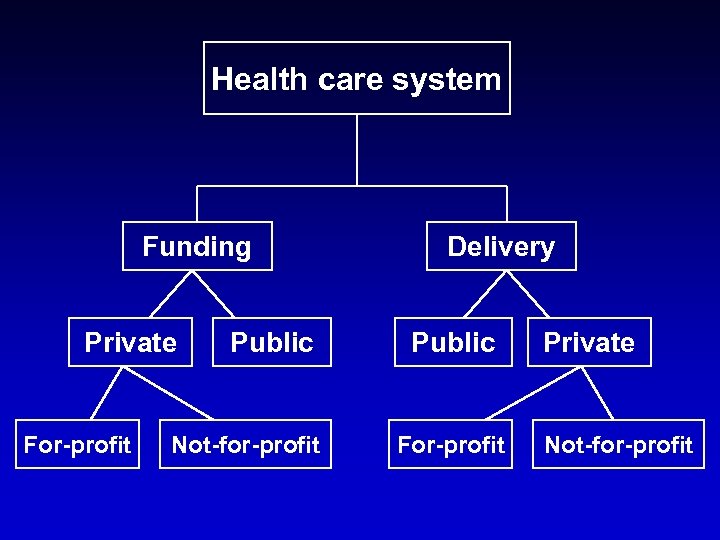 Health care system Funding Private For-profit Public Not-for-profit Delivery Public For-profit Private Not-for-profit
 Myths and demystification • Canadian health care spending is out of control – universal health care is unsustainable – health care is crowding out other public spending • parallel privately funded care can shorten waiting lists • the private sector always does it better – efficiency gains with private funding, for -profit delivery
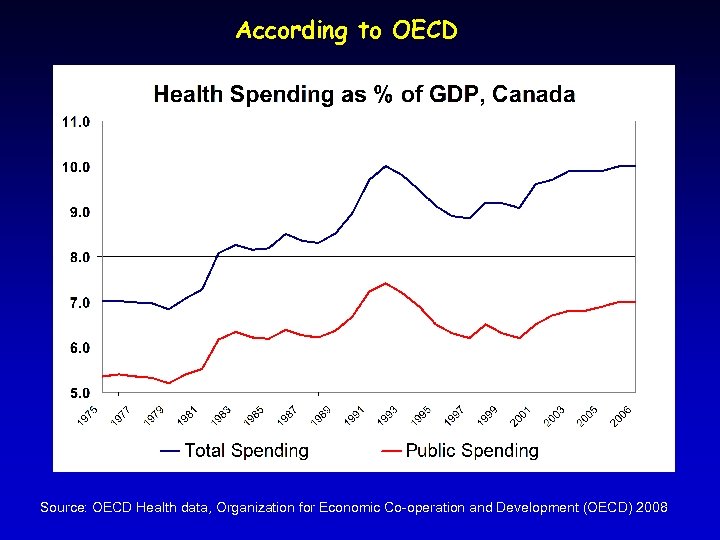 According to OECD Source: OECD Health data, Organization for Economic Co-operation and Development (OECD) 2008
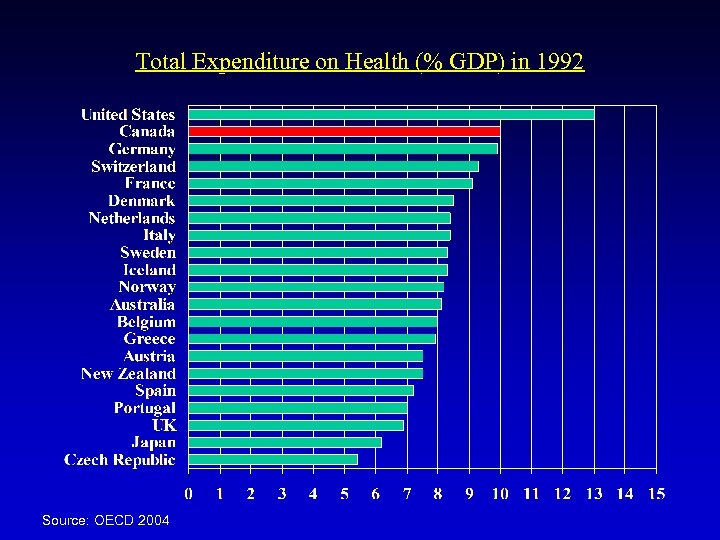 Total Expenditure on Health (% GDP) in 1992 Source: OECD 2004
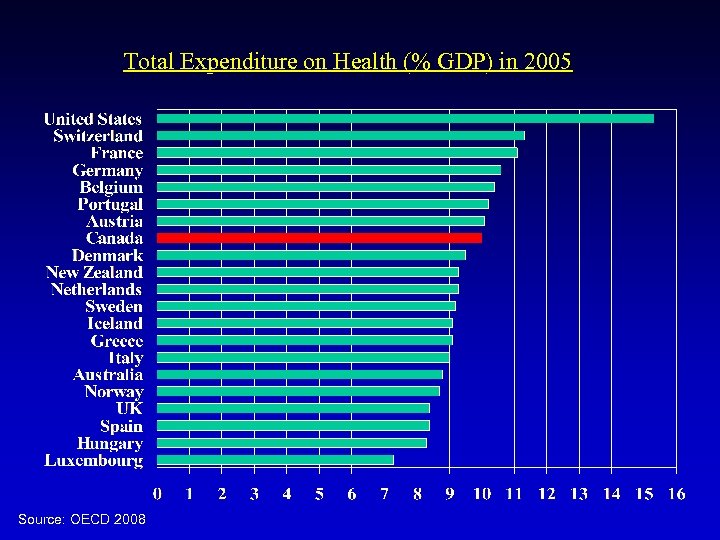 Total Expenditure on Health (% GDP) in 2005 Source: OECD 2008
 Isn’t health care eating up provincial budgets? • 1980 – health care 30% of Ontario budget • 2004 – health care 45% of Ontario budget • but public health care expenditure as % of GDP down, not up?
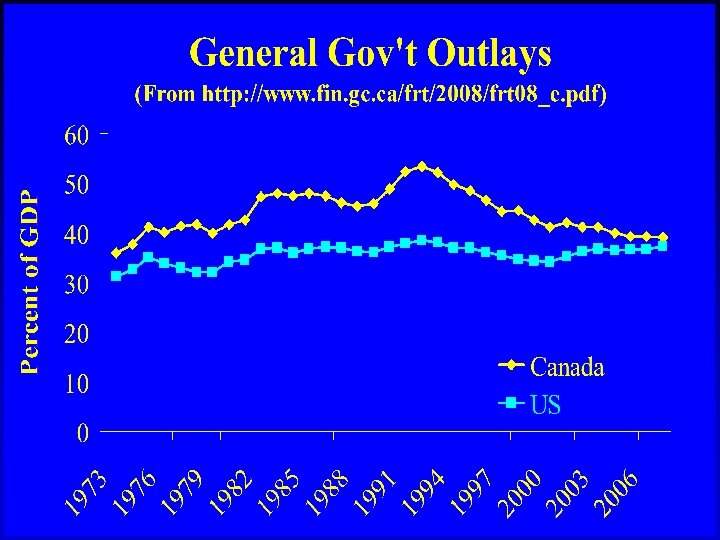
 What are we spending less on? • education – universities from 0. 5% GDP to < 0. 18% • employment insurance – 80% eligible to 40% in Ontario • social support • urban infrastructure • subsidized housing
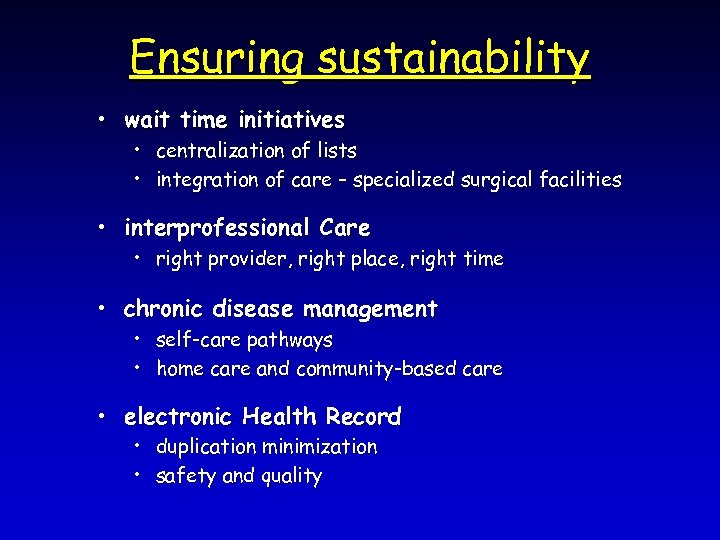 Ensuring sustainability • wait time initiatives • centralization of lists • integration of care – specialized surgical facilities • interprofessional Care • right provider, right place, right time • chronic disease management • self-care pathways • home care and community-based care • electronic Health Record • duplication minimization • safety and quality
 Examples of Success • Hamilton – 70% decrease in referrals to psychiatrists • Alberta • reduced wait times for hip and knee replacements from 19 months to 11 weeks • Sault Ste. Marie – 50% reduction in readmissions of heart failure patients • Nova Scotia South Shore • no ventilator associated pneumonias in 14 months
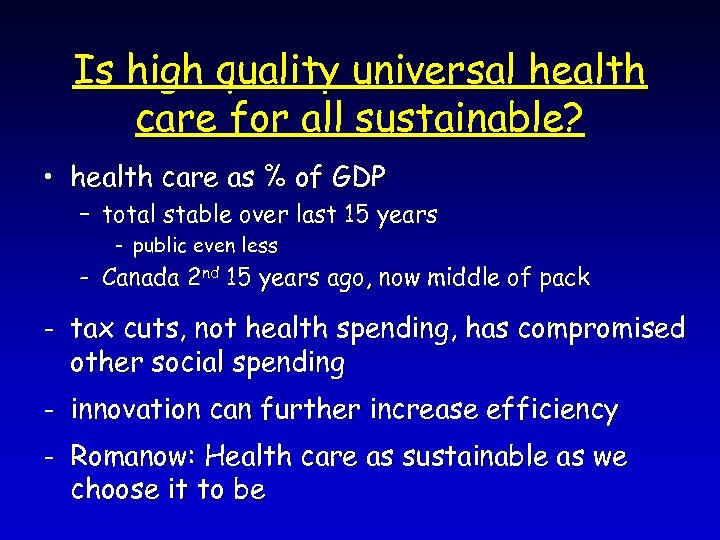 Is high quality universal health care for all sustainable? • health care as % of GDP – total stable over last 15 years - public even less - Canada 2 nd 15 years ago, now middle of pack - tax cuts, not health spending, has compromised other social spending - innovation can further increase efficiency - Romanow: Health care as sustainable as we choose it to be
 Myths and demystification • Canadian health care spending is out of control – universal health care is unsustainable – health care is crowding out other public spending • parallel privately funded care can shorten waiting lists • the private sector always does it better – efficiency gains with private funding, for -profit delivery
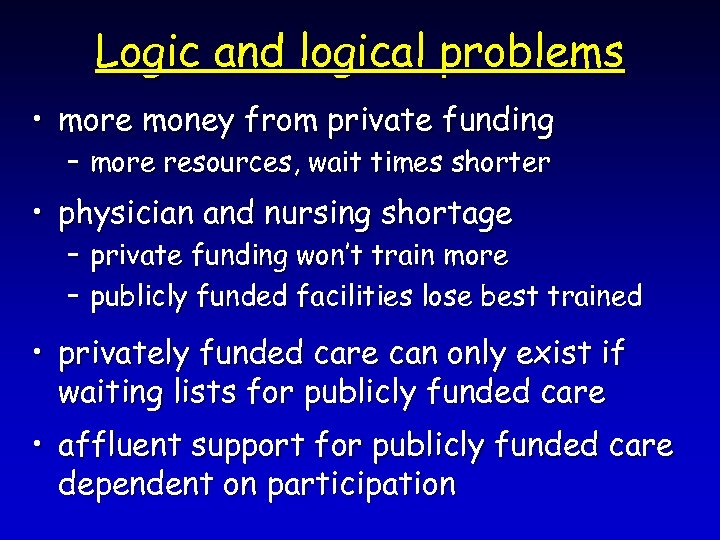 Logic and logical problems • more money from private funding – more resources, wait times shorter • physician and nursing shortage – private funding won’t train more – publicly funded facilities lose best trained • privately funded care can only exist if waiting lists for publicly funded care • affluent support for publicly funded care dependent on participation

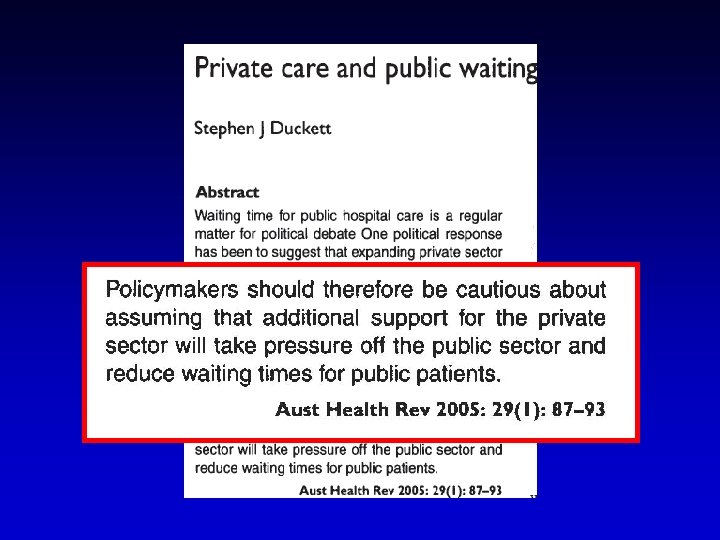
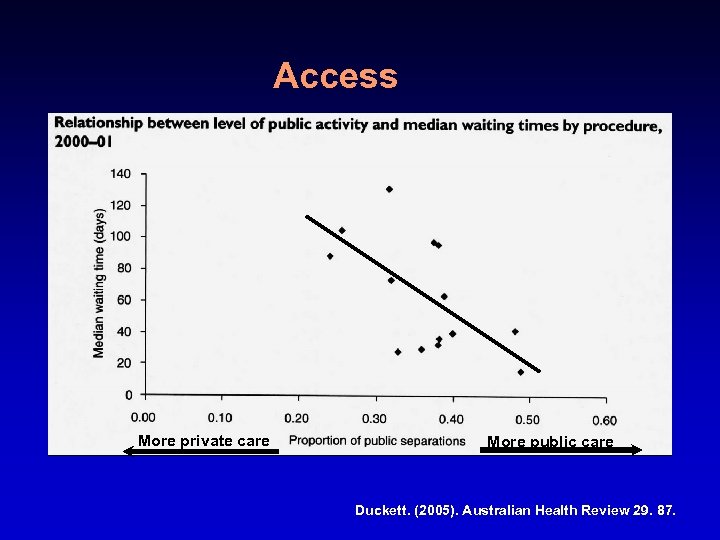 Access More private care More public care Duckett. (2005). Australian Health Review 29. 87.
 Hurley et. al
 Myths and demystification • Canadian health care spending is out of control – universal health care is unsustainable – health care is crowding out other public spending • parallel privately funded care can shorten waiting lists • the private sector always does it better – efficiency gains with private funding, for -profit delivery
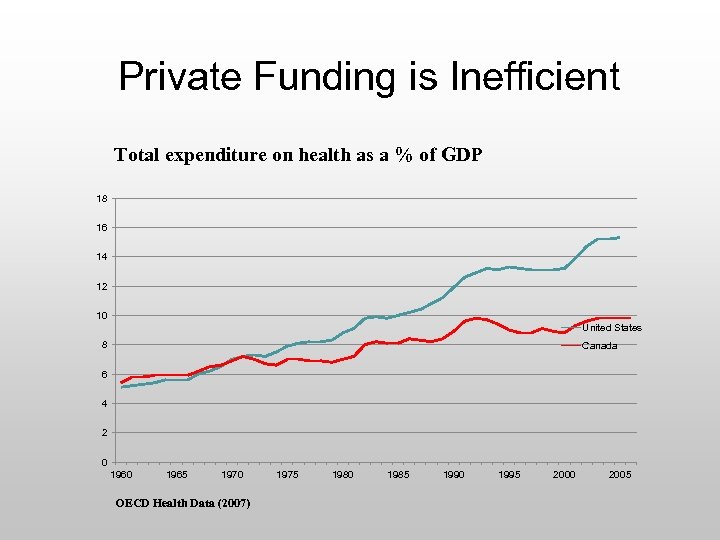 Private Funding is Inefficient Total expenditure on health as a % of GDP 18 16 14 12 10 United States 8 Canada 6 4 2 0 1965 1970 OECD Health Data (2007) 1975 1980 1985 1990 1995 2000 2005
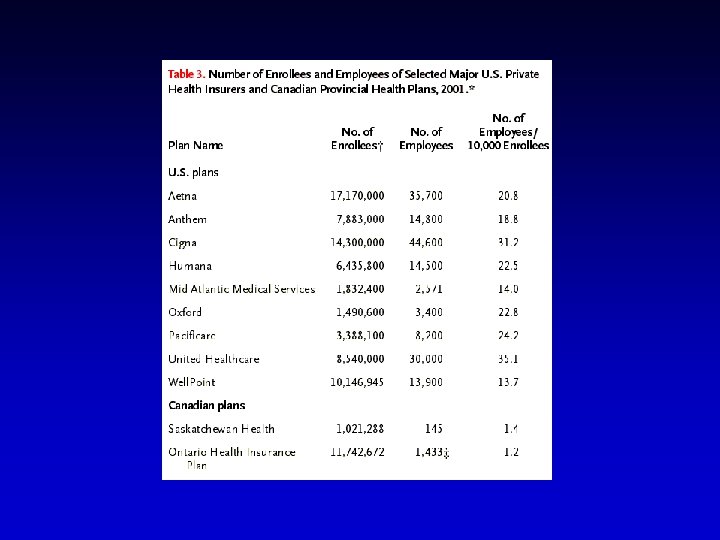
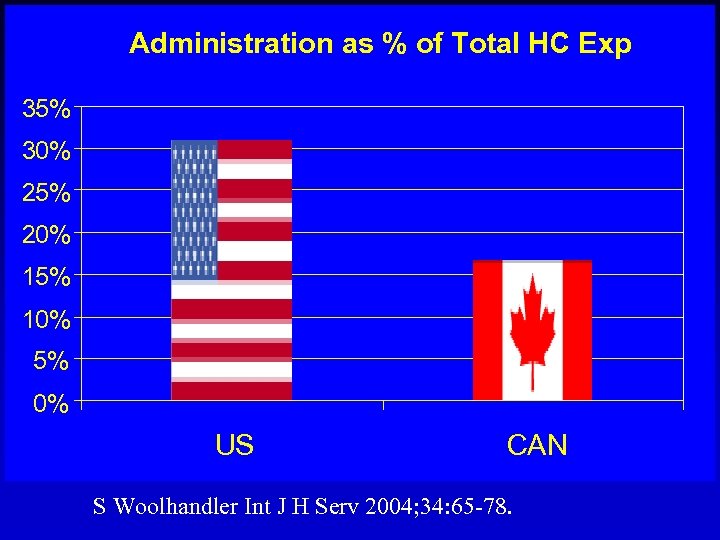 Administration as % of Total HC Exp 35% 30% 25% 20% 15% 10% 5% 0% US CAN S Woolhandler Int J H Serv 2004; 34: 65 -78.
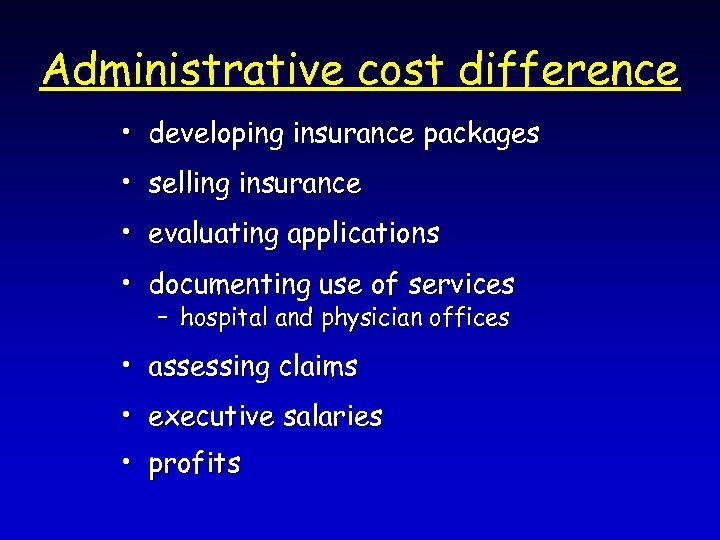 Administrative cost difference • developing insurance packages • selling insurance • evaluating applications • documenting use of services – hospital and physician offices • assessing claims • executive salaries • profits
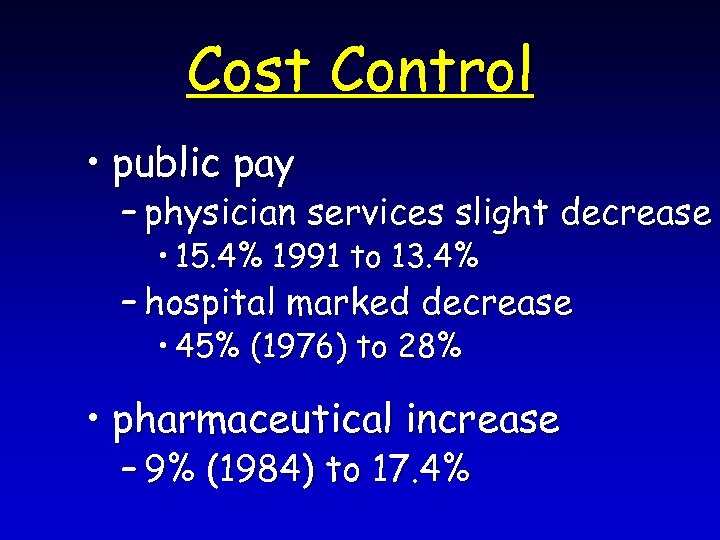 Cost Control • public pay – physician services slight decrease • 15. 4% 1991 to 13. 4% – hospital marked decrease • 45% (1976) to 28% • pharmaceutical increase – 9% (1984) to 17. 4%
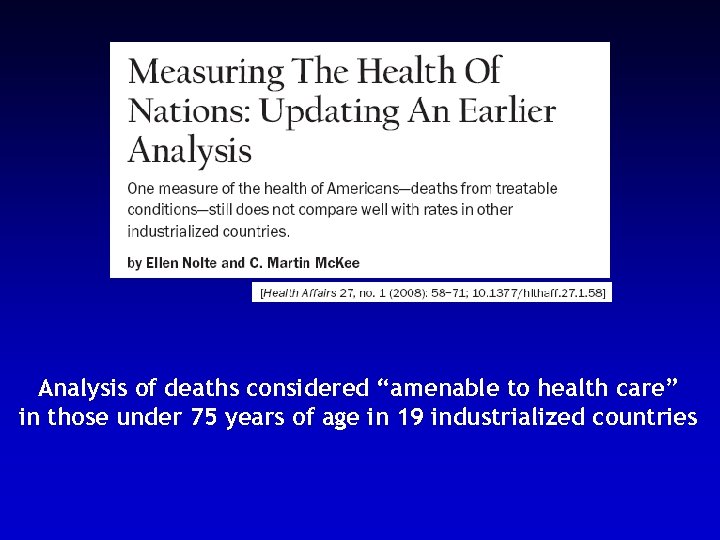 Analysis of deaths considered “amenable to health care” in those under 75 years of age in 19 industrialized countries
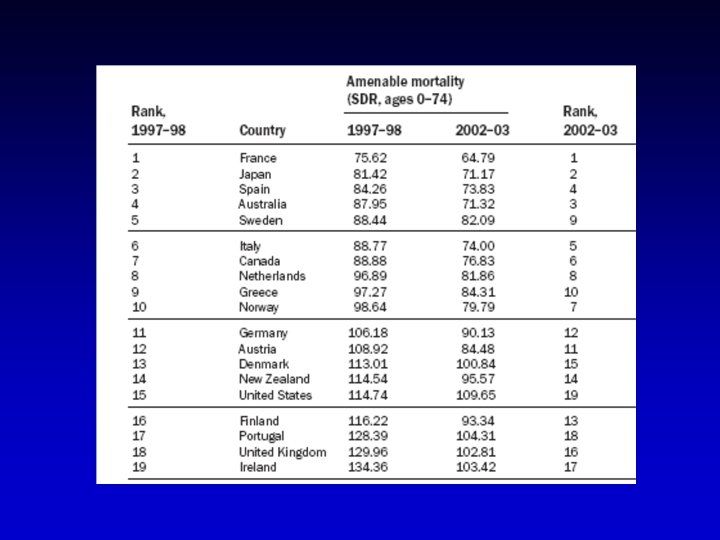
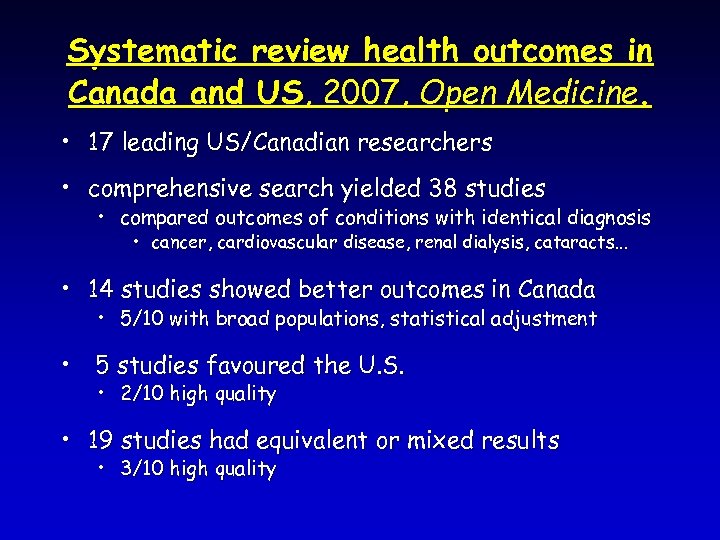 Systematic review health outcomes in Canada and US, 2007, Open Medicine. • 17 leading US/Canadian researchers • comprehensive search yielded 38 studies • compared outcomes of conditions with identical diagnosis • cancer, cardiovascular disease, renal dialysis, cataracts. . . • 14 studies showed better outcomes in Canada • 5/10 with broad populations, statistical adjustment • 5 studies favoured the U. S. • 2/10 high quality • 19 studies had equivalent or mixed results • 3/10 high quality
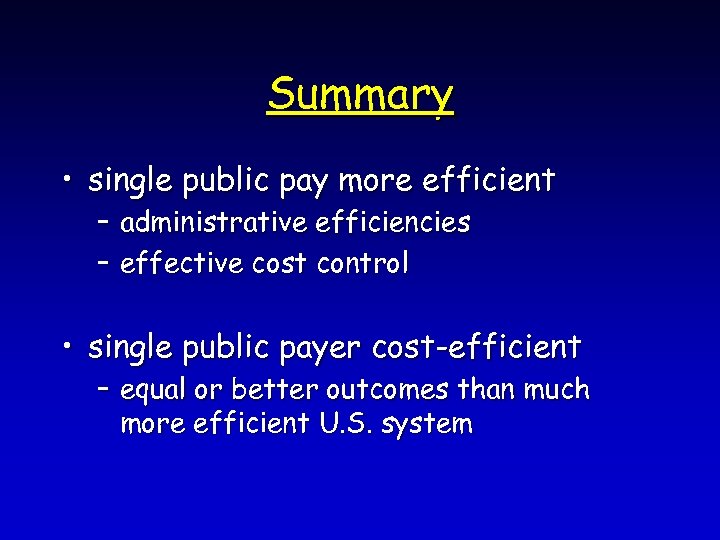 Summary • single public pay more efficient – administrative efficiencies – effective cost control • single public payer cost-efficient – equal or better outcomes than much more efficient U. S. system
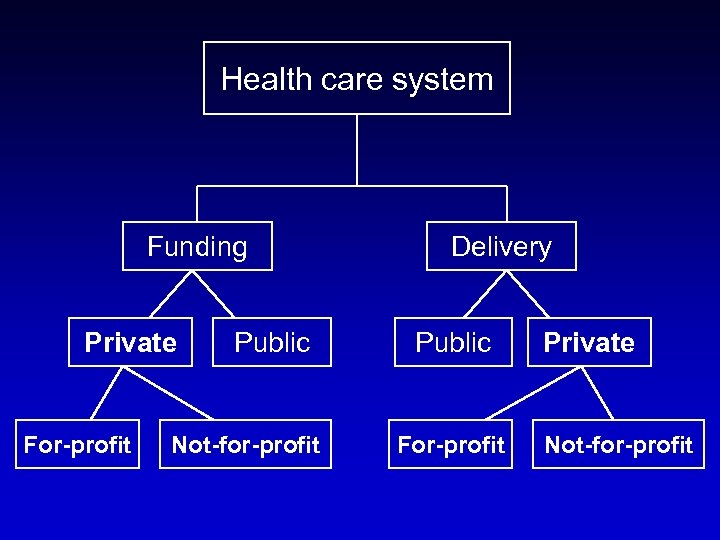 Health care system Funding Private For-profit Public Not-for-profit Delivery Public For-profit Private Not-for-profit
 Debate • advocates of investor owned private for-profit health care delivery argue – for-profit providers deliver care more efficiently • advocates of not-for-profit health care delivery fear – for-profit facilities compromise care to maintain investors returns
 For-profit or not-for-profit? • for-profit initiatives – Ontario: home care, MRI/CT, P 3 hospitals – other provinces, surgical clinics • systematic reviews – investor-owned for-profit vs nfp • hospital death rates • dialysis death rates • hospital charges to payers
 Systematic review and meta-analysis • systematic review – focused question – explicit eligibility criteria – comprehensive search – assessment of validity of primary studies – eligibility and quality assessments are reproducible • meta-analysis combines the results of several studies
 Screening process • 8665 unique citations • teams of 2 individuals – independently screened the titles and abstracts • 805 full text publications – identified for full review
 Assessment of study eligibility • masked results (i. e. blacked them out) • teams of two individuals – independently evaluated each masked article to determine eligibility • disagreements resolved by consensus • agreement was excellent (Kappa 0. 83)
 Results • all studies – comprehensive search, top quality studies – published in top peer-reviewjournals • hospital mortality – – – 38 million patients between 1982 -1995 2% more deaths in for-profit 2, 000 deaths in Canada (MVA, cancer, suicide) • dialysis mortality – 500, 000 patient years 1973 to 1997 – 8% more deaths in for-profit • charges 19 greater in for-profit
 Summary: overall • pressures on health spending but: – Canada better than most other countries – problem is tax cuts, not health spending • private pay won’t shorten waiting lists – will just make ability to pay, rather than need, the criterion to get to the front • single payer maximizes efficiency – not-for-profit more efficent than forprofit