 Скачать презентацию Mycobacterium leprae by Konrad T Juszkiewicz MD MPH
Mycobacterium leprae.pptx
- Количество слайдов: 18



Mycobacterium leprae by Konrad T Juszkiewicz, MD, MPH Donald Burgess, Ph. D DRK Biomedical Research and Development LLC Almaty, November, 2013
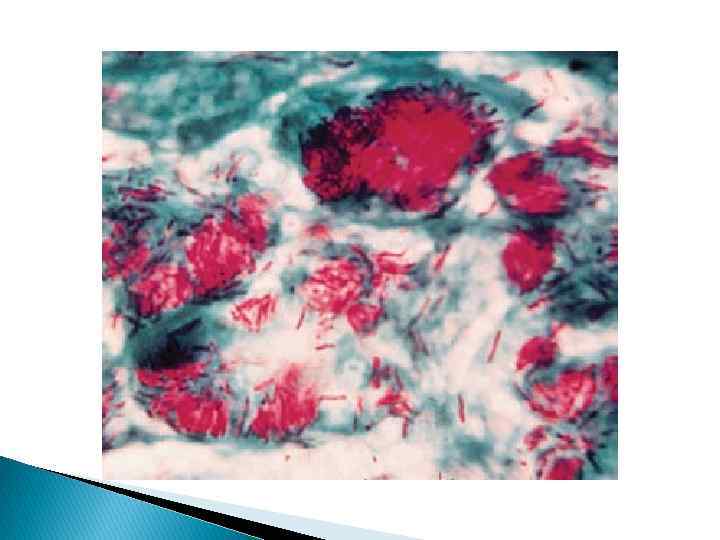
Physiology and Structure Weak gramm-positive, strong acid-fast bacilli Lipid reach cell Diagnosis made with specific skin test (tuberculoid form) or acid fast stain (lepromatous form)

Virulence Capable of intracellular growth Disease primarily from host response to infection
Epidemiology Rare in United States Common in Asia and Africa Armadillo are naturally infected and represents an indigenous reservoir Lepromatous form of disease highly infectious Tuberculoid form not highly infectious
Epidemiology Person to person spread ◦ Direct contact ◦ Inhalation of infectious aerosols People in close contact with patients who has leprepromatous disease are at greatest risk
Diseases Tuberculoid form of leprosy ◦ Lepromatous form of leprosy ◦ Intermediate forms of leprosy
Diagnosis Microscopy sensitive for lepromatous form but not for tuberculoid form Skin testing required to confirm tuberculoid leprosy Culture not usefull
Treatment, Prevention and Control Dapsone with or without rifampin used to treat tuberculoid form Clofaximine added to treat lepromatous form Therapy is prolonged Dapsone recommended for long term prophylaxix in treated patients Disease controled through prompt recognition and treatment
Tuberculoid Leprosy Skin lesion ◦ Few erythomatous or hypopingmented plagues with flat center and raised demarked borders ◦ Periferal nerv damage with completely sensory lost ◦ Viseable enlargement of nerves Histopathology ◦ Infiltration of lymphocytes around center of epithelial cells ◦ Presence of Langhans cells ◦ Few or none acid fast bacilli observed Infectivity low
Tuberculoid Leprosy Immune response ◦ Delayed hypersensitivity with response to lepromin ◦ Immunoglobulin level normal ◦ Erythrema nodosum leprosum absent
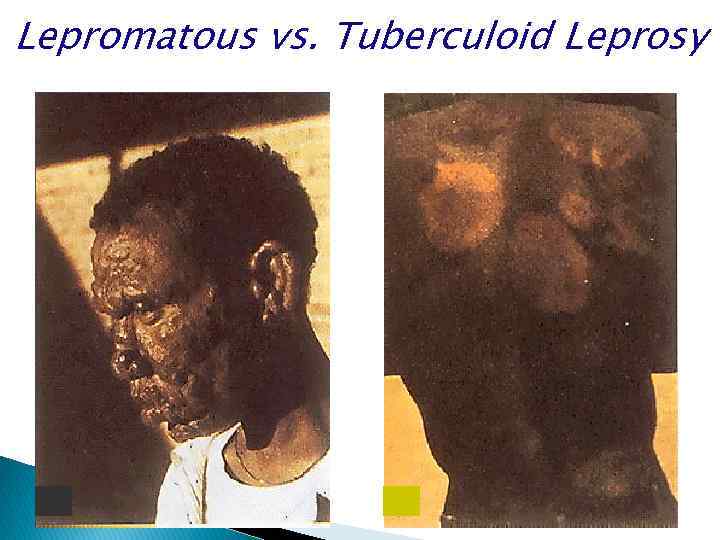
Lepromatous vs. Tuberculoid Leprosy
Lepromatous Leprosy Skin lesion Histopathology Infectivity high ◦ ◦ ◦ ◦ Many erythomatous macules, papules or macules Extensive tissue destruction (nasal cartalage, bones, ears) Diffuse nerve involvement with patchy sensory lost Lack of nerves enlargement Predominantly “foamy” macrophage with few lymphocytes Infiltration of lymphocytes around center of epithelial cells Lack of Langhans cells Numerous acid fast bacilli observed in skin leasion and internal organs
Lepromatous Leprosy Immune response ◦ Nonreactivity to lepromin ◦ Hyper gammaglobulemia ◦ Erythrema nodosum leprosum usually present
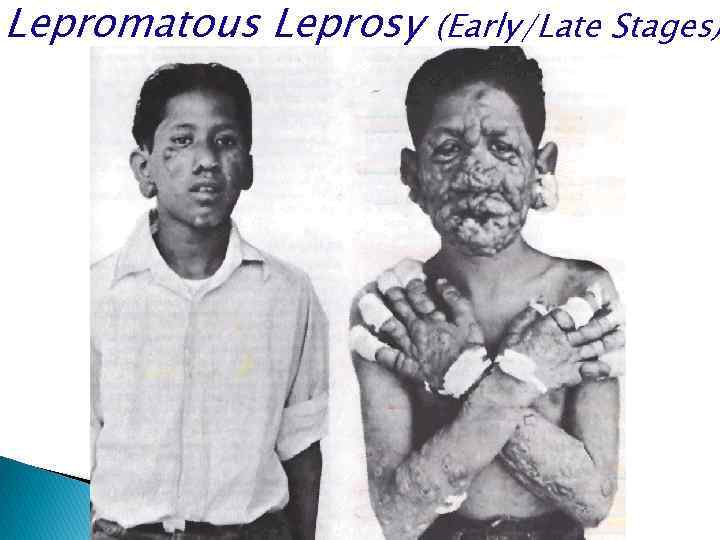
Lepromatous Leprosy (Early/Late Stages)
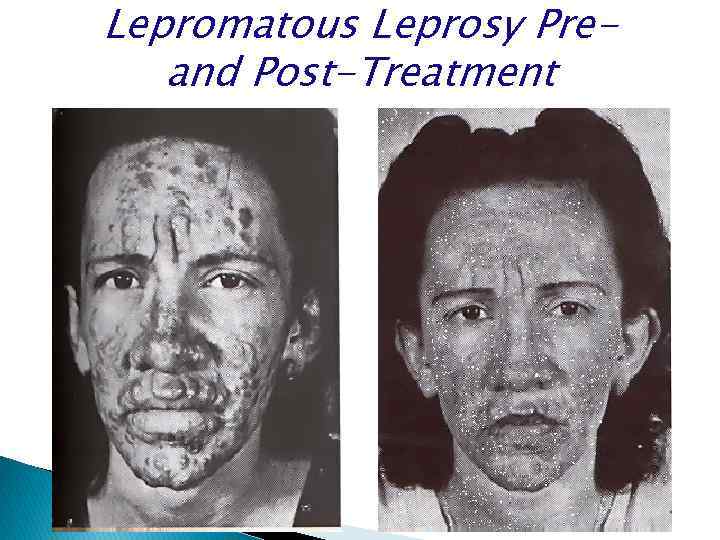
Lepromatous Leprosy Preand Post-Treatment
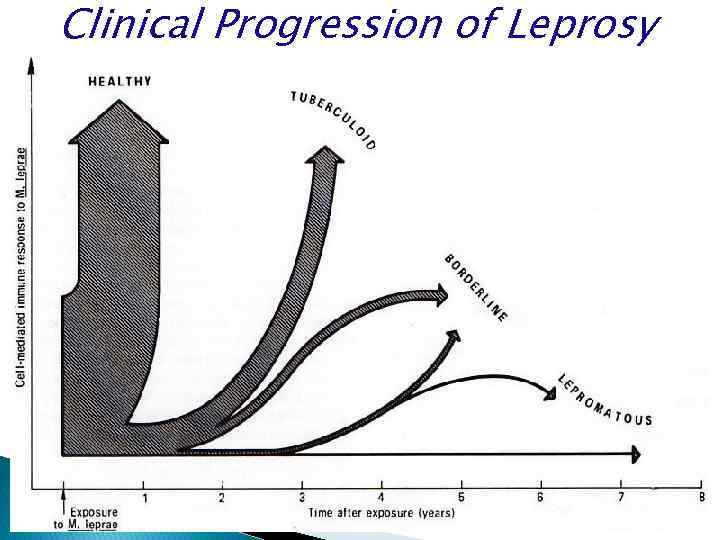
Clinical Progression of Leprosy

Thanks Spasiba Rakhmet Deburgess@drkbiomed. org Kjuszkiewicz@drkbiomed. org Cell. : +7 701 218 2377
Скачать презентацию Mycobacterium leprae by Konrad T Juszkiewicz MD MPH
Mycobacterium leprae.pptx