


 Скачать презентацию Myanmar Culture Society 8 July 2011 Presented
891c4713ec1879c3bda8a4bf886a90bf.ppt
- Количество слайдов: 36
 Myanmar Culture & Society 8 July 2011 Presented at KKU Khon Kaen, Thailand 1
 Outlines of the Presentation I. Myanmar Geography II. Symbols of Myanmar III. Background History of Myanmar IV. Myanmar People V. Economy VI. Myanmar Culture
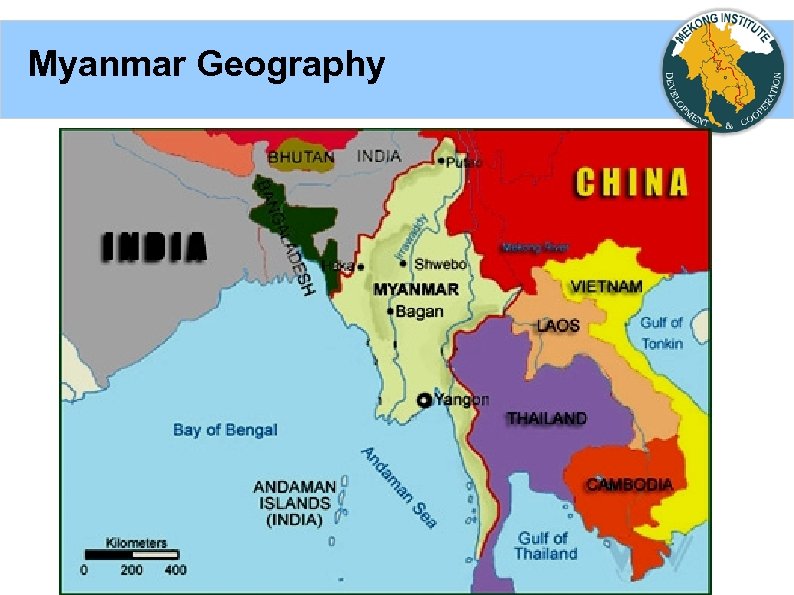 Myanmar Geography
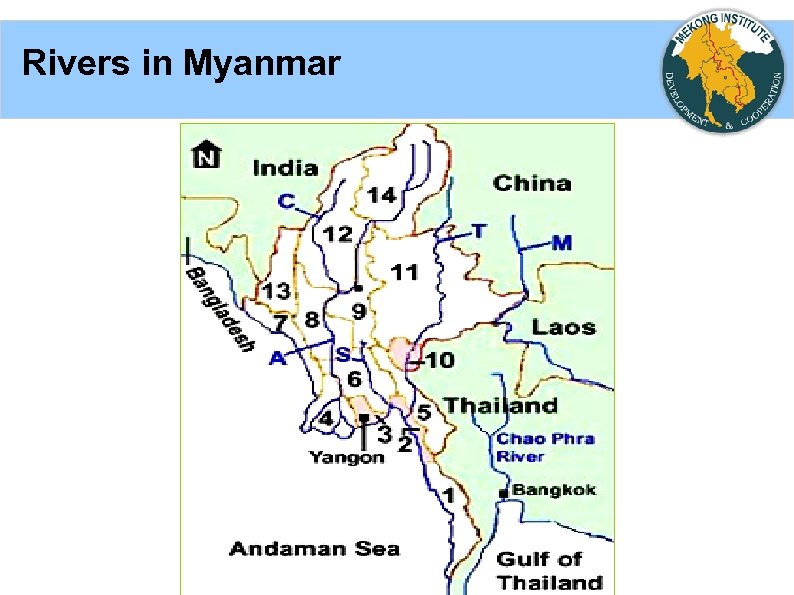 Rivers in Myanmar
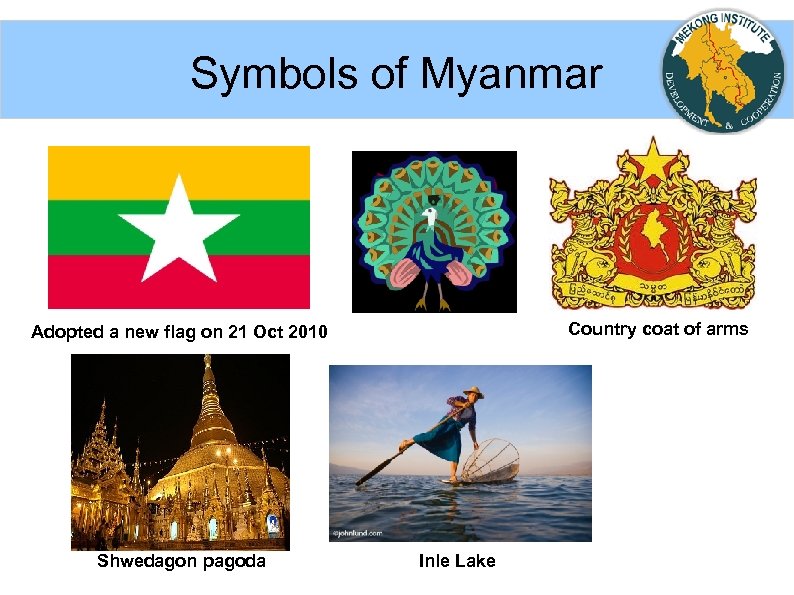 Symbols of Myanmar Country coat of arms Adopted a new flag on 21 Oct 2010 Shwedagon pagoda Inle Lake
 Etymology Burma (Formerly): - Derived from the Burmese word “Bamar” which historically referred to the majority “Bamar” or “Burmans” - Since the time of British colonial rule (1886) Myanmar: - In 1989, the military government officially changed “Burma” to “Myanmar” - The English translations of many colonial-era names
 Background History of Myanmar I. The Early History Mon : First people settled in Myanmay possibly as early as 3, 000 BC. - Settled near the mouths of the Thanlwin and Sittaung rivers and established the kingdom called Suvannabhumi, which is mentioned in the early Indian literatures and Chinese records. - Immigrated from some where in central Asia several centuries before Christ. - Linguistically, the Mon language belong to the Mon-Khmer family who are still to be found in parts of Thailand Cambodia today - Introduced Buddhism and Indian culture to Burma, Besides the religion, the Mons had an advanced knowledge of agriculture. They were experts in irrigation, and turned the river basins in Lower Burma into fertile paddy fields.
 I. The Early History Phyu: arrived Myanmar later in the 1 st century BC - Established several city - kingdoms in the north of Irrawaddy delta. - Spoke Tibeto-Burman language (acc. to Chinese records from the Tang Dynasty) - Created new trade routes and build grand Buddhist temples. - In 832, Nan Chao from Yunnan of China invaded north of Burma, and took many Pyus as war-prisoners back to Nan Chao. - Their weakness brought about the emergence of another people called Burma, who from the 9 th century immigrated into Burma from the border area between China and Tibet.
 The Early History Bamar : Appeared in Myanmar in the 9 th centurty - Coming from the China Tibet border area - Speak Tibeto-Burman language - Establishd a small kingdom centered in Bangan on the Irrawaddy river in 849 and became the dominant ethnic group in Myanmar.
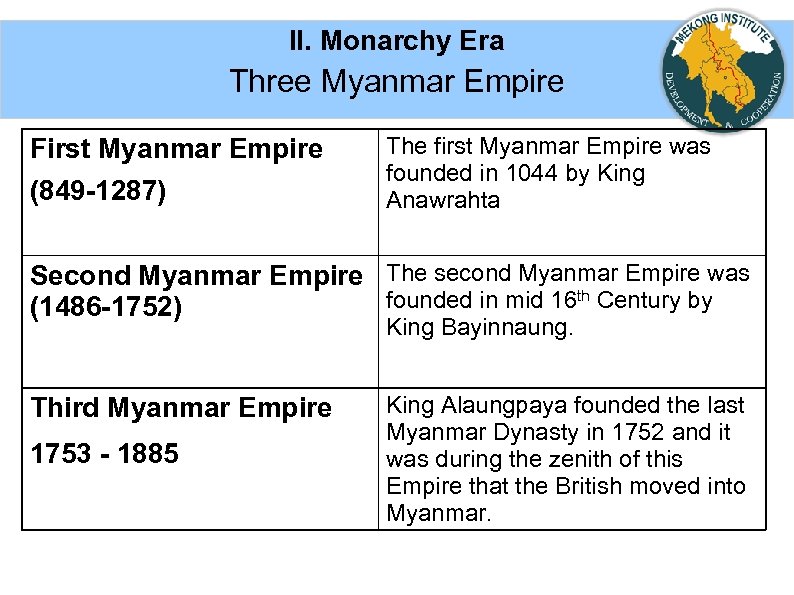 II. Monarchy Era Three Myanmar Empire First Myanmar Empire (849 -1287) The first Myanmar Empire was founded in 1044 by King Anawrahta Second Myanmar Empire The second Myanmar Empire was founded in mid 16 th Century by (1486 -1752) King Bayinnaung. Third Myanmar Empire 1753 - 1885 King Alaungpaya founded the last Myanmar Dynasty in 1752 and it was during the zenith of this Empire that the British moved into Myanmar.
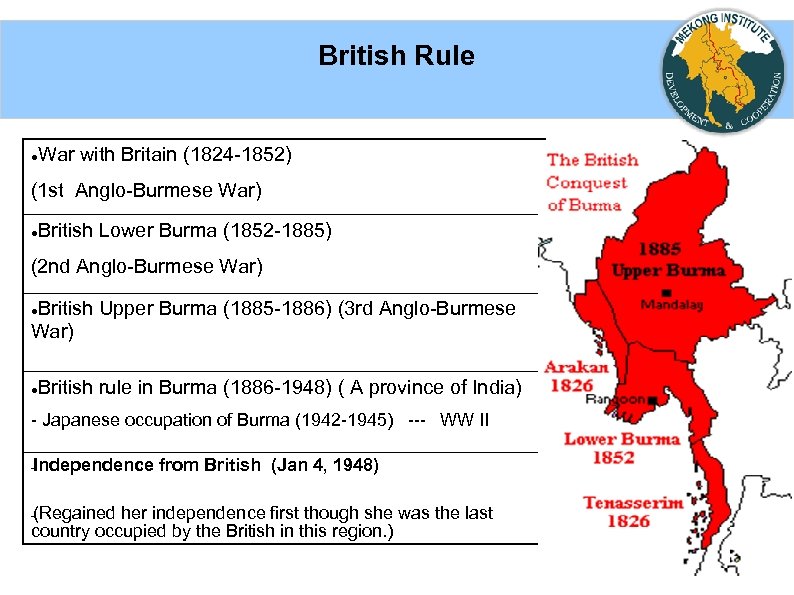 British Rule War with Britain (1824 -1852) (1 st Anglo-Burmese War) British Lower Burma (1852 -1885) (2 nd Anglo-Burmese War) British Upper Burma (1885 -1886) (3 rd Anglo-Burmese War) British rule in Burma (1886 -1948) ( A province of India) - Japanese occupation of Burma (1942 -1945) --- WW II - Independence from British (Jan 4, 1948) (Regained her independence first though she was the last country occupied by the British in this region. ) -
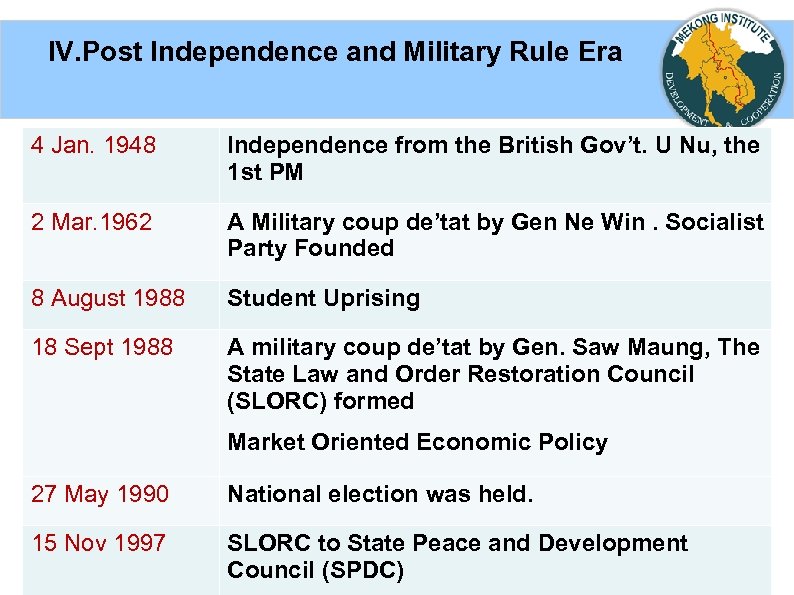 IV. Post Independence and Military Rule Era 4 Jan. 1948 Independence from the British Gov’t. U Nu, the 1 st PM 2 Mar. 1962 A Military coup de’tat by Gen Ne Win. Socialist Party Founded 8 August 1988 Student Uprising 18 Sept 1988 A military coup de’tat by Gen. Saw Maung, The State Law and Order Restoration Council (SLORC) formed Market Oriented Economic Policy 27 May 1990 National election was held. 15 Nov 1997 SLORC to State Peace and Development Council (SPDC)
 Myanmar People Myanmar has a diverse population, the result of three separate migrations from Central Asia and Tibet. 1 st migration group : Mons 2 nd migration group: the Tibeto- Myanmar 3 rd migration group: Tai Shan people
 Myanmar People Officially 135 ethnic groups comprise Myanmar people The population of the country is estimated at 55, 400, 000 (2009) About 70% of the population is descended from the Barmar. A part from the Chinese and Indians, most minority ethnic groups live mainly in the hills.
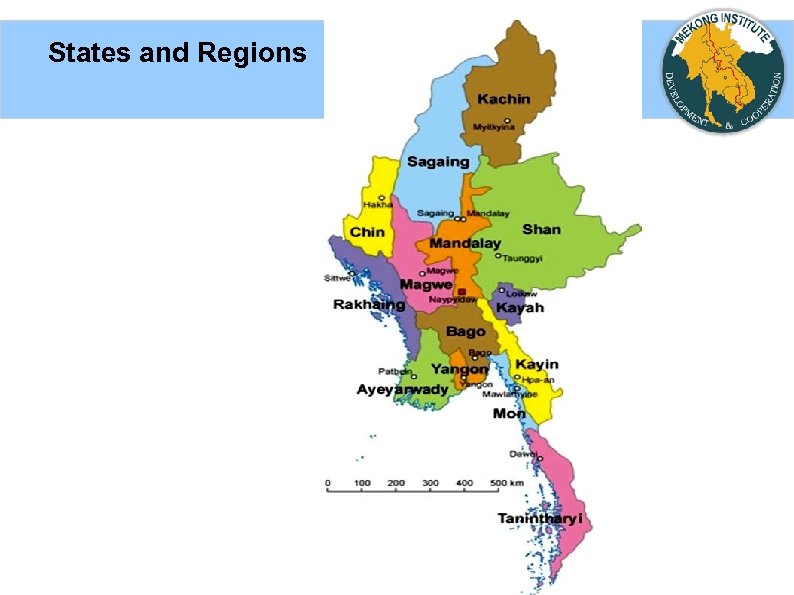 States and Regions
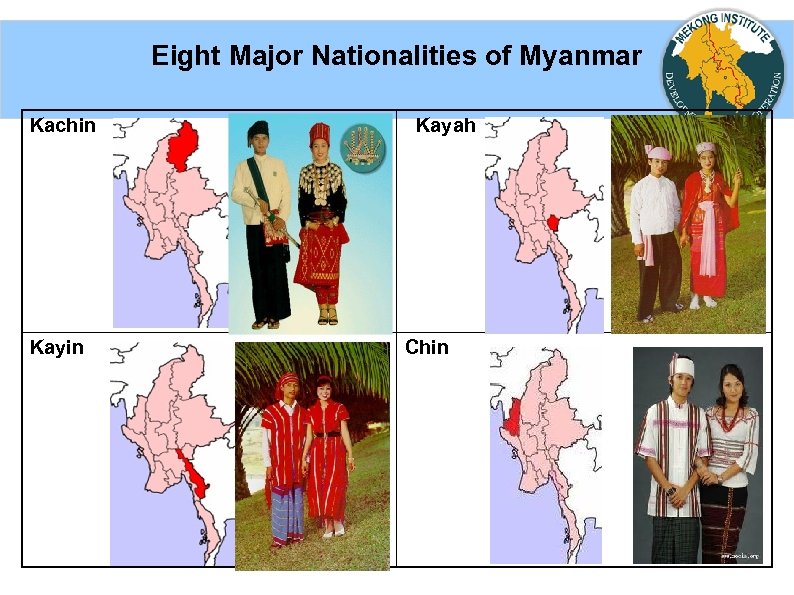 Eight Major Nationalities of Myanmar Kachin Kayah Chin
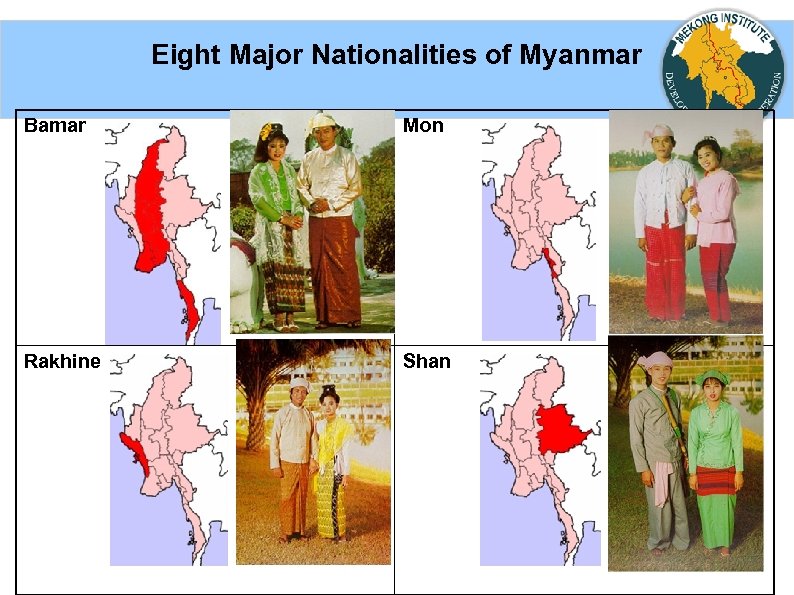 Eight Major Nationalities of Myanmar Bamar Mon Rakhine Shan
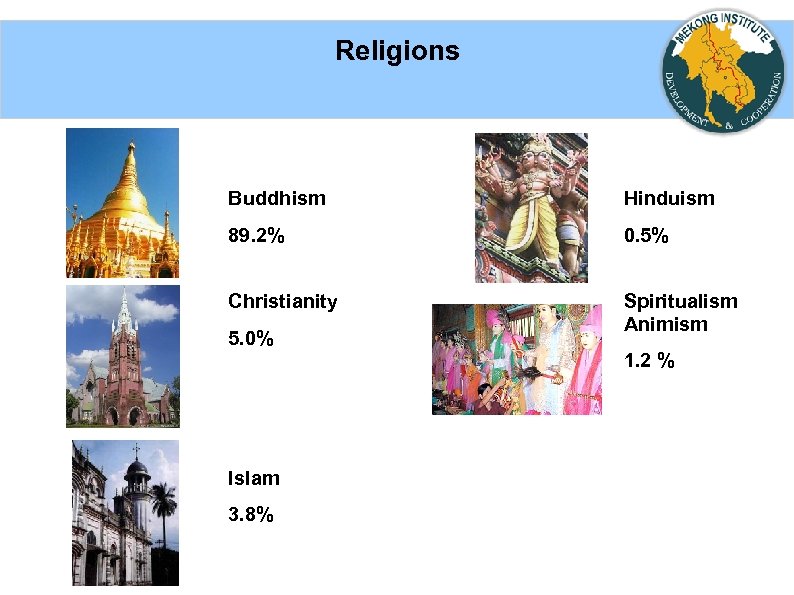 Religions Buddhism Hinduism 89. 2% 0. 5% Christianity Spiritualism Animism 5. 0% 1. 2 % Islam 3. 8%
 Language and Literature Language: belongs to the Sino-Tibetan family of languages. 33 consonants and twelve vowels Script: originally adapted from the Mon language (derived from Pali, the ancient Indian language of the sacred text of Theravada Buddhism.
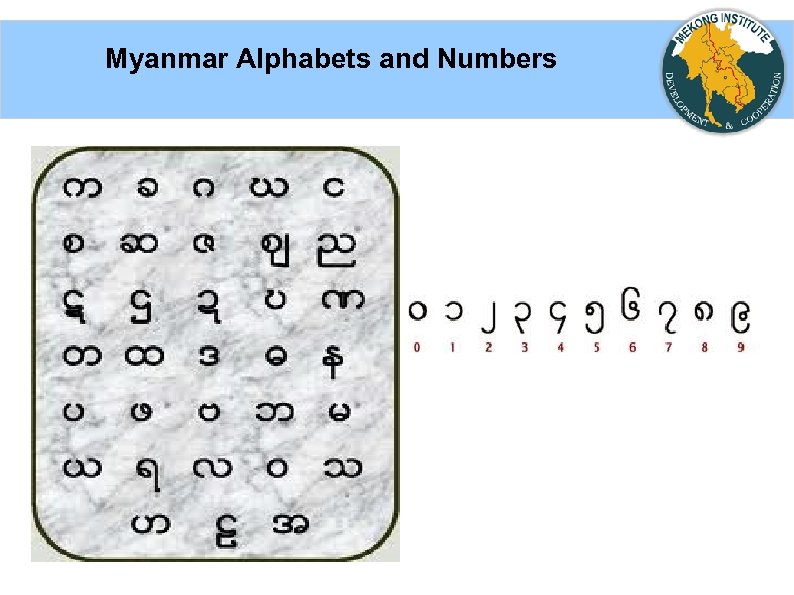 Myanmar Alphabets and Numbers
 Economy British Administration - Myanmar was the 2 nd wealthiest country in South East Asia. s - The world’s largest exporter of rice - Produced 75% of the world’s teak - A highly literately population - The country was believed to be on the fast track to development.
 Economy After Independence 1948: - Adopted central planned economy - Rice exports fell by two thirds and mineral exports by over 96% 1962: - Coup de’tat was followed by an economic scheme called the Burmese Way to socialism 1987: UN gave Myanmar Least Develop Country status
 Economy After Independence In recent yrs: - China and India has established closed ties for economic - US, Canada and EU have imposed investment and trade sanctions on Myanmar Foreign Invest: - Primarily comes from China, Singapore, South Korea, India and Thailand - Major Agriculture is rice, 60% of cultivated land - Rubies are the largest earner, 90% of the world’s rubies come from Myanmar (Thaland buy the majority of the country’ gems)
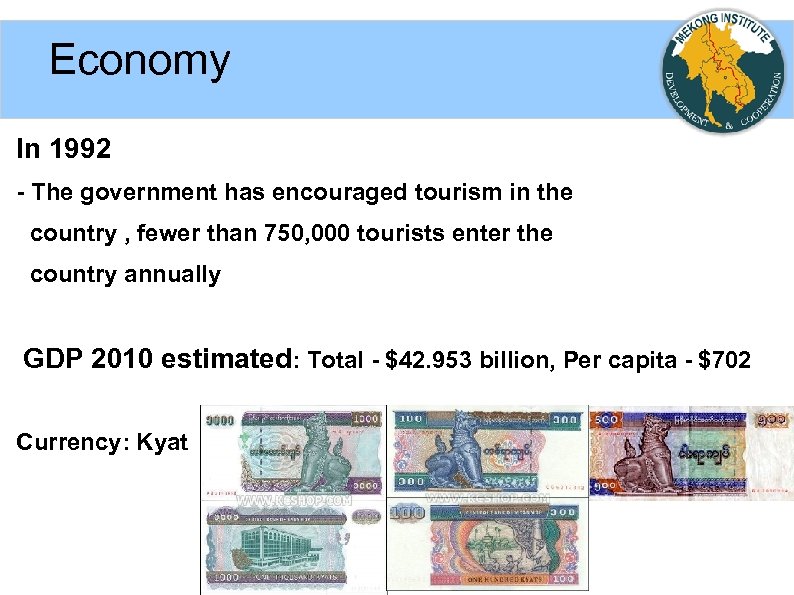 Economy In 1992 - The government has encouraged tourism in the country , fewer than 750, 000 tourists enter the country annually GDP 2010 estimated: Total - $42. 953 billion, Per capita - $702 Currency: Kyat
 Myanmar Culture Generally, Myanmar culture means Buddhist and Bamar culture Bamar Culture has been influenced by the cultures of neighbouring countries (its langauge, cuisine, music, dance and theatre, The arts and literature have been influened by Theravada Buddhism The national epic of Myanmar , the Yama Zatdaw, an adaption of India’s Ramayana
 Myanmar Culture In Traditional Village: - The monastry is the centre of culture life A novitiation ceremony called Shinbyu (All boys) Ear-piercing ceremonies (All girls) - Myanmar culture is most evident in villages where local festivals are held throughout the yaer British Colonial Rule: - Myanmar’s educational system is modelled after that of the UK. - Colonial architectural influences are most evident in major cities such as Yangoon. - Many ethnic minorities, particularly Karen, Kachin, and Chin practice Christianity.
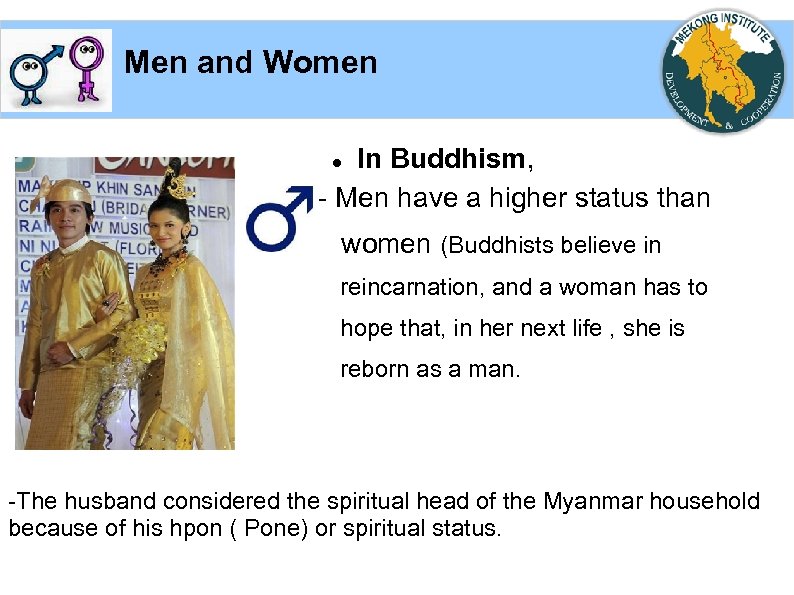 Men and Women In Buddhism, - Men have a higher status than women (Buddhists believe in reincarnation, and a woman has to hope that, in her next life , she is reborn as a man. -The husband considered the spiritual head of the Myanmar household because of his hpon ( Pone) or spiritual status.
 Men and Women - In public, women let men take the lead, often walking behind their husbands or fathers - At home, however, a husband usually hands his earnings over to the wife, who manages the family budget and often runs her own small business, too. - Women are excluded from certain areas of religious buildings Despite the hierarchy of Buddhism, however Myanmar women have a quiet self-confidence that comes from a tradition of independence. - Women have equal rights of inheritance with men. - Women dominate the market as traders of goods or food vendors. - Today, there are many women in professional occupations, working as doctors, dentists, lawyers, writers, teachers, and scientists
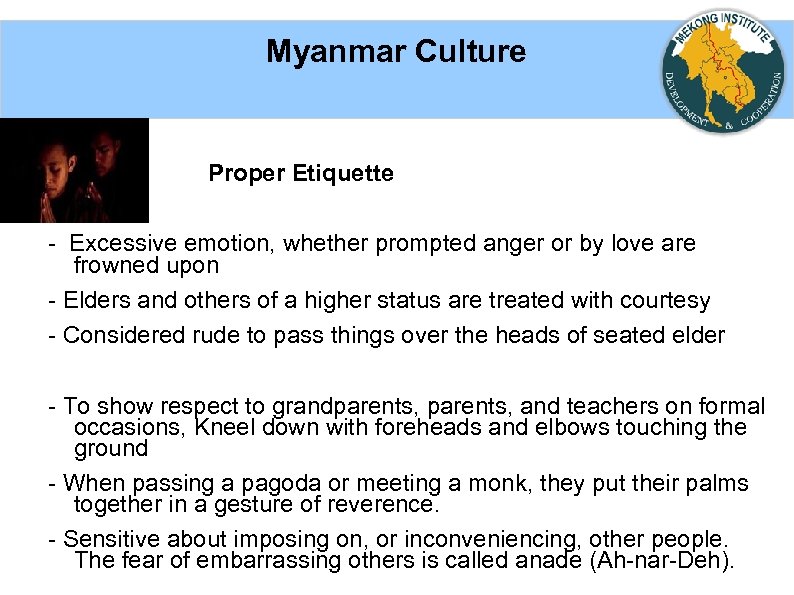 Myanmar Culture Proper Etiquette - Excessive emotion, whether prompted anger or by love are frowned upon - Elders and others of a higher status are treated with courtesy - Considered rude to pass things over the heads of seated elder - To show respect to grandparents, and teachers on formal occasions, Kneel down with foreheads and elbows touching the ground - When passing a pagoda or meeting a monk, they put their palms together in a gesture of reverence. - Sensitive about imposing on, or inconveniencing, other people. The fear of embarrassing others is called anade (Ah-nar-Deh).
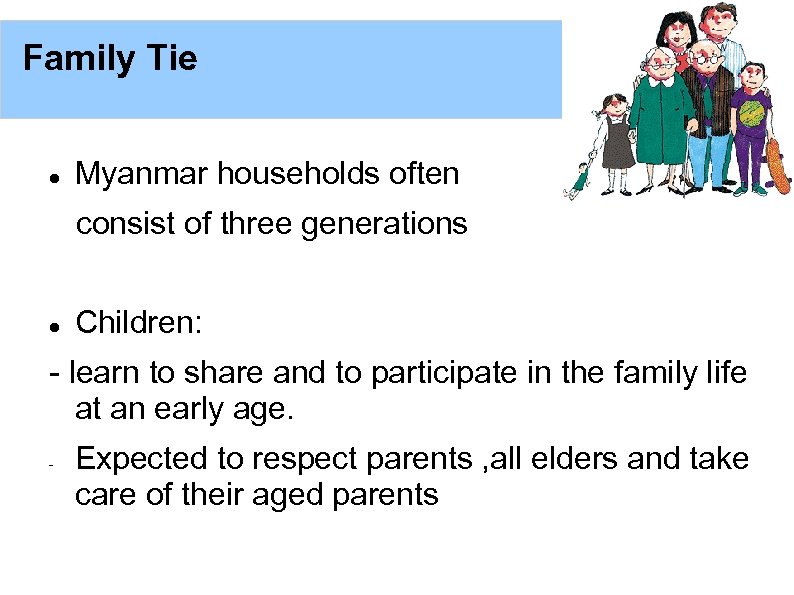 Family Tie Myanmar households often consist of three generations Children: - learn to share and to participate in the family life at an early age. - Expected to respect parents , all elders and take care of their aged parents
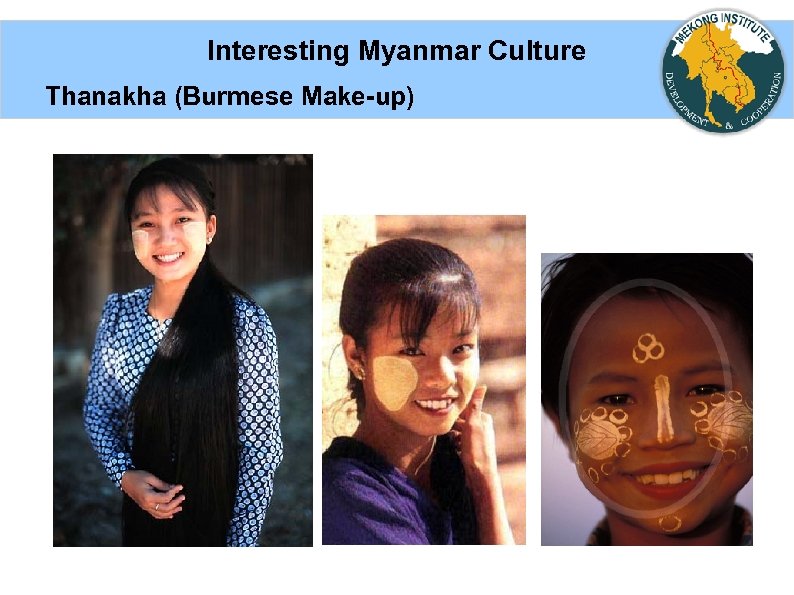 Interesting Myanmar Culture Thanakha (Burmese Make-up)
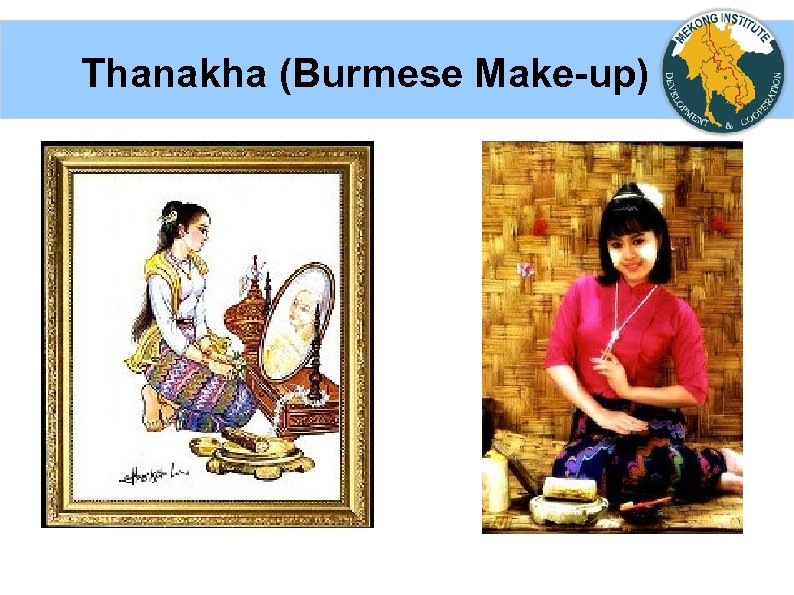 Thanakha (Burmese Make-up)
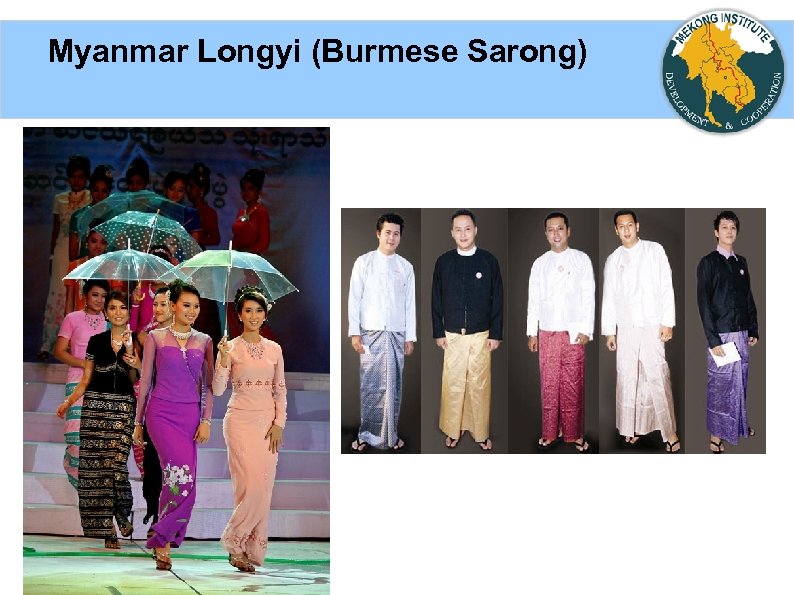 Myanmar Longyi (Burmese Sarong)
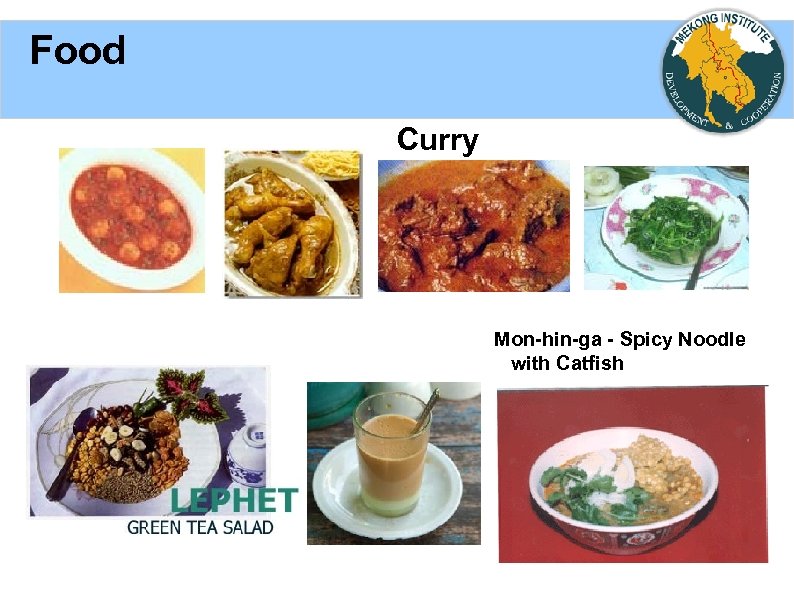 Food Curry Mon-hin-ga - Spicy Noodle with Catfish
 Q&A How does the poor Myanmar economy and national situation effected the GMS region? What are the advantages and disadvantages of increase tourism in Myanmar society? What are the similaraties & difference between Myanmar and other GMS culture?
 Thank You