 Скачать презентацию Muons Inc Tunable RF Cavities Using Orthogonally Biased
33bbcad307eec60cb1171b702babe342.ppt
- Количество слайдов: 17



Muons, Inc. Tunable RF Cavities Using Orthogonally Biased Ferrite Milorad Popovic (with Mike Neubauer, Chuck Ankenbrandt, Katsuya Yonehara, Al Moretti and Rol Johnson) 09/22/2009 FFAG 09 1
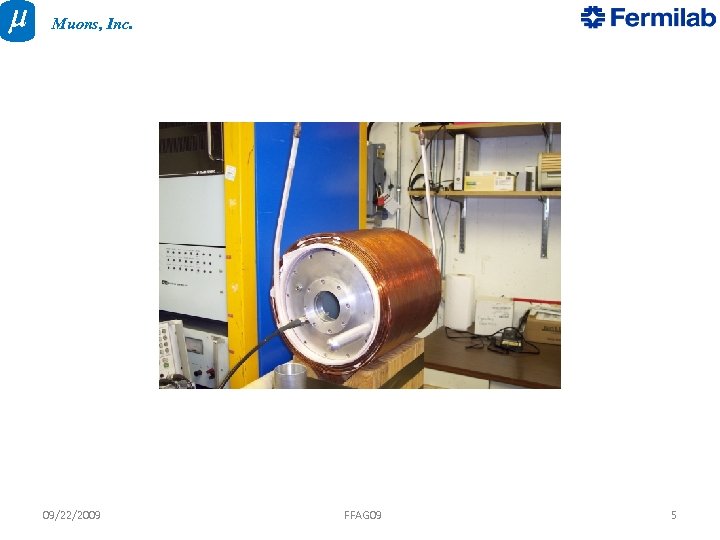
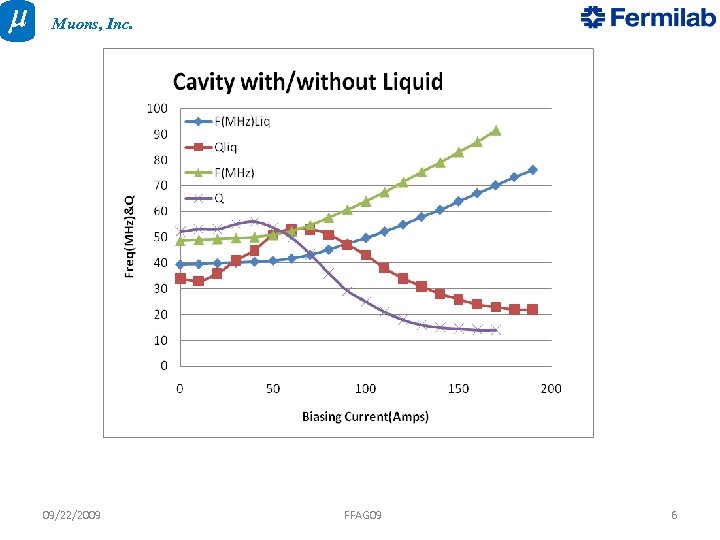
Muons, Inc. • Introduction • New developments in the design of fixed-field alternating gradient (FFAG) synchrotrons have sparked interest in their use as rapid cycling, high-intensity accelerators of ions, protons, and muons. Potential FFAG applications include medical accelerators of protons and light ions for cancer therapy, proton drivers for neutron or muon production, and rapid muon accelerators. The successful development of compact tunable RF cavities for these machines will establish/enhance the feasibility of FFAG machines for these purposes. Another use of these RF cavities is to upgrade older machines that require new capabilities but have limited space for new components. In the 8 Ge. V Fermilab Booster synchrotron second harmonic RF cavities could provide improved proton capture during injection as well as reduce beam losses in transitions. An additional potential use is upgrading the RF system of the Fermilab Main Injector to prepare it for a new H minus linac that would replace the Booster. • 09/22/2009 FFAG 09 2
Muons, Inc. 09/22/2009 FFAG 09 3
Muons, Inc. 09/22/2009 FFAG 09 4
Muons, Inc. 09/22/2009 FFAG 09 5
Muons, Inc. 09/22/2009 FFAG 09 6
Muons, Inc. 09/22/2009 FFAG 09 7
Muons, Inc. 09/15/2009 Gamma. Project 8
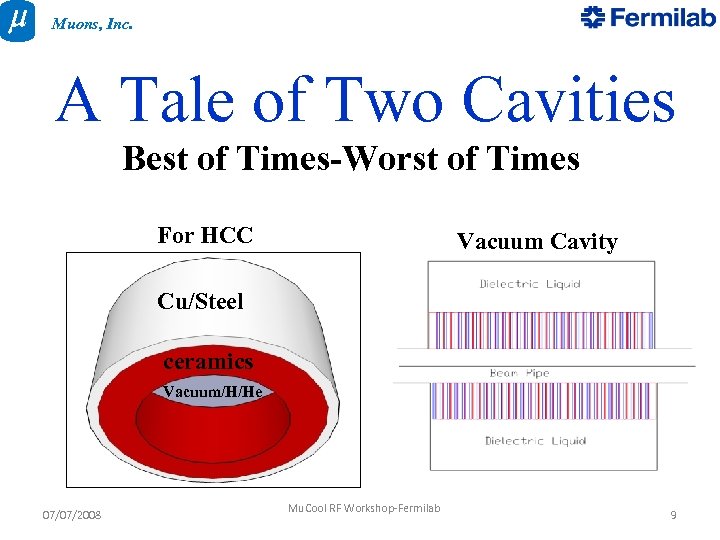
Muons, Inc. A Tale of Two Cavities Best of Times-Worst of Times For HCC Vacuum Cavity Cu/Steel ceramics Vacuum/H/He 07/07/2008 Mu. Cool RF Workshop-Fermilab 9
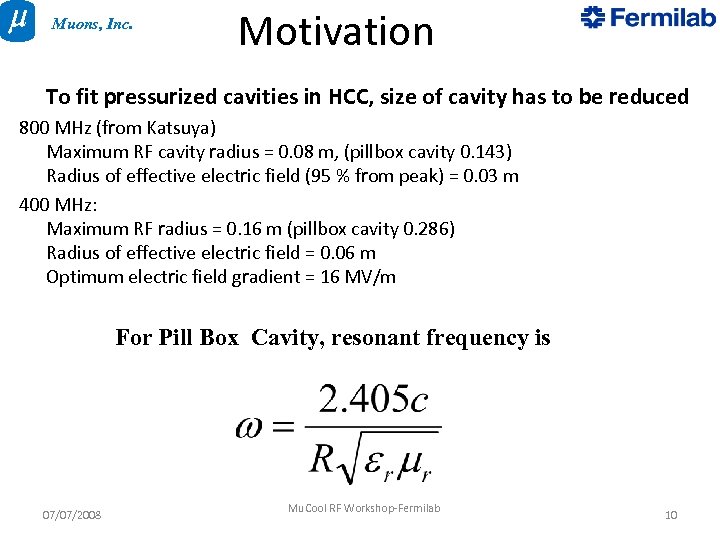
Muons, Inc. Motivation To fit pressurized cavities in HCC, size of cavity has to be reduced 800 MHz (from Katsuya) Maximum RF cavity radius = 0. 08 m, (pillbox cavity 0. 143) Radius of effective electric field (95 % from peak) = 0. 03 m 400 MHz: Maximum RF radius = 0. 16 m (pillbox cavity 0. 286) Radius of effective electric field = 0. 06 m Optimum electric field gradient = 16 MV/m For Pill Box Cavity, resonant frequency is 07/07/2008 Mu. Cool RF Workshop-Fermilab 10
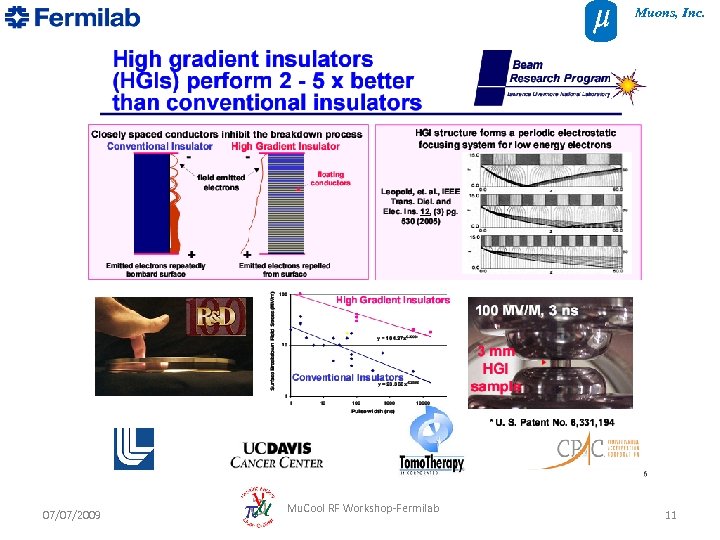
Muons, Inc. 07/07/2009 Mu. Cool RF Workshop-Fermilab 11
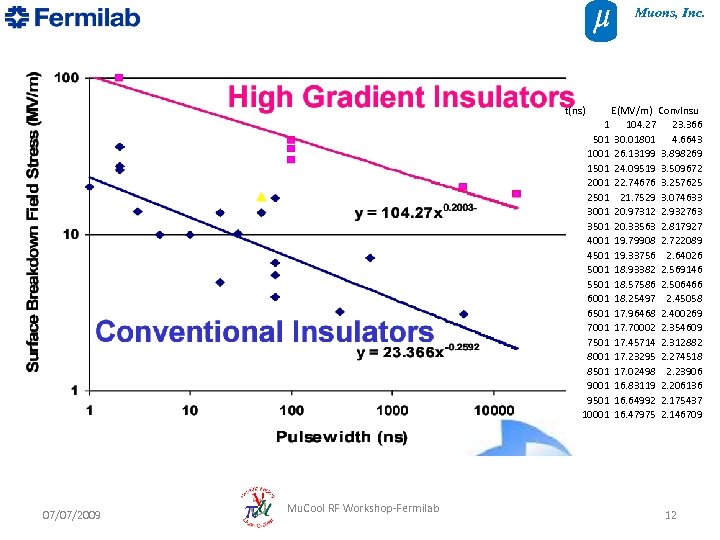
Muons, Inc. t(ns) E(MV/m) Conv. Insu 1 104. 27 23. 366 501 30. 01801 4. 6643 1001 26. 13199 3. 898269 1501 24. 09519 3. 509672 2001 22. 74676 3. 257625 2501 21. 7529 3. 074633 3001 20. 97312 2. 932763 3501 20. 33563 2. 817927 4001 19. 79908 2. 722089 4501 19. 33756 2. 64026 5001 18. 93382 2. 569146 5501 18. 57586 2. 506466 6001 18. 25497 2. 45058 6501 17. 96468 2. 400269 7001 17. 70002 2. 354609 7501 17. 45714 2. 312882 8001 17. 23295 2. 274518 8501 17. 02498 2. 23906 9001 16. 83119 2. 206136 9501 16. 64992 2. 175437 10001 16. 47975 2. 146709 07/07/2009 Mu. Cool RF Workshop-Fermilab 12
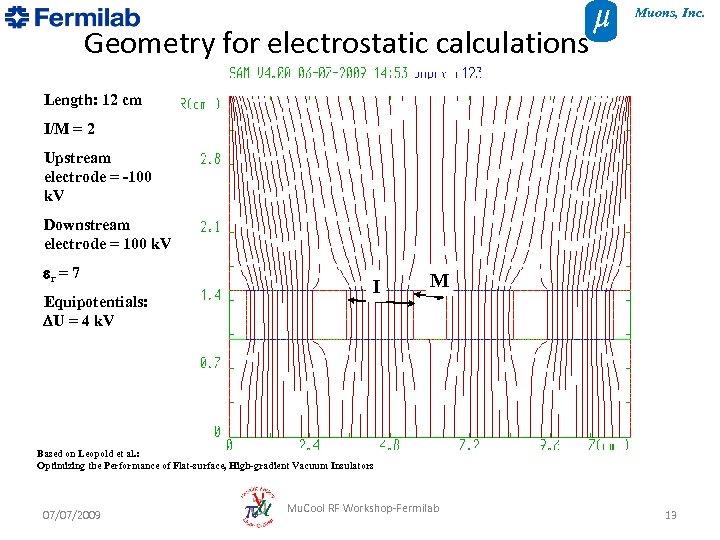
Muons, Inc. Geometry for electrostatic calculations Length: 12 cm I/M = 2 Upstream electrode = -100 k. V Downstream electrode = 100 k. V er = 7 Equipotentials: DU = 4 k. V I M Based on Leopold et al. : Optimizing the Performance of Flat-surface, High-gradient Vacuum Insulators 07/07/2009 Mu. Cool RF Workshop-Fermilab 13
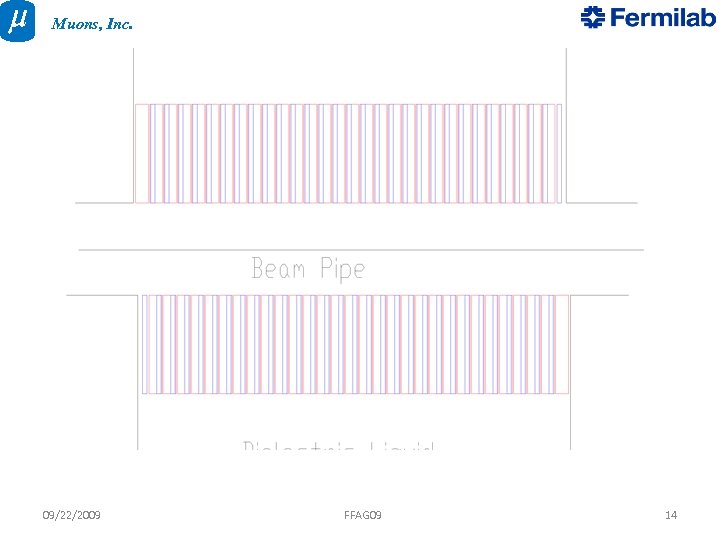
Muons, Inc. 09/22/2009 FFAG 09 14
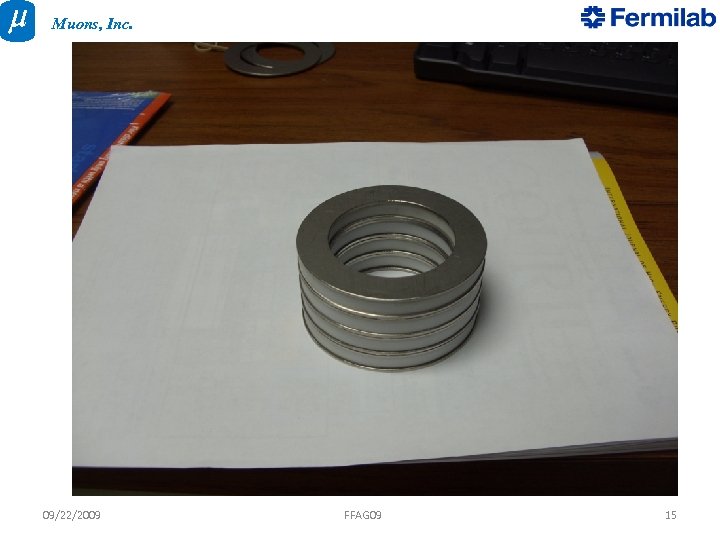
Muons, Inc. 09/22/2009 FFAG 09 15
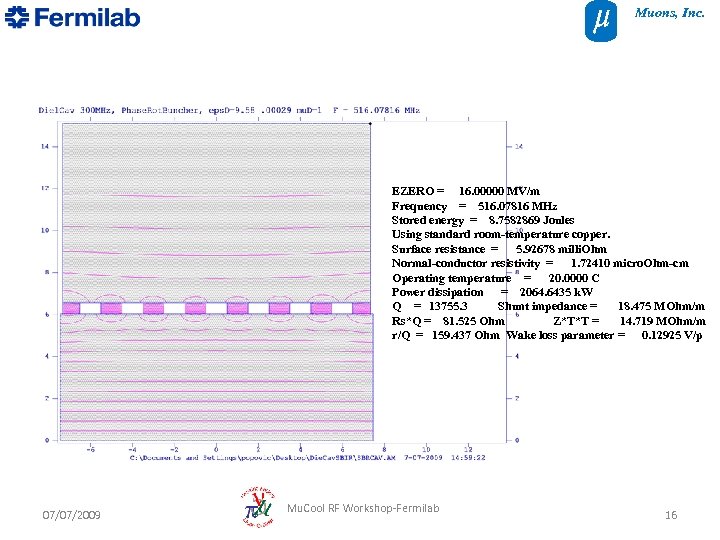
Muons, Inc. EZERO = 16. 00000 MV/m Frequency = 516. 07816 MHz Stored energy = 8. 7582869 Joules Using standard room-temperature copper. Surface resistance = 5. 92678 milli. Ohm Normal-conductor resistivity = 1. 72410 micro. Ohm-cm Operating temperature = 20. 0000 C Power dissipation = 2064. 6435 k. W Q = 13755. 3 Shunt impedance = 18. 475 MOhm/m Rs*Q = 81. 525 Ohm Z*T*T = 14. 719 MOhm/m r/Q = 159. 437 Ohm Wake loss parameter = 0. 12925 V/p 07/07/2009 Mu. Cool RF Workshop-Fermilab 16

Muons, Inc. 09/15/2009 Gamma. Project 17
Скачать презентацию Muons Inc Tunable RF Cavities Using Orthogonally Biased
33bbcad307eec60cb1171b702babe342.ppt