 Скачать презентацию Muons Inc ACCELERATORS FOR SUBCRITICAL MOLTEN-SALT REACTORS Rolland
bc462fadeabd661a32da5d41983a571e.ppt
- Количество слайдов: 57



Muons, Inc. ACCELERATORS FOR SUBCRITICAL MOLTEN-SALT REACTORS Rolland P. Johnson Muons, Inc. (http: //www. muonsinc. com/) Accelerator parameters for subcritical reactors have usually been based on using solid nuclear fuel much like that used in all operating critical reactors as well as the thorium burning accelerator-driven energy amplifier proposed by Rubbia et al. An attractive alternative reactor design that used molten salt fuel was experimentally studied at ORNL in the 1960 s, where a critical molten salt reactor was successfully operated using enriched U 235 or U 233 tetrafluoride fuels. These experiments give confidence that an accelerator-driven subcritical molten salt reactor will work better than conventional reactors, having better efficiency due to their higher operating temperature, having the inherent safety of subcritical operation, and having constant purging of volatile radioactive elements to eliminate their accumulation and potential accidental release in dangerous amounts. Moreover, the requirements to drive a molten salt reactor can be considerably relaxed compared to a solid fuel reactor, especially regarding accelerator reliability and spallation neutron targetry, to the point that much of the required technology exists today. It is proposed that Project-X be developed into a prototype commercial machine to produce energy for the world by, for example, burning thorium in India and nuclear waste from conventional reactors in the USA. Rol - Aug. 3, 2011 Fermilab Colloquium 1
Muons, Inc. Work supported by ATI: http: //acceltech. us With a lot of help from Charlie Bowman of ADNA Corp. And Wikipedia Proceedings of AHIPA 09 are on Google Books – plug for Raja and Shekhar Rol - Aug. 3, 2011 Fermilab Colloquium 2
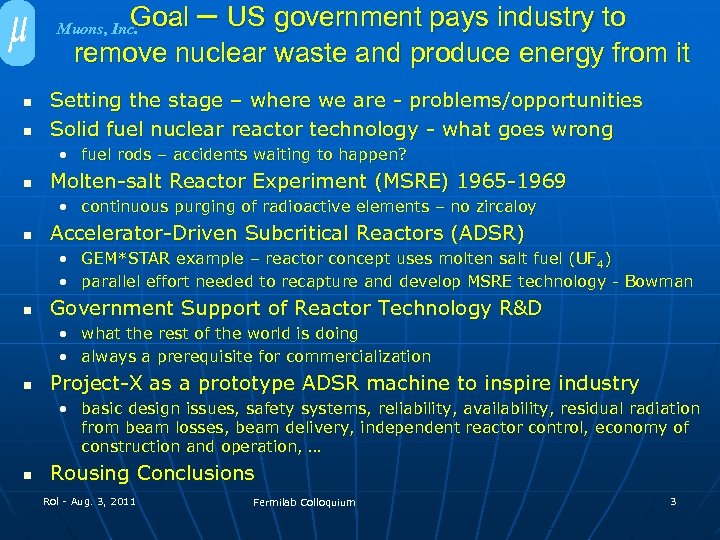
Goal – US government pays industry to remove nuclear waste and produce energy from it Muons, Inc. n n Setting the stage – where we are - problems/opportunities Solid fuel nuclear reactor technology - what goes wrong • fuel rods – accidents waiting to happen? n Molten-salt Reactor Experiment (MSRE) 1965 -1969 • continuous purging of radioactive elements – no zircaloy n Accelerator-Driven Subcritical Reactors (ADSR) • GEM*STAR example – reactor concept uses molten salt fuel (UF 4) • parallel effort needed to recapture and develop MSRE technology - Bowman n Government Support of Reactor Technology R&D • what the rest of the world is doing • always a prerequisite for commercialization n Project-X as a prototype ADSR machine to inspire industry • basic design issues, safety systems, reliability, availability, residual radiation from beam losses, beam delivery, independent reactor control, economy of construction and operation, … n Rousing Conclusions Rol - Aug. 3, 2011 Fermilab Colloquium 3
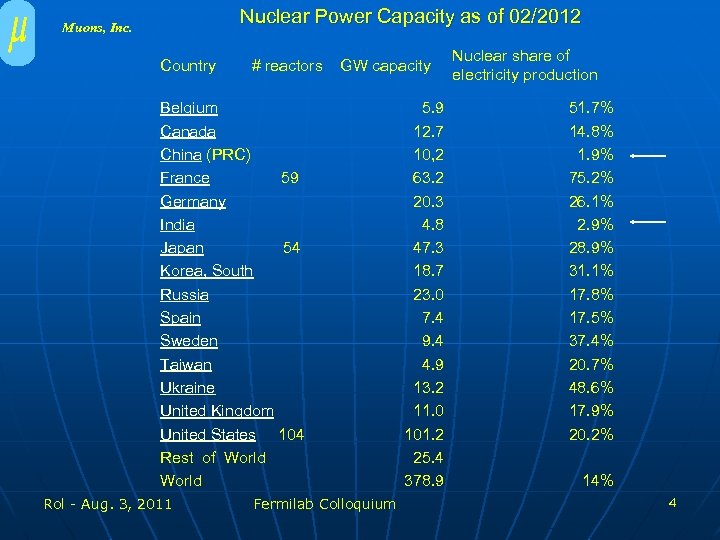
Nuclear Power Capacity as of 02/2012 Muons, Inc. Country # reactors GW capacity Belgium Canada China (PRC) France 59 Germany India Japan 54 Korea, South Russia Spain Sweden Taiwan Ukraine United Kingdom United States 104 Rest of World Rol - Aug. 3, 2011 Fermilab Colloquium 5. 9 12. 7 10, 2 63. 2 20. 3 4. 8 47. 3 18. 7 23. 0 7. 4 9. 4 4. 9 13. 2 11. 0 101. 2 25. 4 378. 9 Nuclear share of electricity production 51. 7% 14. 8% 1. 9% 75. 2% 26. 1% 2. 9% 28. 9% 31. 1% 17. 8% 17. 5% 37. 4% 20. 7% 48. 6% 17. 9% 20. 2% 14% 4
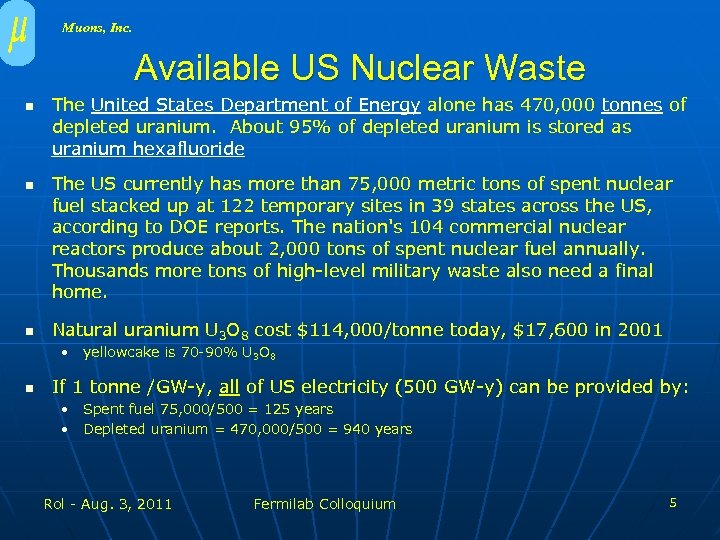
Muons, Inc. Available US Nuclear Waste n n n The United States Department of Energy alone has 470, 000 tonnes of depleted uranium. About 95% of depleted uranium is stored as uranium hexafluoride The US currently has more than 75, 000 metric tons of spent nuclear fuel stacked up at 122 temporary sites in 39 states across the US, according to DOE reports. The nation's 104 commercial nuclear reactors produce about 2, 000 tons of spent nuclear fuel annually. Thousands more tons of high-level military waste also need a final home. Natural uranium U 3 O 8 cost $114, 000/tonne today, $17, 600 in 2001 • n yellowcake is 70 -90% U 3 O 8 If 1 tonne /GW-y, all of US electricity (500 GW-y) can be provided by: • Spent fuel 75, 000/500 = 125 years • Depleted uranium = 470, 000/500 = 940 years Rol - Aug. 3, 2011 Fermilab Colloquium 5
Carlo Rubbia Rol - Aug. 3, 2011 Fermilab Colloquium 6
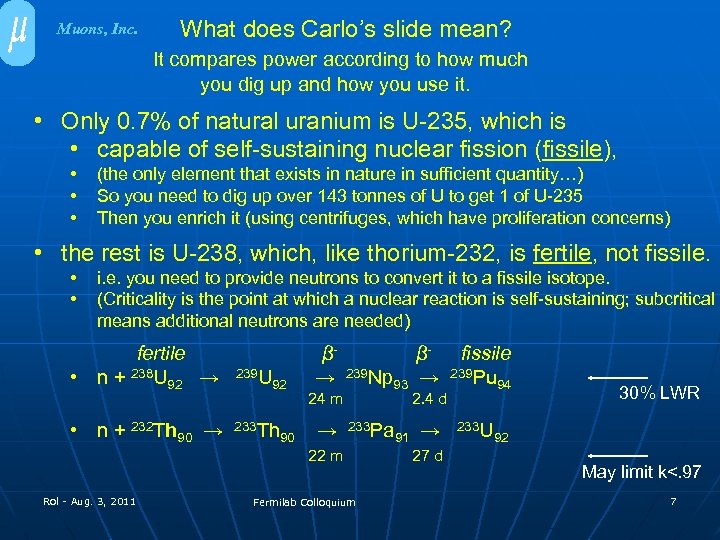
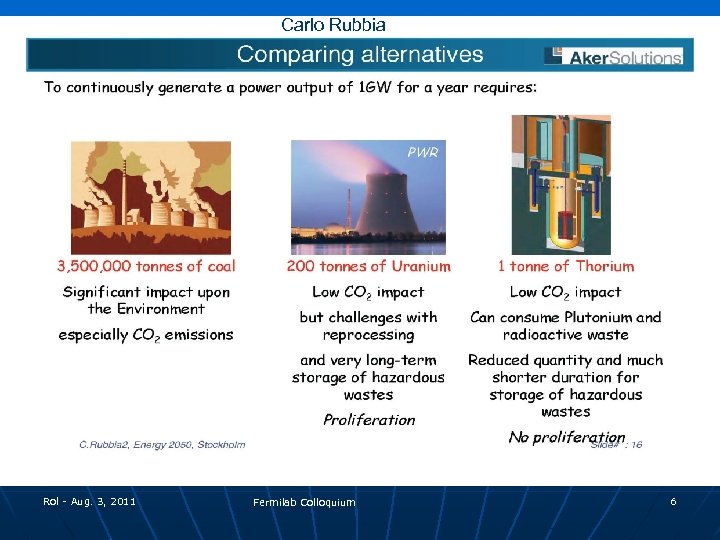
Muons, Inc. What does Carlo’s slide mean? It compares power according to how much you dig up and how you use it. • Only 0. 7% of natural uranium is U-235, which is • capable of self-sustaining nuclear fission (fissile), • • • (the only element that exists in nature in sufficient quantity…) So you need to dig up over 143 tonnes of U to get 1 of U-235 Then you enrich it (using centrifuges, which have proliferation concerns) • the rest is U-238, which, like thorium-232, is fertile, not fissile. • • i. e. you need to provide neutrons to convert it to a fissile isotope. (Criticality is the point at which a nuclear reaction is self-sustaining; subcritical means additional neutrons are needed) fertile β β- fissile • n + 238 U 92 → 239 U 92 → 239 Np 93 → 239 Pu 94 24 m • n + 232 Th 90 → 233 Th 90 → 233 Pa 91 → 233 U 92 22 m Rol - Aug. 3, 2011 30% LWR 2. 4 d 27 d May limit k<. 97 7 Fermilab Colloquium
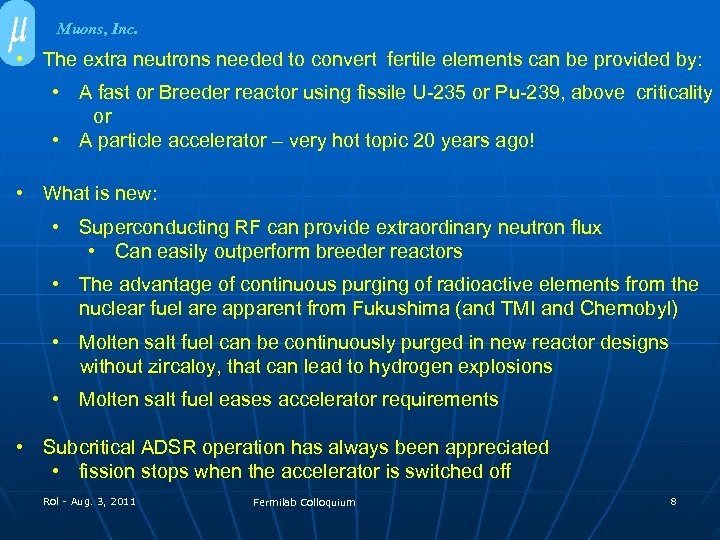
Muons, Inc. • The extra neutrons needed to convert fertile elements can be provided by: • A fast or Breeder reactor using fissile U-235 or Pu-239, above criticality or • A particle accelerator – very hot topic 20 years ago! • What is new: • Superconducting RF can provide extraordinary neutron flux • Can easily outperform breeder reactors • The advantage of continuous purging of radioactive elements from the nuclear fuel are apparent from Fukushima (and TMI and Chernobyl) • Molten salt fuel can be continuously purged in new reactor designs without zircaloy, that can lead to hydrogen explosions • Molten salt fuel eases accelerator requirements • Subcritical ADSR operation has always been appreciated • fission stops when the accelerator is switched off Rol - Aug. 3, 2011 8 Fermilab Colloquium
Muons, Inc. CONCEPT: SRF Linear Accelerators for Transformational Energy Technologies ADSR nuclear power stations using molten salt fuel, operating • in an inherently safe region below criticality, • without accidental releases of radioactive elements, • without generation of greenhouse gases, • producing minimal nuclear waste or • byproducts that are useful to rogue nations or terrorists, • fueled by and eliminating existing stockpiles of • LWR nuclear waste and depleted uranium • and/or efficiently using abundant natural thorium or uranium, • which does not need enrichment. Accelerator-driven Waste-transmutation Power-stations ? (AWPs) Rol - Aug. 3, 2011 Fermilab Colloquium 9
Muons, Inc. Three Mile Island was a lesson unlearned; Fukushima has provided perhaps several more • At Fukushima, perhaps 6 separate cases of things going wrong: • 3 reactor explosions, (spreading uranium oxide fuel components over at least a mile), • fuel in the bottom of 2 of these reactors then melted through the bottom of their pressure vessel. • At least one storage pond went dry enough to expose used fuel rods so they got hot enough to release radioactivity. • (17, 600 tons stored in ponds there) These events released enough radioactive material for class 7 status, with almost 10% of the fallout caused by Chernobyl, but without a criticality accident. Rol - Aug. 3, 2011 Fermilab Colloquium 10
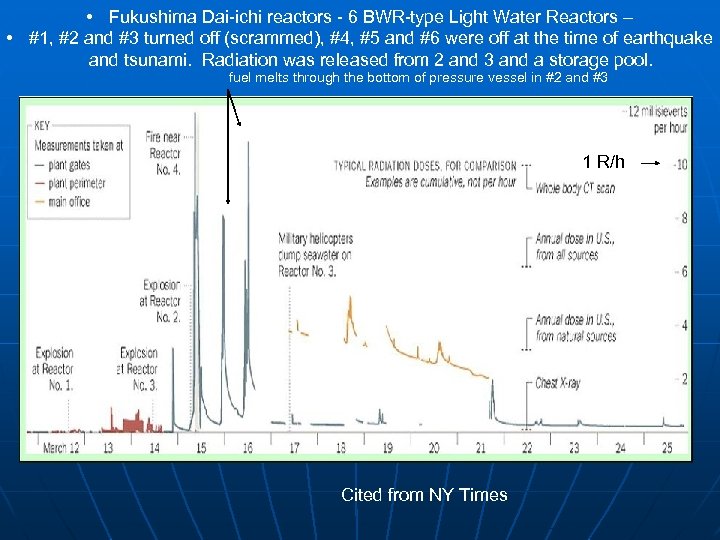
• Fukushima Dai-ichi reactors - 6 BWR-type Light Water Reactors – • #1, #2 and #3 turned off (scrammed), #4, #5 and #6 were off at the time of earthquake and tsunami. Radiation was released from 2 and 3 and a storage pool. fuel melts through the bottom of pressure vessel in #2 and #3 1 R/h Cited from NY Times
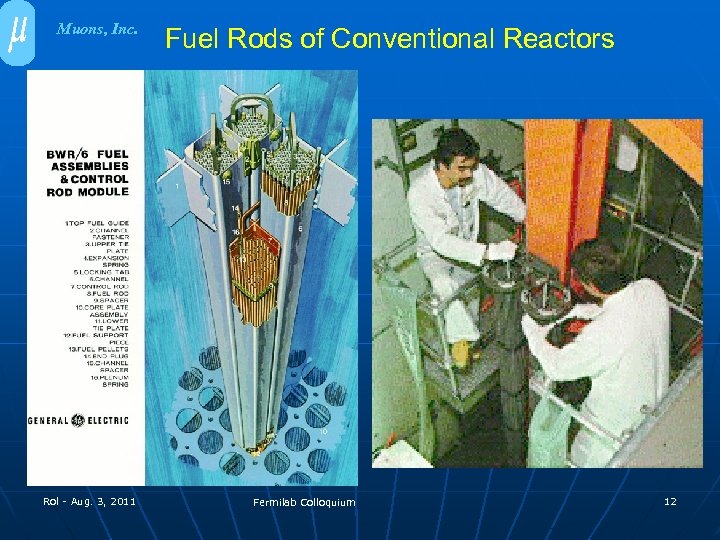
Muons, Inc. Fuel Rods of Conventional Reactors Rol - Aug. 3, 2011 Fermilab Colloquium 12
Muons, Inc. Fuel Rods are an intrinsic problem • Fuel rods are made of many small cylinders of enriched UO 2 or mixed oxide fuel (MOX) enclosed in a sheath of zirconium alloy. • (a plant in France processes spent fuel rods to extract Pu 239, which is mixed with UO 2 to make MOX. Remains are returned to country of origin. ) • During operation, many radioactive elements are created that are contained by the zircaloy sheath • If, during operation or storage, the zircaloy casing is damaged, these radioactive elements can be released and among other things scare the heck out of a lot of people. (fall-out near Fukushima may be 10% of Chernobyl). • Hot zircaloy itself is a hazard – it can oxidize in steam to release hot H 2 in large quantities, which can explode when it rises to meet air. • • • Zr + 2 H 2 O → Zr. O 2 + 2 H 2 Exothermic rate increases exponentially with temperature Rol - Aug. 3, 2011 Fermilab Colloquium 13
Muons, Inc. Fuel Rods are an intrinsic problem • There are lots of layers of protection that have been invented and used to mitigate the problems that follow from solid fuel rod technology. • See latest iteration on next slide. • Is there an intrinsic safety solution? • Like the manhole cover? Trap door →safety chain →procedures →round Rol - Aug. 3, 2011 Fermilab Colloquium 14
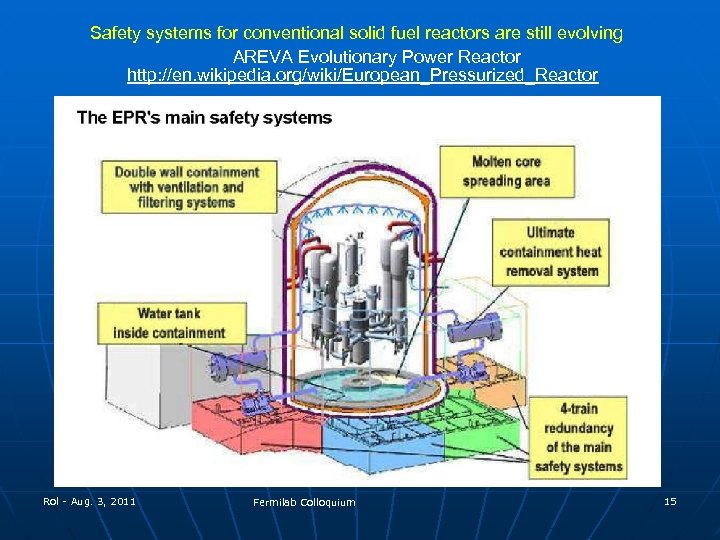
Safety systems for conventional solid fuel reactors are still evolving AREVA Evolutionary Power Reactor http: //en. wikipedia. org/wiki/European_Pressurized_Reactor Rol - Aug. 3, 2011 Fermilab Colloquium 15
Also called the energy amplifier EA Rol - Aug. 3, 2011 Fermilab Colloquium 16
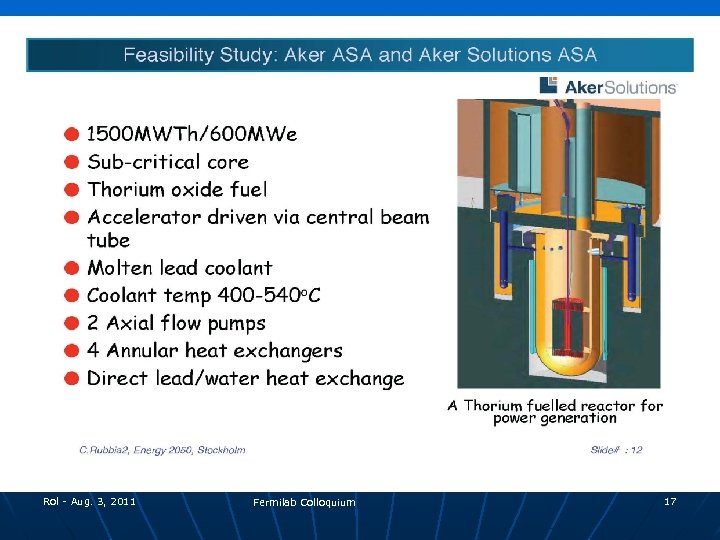
Rol - Aug. 3, 2011 Fermilab Colloquium 17
• An intrinsic safety problem for conventional reactors is enclosed solid fuel. • a natural solution is to use molten-salt fuel • that is also well suited to accelerator -driven subcritical reactors. • A major difficulty is fatigue of UO 2 fuel in rods caused by accelerator trips – no such problem for molten salt fuel • The technology of molten-salt fuel was developed in the 1960 s in the Molten-Salt Reactor Experiment (MSRE) at ORNL. • Use of molten salt fuel was later abandoned because the technique did not produce enough Pu-239 for bombs. Rol - Aug. 3, 2011 Fermilab Colloquium 18
from Wikipedia on Molten-Salt Reactor Experiment (google MSRE) The (MSRE) was an experimental molten-salt reactor at ORNL researching this technology through the 1960 s; it went critical in 1965 and was operated until 1969. The MSRE was a 7. 4 MWth test reactor simulating the neutronic "kernel" of an inherently safe epithermal thorium breeder reactor. It used three fuels: plutonium-239, uranium-235 and uranium-233. The last, 233 UF 4 was the result of breeding from thorium. As an engineering test, the breeding blanket of thorium salt was omitted in favor of neutron measurements. The heat from the reactor core was shed via a cooling system using air blowers and radiators. The MSRE's piping, core vat and structural components were made from Hastelloy-N and its moderator was a pyrolytic graphite core. The fuel for the MSRE was Li. F-Be. F 2 -Zr. F 4 -UF 4 (65 -305 -0. 1), the graphite core moderated it, and its secondary coolant was FLi. Be (2 Li. F-Be. F 2), it operated as hot as 650 °C and operated for the equivalent of about 1. 5 years at full power. The result promised to be a simple, reliable reactor. The purpose of the Molten-Salt Reactor Experiment was to demonstrate that some of the key features of the proposed molten-salt power reactors could be embodied in a practical reactor that could be operated safely and reliably and be maintained without excessive difficulty. For simplicity, it was to be a fairly small, one-fluid (i. e. non-breeding) reactor operating at 10 MW(t) or less, with heat rejection to the air via a secondary (fuel-free) salt. Rol - Aug. 3, 2011 Fermilab Colloquium 19
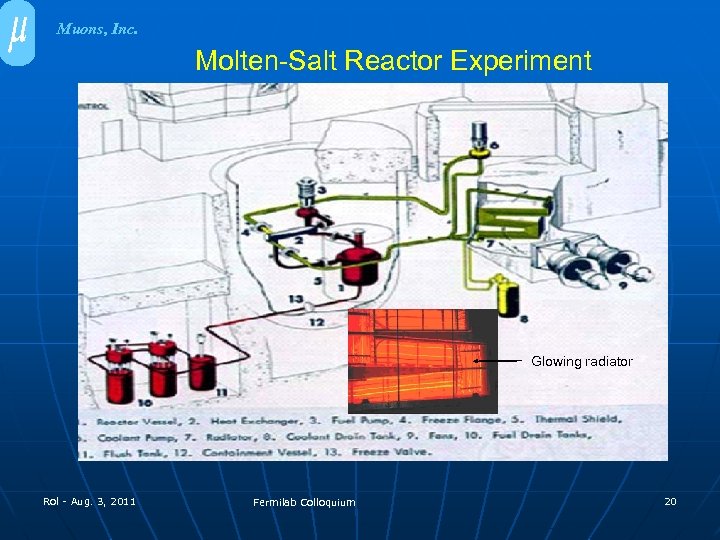
Muons, Inc. Molten-Salt Reactor Experiment Glowing radiator Rol - Aug. 3, 2011 Fermilab Colloquium 20
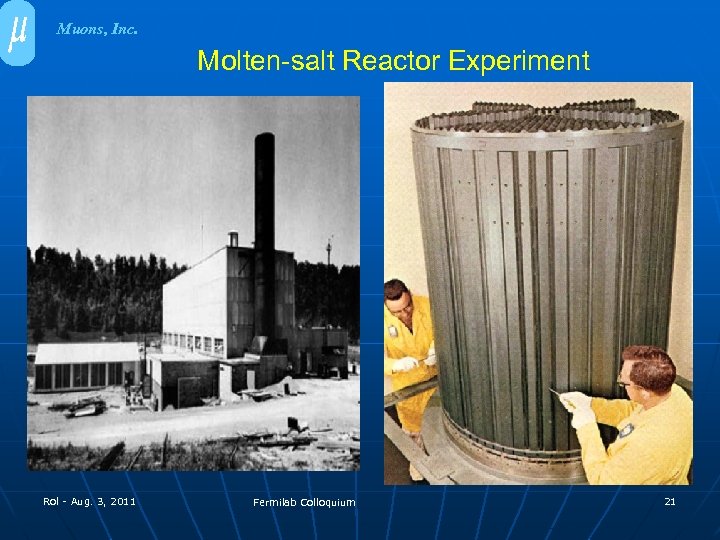
Muons, Inc. Molten-salt Reactor Experiment Rol - Aug. 3, 2011 Fermilab Colloquium 21
1969 MSRE Report Abstract “The MSRE is an 8 -MW(th) reactor in which molten fluoride salt at 1200°F circulates through a core of graphite bars. Its purpose was to demonstrate the practicality of the key features of molten-salt power reactors. Operation with 235 U (33% enrichment) in the fuel salt began in June 1965, and by March 1968 nuclear operation amounted to 9, 000 equivalent full-power hours. The goal of demonstrating reliability had been attained - over the last 15 months of 235 U operation the reactor had been critical 80% of the time. At the end of a 6 -month run which climaxed this demonstration, the reactor was shutdown and the 0. 9 mole% uranium in the fuel was stripped very efficiently in an on-site fluorination facility. Uranium -233 was then added to the carrier salt, making the MSRE the world's first reactor to be fueled with this fissile material. Nuclear operation was resumed in October 1968, and over 2, 500 equivalent full-power hours have now been produced with 233 U. The MSRE has shown that salt handling in an operating reactor is quite practical, the salt chemistry is well behaved, there is practically no corrosion, the nuclear characteristics are very close to predictions, and the system is dynamically stable. Containment of fission products has been excellent and maintenance of radioactive components has been accomplished without unreasonable delay and with very little radiation exposure. The successful operation of the MSRE is an achievement that should strengthen confidence in the practicality of the molten-salt reactor concept. ” NOW FAST FORWARD 40 YEARS Rol - Aug. 3, 2011 Fermilab Colloquium 22
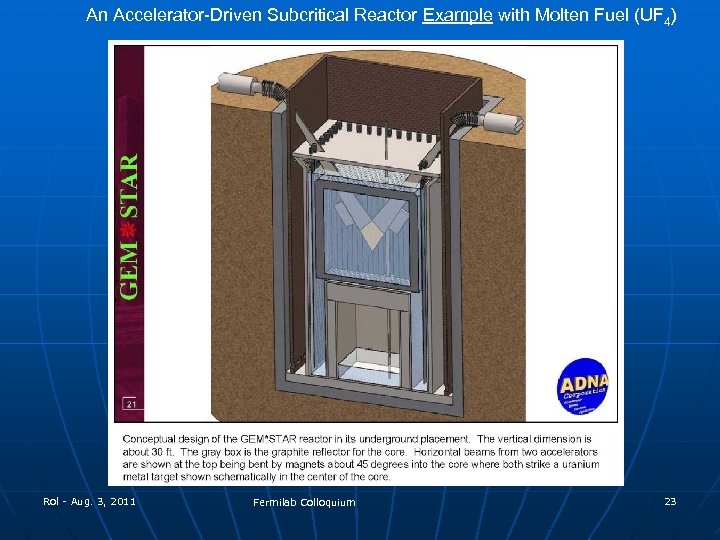
An Accelerator-Driven Subcritical Reactor Example with Molten Fuel (UF 4) Rol - Aug. 3, 2011 Fermilab Colloquium 23
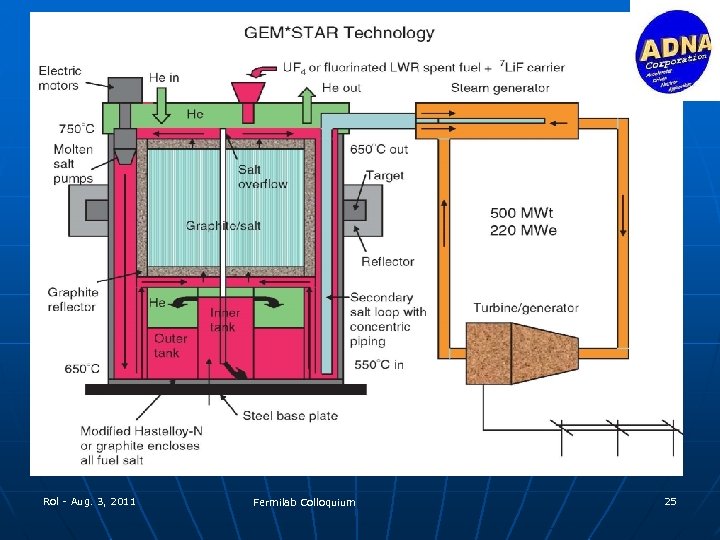
Muons, Inc. GEM*STAR ADSR Molten-Salt Example • GEM*STAR is shown schematically on the next slide. • Charles D. Bowman, et al. GEM*STAR: Handbook of Nuclear Engineering, • The graphite core shown in gray surrounded by a reflector. • The molten salt fuel takes up about 7% of the core volume and it is shown in red outside of the core. • The fuel flows upward to a free surface above the core and over to the sides where it is pumped down as shown on the left to the bottom of the unit. It turns upward and then horizontally and reenters the core through apertures in the bottom reflector. • Heat is removed by a secondary (non-fissile)salt of lower melting point as shown on the right. (A reservoir can be added for reliability) • The secondary salt flows downward on the inside of an array of pairs of concentric tubes, turns the corner at the bottom and flows upward through the outer tube with heat flow through the outer tube wall from the fuel salt to the secondary salt. A secondary salt reservoir is possible. • The secondary salt then flows through a steam generator. Rol - Aug. 3, 2011 Fermilab Colloquium 24
Rol - Aug. 3, 2011 Fermilab Colloquium 25
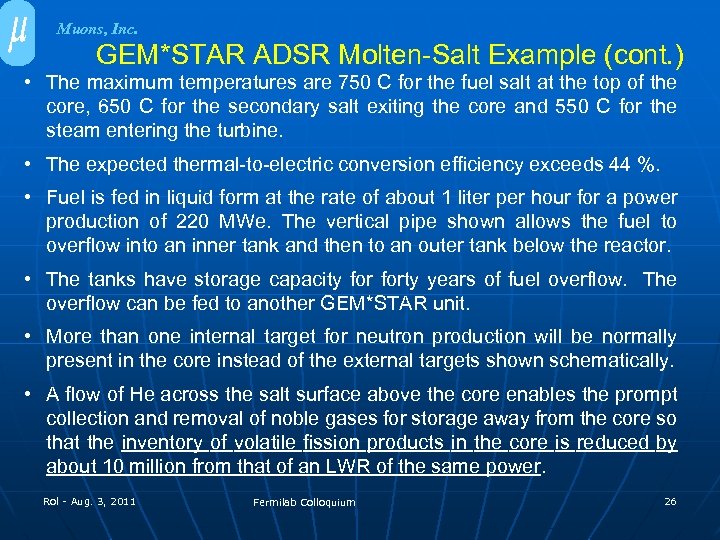
Muons, Inc. GEM*STAR ADSR Molten-Salt Example (cont. ) • The maximum temperatures are 750 C for the fuel salt at the top of the core, 650 C for the secondary salt exiting the core and 550 C for the steam entering the turbine. • The expected thermal-to-electric conversion efficiency exceeds 44 %. • Fuel is fed in liquid form at the rate of about 1 liter per hour for a power production of 220 MWe. The vertical pipe shown allows the fuel to overflow into an inner tank and then to an outer tank below the reactor. • The tanks have storage capacity forty years of fuel overflow. The overflow can be fed to another GEM*STAR unit. • More than one internal target for neutron production will be normally present in the core instead of the external targets shown schematically. • A flow of He across the salt surface above the core enables the prompt collection and removal of noble gases for storage away from the core so that the inventory of volatile fission products in the core is reduced by about 10 million from that of an LWR of the same power. Rol - Aug. 3, 2011 Fermilab Colloquium 26
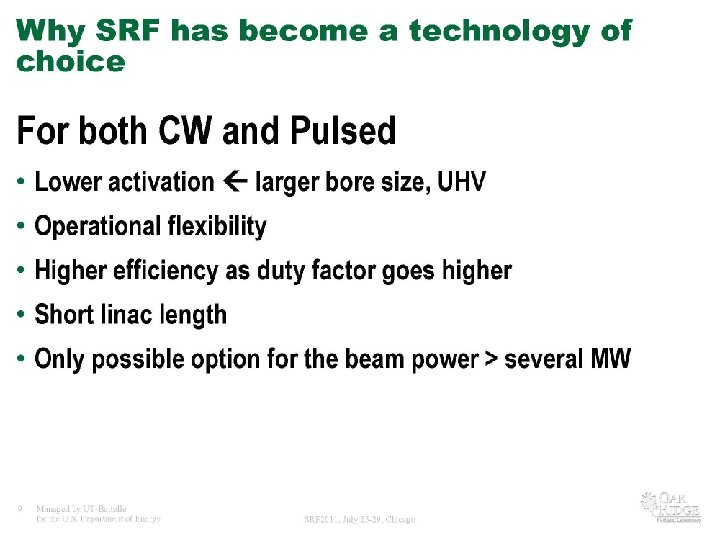
Muons, Inc. Status of Superconducting RF • Discussed at SRF Workshop last week at SRF 11. • http: //conferences. fnal. gov/srf 2011/ • Many talks and posters, some of which I will now show Rol - Aug. 3, 2011 Fermilab Colloquium 27
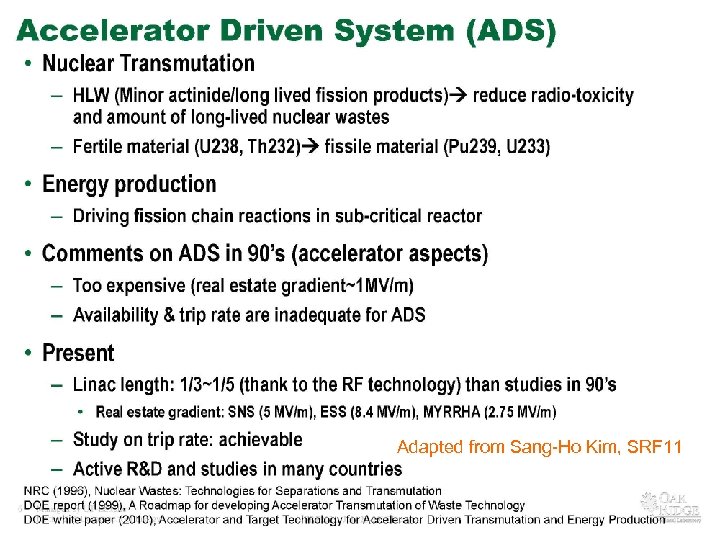
Adapted from Sang-Ho Kim, SRF 11 Rol - Aug. 3, 2011 Fermilab Colloquium 28
Rol - Aug. 3, 2011 Fermilab Colloquium 29
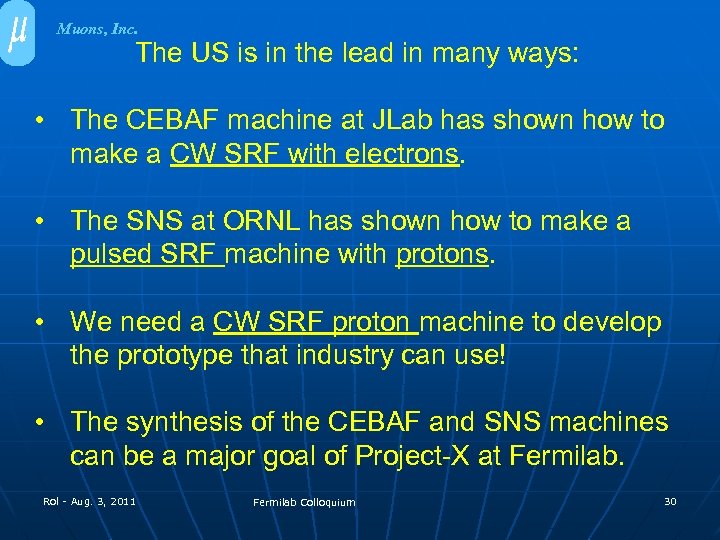
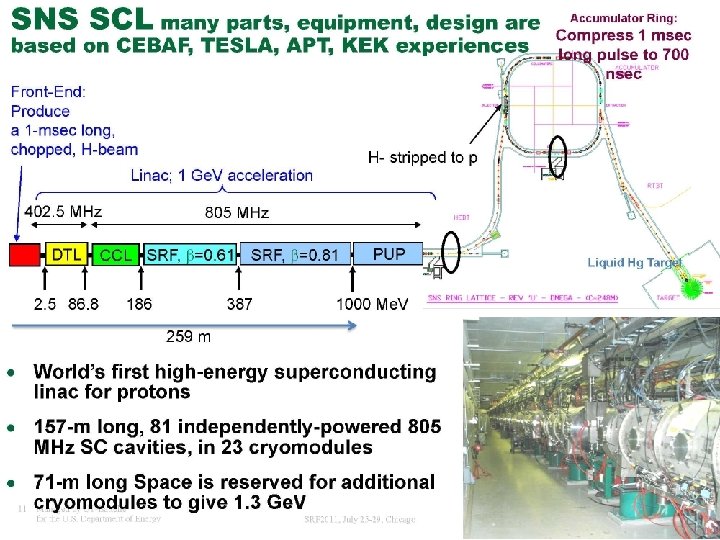
Muons, Inc. The US is in the lead in many ways: • The CEBAF machine at JLab has shown how to make a CW SRF with electrons. • The SNS at ORNL has shown how to make a pulsed SRF machine with protons. • We need a CW SRF proton machine to develop the prototype that industry can use! • The synthesis of the CEBAF and SNS machines can be a major goal of Project-X at Fermilab. Rol - Aug. 3, 2011 Fermilab Colloquium 30
Rol - Aug. 3, 2011 Fermilab Colloquium 31
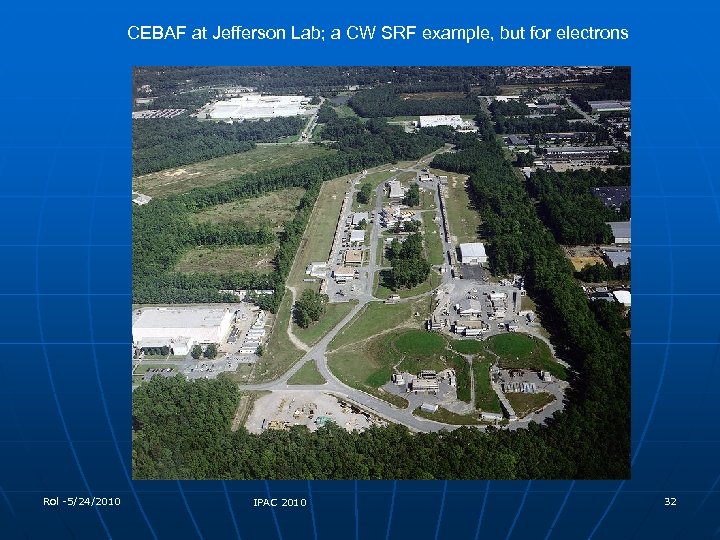
CEBAF at Jefferson Lab; a CW SRF example, but for electrons Rol -5/24/2010 IPAC 2010 32
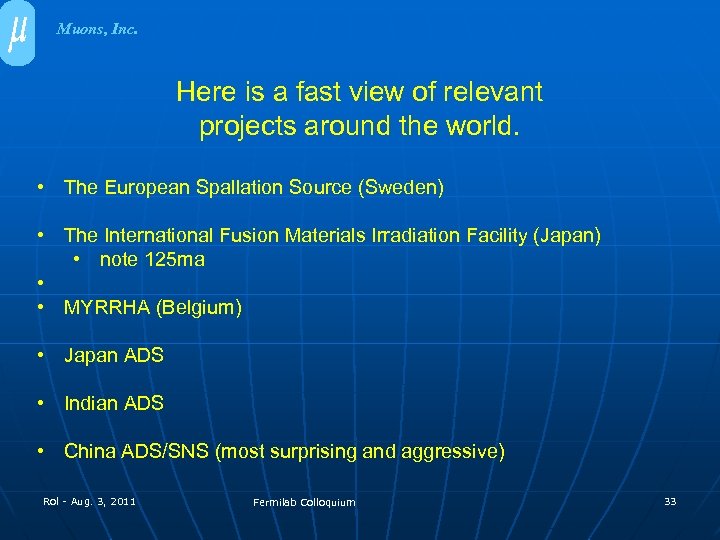
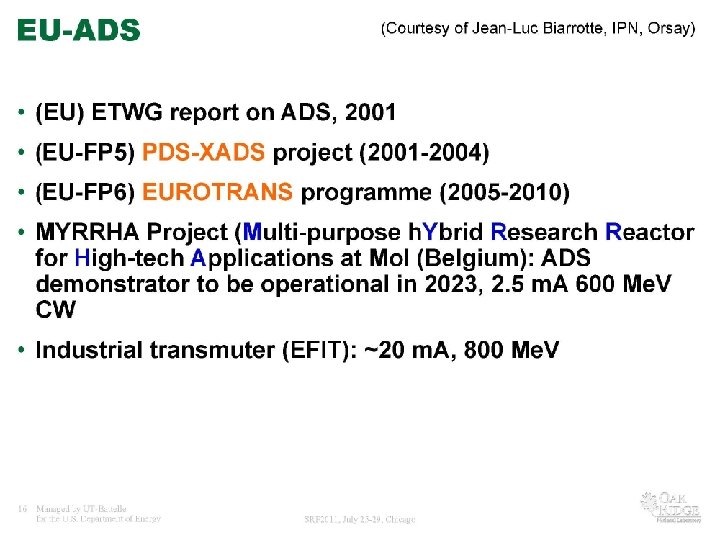
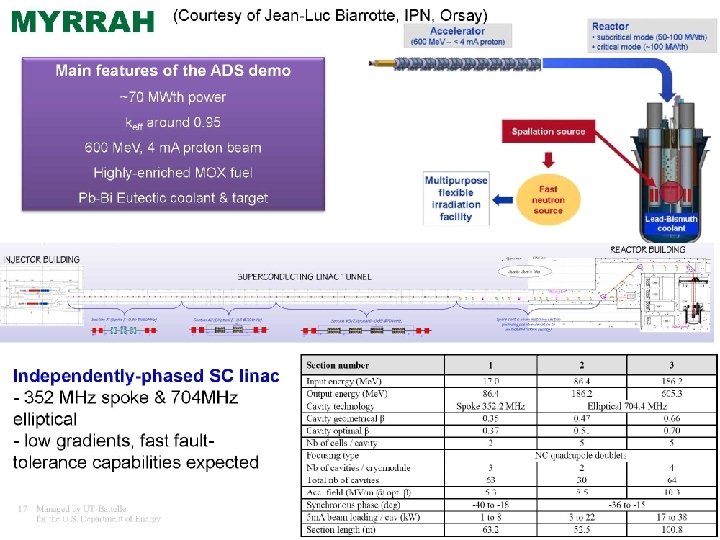
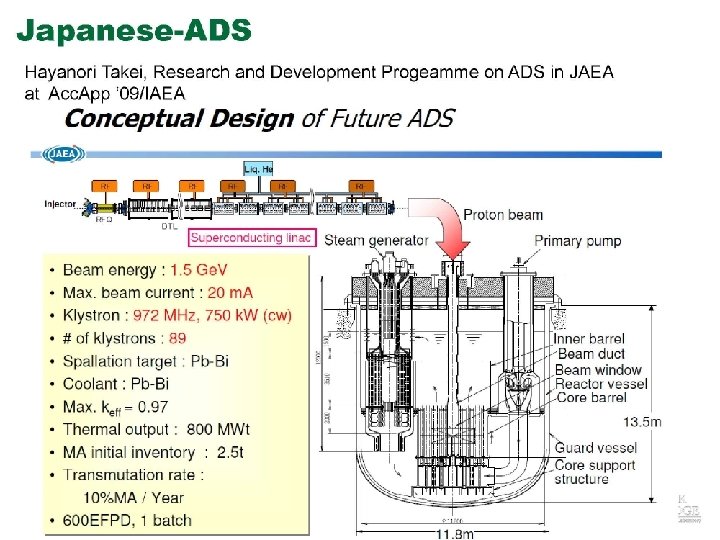
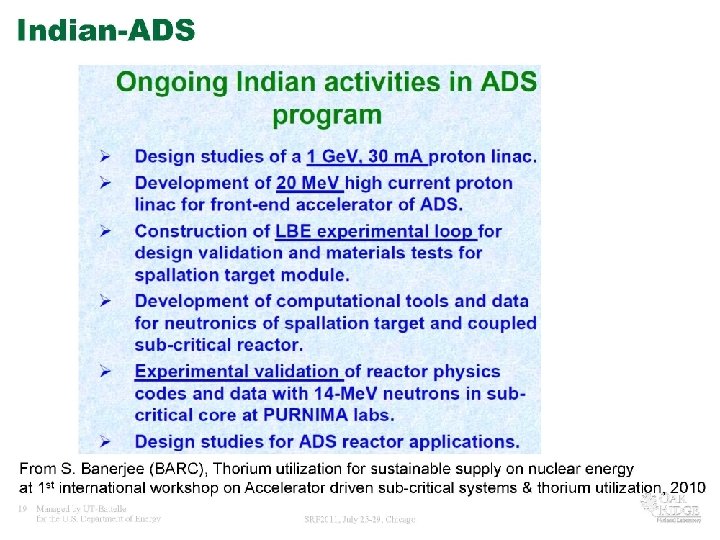
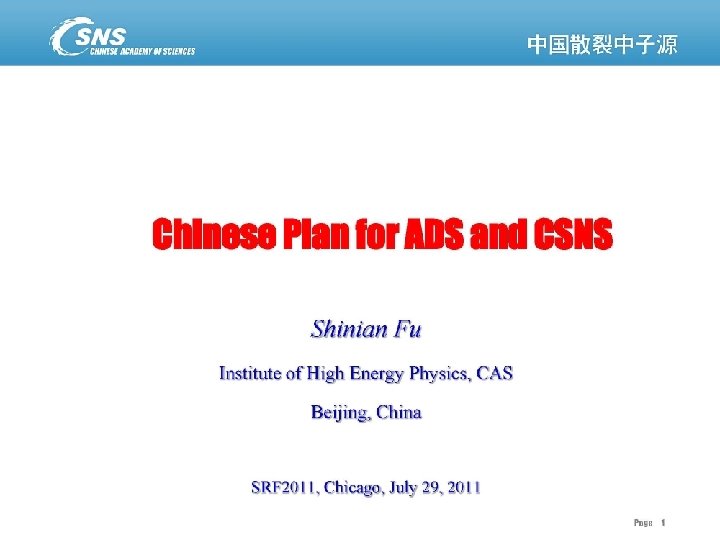
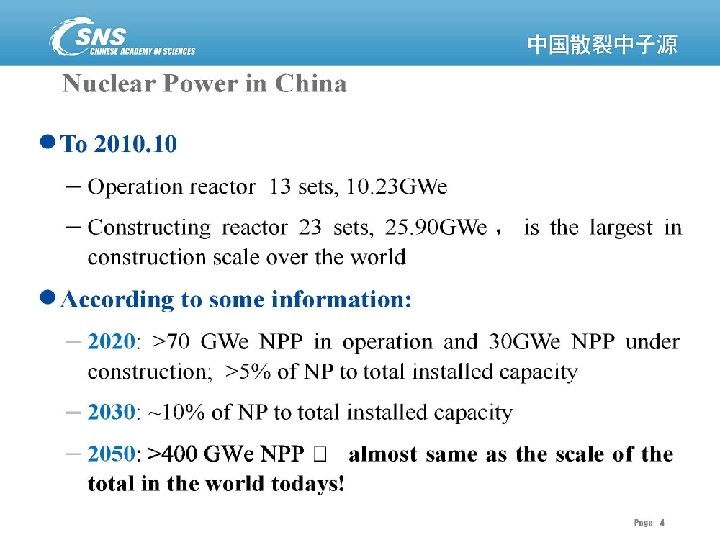
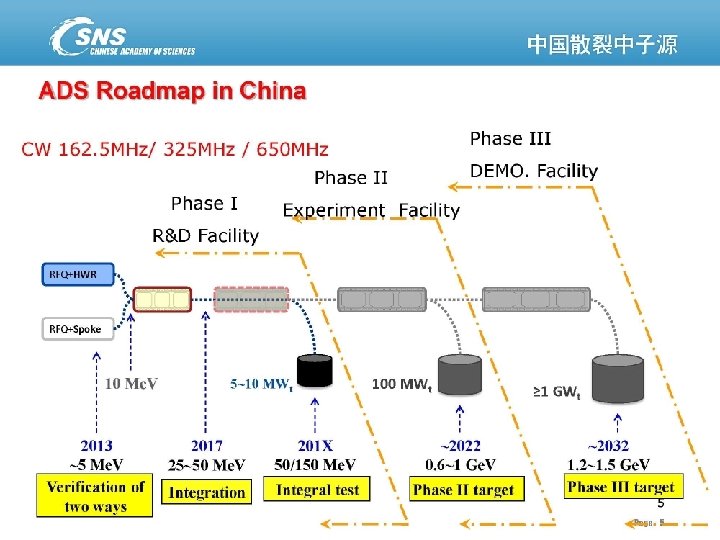
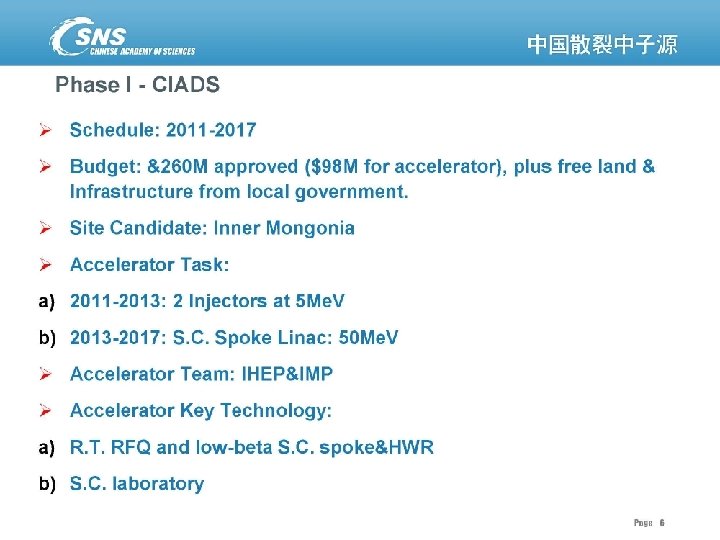
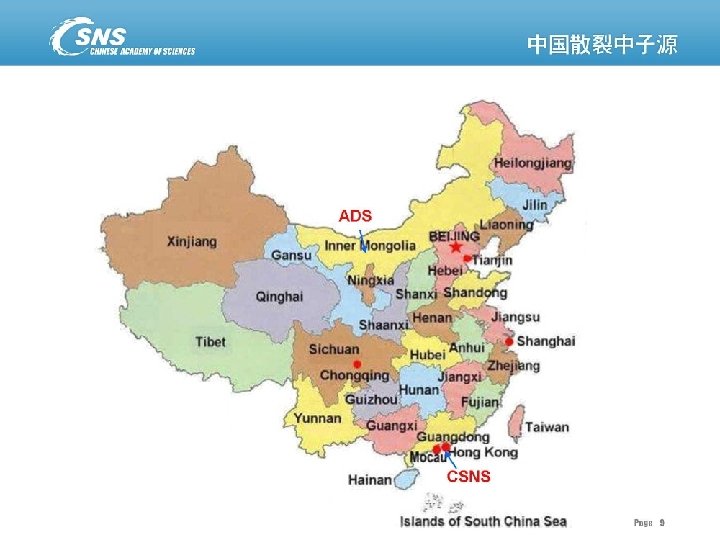
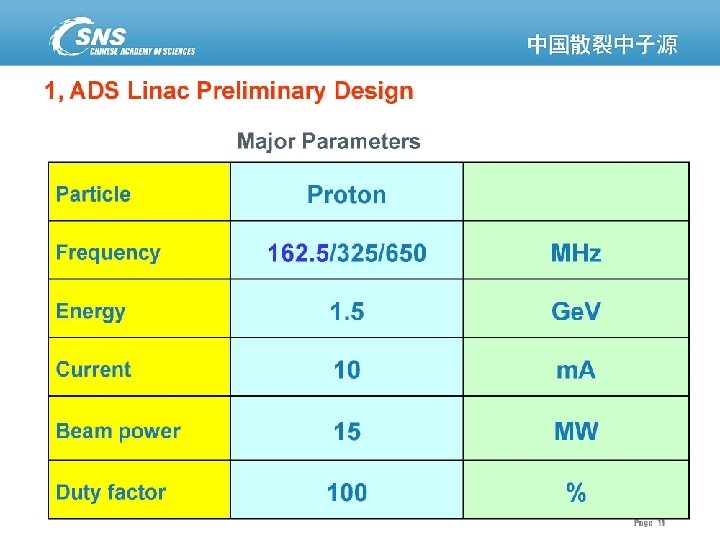
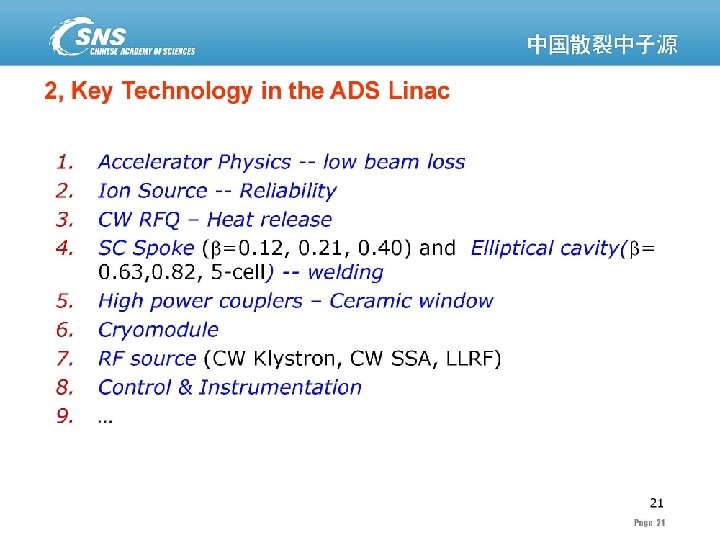
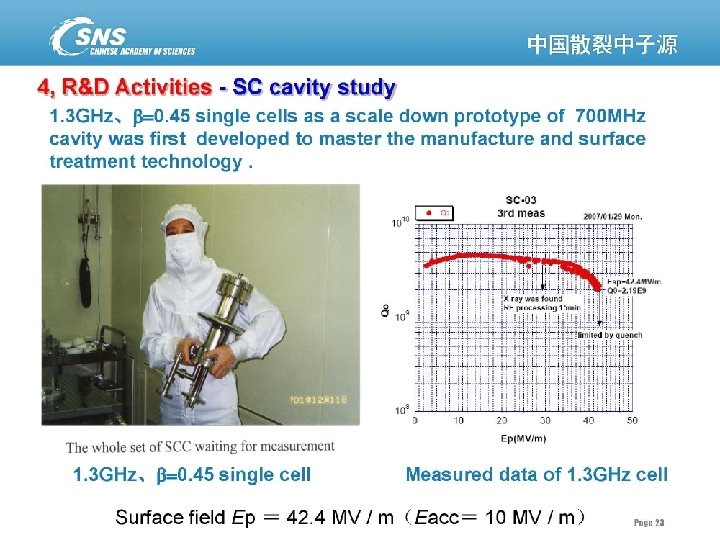
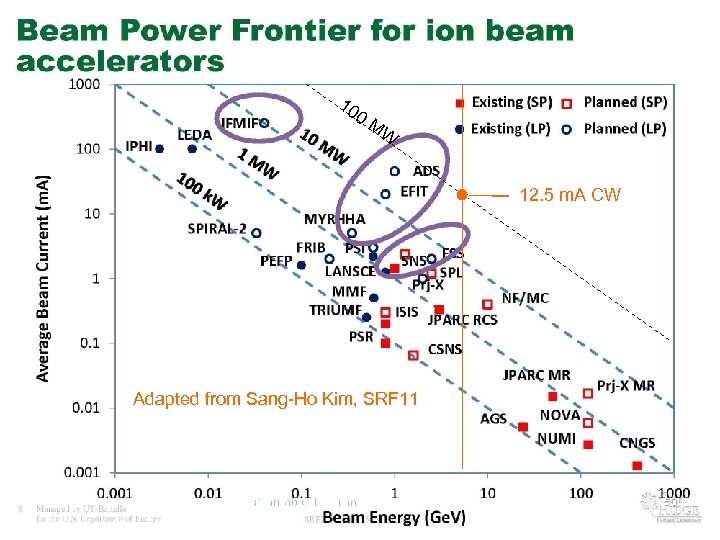
Muons, Inc. Here is a fast view of relevant projects around the world. • The European Spallation Source (Sweden) • The International Fusion Materials Irradiation Facility (Japan) • note 125 ma • • MYRRHA (Belgium) • Japan ADS • Indian ADS • China ADS/SNS (most surprising and aggressive) Rol - Aug. 3, 2011 Fermilab Colloquium 33
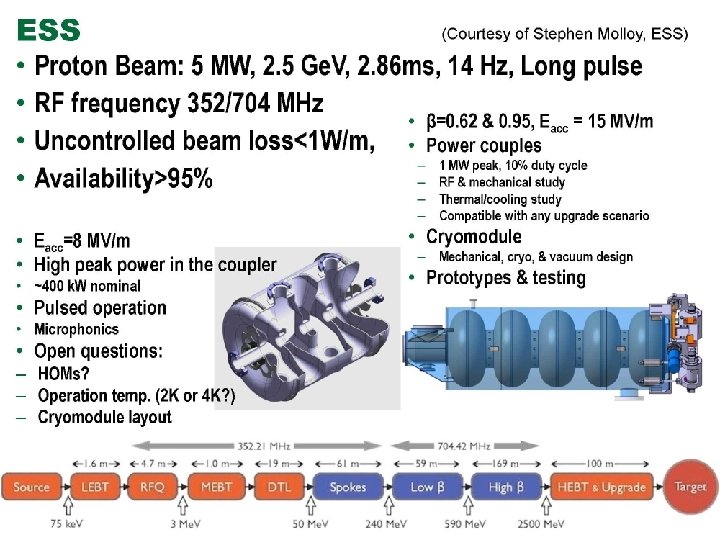
Rol - Aug. 3, 2011 Fermilab Colloquium 34
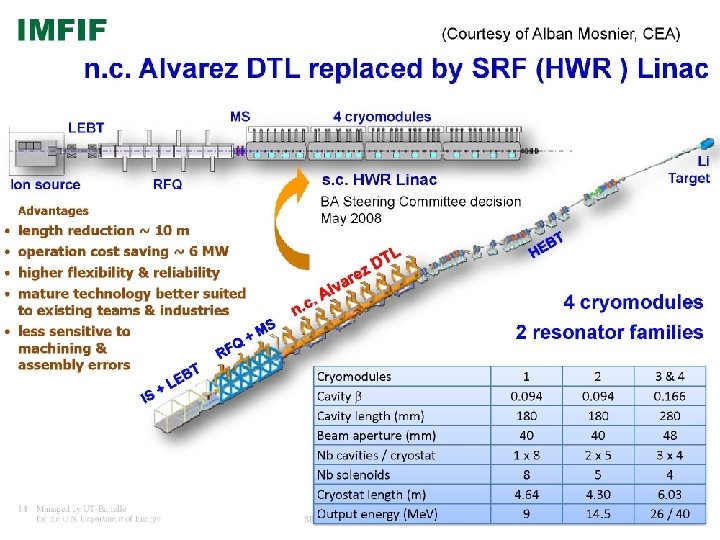
Rol - Aug. 3, 2011 Fermilab Colloquium 35
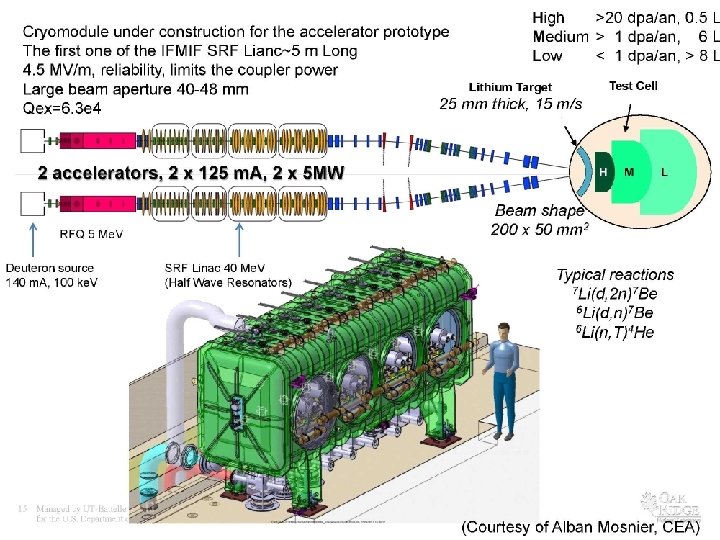
Rol - Aug. 3, 2011 Fermilab Colloquium 36
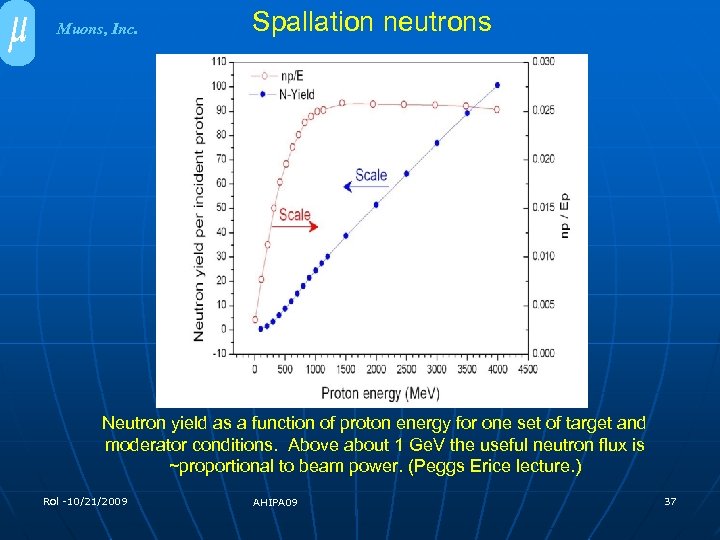
Muons, Inc. Spallation neutrons Neutron yield as a function of proton energy for one set of target and moderator conditions. Above about 1 Ge. V the useful neutron flux is ~proportional to beam power. (Peggs Erice lecture. ) Rol -10/21/2009 AHIPA 09 37
Rol - Aug. 3, 2011 Fermilab Colloquium 38
Rol - Aug. 3, 2011 Fermilab Colloquium 39
Rol - Aug. 3, 2011 Fermilab Colloquium 40
Rol - Aug. 3, 2011 Fermilab Colloquium 41
Rol - Aug. 3, 2011 Fermilab Colloquium 42
Rol - Aug. 3, 2011 Fermilab Colloquium 43
Rol - Aug. 3, 2011 Fermilab Colloquium 44
Rol - Aug. 3, 2011 Fermilab Colloquium 45
Rol - Aug. 3, 2011 Fermilab Colloquium 46
Rol - Aug. 3, 2011 Fermilab Colloquium 47
Rol - Aug. 3, 2011 Fermilab Colloquium 48
Rol - Aug. 3, 2011 Fermilab Colloquium 49
10 0 M W 12. 5 m. A CW Adapted from Sang-Ho Kim, SRF 11 Rol - Aug. 3, 2011 Fermilab Colloquium 50
Adapted from Sang-Ho Kim, SRF 11 Rol - Aug. 3, 2011 Fermilab Colloquium 51
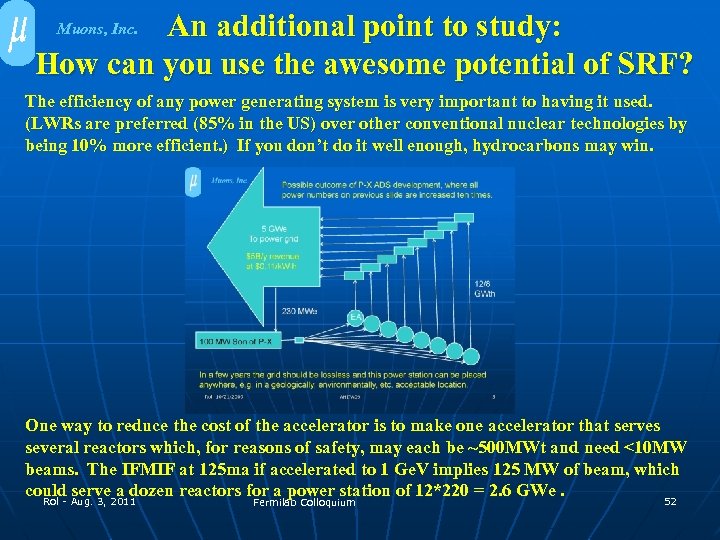
An additional point to study: How can you use the awesome potential of SRF? Muons, Inc. The efficiency of any power generating system is very important to having it used. (LWRs are preferred (85% in the US) over other conventional nuclear technologies by being 10% more efficient. ) If you don’t do it well enough, hydrocarbons may win. One way to reduce the cost of the accelerator is to make one accelerator that serves several reactors which, for reasons of safety, may each be ~500 MWt and need <10 MW beams. The IFMIF at 125 ma if accelerated to 1 Ge. V implies 125 MW of beam, which could Aug. 3, 2011 serve a dozen reactors for a power station of 12*220 = 2. 6 GWe. Rol 52 Fermilab Colloquium
• Muons, Inc. P-X and ADS P-X can be the prototype for an ADSR/ATW machine to develop accelerator and reactor techniques and test materials (>>10 MW) Since most P-X physics uses require accumulator and buncher rings, the linac design can be flexible. High current capability makes HEP easier. Let’s get the US Government (for national environmental goals) and US Industry (for fun and profit) interested to support ADS R&D using our unique accelerator expertise. We imagine a Project-X which would supply the required power for ADS & ATW development and also replace the Fermilab Booster for the next 40 years of exciting fundamental science at the intensity and energy frontiers while addressing National Goals: Energy Independence, Climate Change, High-Tech Work Force. Rol - Aug. 3, 2011 Fermilab Colloquium 53
Muons, Inc. Conclusions ADSR with Molten-Salt-Fuel can simultaneously address - elimination of dangerous stored nuclear waste - production of safe, environmentally-friendly energy with a high-tech work force to reduce dependence on foreign energy sources using US manufacturing Project-X with ADS goals - a wonderful win-win opportunity - to enthuse industry and government - by working with reactor designers - to provide a prototype and blueprints for an ADSR demo Rol - Aug. 3, 2011 Fermilab Colloquium 54
Muons, Inc. Backup slides Rol - Aug. 3, 2011 Fermilab Colloquium 55
Muons, Inc. CONCEPT: SRF Linear Accelerators for Transformational Energy Technologies ADSR nuclear power stations using molten salt fuel, operating • in an inherently safe region below criticality, • without accidental releases of radioactive elements, • without generation of greenhouse gases, • producing minimal nuclear waste or • byproducts that are useful to rogue nations or terrorists, • fueled by and eliminating existing stockpiles of • LWR nuclear waste and depleted uranium • and/or efficiently using abundant natural thorium or uranium, • which does not need enrichment. Accelerator-driven Waste-transmutation Power-stations ? (AWPs) Rol - Aug. 3, 2011 Fermilab Colloquium 56
Thorium vs Uranium (Charlie Bowman opinion) There is a significant community that believes that accelerators will find their place in nuclear energy with thorium fuel more readily than with uranium, but we choose uranium because it allows smaller accelerators. While our systems can readily burn thorium fuel, thorium is inferior in neutron economy to natural uranium, un-reprocessed LWR spent fuel, or even depleted uranium, the accelerator size will always be smaller with uranium than with thorium and so the introduction of accelerators will come first with uranium. (I have a more optimistic view than Charlie – Rol) Furthermore the supply of uranium-based fuel is sufficient for centuries even if worldwide nuclear power grew by a factor of ten from today. And even if we ever wished to burn thorium in our designs, the thorium would always be burned for centuries in a mixture with uranium, which also would reduce any 233 Pa effect. (see lifetime numbers) The possibility that thorium would be cheaper is largely irrelevant as the cost of uranium fuel in almost any form for our design is only 3 % of the total operating cost of our subcritical design producing electricity at a break-even cost of 4. 5 cents per kwh including debt retirement costs. (even less if we are paid to remove spent uranium fuel rods) Rol - Aug. 3, 2011 Fermilab Colloquium 57
Скачать презентацию Muons Inc ACCELERATORS FOR SUBCRITICAL MOLTEN-SALT REACTORS Rolland
bc462fadeabd661a32da5d41983a571e.ppt