 Скачать презентацию MUNICIPAL INDABA 2008 FINANCE SYNDICATE GROUP FINANCING WATER
0b858655328d45480cc7656e8d75feb2.ppt
- Количество слайдов: 35



MUNICIPAL INDABA 2008 FINANCE SYNDICATE GROUP FINANCING WATER AND SANITATION INFRASTRUCTURE Dr Cosmas M. Ambe
STRUCTURE OF PRESENTATION 1. INTRODUCTION 2. CHALLENGES OF FINANCING WSS 3. ADDRESSING THE CHALLENGES 4. CONCLUSION
1. INTRODUCTION Minister Hendricks during her Budget Vote in the NCOP in June 2008 expresses the need to: • “develop and expand water resource infrastructure to meet the increasing demand for water as the economy grows and the standard of living of our communities improve. DWAF has the responsibility to develop WSS new infrastructure and the rehabilitation and upgrading of existing infrastructure, and will be spending in the current year R 1. 2 billion on the establishment of new water resource infrastructure and R 415 million on rehabilitation of existing infrastructure”
“the provision of infrastructure needed to meet the ASGISA growth target and to ensure a well the developed and maintained water resources infrastructure DWAF is seeking to establish a National Water Resources Infrastructure Agency incorporating the Trans-Caledon Tunnel Authority (TCTA) and the infrastructure branch of DWAF. One of the benefits of such an agency is that it will better be able to attract finance from capital markets for the development of water resource infrastructure, which will then free up government funds to be channeled towards social development needs”.
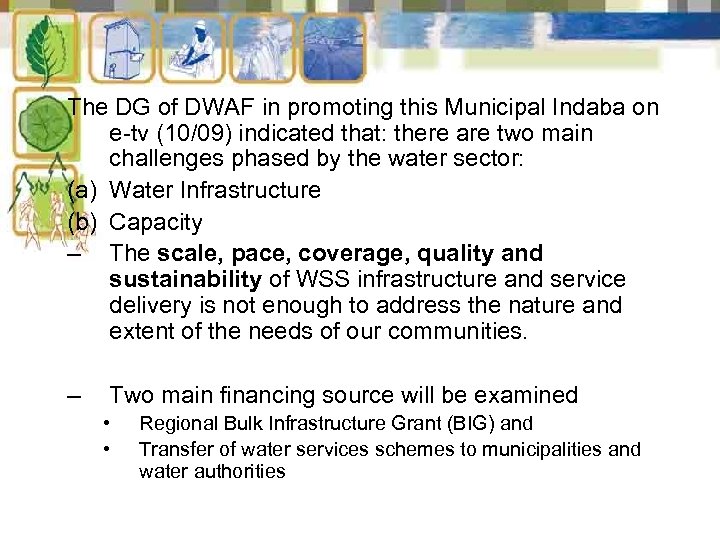
The DG of DWAF in promoting this Municipal Indaba on e-tv (10/09) indicated that: there are two main challenges phased by the water sector: (a) Water Infrastructure (b) Capacity – The scale, pace, coverage, quality and sustainability of WSS infrastructure and service delivery is not enough to address the nature and extent of the needs of our communities. – Two main financing source will be examined • • Regional Bulk Infrastructure Grant (BIG) and Transfer of water services schemes to municipalities and water authorities
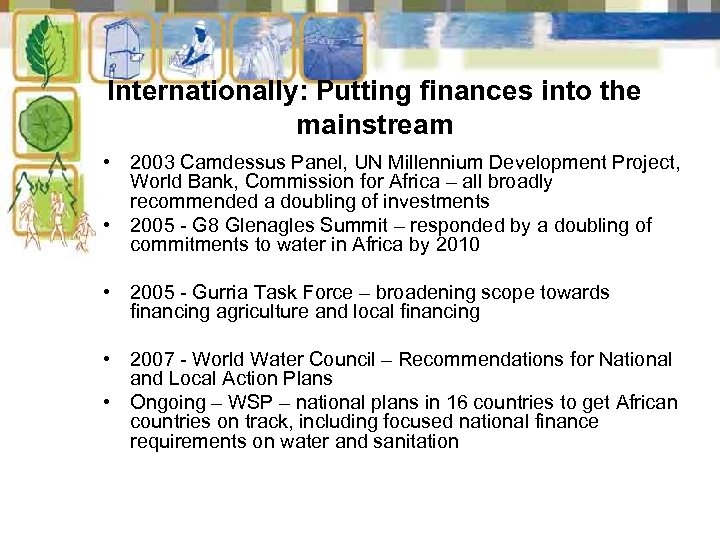
Internationally: Putting finances into the mainstream • 2003 Camdessus Panel, UN Millennium Development Project, World Bank, Commission for Africa – all broadly recommended a doubling of investments • 2005 - G 8 Glenagles Summit – responded by a doubling of commitments to water in Africa by 2010 • 2005 - Gurria Task Force – broadening scope towards financing agriculture and local financing • 2007 - World Water Council – Recommendations for National and Local Action Plans • Ongoing – WSP – national plans in 16 countries to get African countries on track, including focused national finance requirements on water and sanitation
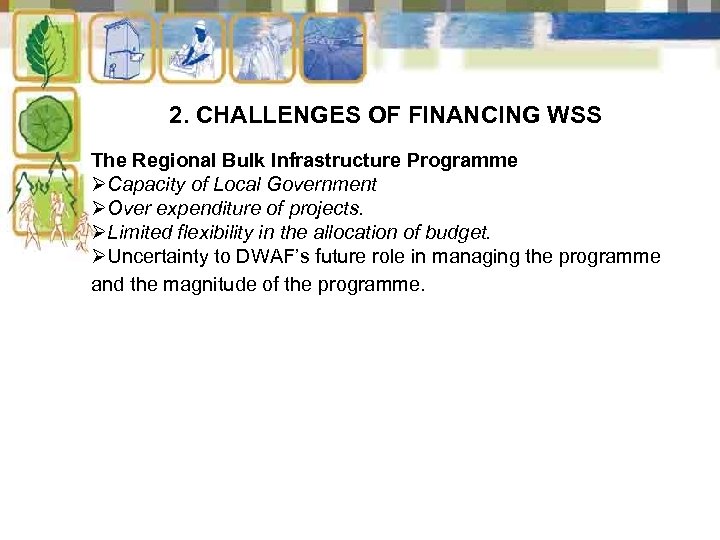
2. CHALLENGES OF FINANCING WSS The Regional Bulk Infrastructure Programme ØCapacity of Local Government ØOver expenditure of projects. ØLimited flexibility in the allocation of budget. ØUncertainty to DWAF’s future role in managing the programme and the magnitude of the programme.
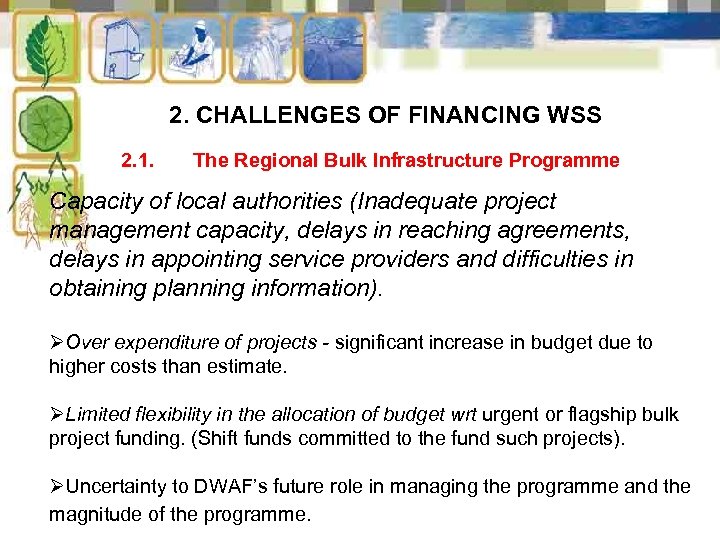
2. CHALLENGES OF FINANCING WSS 2. 1. The Regional Bulk Infrastructure Programme Capacity of local authorities (Inadequate project management capacity, delays in reaching agreements, delays in appointing service providers and difficulties in obtaining planning information). ØOver expenditure of projects - significant increase in budget due to higher costs than estimate. ØLimited flexibility in the allocation of budget wrt urgent or flagship bulk project funding. (Shift funds committed to the fund such projects). ØUncertainty to DWAF’s future role in managing the programme and the magnitude of the programme.
2. CHALLENGES OF FINANCING WSS 2. 2 National Transfer of Water Services Schemes ØInadequate refurbishment budget ØMunicipalities’ failure to adhere to the reporting requirements as per the Division of Revenue Act and other relevant legislation. ØShortfall experienced in the Water Services Operating Subsidy to cover the actual expenditure and staff costs incurred by DWAF and to sustain the new water services framework (100% subsidy up to June 2009 and 100% HR subsidy for a period of three years from taking transfer).
2. CHALLENGES OF FINANCING WSS 2. 3. DPLG and DBSA Municipal Infrastructure Investment Framework (MIIF) 2008. ØCapital spending required needs to increase rapidly to enable these targets to be met. It is estimated that a total of R 20. 9 billion is required to meet backlog and universal access to basic WSS ØEscalating Capital Requirements ØGrant funding for water and sanitation infrastructure becoming a smaller proportion of the funding package for municipal infrastructure ØAvailability of capital is becoming a major constraint. ØWeak and declining viability of some municipalities
2. CHALLENGES OF FINANCING WSS 2. 4. Auditor General Audit Reports Do. RA requirements impacted on the influence DPLG had in the MIG distribution process. Capacity constraints at municipalities Treasury stopping of funds without reallocating the funds to other municipalities. The untimely withholding of funds resulted in municipalities not being able to spend the funds within the said financial year.
2. CHALLENGES OF FINANCING WSS 2. 5. The Camdessus Commission Report Coherent philosophy and set of principles, and many detailed proposals for improvements, in two broad domains: Øwater governance, and Øfinancial instruments and facilities. 2. 6. Climate change 2. 7. Energy
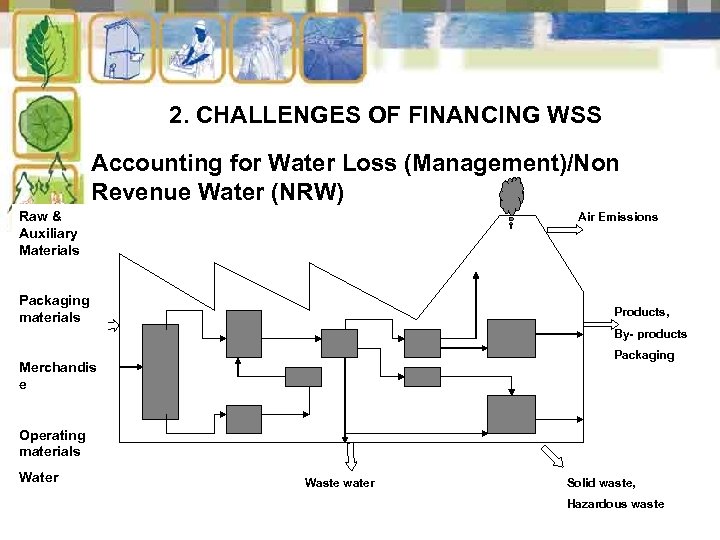
2. CHALLENGES OF FINANCING WSS Accounting for Water Loss (Management)/Non Revenue Water (NRW) Raw & Auxiliary Materials Air Emissions Packaging materials Products, By- products Packaging Merchandis e Operating materials Water Waste water Solid waste, Hazardous waste
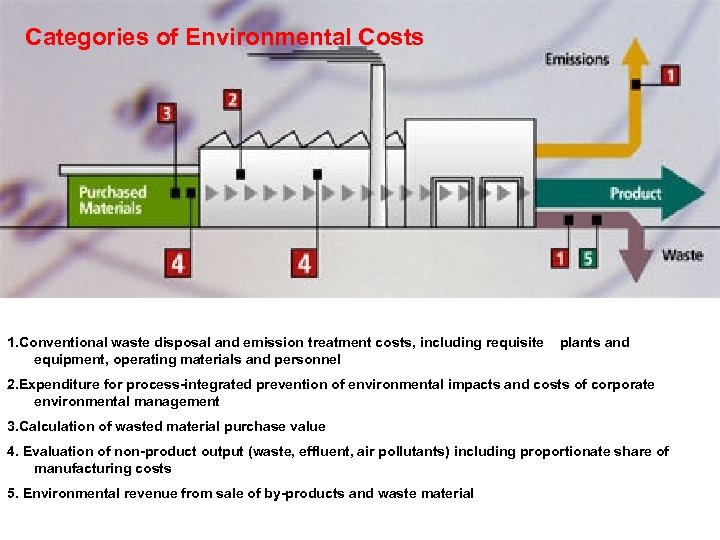
Categories of Environmental Costs 1. Conventional waste disposal and emission treatment costs, including requisite equipment, operating materials and personnel plants and 2. Expenditure for process-integrated prevention of environmental impacts and costs of corporate environmental management 3. Calculation of wasted material purchase value 4. Evaluation of non-product output (waste, effluent, air pollutants) including proportionate share of manufacturing costs 5. Environmental revenue from sale of by-products and waste material
Challenges: MIG • • • Lack of project management capacity to manage MIG projects Lack of proper planning: project life cycle Late submission and approval of technical reports and Environmental Impact Assessments Inclement weather conditions Late registration of MIG projects Lengthy procurement process due to implementation of the supply chain management regulations Overlapping financial years? Lack of multi-year capital budget approvals Appointment of service providers who cannot deliver Council decisions take too long to approve projects and budgets Unprocedural selection and changes to projects outside of IDP process
3. ADDRESSING THE CHALLENGES The FEASIBLE model developed by the OECD Task Force and Denmark is a tool to help rationalise financing strategies of the water sector in several regions and countries in Central and Eastern Europe. Advantages • Environmental financing strategies offer a wide range of advantages to governments, donors and IFIs, including: • They support the introduction of good governance, which is just as important as finance to improve the situation in the environmental sectors • They facilitate a change in the minds of decision-makers - e. g. from focus on wish-lists to Santa Claus to focus on realistic targets • They assist in establishing a regulatory framework for financial sustainability and promote cost-effective use of resources. • They offer a way out of the vicious circle of financial un-sustainability and declining service provision that many countries are caught in • They contribute to the development of road maps for achieving the MDGs - and may be used by all parties to check realism • No need to derive country-specific cost functions
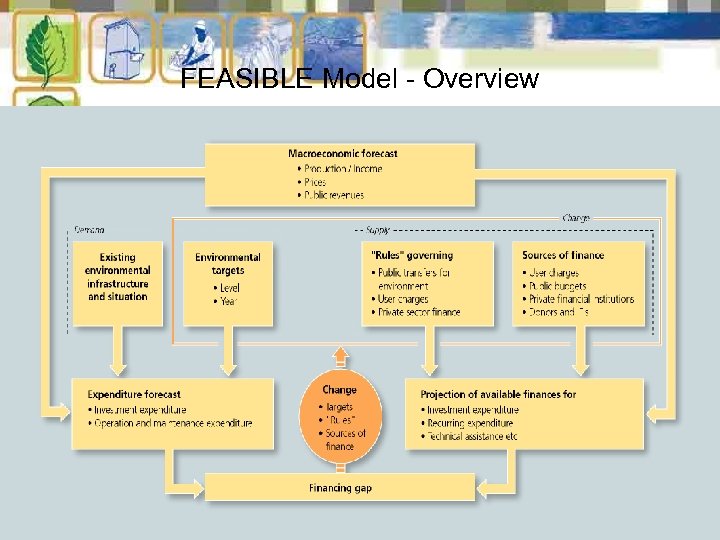
FEASIBLE Model - Overview
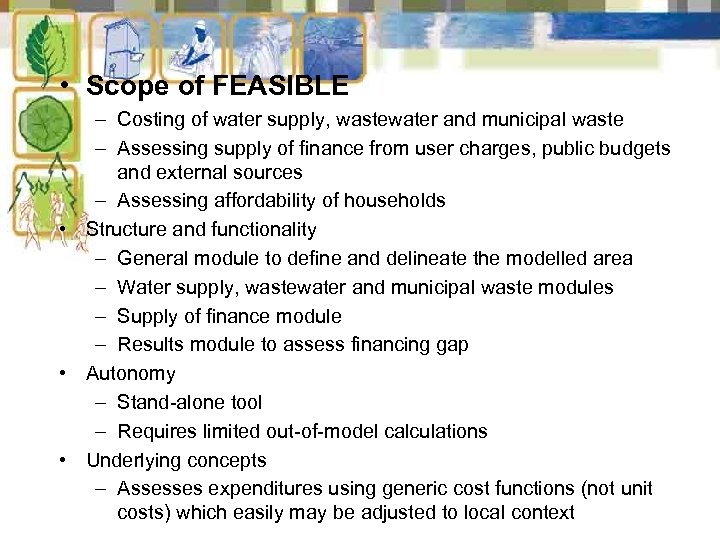
• Scope of FEASIBLE – Costing of water supply, wastewater and municipal waste – Assessing supply of finance from user charges, public budgets and external sources – Assessing affordability of households • Structure and functionality – General module to define and delineate the modelled area – Water supply, wastewater and municipal waste modules – Supply of finance module – Results module to assess financing gap • Autonomy – Stand-alone tool – Requires limited out-of-model calculations • Underlying concepts – Assesses expenditures using generic cost functions (not unit costs) which easily may be adjusted to local context
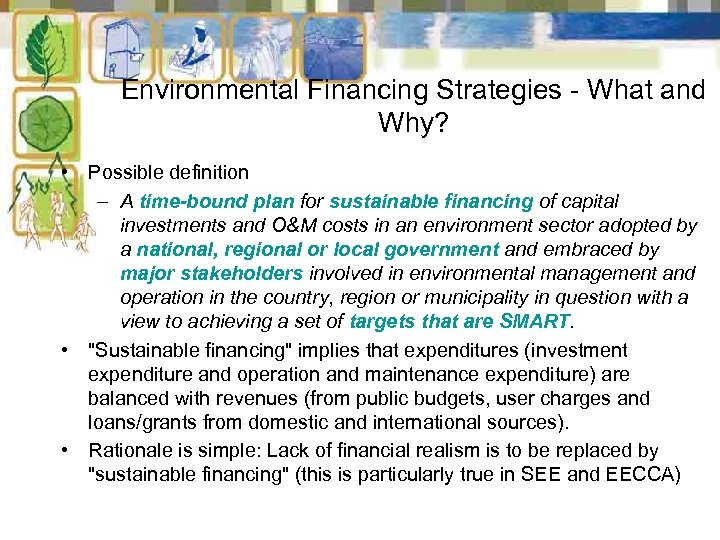
Environmental Financing Strategies - What and Why? • Possible definition – A time-bound plan for sustainable financing of capital investments and O&M costs in an environment sector adopted by a national, regional or local government and embraced by major stakeholders involved in environmental management and operation in the country, region or municipality in question with a view to achieving a set of targets that are SMART. • "Sustainable financing" implies that expenditures (investment expenditure and operation and maintenance expenditure) are balanced with revenues (from public budgets, user charges and loans/grants from domestic and international sources). • Rationale is simple: Lack of financial realism is to be replaced by "sustainable financing" (this is particularly true in SEE and EECCA)
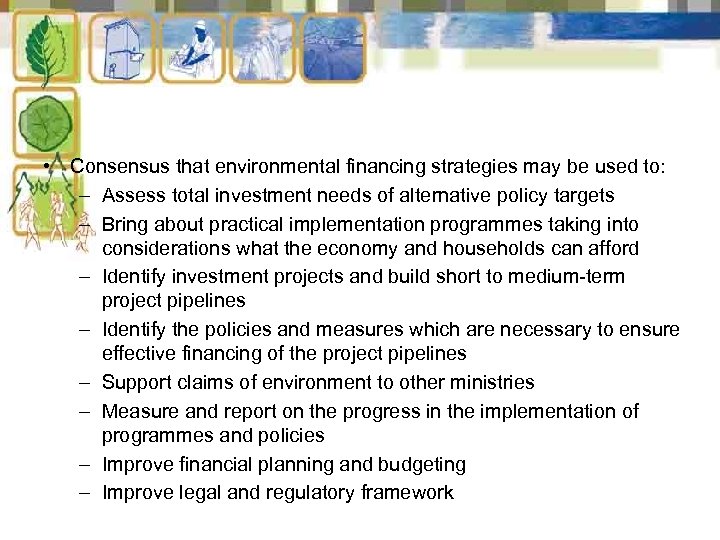
• Consensus that environmental financing strategies may be used to: – Assess total investment needs of alternative policy targets – Bring about practical implementation programmes taking into considerations what the economy and households can afford – Identify investment projects and build short to medium-term project pipelines – Identify the policies and measures which are necessary to ensure effective financing of the project pipelines – Support claims of environment to other ministries – Measure and report on the progress in the implementation of programmes and policies – Improve financial planning and budgeting – Improve legal and regulatory framework
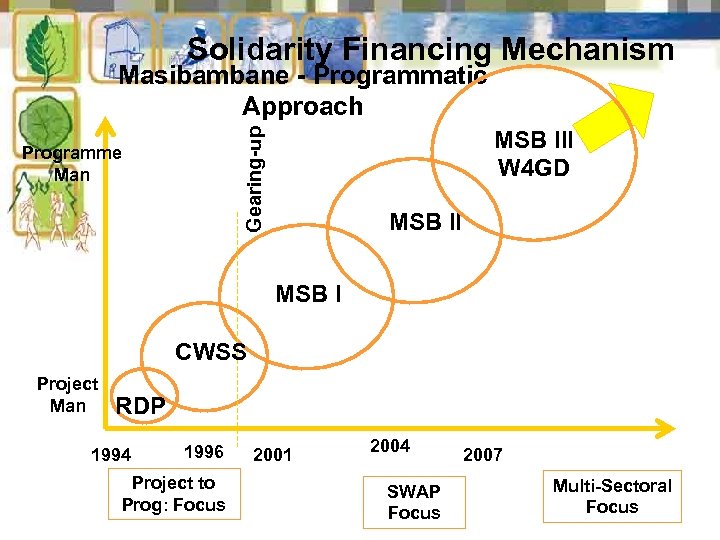
Solidarity Financing Mechanism Masibambane - Programmatic Approach MSB III W 4 GD Gearing-up Programme Man MSB II MSB I CWSS Project Man RDP 1994 1996 Project to Prog: Focus 2001 2004 SWAP Focus 2007 Multi-Sectoral Focus
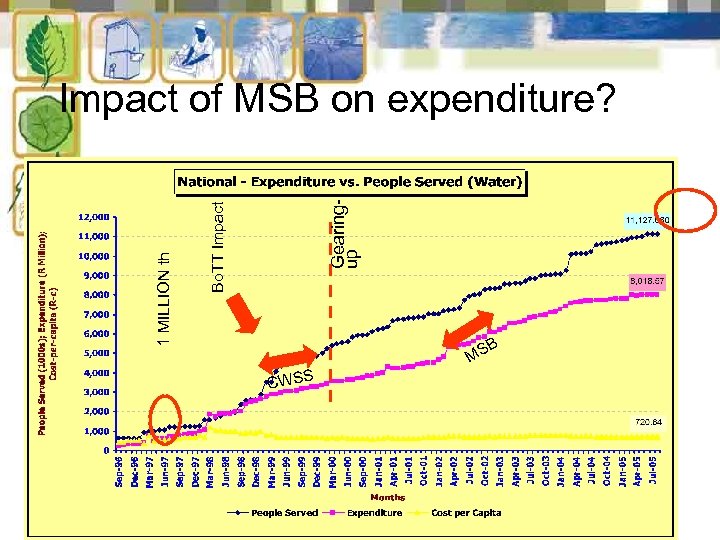
Gearingup Bo. TT Impact 1 MILLION th Impact of MSB on expenditure? B MS CWSS
Stimulating Local Capital Markets and Financing Water Infrastructure ØA substantial proportion of capital investment in the past decade has already been financed off budget, from sources other than the National Treasury. ØThe R 15 billion Lesotho Highlands Water Project is financed by loans arranged by the Trans-Caledon Tunnel Authority (TCTA), which are paid back from charges on water users in the Vaal River System. ØA new R 1500 million dam on the Berg river to assure supplies to the Cape Peninsula will be funded in a similar way. ØDam development in the Usutu River to facilitate power generation was partially financed by the principal user, the South African power utility, Eskom.
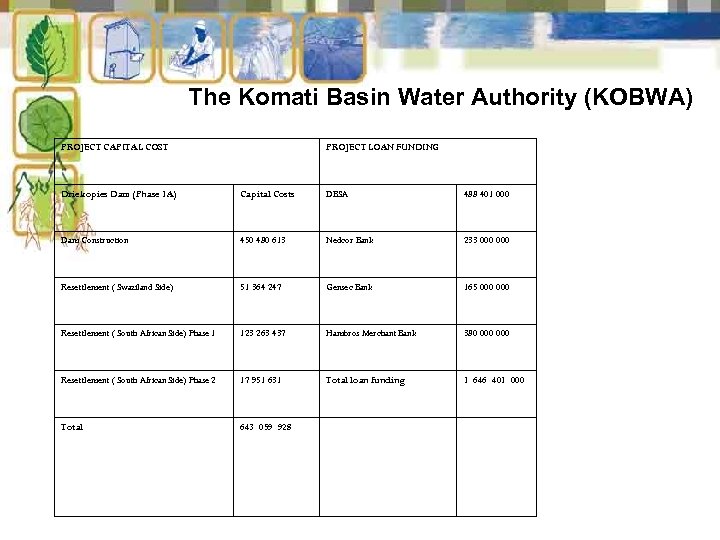
The Komati Basin Water Authority (KOBWA) PROJECT CAPITAL COST PROJECT LOAN FUNDING Driekopies Dam (Phase 1 A) Capital Costs DBSA 488 401 000 Dam Construction 450 480 613 Nedcor Bank 233 000 Resettlement ( Swaziland Side) 51 364 247 Gensec Bank 165 000 Resettlement ( South African Side) Phase 1 123 263 437 Hambros Merchant Bank 380 000 Resettlement ( South African Side) Phase 2 17 951 631 Total loan funding 1 646 401 000 Total 643 059 928
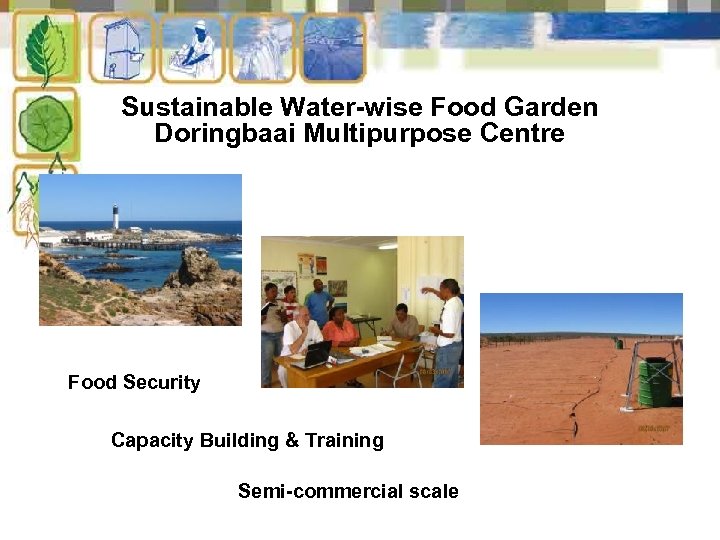
Sustainable Water-wise Food Garden Doringbaai Multipurpose Centre Food Security Capacity Building & Training Semi-commercial scale
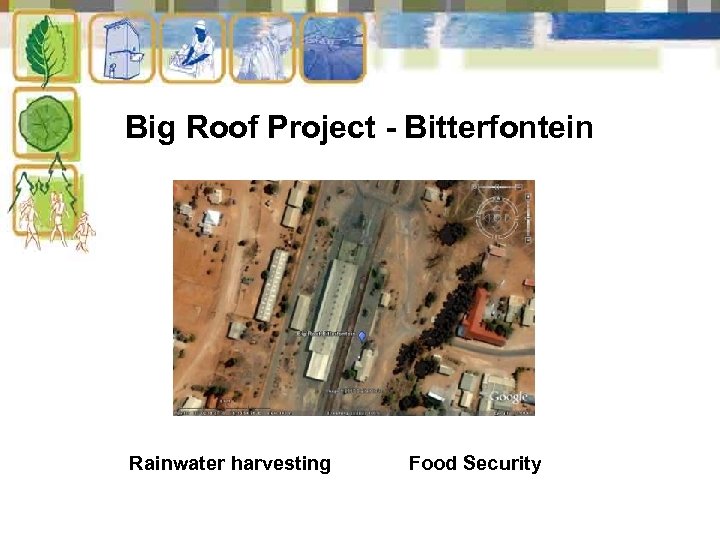
Big Roof Project - Bitterfontein Rainwater harvesting Food Security
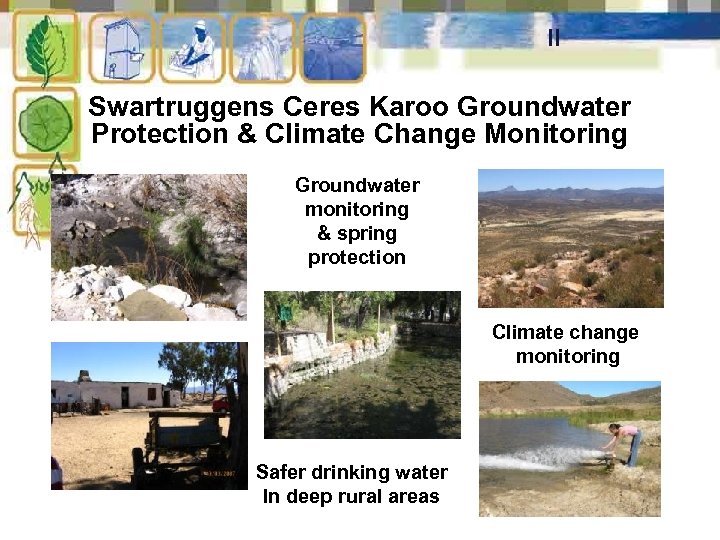
II Swartruggens Ceres Karoo Groundwater Protection & Climate Change Monitoring Groundwater monitoring & spring protection Climate change monitoring Safer drinking water In deep rural areas
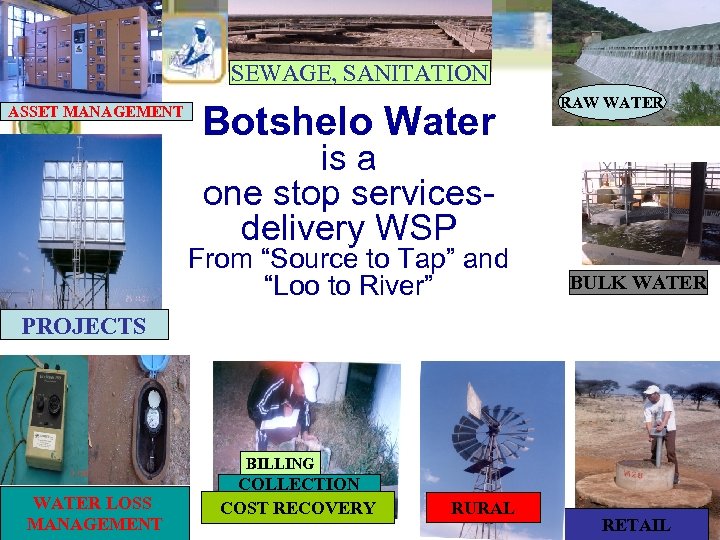
SEWAGE, SANITATION ASSET MANAGEMENT Botshelo Water RAW WATER is a one stop servicesdelivery WSP From “Source to Tap” and “Loo to River” BULK WATER PROJECTS BILLING WATER LOSS MANAGEMENT COLLECTION COST RECOVERY RURAL RETAIL
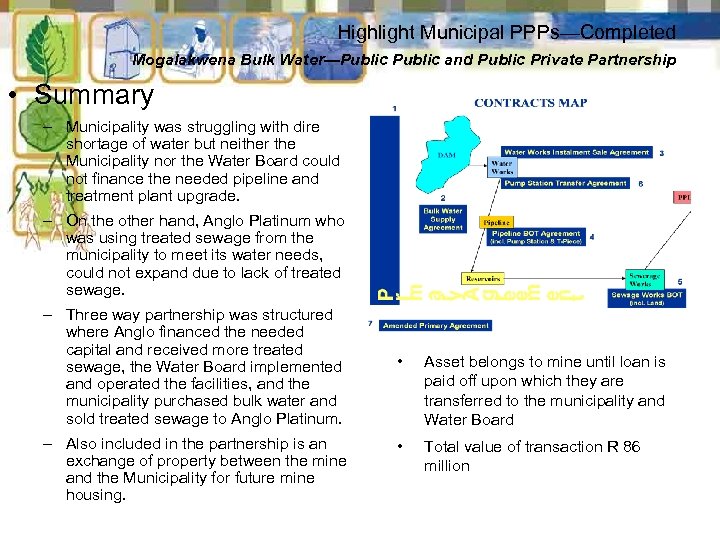
Highlight Municipal PPPs—Completed Mogalakwena Bulk Water—Public and Public Private Partnership • Summary – Municipality was struggling with dire shortage of water but neither the Municipality nor the Water Board could not finance the needed pipeline and treatment plant upgrade. – On the other hand, Anglo Platinum who was using treated sewage from the municipality to meet its water needs, could not expand due to lack of treated sewage. – Three way partnership was structured where Anglo financed the needed capital and received more treated sewage, the Water Board implemented and operated the facilities, and the municipality purchased bulk water and sold treated sewage to Anglo Platinum. – Also included in the partnership is an exchange of property between the mine and the Municipality for future mine housing. • Asset belongs to mine until loan is paid off upon which they are transferred to the municipality and Water Board • Total value of transaction R 86 million
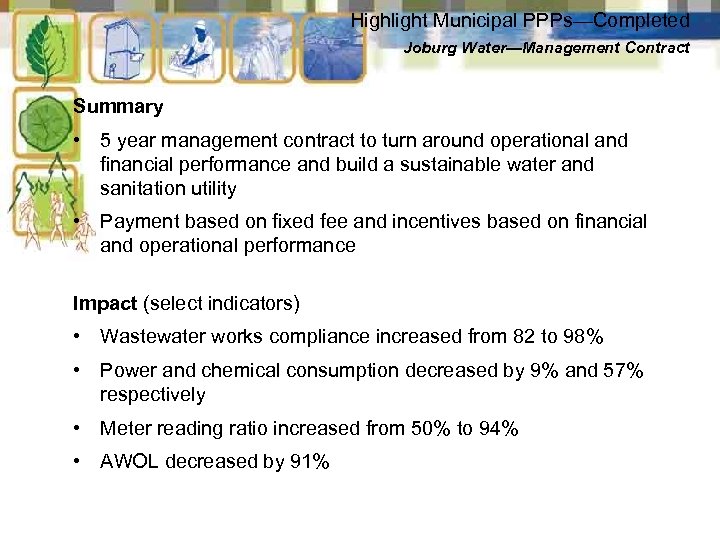
Highlight Municipal PPPs—Completed Joburg Water—Management Contract Summary • 5 year management contract to turn around operational and financial performance and build a sustainable water and sanitation utility • Payment based on fixed fee and incentives based on financial and operational performance Impact (select indicators) • Wastewater works compliance increased from 82 to 98% • Power and chemical consumption decreased by 9% and 57% respectively • Meter reading ratio increased from 50% to 94% • AWOL decreased by 91%
4. CONCLUSION There is no “magic bullet” to solve the problem of financing WSS infrastructure. Although reform and innovation is needed in financial architecture, a “paradigm shift” is unlikely. Different sources of finance will, however, need to be blended in “smart” ways to enhance synergies, avoid crowding out other sources, and to maximise leverage on the total flows Useful tools to facilitate smart blending of potential financial sources and instruments have recently been developed and applied with positive results. Economies of scale can be safeguarded by encouraging municipalities to cooperate in financing water services.
Open questions to consider Ø Treasury’s role in sector & inter-sector collaboration? Enhance its ability to improve effectiveness of resource allocation, consistency of policy & links with LG. Ø Given centrality of infrastructure spending in new accelerated & shared economic growth plan – collaborative approach is essential & Treasury has critical role? Ø Sustainable budget for collaboration & importance of flexible resources? Ø Does IGR open opportunity to entrench collaboration? Resource allocation job descriptions – political leadership? Ø Budgeting for collaboration & importance of flexible resources? (MIG 1% lost opportunity)
Open questions to consider Ø Horse before the cart? LG/dplg vis a vis WS sector/DWAF Ø Premiers’ offices key to coordinating across sectors? Ø Taking sector wide approach in other sectors, esp re donor coordination? When is a sector ready? Ø Harmonising reporting systems – with LG at the centre? Ø Does collaboration streamline or proliferate planning and when? Ø Recognising decentralisation is a process – not overnight instruction Ø Will ‘regulatory collaboration’ look significantly different from existing collaboration –given change in relationship?
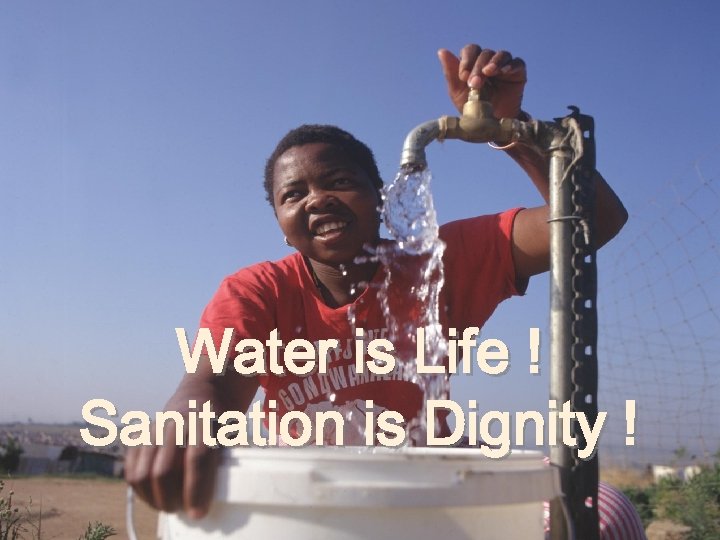
Water is Life ! Sanitation is Dignity !
Скачать презентацию MUNICIPAL INDABA 2008 FINANCE SYNDICATE GROUP FINANCING WATER
0b858655328d45480cc7656e8d75feb2.ppt