 Скачать презентацию Multiple-Objective and Multiple-Stakeholder Decision Making The Star Kist
eb7f388c5fcc2d10d804e1a381bb399d.ppt
- Количество слайдов: 16



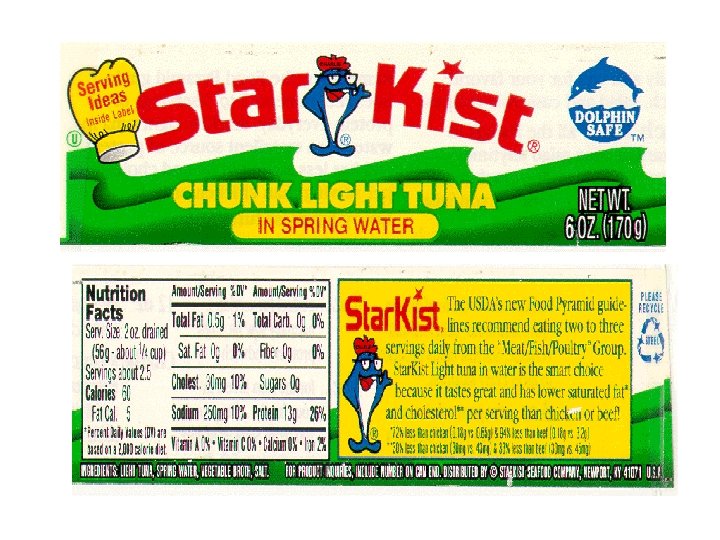
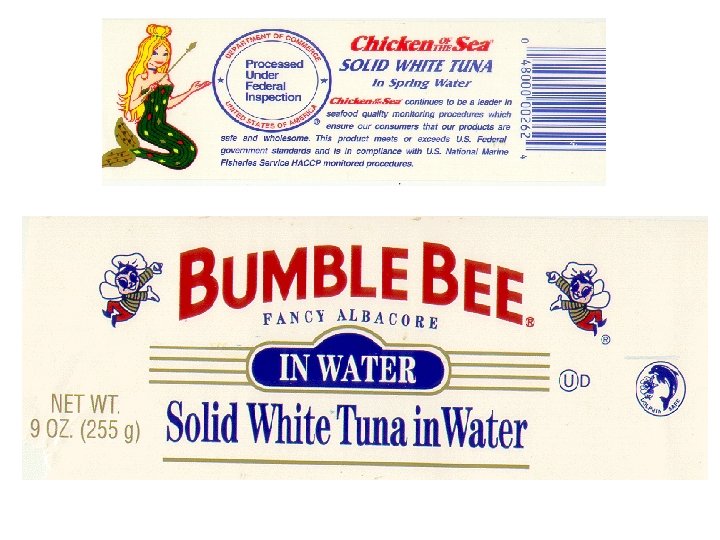
Multiple-Objective and Multiple-Stakeholder Decision Making The Star. Kist Tuna Fishing Decision Stakeholders Star. Kist Tuna Co. (Primary Stakeholder) Bumblebee Tuna & Chicken of the Sea (Competitors) Consumers (Buyers) San Diego Tuna Fishing Fleet (Suppliers) TV, Press, etc. (Media) Earth Island Institute, etc. (Special Interest Groups) Background References: Monika I. Winn (University of Victoria, British Columbia) and L. Robin Keller, “A Modeling Methodology for Multi-Objective Multi-Stakeholder Decisions: Implications for Research, " Journal of Management Inquiry, vol. 10, no. 2, June 2001, 166 -181. Star. Kist homepage: http: //www. starkist. com/; Earth Island Institute homepage: http: //www. earthisland. org
Warren Beatty, Heaven Can Wait, 1978 "What if we had a good-guy tuna company that was on the ((dolphin)) team? A lot of these guys would buy that, so their kids wouldn't get mad at them, right? And if it costs too much, we charge a penny more. We make it part of the game plan. ” “Tuna Without The Guilt, ” Time magazine, MONDAY, APR. 23, 1990 http: //www. time. com/time/magazine/article/0, 9171, 969934, 00. html? iid=chix-sphere Video: Where Have All the Dolphins Gone? The untold story of dolphin slaughter-and the shameful coverup, narrated by George C. Scott, copyright 1990, Marine Mammal Fund, Ft. Mason Center, Bldg. E, SF, CA 94123
DECISION ALTERNATIVES Legal Quota Maintain current practices and stay within legal limits Limited Mortality Step up efforts to reduce the number of dolphins killed Zero-Mortality No fishing associated with setting nets on dolphins Star. Kist’s Dolphin Safe Policy From the 1991 Star. Kist Dolphin-Safe Brochure: "Star. Kist will not buy any tuna caught in association with dolphins in the Eastern Tropical Pacific. "
STARKIST CASE BACKGROUND This supplementary page provides background on the widely publicized and controversial strategic decision by Star. Kist Tuna Company to provide only "dolphin-safe" tuna to its customers. Star. Kist Tuna Company was the market share leader with almost forty percent of U. S. tuna fish sales in 1990. Star. Kist's main competitors were Bumblebee Tuna and Chicken-of-the-Sea. These three companies dominated the U. S. market with a combined market share of about eighty percent. At issue was a tuna fishing method which is feasible only in the Eastern Tropical Pacific, extending from Chile to California along the west coast of the American continent. In this area, schools of dolphins tend to swim with, or above, schools of yellow-fin tuna, for unknown reasons. This peculiar association between tuna and dolphin has resulted in the development of a fishing method referred to as "setting nets on dolphins, " which uses dolphins as signs that tuna are nearby. In the 1960's, so-called "purse seine nets" were introduced and they soon replaced traditional long-line methods. These nets were released by high-tech fishing boats to encircle a suspected catch of tuna. Once deployed, the bottom was pulled shut with cables acting like purse-strings - hence the name. This fishing method was very effective and yielded rich catches. However, in the process of encircling and netting the tuna, dolphins were also captured in the nets, and were either killed outright or, in cases of incidental killing, were injured, suffocated or crushed. One estimate puts the number of dolphins killed since the 1960's at six million. Legislation introduced by the United States in the 1970's progressively limited the legal number of dolphins killed during tuna fishing. Annual quotas of "incidental kills" were reduced from an initial number of 78, 000 in the 1970's to 20, 500 in the eighties. The fishing boats tried many different approaches to reduce the number of dolphins killed, including chasing dolphins out of the net before hauling the catch aboard. The tuna industry is a highly competitive industry with very tight profit margins. Any operational changes to protect dolphins considered at the time were likely to result in higher costs to the canners. Additionally, consumers of canned tuna tend to be very price-conscious, making it difficult to pass higher fishing costs on to the end-user by increasing the price of a can of tuna. Thus, the case is a prime example of a strategic decision requiring tradeoffs between economic and environmental values.
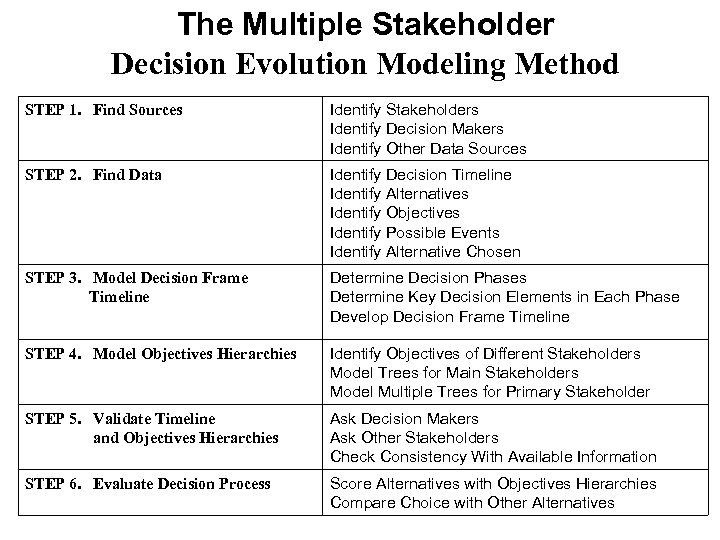
The Multiple Stakeholder Decision Evolution Modeling Method STEP 1. Find Sources Identify Stakeholders Identify Decision Makers Identify Other Data Sources STEP 2. Find Data Identify Decision Timeline Identify Alternatives Identify Objectives Identify Possible Events Identify Alternative Chosen STEP 3. Model Decision Frame Timeline Determine Decision Phases Determine Key Decision Elements in Each Phase Develop Decision Frame Timeline STEP 4. Model Objectives Hierarchies Identify Objectives of Different Stakeholders Model Trees for Main Stakeholders Model Multiple Trees for Primary Stakeholder STEP 5. Validate Timeline and Objectives Hierarchies Ask Decision Makers Ask Other Stakeholders Check Consistency With Available Information STEP 6. Evaluate Decision Process Score Alternatives with Objectives Hierarchies Compare Choice with Other Alternatives
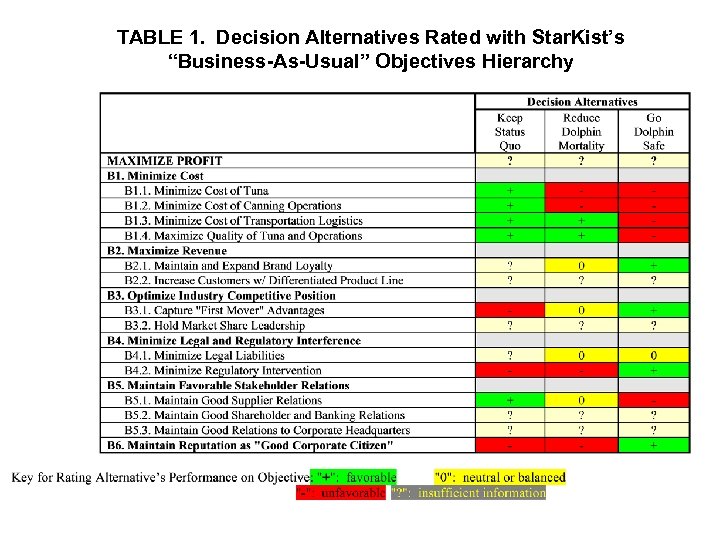
TABLE 1. Decision Alternatives Rated with Star. Kist’s “Business-As-Usual” Objectives Hierarchy
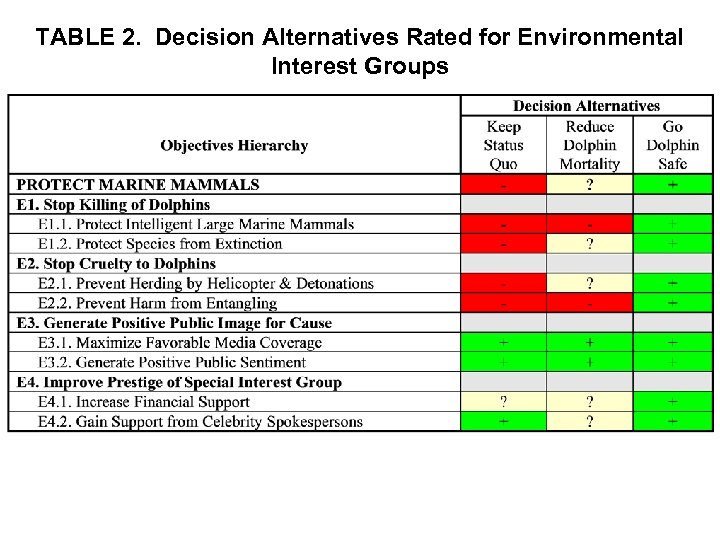
TABLE 2. Decision Alternatives Rated for Environmental Interest Groups
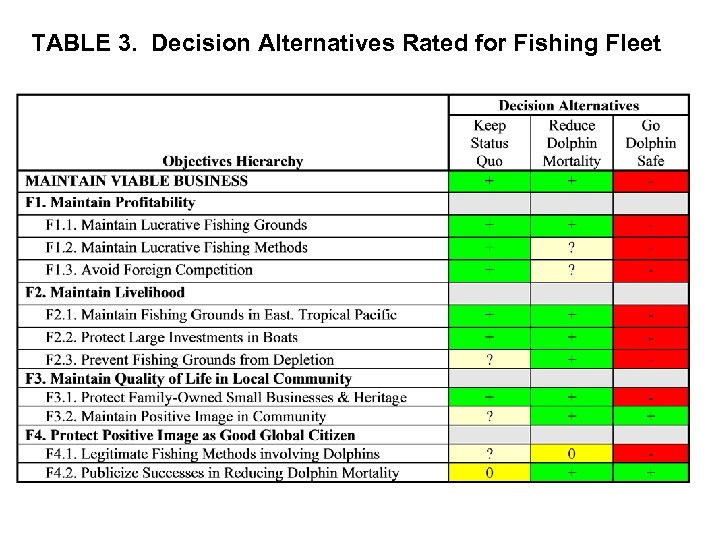
TABLE 3. Decision Alternatives Rated for Fishing Fleet
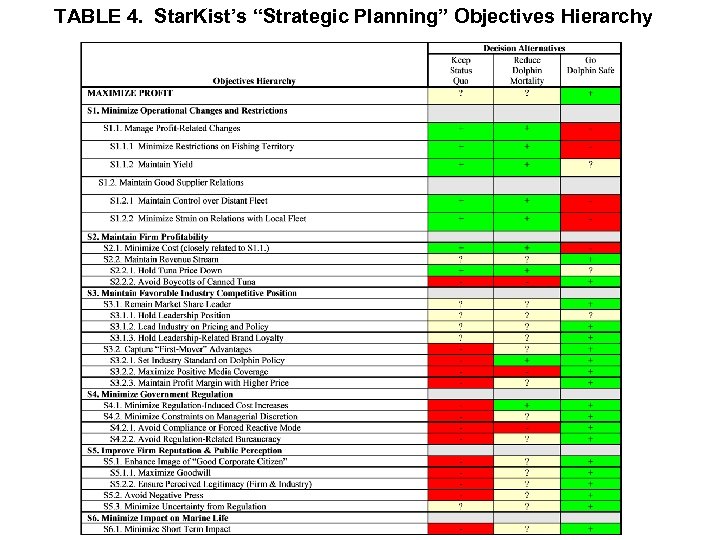
TABLE 4. Star. Kist’s “Strategic Planning” Objectives Hierarchy
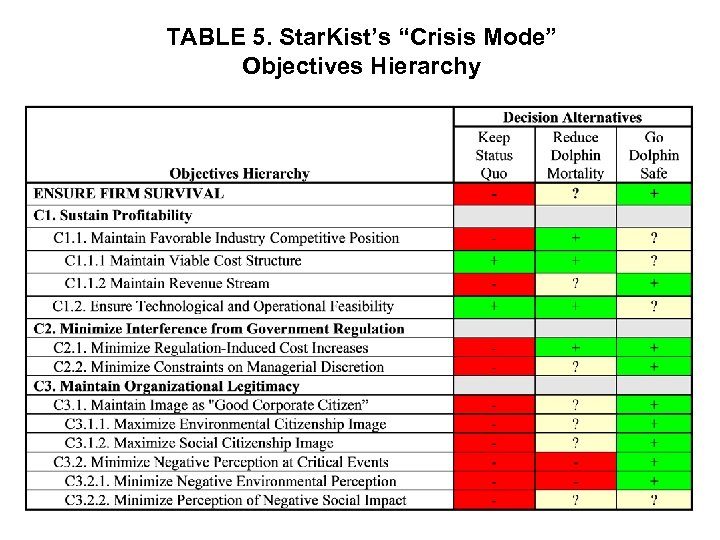
TABLE 5. Star. Kist’s “Crisis Mode” Objectives Hierarchy
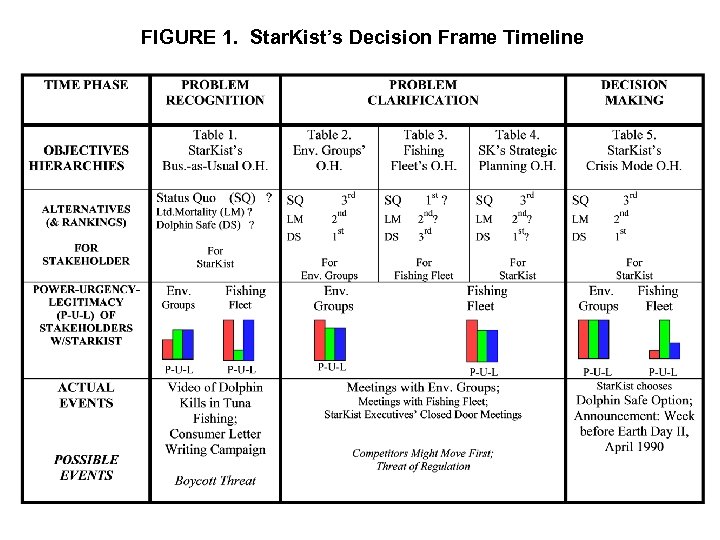
FIGURE 1. Star. Kist’s Decision Frame Timeline
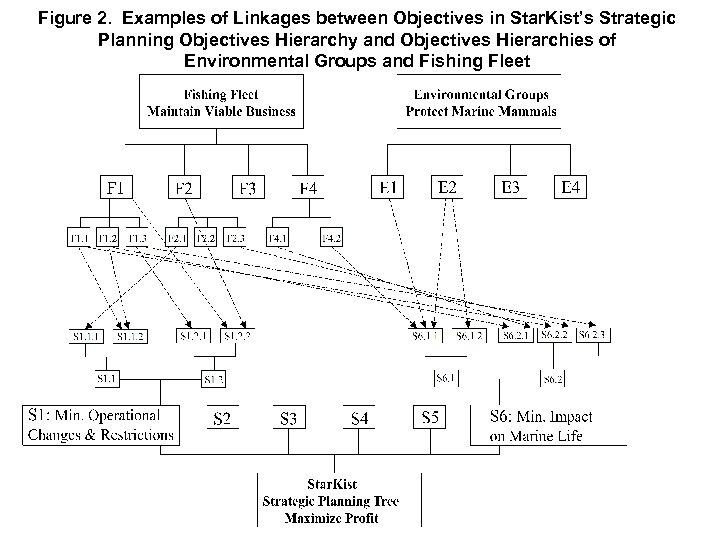
Figure 2. Examples of Linkages between Objectives in Star. Kist’s Strategic Planning Objectives Hierarchy and Objectives Hierarchies of Environmental Groups and Fishing Fleet
Скачать презентацию Multiple-Objective and Multiple-Stakeholder Decision Making The Star Kist
eb7f388c5fcc2d10d804e1a381bb399d.ppt