 Скачать презентацию Multilingual Lexical Acquisition by Bootstrapping Cognate Seed Lexicons
71fd954c8801dd111bb2beb6dcde493f.ppt
- Количество слайдов: 53



Multilingual Lexical Acquisition by Bootstrapping Cognate Seed Lexicons Kornél Markó Stefan Schulz Udo Hahn Medical Informatics, Freiburg University Hospital (Germany) Jena University, Language & Information Engineering (Germany)
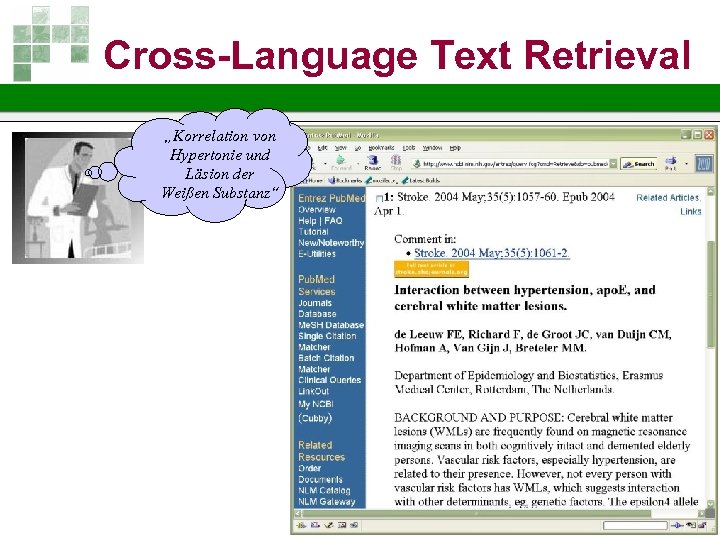
Cross-Language Text Retrieval „Korrelation von Hypertonie und Läsion der Weißen Substanz“
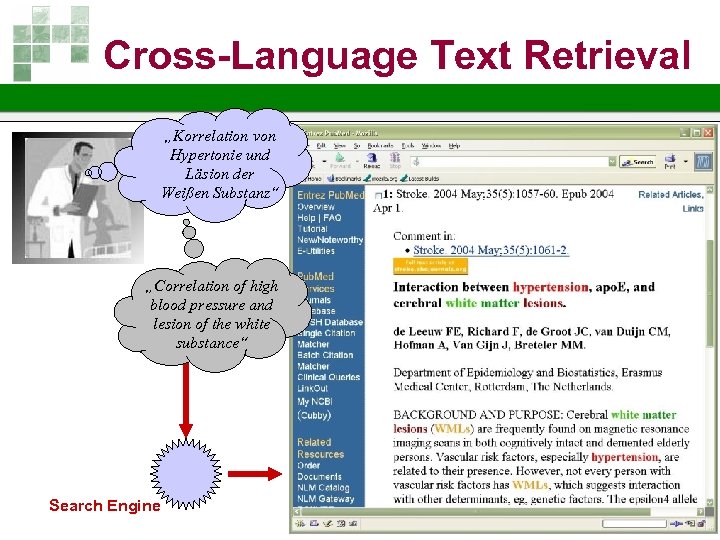
Cross-Language Text Retrieval „Korrelation von Hypertonie und Läsion der Weißen Substanz“ „Correlation of high blood pressure and lesion of the white substance“ Search Engine
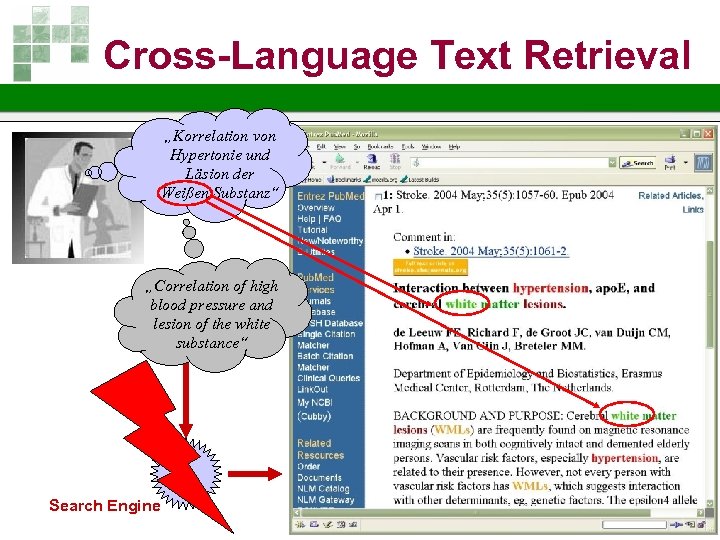
Cross-Language Text Retrieval „Korrelation von Hypertonie und Läsion der Weißen Substanz“ „Correlation of high blood pressure and lesion of the white substance“ Search Engine
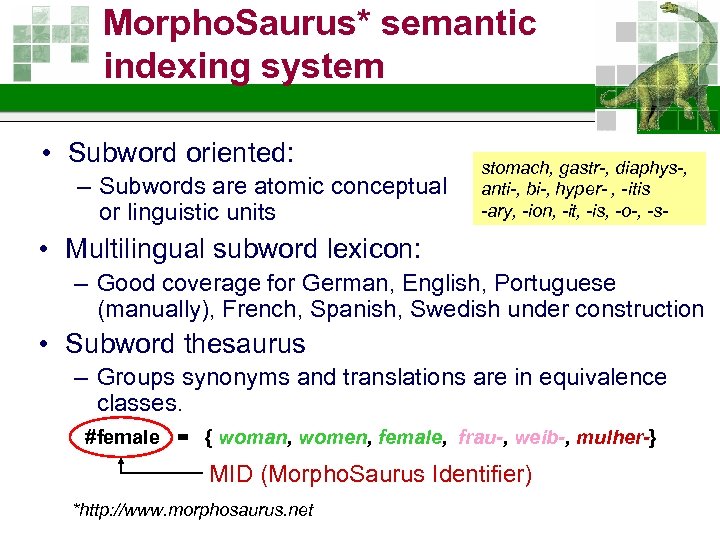
Morpho. Saurus* semantic indexing system • Subword oriented: – Subwords are atomic conceptual or linguistic units stomach, gastr-, diaphys-, anti-, bi-, hyper- , -itis -ary, -ion, -it, -is, -o-, -s- • Multilingual subword lexicon: – Good coverage for German, English, Portuguese (manually), French, Spanish, Swedish under construction • Subword thesaurus – Groups synonyms and translations are in equivalence classes. #female = { woman, women, female, frau-, weib-, mulher-} MID (Morpho. Saurus Identifier) *http: //www. morphosaurus. net
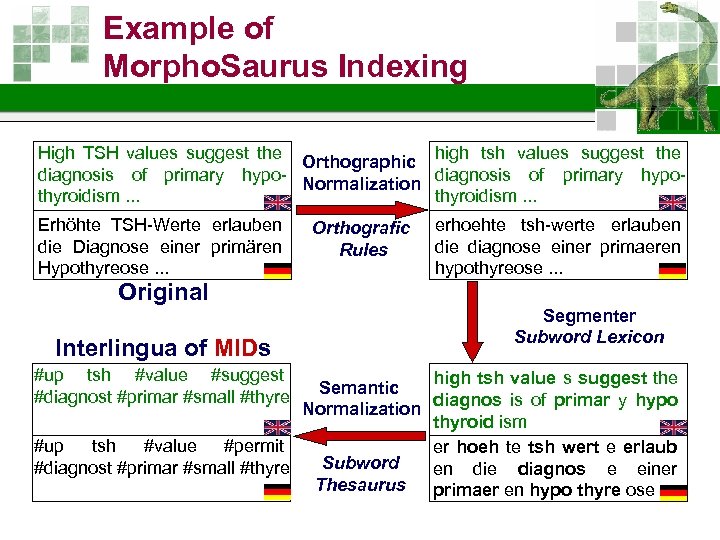
Example of Morpho. Saurus Indexing High TSH values suggest the Orthographic high tsh values suggest the diagnosis of primary hypo- Normalization diagnosis of primary hypothyroidism. . . Erhöhte TSH-Werte erlauben die Diagnose einer primären Hypothyreose. . . Orthografic Rules erhoehte tsh-werte erlauben die diagnose einer primaeren hypothyreose. . . Original Interlingua of MIDs #up tsh #value #suggest #diagnost #primar #small #thyre Segmenter Subword Lexicon high tsh value s suggest the Semantic diagnos is of primar y hypo Normalization thyroid ism #up tsh #value #permit er hoeh te tsh wert e erlaub Subword #diagnost #primar #small #thyre en die diagnos e einer Thesaurus primaer en hypo thyre ose
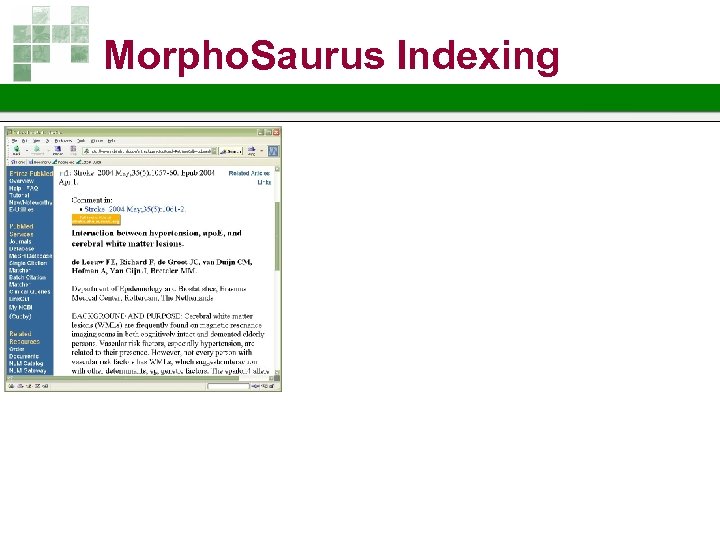
Morpho. Saurus Indexing
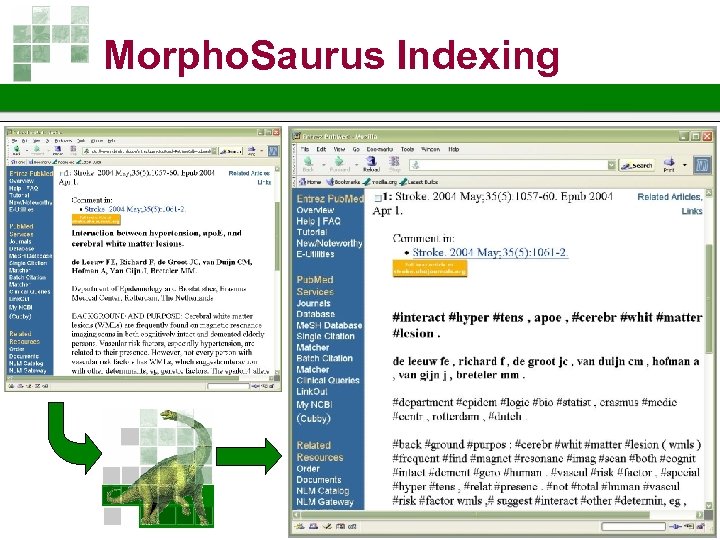
Morpho. Saurus Indexing
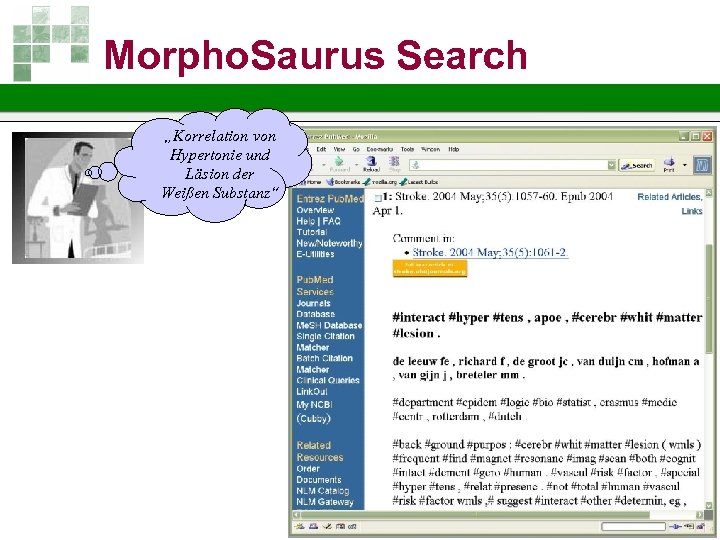
Morpho. Saurus Search „Korrelation von Hypertonie und Läsion der Weißen Substanz“
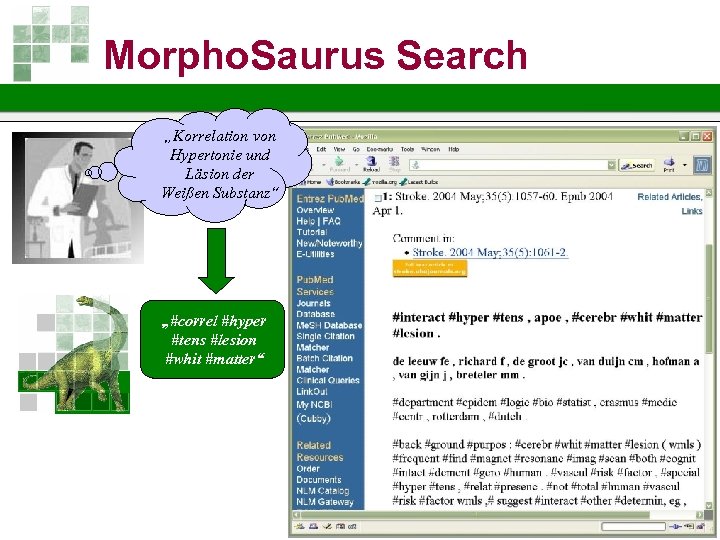
Morpho. Saurus Search „Korrelation von Hypertonie und Läsion der Weißen Substanz“ „#correl #hyper #tens #lesion #whit #matter“
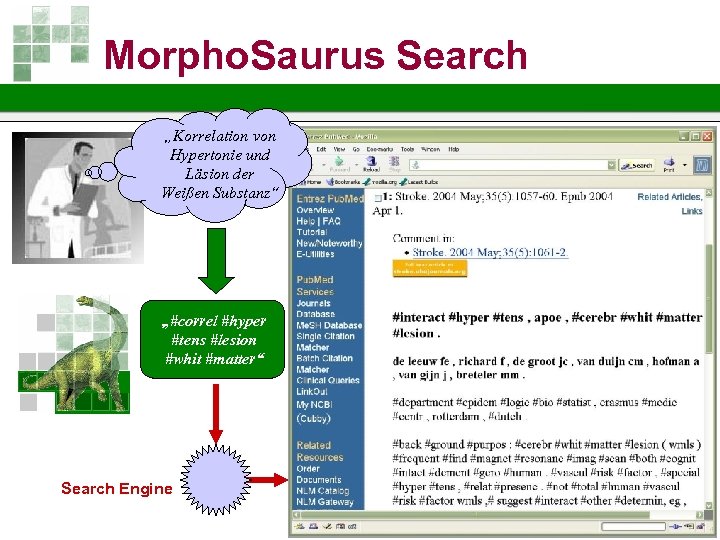
Morpho. Saurus Search „Korrelation von Hypertonie und Läsion der Weißen Substanz“ „#correl #hyper #tens #lesion #whit #matter“ Search Engine
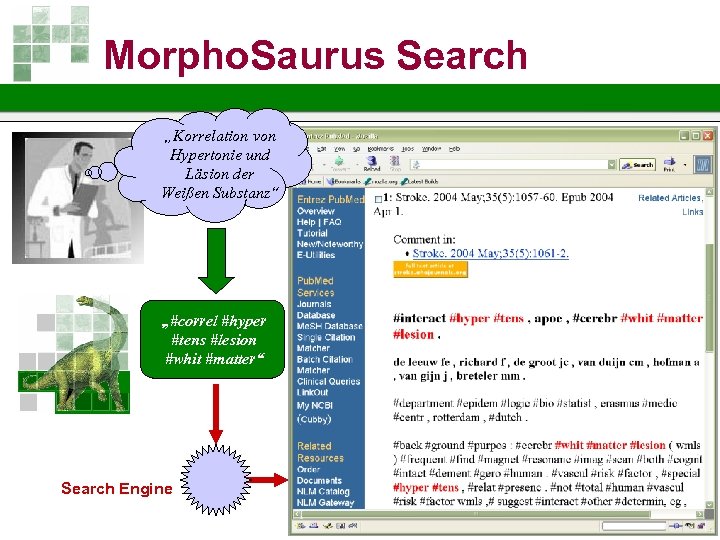
Morpho. Saurus Search „Korrelation von Hypertonie und Läsion der Weißen Substanz“ „#correl #hyper #tens #lesion #whit #matter“ Search Engine
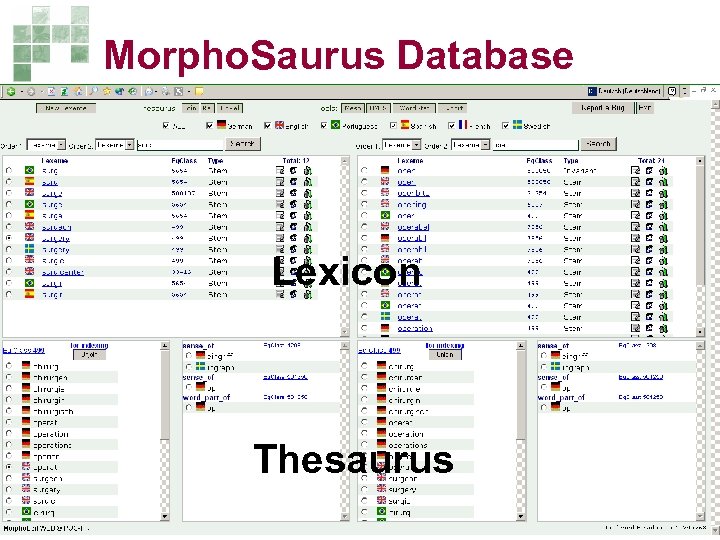
Morpho. Saurus Database Lexicon Thesaurus
Lexicon Construction • Manual construction of lexicon labor-intensive • Many medical terms exhibit high degree of similarity across languages (“cognates”): surgical, chirurgisch, chirurgique, cirúrgico, quirurgico, kirurgisk • Others don’t (“non-cognate translations”): spleen, Milz, rate, baço, bazo, mjälten • Project: development of automated technique for lexicon acquisition for new languages • Case study: Acquisition of medical subword lexemes for target languages Spanish, French and Swedish
Automatic Lexicon Acquisition Two steps of lexicon acquisition: 1. Generation and Validation of trusted subword cognates for the target languages 2. Bootstrapping: iterative learning of non cognate subword translations
Resources for Cognate Acquisition • Manually constructed subword lexicons in the source languages: – German (~22, 000 stems) – English (~22, 000 stems) – Portuguese (~14, 000 stems) • Manually created list of prefixes and suffixes for the target languages • Medical corpora for all languages • Word frequency lists generated from these corpora • Language pair specific string substitution rules
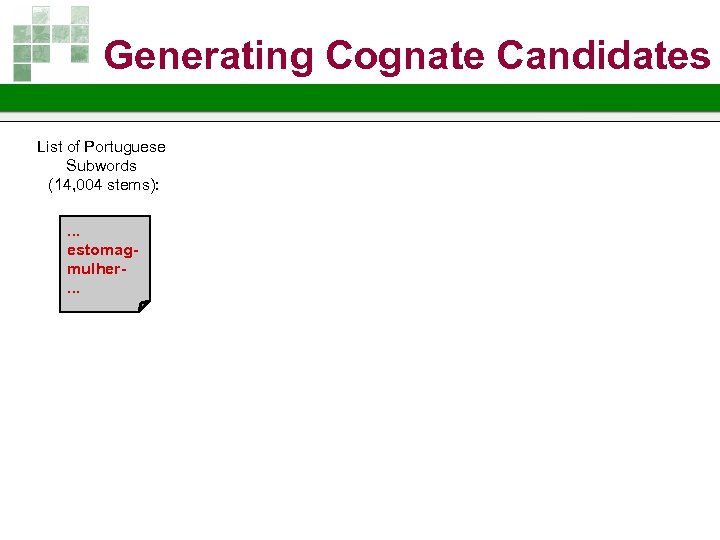
Generating Cognate Candidates List of Portuguese Subwords (14, 004 stems): . . . estomagmulher. . .
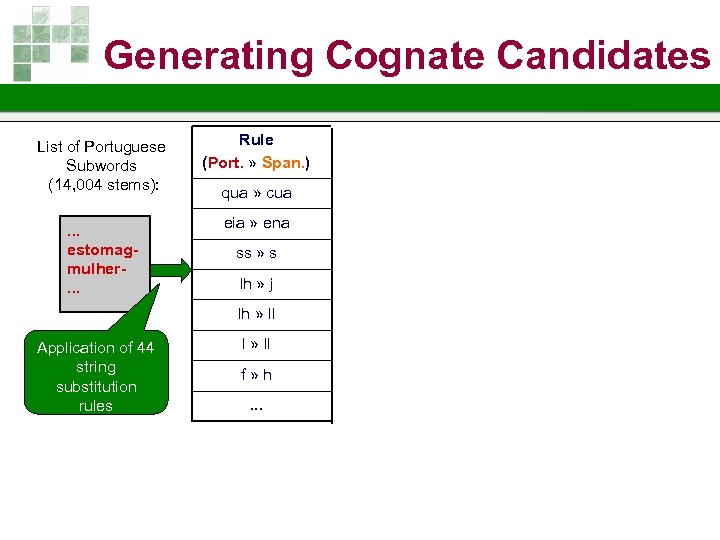
Generating Cognate Candidates List of Portuguese Subwords (14, 004 stems): Rule (Port. » Span. ) . . . estomagmulher. . . eia » ena qua » cua ss » s lh » j lh » ll Application of 44 string substitution rules l » ll f» h. . .
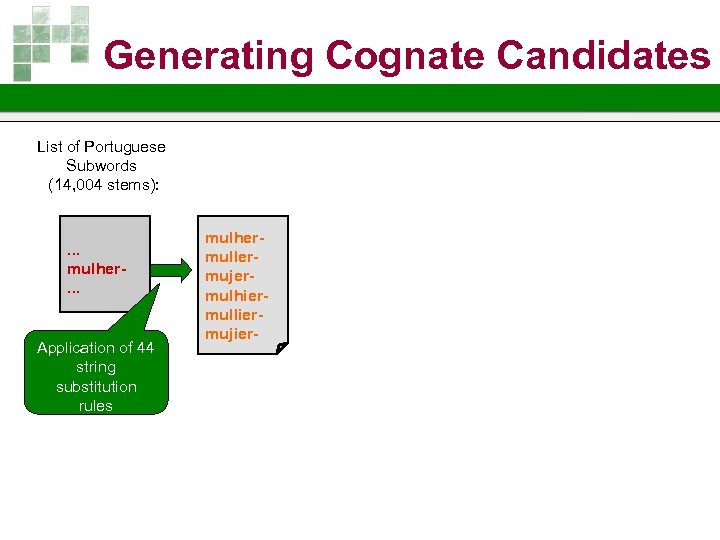
Generating Cognate Candidates List of Portuguese Subwords (14, 004 stems): . . . mulher. . . Application of 44 string substitution rules mulhermullermujermulhiermulliermujier-
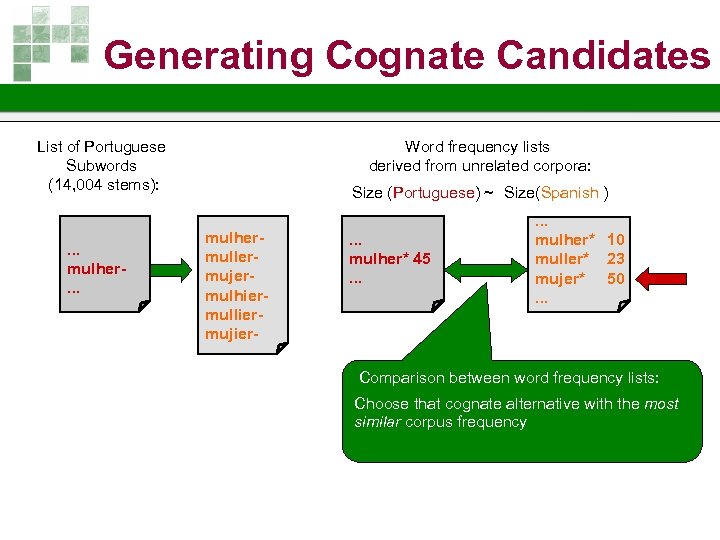
Generating Cognate Candidates List of Portuguese Subwords (14, 004 stems): . . . mulher. . . Word frequency lists derived from unrelated corpora: Size (Portuguese) ~ Size(Spanish ) mulhermullermujermulhiermulliermujier- . . . mulher* 45. . . mulher* 10 muller* 23 mujer* 50. . . Comparison between word frequency lists: Choose that cognate alternative with the most similar corpus frequency
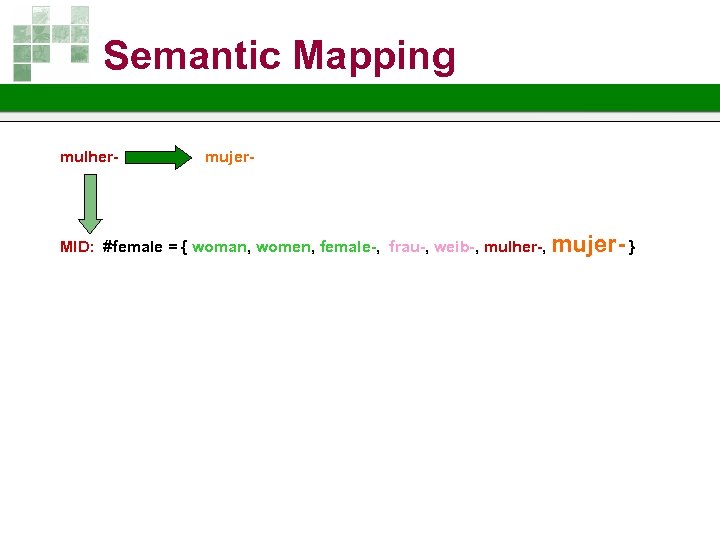
Semantic Mapping mulher- mujer- MID: #female = { woman, women, female-, frau-, weib-, mulher-, mujer- }
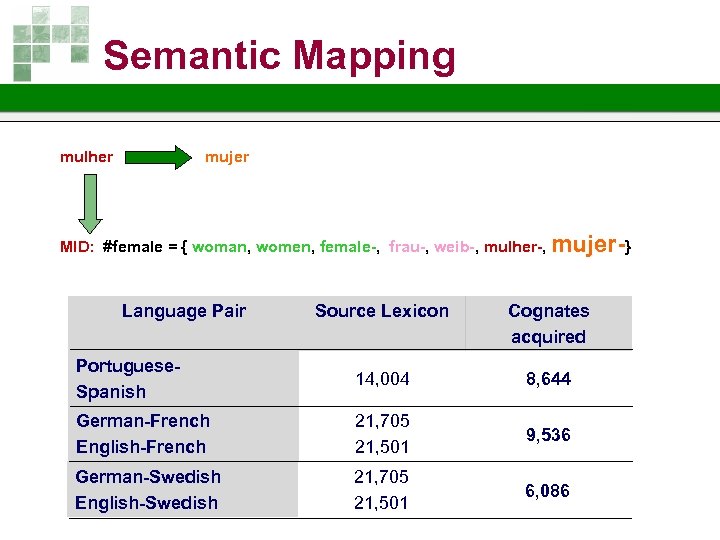
Semantic Mapping mulher mujer MID: #female = { woman, women, female-, frau-, weib-, mulher-, mujer-} Language Pair Source Lexicon Cognates acquired Portuguese. Spanish 14, 004 8, 644 German-French English-French 21, 705 21, 501 9, 536 German-Swedish English-Swedish 21, 705 21, 501 6, 086
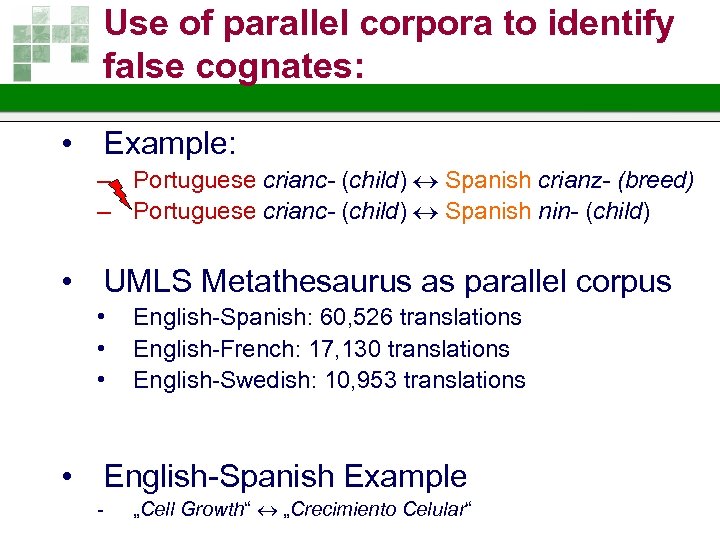
Use of parallel corpora to identify false cognates: • Example: – Portuguese crianc- (child) Spanish crianz- (breed) – Portuguese crianc- (child) Spanish nin- (child) • UMLS Metathesaurus as parallel corpus • • • English-Spanish: 60, 526 translations English-French: 17, 130 translations English-Swedish: 10, 953 translations • English-Spanish Example - „Cell Growth“ „Crecimiento Celular“
Cognate Validation • Use generated cognate seed lexicons to process the UMLS translations with the Morpho. Saurus
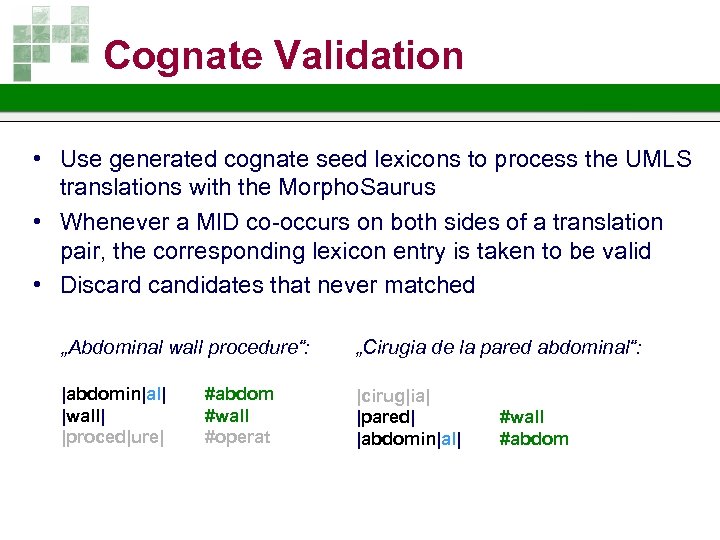
Cognate Validation • Use generated cognate seed lexicons to process the UMLS translations with the Morpho. Saurus • Whenever a MID co-occurs on both sides of a translation pair, the corresponding lexicon entry is taken to be valid • Discard candidates that never matched „Abdominal wall procedure“: „Cirugia de la pared abdominal“: |abdomin|al| |wall| |proced|ure| |cirug|ia| |pared| |abdomin|al| #abdom #wall #operat #wall #abdom
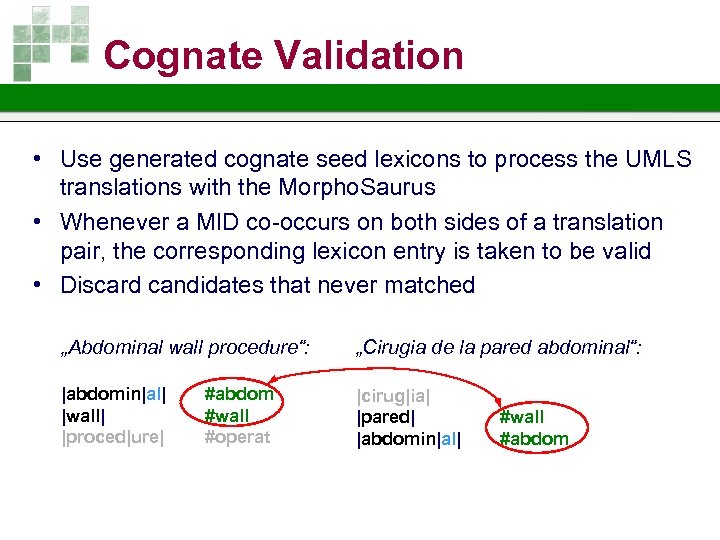
Cognate Validation • Use generated cognate seed lexicons to process the UMLS translations with the Morpho. Saurus • Whenever a MID co-occurs on both sides of a translation pair, the corresponding lexicon entry is taken to be valid • Discard candidates that never matched „Abdominal wall procedure“: „Cirugia de la pared abdominal“: |abdomin|al| |wall| |proced|ure| |cirug|ia| |pared| |abdomin|al| #abdom #wall #operat #wall #abdom
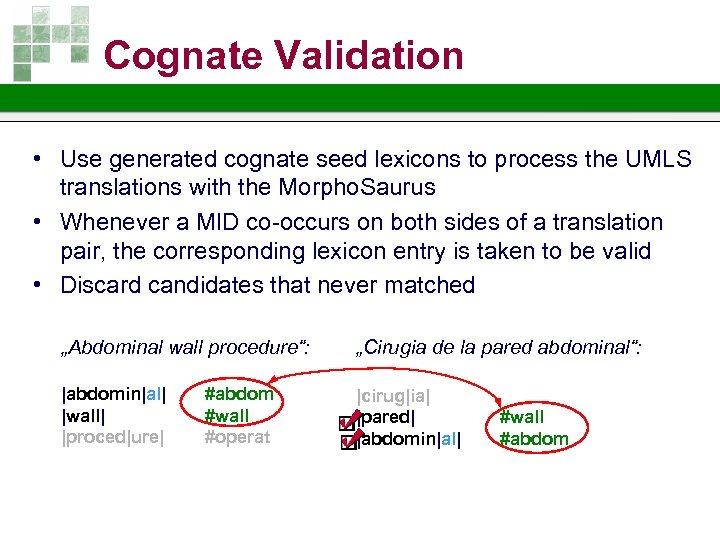
Cognate Validation • Use generated cognate seed lexicons to process the UMLS translations with the Morpho. Saurus • Whenever a MID co-occurs on both sides of a translation pair, the corresponding lexicon entry is taken to be valid • Discard candidates that never matched „Abdominal wall procedure“: „Cirugia de la pared abdominal“: |abdomin|al| |wall| |proced|ure| |cirug|ia| |pared| |abdomin|al| #abdom #wall #operat #wall #abdom
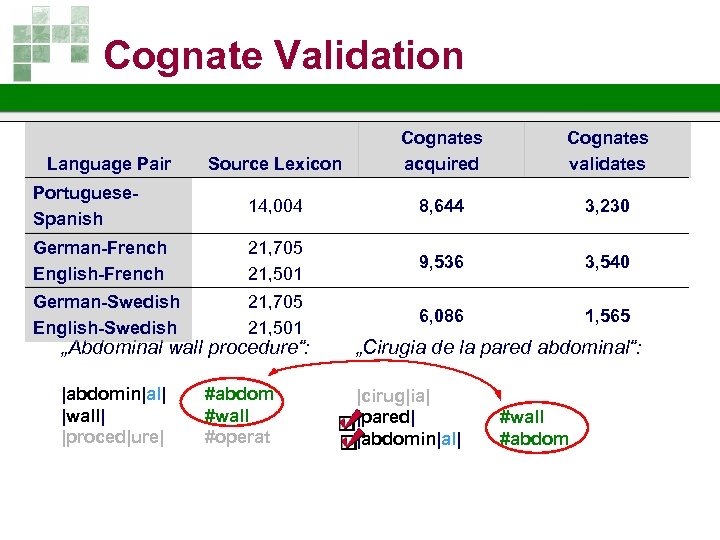
Cognate Validation Source Lexicon Cognates acquired Cognates validates Portuguese. Spanish 14, 004 8, 644 3, 230 German-French English-French 21, 705 21, 501 9, 536 3, 540 German-Swedish English-Swedish 21, 705 21, 501 6, 086 1, 565 Language Pair „Abdominal wall procedure“: „Cirugia de la pared abdominal“: |abdomin|al| |wall| |proced|ure| |cirug|ia| |pared| |abdomin|al| #abdom #wall #operat #wall #abdom
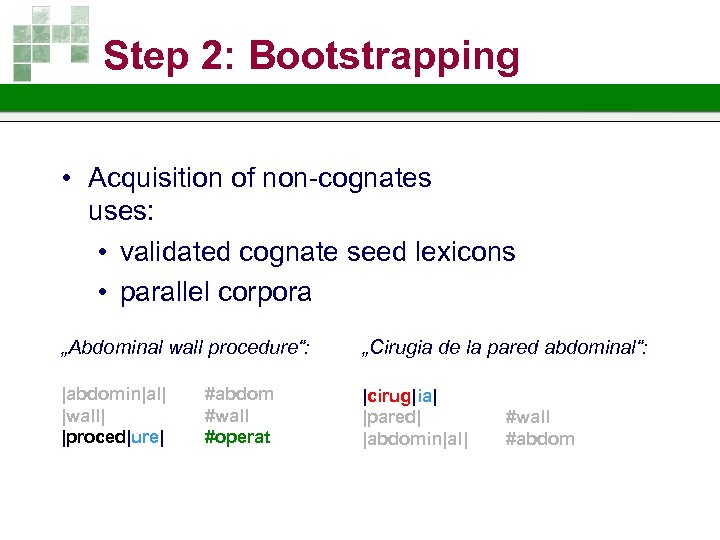
Step 2: Bootstrapping • Acquisition of non-cognates uses: • validated cognate seed lexicons • parallel corpora „Abdominal wall procedure“: „Cirugia de la pared abdominal“: |abdomin|al| |wall| |proced|ure| |cirug|ia| |pared| |abdomin|al| #abdom #wall #operat #wall #abdom
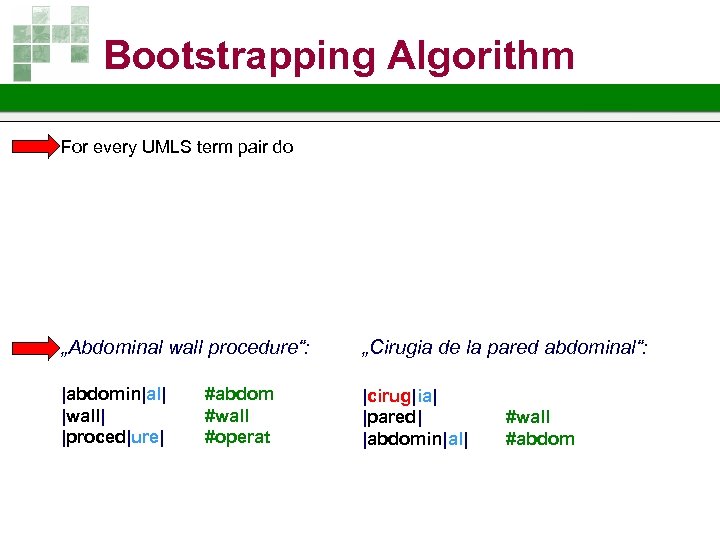
Bootstrapping Algorithm For every UMLS term pair do „Abdominal wall procedure“: „Cirugia de la pared abdominal“: |abdomin|al| |wall| |proced|ure| |cirug|ia| |pared| |abdomin|al| #abdom #wall #operat #wall #abdom
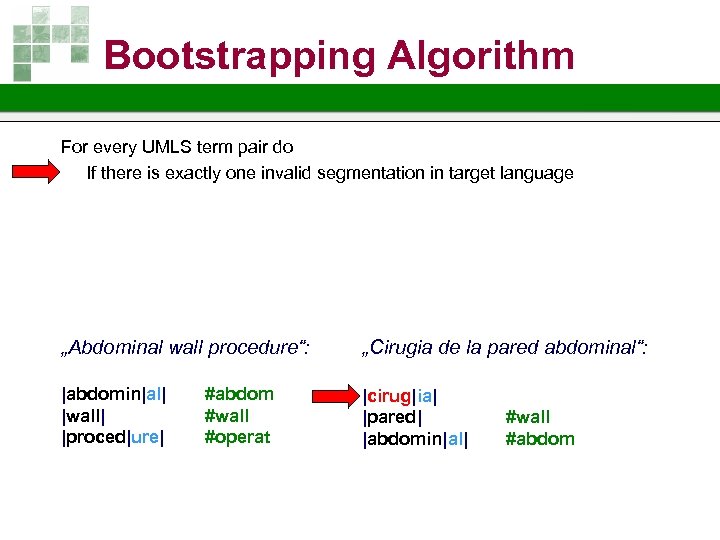
Bootstrapping Algorithm For every UMLS term pair do If there is exactly one invalid segmentation in target language „Abdominal wall procedure“: „Cirugia de la pared abdominal“: |abdomin|al| |wall| |proced|ure| |cirug|ia| |pared| |abdomin|al| #abdom #wall #operat #wall #abdom
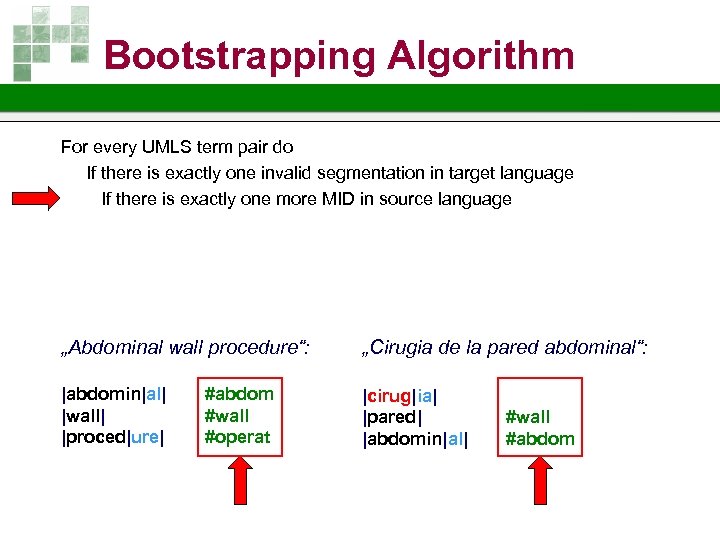
Bootstrapping Algorithm For every UMLS term pair do If there is exactly one invalid segmentation in target language If there is exactly one more MID in source language „Abdominal wall procedure“: „Cirugia de la pared abdominal“: |abdomin|al| |wall| |proced|ure| |cirug|ia| |pared| |abdomin|al| #abdom #wall #operat #wall #abdom
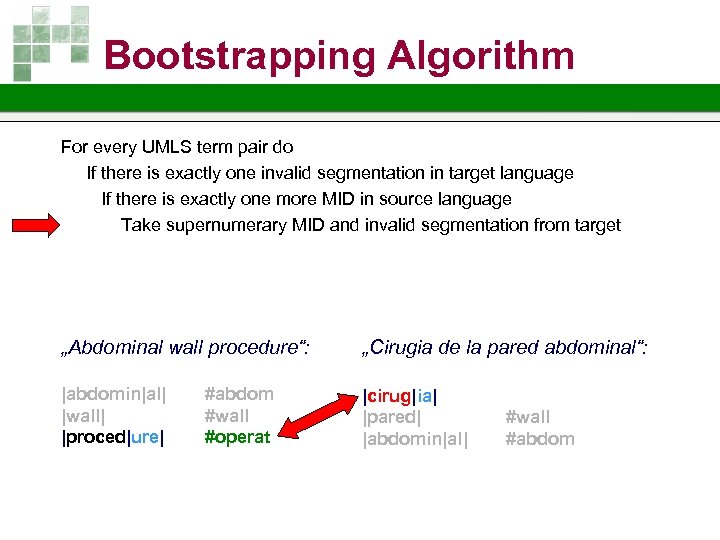
Bootstrapping Algorithm For every UMLS term pair do If there is exactly one invalid segmentation in target language If there is exactly one more MID in source language Take supernumerary MID and invalid segmentation from target „Abdominal wall procedure“: „Cirugia de la pared abdominal“: |abdomin|al| |wall| |proced|ure| |cirug|ia| |pared| |abdomin|al| #abdom #wall #operat #wall #abdom
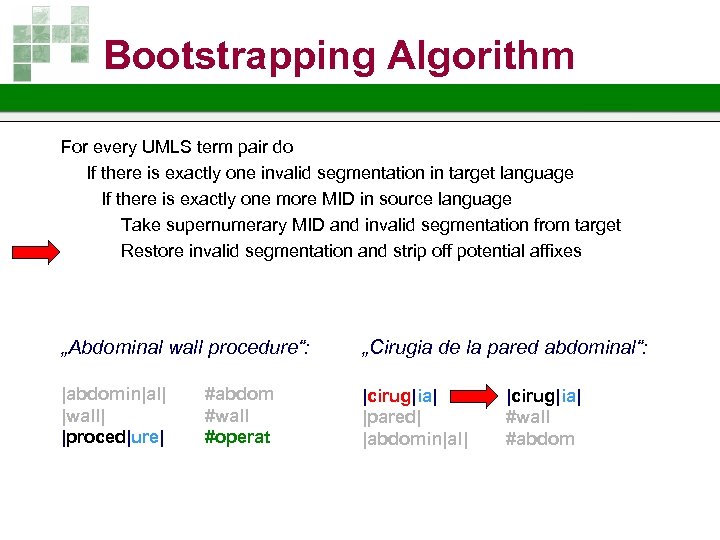
Bootstrapping Algorithm For every UMLS term pair do If there is exactly one invalid segmentation in target language If there is exactly one more MID in source language Take supernumerary MID and invalid segmentation from target Restore invalid segmentation and strip off potential affixes „Abdominal wall procedure“: „Cirugia de la pared abdominal“: |abdomin|al| |wall| |proced|ure| |cirug|ia| |pared| |abdomin|al| #abdom #wall #operat |cirug|ia| #wall #abdom
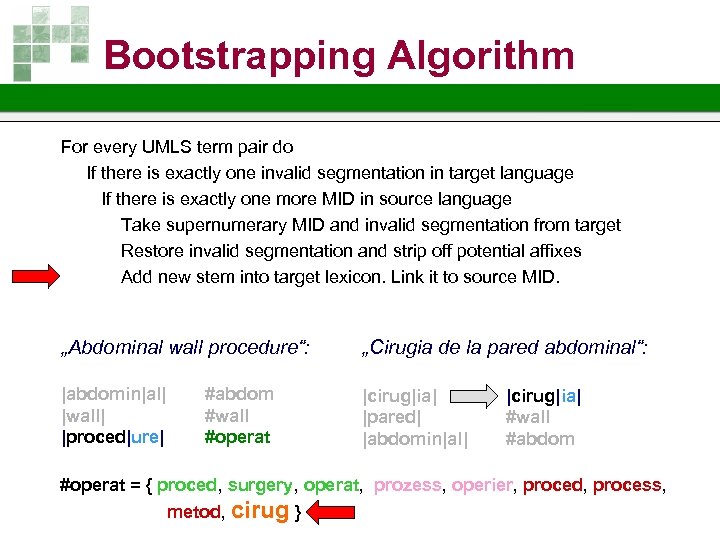
Bootstrapping Algorithm For every UMLS term pair do If there is exactly one invalid segmentation in target language If there is exactly one more MID in source language Take supernumerary MID and invalid segmentation from target Restore invalid segmentation and strip off potential affixes Add new stem into target lexicon. Link it to source MID. „Abdominal wall procedure“: „Cirugia de la pared abdominal“: |abdomin|al| |wall| |proced|ure| |cirug|ia| |pared| |abdomin|al| #abdom #wall #operat |cirug|ia| #wall #abdom #operat = { proced, surgery, operat, prozess, operier, proced, process, metod, cirug }
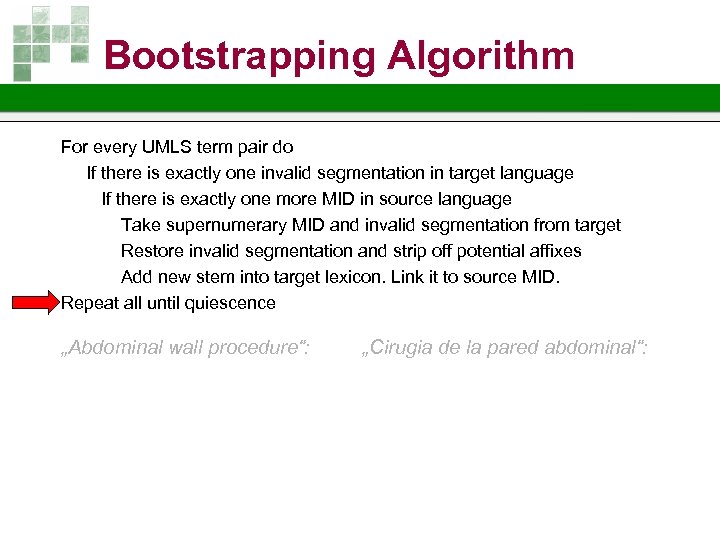
Bootstrapping Algorithm For every UMLS term pair do If there is exactly one invalid segmentation in target language If there is exactly one more MID in source language Take supernumerary MID and invalid segmentation from target Restore invalid segmentation and strip off potential affixes Add new stem into target lexicon. Link it to source MID. Repeat all until quiescence „Abdominal wall procedure“: „Cirugia de la pared abdominal“:
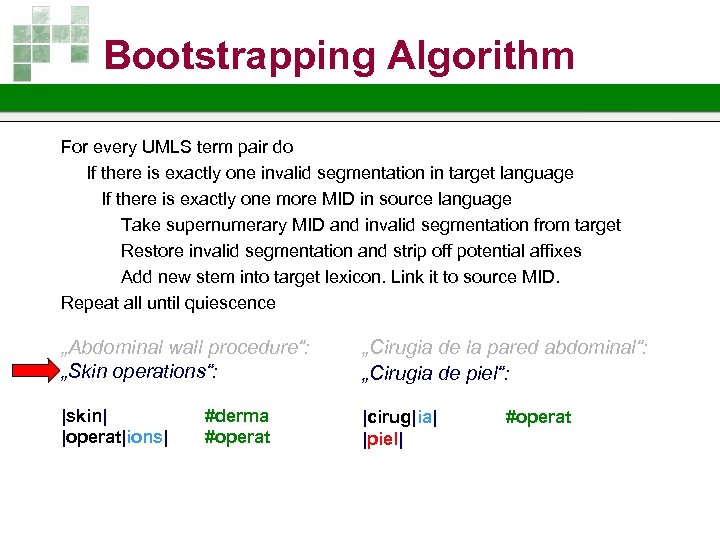
Bootstrapping Algorithm For every UMLS term pair do If there is exactly one invalid segmentation in target language If there is exactly one more MID in source language Take supernumerary MID and invalid segmentation from target Restore invalid segmentation and strip off potential affixes Add new stem into target lexicon. Link it to source MID. Repeat all until quiescence „Abdominal wall procedure“: „Skin operations“: „Cirugia de la pared abdominal“: „Cirugia de piel“: |skin| |operat|ions| |cirug|ia| |piel| #derma #operat
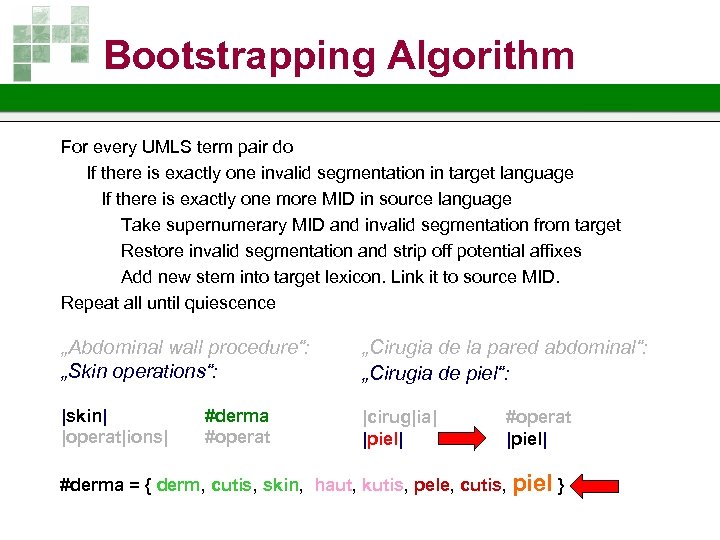
Bootstrapping Algorithm For every UMLS term pair do If there is exactly one invalid segmentation in target language If there is exactly one more MID in source language Take supernumerary MID and invalid segmentation from target Restore invalid segmentation and strip off potential affixes Add new stem into target lexicon. Link it to source MID. Repeat all until quiescence „Abdominal wall procedure“: „Skin operations“: „Cirugia de la pared abdominal“: „Cirugia de piel“: |skin| |operat|ions| |cirug|ia| |piel| #derma #operat |piel| #derma = { derm, cutis, skin, haut, kutis, pele, cutis, piel }
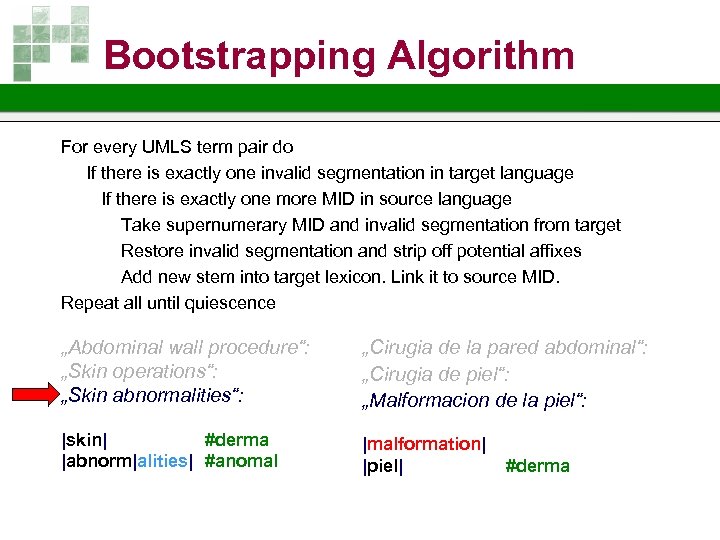
Bootstrapping Algorithm For every UMLS term pair do If there is exactly one invalid segmentation in target language If there is exactly one more MID in source language Take supernumerary MID and invalid segmentation from target Restore invalid segmentation and strip off potential affixes Add new stem into target lexicon. Link it to source MID. Repeat all until quiescence „Abdominal wall procedure“: „Skin operations“: „Skin abnormalities“: „Cirugia de la pared abdominal“: „Cirugia de piel“: „Malformacion de la piel“: |skin| #derma |abnorm|alities| #anomal |malformation| |piel| #derma
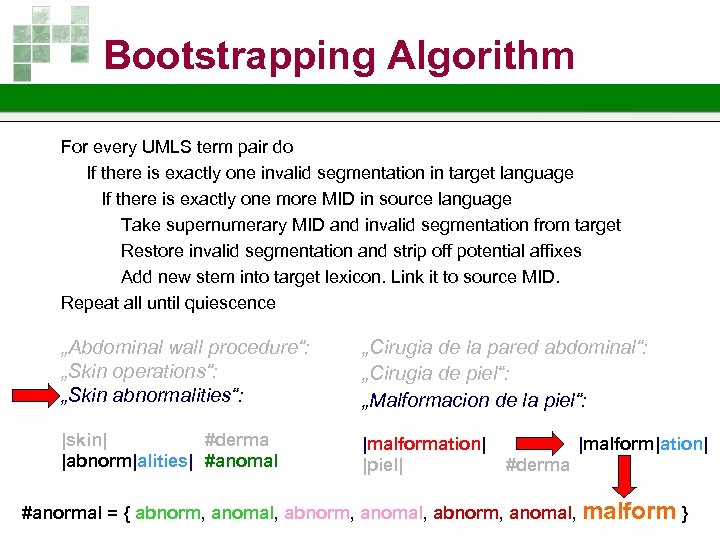
Bootstrapping Algorithm For every UMLS term pair do If there is exactly one invalid segmentation in target language If there is exactly one more MID in source language Take supernumerary MID and invalid segmentation from target Restore invalid segmentation and strip off potential affixes Add new stem into target lexicon. Link it to source MID. Repeat all until quiescence „Abdominal wall procedure“: „Skin operations“: „Skin abnormalities“: „Cirugia de la pared abdominal“: „Cirugia de piel“: „Malformacion de la piel“: |skin| #derma |abnorm|alities| #anomal |malformation| |piel| |malform|ation| #derma #anormal = { abnorm, anomal, malform }
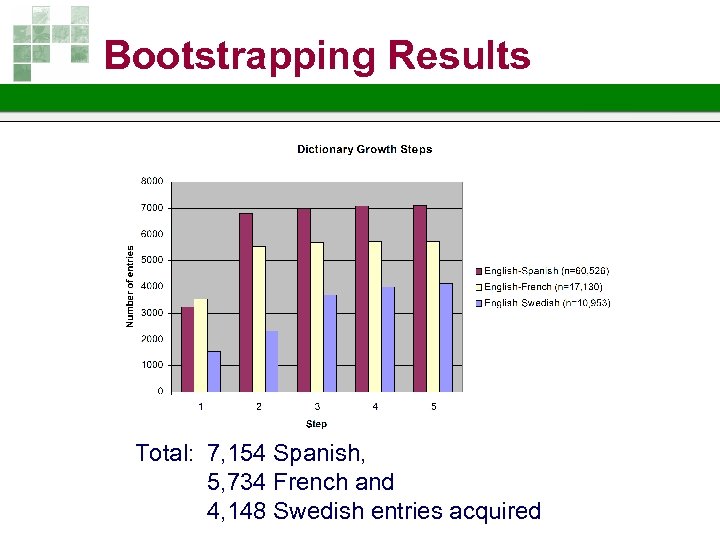
Bootstrapping Results Total: 7, 154 Spanish, 5, 734 French and 4, 148 Swedish entries acquired
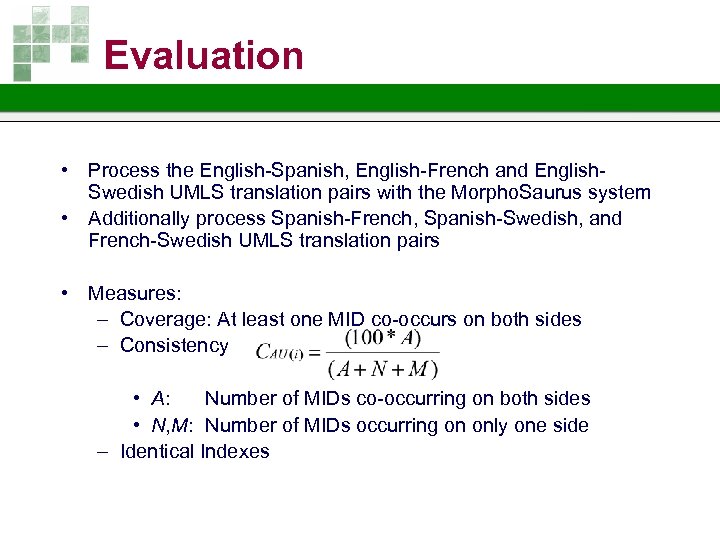
Evaluation • Process the English-Spanish, English-French and English. Swedish UMLS translation pairs with the Morpho. Saurus system • Additionally process Spanish-French, Spanish-Swedish, and French-Swedish UMLS translation pairs • Measures: – Coverage: At least one MID co-occurs on both sides – Consistency • A: Number of MIDs co-occurring on both sides • N, M: Number of MIDs occurring on only one side – Identical Indexes
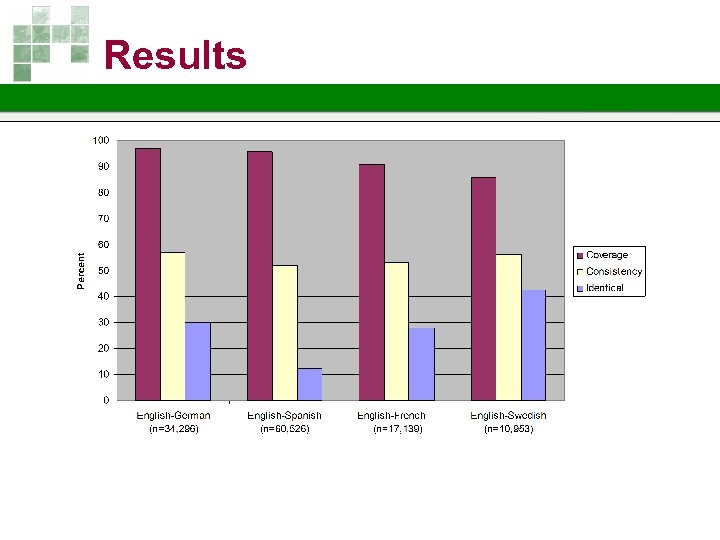
Results
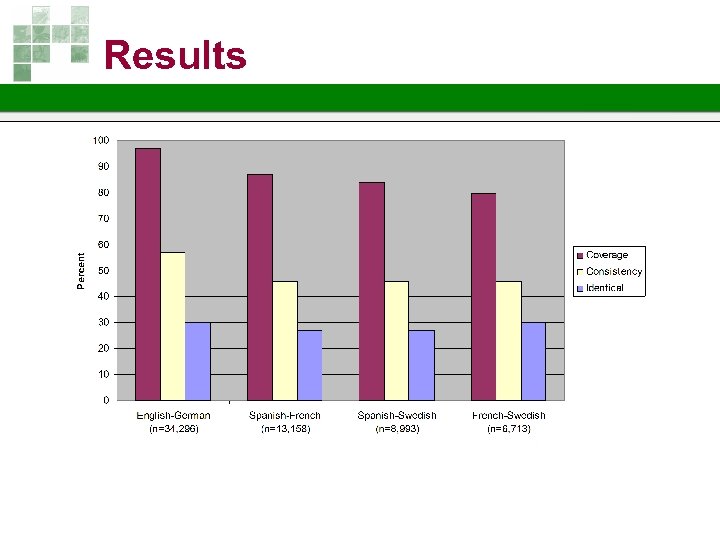
Results
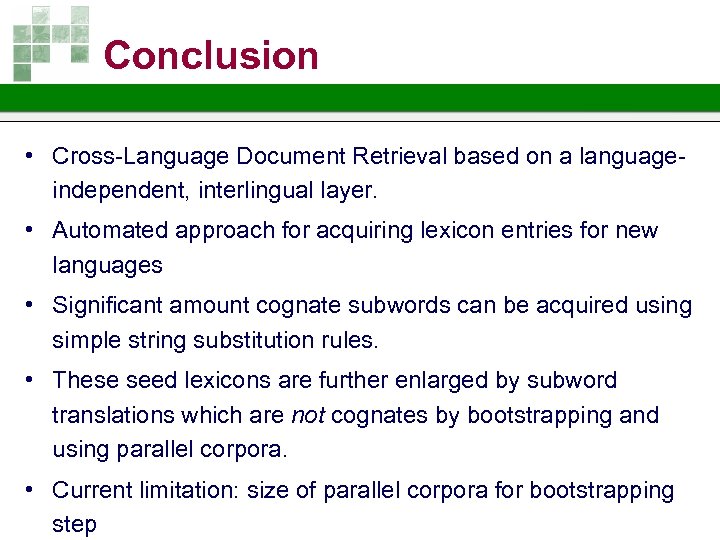
Conclusion • Cross-Language Document Retrieval based on a languageindependent, interlingual layer. • Automated approach for acquiring lexicon entries for new languages • Significant amount cognate subwords can be acquired using simple string substitution rules. • These seed lexicons are further enlarged by subword translations which are not cognates by bootstrapping and using parallel corpora. • Current limitation: size of parallel corpora for bootstrapping step
Automatic Lexicon Acquisition for a Medical Cross-Language Information Retrieval System Kornél Markó Stefan Schulz Udo Hahn Medical Informatics, Freiburg University Hospital (Germany) Jena University, Language & Information Engineering (Germany)
www. Morpho. Saurus. net
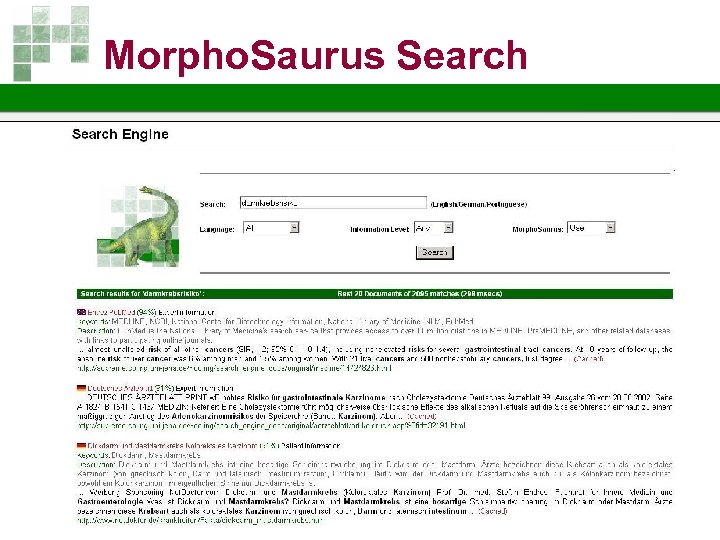
Morpho. Saurus Search
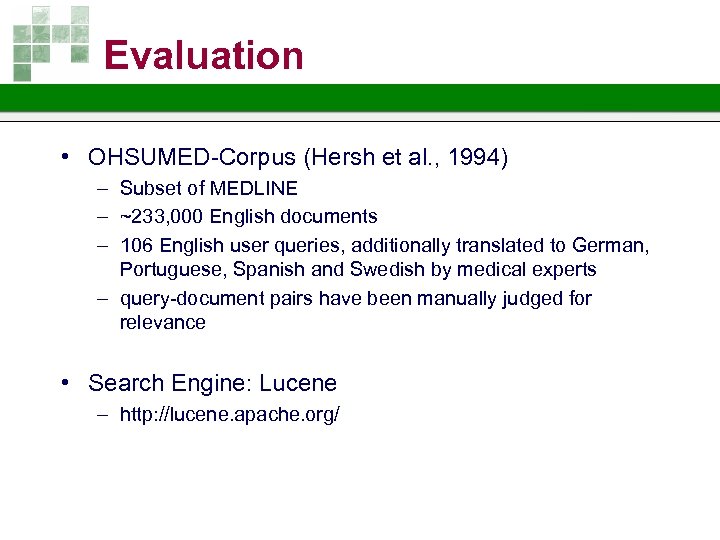
Evaluation • OHSUMED-Corpus (Hersh et al. , 1994) – Subset of MEDLINE – ~233, 000 English documents – 106 English user queries, additionally translated to German, Portuguese, Spanish and Swedish by medical experts – query-document pairs have been manually judged for relevance • Search Engine: Lucene – http: //lucene. apache. org/
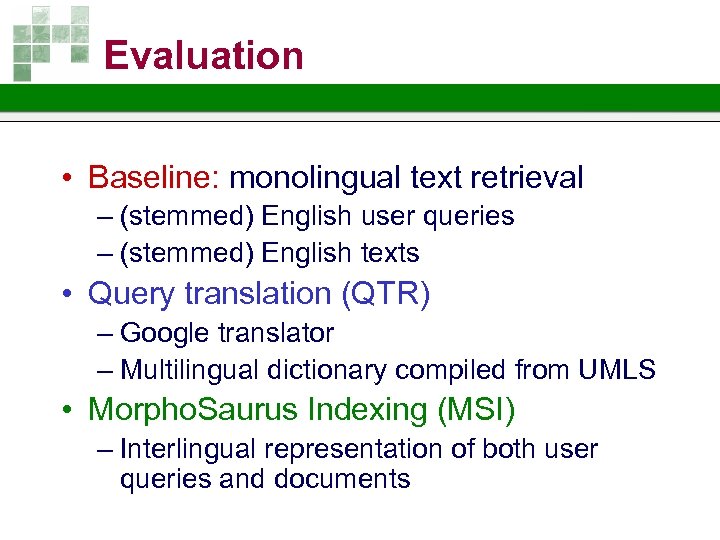
Evaluation • Baseline: monolingual text retrieval – (stemmed) English user queries – (stemmed) English texts • Query translation (QTR) – Google translator – Multilingual dictionary compiled from UMLS • Morpho. Saurus Indexing (MSI) – Interlingual representation of both user queries and documents
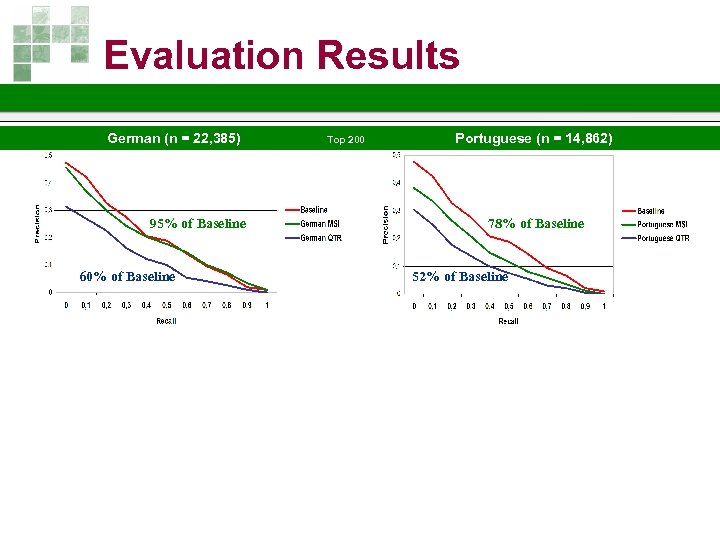
Evaluation Results German (n = 22, 385) 95% of Baseline 60% of Baseline Top 200 Portuguese (n = 14, 862) 78% of Baseline 52% of Baseline
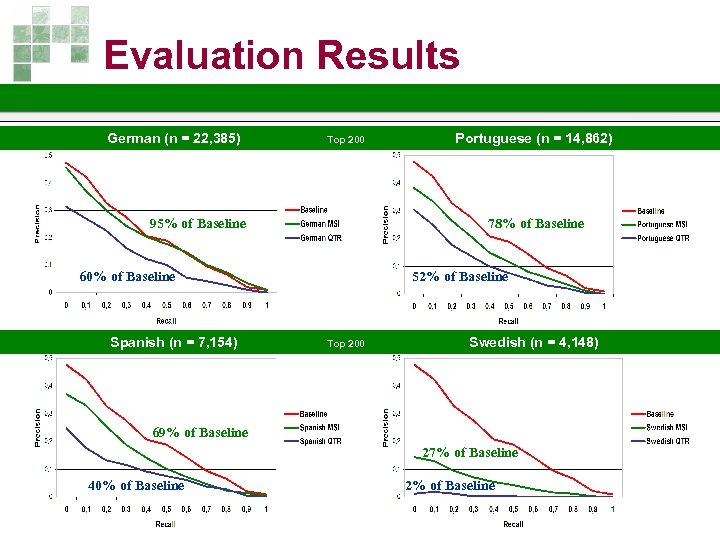
Evaluation Results German (n = 22, 385) Top 200 78% of Baseline 95% of Baseline 52% of Baseline 60% of Baseline Spanish (n = 7, 154) Portuguese (n = 14, 862) Top 200 Swedish (n = 4, 148) 69% of Baseline 27% of Baseline 40% of Baseline 2% of Baseline
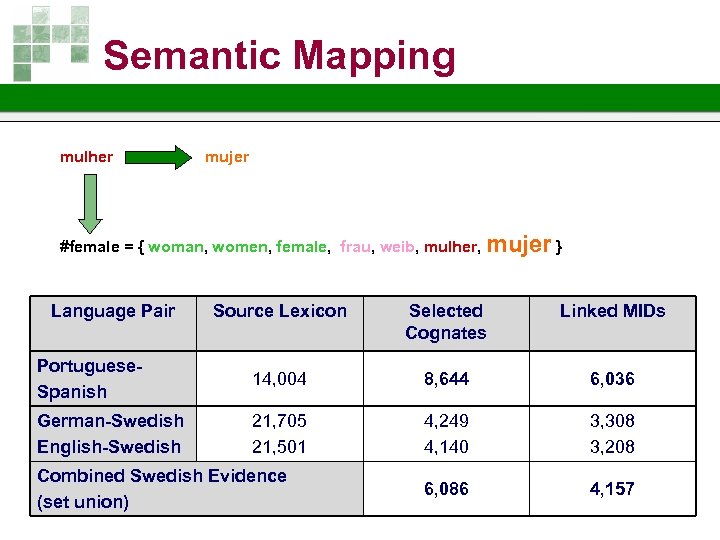
Semantic Mapping mulher mujer #female = { woman, women, female, frau, weib, mulher, mujer } Language Pair Source Lexicon Selected Cognates Linked MIDs Portuguese. Spanish 14, 004 8, 644 6, 036 German-Swedish English-Swedish 21, 705 21, 501 4, 249 4, 140 3, 308 3, 208 6, 086 4, 157 Combined Swedish Evidence (set union)
Скачать презентацию Multilingual Lexical Acquisition by Bootstrapping Cognate Seed Lexicons
71fd954c8801dd111bb2beb6dcde493f.ppt