


 Скачать презентацию Multifunctional agriculture and rural development New trends Paola
ad653226a113427c36f009a9185208a3.ppt
- Количество слайдов: 28
 Multifunctional agriculture and rural development New trends Paola Scarpellini 14 May 2006
 Some points n The concept of multifunctionality concept n Why is important today and why is a policy issue? n Multifunctionality dependent concept n The is a context- dimensions of multifunctionality. Practical application
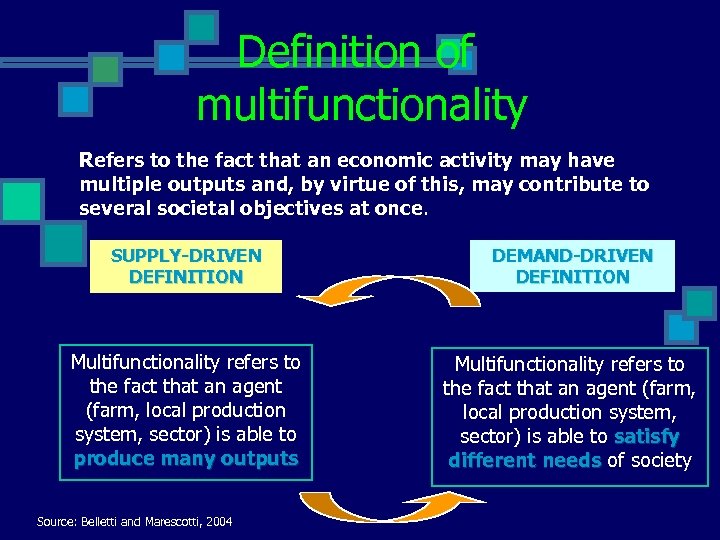 Definition of multifunctionality Refers to the fact that an economic activity may have multiple outputs and, by virtue of this, may contribute to several societal objectives at once. SUPPLY-DRIVEN DEFINITION DEMAND-DRIVEN DEFINITION Multifunctionality refers to the fact that an agent (farm, local production system, sector) is able to produce many outputs Multifunctionality refers to the fact that an agent (farm, local production system, sector) is able to satisfy different needs of society needs Source: Belletti and Marescotti, 2004
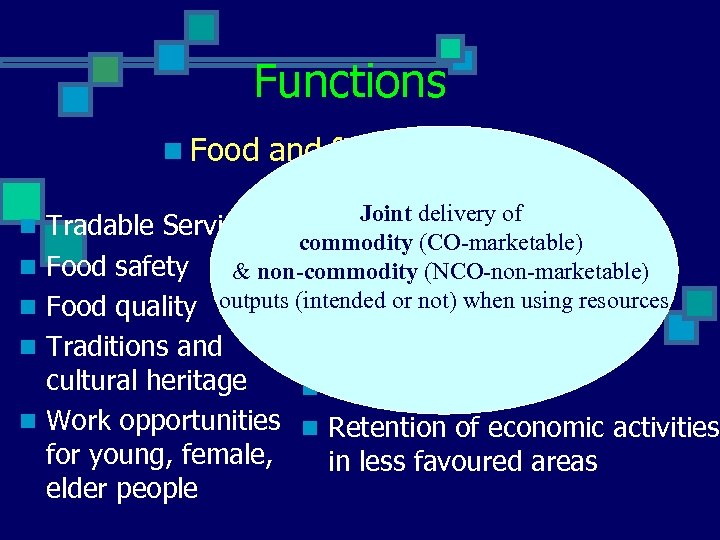 Functions n Food and fibre production Joint delivery of n Biodiversity commodity (CO-marketable) n Food safety n Animal welfare & non-commodity (NCO-non-marketable) n Food quality outputs (intended or not) when using resources n Pollution control n Tradable Services n Traditions and n Amenity values cultural heritage n Rural settlement n Work opportunities n Retention of economic activities for young, female, in less favoured areas elder people
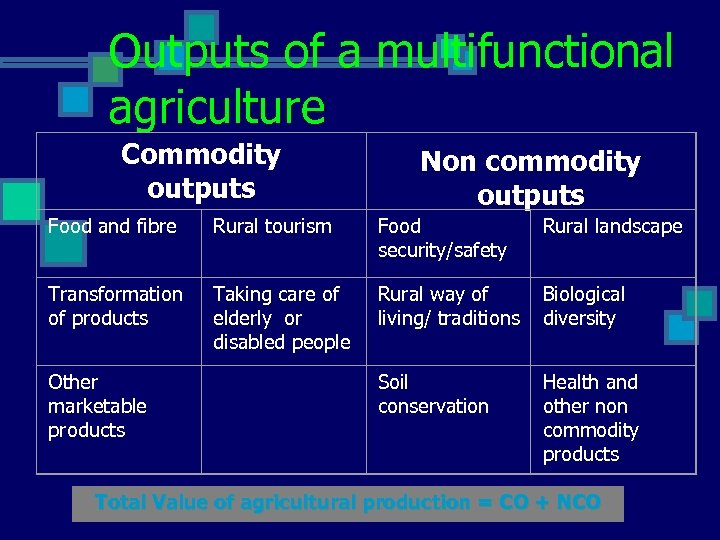 Outputs of a multifunctional agriculture Commodity outputs Non commodity outputs Food and fibre Rural tourism Food security/safety Rural landscape Transformation of products Taking care of elderly or disabled people Rural way of living/ traditions Biological diversity Other marketable products Soil conservation Health and other non commodity products Total Value of agricultural production = CO + NCO
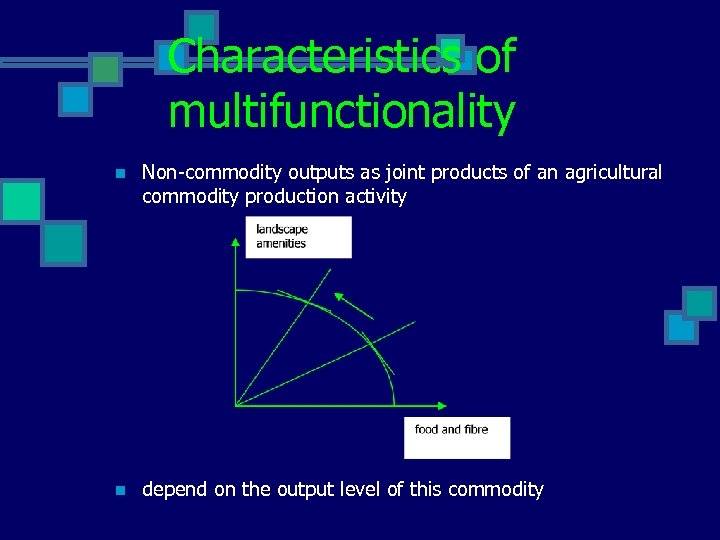 Characteristics of multifunctionality n Non-commodity outputs as joint products of an agricultural commodity production activity n depend on the output level of this commodity
 Examples of jointness biodiversity in prairies depend on cultivation practices beauty of landscape: may depend on farming system employment/rural viability depend on economic performance of farms water quality depend on agricultural intensity Problem: non-commodity outputs have no price and therefore output combination may be biased and is thus not always reflecting the willingness-to-pay of consumers (externalities and public goods) Depending on the nature of the linkage the noncommodity output can totally, partially or not be de-linked from commodity output
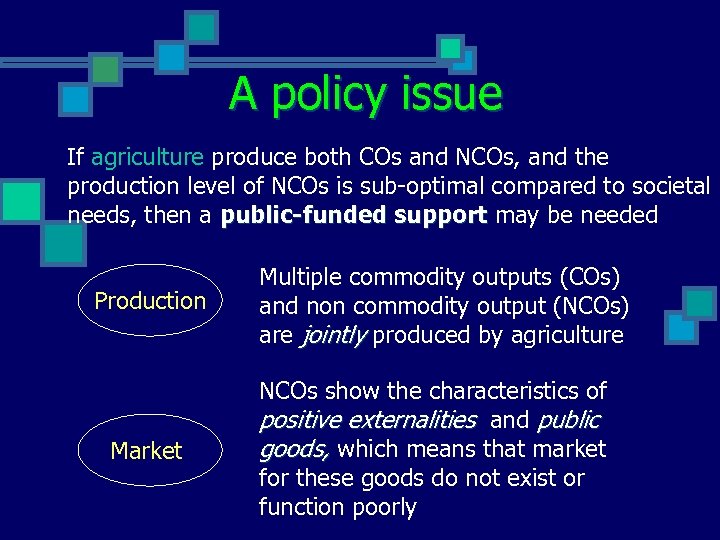 A policy issue If agriculture produce both COs and NCOs, and the production level of NCOs is sub-optimal compared to societal needs, then a public-funded support may be needed support Production Market Multiple commodity outputs (COs) and non commodity output (NCOs) are jointly produced by agriculture NCOs show the characteristics of positive externalities and public goods, which means that market for these goods do not exist or function poorly
 Externalities n Non-commodities for which no markets/correct price exist n Positive externalities: goods contributing to welfare or well-being n Negative externalities: outputs decreasing welfare or well-being Any change in commodity production, be it market-led or policy-driven, entails a change in the levels of the NCOs that are jointly-produced with CO Externalities do not mean that public intervention is always the only solution
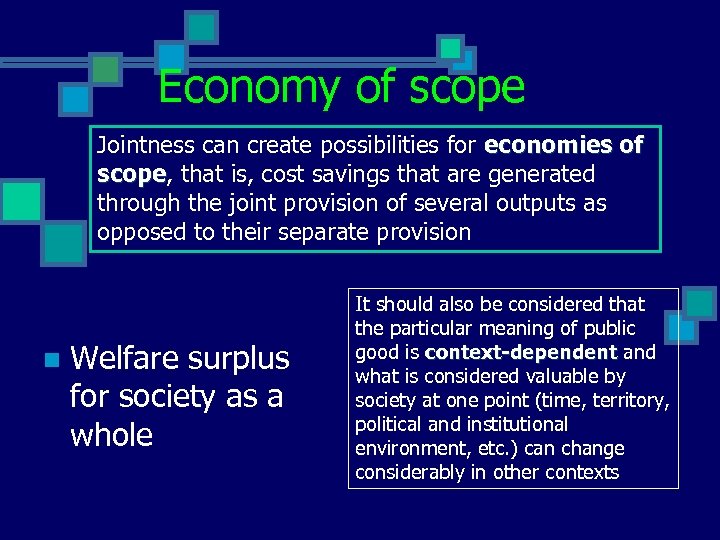 Economy of scope Jointness can create possibilities for economies of scope, that is, cost savings that are generated scope through the joint provision of several outputs as opposed to their separate provision n Welfare surplus for society as a whole It should also be considered that the particular meaning of public good is context-dependent and context-dependent what is considered valuable by society at one point (time, territory, political and institutional environment, etc. ) can change considerably in other contexts
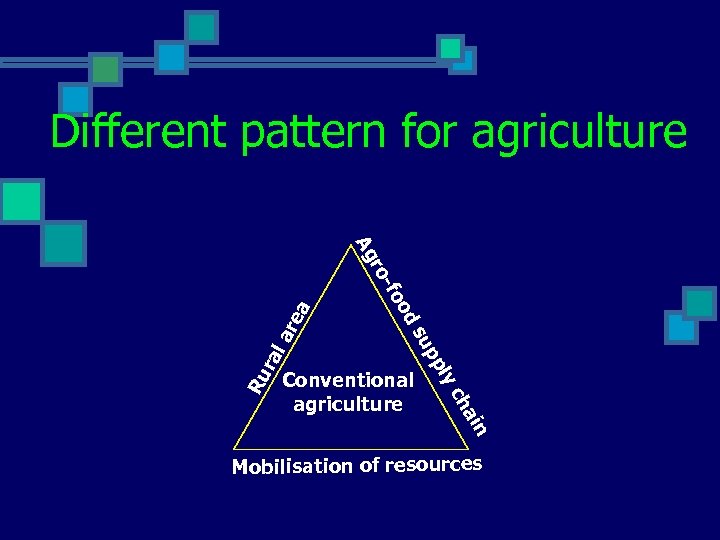
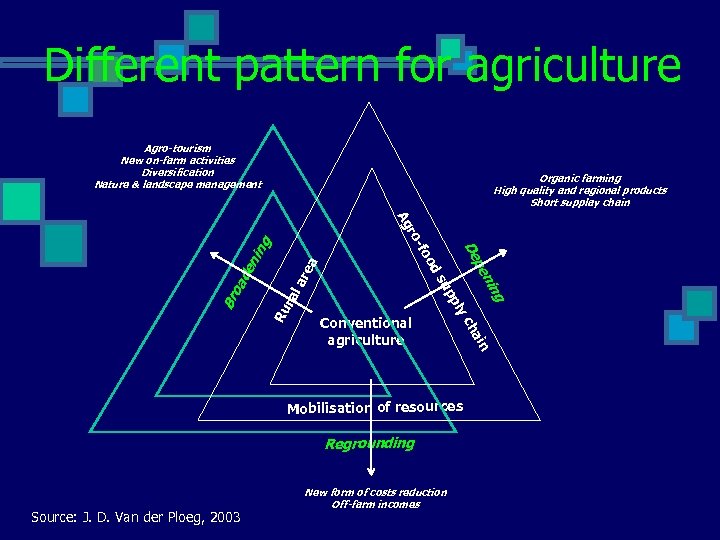
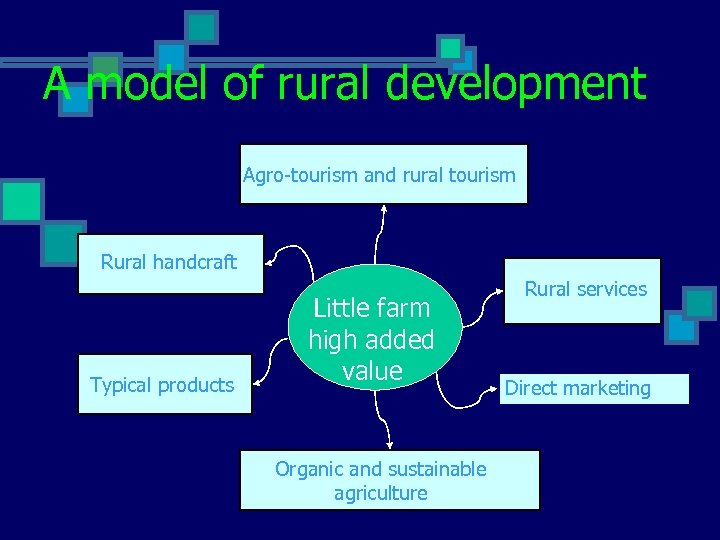
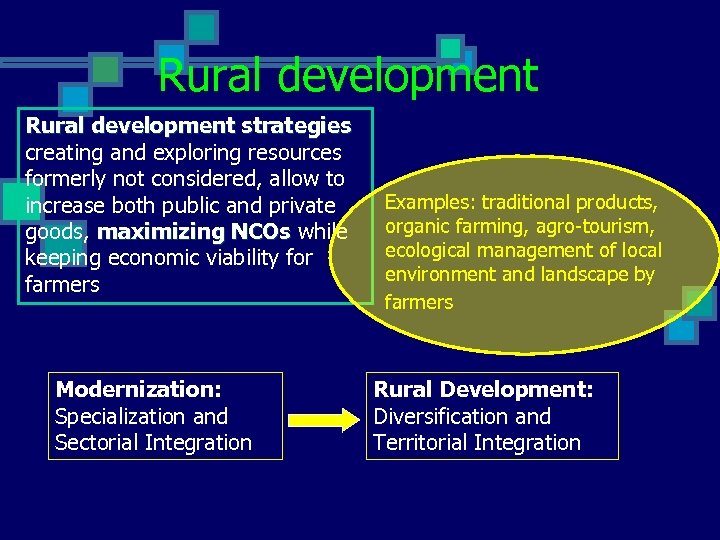 Rural development strategies creating and exploring resources formerly not considered, allow to increase both public and private goods, maximizing NCOs while NCOs keeping economic viability for farmers Modernization: Specialization and Sectorial Integration Examples: traditional products, organic farming, agro-tourism, ecological management of local environment and landscape by farmers Rural Development: Diversification and Territorial Integration
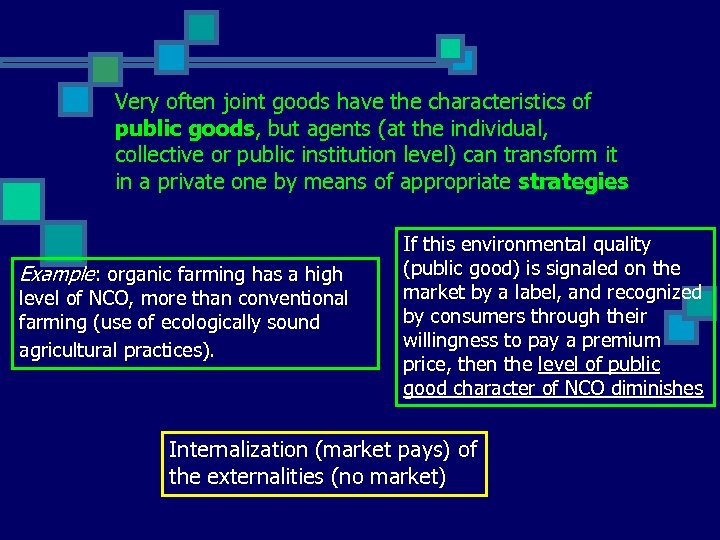 Very often joint goods have the characteristics of public goods, but agents (at the individual, collective or public institution level) can transform it in a private one by means of appropriate strategies Example: organic farming has a high level of NCO, more than conventional farming (use of ecologically sound agricultural practices). If this environmental quality (public good) is signaled on the market by a label, and recognized by consumers through their willingness to pay a premium price, then the level of public good character of NCO diminishes Internalization (market pays) of the externalities (no market)
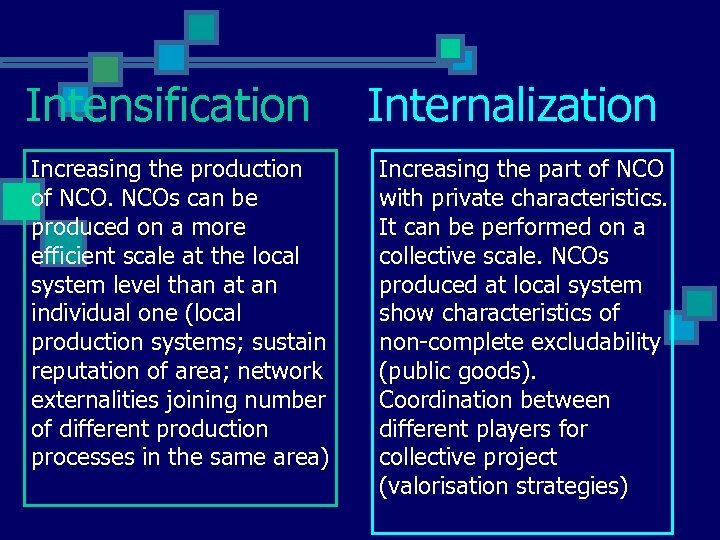 Intensification Increasing the production of NCOs can be produced on a more efficient scale at the local system level than at an individual one (local production systems; sustain reputation of area; network externalities joining number of different production processes in the same area) Internalization Increasing the part of NCO with private characteristics. It can be performed on a collective scale. NCOs produced at local system show characteristics of non-complete excludability (public goods). Coordination between different players for collective project (valorisation strategies)
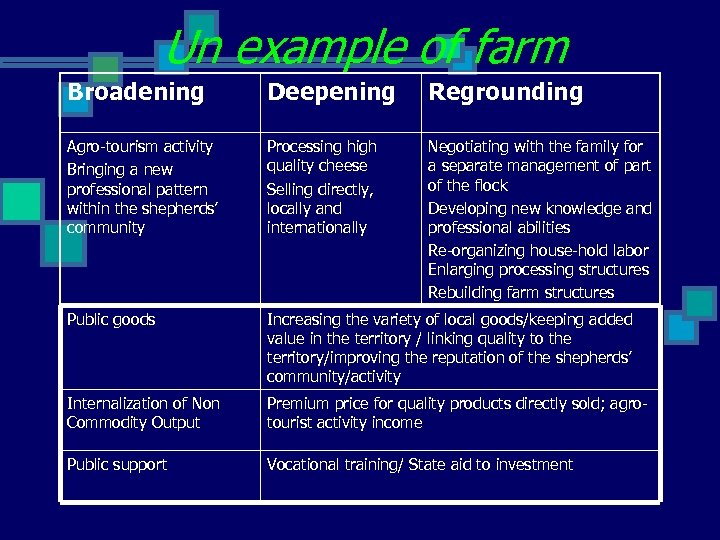
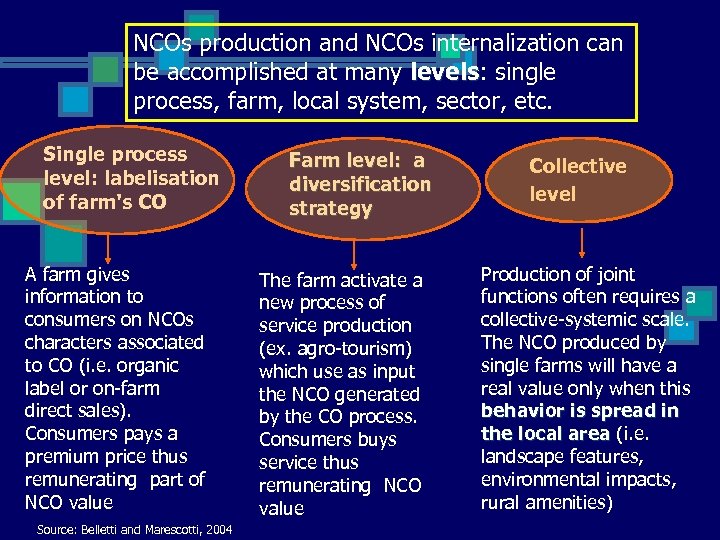 NCOs production and NCOs internalization can be accomplished at many levels: single levels process, farm, local system, sector, etc. Single process level: labelisation of farm's CO A farm gives information to consumers on NCOs characters associated to CO (i. e. organic label or on-farm direct sales). Consumers pays a premium price thus remunerating part of NCO value Source: Belletti and Marescotti, 2004 Farm level: a diversification strategy The farm activate a new process of service production (ex. agro-tourism) which use as input the NCO generated by the CO process. Consumers buys service thus remunerating NCO value Collective level Production of joint functions often requires a collective-systemic scale. The NCO produced by single farms will have a real value only when this behavior is spread in the local area (i. e. area landscape features, environmental impacts, rural amenities)
 MF today: relevance of the concept n In international trade negotations the concept of multifunctionality is used to defend a certain level of protectionism (by the EU, Norway) n To find new direction in order to integrate farms and local society n Reaction of local society
 Some few questions: MF in context n After modernisation a new deal for rural areas n Rural areas are attractive also because urban areas are less attractive n Rural areas are more attractive because different lifestyle and specific culture n Rural areas are re-organizing the internal networks and their own offer
 Multifunctionality in practice At farm level n As activity: agro-tourism n In a local community n
 Different pattern for agriculture ly re a la ra pp su ch Ru od -fo ro Ag ain Conventional agriculture Mobilisation of resources
 Different pattern for agriculture Agro-tourism New on-farm activities Diversification Nature & landscape management Organic farming High quality and regional products Short supplay chain ch a re la de oa Ru ra ly pp Br su Mobilisation of resources Regrounding Source: J. D. Van der Ploeg, 2003 New form of costs reduction Off-farm incomes g nin pe od De -fo nin g ro Ag Conventional agriculture
 Un example of farm Broadening Deepening Regrounding Agro-tourism activity Bringing a new professional pattern within the shepherds’ community Processing high quality cheese Selling directly, locally and internationally Negotiating with the family for a separate management of part of the flock Developing new knowledge and professional abilities Re-organizing house-hold labor Enlarging processing structures Rebuilding farm structures Public goods Increasing the variety of local goods/keeping added value in the territory / linking quality to the territory/improving the reputation of the shepherds’ community/activity Internalization of Non Commodity Output Premium price for quality products directly sold; agrotourist activity income Public support Vocational training/ State aid to investment
 A model of rural development Agro-tourism and rural tourism Rural handcraft Typical products Little farm high added value Organic and sustainable agriculture Rural services Direct marketing
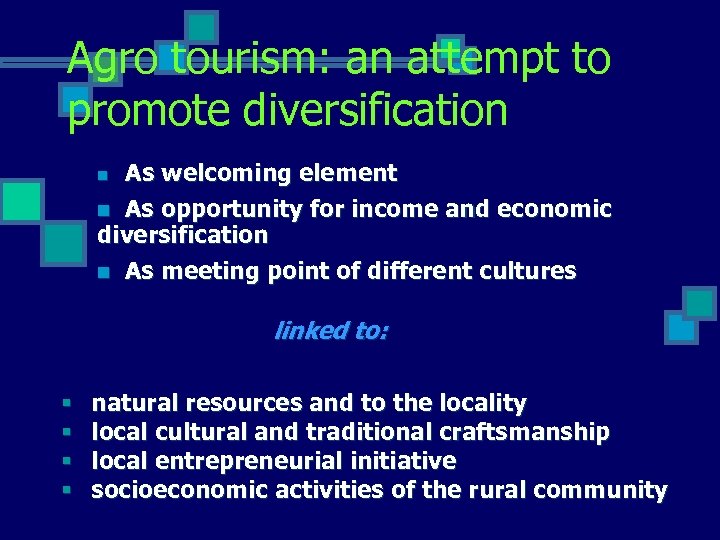 Agro tourism: an attempt to promote diversification As welcoming element n As opportunity for income and economic diversification n As meeting point of different cultures n linked to: § § natural resources and to the locality local cultural and traditional craftsmanship local entrepreneurial initiative socioeconomic activities of the rural community
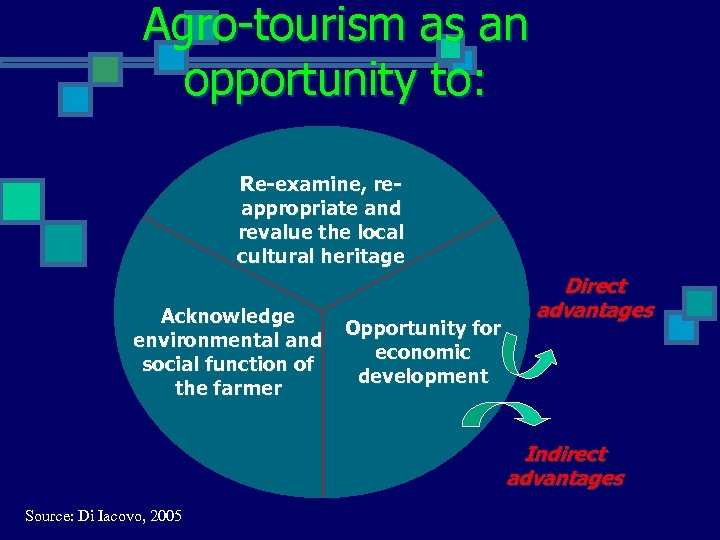 Agro-tourism as an opportunity to: Re-examine, reappropriate and revalue the local cultural heritage Acknowledge environmental and social function of the farmer Opportunity for economic development Direct advantages Indirect advantages Source: Di Iacovo, 2005
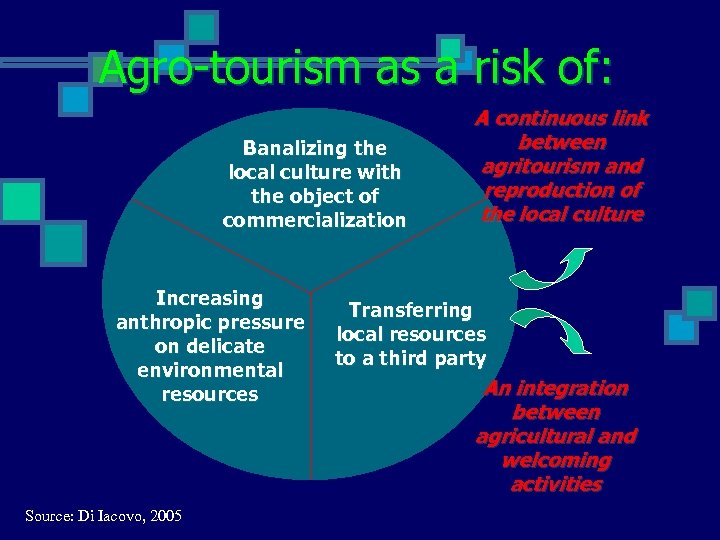 Agro-tourism as a risk of: Banalizing the local culture with the object of commercialization Increasing anthropic pressure on delicate environmental resources Source: Di Iacovo, 2005 A continuous link between agritourism and reproduction of the local culture Transferring local resources to a third party An integration between agricultural and welcoming activities
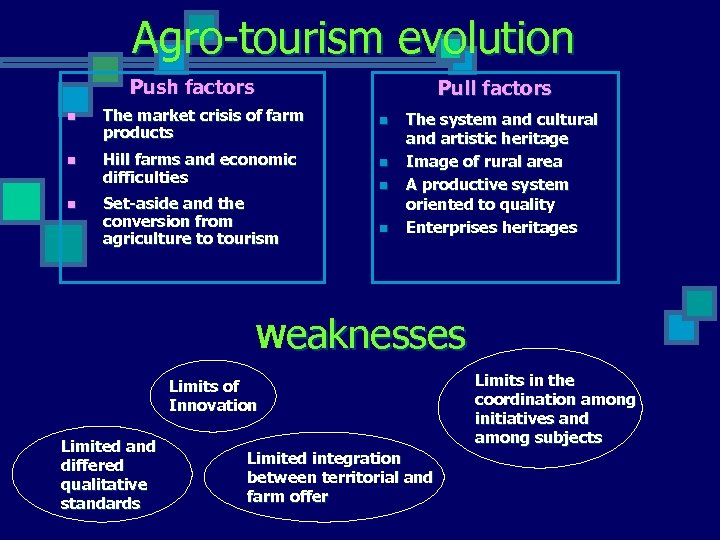 Agro-tourism evolution Push factors Pull factors n The market crisis of farm products n n Hill farms and economic difficulties n n Set-aside and the conversion from agriculture to tourism n n The system and cultural and artistic heritage Image of rural area A productive system oriented to quality Enterprises heritages Weaknesses Limits of Innovation Limited and differed qualitative standards Limited integration between territorial and farm offer Limits in the coordination among initiatives and among subjects
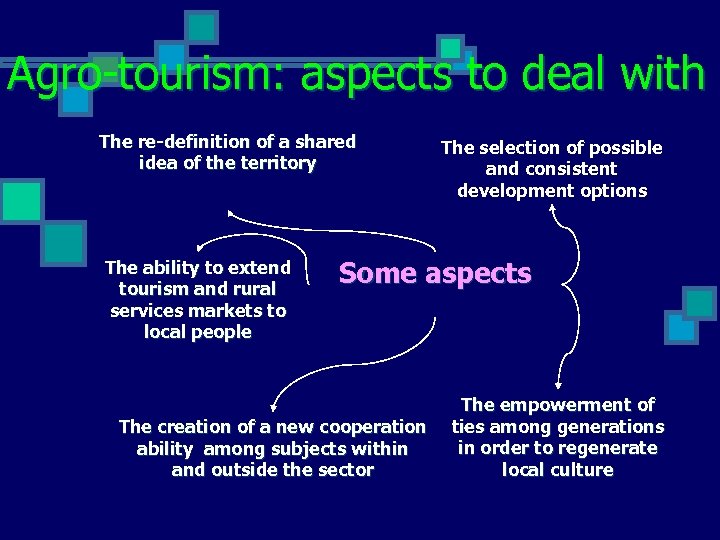 Agro-tourism: aspects to deal with The re-definition of a shared idea of the territory The ability to extend tourism and rural services markets to local people The selection of possible and consistent development options Some aspects The creation of a new cooperation ability among subjects within and outside the sector The empowerment of ties among generations in order to regenerate local culture
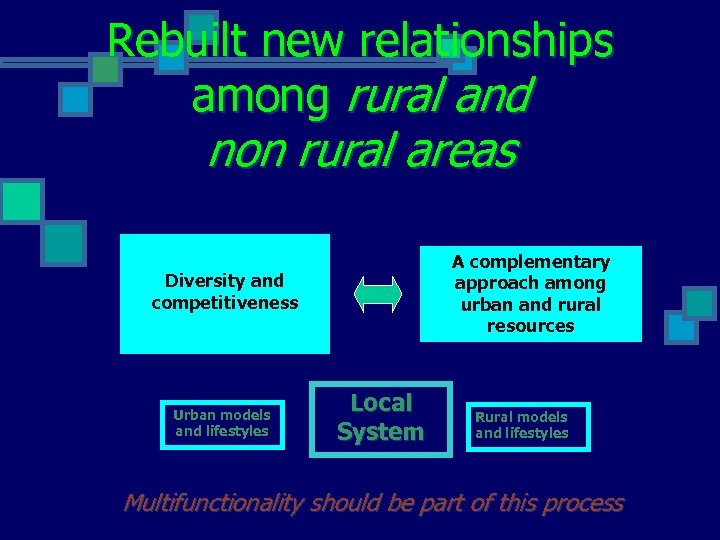 Rebuilt new relationships among rural and non rural areas A complementary approach among urban and rural resources Diversity and competitiveness Urban models and lifestyles Local System Rural models and lifestyles Multifunctionality should be part of this process
 Thank you for your attention