

Multicultural assessment, expatriates selection & testing cultural intelligent

 Скачать презентацию Multicultural assessment, expatriates selection & testing cultural intelligent
Lec. 7 Тестирование и отбор 2017.pptx
- Количество слайдов: 41
Multicultural assessment, expatriates selection & testing cultural intelligent
Selecting and recruiting employees • The process of selecting and recruiting employees varies from culture to culture. 5 -1
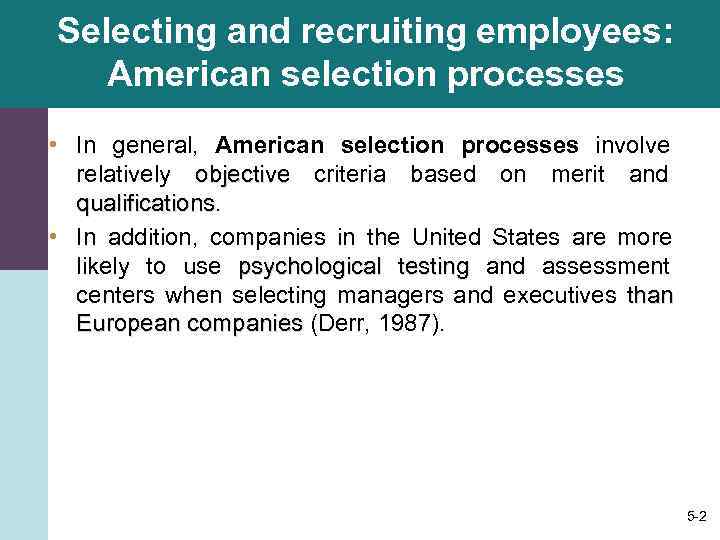
Selecting and recruiting employees: American selection processes • In general, American selection processes involve relatively objective criteria based on merit and qualifications • In addition, companies in the United States are more likely to use psychological testing and assessment centers when selecting managers and executives than European companies (Derr, 1987). European companies 5 -2
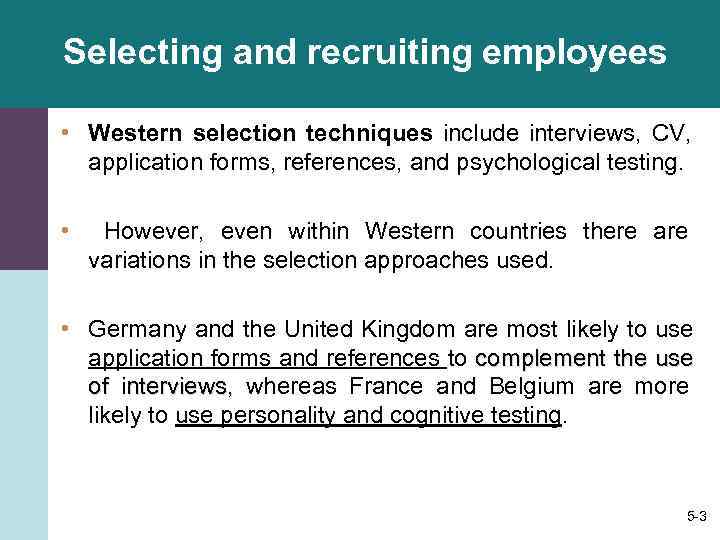
Selecting and recruiting employees • Western selection techniques include interviews, CV, application forms, references, and psychological testing. • However, even within Western countries there are variations in the selection approaches used. • Germany and the United Kingdom are most likely to use application forms and references to complement the use of interviews, whereas France and Belgium are more likely to use personality and cognitive testing. 5 -3
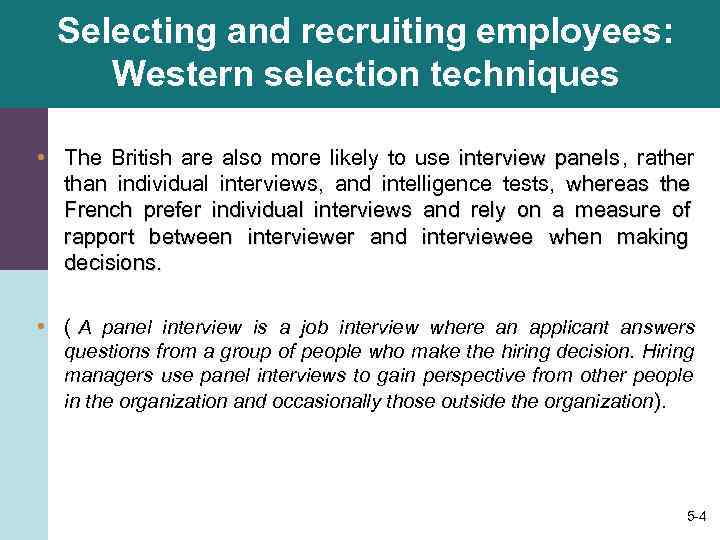
Selecting and recruiting employees: Western selection techniques • The British are also more likely to use interview panels , rather than individual interviews, and intelligence tests, whereas the French prefer individual interviews and rely on a measure of rapport between interviewer and interviewee when making decisions. • ( A panel interview is a job interview where an applicant answers questions from a group of people who make the hiring decision. Hiring managers use panel interviews to gain perspective from other people in the organization and occasionally those outside the organization). 5 -4
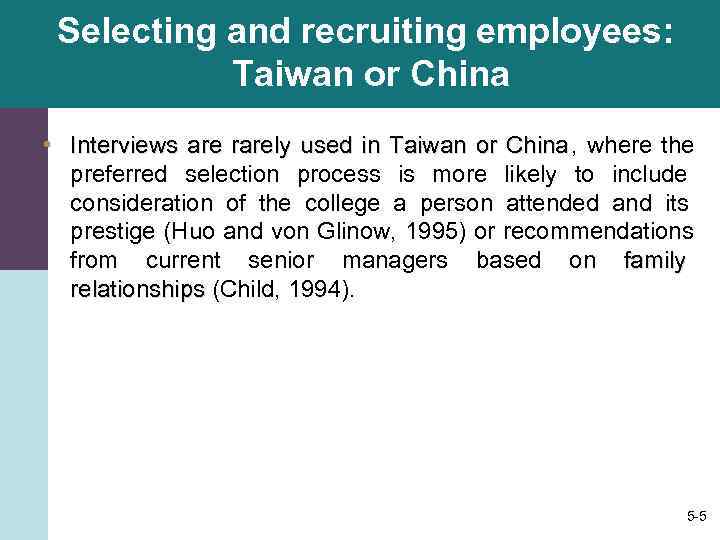
Selecting and recruiting employees: Taiwan or China • Interviews are rarely used in Taiwan or China , where the preferred selection process is more likely to include consideration of the college a person attended and its prestige (Huo and von Glinow, 1995) or recommendations from current senior managers based on family relationships (Child, 1994). relationships 5 -5
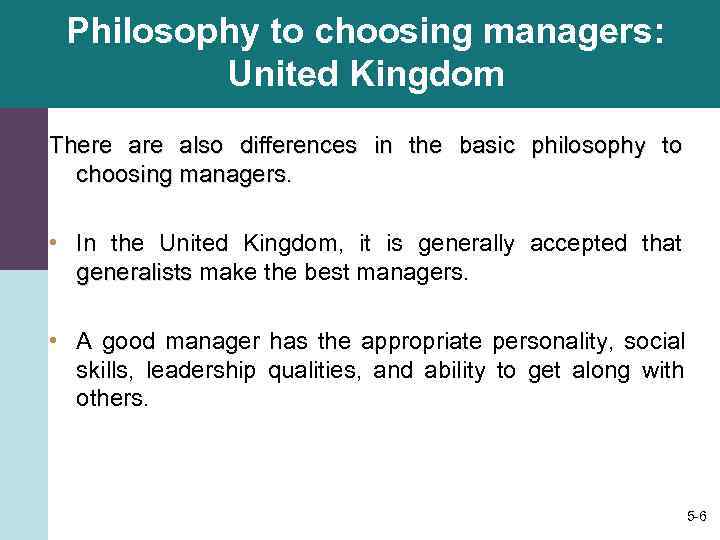
Philosophy to choosing managers: United Kingdom There also differences in the basic philosophy to choosing managers. • In the United Kingdom, it is generally accepted that generalists make the best managers. generalists • A good manager has the appropriate personality, social skills, leadership qualities, and ability to get along with others. 5 -6
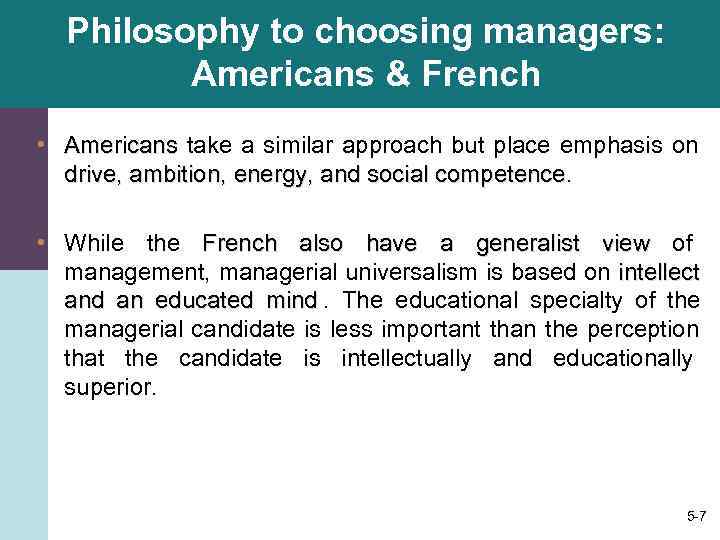
Philosophy to choosing managers: Americans & French • Americans take a similar approach but place emphasis on Americans drive, ambition, energy, and social competence. energy, and social competence • While the French also have a generalist view of management, managerial universalism is based on intellect and an educated mind. The educational specialty of the managerial candidate is less important than the perception that the candidate is intellectually and educationally superior. 5 -7
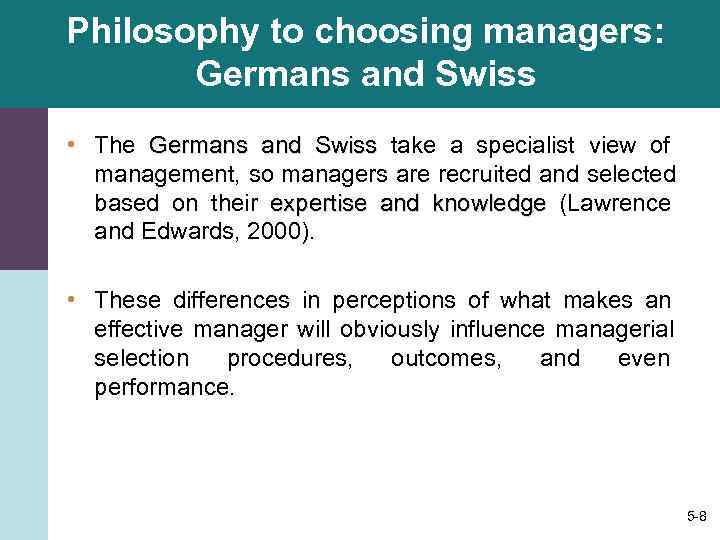
Philosophy to choosing managers: Germans and Swiss • The Germans and Swiss take a specialist view of management, so managers are recruited and selected based on their expertise and knowledge (Lawrence and Edwards, 2000). • These differences in perceptions of what makes an effective manager will obviously influence managerial selection procedures, outcomes, and even performance. 5 -8
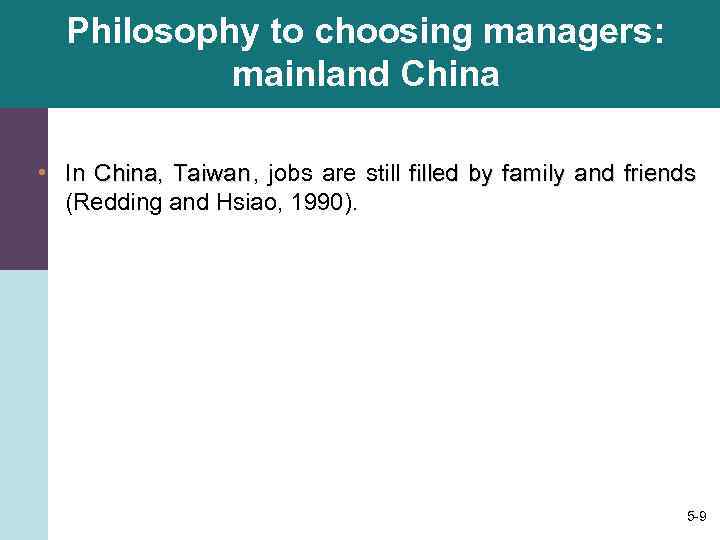
Philosophy to choosing managers: mainland China • In China, Taiwan , jobs are still filled by family and friends (Redding and Hsiao, 1990). 5 -9
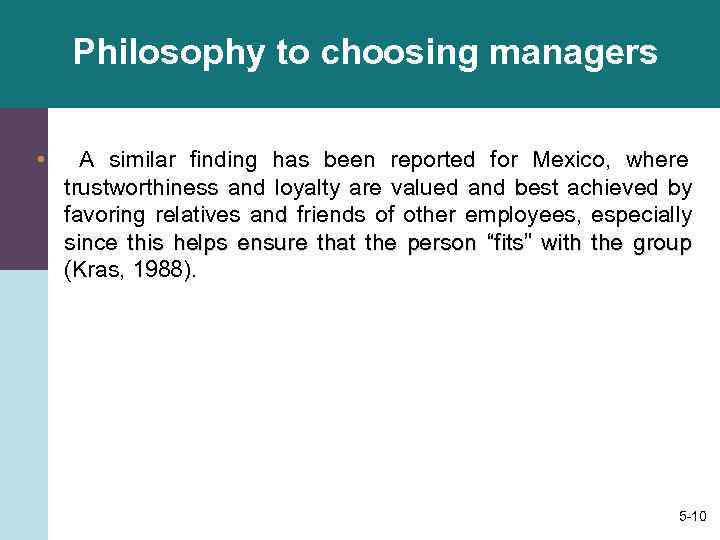
Philosophy to choosing managers • A similar finding has been reported for Mexico, where trustworthiness and loyalty are valued and best achieved by favoring relatives and friends of other employees, especially since this helps ensure that the person “fits” with the group (Kras, 1988). 5 -10
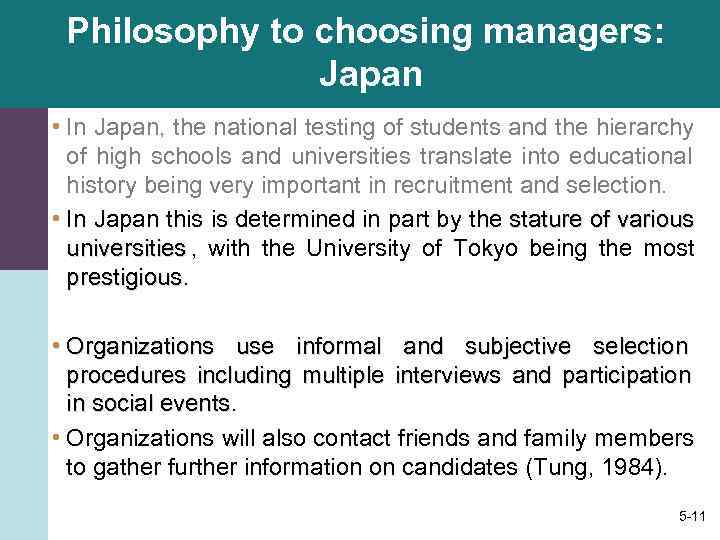
Philosophy to choosing managers: Japan • In Japan, the national testing of students and the hierarchy of high schools and universities translate into educational history being very important in recruitment and selection. • In Japan this is determined in part by the stature of various universities , with the University of Tokyo being the most prestigious • Organizations use informal and subjective selection procedures including multiple interviews and participation in social events • Organizations will also contact friends and family members to gather further information on candidates (Tung, 1984). 5 -11
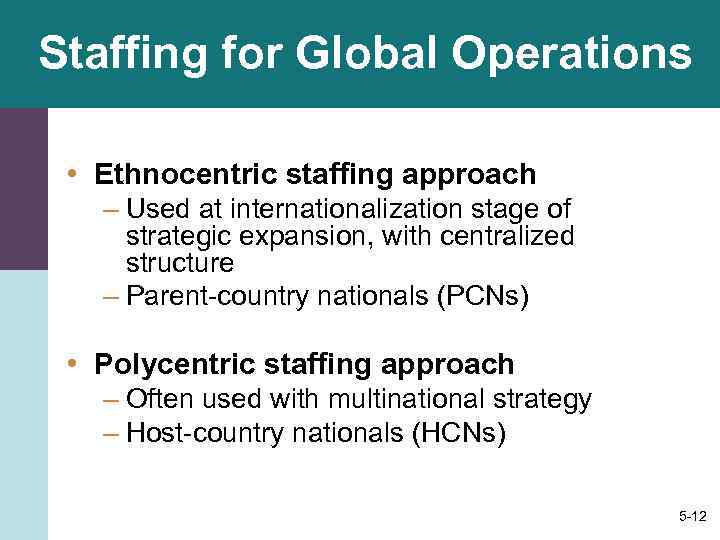
Staffing for Global Operations • Ethnocentric staffing approach – Used at internationalization stage of strategic expansion, with centralized structure – Parent-country nationals (PCNs) • Polycentric staffing approach – Often used with multinational strategy – Host-country nationals (HCNs) 5 -12
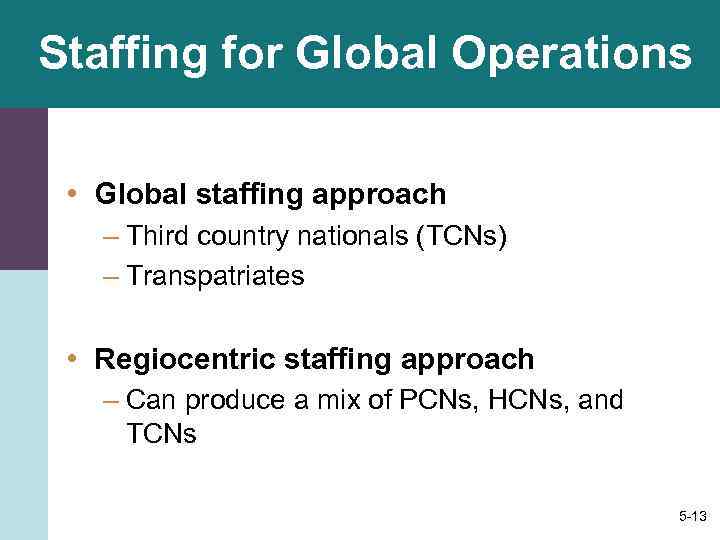
Staffing for Global Operations • Global staffing approach – Third country nationals (TCNs) – Transpatriates • Regiocentric staffing approach – Can produce a mix of PCNs, HCNs, and TCNs 5 -13
Expatriates Selection 5 -14
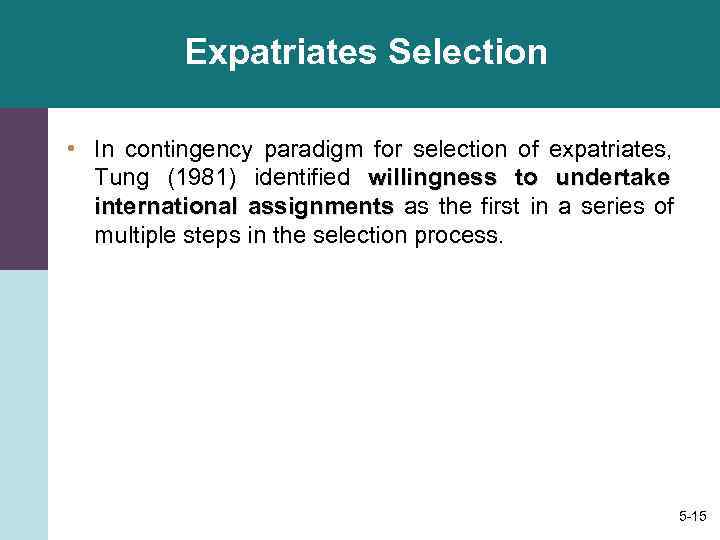
Expatriates Selection • In contingency paradigm for selection of expatriates, Tung (1981) identified willingness to undertake international assignments as the first in a series of assignments multiple steps in the selection process. 5 -15
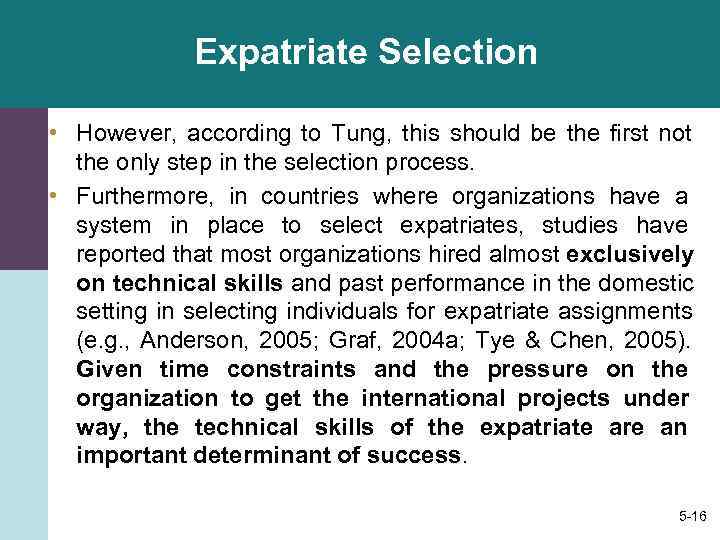
Expatriate Selection • However, according to Tung, this should be the first not the only step in the selection process. • Furthermore, in countries where organizations have a system in place to select expatriates, studies have reported that most organizations hired almost exclusively on technical skills and past performance in the domestic setting in selecting individuals for expatriate assignments (e. g. , Anderson, 2005; Graf, 2004 a; Туе & Chen, 2005). Given time constraints and the pressure on the organization to get the international projects under way, the technical skills of the expatriate are an important determinant of success. 5 -16
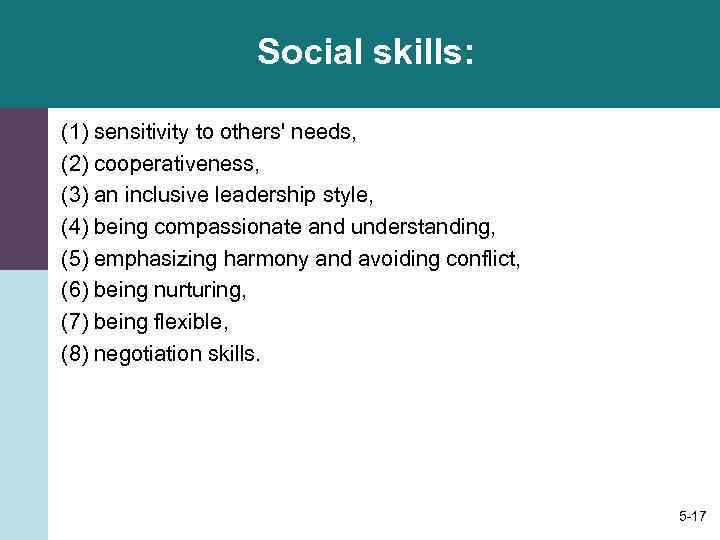
Social skills: (1) sensitivity to others' needs, (2) cooperativeness, (3) an inclusive leadership style, (4) being compassionate and understanding, (5) emphasizing harmony and avoiding conflict, (6) being nurturing, (7) being flexible, (8) negotiation skills. 5 -17
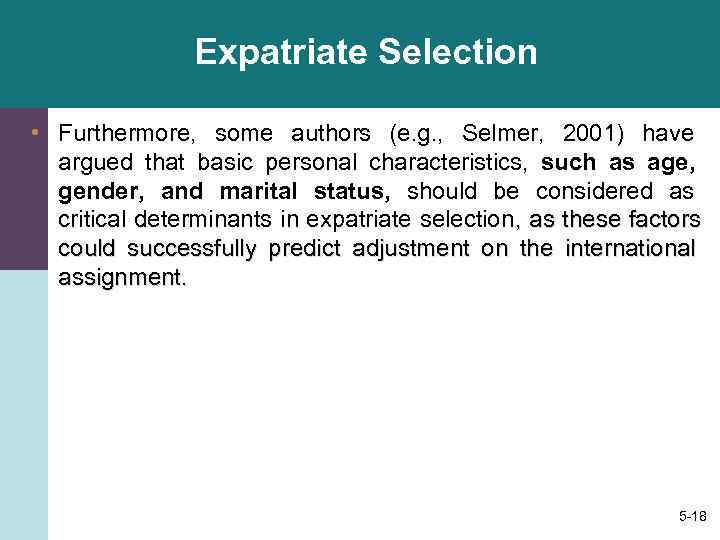
Expatriate Selection • Furthermore, some authors (e. g. , Selmer, 2001) have argued that basic personal characteristics, such as age, gender, and marital status, should be considered as critical determinants in expatriate selection , as these factors could successfully predict adjustment on the international assignment. 5 -18
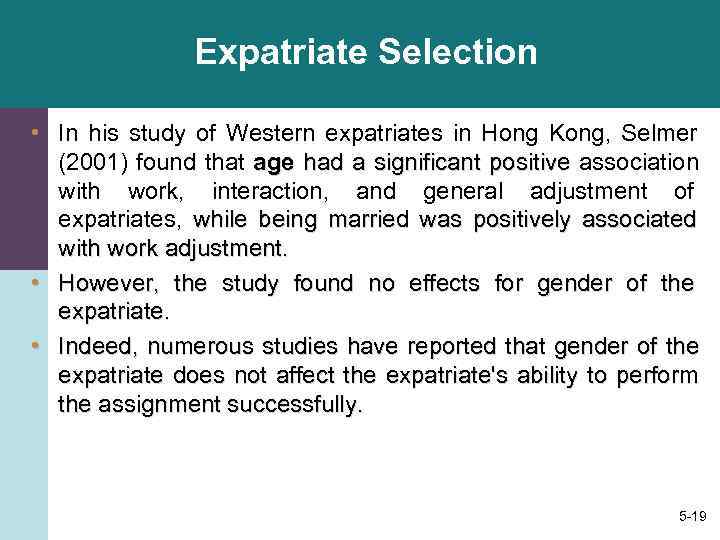
Expatriate Selection • In his study of Western expatriates in Hong Kong, Selmer (2001) found that age had a significant positive association positive with work, interaction, and general adjustment of expatriates, while being married was positively associated with work adjustment. • However, the study found no effects for gender of the expatriate. • Indeed, numerous studies have reported that gender of the expatriate does not affect the expatriate's ability to perform the assignment successfully. 5 -19
Role of the family • Researchers (Brett & Stroh, 1995; Tung, 1986, 1999) have argued that the assignee's family situation plays a major role in influencing the expatriate's willingness to accept the assignment and the candidate's potential success on the job • In fact, Tung (1999) found that the size of the family (i. e. , number of children) might actually influence the expatriate's performance on the job. She found a curvilinear relationship whereby expatriates with two or no children met with higher incidence of success than those who had either one or more than two offspring 5 -20
Role of the family • However, research has revealed that organizations in many nations continue to ignore the family in the selection process. • While over one half of U. S. organizations involve the spouse in the selection process through informational meetings or interviews, Japanese and Chinese organizations (Shen & Edwards, 2004) apparently pay little attention to the role of the spouse or family in the expatriate selection process. 5 -21
Not directly engaging the family (particularly the spouse) in the selection process might stem from one or more of several reasons. • First, given the high-context culture found in Asian countries, such as Japan and China, the company typically already has much information about the candidate's family background and thus would exclude those whose family situation is not suitable. • Second, Asian spouses (typically, the wives) tend to be more supportive of the husband's business or work-related decisions. In other words, they are less likely to complain about relocation decisions. • Third, in cases where the family situation makes relocation difficult, for example when there are concerns for children's education, the spouse and children would remain in the home country. This is common practice among Japanese multinationals (Tung, 1988). common practice among Japanese multinationals 5 -22
Gender Bias in Expatriate Selection 5 -23
Gender Bias in Expatriate Selection • Only 3% of expatriates were female, while more recent studies place the mark at around 14% (Fischlmayr, 2002). In this connection, Adler (1993) had argued that the low numbers of females in expatriate assignments stems from two persistent myths: First myth, that women are not interested in expatriate assignments. 5 -24
Gender Bias in Expatriate Selection Second myth, that women would be at a disadvantage in many countries because these countries are not receptive to female expatriates. 5 -25
Gender Bias in Expatriate Selection However, research has shown that women are as interested as men in expatriate assignments and that women are as successful as men on such assignments (Adler, 1984), even in countries that are often thought to have male- dominated cultures (e. g. , Japan, Turkey, Vietnam). Based on paired comparisons of 80 male and 80 female expatriates, Tung (2004) found no difference between their willingness to undertake international assignments nor any difference in the effectiveness of their performance on the job. In fact, she found that the women expatriates were more willing to make personal sacrifices. 5 -26
Cultural Intelligence 5 -27
Cultural Intelligence in Organizations Many organizations of the 21 st century are multicultural. Products are conceived and designed in one country, produced in perhaps 10 countries, and marketed in more than 100 countries. This reality results in numerous dyadic relationships where the cultures of the two members differ. The difference may be in language, ethnicity, religion, politics, social class, and/or many other attributes. Cultural intelligence (Earley & Ang, 2003) is required for the two members of the dyad to develop a good working relationship. Some attributes are especially important to achieve cultural intelligence. Perhaps the most important is the habit to suspend judgment, until enough information becomes available. 5 -28
• Cultural Intelligence (CQ), is a term used in business, education, government and academic research. Cultural intelligence can be understood as the capability to relate and work effectively across cultures. • Originally, the term cultural intelligence and the abbreviation "CQ" was developed by the research done by Soon Ang and Linn Van Dyne as a researched-based way of measuring and predicting intercultural performance. 5 -29
Research demonstrates several consistent results for individuals and organizations that improve CQ, including: - More Effective Cross-Cultural Adaptability and Decision -Making - Enhanced Job Performance - Improved Creativity and Innovation - Increased Profitability and Cost-Savings - Cultural intelligence is proven to reduce attrition, improve innovation, and make multicultural teams more effective. 5 -30
Cultural intelligence is not fixed, but that it changes based on people's interactions, efforts, and experiences. You can enhance your Cultural Intelligence. 5 -31
• Cultural Intelligence is NOT specific to a particular culture. For example, it does not focus on the capability to function effectively in France or in Japan. Instead, it focuses on the more general capability to function effectively in culturally diverse situations: • perhaps in France • perhaps in Japan • or anywhere else. 5 -32
Cultural intelligence & intercultural training Earley and Ang (2003) pointed out, cultural intelligence requires cognitive, affective, and behavioral training. For example, cognitive training may include learning to make isomorphic attributions (Triandis, 1975). This can be achieved with culture assimilators (Triandis, 1994, pp. 278 -282). 5 -33
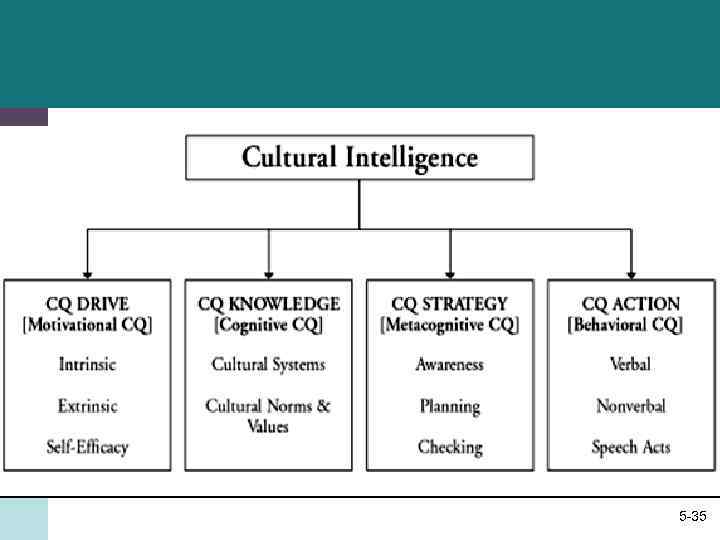
Dimensions of Cultural Intelligence • Earley and Ang developed the CQ approach in order to capture the ability of adapting in a foreign country, and its reflection of a person’s capability to gather, interpret, and act upon radically different cues in order to function effectively across cultures. • Figure below depicts a Dimensional Model that includes four core factors of CQ: motivational CQ (drive), cognitive CQ (knowledge), metacognitive CQ (strategy) and behavioral CQ (action). This model is one of the first frameworks provided to help understand why people vary dramatically in their capacity to adjust to new cultures. 5 -34
5 -35
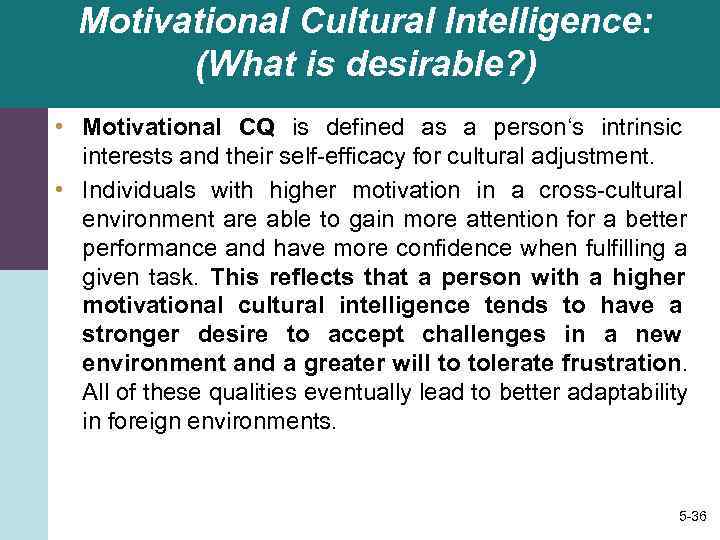
Motivational Cultural Intelligence: (What is desirable? ) • Motivational CQ is defined as a person‘s intrinsic interests and their self-efficacy for cultural adjustment. • Individuals with higher motivation in a cross-cultural environment are able to gain more attention for a better performance and have more confidence when fulfilling a given task. This reflects that a person with a higher motivational cultural intelligence tends to have a stronger desire to accept challenges in a new environment and a greater will to tolerate frustration. All of these qualities eventually lead to better adaptability in foreign environments. 5 -36
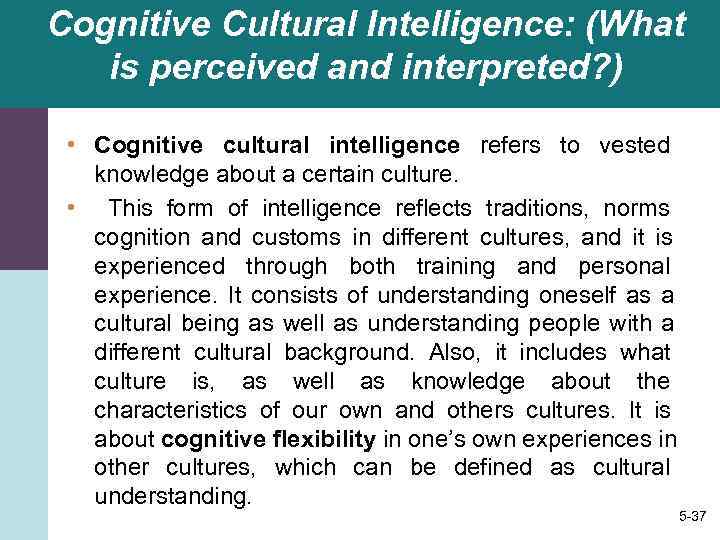
Cognitive Cultural Intelligence: (What is perceived and interpreted? ) • Cognitive cultural intelligence refers to vested knowledge about a certain culture. • This form of intelligence reflects traditions, norms cognition and customs in different cultures, and it is experienced through both training and personal experience. It consists of understanding oneself as a cultural being as well as understanding people with a different cultural background. Also, it includes what culture is, as well as knowledge about the characteristics of our own and others cultures. It is about cognitive flexibility in one’s own experiences in other cultures, which can be defined as cultural understanding. 5 -37
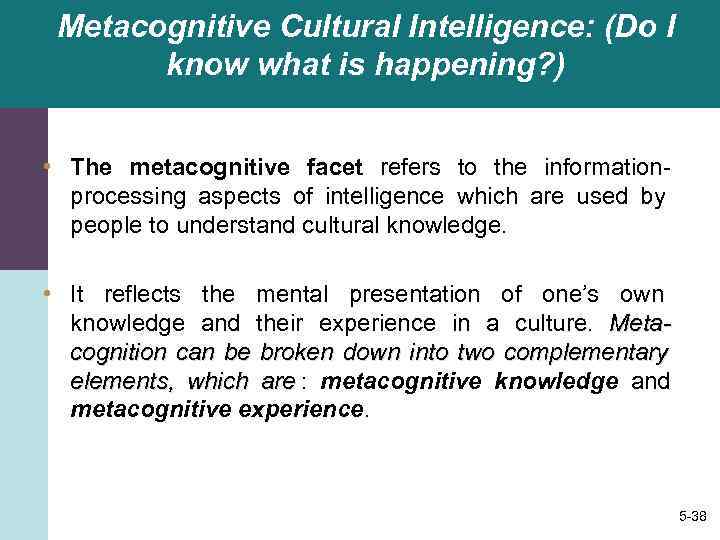
Metacognitive Cultural Intelligence: (Do I know what is happening? ) • The metacognitive facet refers to the information- processing aspects of intelligence which are used by people to understand cultural knowledge. • It reflects the mental presentation of one’s own knowledge and their experience in a culture. Meta- cognition can be broken down into two complementary elements, which are : metacognitive knowledge and metacognitive experience. 5 -38
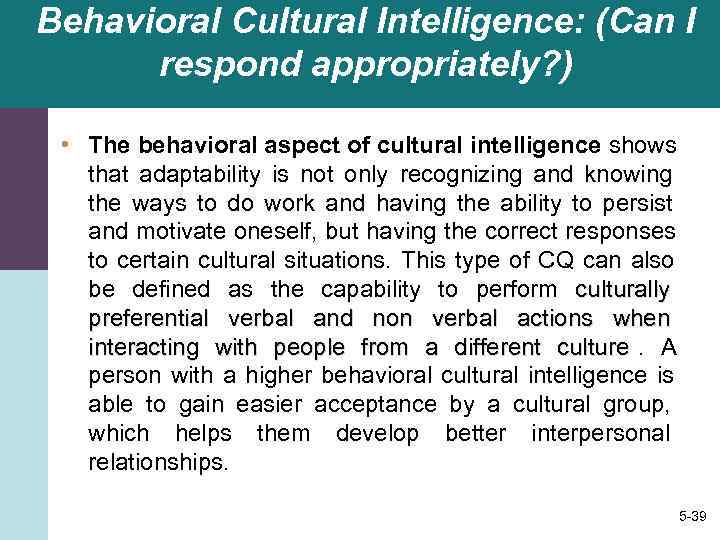
Behavioral Cultural Intelligence: (Can I respond appropriately? ) • The behavioral aspect of cultural intelligence shows that adaptability is not only recognizing and knowing the ways to do work and having the ability to persist and motivate oneself, but having the correct responses to certain cultural situations. This type of CQ can also be defined as the capability to perform culturally preferential verbal and non verbal actions when interacting with people from a different culture. A person with a higher behavioral cultural intelligence is able to gain easier acceptance by a cultural group, which helps them develop better interpersonal relationships. 5 -39
• These dimensions of CQ all need to be tied together in order for cultural intelligence to be created. If a worker from a company is sent abroad, i. e. an expatriate, it would be very beneficial for them to combine all of these dimensions of cultural intelligence. Having this mindset in relation to CQ would not only increase the expatriate's performance, but it could also bring about a competitive advantage for the company. 5 -40