 Скачать презентацию MTAT 03 231 Business Process Management BPM for
c8e15db15bfd6c8cf1c04daa79b00e5a.ppt
- Количество слайдов: 37



MTAT. 03. 231 Business Process Management (BPM) (for Masters of ETM) Lecture 3 Process Implementation & Monitoring Marlon Dumas marlon. dumas ät ut. ee
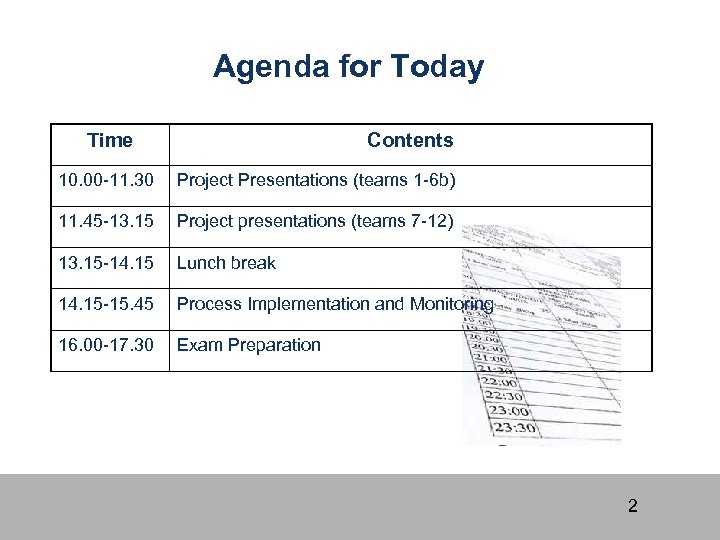
Agenda for Today Time Contents 10. 00 -11. 30 Project Presentations (teams 1 -6 b) 11. 45 -13. 15 Project presentations (teams 7 -12) 13. 15 -14. 15 Lunch break 14. 15 -15. 45 Process Implementation and Monitoring 16. 00 -17. 30 Exam Preparation 2
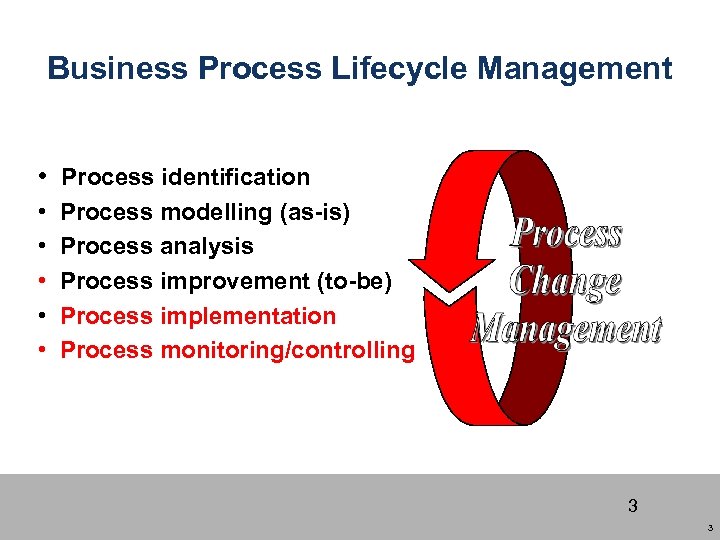
Business Process Lifecycle Management • Process identification • • • Process modelling (as-is) Process analysis Process improvement (to-be) Process implementation Process monitoring/controlling 3 3
Process Implementation
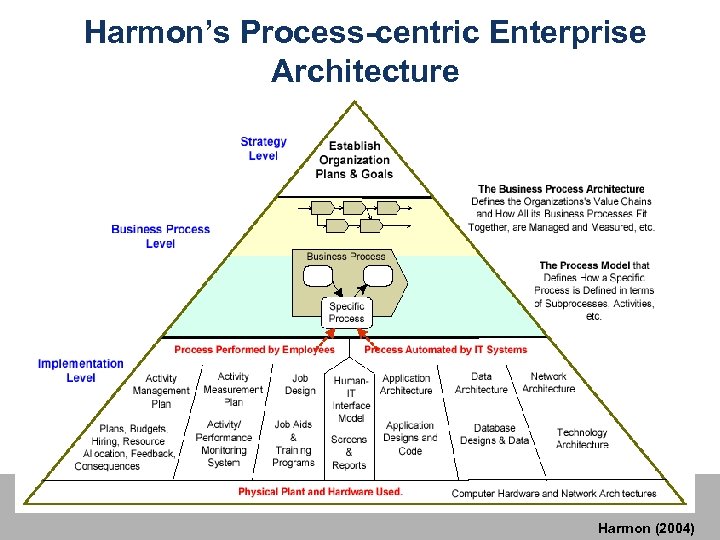
Harmon’s Process-centric Enterprise Architecture 5 Harmon (2004)
Process Implementation • Organisational Change and Enablement – User Participation – User Training – Change Planning and Management • IT Implementation – Custom Software Application • In-house development • Outsourced – Packaged Enterprise System – Workflow Management System (Wf. MS / BPMS) 6
IT Implementation – Packaged Enterprise Systems Typically classified into: • ERP: Enterprise Resource Planning, including – Manufacturing, inventory control, procurement, financials, human resources • SCM: Supply Chain Management, including – Material acquisition (forecasting, planning), logistics/transportation – Supplier relationship management • CRM: Customer Relationship Management – Marketing, lead management, sales • These functions may come together, or acquired separately – E. g. Salesforce (mainly CRM), SAP Business Suite, Oracle E-Business Suite, Microsoft Dynamics AX. 7
What is an ERP System? • Multi-module application that helps a company manage key parts of its business in an integrated fashion. • Key features include: – standardized environment with shared database independent of applications and integrated applications – enables information flow across organizational boundaries to support common transactions and business processes – intended to be customized for specific companies • database configuration • bolt-on software 8
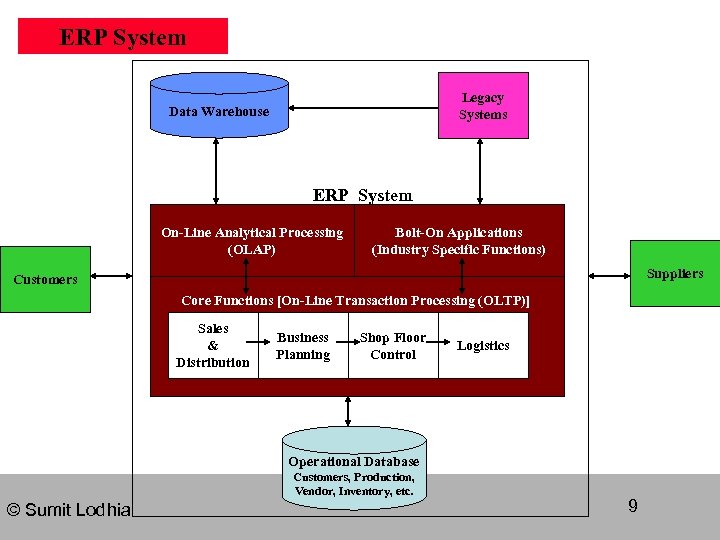
ERP System Legacy Systems Data Warehouse ERP System On-Line Analytical Processing (OLAP) Bolt-On Applications (Industry Specific Functions) Suppliers Customers Core Functions [On-Line Transaction Processing (OLTP)] Sales & Distribution Business Planning Shop Floor Control Logistics Operational Database Customers, Production, Vendor, Inventory, etc. © Sumit Lodhia 9
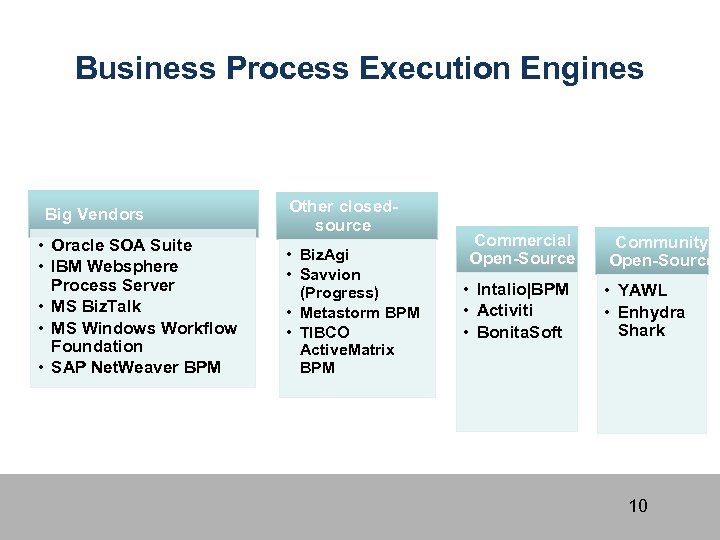
Business Process Execution Engines Big Vendors • Oracle SOA Suite • IBM Websphere Process Server • MS Biz. Talk • MS Windows Workflow Foundation • SAP Net. Weaver BPM Other closedsource • Biz. Agi • Savvion (Progress) • Metastorm BPM • TIBCO Active. Matrix BPM Commercial Open-Source • Intalio|BPM • Activiti • Bonita. Soft Community Open-Source • YAWL • Enhydra Shark 10
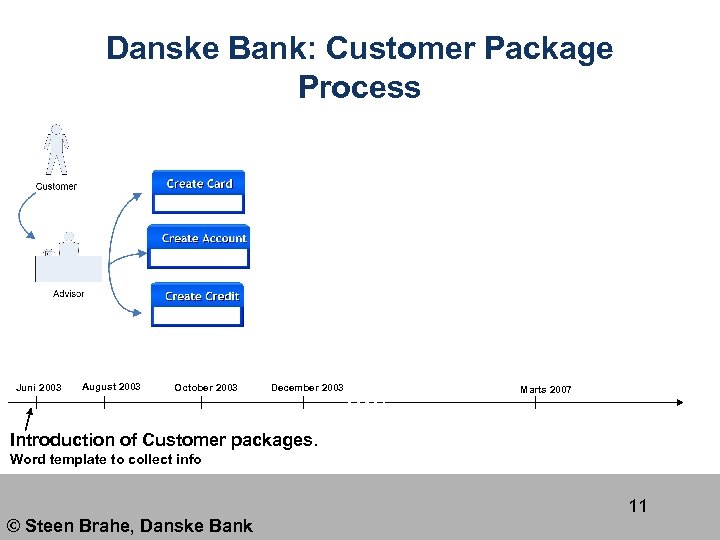
Danske Bank: Customer Package Process Juni 2003 August 2003 October 2003 December 2003 Marts 2007 Introduction of Customer packages. Word template to collect info 11 © Steen Brahe, Danske Bank
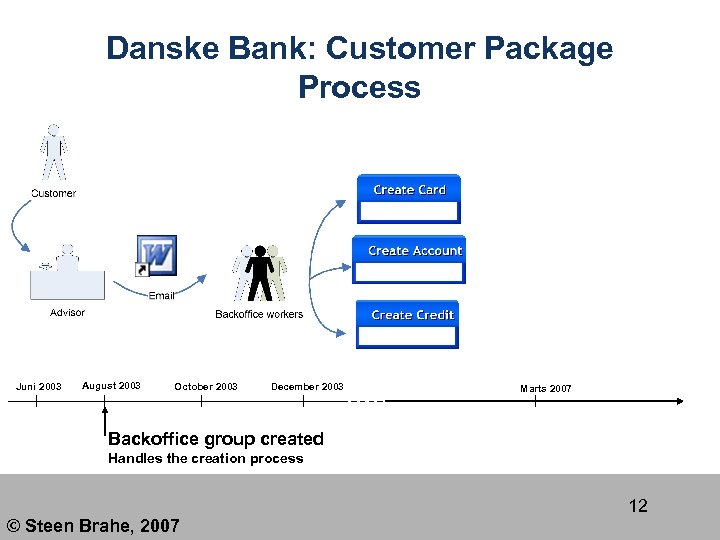
Danske Bank: Customer Package Process Juni 2003 August 2003 October 2003 December 2003 Marts 2007 Backoffice group created Handles the creation process 12 © Steen Brahe, 2007
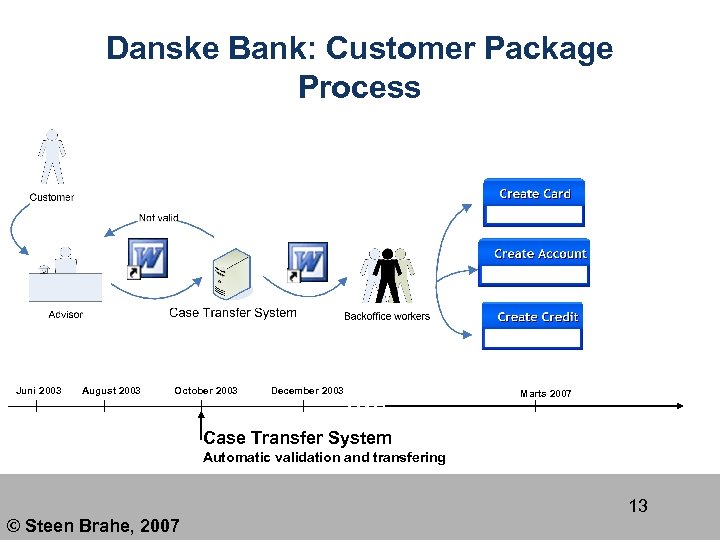
Danske Bank: Customer Package Process Juni 2003 August 2003 October 2003 December 2003 Marts 2007 Case Transfer System Automatic validation and transfering 13 © Steen Brahe, 2007
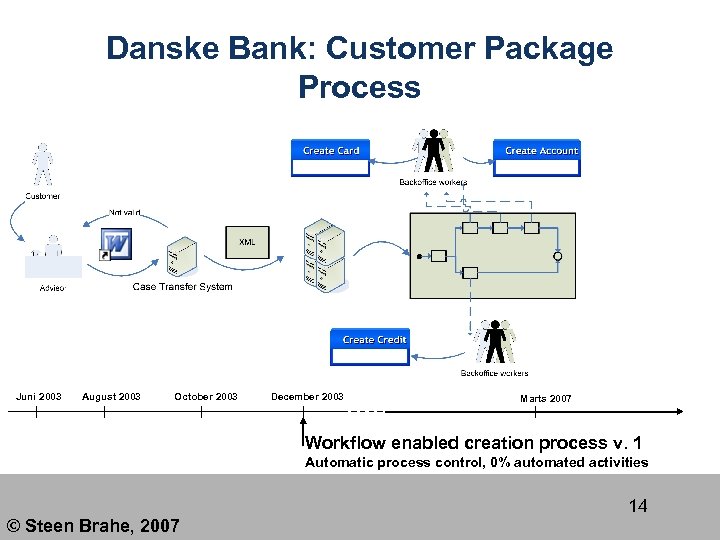
Danske Bank: Customer Package Process Juni 2003 August 2003 October 2003 December 2003 Marts 2007 Workflow enabled creation process v. 1 Automatic process control, 0% automated activities 14 © Steen Brahe, 2007
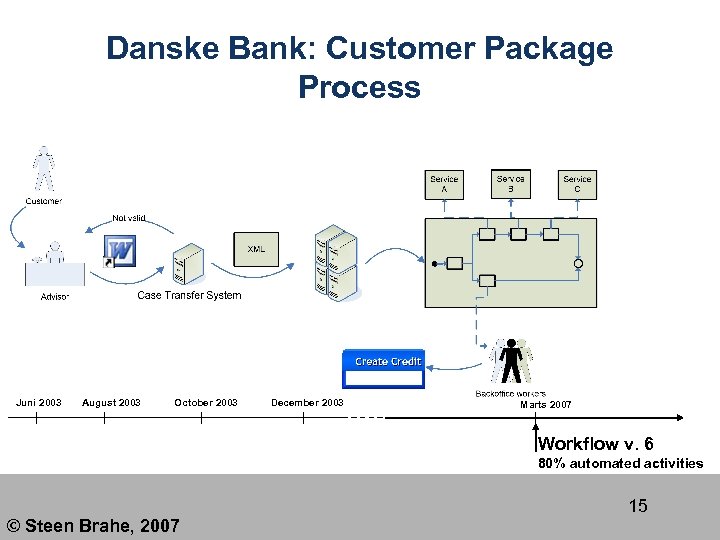
Danske Bank: Customer Package Process Juni 2003 August 2003 October 2003 December 2003 Marts 2007 Workflow v. 6 80% automated activities 15 © Steen Brahe, 2007
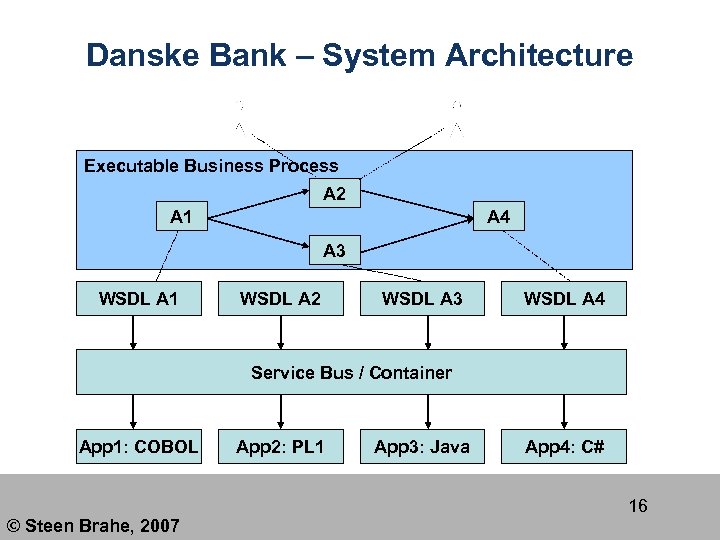
Danske Bank – System Architecture Executable Business Process A 2 A 1 A 4 A 3 WSDL A 1 WSDL A 2 WSDL A 3 WSDL A 4 Service Bus / Container App 1: COBOL App 2: PL 1 App 3: Java App 4: C# 16 © Steen Brahe, 2007
Process Monitoring & Controlling
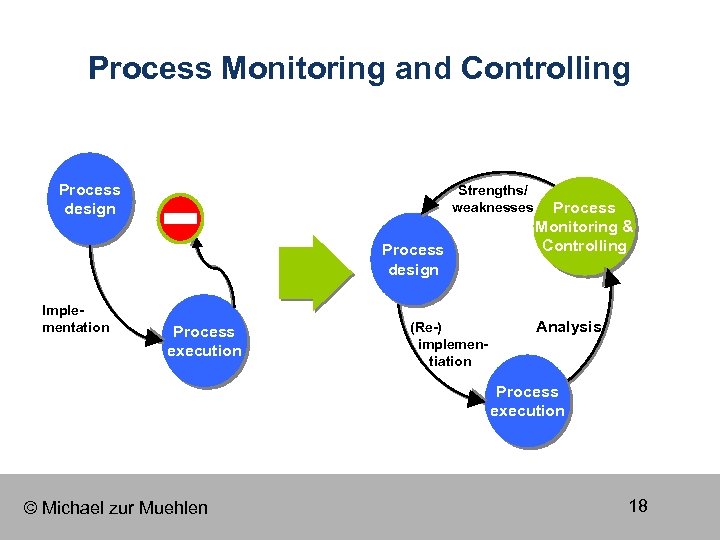
Process Monitoring and Controlling Process design Strengths/ weaknesses Process design Implementation Process execution (Re-) implementiation Process Monitoring & Controlling Analysis Process execution © Michael zur Muehlen 18
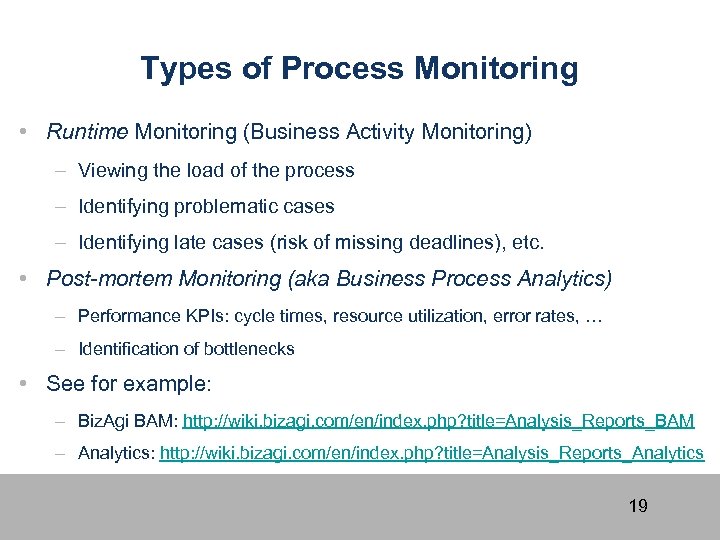
Types of Process Monitoring • Runtime Monitoring (Business Activity Monitoring) – Viewing the load of the process – Identifying problematic cases – Identifying late cases (risk of missing deadlines), etc. • Post-mortem Monitoring (aka Business Process Analytics) – Performance KPIs: cycle times, resource utilization, error rates, … – Identification of bottlenecks • See for example: – Biz. Agi BAM: http: //wiki. bizagi. com/en/index. php? title=Analysis_Reports_BAM – Analytics: http: //wiki. bizagi. com/en/index. php? title=Analysis_Reports_Analytics 19
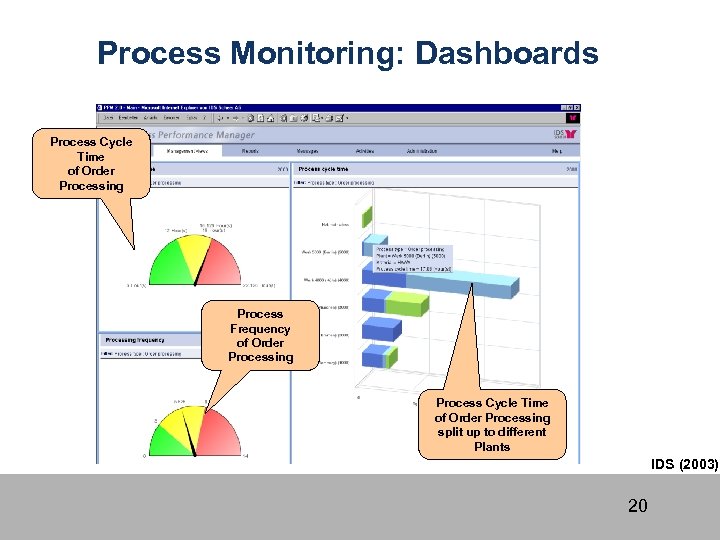
Process Monitoring: Dashboards Process Cycle Time of Order Processing Process Frequency of Order Processing Process Cycle Time of Order Processing split up to different Plants IDS (2003) 20
Process Mining Tools • • ARIS Process Performance Manager Percetive Software Reflect Fujitsu Interstage (BPM Analytics) Pro. M (open-source) 22
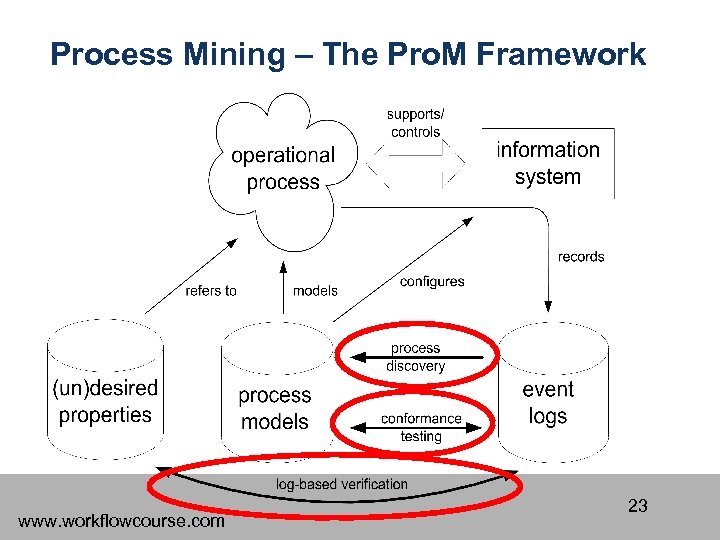
Process Mining – The Pro. M Framework www. workflowcourse. com 23
Pro. M Demo http: //www. processmining. org/ www. workflowcourse. com 24
Process Controlling • Collation and analysis of runtime data • Comparison of actual- and target data • Active impact on current process execution as well as future process modeling (target) Goal: Improvement of an enterprise‘s adaptability to changes in the environment and in the enterprise itself 25
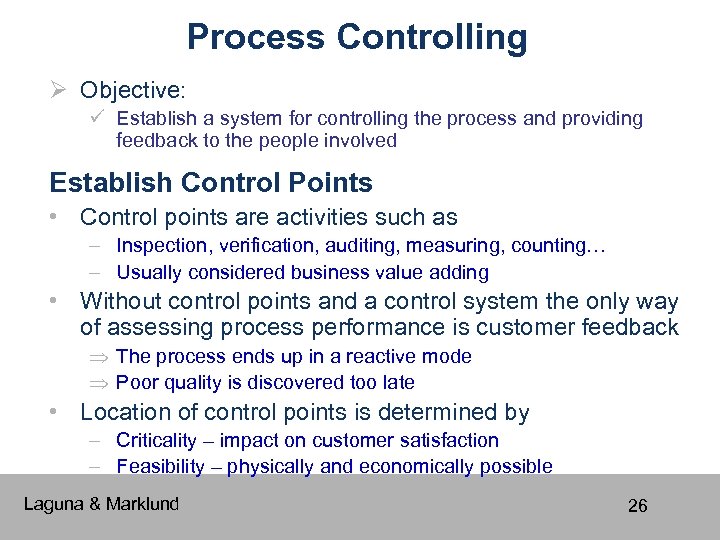
Process Controlling Ø Objective: ü Establish a system for controlling the process and providing feedback to the people involved Establish Control Points • Control points are activities such as – Inspection, verification, auditing, measuring, counting… – Usually considered business value adding • Without control points and a control system the only way of assessing process performance is customer feedback Þ The process ends up in a reactive mode Þ Poor quality is discovered too late • Location of control points is determined by – Criticality – impact on customer satisfaction – Feasibility – physically and economically possible Laguna & Marklund 26
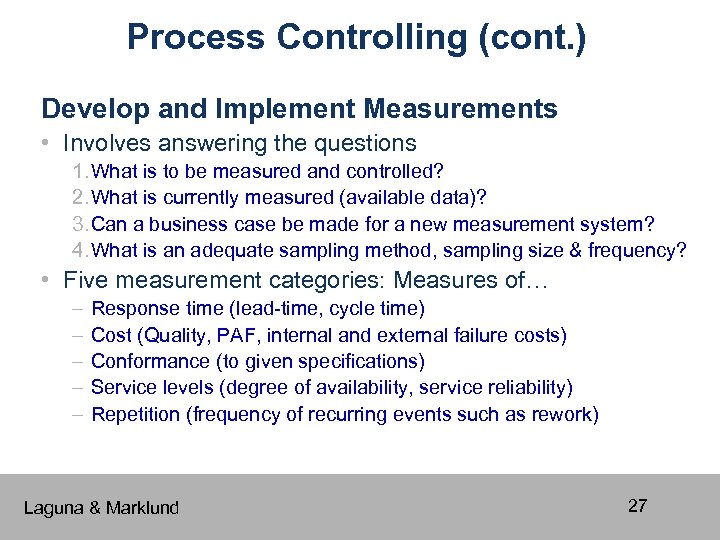
Process Controlling (cont. ) Develop and Implement Measurements • Involves answering the questions 1. What is to be measured and controlled? 2. What is currently measured (available data)? 3. Can a business case be made for a new measurement system? 4. What is an adequate sampling method, sampling size & frequency? • Five measurement categories: Measures of… – – – Response time (lead-time, cycle time) Cost (Quality, PAF, internal and external failure costs) Conformance (to given specifications) Service levels (degree of availability, service reliability) Repetition (frequency of recurring events such as rework) Laguna & Marklund 27
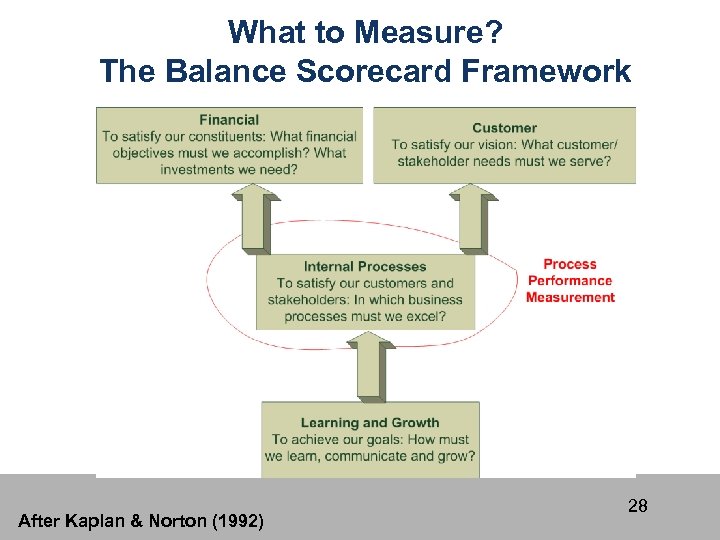
What to Measure? The Balance Scorecard Framework After Kaplan & Norton (1992) 28
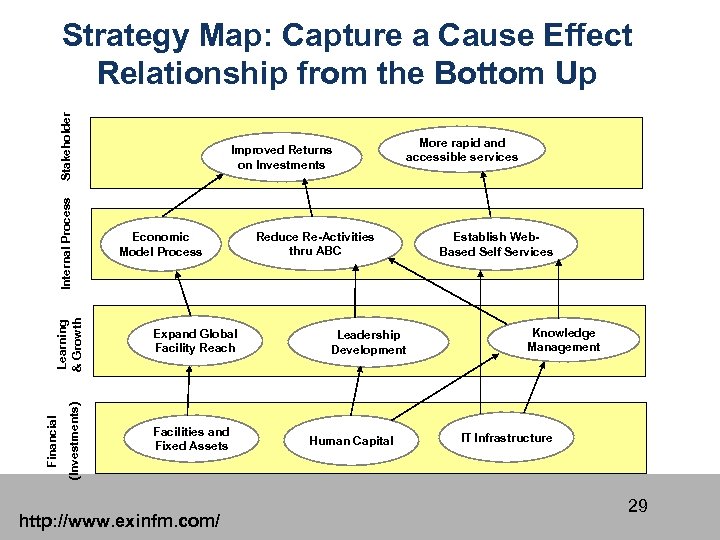
(Investments) Financial Learning & Growth Internal Process Stakeholder Strategy Map: Capture a Cause Effect Relationship from the Bottom Up Improved Returns on Investments Economic Model Process Expand Global Facility Reach Facilities and Fixed Assets http: //www. exinfm. com/ Reduce Re-Activities thru ABC Leadership Development Human Capital More rapid and accessible services Establish Web. Based Self Services Knowledge Management IT Infrastructure 29
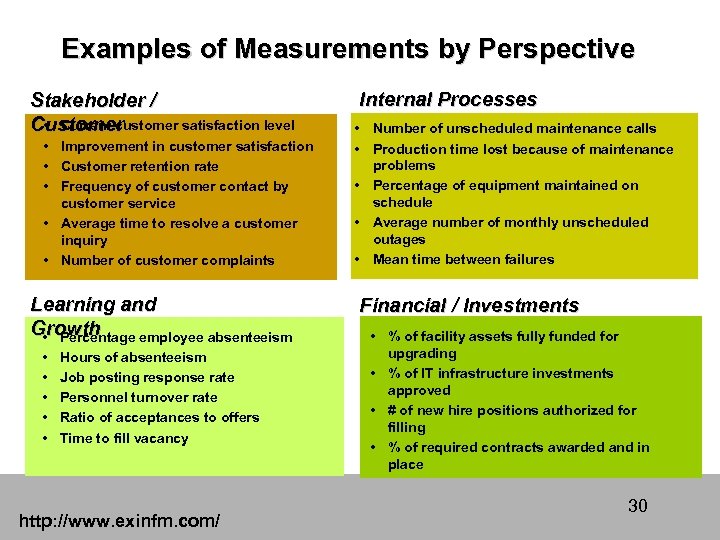
Examples of Measurements by Perspective Stakeholder / • Current customer satisfaction level Customer • Improvement in customer satisfaction • Customer retention rate • Frequency of customer contact by customer service • Average time to resolve a customer inquiry • Number of customer complaints Learning and Growth • Percentage employee absenteeism • • • Hours of absenteeism Job posting response rate Personnel turnover rate Ratio of acceptances to offers Time to fill vacancy http: //www. exinfm. com/ Internal Processes • Number of unscheduled maintenance calls • Production time lost because of maintenance problems • Percentage of equipment maintained on schedule • Average number of monthly unscheduled outages • Mean time between failures Financial / Investments • % of facility assets fully funded for upgrading • % of IT infrastructure investments approved • # of new hire positions authorized for filling • % of required contracts awarded and in place 30
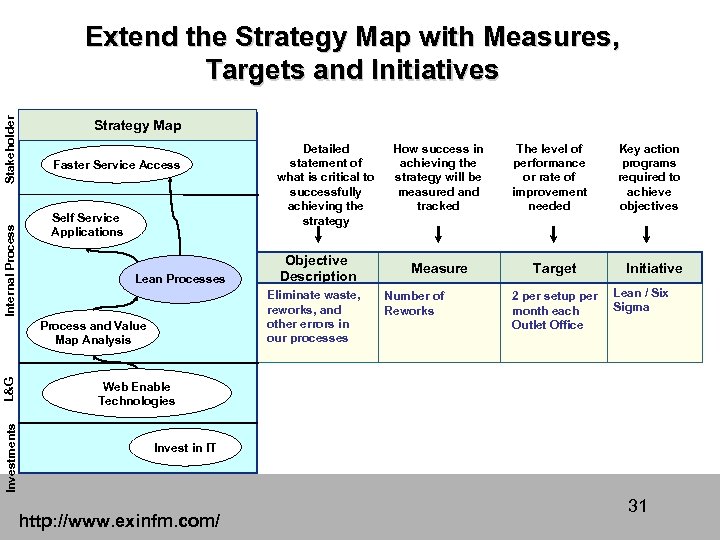
Internal Process Stakeholder Extend the Strategy Map with Measures, Targets and Initiatives Strategy Map Faster Service Access Self Service Applications Lean Processes L&G Objective Description Eliminate waste, reworks, and other errors in our processes Process and Value Map Analysis Investments Detailed statement of what is critical to successfully achieving the strategy How success in achieving the strategy will be measured and tracked Measure Number of Reworks The level of performance or rate of improvement needed Target 2 per setup per month each Outlet Office Key action programs required to achieve objectives Initiative Lean / Six Sigma Web Enable Technologies Invest in IT http: //www. exinfm. com/ 31
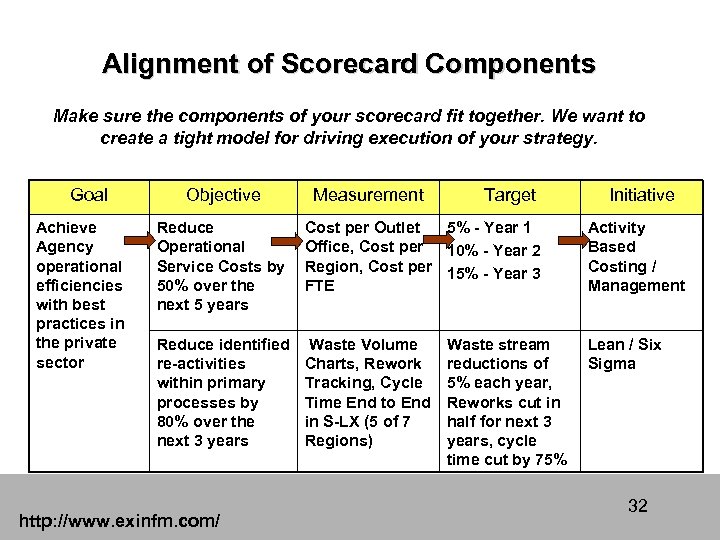
Alignment of Scorecard Components Make sure the components of your scorecard fit together. We want to create a tight model for driving execution of your strategy. Goal Achieve Agency operational efficiencies with best practices in the private sector Objective Measurement Target Initiative Reduce Operational Service Costs by 50% over the next 5 years Cost per Outlet 5% - Year 1 Office, Cost per 10% - Year 2 Region, Cost per 15% - Year 3 FTE Activity Based Costing / Management Reduce identified re-activities within primary processes by 80% over the next 3 years Waste Volume Charts, Rework Tracking, Cycle Time End to End in S-LX (5 of 7 Regions) Lean / Six Sigma http: //www. exinfm. com/ Waste stream reductions of 5% each year, Reworks cut in half for next 3 years, cycle time cut by 75% 32
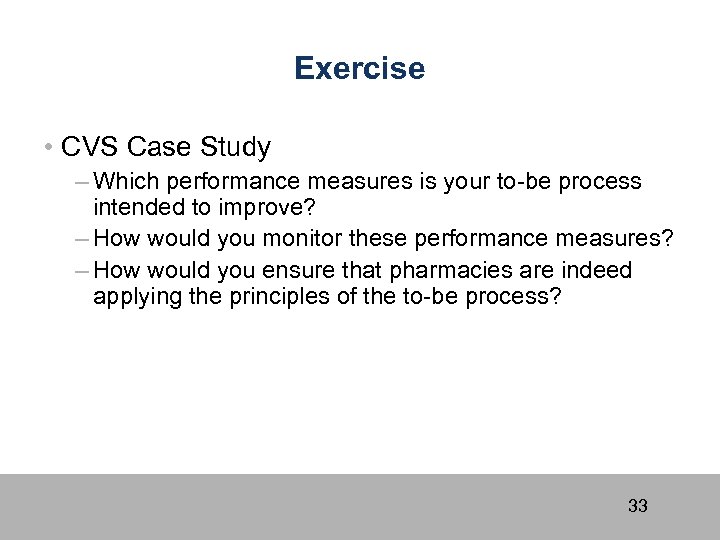
Exercise • CVS Case Study – Which performance measures is your to-be process intended to improve? – How would you monitor these performance measures? – How would you ensure that pharmacies are indeed applying the principles of the to-be process? 33
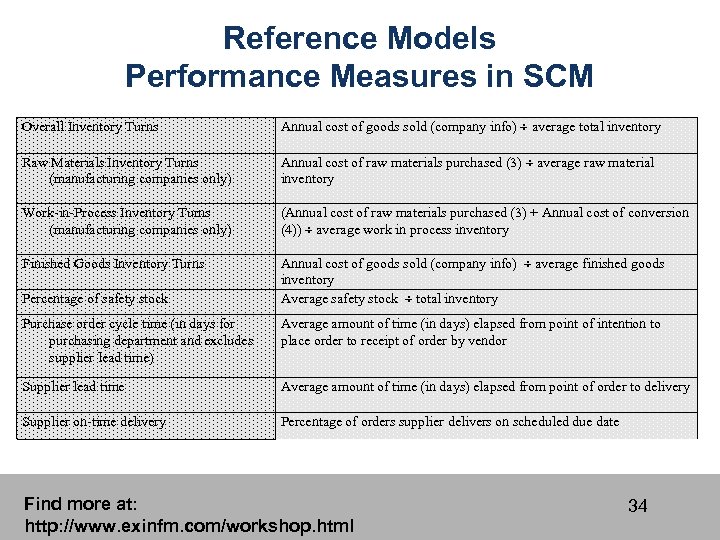
Reference Models Performance Measures in SCM Overall Inventory Turns Annual cost of goods sold (company info) average total inventory Raw Materials Inventory Turns (manufacturing companies only) Annual cost of raw materials purchased (3) average raw material inventory Work-in-Process Inventory Turns (manufacturing companies only) (Annual cost of raw materials purchased (3) + Annual cost of conversion (4)) average work in process inventory Finished Goods Inventory Turns Annual cost of goods sold (company info) average finished goods inventory Average safety stock total inventory Percentage of safety stock Purchase order cycle time (in days for purchasing department and excludes supplier lead time) Average amount of time (in days) elapsed from point of intention to place order to receipt of order by vendor Supplier lead time Average amount of time (in days) elapsed from point of order to delivery Supplier on-time delivery Percentage of orders supplier delivers on scheduled due date Find more at: http: //www. exinfm. com/workshop. html 34
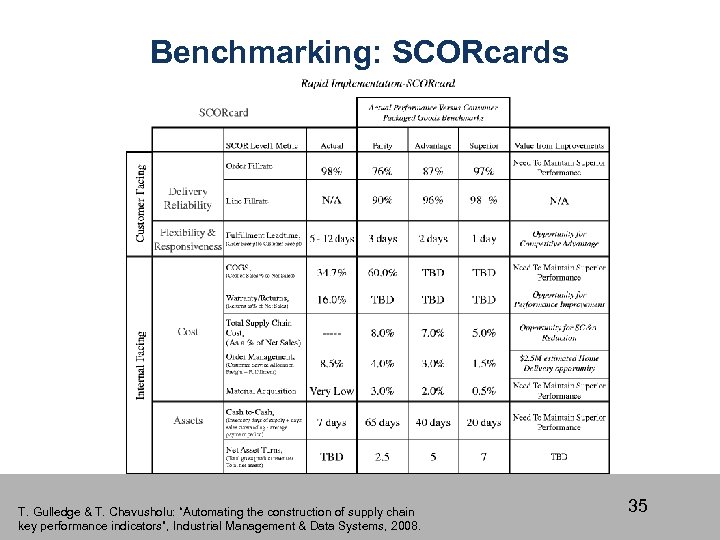
Benchmarking: SCORcards T. Gulledge & T. Chavusholu: “Automating the construction of supply chain key performance indicators”, Industrial Management & Data Systems, 2008. 35
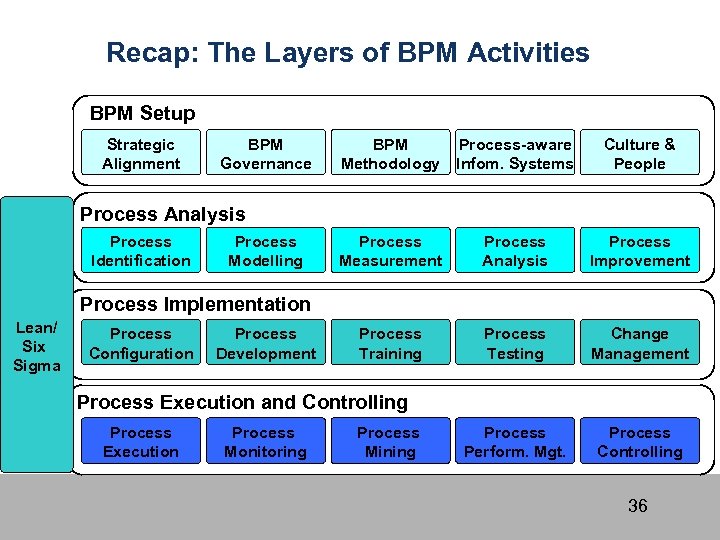
Recap: The Layers of BPM Activities BPM Setup Strategic Alignment BPM Governance BPM Process-aware Methodology Infom. Systems Culture & People Process Analysis Process Identification Process Modelling Process Measurement Process Analysis Process Improvement Process Training Process Testing Change Management Process Perform. Mgt. Process Controlling Process Implementation Lean/ Six Sigma Process Configuration Process Development Process Execution and Controlling Process Execution Process Monitoring Process Mining 36
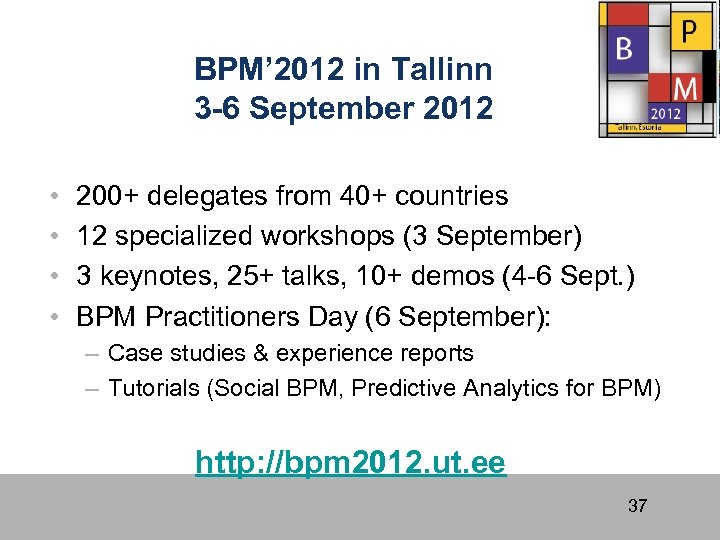
BPM’ 2012 in Tallinn 3 -6 September 2012 • • 200+ delegates from 40+ countries 12 specialized workshops (3 September) 3 keynotes, 25+ talks, 10+ demos (4 -6 Sept. ) BPM Practitioners Day (6 September): – Case studies & experience reports – Tutorials (Social BPM, Predictive Analytics for BPM) http: //bpm 2012. ut. ee 37
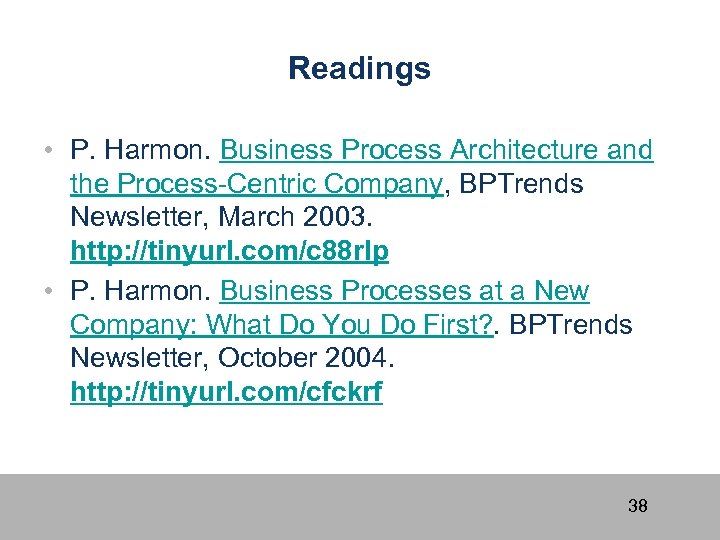
Readings • P. Harmon. Business Process Architecture and the Process-Centric Company, BPTrends Newsletter, March 2003. http: //tinyurl. com/c 88 rlp • P. Harmon. Business Processes at a New Company: What Do You Do First? . BPTrends Newsletter, October 2004. http: //tinyurl. com/cfckrf 38
Скачать презентацию MTAT 03 231 Business Process Management BPM for
c8e15db15bfd6c8cf1c04daa79b00e5a.ppt