


 Скачать презентацию MSWM-ROLE OF INFORMAL SECTOR A look at
ca18d60fd2f0b27d7a6128c28fed3fc6.ppt
- Количество слайдов: 29
 MSWM-ROLE OF INFORMAL SECTOR
 A look at • PEOPLE • PROFILE • PRODUCTIVITY
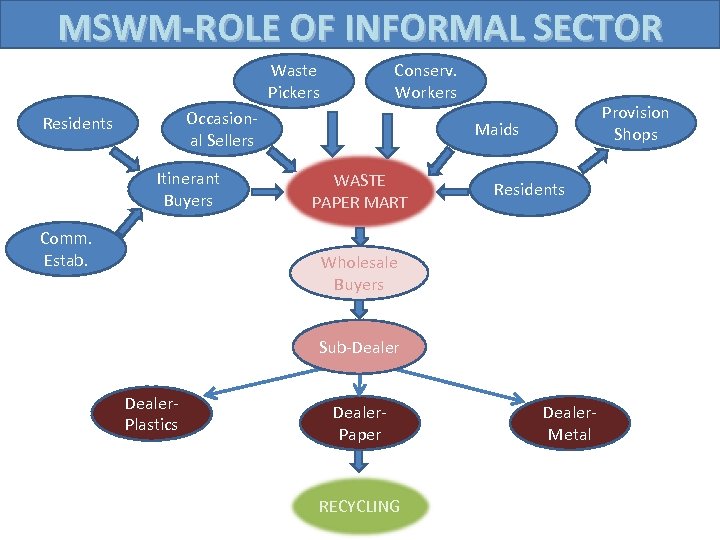 MSWM-ROLE OF INFORMAL SECTOR Waste Pickers Conserv. Workers Occasional Sellers Residents Itinerant Buyers Comm. Estab. Provision Shops Maids WASTE PAPER MART Residents Wholesale Buyers Sub-Dealer. Plastics Dealer. Paper RECYCLING Dealer. Metal
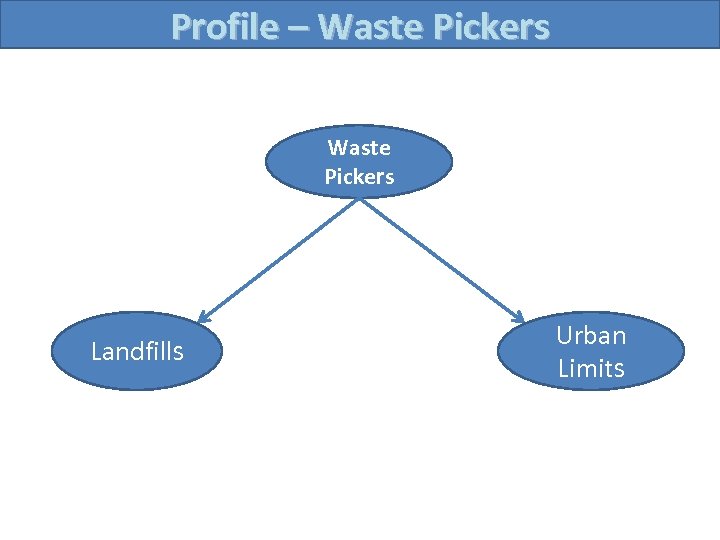 Profile – Waste Pickers Landfills Urban Limits
 Waste Pickers – Landfills • Includes men and women workers, as well as children picking recyclable waste • Earn a minimum of Rs 250 per day • Day begins early between 5 am and 6 am and ends at 7 pm or so • Most carry lunch to the landfills so as avoid coming out of the site • Our interviewees expressed openness to being part of any inclusive MSWM
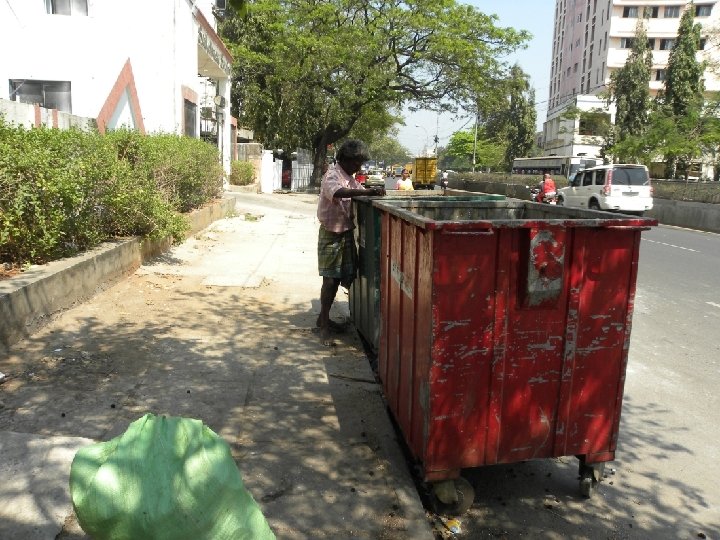
 Waste Pickers – Neighbourhoods • Collect waste for survival, earning min Rs 250/day • Do not know / see their work as part of a business chain • Do not know their role in urban waste management • Majority of them are uneducated • Our interviews revealed platform dwellers as well as those in rented or own housing (formal) • Men face police harassment when thefts are reported in their locality • Not keen to be incorporated into formal workforce, as the present mode of work gives them freedom and flexible timings; and they earn more than private conservancy workers
 Common observations • Most waste pickers belong to the SC and ST • Took this up based on who they bonded with (esply runaways) • Some took this up after unsatisfactory, lowpaying stints in eateries, caterers, etc. • Collect and earn more around festivals, especially Ayudha Pooja • Respondents reported working between two years and forty years • Familiar with plastic and paper grades that fetch more money
 Challenges • Not all shops buy from them • Waste pickers in landfills and neighbourhoods face different kinds of health risks • Many of their children end up doing the same or go for other menial jobs (sharing experiences)
 Conservancy Workers Governmental Private
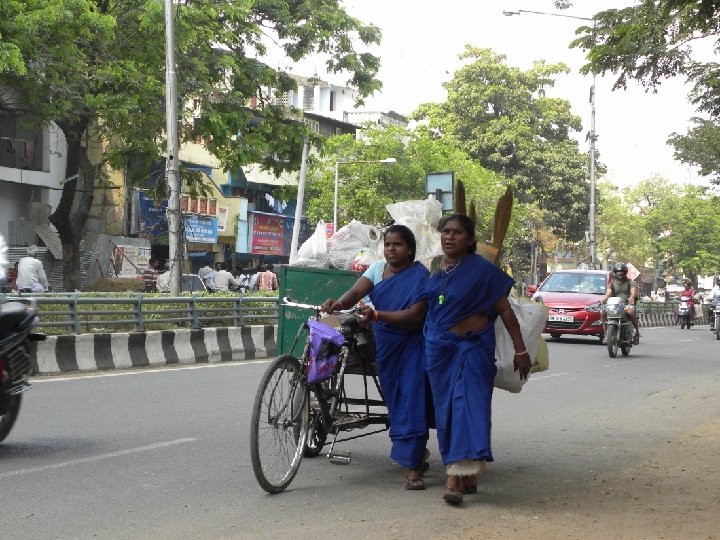
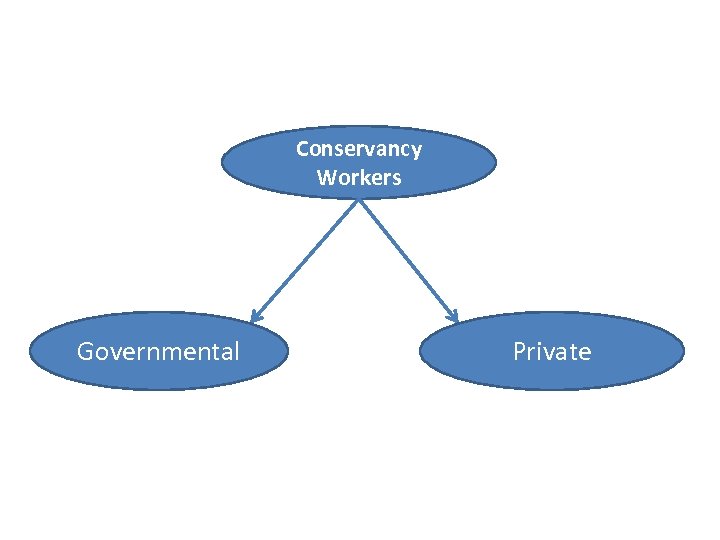
 Conservancy workers with private contractors • A sizeable number belongs to Adi Andhra / arunthathiyar community • Live in rented houses in LIG / EWS neighbourhoods • Regular income of Rs 5500 per month. One pvt company contributes to PF. Four days off a month. • One company pays Rs 230 / day. No PF
 Government conservancy workers • Permanent employees earn around Rs 13, 000 pm • Unaware of what deductions are for and about ESI
 Challenges / observations • As they start working early (they report to work by 6. 20 am latest), they do not have time to cook. • Food, conveyance and using rest rooms amounts to Rs 50 to Rs 90 a day depending on the distance between residence and work place • Protection gear and uniform seem to have been given in an arbitrary manner • If given, workers find the gloves unwieldy • Earn Rs 30 / day from recyclable waste they segregate
 • Have family • Many are educated upto a min of primary level • Children of many of them are educated / studying • Some send their children to private school, borrowing money for fee
 Itinerant Buyers • Many came into this business following family members / people from their native place who were already into it • Most of them start with a cycle, progressing to a tricycle cart, thus collecting and earning more • Most live in rented houses • Earn Rs 300 / day on an average • Children educated / studying • Till about ten years back, they bought more of paper. Now they buy almost an equal quantity of plastic • Not all shops buy from them • Doubtful (own observation and of respondents) that women take this up
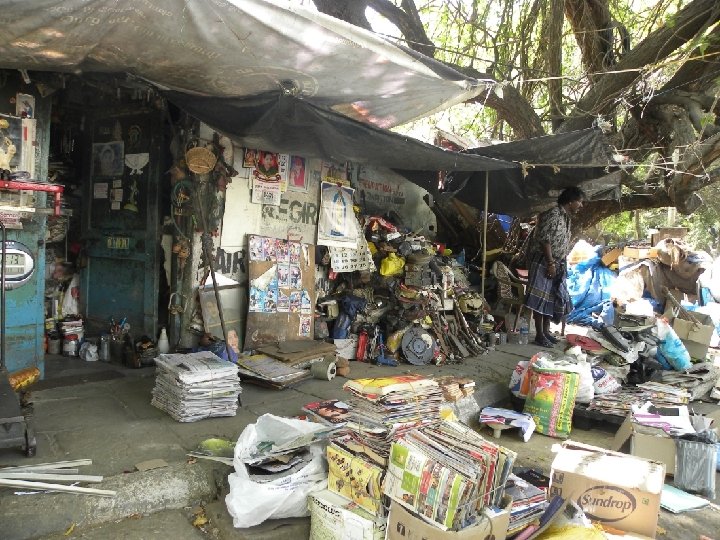
 Waste Paper Mart Owners • Many were itinerant buyers before setting up shop • Get their scales calibrated every year as per norms • Majority of them do not buy from waste pickers and conservancy workers, as the wares need to be cleaned for which they do not have the place and resource • Many do not buy from itinerant buyers as the margin is less • Those who do not buy from the above two, but directly from residences and small commercial establishments • Are subjected to police interrogations when they inadvertently buy stolen goods • Many are in rented premises and live in rented houses • They cart their collections every day / once or twice a week depending on the volume and space for stocking
 Waste Pickers • Number surveyed – 20 • They were unable to tell their collections in volume • There are likely to be a min. of 15000 collectors • On observation while a few of them sold their collections, the estimates are Paper – 12 kg / person on an average Plastic – 11 kg / person on an average Note: Paper grades vary as in clean cardboards, soiled cardboards, white (clean paper), soiled paper; as also plastic. They were combined for the purpose of this calculation
 Itinerant Buyers • Number surveyed: 7 • Able to buy a minimum of Paper – 25 kg Plastic – 3 kg Metal – 5 kg • An NGO working in the waste sector estimates itinerant buyers at a minimum of 3000
 Waste Paper Marts • Number surveyed > 50 • For arriving at the volume, number considered – 30, depending on the data provided • Paper carted away per day – approximately 100 kg (it is likely to be a minimum of 150 kg, as some who were reluctant to share information reduced the volume they sell) • Plastic carted away per day – 300 kg
 Volume being sent for recycling • (Based on the volume handled at waste paper marts as they are the nodal point for buying and selling) • There a min of 20 exclusive waste traders associations. The number of members varies between 75 and 500. • At an average of 200, the number of waste paper marts – 4000 who are members of waste paper traders association • Based on our field work, around 57% are not members of waste traders association, the same heard from association secretaries
 • There are likely to be around 2000 waste paper marts in the newly added CMA • At a minimum of 10000 waste paper marts, volume of recyclable waste handled • Paper – 1000 mt/ day • Plastic – 3000 mt /day
 • Depending on locality and space for stocking, the waste paper marts may skip the wholesale / subdealer • Reason for selling to wholesale contractor • (i) the recyling units / dealers handle huge volumes of 15 to 30 mt / week • (ii)Wholesale contractors pay immediately
 General Observations • There are fewer waste paper marts in HIG neighbourhoods • The number of shops is more in densely populated areas such as Choolaimedu, Jafferkhanpet, Chromepet, etc. – typically the continous-built areas • Waste paper marts have to pay regular money to police and local heavyweights. • Generally the shops are found on the interior roads and bye lanes, given the traffic and high rent on arterial roads.
 General Observations • The number of shops is more in mixed localities such as Periamet (leather manufacturing, steel iron workshops, etc. ) - where residences and commercial establishments such as workshops, small time manufacturers are equal in number • Itinerant buyers and collectors generally have fixed routes / localities. • Waste pickers seem to have a good rapport with the shop owners who buy from them. In some cases, the shop owners give them tricycles on rent. The shop owners refer to the pickers as ‘vyabari’ (trader /monger).
 Thank you