


 Скачать презентацию MSU Skol Tech Restriction modification Restriction modification Restriction
8. Restriction modification.ppt
- Количество слайдов: 23
 MSU & Skol. Tech Restriction/modification
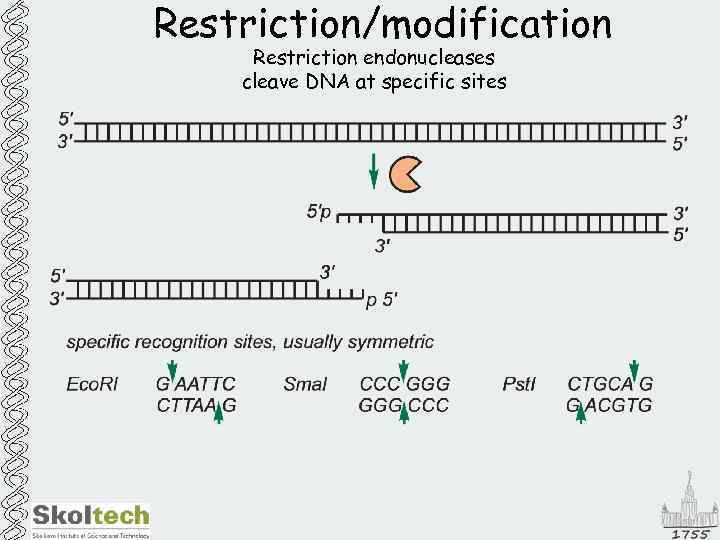 Restriction/modification Restriction endonucleases cleave DNA at specific sites
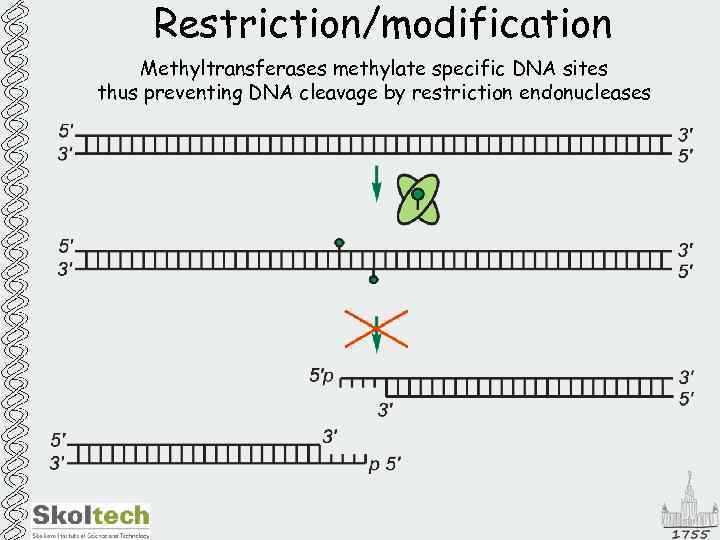 Restriction/modification Methyltransferases methylate specific DNA sites thus preventing DNA cleavage by restriction endonucleases
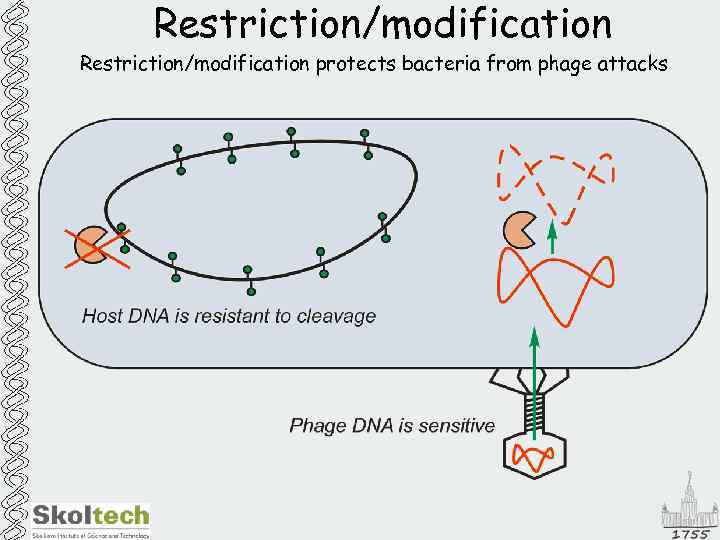 Restriction/modification protects bacteria from phage attacks
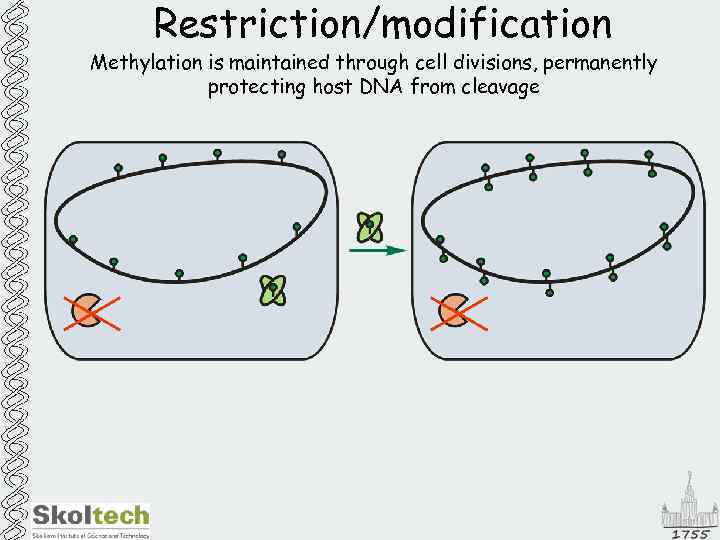 Restriction/modification Methylation is maintained through cell divisions, permanently protecting host DNA from cleavage
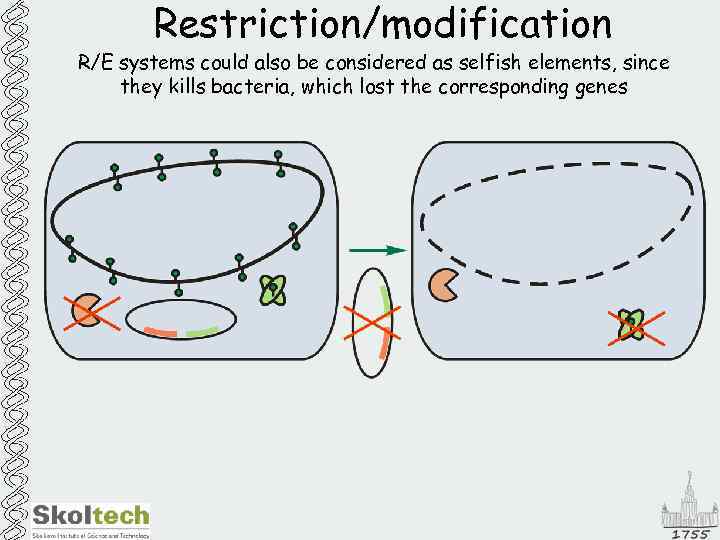 Restriction/modification R/E systems could also be considered as selfish elements, since they kills bacteria, which lost the corresponding genes
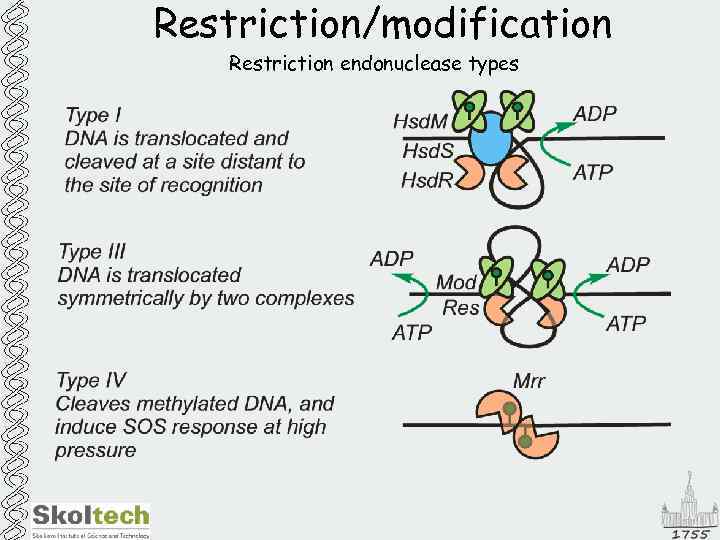 Restriction/modification Restriction endonuclease types
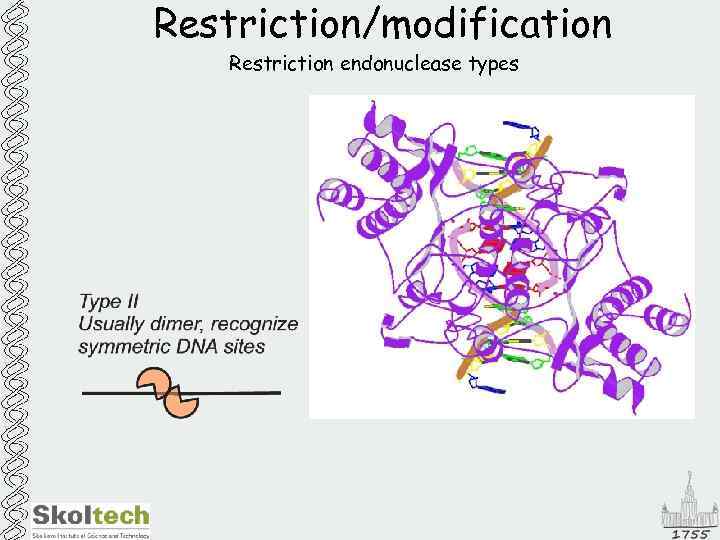 Restriction/modification Restriction endonuclease types
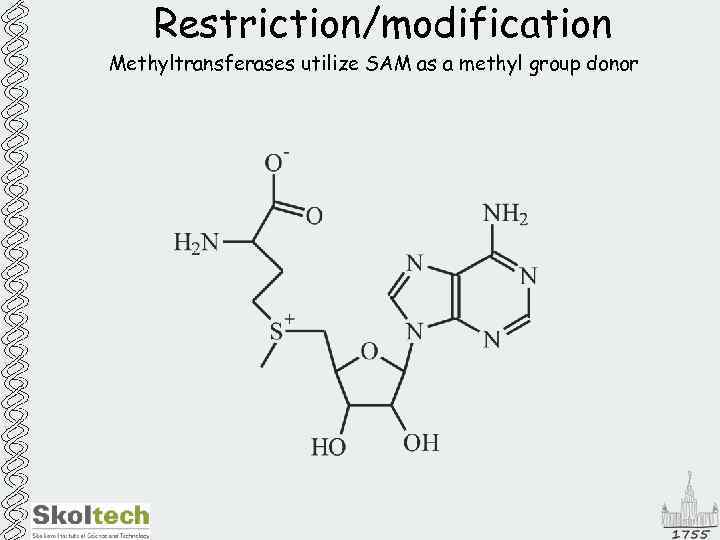 Restriction/modification Methyltransferases utilize SAM as a methyl group donor
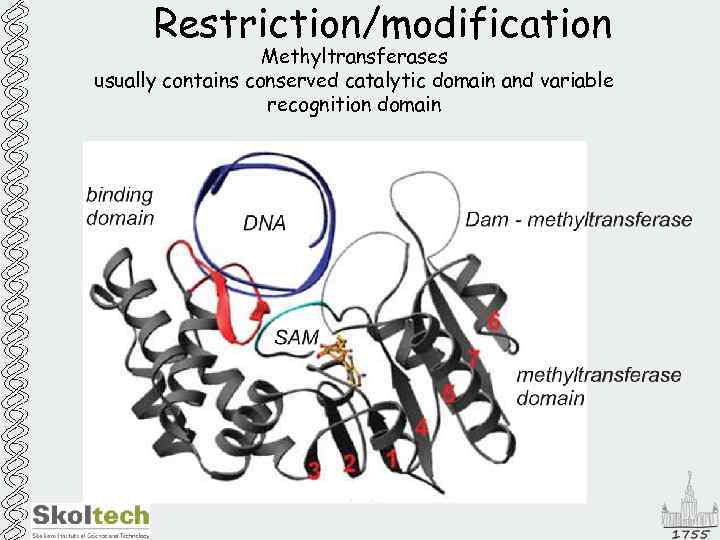 Restriction/modification Methyltransferases usually contains conserved catalytic domain and variable recognition domain
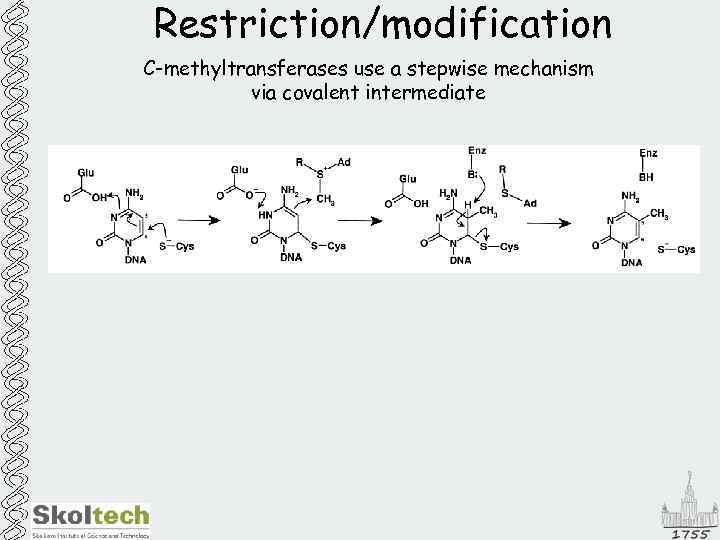 Restriction/modification C-methyltransferases use a stepwise mechanism via covalent intermediate
 Restriction/modification Regulation of R/E systems Aims of regulation 1. Methyltransferase should appear first to protect host DNA 2. Restriction nuclease expression should follow that of methyltransferase 3. In a steady state methyltransferase shouldn’t be in a too much excess (not to methylate phage DNA)
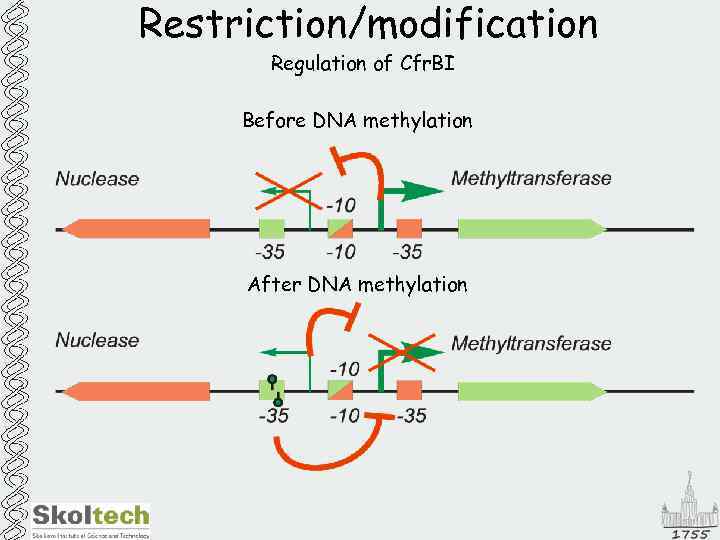 Restriction/modification Regulation of Cfr. BI Before DNA methylation After DNA methylation
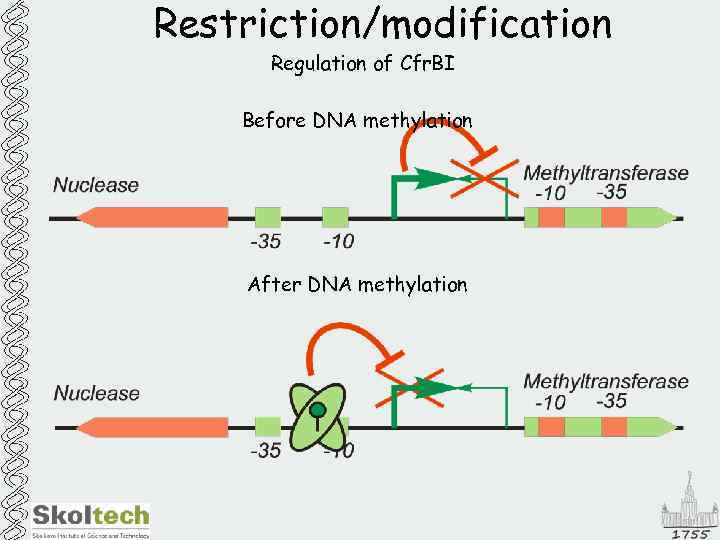 Restriction/modification Regulation of Cfr. BI Before DNA methylation After DNA methylation
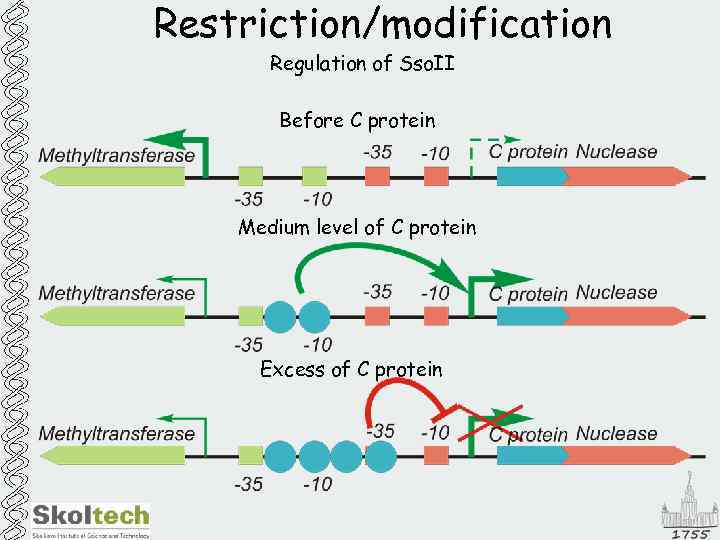 Restriction/modification Regulation of Sso. II Before C protein Medium level of C protein Excess of C protein
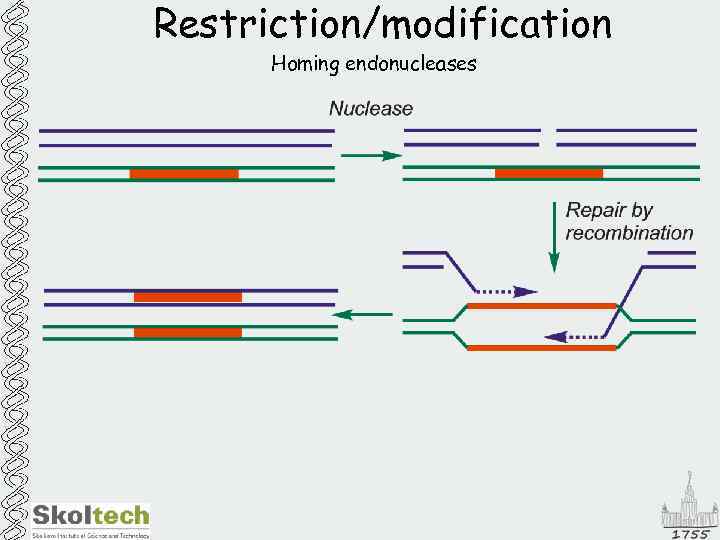 Restriction/modification Homing endonucleases
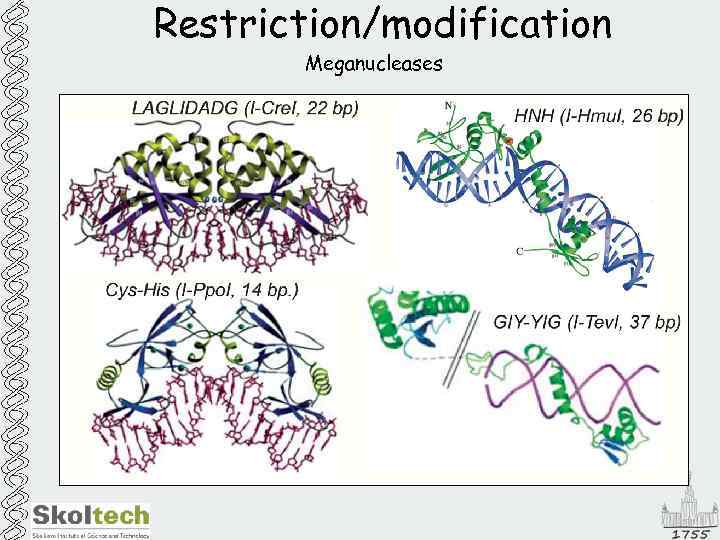 Restriction/modification Meganucleases
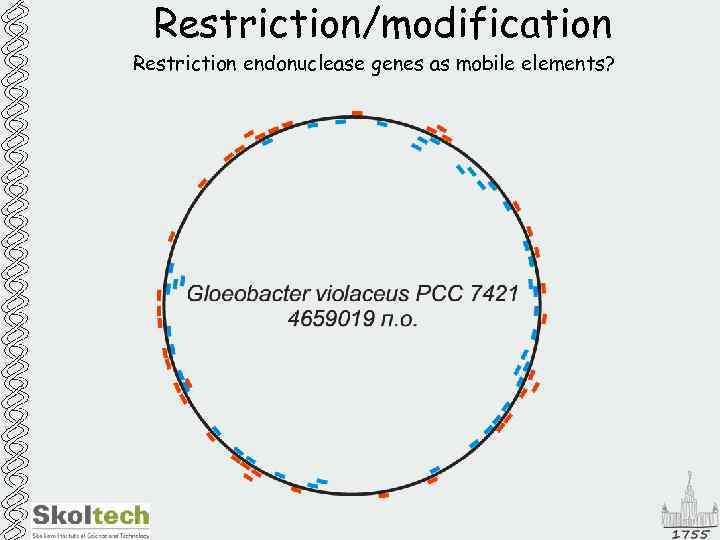 Restriction/modification Restriction endonuclease genes as mobile elements?
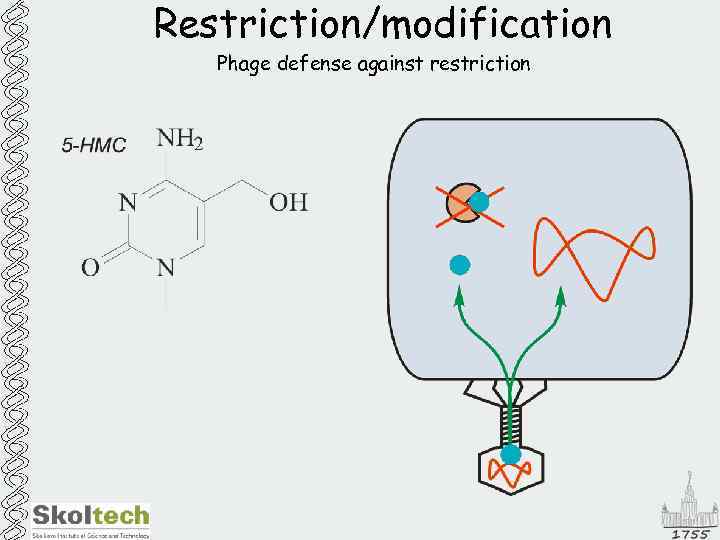 Restriction/modification Phage defense against restriction
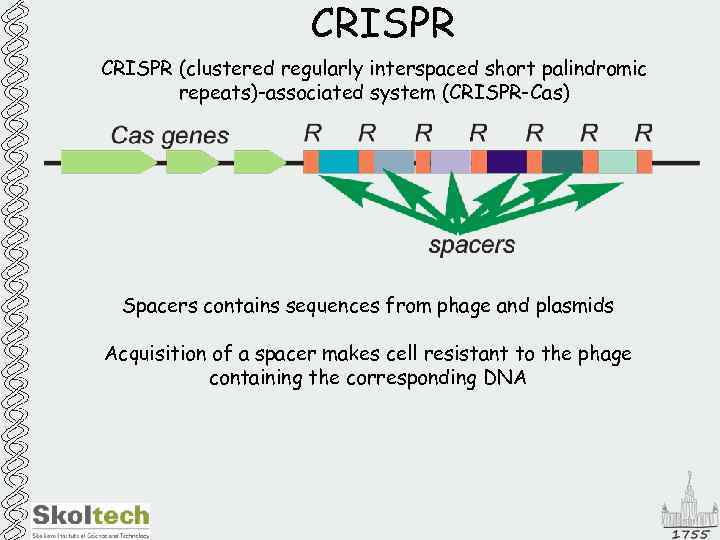 CRISPR (clustered regularly interspaced short palindromic repeats)-associated system (CRISPR-Cas) Spacers contains sequences from phage and plasmids Acquisition of a spacer makes cell resistant to the phage containing the corresponding DNA
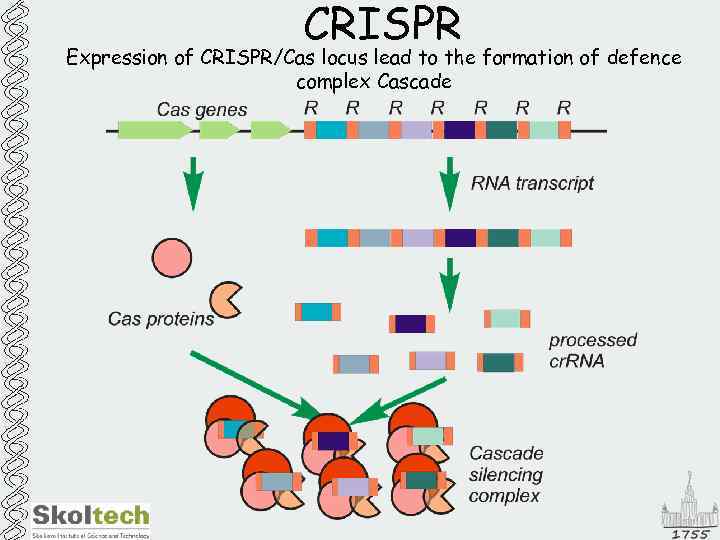 CRISPR Expression of CRISPR/Cas locus lead to the formation of defence complex Cascade
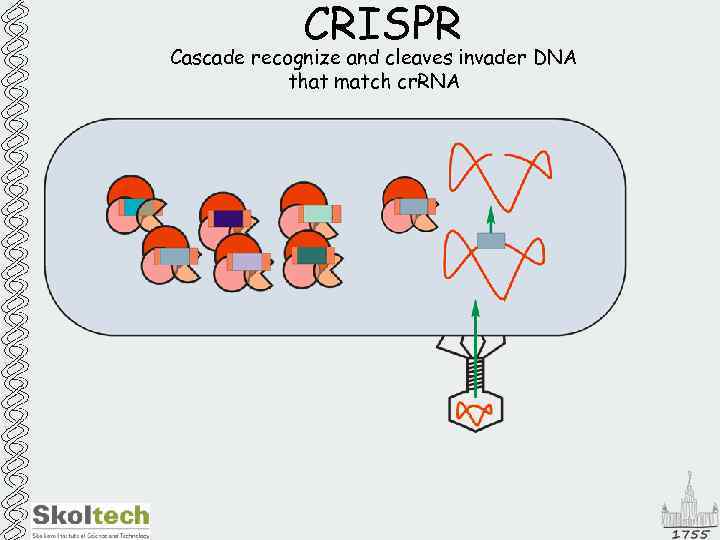 CRISPR Cascade recognize and cleaves invader DNA that match cr. RNA
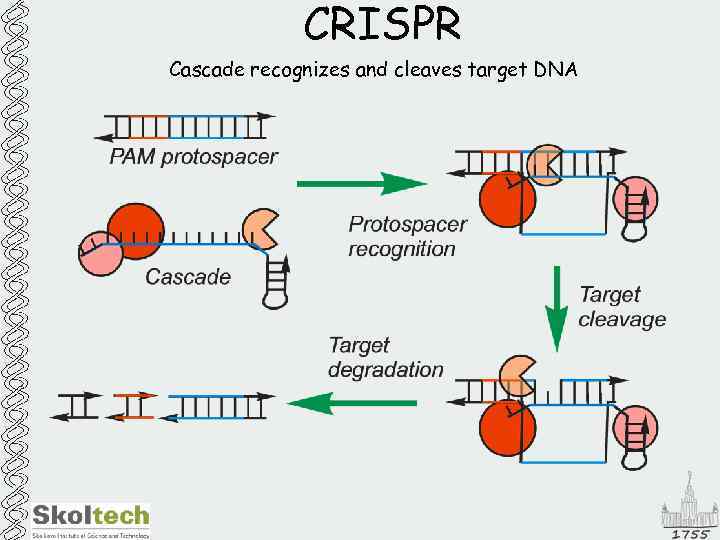 CRISPR Cascade recognizes and cleaves target DNA