


 Скачать презентацию MSCHE Follow-up Reporting Expectations MSCHE Annual Conference 2010
1ed8067a3f0a51b5b32757c22e66dd28.ppt
- Количество слайдов: 33
 MSCHE Follow-up Reporting Expectations MSCHE Annual Conference 2010 Mary Ellen Petrisko Linda Suskie
 MSCHE Guidelines Fwww. msche. org FClick on “Policies” on left side. FScroll down to “Follow-Up Reports & Visits”
 What is Follow-Up? FA Commission request for a – Progress report – Monitoring report – Supplemental report – Commission liaison guidance visit – Small team visit
 Why Did You Get a Follow-Up? FConcern about compliance with one or more – Standards – Requirements of Affiliation FSee Characteristics of Excellence
 USED’s Two-Year Rule FIf MSCHE finds your institution out of compliance… – Warning – Probation FAccreditation must be reaffirmed within two years. FShort extensions possible for “good cause”
 Progress Reports FMeet the Commission’s standards FBut MSCHE needs assurance that activities planned or being implemented are carried out – Improved governance structure – Rewritten strategic plan – Revised assessment plan
 Monitoring Reports #1 FMeet the Commission’s standards FBut MSCHE has concerns about ongoing compliance with one or more standards – Financial future looks dicey – Enrollment management plan doesn’t seem based on realistic assumptions – Maintaining quality during a time of dramatic change
 Monitoring Reports #2 FWarning or probation – Lack of evidence that the institution is in compliance with one or more standards
 Supplemental Reports FPostponement of an accreditation decision FInsufficient evidence to verify compliance – Topic not addressed in report – Assurances but no evidence – Evidence not yet available § Audited financial statements FShort time-frame
 Preparing an Effective Follow-Up Report
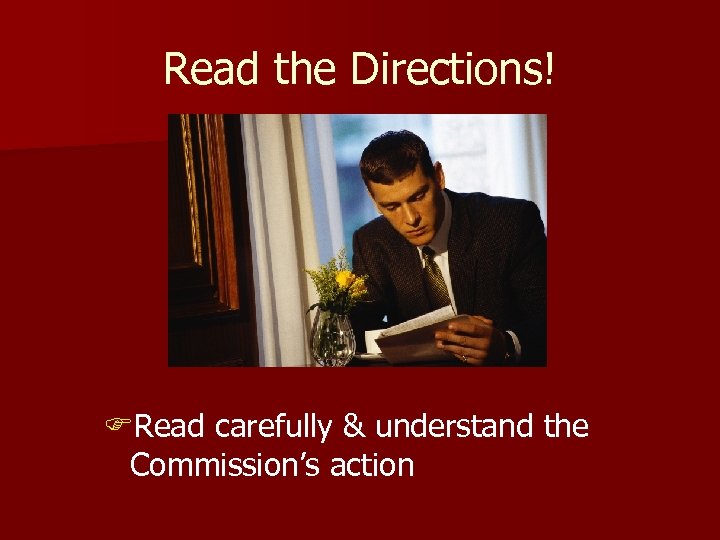 Read the Directions! FRead carefully & understand the Commission’s action
 Understand MSCHE’s Underlying Concerns & Expectations FCharacteristics of Excellence – Introduction – Standard – Context – Fundamental Elements – Requirement of Affiliation? FReports from MSCHE reviewers – Evaluation team – PRR reviewer – Small team
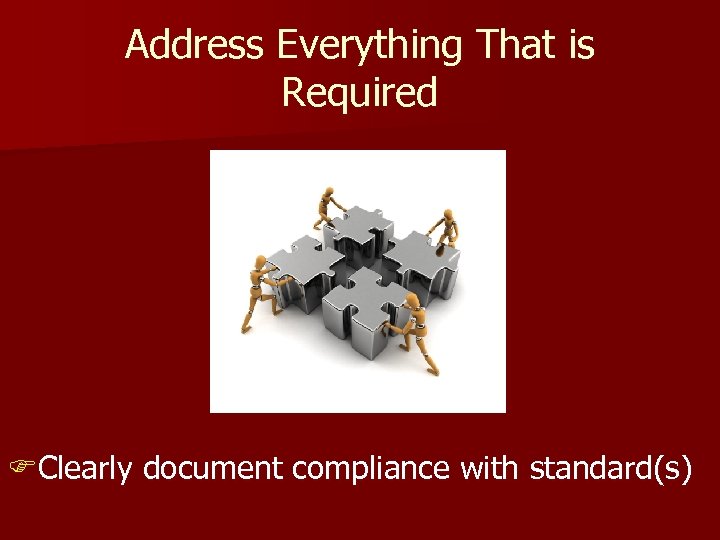 Address Everything That is Required FClearly document compliance with standard(s)
 Focus on Past and Present, Not Future FCurrent and sustained compliance FNo “I’m a gonna”s FConcrete details on work to be done – Action plans – Timelines – Accountabilities – Benchmarks
 Focus on Outcomes FMore than structures & processes – What is the governance structure? – Is the governance structure fulfilling its responsibilities?
 Provide Documented Evidence FNot just platitudes or assertions – We have made major progress toward creating a thriving culture of assessment. – Faculty are dedicated to meeting student needs. – Budget decisions are linked to strategic goals.
 Be Forthright & Honest FHonesty is the best policy! FStandard 6: Integrity FIf there’s a problem… – Explain why. – Provide clear, specific plans.
 Be Concise & Well-Organized FRespect readers’ time and energy. FAvoid data dumps. FCull out irrelevant documentation. FMake the report easy to follow. – Headings – Charts – Links to supporting documentation – Document names/labels
 Submit the Report On Time! FMSCHE may consider your institution to have voluntarily allowed its accreditation to lapse! FElectronic submissions (e-mail or CD) are usually fine.
 Report Format FTitle page template FIntroduction – Overview – Context FProgress to date and current status – – – Summary, discussion, analysis What does documentation say to you? Next steps to sustain compliance? FAppendices of supporting documentation FConclusion
 Report Length FProportionate to number and complexity of issues FSelf-studies are 100 pages FRelatively short report with well-organized appendices of documentation
 Follow-Up Visits
 Commission Liaison Guidance Visit FTo help you get an A! FNOT an accreditation visit – No Commission action FSchedule depends on issues – Key administrators – Faculty/staff representatives – Governing board representatives – Often an open meeting
 Small Team Visit FTo verify information in your report FRequired for warning & probation FSmaller than evaluation team FShorter than evaluation team visit FShorter timeframe to complete team report & institutional response
 Small Team Dates & Members FDeveloped by MSCHE VP liaison FWritten confirmation to institution & team
 Hosting a Successful Small Team Visit
 Travel Arrangements FHotel reservations FGround transportation – Airport/train station to hotel – Hotel to campus
 Private, Secure Meetings Rooms on Campus & in Hotel FComputer & printer FInternet access FPhone & on-call technical support FSupplies (paper, flash drives) FRefreshments FCheck with team for additional needs
 Meals FCheck with team chair. FGenerally private working meals FNo interruptions (buffet or pre-plated) FMeals with campus representatives?
 Small Team Visit Schedule FDepends on issues – President – Key administrators – Faculty/staff representatives – Governing board representatives – Open meeting – Private team meetings – Oral exit report
 FRespond to reasonable requests for additional information FEmergency contact info (travel delays)
 After the Visit FDraft team report FCorrection of errors of fact FInstitutional response FChair’s confidential brief FCommittee on Follow-Up – Late January – Late May – Early November FCommission Meeting
 Your MSCHE VP Liaison is Your Friend! FE-mail or telephone with questions. FMeet in Commission offices? FMeet during MSCHE Annual Conference? FCommission Liaison Guidance Visit FCampus visit? (Fee charged) FCannot review drafts