 Скачать презентацию MSc GBE Course Genes from sequence to function
3cdd4ea9d15d907df58ee082c78b1a53.ppt
- Количество слайдов: 36




MSc GBE Course: Genes: from sequence to function Brief Introduction to Systems Biology Sven Bergmann Department of Medical Genetics University of Lausanne Rue de Bugnon 27 - DGM 328 CH-1005 Lausanne Switzerland work: ++41 -21 -692 -5452 cell: ++41 -78 -663 -4980 http: //serverdgm. unil. ch/bergmann

Modeling Crash course Pre-Steady-State Decoding of the Bicoid Morphogen Gradient Sven Bergmann Department of Medical Genetics – UNIL & Swiss Institute of Bioinformatics

PLo. S Biology 5(2) e 46, 2007
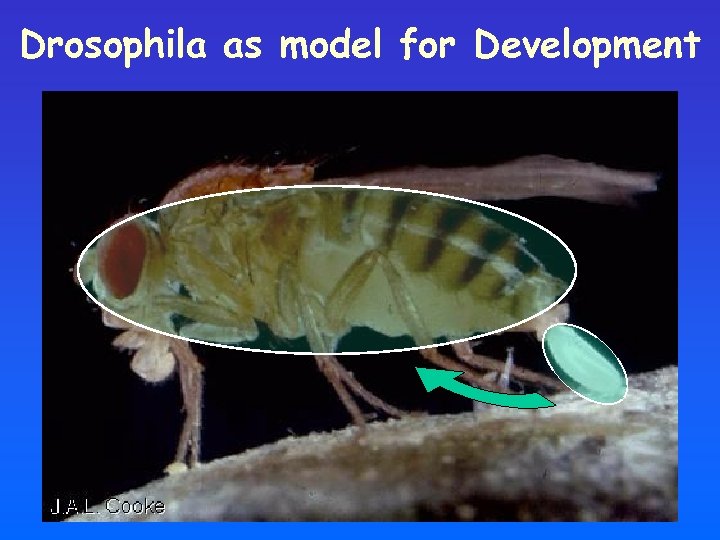
Drosophila as model for Development
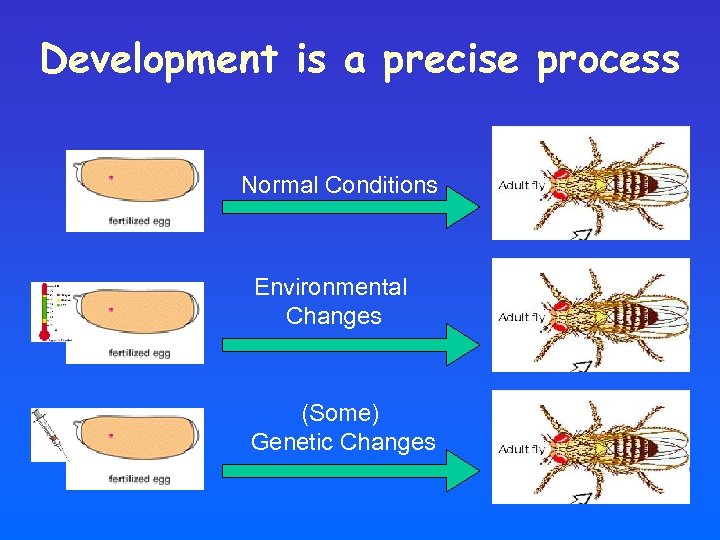
Development is a precise process Normal Conditions Environmental Changes (Some) Genetic Changes

How to ensure buffering when patterning proceeds rapidly? Genetic buffering mechanisms are hard to establish in fast development!
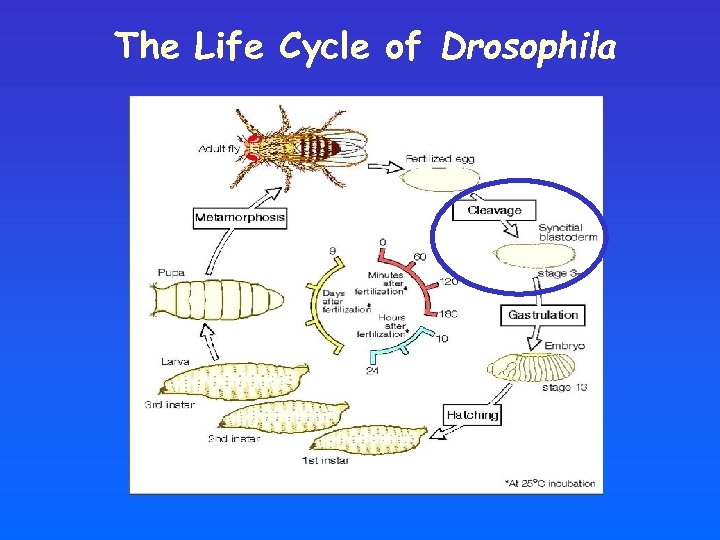
The Life Cycle of Drosophila
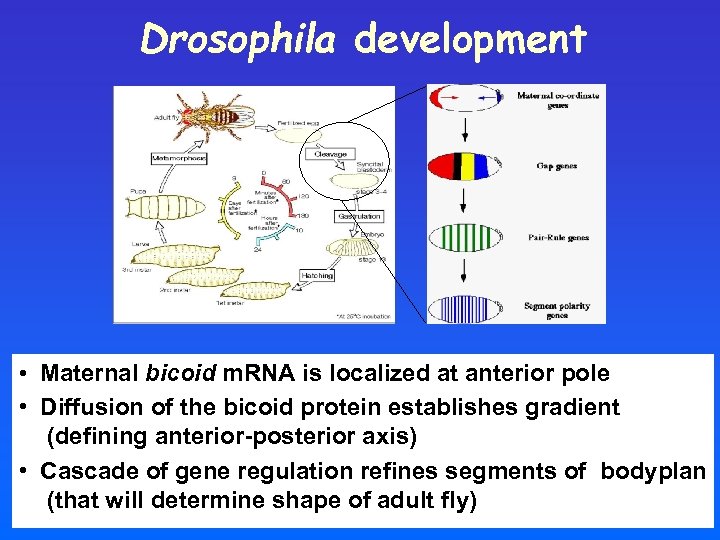
Drosophila development • Maternal bicoid m. RNA is localized at anterior pole • Diffusion of the bicoid protein establishes gradient (defining anterior-posterior axis) • Cascade of gene regulation refines segments of bodyplan (that will determine shape of adult fly)
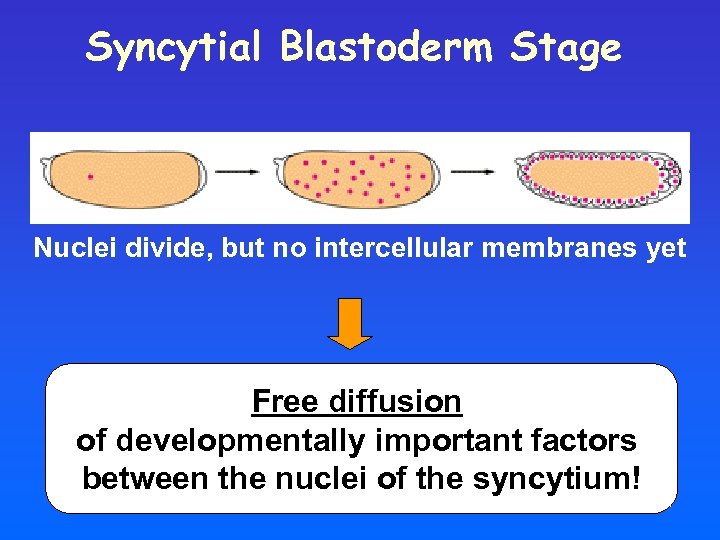
Syncytial Blastoderm Stage Nuclei divide, but no intercellular membranes yet Free diffusion of developmentally important factors between the nuclei of the syncytium!
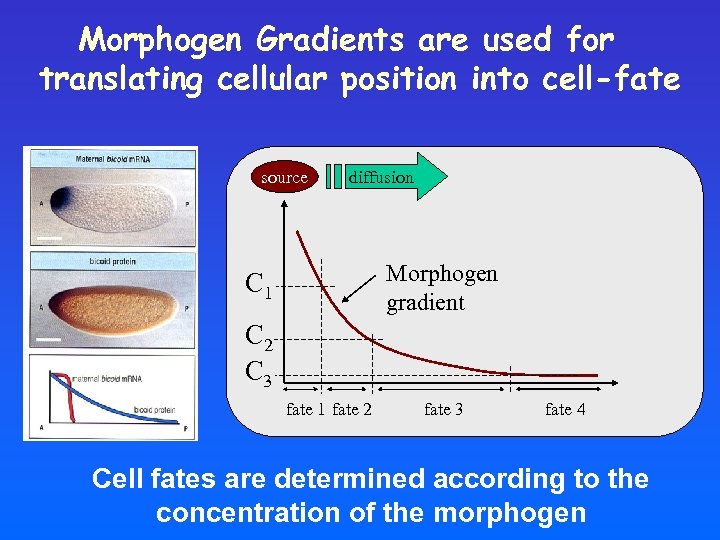
Morphogen Gradients are used for translating cellular position into cell-fate source diffusion Morphogen gradient C 1 C 2 C 3 fate 1 fate 2 fate 3 fate 4 Cell fates are determined according to the concentration of the morphogen
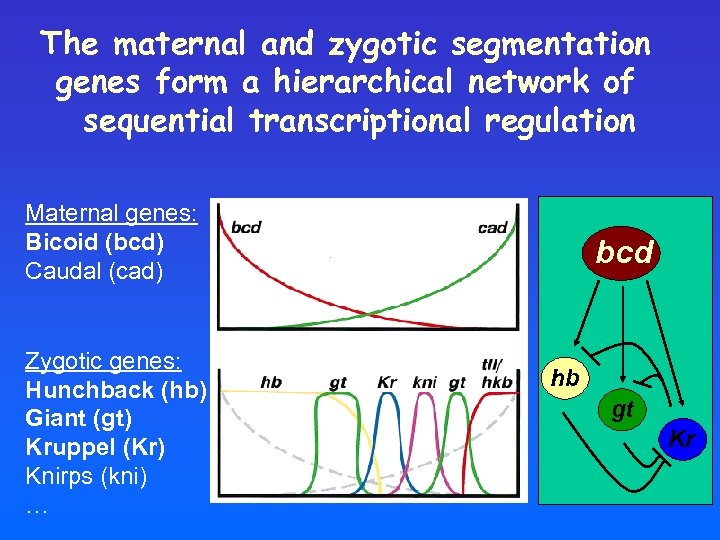
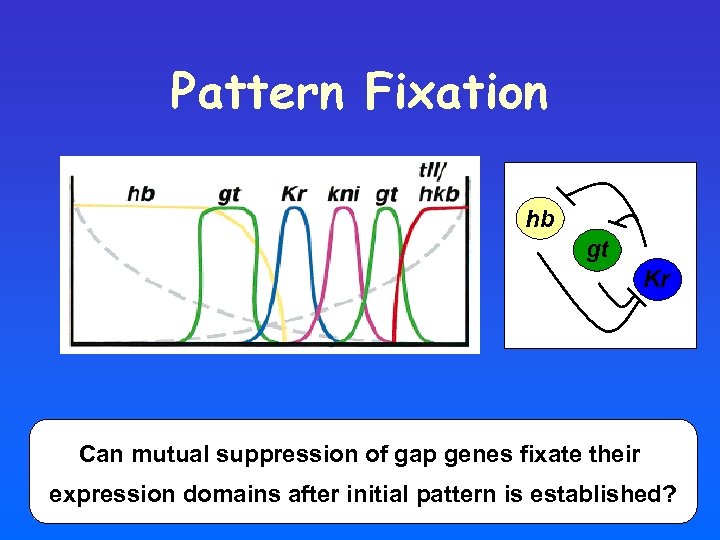
The maternal and zygotic segmentation genes form a hierarchical network of sequential transcriptional regulation Maternal genes: Bicoid (bcd) Caudal (cad) Zygotic genes: Hunchback (hb) Giant (gt) Kruppel (Kr) Knirps (kni) … bcd hb gt Kr

What happens when perturbing the system?
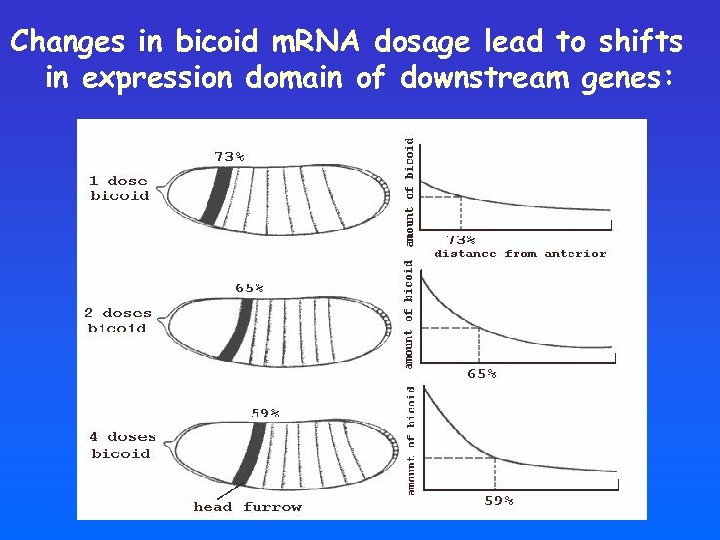
Changes in bicoid m. RNA dosage lead to shifts in expression domain of downstream genes:
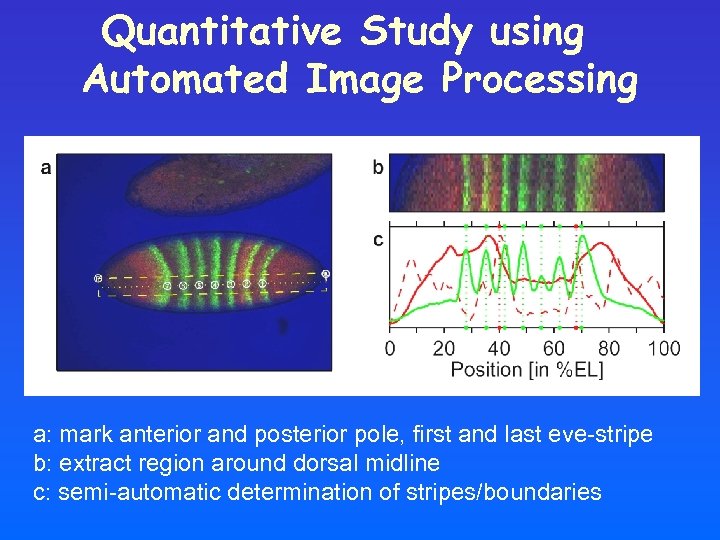
Quantitative Study using Automated Image Processing a: mark anterior and posterior pole, first and last eve-stripe b: extract region around dorsal midline c: semi-automatic determination of stripes/boundaries
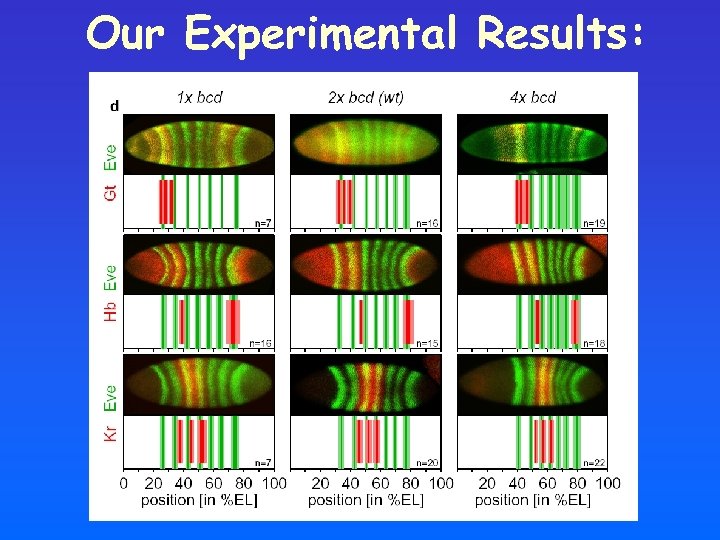
Our Experimental Results:
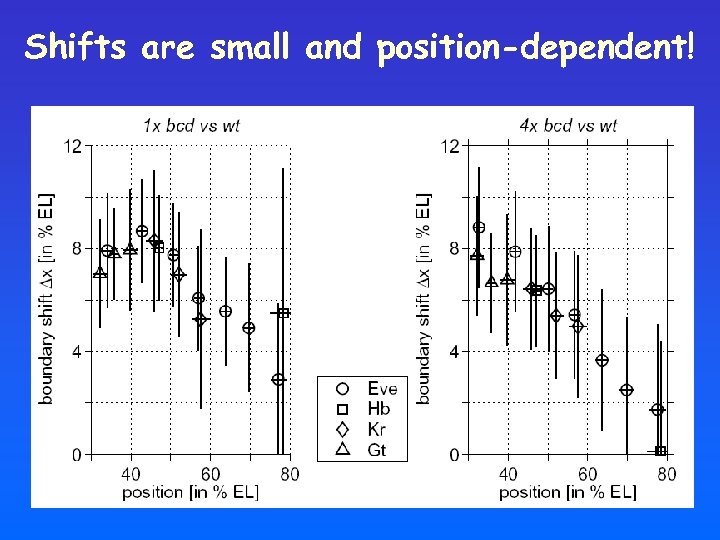
Shifts are small and position-dependent!

A bit of Theory… The morphogen density M(x, t) can be modeled by a differential equation (reaction diffusion equation): Change in concentration of the morphogen at position x, time t Diffusion D: diffusion const. Degradation α: decay rate Source

The Canonical Model Steady state: (no change in time) Solution: M(x ) Length scale: decay time x

In steady-state induced shifts are independent of position: Original gradient Gradient for half production rate

What if the profile has not reached its steady state yet? • Steady state assumption is ad-hoc • Early patterning processes are very rapid • Consistent with typical values for diffusion
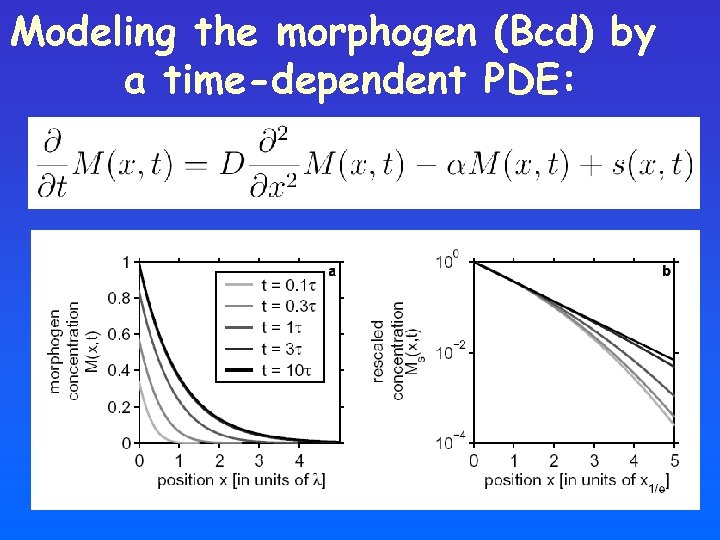
Modeling the morphogen (Bcd) by a time-dependent PDE:

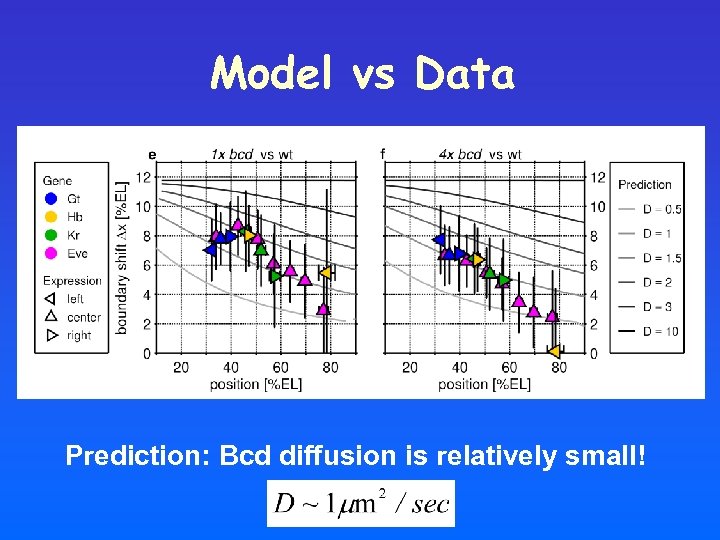
Shifts induced by altered bcd dosage: steady-state vs transient profile Decoding the transient profile: • Position-dependent shifts • Smaller shifts towards the posterior pole
Model vs Data Prediction: Bcd diffusion is relatively small!
Pattern Fixation hb gt Kr Can mutual suppression of gap genes fixate their expression domains after initial pattern is established?

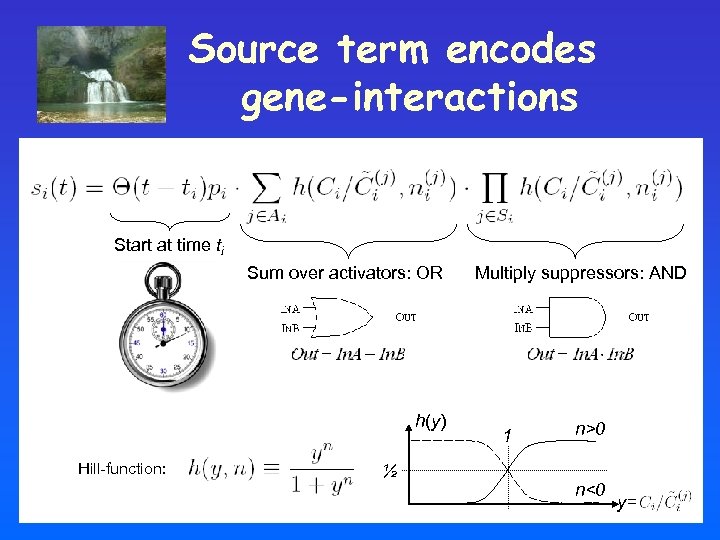
Simulating the system Model using partial differential equations: Change in concentration of gene i=Bcd, Gt, Hb, … at position x, time t Diffusion Di: diffusion const. Degradation αi: decay rate Source
Source term encodes gene-interactions Start at time ti Sum over activators: OR h(y) Hill-function: ½ Multiply suppressors: AND 1 n>0 n<0 y=
Gradient evolution in time
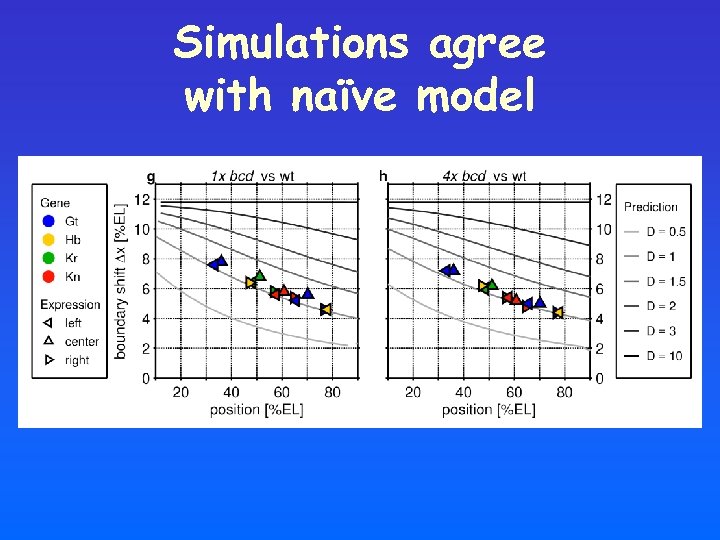
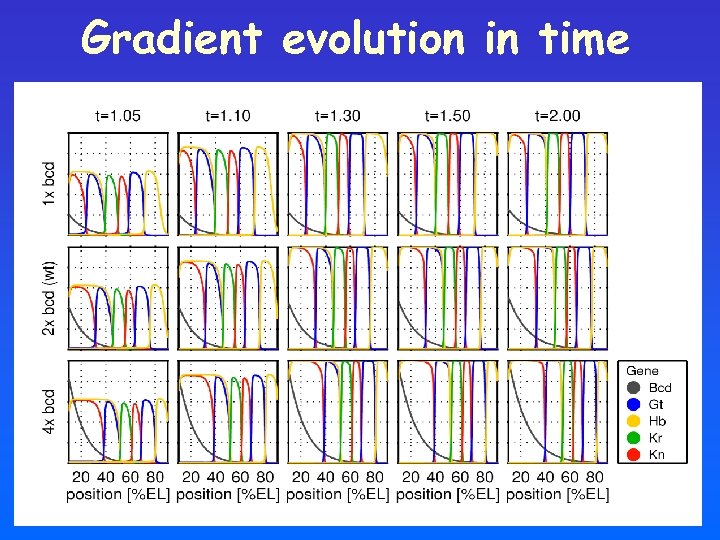
Simulations agree with naïve model

Buffering is lost when patterning occurs after Bcd has reached steady state (tinit >> τ)!
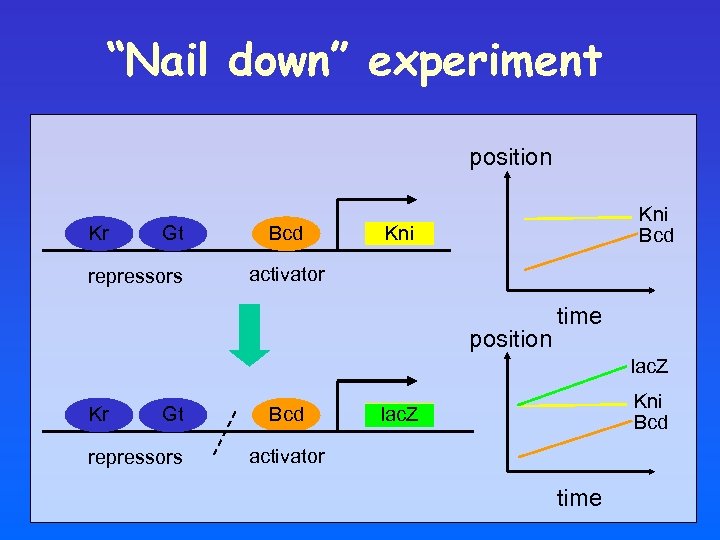
“Nail down” experiment position Kr Gt repressors Bcd Kni activator position time lac. Z Kr Gt repressors Bcd Kni lac. Z activator time
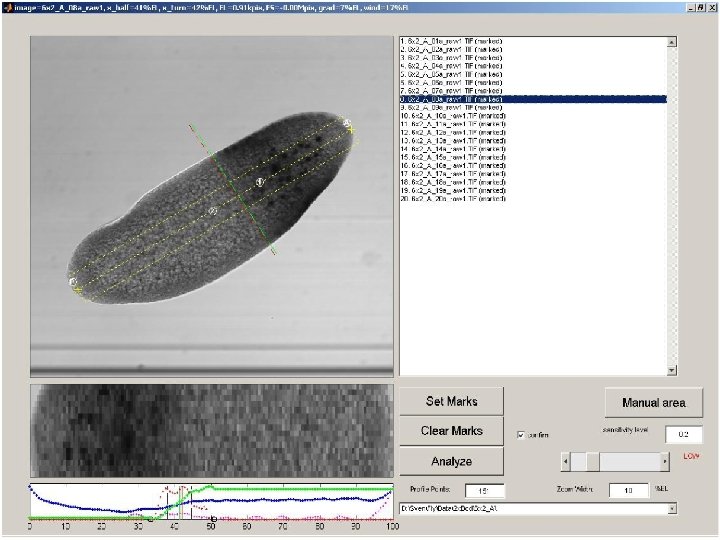
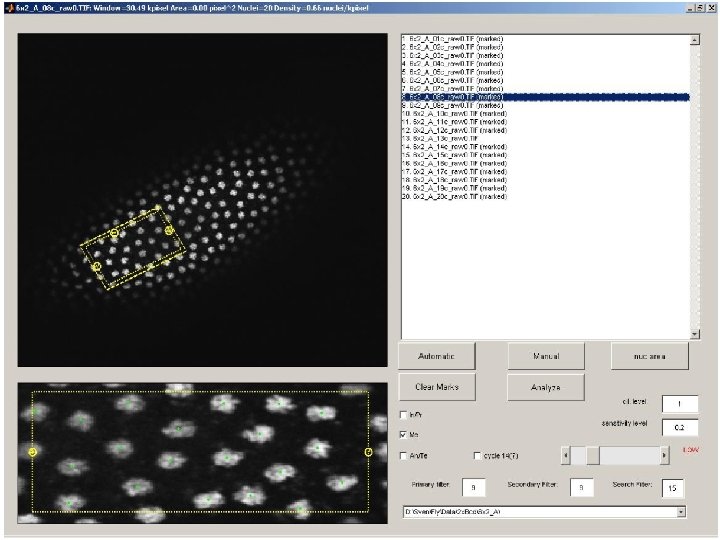
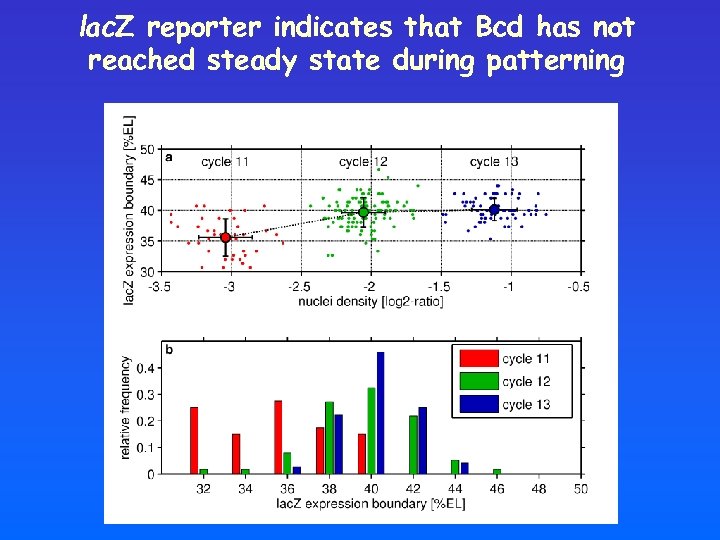
lac. Z reporter indicates that Bcd has not reached steady state during patterning
Conclusion: Systems approach to the gap-gene network reveals that dynamic decoding of pre-steady state morphogen gradient is consistent with experimental data from the anterior-posterior patterning in early Drosophila embryos
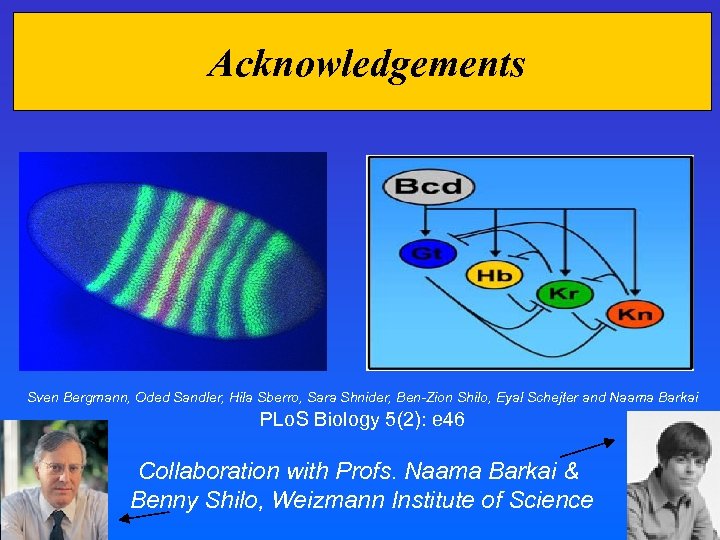
Acknowledgements Sven Bergmann, Oded Sandler, Hila Sberro, Sara Shnider, Ben-Zion Shilo, Eyal Schejter and Naama Barkai PLo. S Biology 5(2): e 46 Collaboration with Profs. Naama Barkai & Benny Shilo, Weizmann Institute of Science
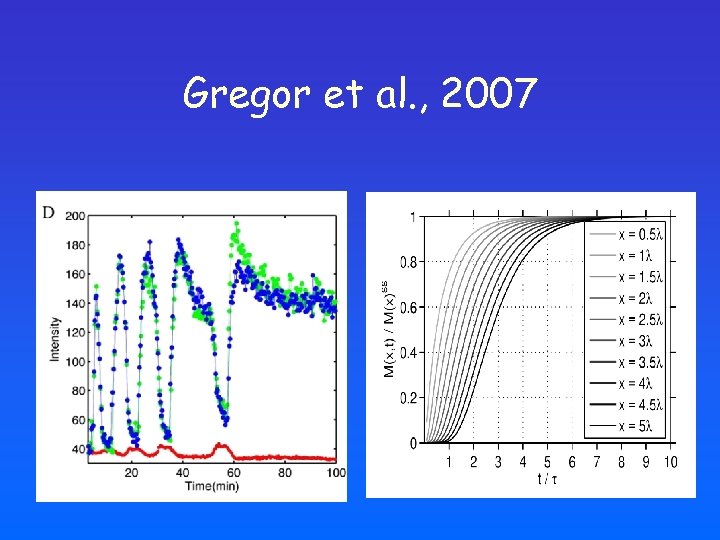
Gregor et al. , 2007
Скачать презентацию MSc GBE Course Genes from sequence to function
3cdd4ea9d15d907df58ee082c78b1a53.ppt