


 Скачать презентацию MRP II Manufacturing Resource Planning It covers only
d260dfbd89fa0000f514307122ef23da.ppt
- Количество слайдов: 18
 MRP II (Manufacturing Resource Planning) It covers only the processes required for that function inside a manufacturing environment, such as Finite Capacity Planning / Loading, Production Scheduling, JIT, OPT, etc. An MRPII system can be utilized in a multi plan environment and can also have EDI and even be running in automatic mode every time that an MRP Flag changes in any MRP item (while this require lots of processing power).
 Enterprise Resource Planning (ERP) ERP includes MRP as part of its functionality. ERP is a newer generation product which integrates more business functional areas into a single interactive application, functionality such as Sales Forecasting, purchasing, Distribution Requirement Planning, Inventory Management, Sales Automation, Financial Control, HRMS, etc. ,
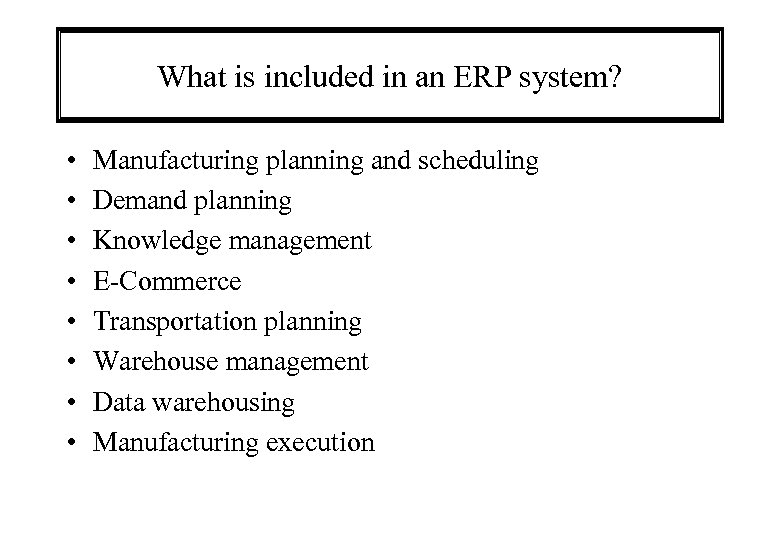 What is included in an ERP system? • • Manufacturing planning and scheduling Demand planning Knowledge management E-Commerce Transportation planning Warehouse management Data warehousing Manufacturing execution
 Current Major ERP Software players in the market • • • SAP Oracle Baan People. Soft J D Edwards
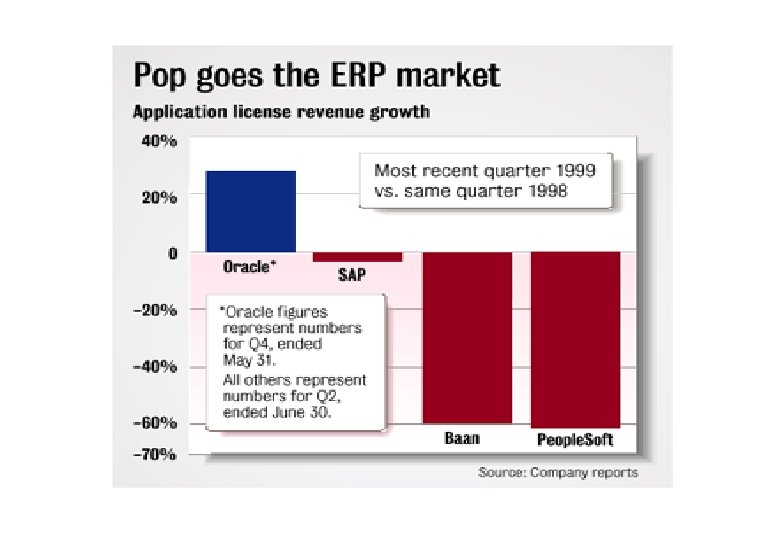
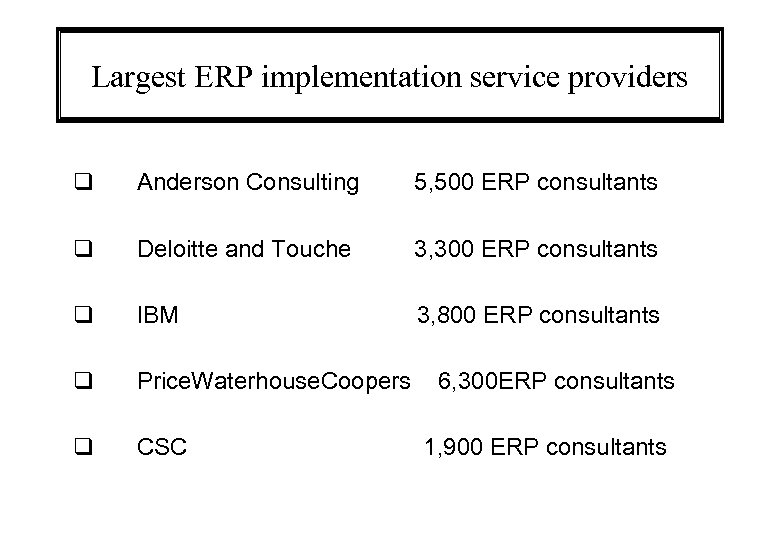 Largest ERP implementation service providers q Anderson Consulting 5, 500 ERP consultants q Deloitte and Touche 3, 300 ERP consultants q IBM 3, 800 ERP consultants q Price. Waterhouse. Coopers q CSC 6, 300 ERP consultants 1, 900 ERP consultants
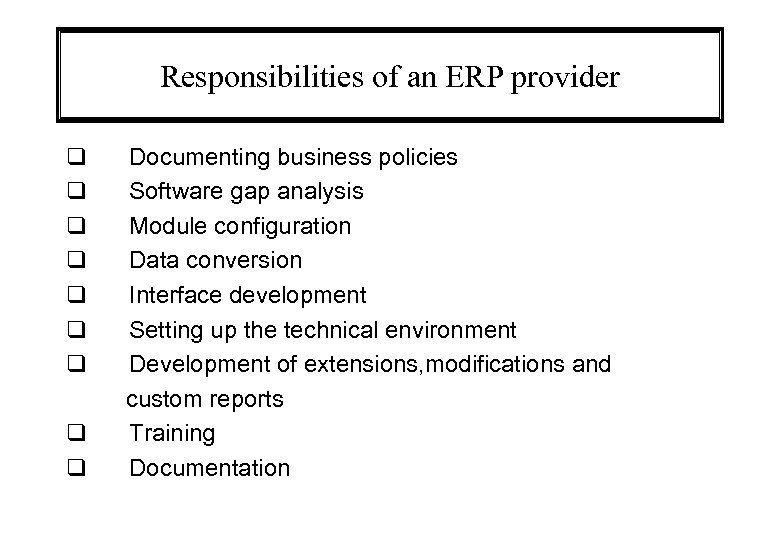 Responsibilities of an ERP provider q Documenting business policies q Software gap analysis q Module configuration q Data conversion q Interface development q Setting up the technical environment q Development of extensions, modifications and custom reports q Training q Documentation
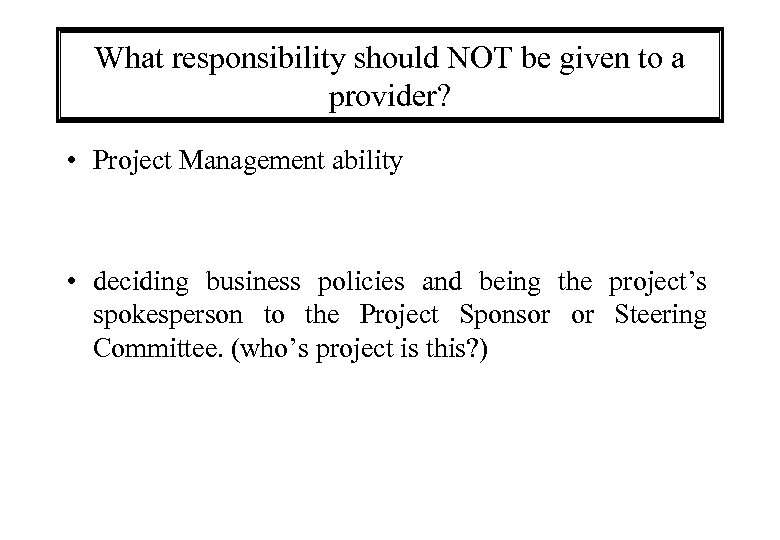 What responsibility should NOT be given to a provider? • Project Management ability • deciding business policies and being the project’s spokesperson to the Project Sponsor or Steering Committee. (who’s project is this? )
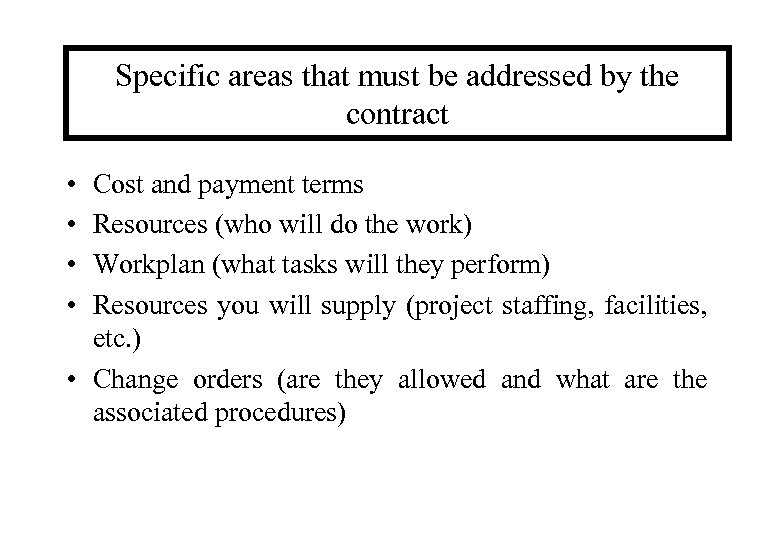 Specific areas that must be addressed by the contract • • Cost and payment terms Resources (who will do the work) Workplan (what tasks will they perform) Resources you will supply (project staffing, facilities, etc. ) • Change orders (are they allowed and what are the associated procedures)
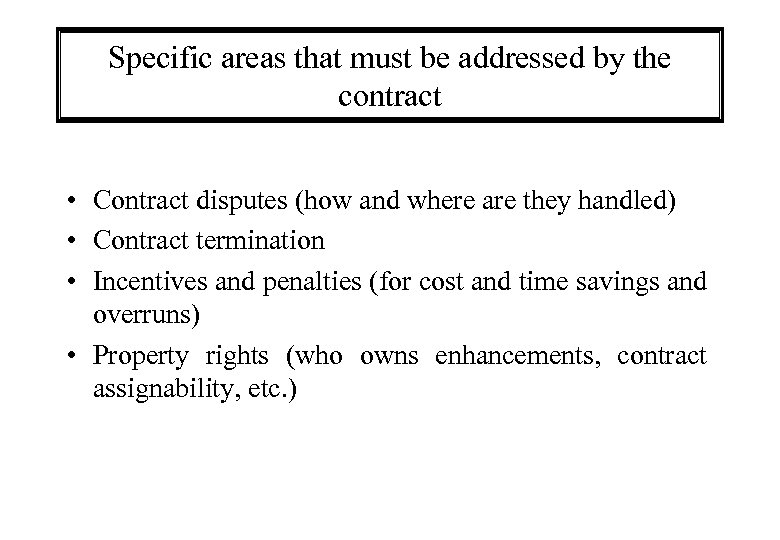 Specific areas that must be addressed by the contract • Contract disputes (how and where are they handled) • Contract termination • Incentives and penalties (for cost and time savings and overruns) • Property rights (who owns enhancements, contract assignability, etc. )
 Barriers to implement changes • People have no clear understanding of the business case driving the change • People are not integrated and engaged in the change process • Leaders do not “walk the talk” • People fear the new processes and technology and changes on their current jobs • Technology changes outpace the preparedness of people
 Workplace Automation • Automatic data collection • Automatic accounting information • Automatic order processing • Automatic problem identification and solution
 The Implementation • The process is long and draining • The learning process is BIG!!! • The system needs to fit your business • The fit is never perfect!!
 ERP and SCM • Who should implement ERP? • Is ERP the way to SCM? • How are they related?
 ASP vs ERP providers • Should I spend the money? • Should I run my ERP on other people’s Web?
 Common problems in Implementing ERP • Corporate identity lost (function vs strategy) • No one is in charge • Too complicated to manage • SC members not synchronized • Information sharing not real-time enough • Cost of ownership is high • Why do “I” have to do the integration?
 The Next Wave-CRM • Combining traditional CRM activities such as sales, marketing, service and call center, with electronic commerce activities such as buying and selling over the web. These customer-facing applications manage customer interactions through channels including the web, direct sales forces and call centers.
 CRM • By far the biggest change will involve a shift from client/server technologies and legacy systems to Webbased customer service and sales applications, particularly as CRM and sell-side electronic-commerce solutions converge. • As it shifts its focus, the CRM market will continue to grow. The worldwide market is expected to reach $7. 5 billion by 2003, compared with $3. 6 billion next year and $2. 55 billion in 1999,