


 Скачать презентацию Mr Chamness 05 27 2011 1 Define the Following
a1eb70574cde7a2853bec97304264c7c.ppt
- Количество слайдов: 115
 Mr. Chamness 05/27/2011 1
 Define the Following Terms • Safety • Accident • First Aid 2
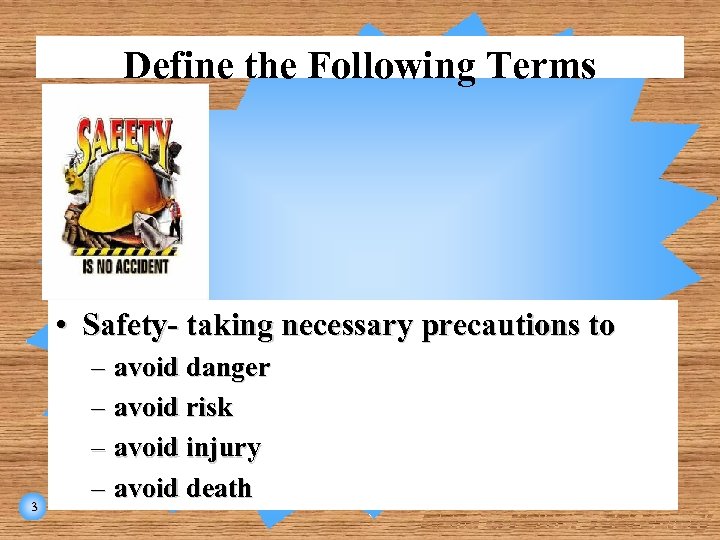 Define the Following Terms • Safety- taking necessary precautions to 3 – avoid danger – avoid risk – avoid injury – avoid death
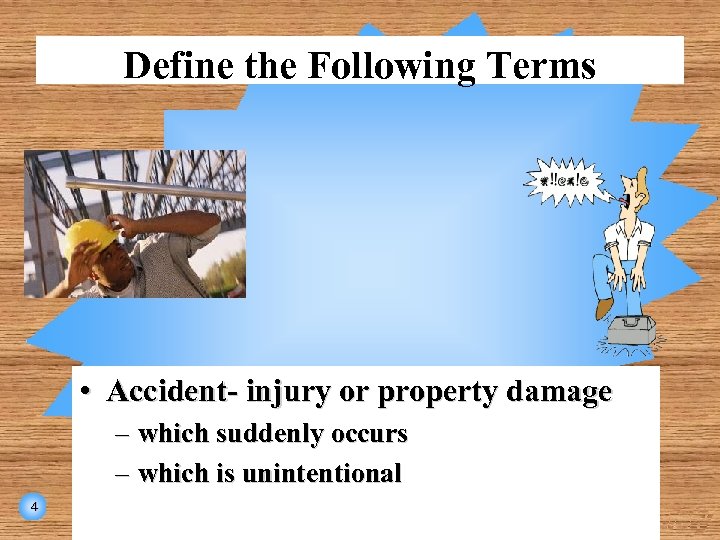 Define the Following Terms • Accident- injury or property damage – which suddenly occurs – which is unintentional 4
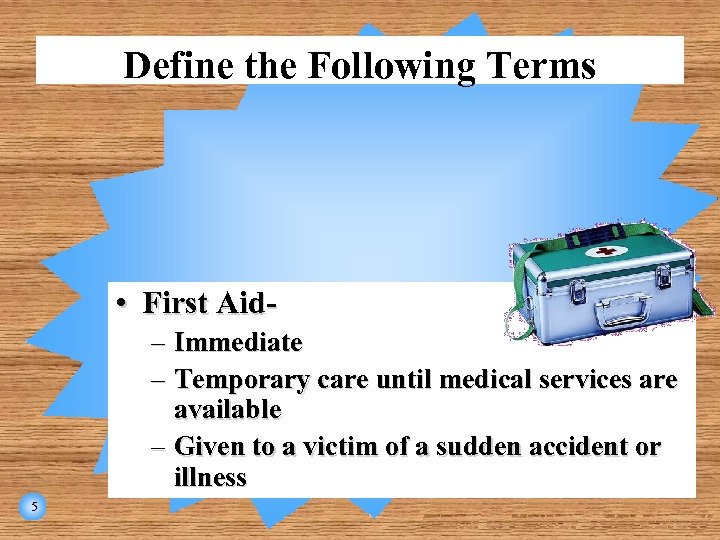 Define the Following Terms • First Aid– Immediate – Temporary care until medical services are available – Given to a victim of a sudden accident or illness 5
 Application of the Safety Color Code • • • 6 Federal Safety Red Federal Safety Yellow Federal Safety Orange Federal Safety Purple Federal Safety Green Federal Safety Yllw/Blck
 Safety Agencies • OSHA stands for the Occupational Safety and Health Administration. • It is a governmental safety organization that is responsible to reduce work related injuries 7
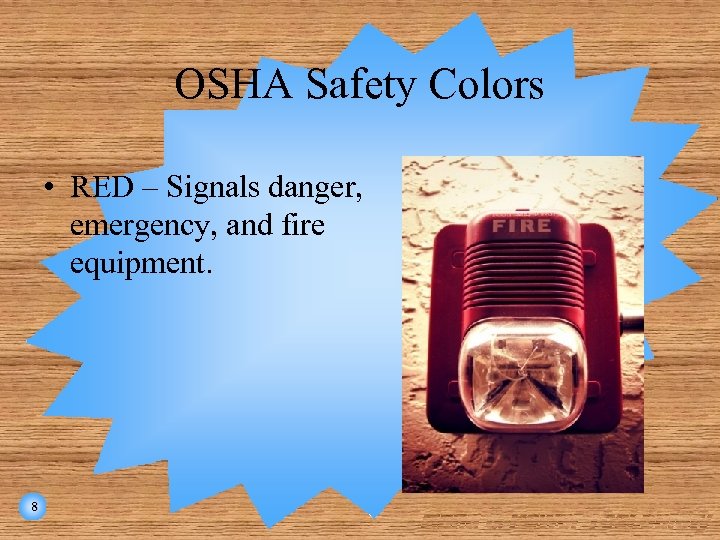 OSHA Safety Colors • RED – Signals danger, emergency, and fire equipment. 8
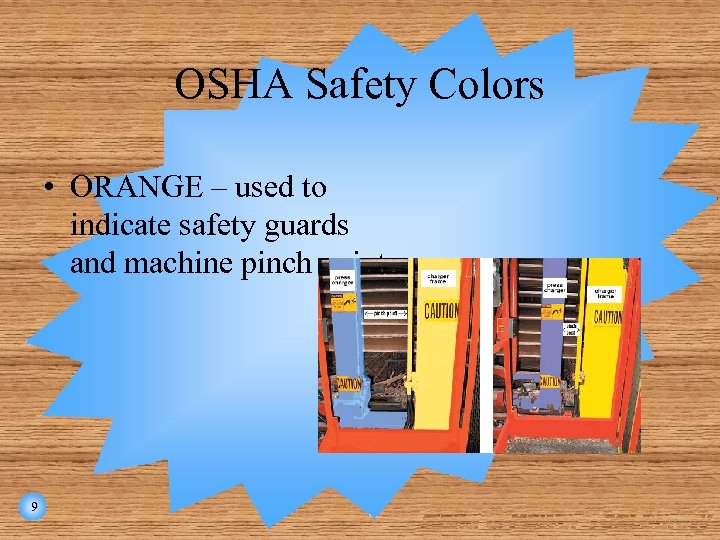 OSHA Safety Colors • ORANGE – used to indicate safety guards and machine pinch points. 9
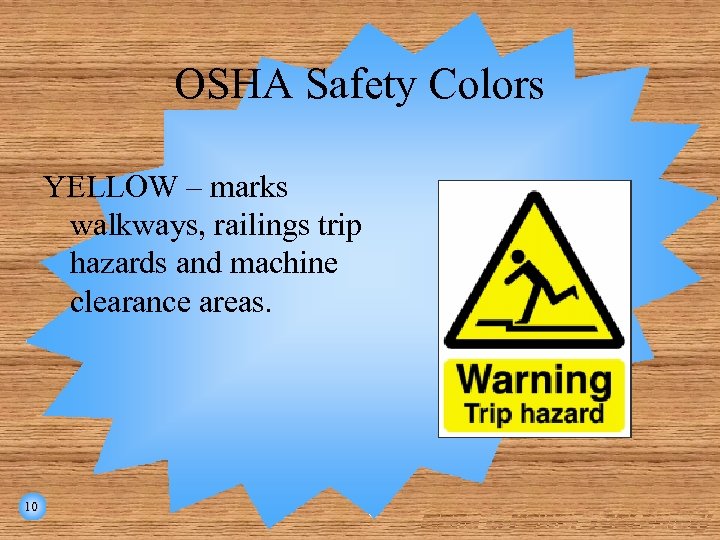 OSHA Safety Colors YELLOW – marks walkways, railings trip hazards and machine clearance areas. 10
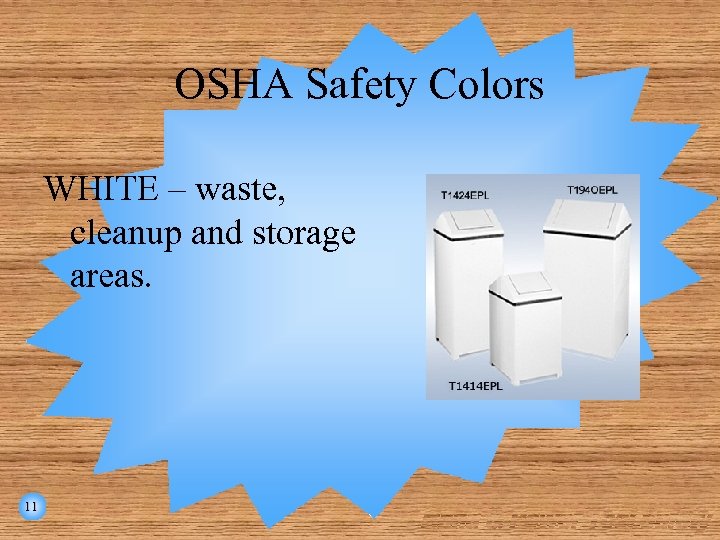 OSHA Safety Colors WHITE – waste, cleanup and storage areas. 11
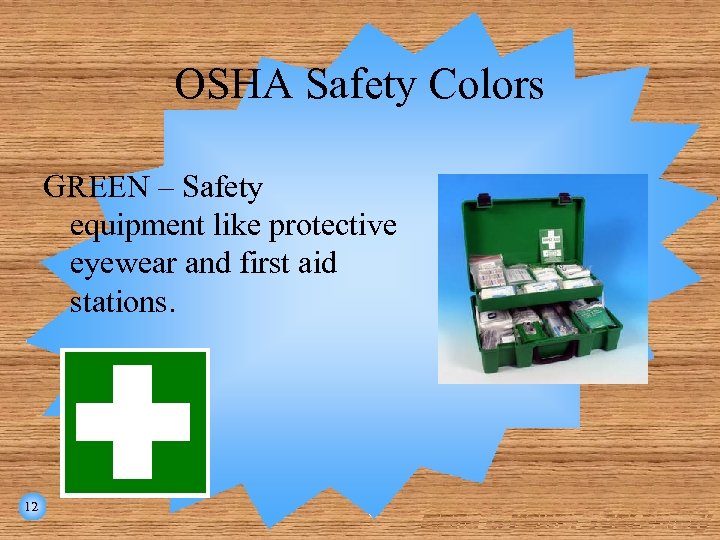 OSHA Safety Colors GREEN – Safety equipment like protective eyewear and first aid stations. 12
 OSHA Safety Colors BLUE – informational and out of order signs. 13
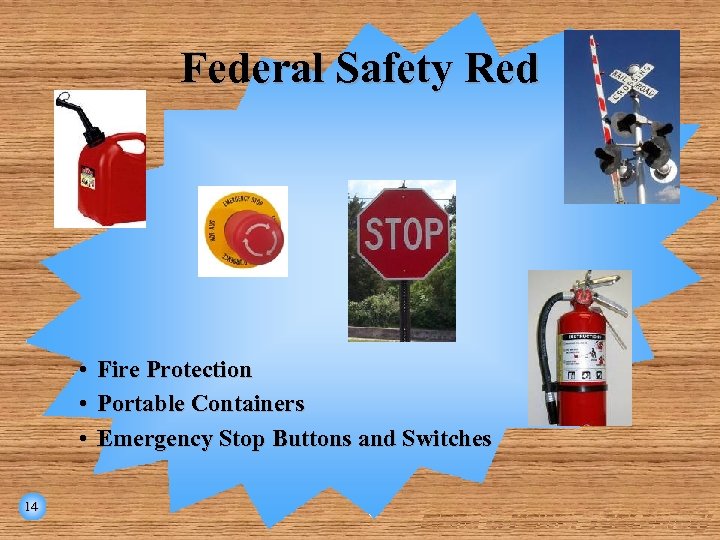 Federal Safety Red • • • 14 Fire Protection Portable Containers Emergency Stop Buttons and Switches
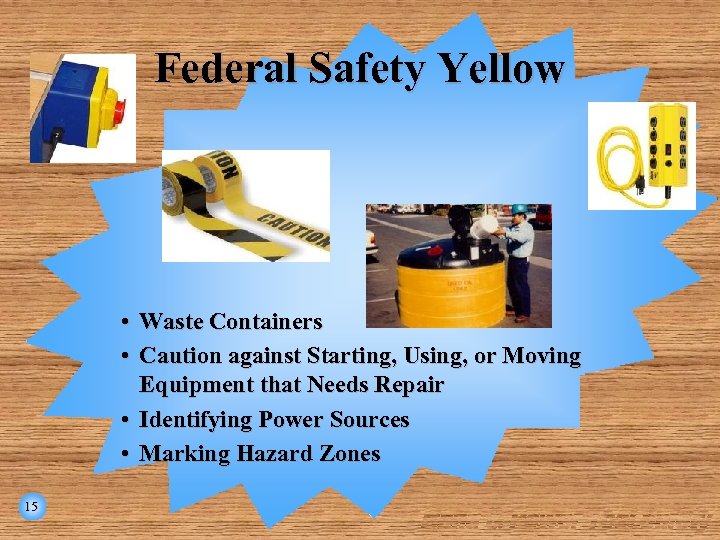 Federal Safety Yellow • Waste Containers • Caution against Starting, Using, or Moving Equipment that Needs Repair • Identifying Power Sources • Marking Hazard Zones 15
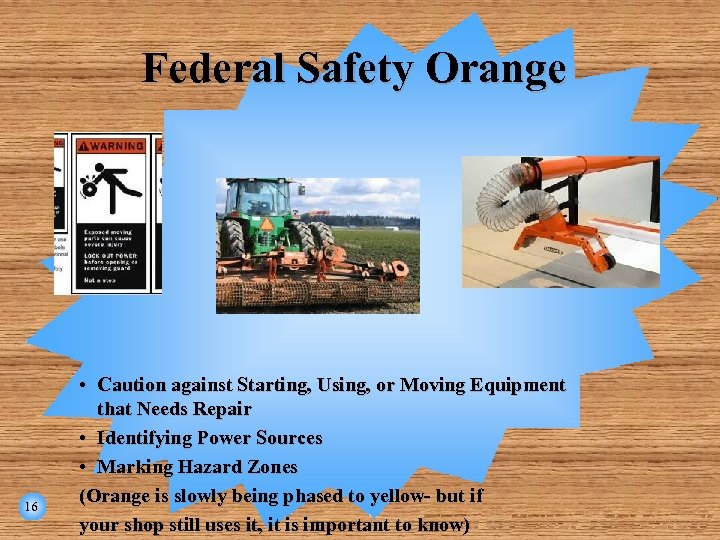 Federal Safety Orange 16 • Caution against Starting, Using, or Moving Equipment that Needs Repair • Identifying Power Sources • Marking Hazard Zones (Orange is slowly being phased to yellow- but if your shop still uses it, it is important to know)
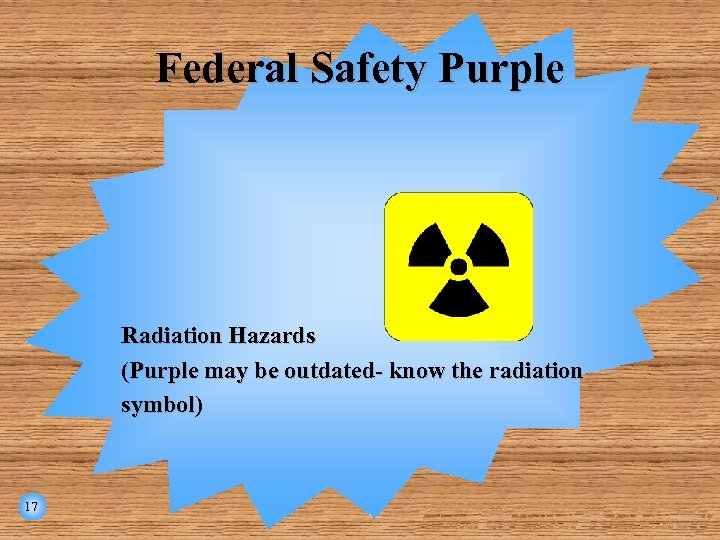 Federal Safety Purple Radiation Hazards (Purple may be outdated- know the radiation symbol) 17
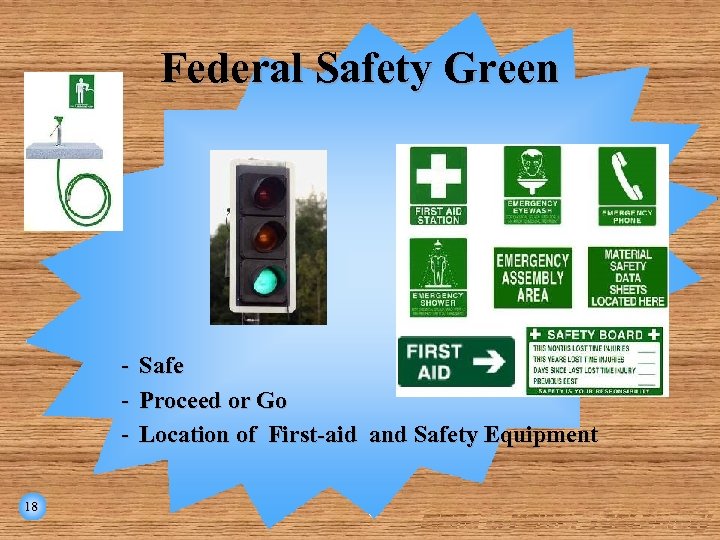 Federal Safety Green 18 Safe Proceed or Go Location of First-aid and Safety Equipment
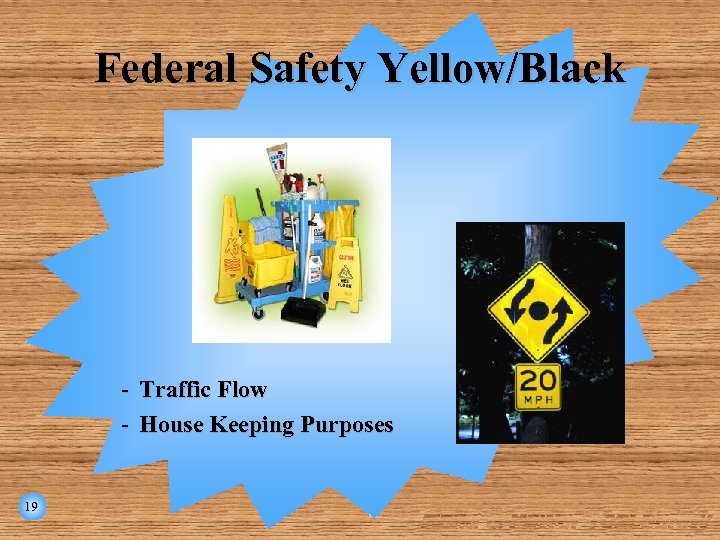 Federal Safety Yellow/Black - Traffic Flow - House Keeping Purposes 19
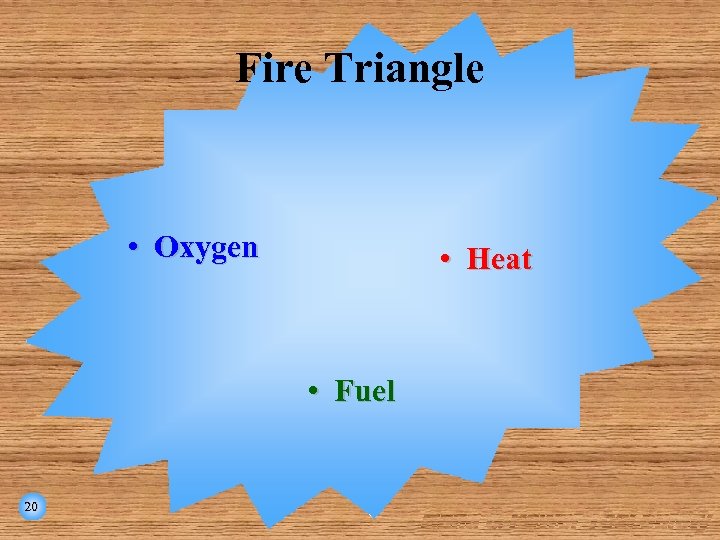 Fire Triangle • Oxygen • Heat • Fuel 20
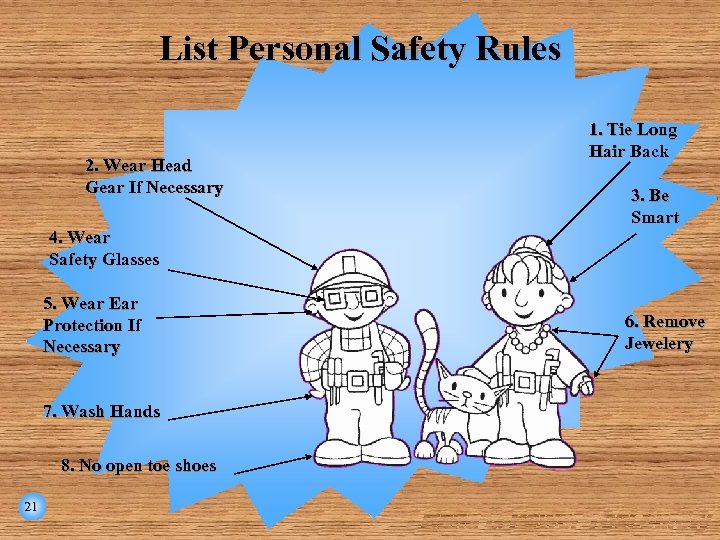 List Personal Safety Rules 2. Wear Head Gear If Necessary 4. Wear Safety Glasses 5. Wear Ear Protection If Necessary 7. Wash Hands 8. No open toe shoes 21 1. Tie Long Hair Back 3. Be Smart 6. Remove Jewelery
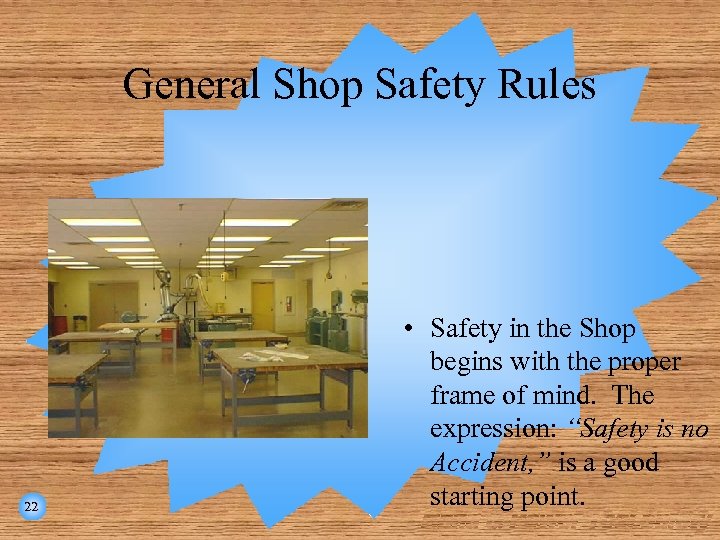 General Shop Safety Rules 22 • Safety in the Shop begins with the proper frame of mind. The expression: “Safety is no Accident, ” is a good starting point.
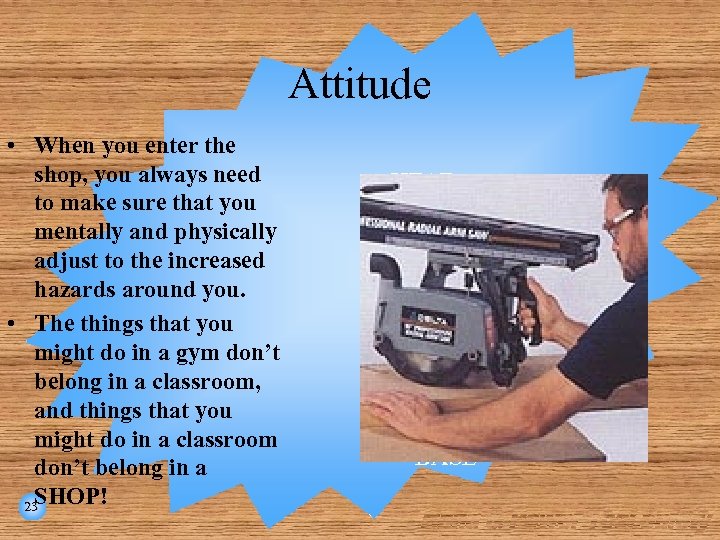 Attitude • When you enter the shop, you always need to make sure that you mentally and physically adjust to the increased hazards around you. • The things that you might do in a gym don’t belong in a classroom, and things that you might do in a classroom don’t belong in a SHOP! 23 HEAD ARBOR CHUCK TABLE BASE SPINDLE
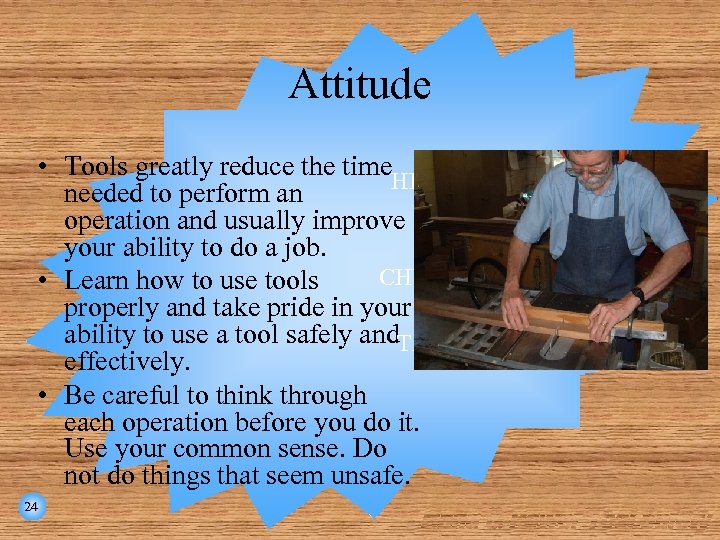 Attitude • Tools greatly reduce the time. HEAD needed to perform an operation and usually improve your ability to do a job. CHUCK • Learn how to use tools properly and take pride in your ability to use a tool safely and. TABLE effectively. • Be careful to think through each operation before you do it. Use your common sense. Do not do things that seem unsafe. 24 SPINDLE
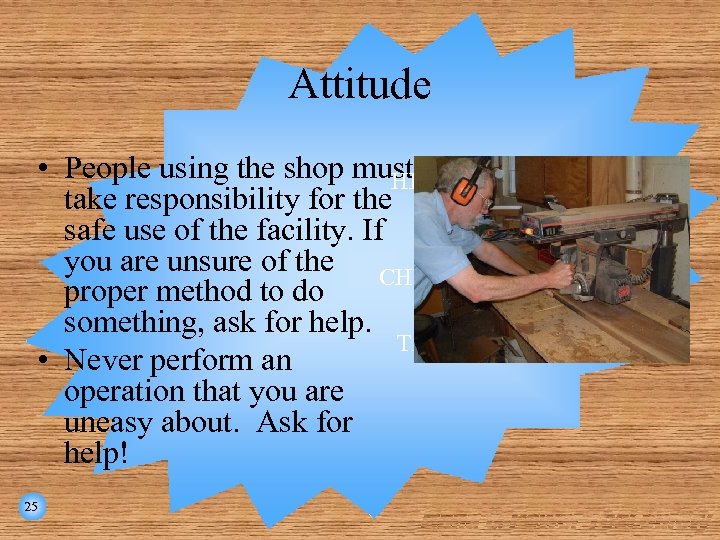 Attitude • People using the shop must HEAD take responsibility for the safe use of the facility. If you are unsure of the CHUCK proper method to do something, ask for help. TABLE • Never perform an operation that you are uneasy about. Ask for help! 25 ARBOR SPINDLE
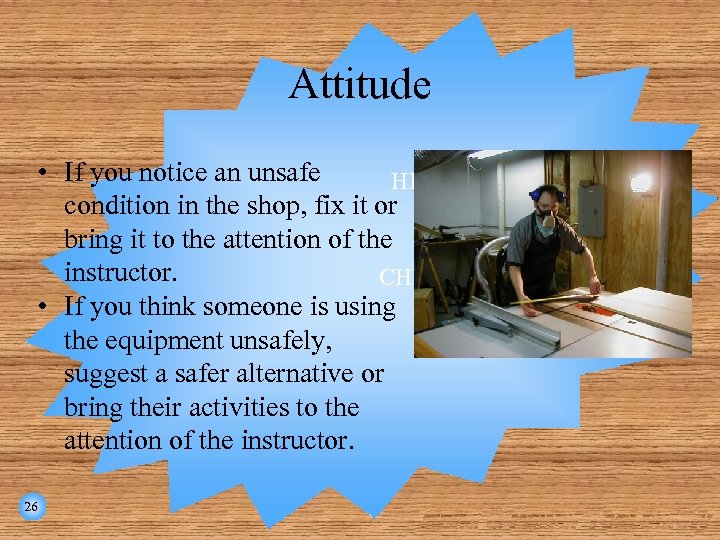 Attitude • If you notice an unsafe HEAD condition in the shop, fix it or bring it to the attention of the instructor. CHUCK • If you think someone is using the equipment unsafely, suggest a safer alternative or bring their activities to the attention of the instructor. 26 ARBOR SPINDLE
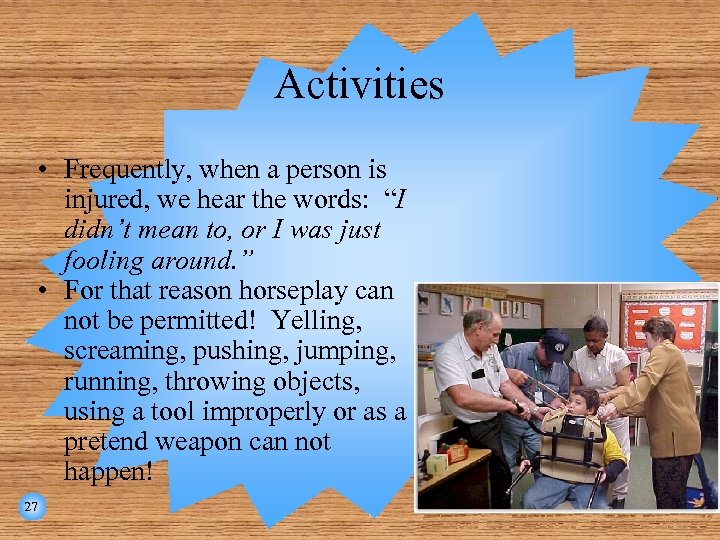 Activities • Frequently, when a person is injured, we hear the words: “I didn’t mean to, or I was just fooling around. ” • For that reason horseplay can not be permitted! Yelling, screaming, pushing, jumping, running, throwing objects, using a tool improperly or as a pretend weapon can not happen! 27
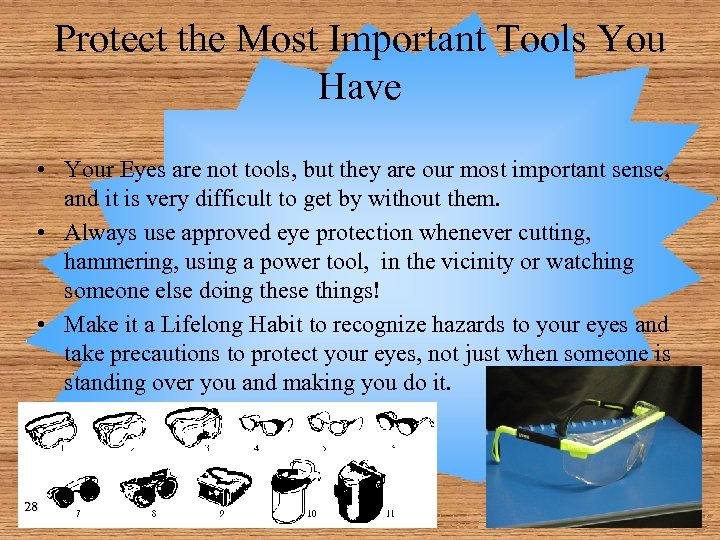 Protect the Most Important Tools You Have • Your Eyes are not tools, but they are our most important sense, and it is very difficult to get by without them. • Always use approved eye protection whenever cutting, hammering, using a power tool, in the vicinity or watching someone else doing these things! • Make it a Lifelong Habit to recognize hazards to your eyes and take precautions to protect your eyes, not just when someone is standing over you and making you do it. 28
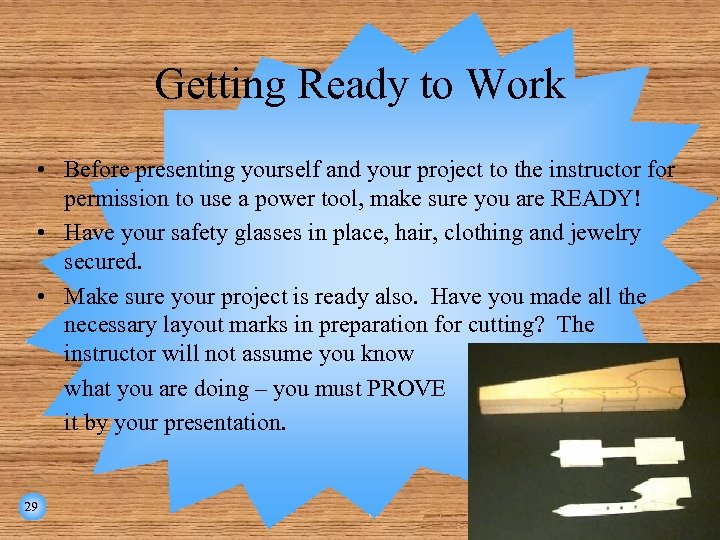 Getting Ready to Work • Before presenting yourself and your project to the instructor for permission to use a power tool, make sure you are READY! • Have your safety glasses in place, hair, clothing and jewelry secured. • Make sure your project is ready also. Have you made all the necessary layout marks in preparation for cutting? The instructor will not assume you know what you are doing – you must PROVE it by your presentation. 29
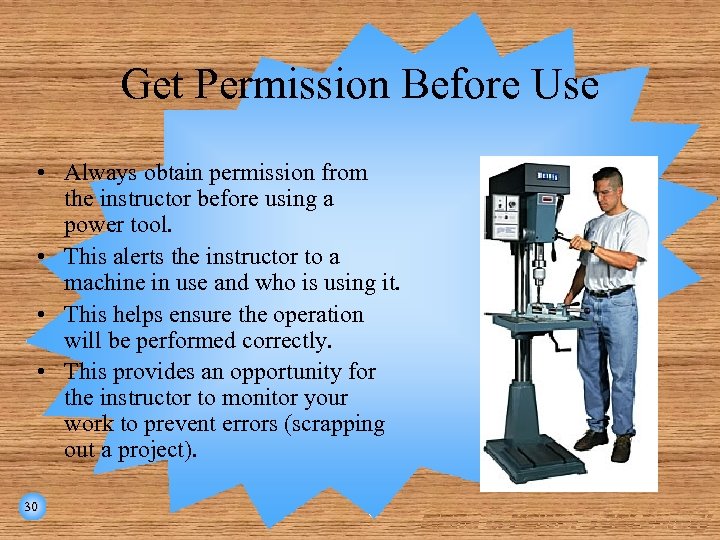 Get Permission Before Use • Always obtain permission from the instructor before using a power tool. • This alerts the instructor to a machine in use and who is using it. • This helps ensure the operation will be performed correctly. • This provides an opportunity for the instructor to monitor your work to prevent errors (scrapping out a project). 30
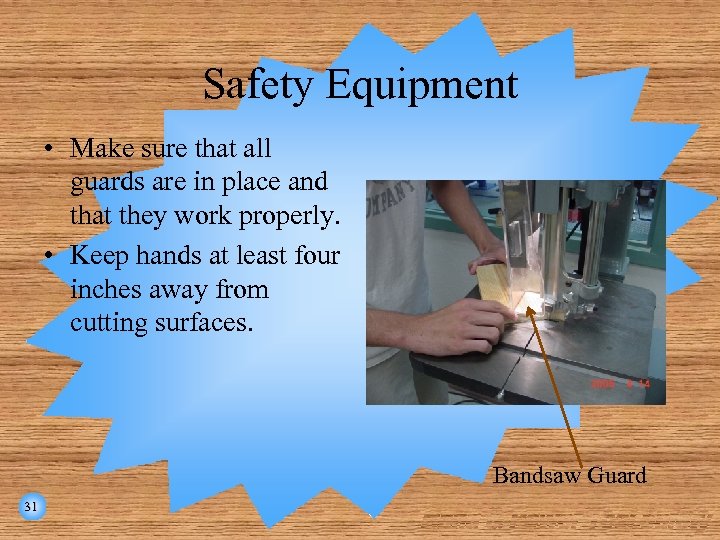 Safety Equipment • Make sure that all guards are in place and that they work properly. • Keep hands at least four inches away from cutting surfaces. Bandsaw Guard 31
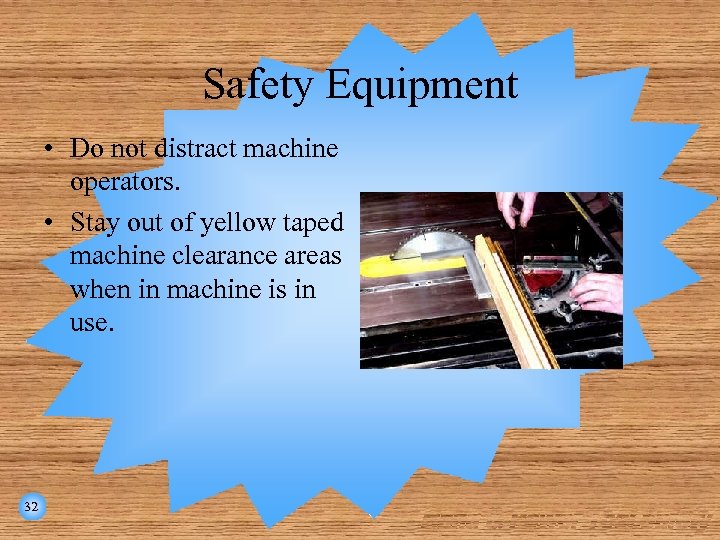 Safety Equipment • Do not distract machine operators. • Stay out of yellow taped machine clearance areas when in machine is in use. 32
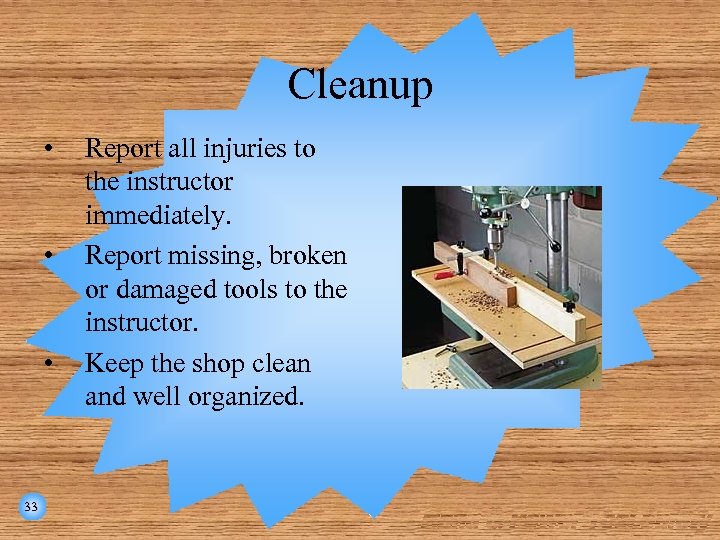 Cleanup • • • 33 Report all injuries to the instructor immediately. Report missing, broken or damaged tools to the instructor. Keep the shop clean and well organized.
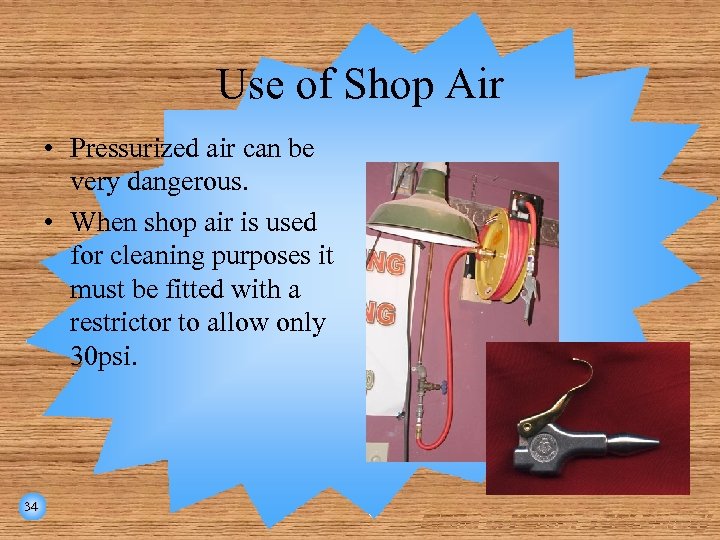 Use of Shop Air • Pressurized air can be very dangerous. • When shop air is used for cleaning purposes it must be fitted with a restrictor to allow only 30 psi. 34
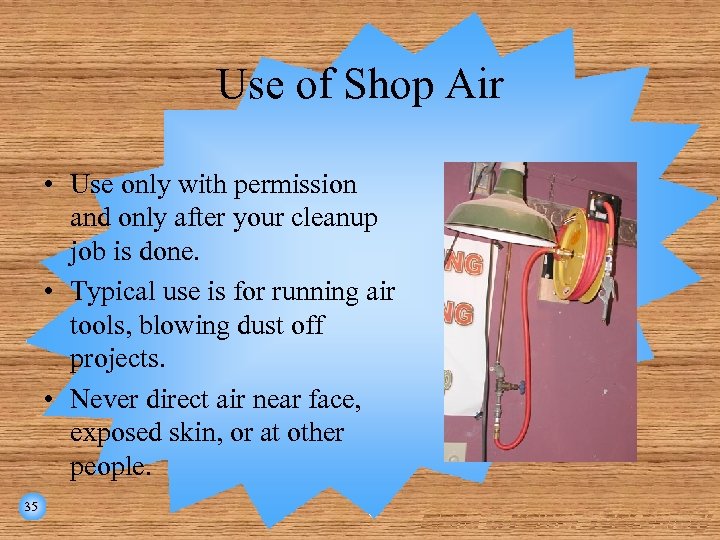 Use of Shop Air • Use only with permission and only after your cleanup job is done. • Typical use is for running air tools, blowing dust off projects. • Never direct air near face, exposed skin, or at other people. 35
 List General Shop Safety Rules • Keep all hand tools • Sharp • Clean • In safe working order (If a tool is broken, notify your instructor to have the tool sharpened or repaired) 36
 List General Shop Safety Rules • Never operate a hazardous machine unless 37 • You have been instructed on how to use it • You have properly demonstrated the correct way to use it safely
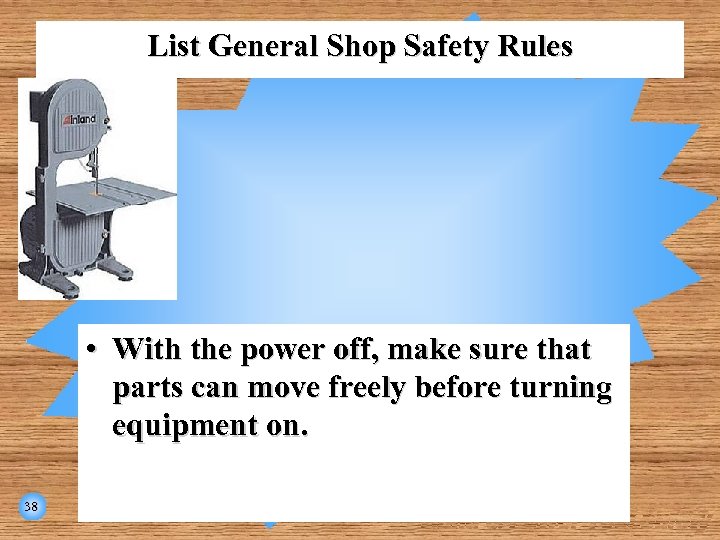 List General Shop Safety Rules • With the power off, make sure that parts can move freely before turning equipment on. 38
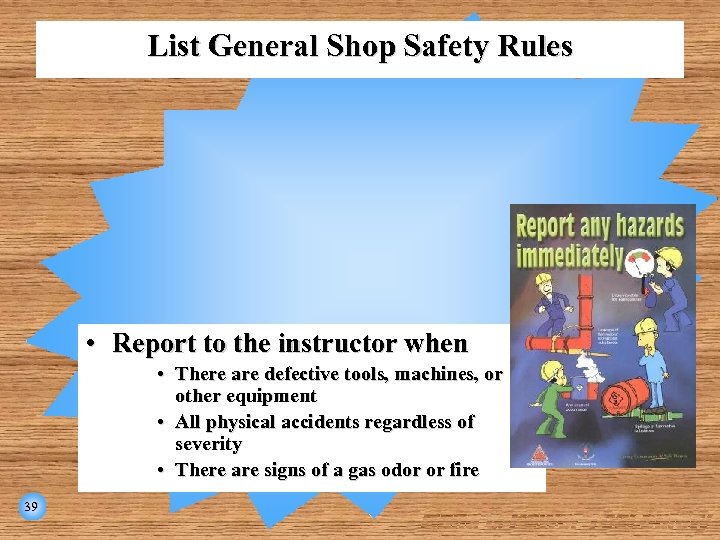 List General Shop Safety Rules • Report to the instructor when • There are defective tools, machines, or other equipment • All physical accidents regardless of severity • There are signs of a gas odor or fire 39
 List General Shop Safety Rules • Retain all guards and safety devices except with specific authorization from an instructor. 40
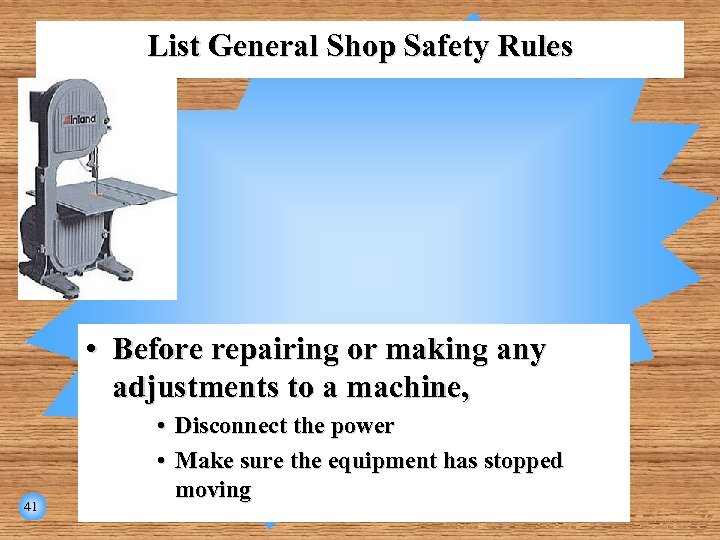 List General Shop Safety Rules • Before repairing or making any adjustments to a machine, 41 • Disconnect the power • Make sure the equipment has stopped moving
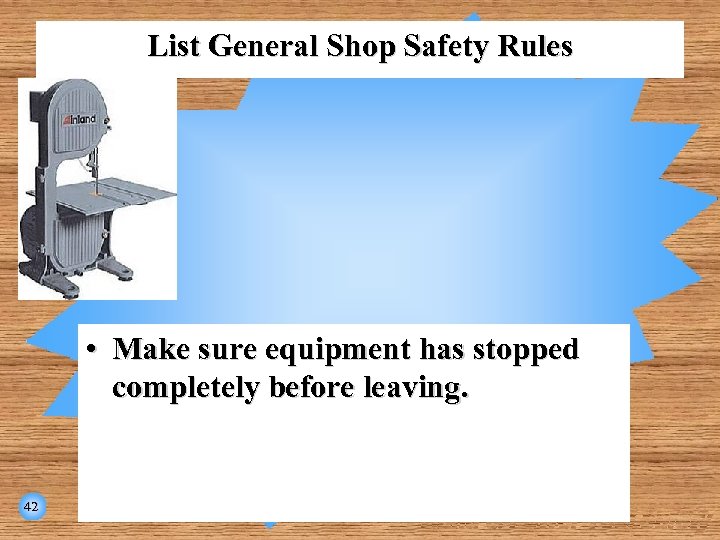 List General Shop Safety Rules • Make sure equipment has stopped completely before leaving. 42
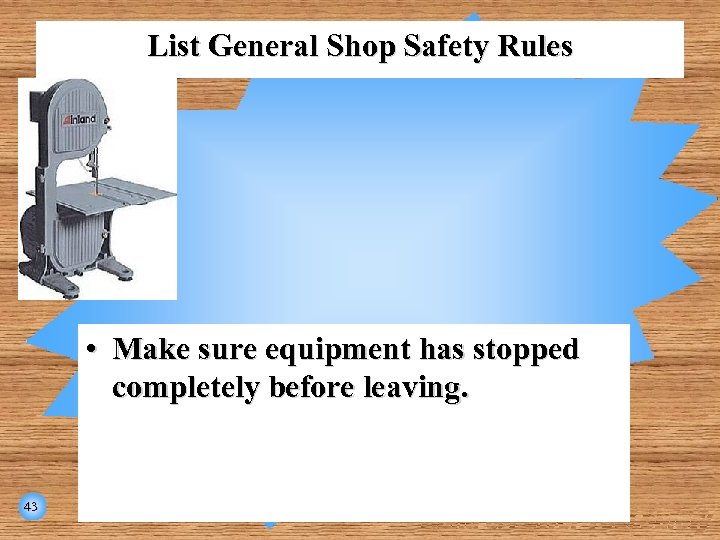 List General Shop Safety Rules • Make sure equipment has stopped completely before leaving. 43
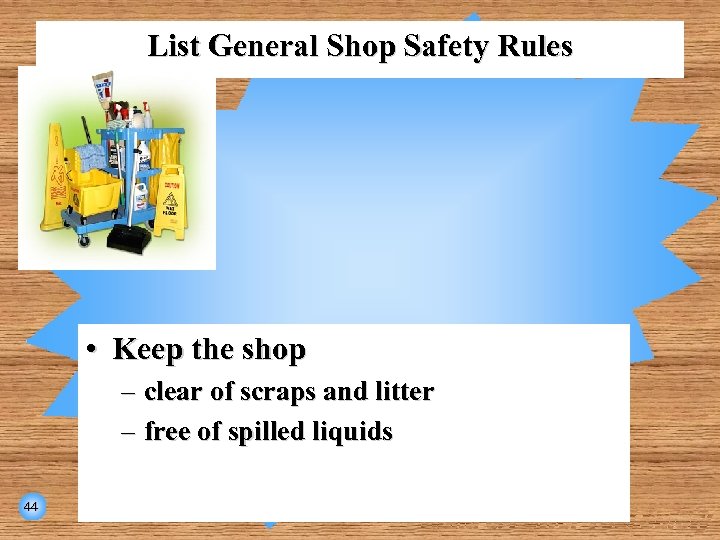 List General Shop Safety Rules • Keep the shop – clear of scraps and litter – free of spilled liquids 44
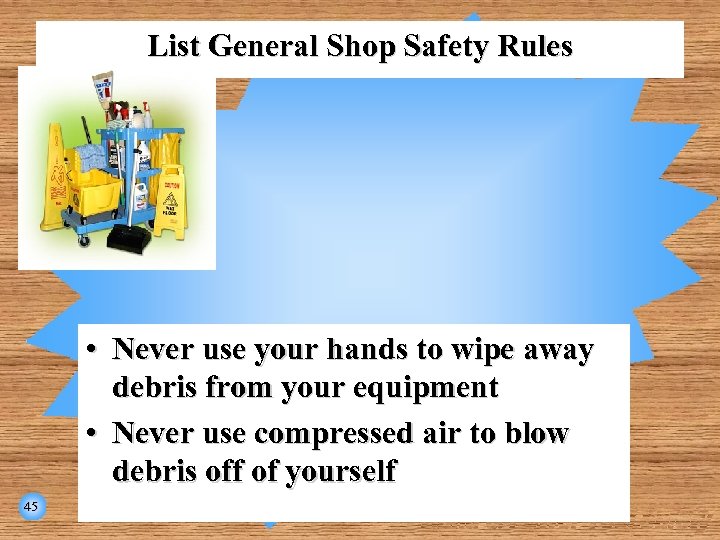 List General Shop Safety Rules • Never use your hands to wipe away debris from your equipment • Never use compressed air to blow debris off of yourself 45
 Clean and Orderly Shop • Arrange machinery and equipment to permit safe, efficient work practices. 46
 Clean and Orderly Shop • Put tools, materials and supplies away in their proper place when finished with your projects. 47
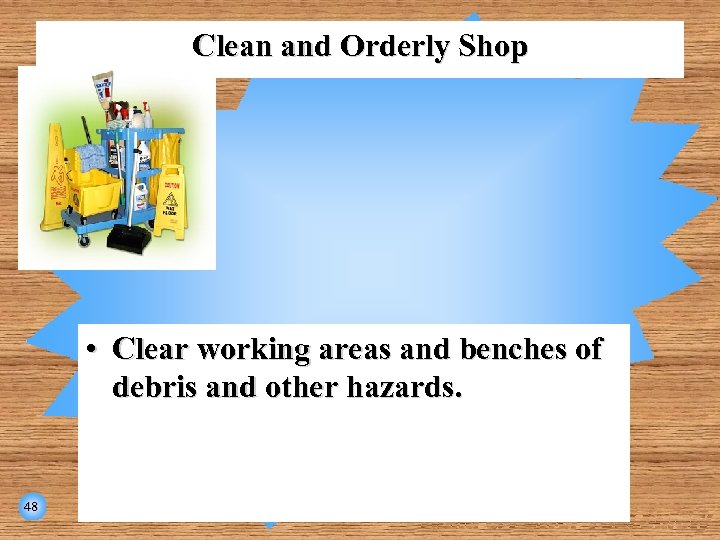 Clean and Orderly Shop • Clear working areas and benches of debris and other hazards. 48
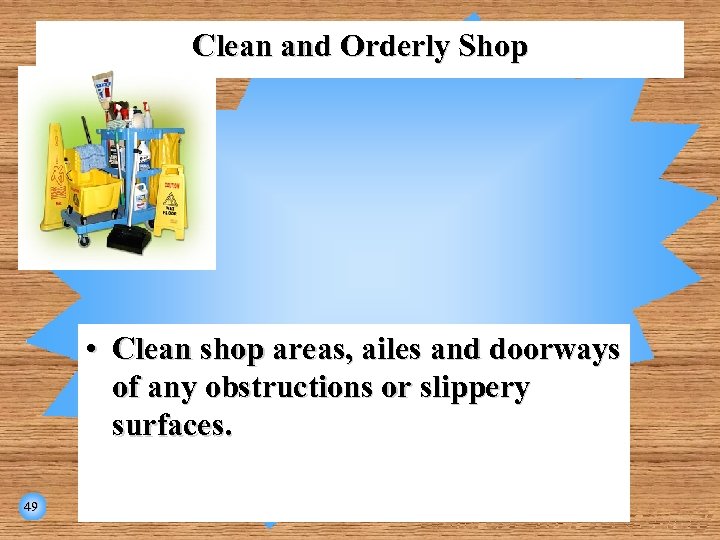 Clean and Orderly Shop • Clean shop areas, ailes and doorways of any obstructions or slippery surfaces. 49
 Clean and Orderly Shop • Make sure that oily rags and combustible materials get placed in the proper sealed containers. 50
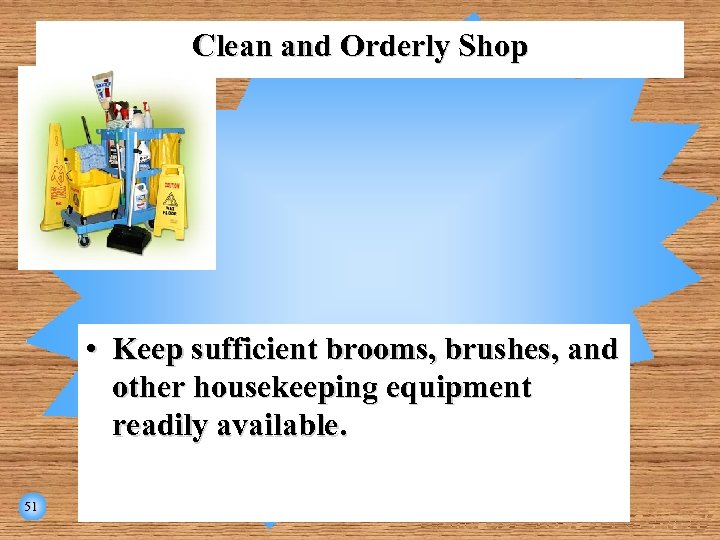 Clean and Orderly Shop • Keep sufficient brooms, brushes, and other housekeeping equipment readily available. 51
 Safety in the Shop 52 The shop can either be safe or dangerous; it all depends on how you conduct your behavior and whether you follow the rules given to you. For the safety of your classmates, you will be pulled out of the shop if the rules aren’t followed.
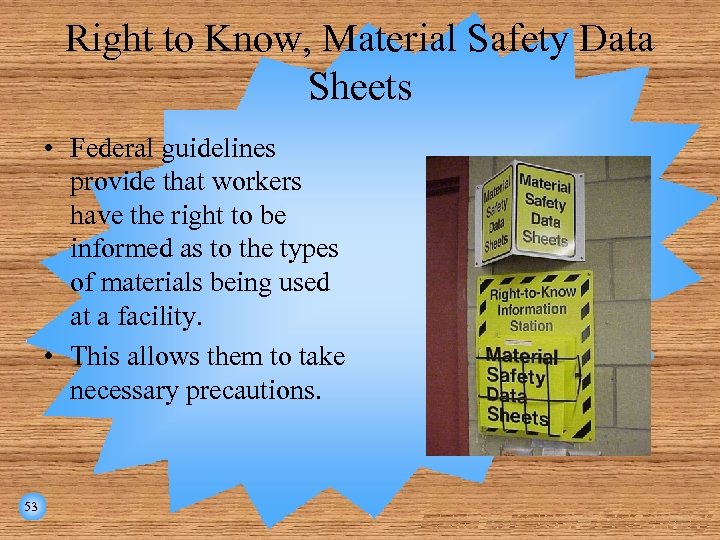 Right to Know, Material Safety Data Sheets • Federal guidelines provide that workers have the right to be informed as to the types of materials being used at a facility. • This allows them to take necessary precautions. 53
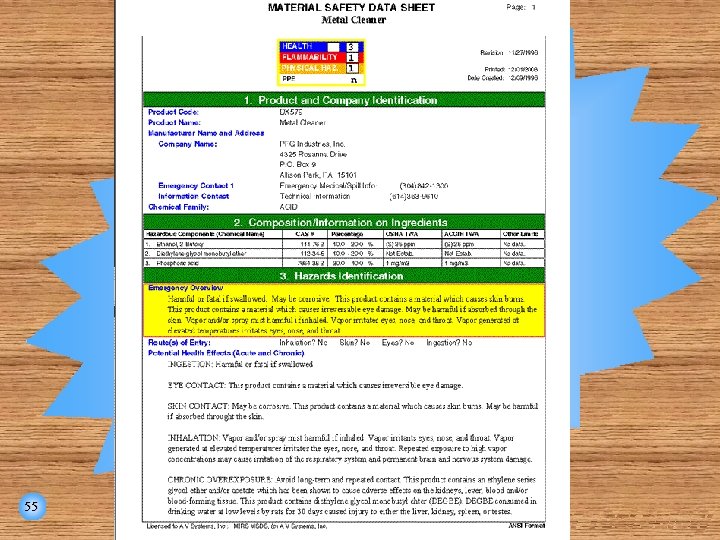
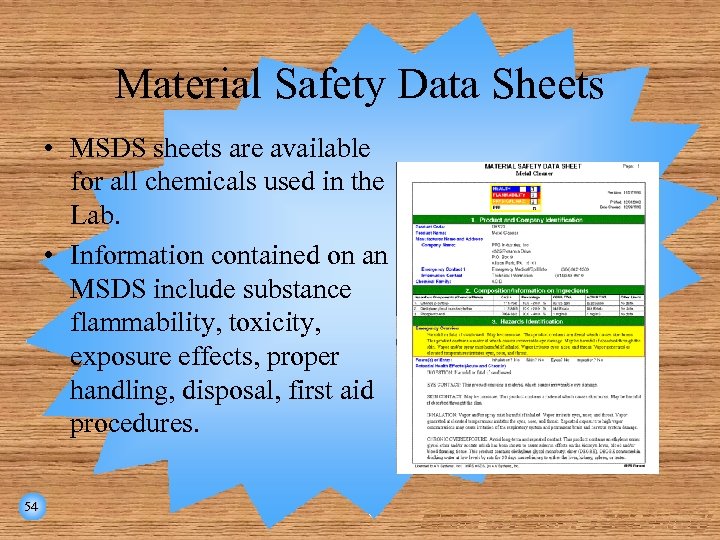 Material Safety Data Sheets • MSDS sheets are available for all chemicals used in the Lab. • Information contained on an MSDS include substance flammability, toxicity, exposure effects, proper handling, disposal, first aid procedures. 54
 55
55
 Basic Carpentry Hand Tools: Hammers By Ryan Saucier 56
 Hammers • Various types • Used to drive nails, pull nails and adjust boards or move objects. • Never strike one hammer head against another. The force could break both hammers and cause an eye injury. 57
 58
58
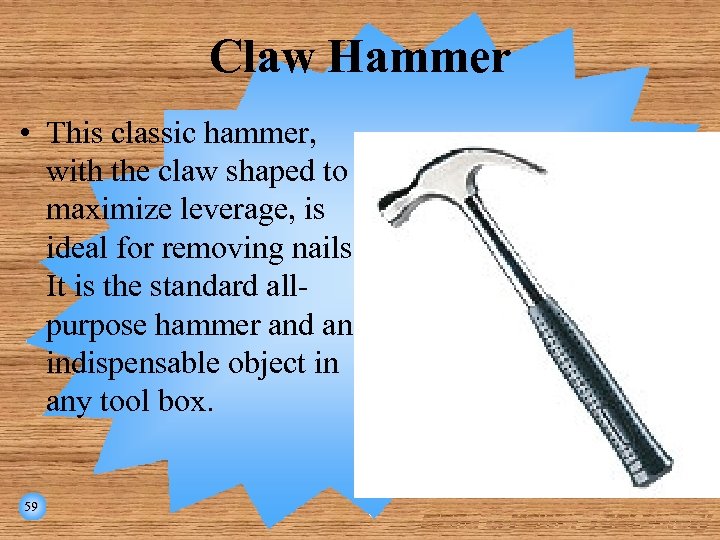 Claw Hammer • This classic hammer, with the claw shaped to maximize leverage, is ideal for removing nails. It is the standard allpurpose hammer and an indispensable object in any tool box. 59
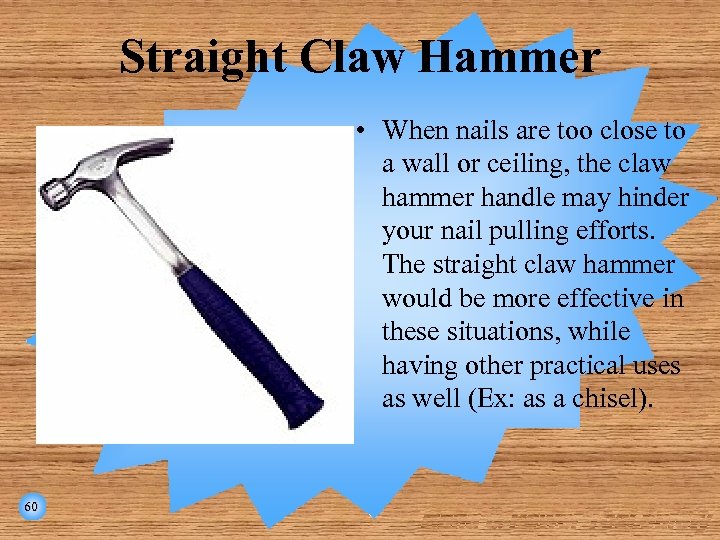 Straight Claw Hammer • When nails are too close to a wall or ceiling, the claw hammer handle may hinder your nail pulling efforts. The straight claw hammer would be more effective in these situations, while having other practical uses as well (Ex: as a chisel). 60
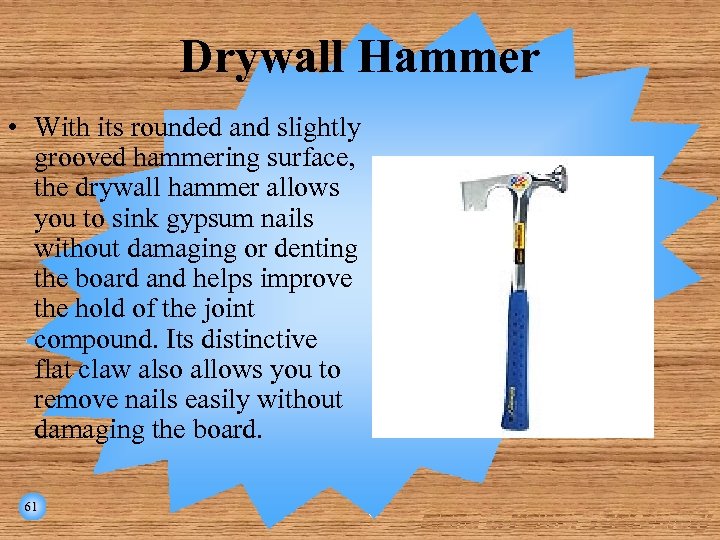 Drywall Hammer • With its rounded and slightly grooved hammering surface, the drywall hammer allows you to sink gypsum nails without damaging or denting the board and helps improve the hold of the joint compound. Its distinctive flat claw also allows you to remove nails easily without damaging the board. 61
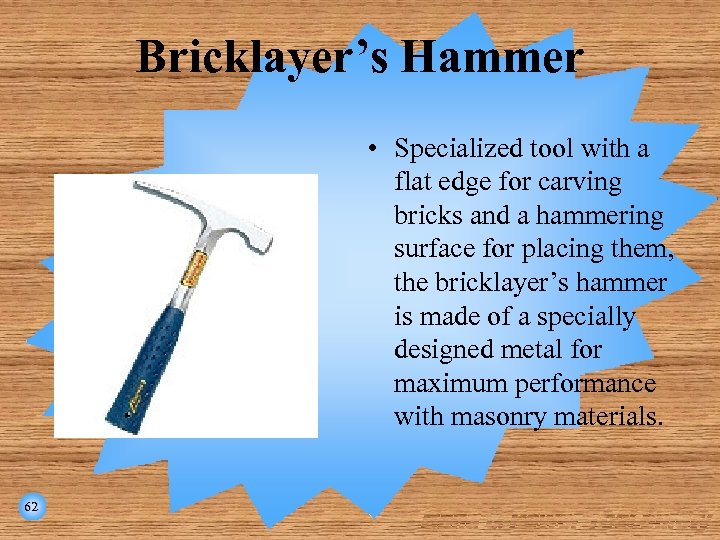 Bricklayer’s Hammer • Specialized tool with a flat edge for carving bricks and a hammering surface for placing them, the bricklayer’s hammer is made of a specially designed metal for maximum performance with masonry materials. 62
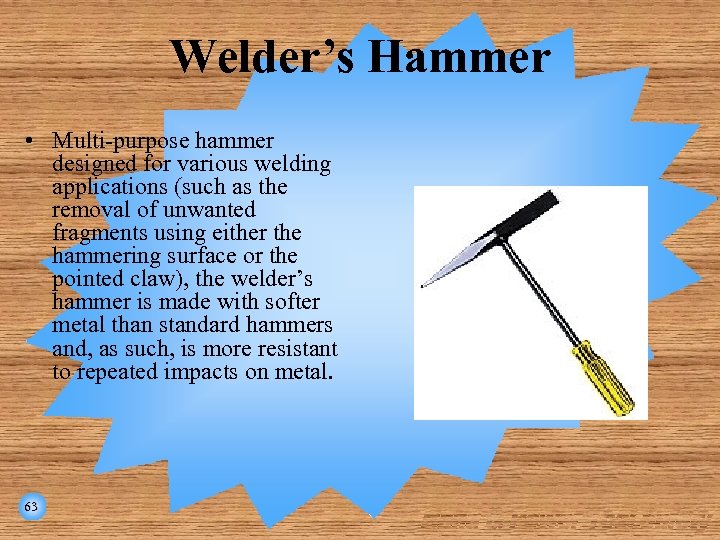 Welder’s Hammer • Multi-purpose hammer designed for various welding applications (such as the removal of unwanted fragments using either the hammering surface or the pointed claw), the welder’s hammer is made with softer metal than standard hammers and, as such, is more resistant to repeated impacts on metal. 63
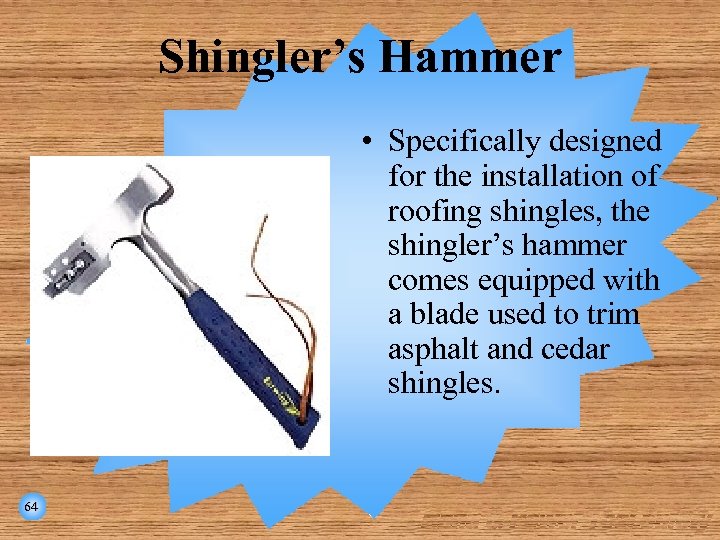 Shingler’s Hammer • Specifically designed for the installation of roofing shingles, the shingler’s hammer comes equipped with a blade used to trim asphalt and cedar shingles. 64
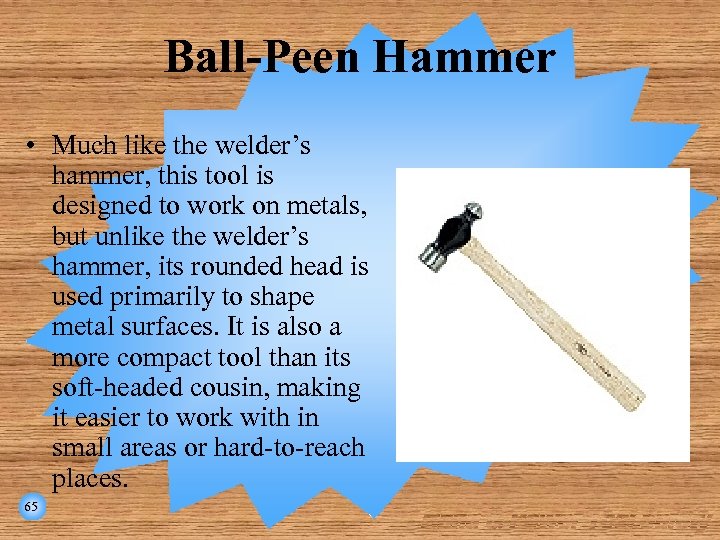 Ball-Peen Hammer • Much like the welder’s hammer, this tool is designed to work on metals, but unlike the welder’s hammer, its rounded head is used primarily to shape metal surfaces. It is also a more compact tool than its soft-headed cousin, making it easier to work with in small areas or hard-to-reach places. 65
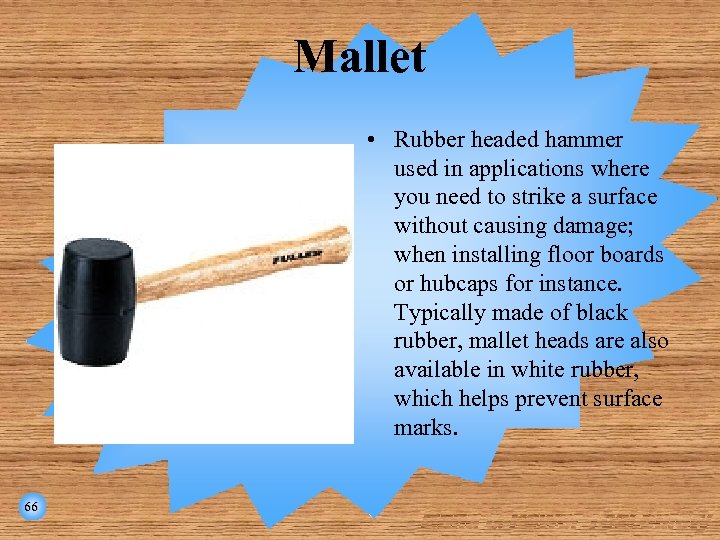 Mallet • Rubber headed hammer used in applications where you need to strike a surface without causing damage; when installing floor boards or hubcaps for instance. Typically made of black rubber, mallet heads are also available in white rubber, which helps prevent surface marks. 66
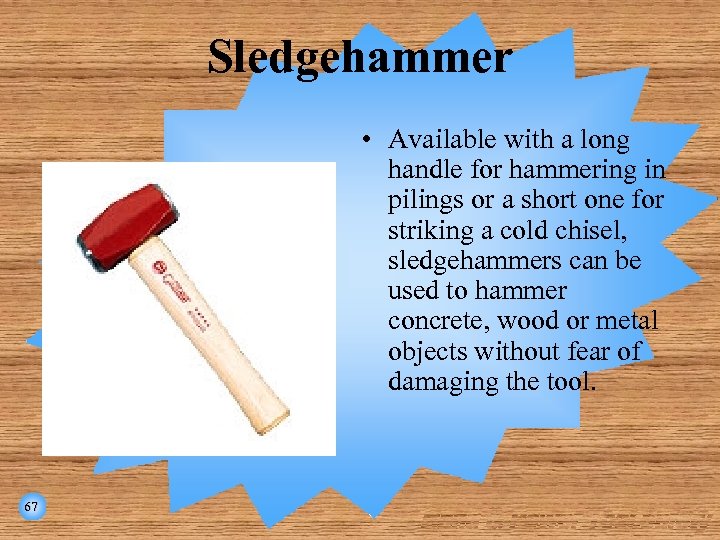 Sledgehammer • Available with a long handle for hammering in pilings or a short one for striking a cold chisel, sledgehammers can be used to hammer concrete, wood or metal objects without fear of damaging the tool. 67
 Types of Hammer Handles • Hammers are typically built with metal, wood or fiberglass handles. • There is no one type of handle that is better than the rest; it’s all about how the handle feels in your hand, thus the importance of trying the tool out. • This being said, a wood handle is ideal for working in areas in close proximity with sources of extreme heat (Ex: in some factories) as the wood will not conduct heat. • Note that wood handled hammers are usually less expensive and provide another interesting advantage - the handle can be replaced. • However, some users find that hammers made with metal and fiberglass handles offer better control when hammering. 68
 Types of Hammer Handles • Metal handles come in two types: flat and tubular. Here too, it is mostly a question of preference. • Some users prefer the flat handle for its versatility (it can be used to straighten bent nails for example), whereas tubular handles are less likely to mark or damage surfaces if the user “misses the mark”. • Keep in mind that tubular handles are less durable when it comes to pulling difficult nails…The truth is, when a hammer handle breaks, regardless of type or material, it is usually because the tool was “forced” while being applied as a nail puller or pry bar, which it isn’t. 69
 Types of Hammer Handles • Over the last few years, manufacturers began offering hammers with anti-vibration handles. These tools can, depending on the model, reduce the amount of vibration felt by the user from three to eight times when compared to a regular hammer. A significant advantage for everyday users! 70
 Types of Hammer Heads • The hammer head is comprised of a hammering surface and a claw. The claw may be straight or curved and can be used to straighten or pull nails. • In general terms, forged steel heads provide better quality than molded heads, which have a tendency to become damaged with use. 71
 Types of Hammer Heads • Some hammers have a “textured” striking surface to avoid slippage but keep in mind that these models tend to damage the hammering surface and cause more serious injuries when fingers get hit. • This type of head is not to be confused with the drywall hammer, which is slightly rounded and finely textured to minimize the risk of damage to the drywall board and to create small relief on the board in order to improve the hold of the joint compound. 72
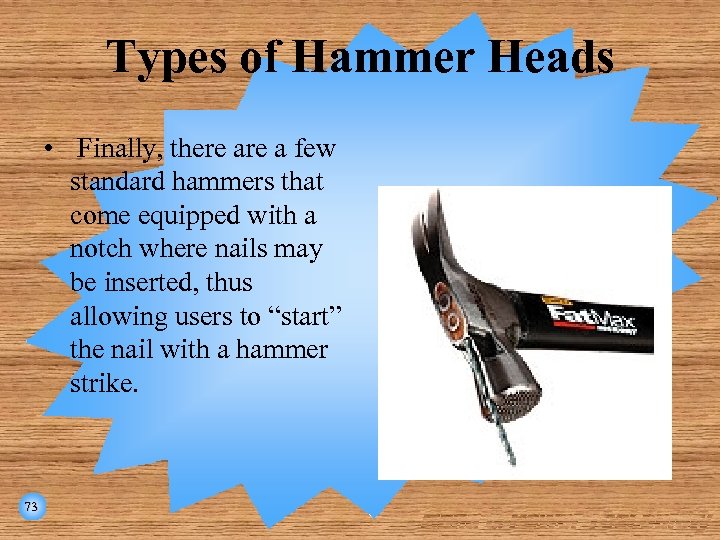 Types of Hammer Heads • Finally, there a few standard hammers that come equipped with a notch where nails may be inserted, thus allowing users to “start” the nail with a hammer strike. 73
 Various Hammer Weights • Regardless of handle material, standard hammers are offered in 8, 13, 16, 20 and 22 -ounce models: a 16 -oz. hammer with wood handle will weigh the same as a 16 -oz. hammer with a fibreglass handle. • Though 8 -oz. hammers can be useful for small jobs, 16 -oz. versions, with their optimal weight to handling ratio, are the ultimate all-purpose models. • 20 and 22 -oz. hammers are usually intended for use by profesionnals, in carpentry or demolition applications for example. • The 13 -oz. hammer, designed for finishing applications such as the installation of baseboards and mouldings, is gradually disappearing and is being replaced by compressed air hammers. 74
 Hammer Maintenance • It is recommended that hammers be stored in a dry location and that they be wiped down if wet. • To avoid injury, never leave any tool within reach of a child. • Use added caution when using a tool in proximity to electrical installations. • Always wear safety glasses. • Grip the hammer firmly and strike using the entire arm and not only the wrist. • Never use a hammer with a damaged handle or head. • Always look behind you before starting the required swing to make your strike. 75
 In Closing… • Use a 16 -oz. hammer for your various carpentry and household jobs as it provides the best weighthandling ratio. • Try different handles before purchasing your hammer; evaluate tool balance, grip comfort, and then choose the model that feels best in your hand. • If you keep in mind that your household hammer is not a nail puller and is not designed for working metal, it will no doubt provide you with many years of carefree service. 76
 Immediately following this training you will be given a ten question informational quiz. Upon completion, you will receive a training certificate to be used as documentation. 77
 78
78
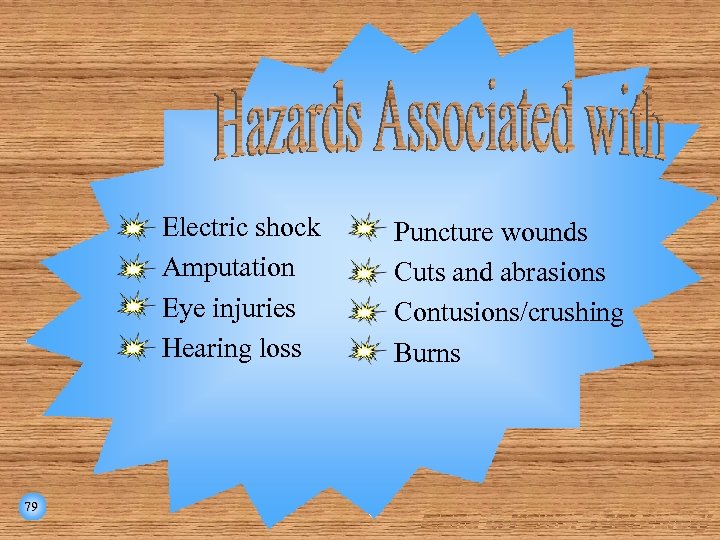 Electric shock Amputation Eye injuries Hearing loss 79 Puncture wounds Cuts and abrasions Contusions/crushing Burns
 Electric Shock Improper grounding (removing the ground prong from the plug) Not unplugging equipment when changing accessories Frayed cords Pulling on the cord to unplug the equipment Standing in water or wet surfaces Not using a ground fault circuit interrupter (GFCI) 80
 Amputation, puncture wounds, cuts, abrasions, contusions and burns Removal of guards Using damaged equipment Improper use of equipment Using the wrong tool 81
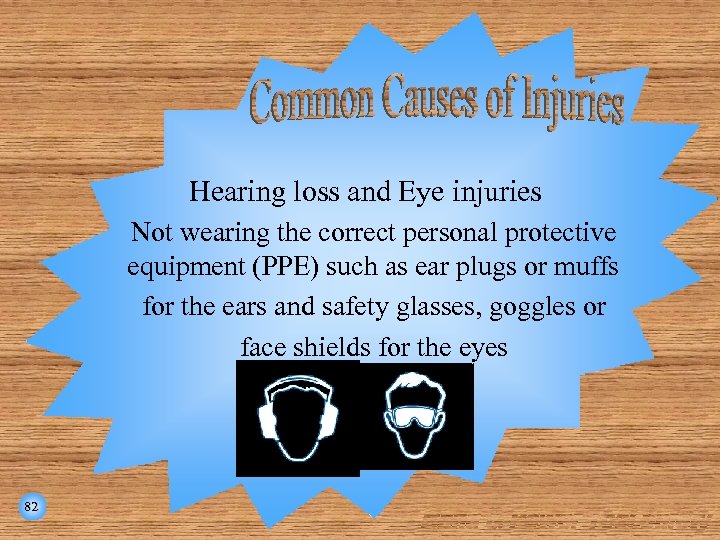 Hearing loss and Eye injuries Not wearing the correct personal protective equipment (PPE) such as ear plugs or muffs for the ears and safety glasses, goggles or face shields for the eyes 82
 Keep all tools in good condition with regular maintenance Use the right tool for the job Examine each tool for damage before use and do not use damaged tools Operate tools according to the manufacturers’ instructions Properly use the appropriate PPE 83
 84
84
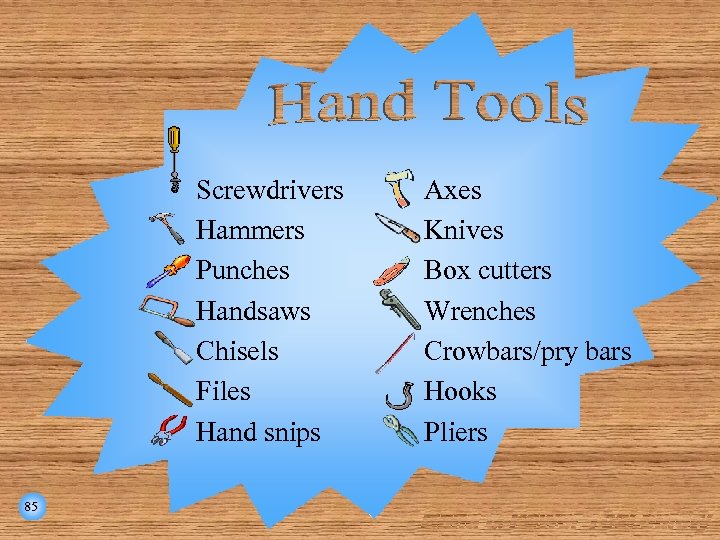 • Screwdrivers Hammers Punches Handsaws Chisels Files Hand snips 85 Axes Knives Box cutters Wrenches Crowbars/pry bars Hooks Pliers
 86
86
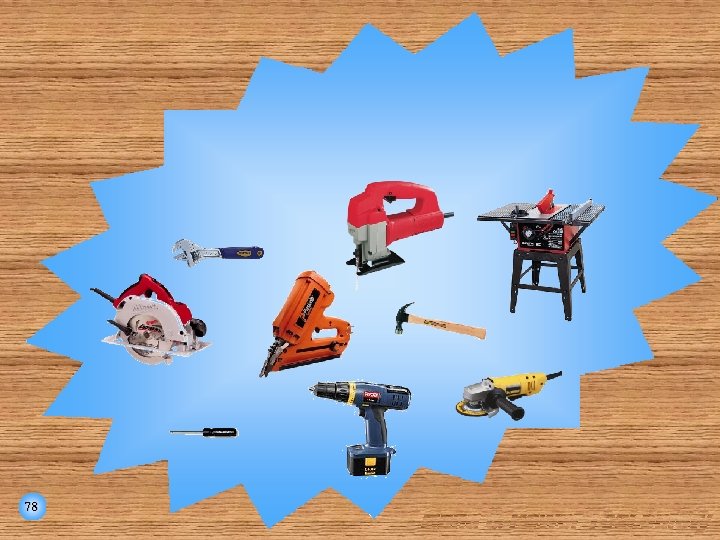
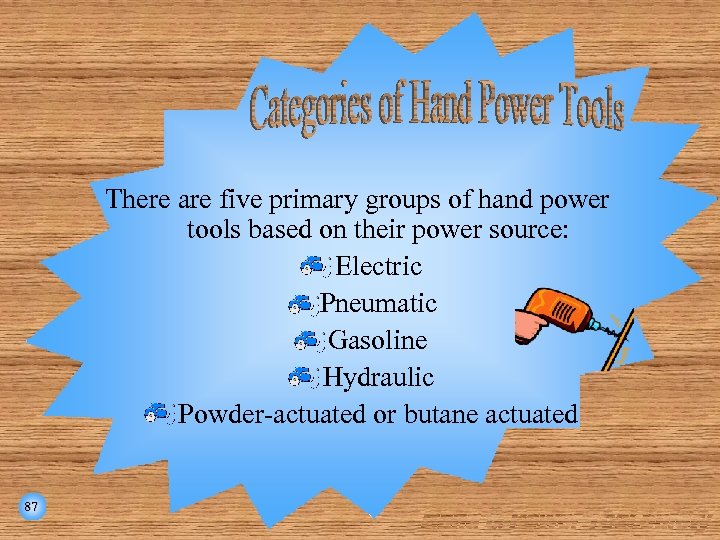 There are five primary groups of hand power tools based on their power source: Electric Pneumatic Gasoline Hydraulic Powder-actuated or butane actuated 87
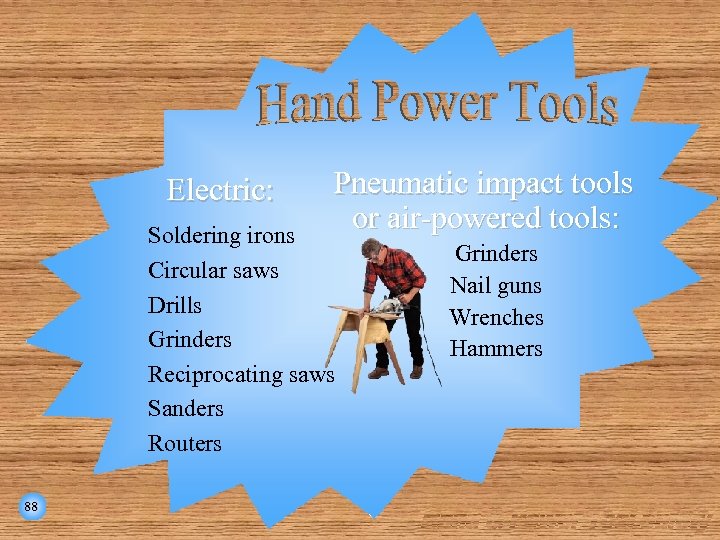 Electric: Pneumatic impact tools or air-powered tools: Soldering irons Circular saws Drills Grinders Reciprocating saws Sanders Routers 88 Grinders Nail guns Wrenches Hammers
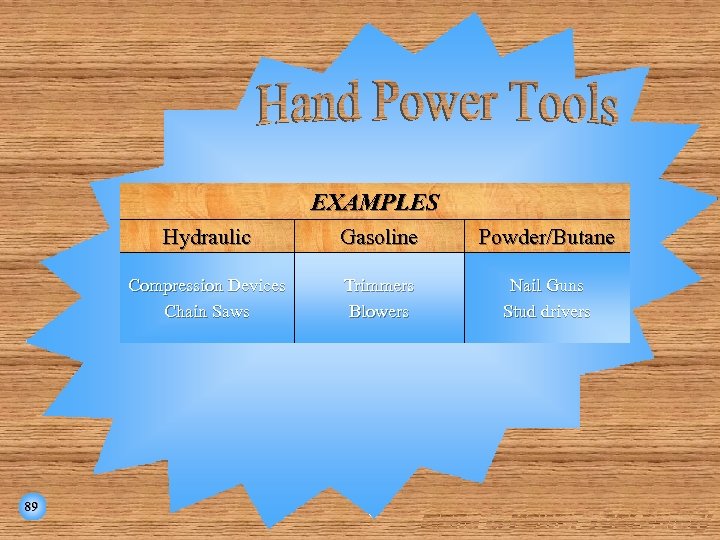 EXAMPLES Hydraulic Powder/Butane Compression Devices Chain Saws 89 Gasoline Trimmers Blowers Nail Guns Stud drivers
 Select the right tool for the job Consider the tools shape and size – the tool should be comfortable to hold Do not select undersized tools for the job Consider the quality of the tool including its sharpness for cutting 90
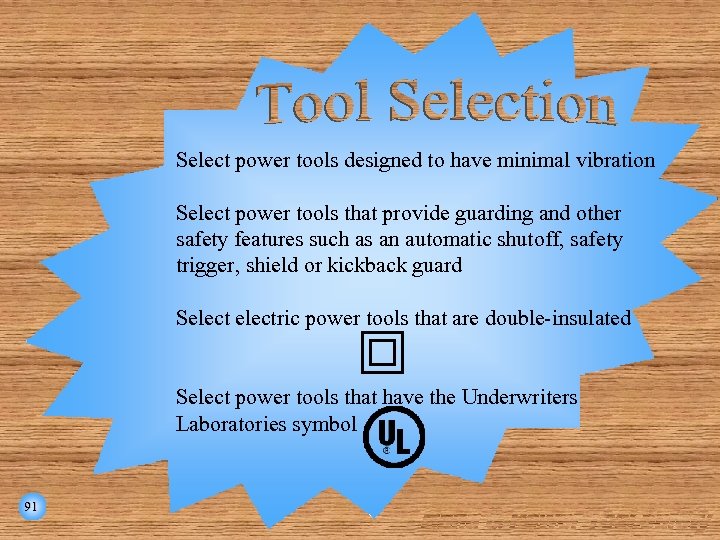 Select power tools designed to have minimal vibration Select power tools that provide guarding and other safety features such as an automatic shutoff, safety trigger, shield or kickback guard Selectric power tools that are double-insulated Select power tools that have the Underwriters Laboratories symbol 91
 Select spark-resistant tools when working around flammables or explosive material Select insulated hand tools when working around electricity Select battery powered tools for wet locations 92
 Use a tool box, tool-holder, belt or pouch, this will protect the person and the tool Carry pointed or sharp tools with the point or cutting edge away from the body Do not carry tools by hand up ladders Do not lay tools down where people can trip on them or they can fall on someone Hand tools off, do not throw them 93
 Purchase tools of the best quality Inspect tools for dull or damaged edges, and damaged handles or grips Redress edges and tips of tools or blades-this should only be done by qualified personnel or the manufacturer Replace damaged handles or grips Inspect plugs and power cords for damage 94
 Inspect air or hydraulic hoses for leaks Clean tools with a recommended nonflammable and nontoxic solvent Use air drying in place of blow drying with compressed air 95
 Select and use the appropriate PPE (i. e. , safety glasses, leather gloves, steel toed shoes) Read and follow the manufacturer’s instructions Create a safe work area by keeping people at a safe distance and removing objects that may get in the way Use the tool as it is attended to be used (i. e. , don’t use a screwdriver as a punch, pry or wedge) 96
 Disconnect electric cords when working on or around electric appliances Use the correct size tool for the job (i. e. match the screwdriver with the screw head) Pull wrenches and levers towards yourself-this will provide better control 97
 Select and use the appropriate PPE (i. e. , safety glasses and ear plugs, steel toed shoes) Read and follow the manufacturer’s instructions Create a safe work area by keeping people at a safe distance and removing objects that may get in the way Use the tool as it is attended to be used 98
 Make sure the power cord is not in the path of blades or other cutting implements Avoid placing cords or hoses where they will be a tripping hazard Never unplug a power tool with the switch in the on position Use a ground fault circuit interrupters when working in wet areas 99
 Make sure guards are in place Do not over extend the arm-this can cause a loss of balance or control of the power tool Do not wear loose fitting cloths that can get caught in the power tool Unplug the power cord when changing accessories 100
 Never remove saws while blades are in motion Do not place hands or fingers into the cutting area until the blade has stopped Never carry a hand powered tool by the power cord 101
 Keep all tools in good condition with regular maintenance Use the right tool for the job Examine each tool for damage before use and do not use damaged tools Operate tools according to the manufacturers’ instructions Properly use the appropriate PPE 102
 Should you have any questions in regard to hand tool or power hand tool safety, contact the Office of Environmental Health and Safety at 292 -1284 EHS 103
 For Questions call: 292 -1284 or email: Mitch Baker or Dorian Richards Click below to begin assessment quiz: 104
 Which of these hazards is associated with hand portable power tools? A. Hearing Loss B. Electric Shock C. Burns D. All of the above 105
 Which of these causes injuries while working with hand or power tools? A. Removal of guards B. Using the wrong tool C. Not using a GFCI D. All of the above 106
 To prevent injuries you should? A. Use the correct tools for the job B. Use the appropriate PPE C. Follow the manufactures recommendations for use D. All of the above 107
 Electricity is the only source of energy for power tools? A. True B. False 108
 While working around flammables or explosives hand tools should be? A. Made of metal B. Made of spark resistant material C. Extra long D. Both A and C are correct 109
 Electric hand power tools should? A. B. Be double insulated Carry the Underwriters Laboratories symbol C. Used in water D. Both A & B are correct 110
 While transporting tools? A. They should be carried with sharp edges away from the body B. Placed in a tool box, belt or pouch C. Placed in pants pockets D. Both A and B are correct 111
 Purchase tools only made of the best quality material. A. True B. False 112
 It is safe to use screwdrivers as a punch, pry or wedge. A. True B. False 113
 While working in wet areas with electric power tools a GFCI should be used? A. True B. False 114
 1. All the above (D) 6. Both A and B (D) 2. All the above (D) 7. Both A and B (D) 3. All the above (D) 8. True (A) 4. False (B) 9. False (B) 5. Made of spark resistant 10. True (A) materials (C) Click here to receive certificate: 115