


 Скачать презентацию Motivation A Structured Look at Motivation Incentive
d51a35b99dfff4318eb0f3d95f517f2e.ppt
- Количество слайдов: 17
 Motivation: A Structured Look at Motivation & Incentive Programs Presented By James M. Griffith Sr. Consultant 1
 Objectives • Define motivation. • What are positive indicators of motivation. • How do we as safety professional motivate our employees. • Motivational models. • What elements are necessary to achieve the desired results. • Incentive programs.
 Motivation • Motivation involves moving people to act in support of achieving desired goals. • Motivation changes behavior and attitudes in three ways: – Direction of behavior – Intensity of action – Persistence of the effort
 Direction of Behavior • Actions people take to accomplish defined objectives. • Requires: – Must first specify the behavior to be achieved – Employees must clearly understand “How” to achieve the desired objectives – Employees obtain the necessary knowledge
 Intensity of Action • The amount of personal attention and thought given to performing goal-oriented actions. • Requires: – Extra time to incorporate into routine work patterns – New behavior may be required – Management must reinforce required behaviors – Increased communication of results
 Persistence of Effort • The desired performance through time. • Requires: – Employees must be willing to modify personal behavior – Management must be visibly committed – Management must actively support the efforts
 Motivation Steps • Specify safety objectives for program Examples: – Maximize safe performance – Adherence to procedures – Identify unsafe conditions – Using proper PPE – Increased employee involvement
 Motivational Steps cont. • Reinforce desired behaviors – Requires positive and timely feedback by management – Positive reinforcement • Personal Recognition • Performance Awards • Group Recognition – Measurement of progress towards the safety objective • Safe vs. at-risk observations
 Motivational Steps cont • Attain commitment and involvement • Requires employee and management commitment to and involvement in the behavior change process – Breaking old habits – Accepting “new” safe habits
 Motivational Models Organization Behavior Model (OBM)-uses reinforcement and feedback to modify behavior. Total Quality Management (TQM)-adjusts attitude to achieve quality improvement goals.
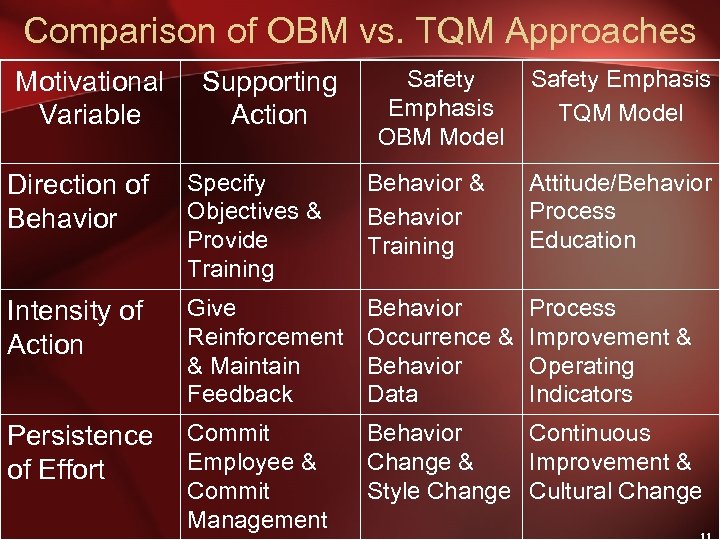 Comparison of OBM vs. TQM Approaches Motivational Variable Supporting Action Safety Emphasis OBM Model Safety Emphasis TQM Model Direction of Behavior Specify Objectives & Provide Training Behavior & Behavior Training Attitude/Behavior Process Education Intensity of Action Give Reinforcement & Maintain Feedback Behavior Occurrence & Behavior Data Process Improvement & Operating Indicators Persistence of Effort Commit Employee & Commit Management Behavior Continuous Change & Improvement & Style Change Cultural Change
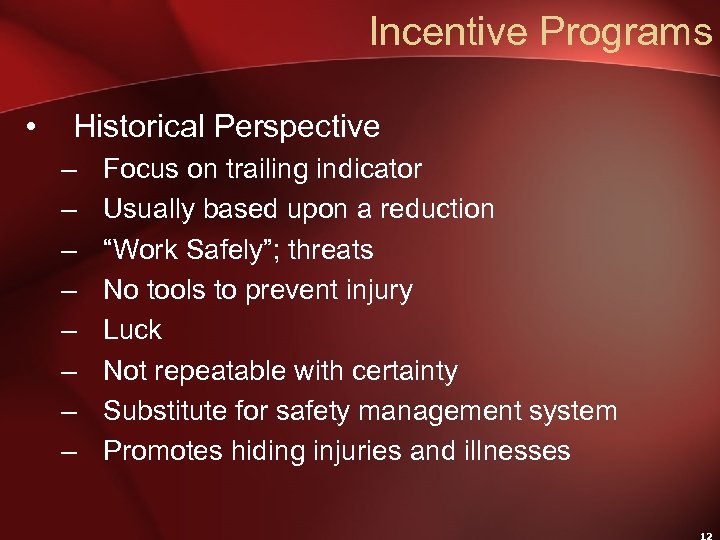 Incentive Programs • Historical Perspective – – – – Focus on trailing indicator Usually based upon a reduction “Work Safely”; threats No tools to prevent injury Luck Not repeatable with certainty Substitute for safety management system Promotes hiding injuries and illnesses
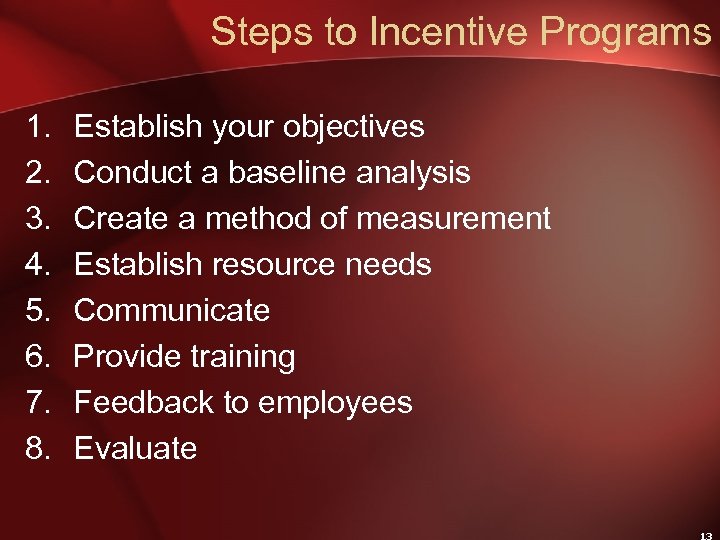 Steps to Incentive Programs 1. 2. 3. 4. 5. 6. 7. 8. Establish your objectives Conduct a baseline analysis Create a method of measurement Establish resource needs Communicate Provide training Feedback to employees Evaluate
 Incentive Programs • Effective Programs: – Clearly developed and stated goals – Meaningful to employees – Long term commitment – Kept exciting and fresh – Make it a priority communication – Requires all of management to be involved
 Review Incentive Plans Many different options are available – Programs tied into other areas • Tied in with production, quality, (equal value) – Sustainment programs • • Safety Dollars Bingo Crossword Giveaways (Milestone attainment) Remember it should have value to the employee
 Incentive Resources • • • Internet NSC Library Professional Organizations Friends in Safety NSC
 Thank You For Your Participation! Have a Safe Day