 Скачать презентацию Moscow Digital Herbarium and the National Depository Bank
IBC 2017 - Shenzhen.ppt
- Количество слайдов: 43



Moscow Digital Herbarium and the National Depository Bank of Live Systems Initiative (Russia) Dr Sci Alexey P. Seregin Lomonosov Moscow State University XIX International Botanical Congress (Shenzhen, China, 2017) “Biodiversity informatics and Mapping Asia Plants (MAP)” Symposium
Moscow University Herbarium (MW) • • Founded ca. 1780 The second largest herbarium in Russia Six staff members (science & technical) Part of the National Depository Bank of Live Systems initiative (launched by the Moscow University) • No international loans due to custom regulations
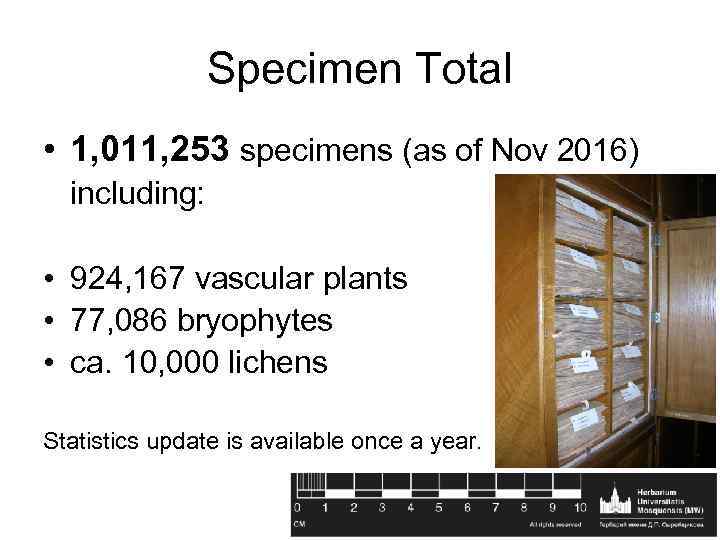
Specimen Total • 1, 011, 253 specimens (as of Nov 2016) including: • 924, 167 vascular plants • 77, 086 bryophytes • ca. 10, 000 lichens Statistics update is available once a year.
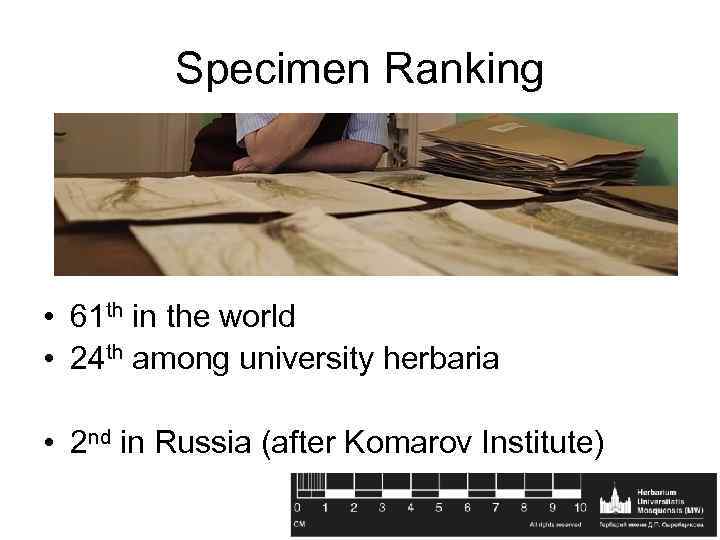
Specimen Ranking • 61 th in the world • 24 th among university herbaria • 2 nd in Russia (after Komarov Institute)
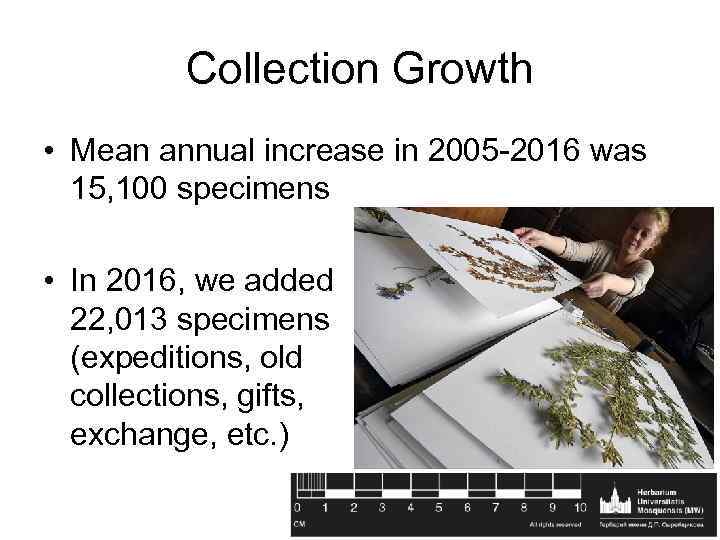
Collection Growth • Mean annual increase in 2005 -2016 was 15, 100 specimens • In 2016, we added 22, 013 specimens (expeditions, old collections, gifts, exchange, etc. )
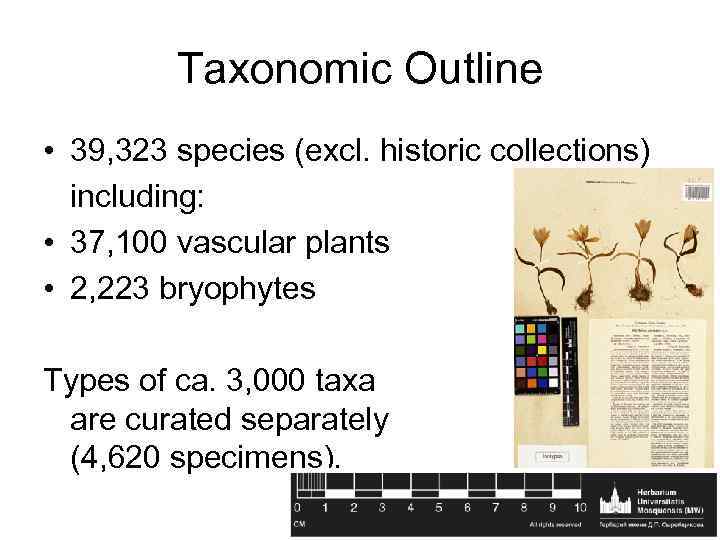
Taxonomic Outline • 39, 323 species (excl. historic collections) including: • 37, 100 vascular plants • 2, 223 bryophytes Types of ca. 3, 000 taxa are curated separately (4, 620 specimens).
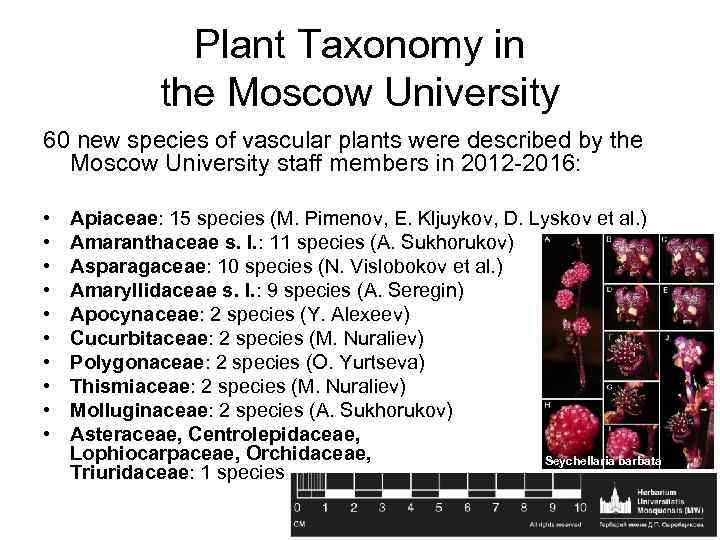
Plant Taxonomy in the Moscow University 60 new species of vascular plants were described by the Moscow University staff members in 2012 -2016: • • • Apiaceae: 15 species (M. Pimenov, E. Kljuykov, D. Lyskov et al. ) Amaranthaceae s. l. : 11 species (A. Sukhorukov) Asparagaceae: 10 species (N. Vislobokov et al. ) Amaryllidaceae s. l. : 9 species (A. Seregin) Apocynaceae: 2 species (Y. Alexeev) Cucurbitaceae: 2 species (M. Nuraliev) Polygonaceae: 2 species (O. Yurtseva) Thismiaceae: 2 species (M. Nuraliev) Molluginaceae: 2 species (A. Sukhorukov) Asteraceae, Centrolepidaceae, Lophiocarpaceae, Orchidaceae, Seychellaria barbata Triuridaceae: 1 species
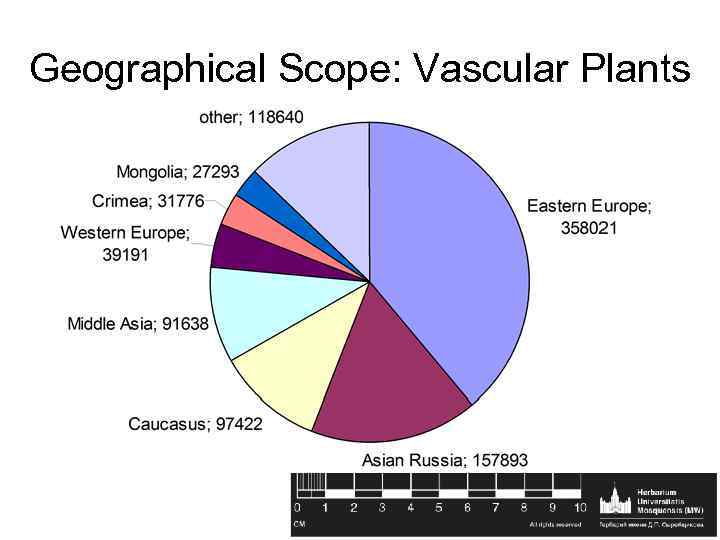
Geographical Scope: Vascular Plants
Moscow University Project • Moscow University have received 750, 000 RUR (ca. 10, 910, 000 Euro) for foundation of the National Depository Bank of Live Systems from Russian Science Foundation. • 4 -year project (2015 -2018). • Five branches: 1) Plants; 2) Animals; 3) Fungi & Microbes; 4) Human Material; 5) Bioinformatics.
Moscow University Project: Plants • 125, 000 RUR (ca. 1, 820, 000 Euro) for plant studies (collections, new labs, expeditions, extra salary, etc. ) in 2015 -2018. • The largest grant in the history of Russian botany. • 24% for the Moscow University Herbarium (MW) for digitisation, databasing and management.
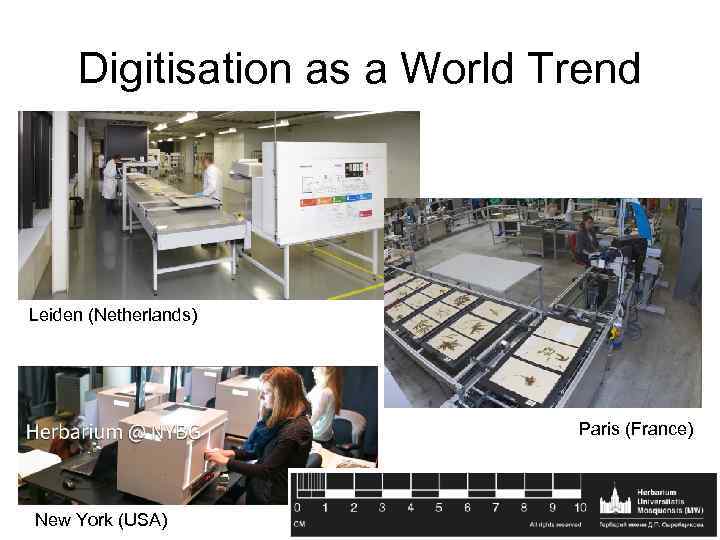
Digitisation as a World Trend Leiden (Netherlands) Paris (France) New York (USA)
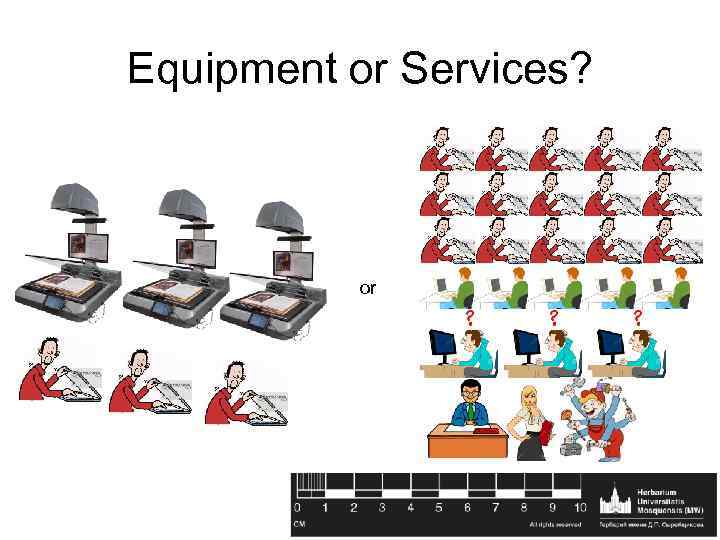
Equipment or Services? or
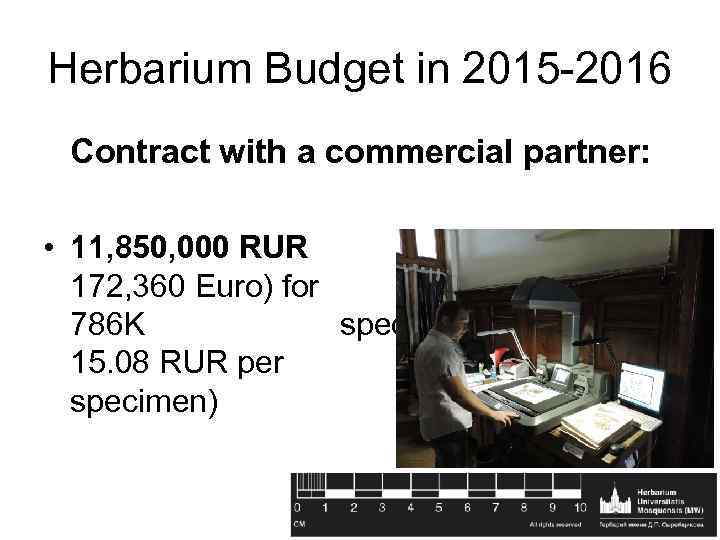
Herbarium Budget in 2015 -2016 Contract with a commercial partner: • 11, 850, 000 RUR (ca. 172, 360 Euro) for digitisation of 786 K specimens (or 15. 08 RUR per specimen)
Extra Funding in 2015 -2016 Development of the web portal: • 2, 500, 000 RUR (ca. 36, 400 Euro) Additional herbarium facilities (cupboards): • 4, 800, 000 RUR (ca. 69, 800 Euro) for the additional space to preserve ca. 192 K new specimens
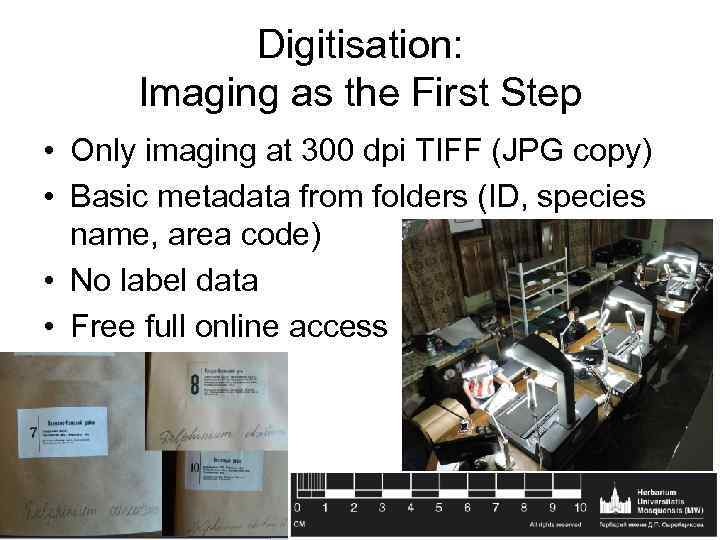
Digitisation: Imaging as the First Step • Only imaging at 300 dpi TIFF (JPG copy) • Basic metadata from folders (ID, species name, area code) • No label data • Free full online access
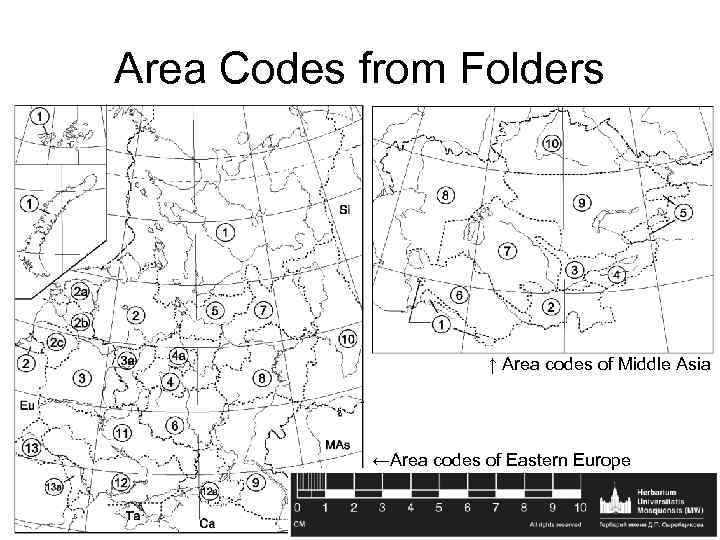
Area Codes from Folders ↑ Area codes of Middle Asia ←Area codes of Eastern Europe
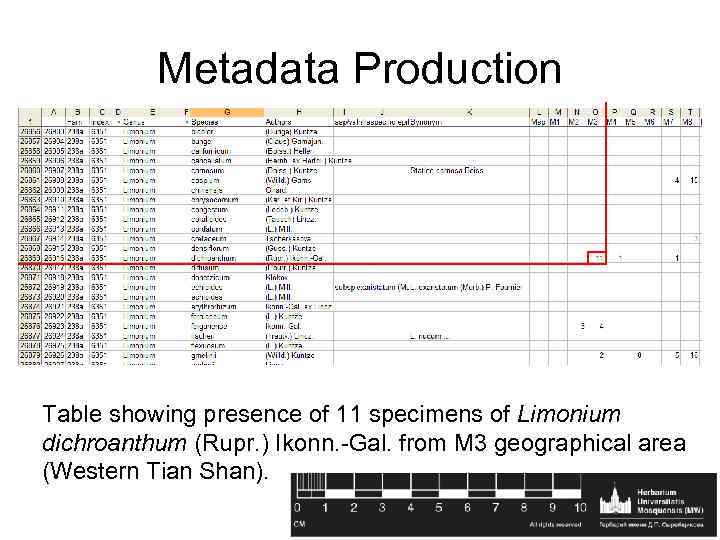
Metadata Production Table showing presence of 11 specimens of Limonium dichroanthum (Rupr. ) Ikonn. -Gal. from M 3 geographical area (Western Tian Shan).
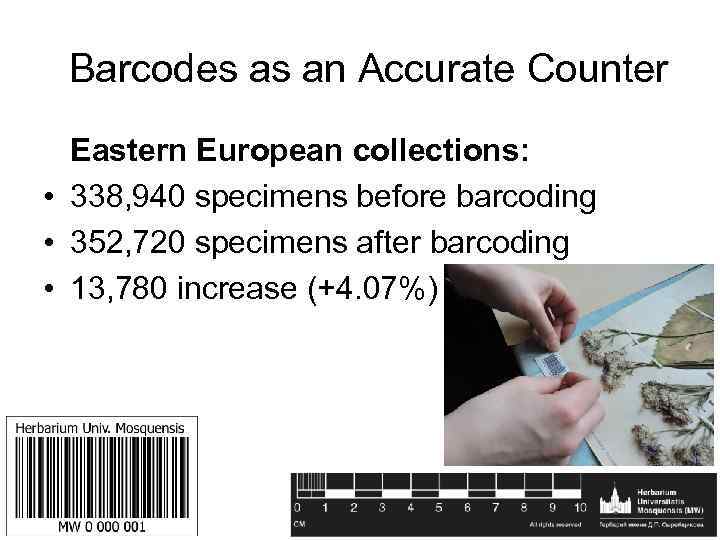
Barcodes as an Accurate Counter Eastern European collections: • 338, 940 specimens before barcoding • 352, 720 specimens after barcoding • 13, 780 increase (+4. 07%)
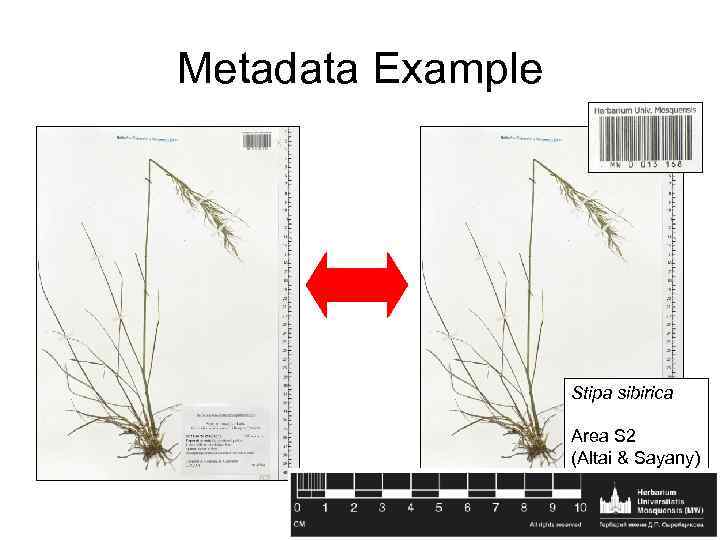
Metadata Example Stipa sibirica Area S 2 (Altai & Sayany)
Current Digitisation Rate • 785, 844 specimens (77. 7%) are scanned and available online including: • 708, 209 specimens of vascular plants (300 dpi) • 4, 632 type specimens of vascular plants (600 dpi) • 72, 997 labels of bryophytes
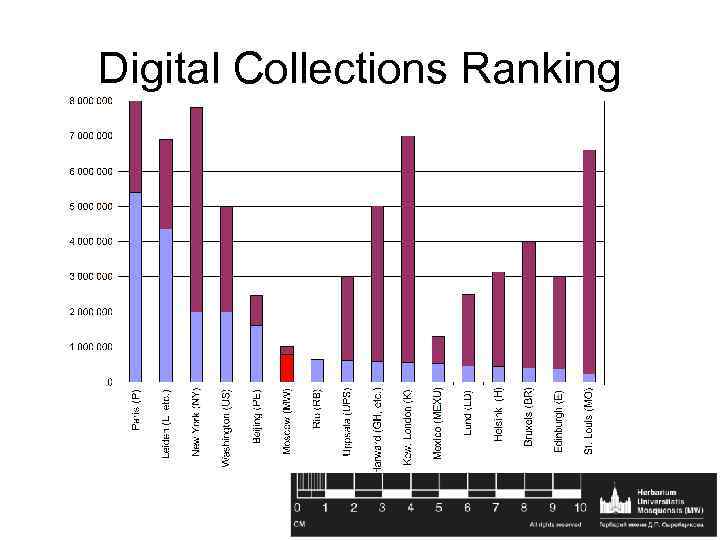
Digital Collections Ranking
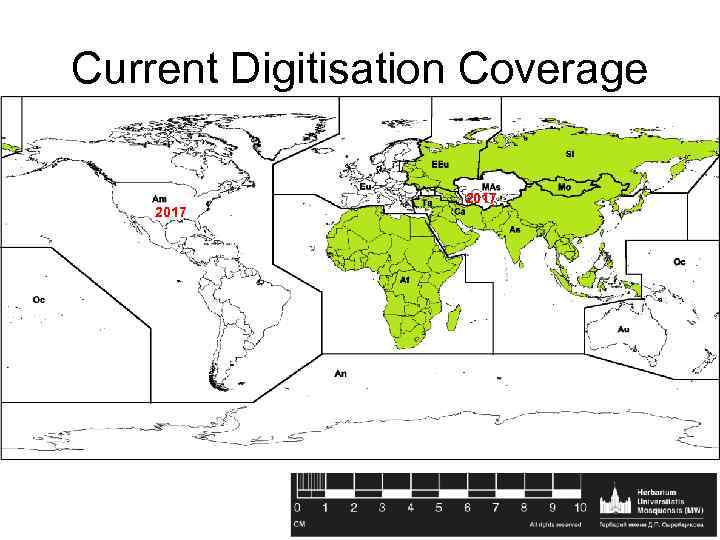
Current Digitisation Coverage 2017
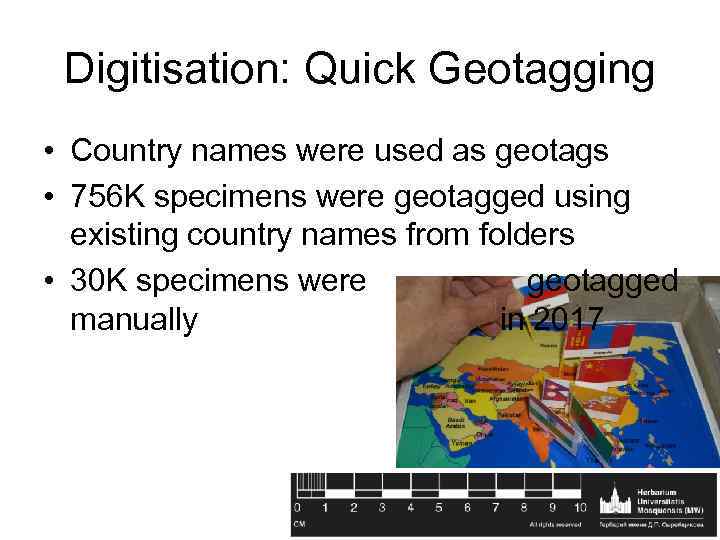
Digitisation: Quick Geotagging • Country names were used as geotags • 756 K specimens were geotagged using existing country names from folders • 30 K specimens were geotagged manually in 2017
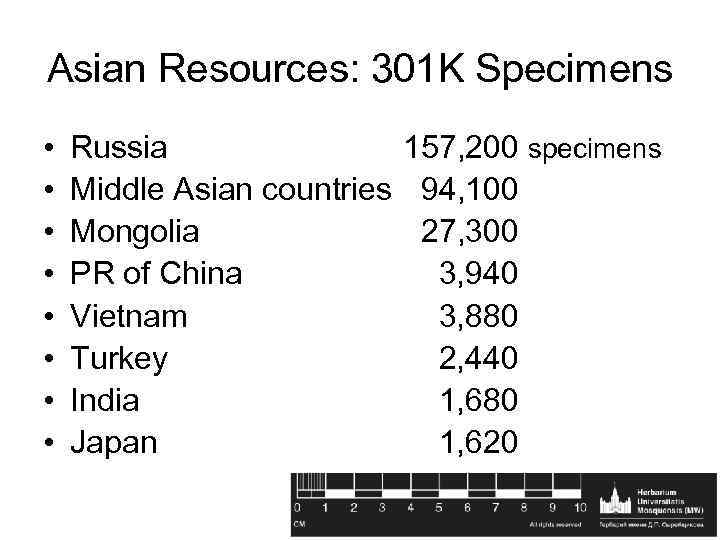
Asian Resources: 301 K Specimens • • Russia 157, 200 specimens Middle Asian countries 94, 100 Mongolia 27, 300 PR of China 3, 940 Vietnam 3, 880 Turkey 2, 440 India 1, 680 Japan 1, 620
Online Access • • http: //plant. depo. msu. ru/ (public access) Russian / English versions 786 K specimens at 300 dpi (JPG) Automatic linking of the collection names with Catalogue of Life taxonomy • No label data at the moment • No geographical coordinates
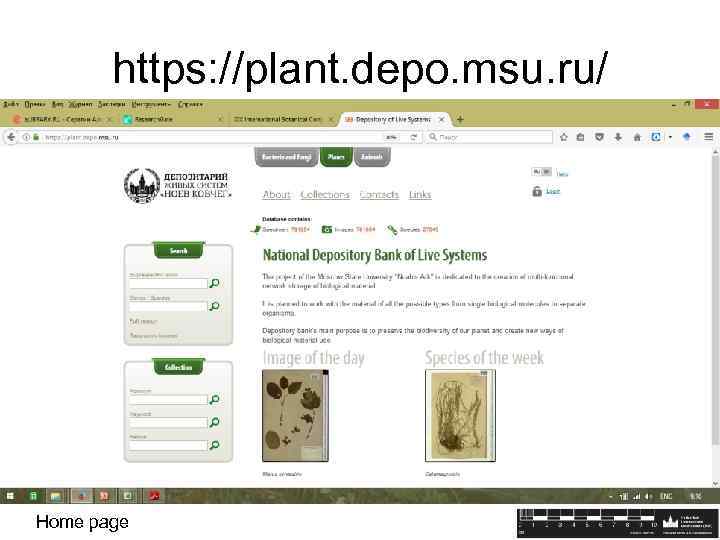
https: //plant. depo. msu. ru/ Home page
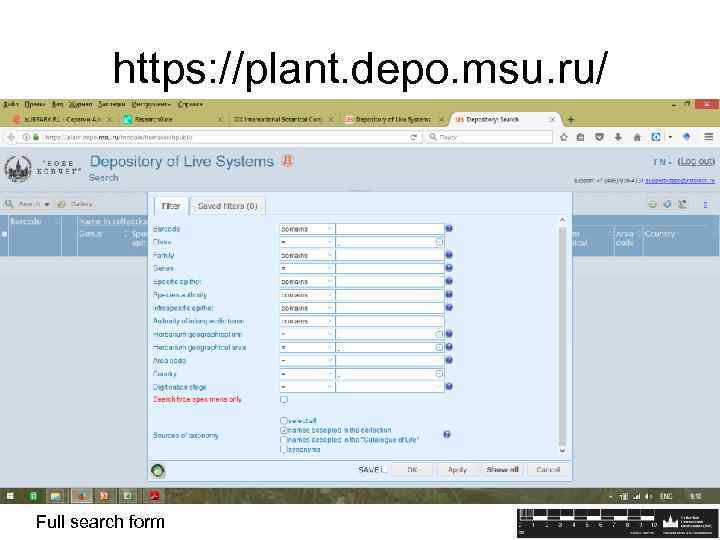
https: //plant. depo. msu. ru/ Full search form
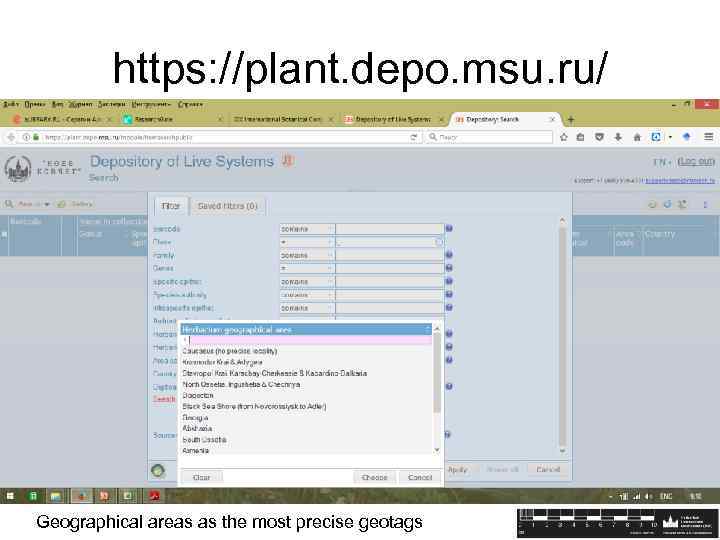
https: //plant. depo. msu. ru/ Geographical areas as the most precise geotags
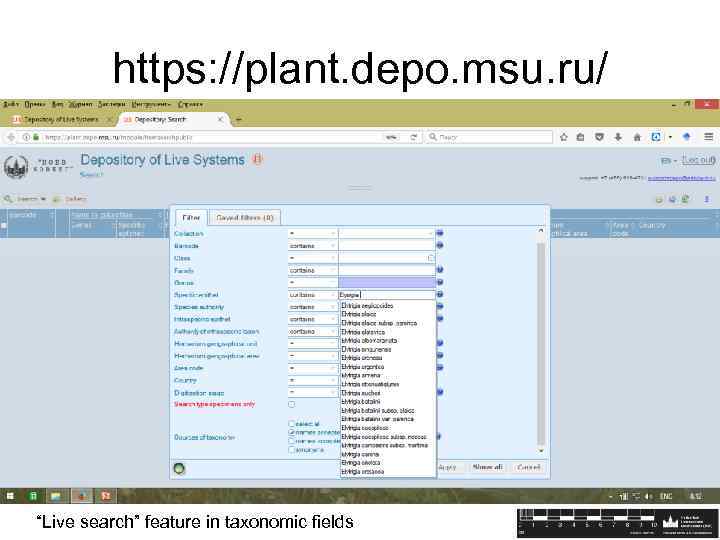
https: //plant. depo. msu. ru/ “Live search” feature in taxonomic fields
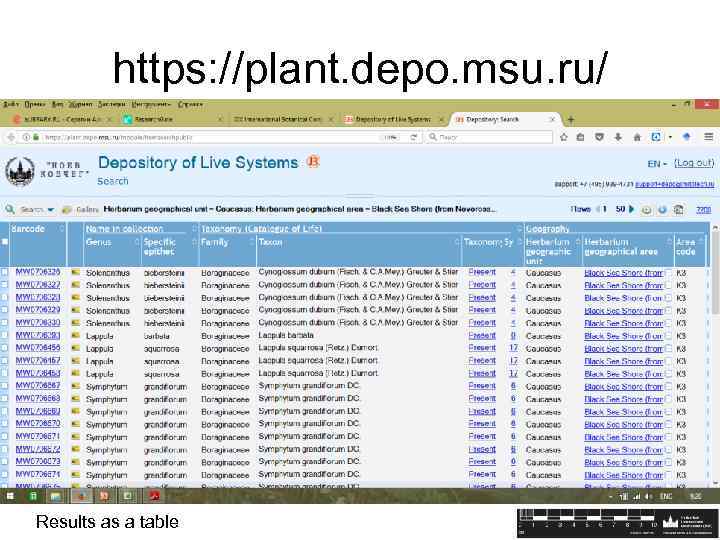
https: //plant. depo. msu. ru/ Results as a table
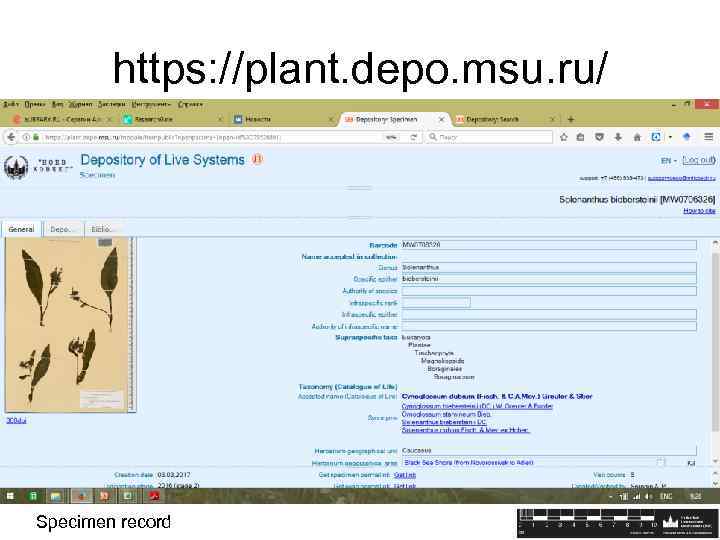
https: //plant. depo. msu. ru/ Specimen record
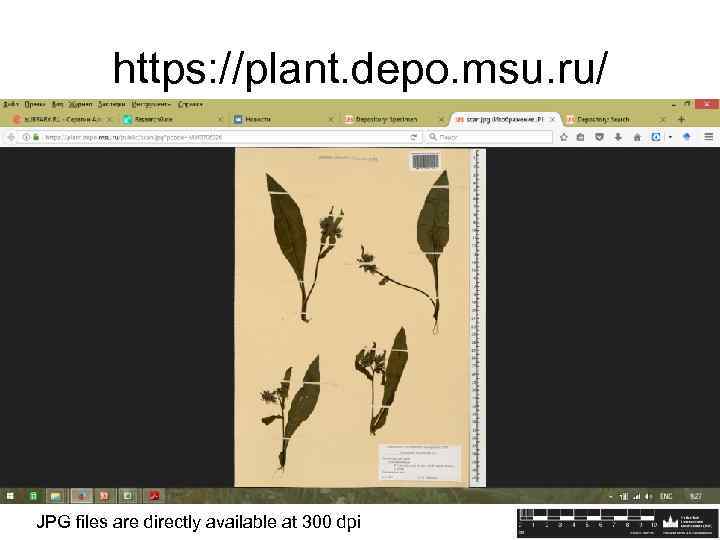
https: //plant. depo. msu. ru/ JPG files are directly available at 300 dpi
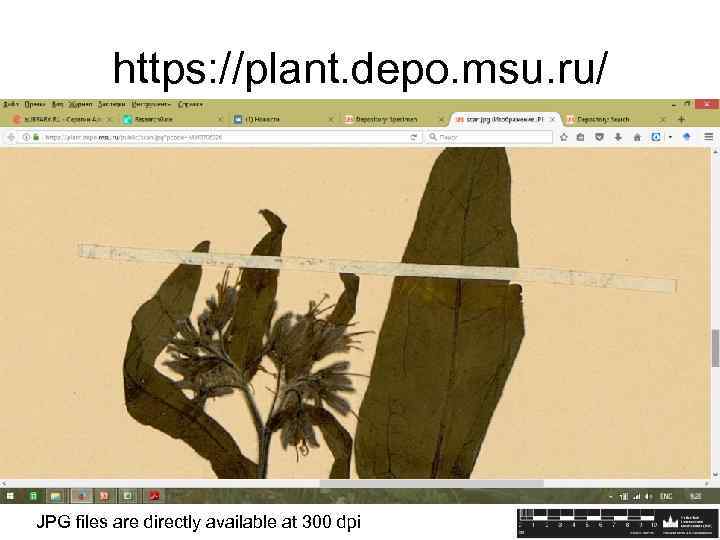
https: //plant. depo. msu. ru/ JPG files are directly available at 300 dpi
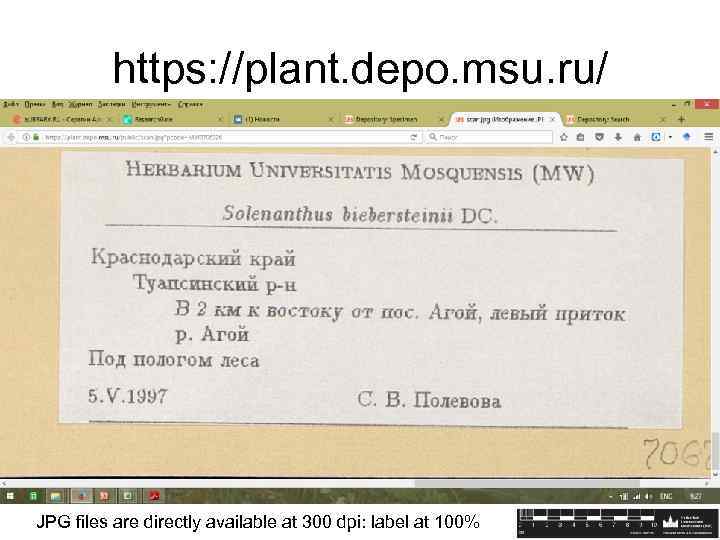
https: //plant. depo. msu. ru/ JPG files are directly available at 300 dpi: label at 100%
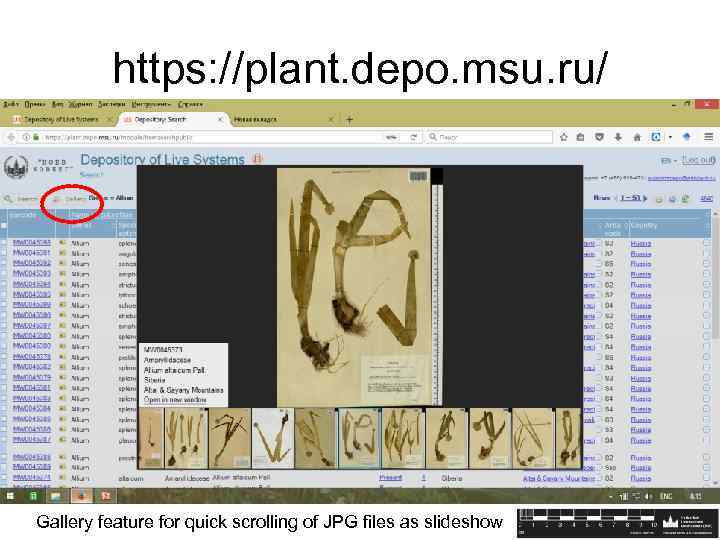
https: //plant. depo. msu. ru/ Gallery feature for quick scrolling of JPG files as slideshow
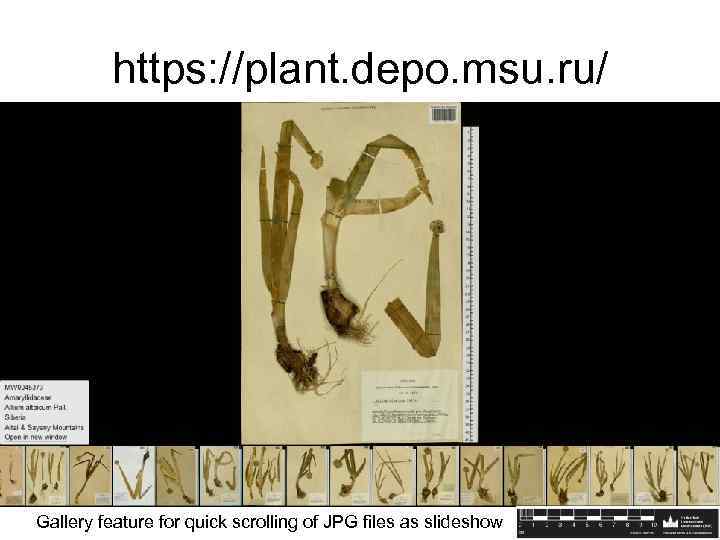
https: //plant. depo. msu. ru/ Gallery feature for quick scrolling of JPG files as slideshow
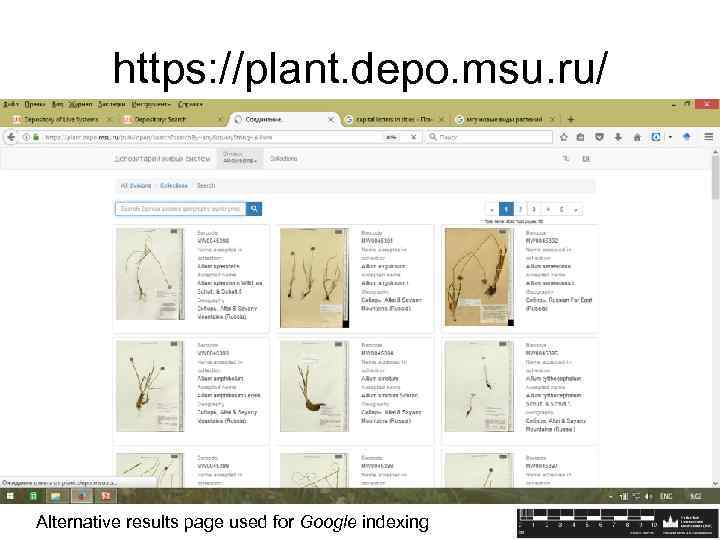
https: //plant. depo. msu. ru/ Alternative results page used for Google indexing
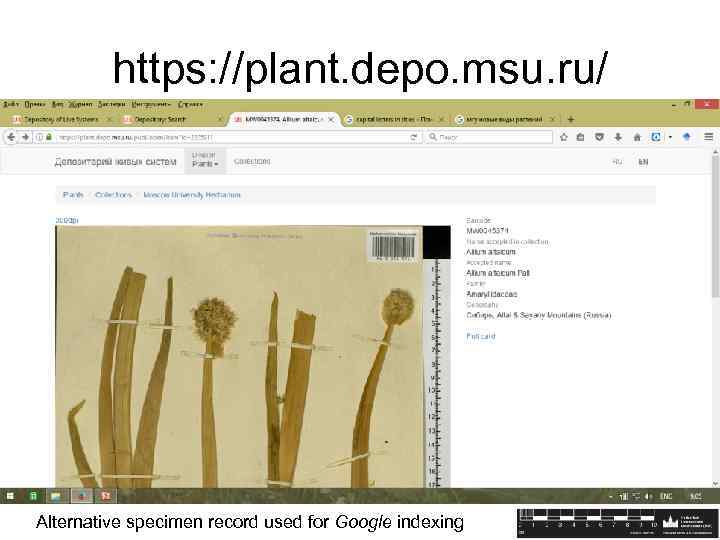
https: //plant. depo. msu. ru/ Alternative specimen record used for Google indexing
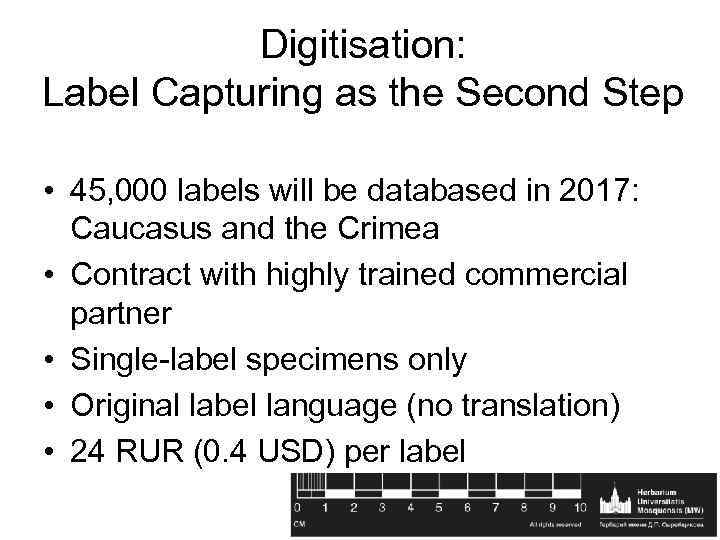
Digitisation: Label Capturing as the Second Step • 45, 000 labels will be databased in 2017: Caucasus and the Crimea • Contract with highly trained commercial partner • Single-label specimens only • Original label language (no translation) • 24 RUR (0. 4 USD) per label
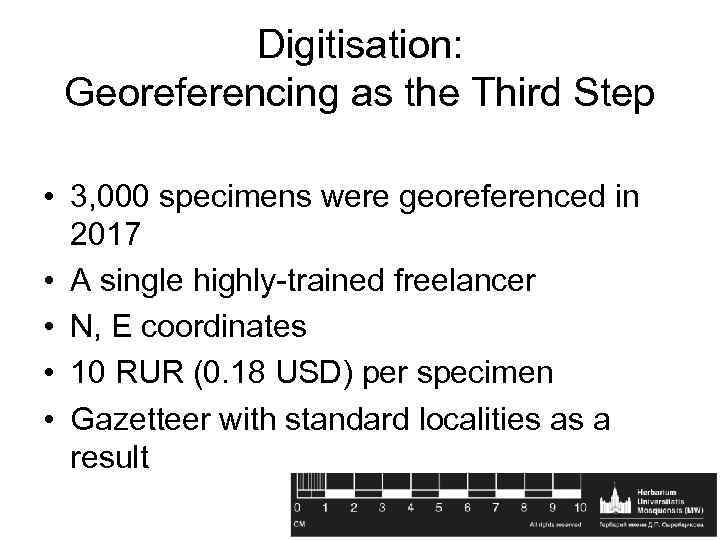
Digitisation: Georeferencing as the Third Step • 3, 000 specimens were georeferenced in 2017 • A single highly-trained freelancer • N, E coordinates • 10 RUR (0. 18 USD) per specimen • Gazetteer with standard localities as a result
PR and Promotion • Four appearances on federal TV • Dozens of communications in news on web portals • Digital Herbarium blog on vk. com • Russian vernacular names (14 K) used for indexing
MW Herbarium by the End of 2018 • 1, 050, 000 physical specimens (60 th in the world) • integration of few lesser collections (negotiations are in progress) • 930, 000 specimens will be imaged (89%) • 250, 000 specimens will be databased (24%) • 10, 000 specimens will be georeferenced (1%)
Thank you for being with me today! Dr Sci Alexey P. Seregin botanik. seregin@gmail. com
Скачать презентацию Moscow Digital Herbarium and the National Depository Bank
IBC 2017 - Shenzhen.ppt