


 Скачать презентацию Mortality After Apparent Cure of Soft Tissue Sarcoma
f1992855a164e4c5853f376d0ff82ccd.ppt
- Количество слайдов: 22
 Mortality After Apparent Cure of Soft Tissue Sarcoma Using Combined Modality Therapy Ballo MT, Zagars GK, Strom SS, Pisters PW, Patel SR, Feig BW, Cormier JN, Hunt KK, Pollack RE, & Benjamin RS
 Purpose Determine the incidence of treatment-related mortality in longterm survivors of STS
 Hypothesis 1. Survival of patients cured of STS will be equivalent to that of the general population. 2. No patient, tumor, or treatment characteristic will be associated with survival.
 Patients & Methods • • • 1, 435 patients with STS 1960 -2000 Surgery and XRT +/- Chemotherapy • Examined only 640 patients ostensibly cured of disease. • IRB approved retrospective review
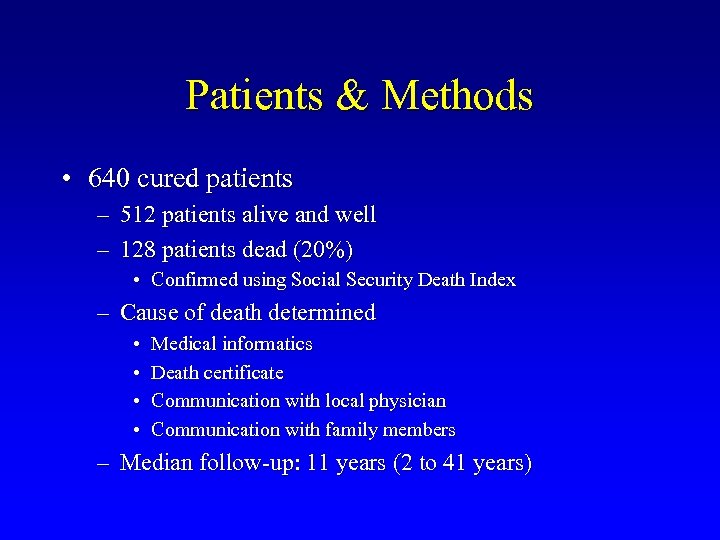 Patients & Methods • 640 cured patients – 512 patients alive and well – 128 patients dead (20%) • Confirmed using Social Security Death Index – Cause of death determined • • Medical informatics Death certificate Communication with local physician Communication with family members – Median follow-up: 11 years (2 to 41 years)
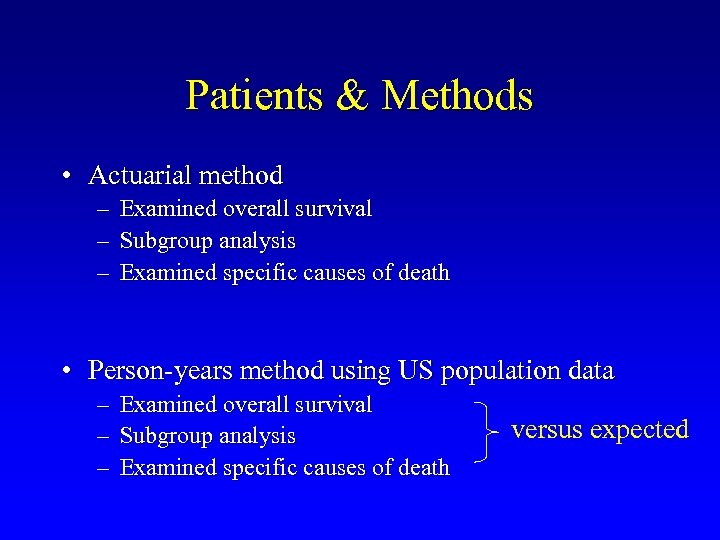 Patients & Methods • Actuarial method – – – Examined overall survival Subgroup analysis Examined specific causes of death • Person-years method using US population data – – – Examined overall survival Subgroup analysis Examined specific causes of death versus expected
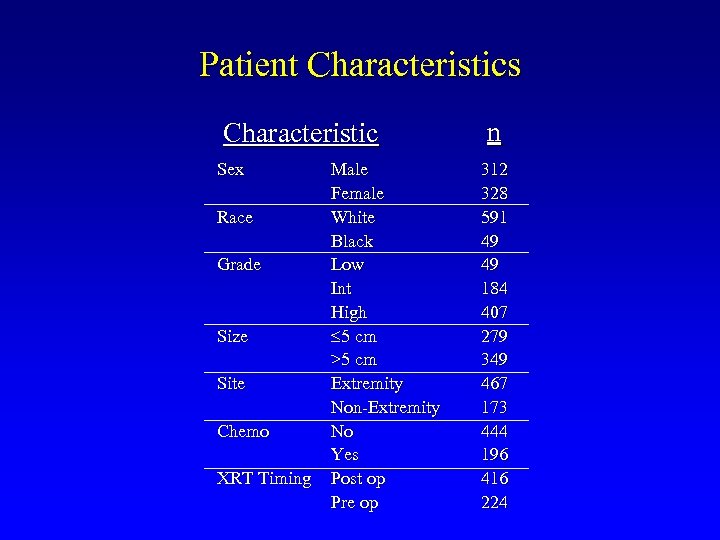 Patient Characteristics Characteristic Sex Race Grade Size Site Chemo XRT Timing Male Female White Black Low Int High 5 cm >5 cm Extremity Non-Extremity No Yes Post op Pre op n 312 328 591 49 49 184 407 279 349 467 173 444 196 416 224
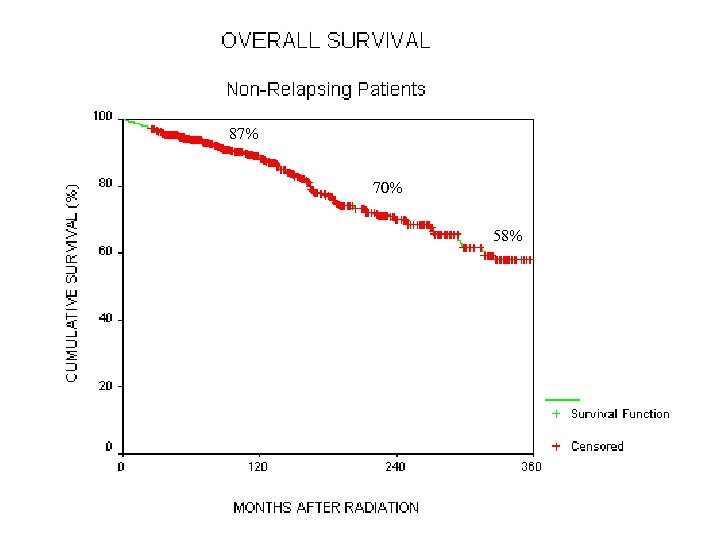 87% 70% 58%
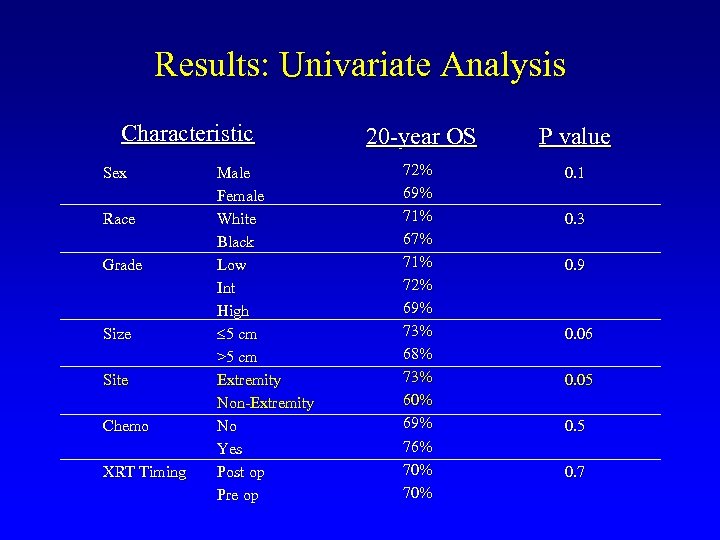 Results: Univariate Analysis Characteristic Sex Race Grade Size Site Chemo XRT Timing Male Female White Black Low Int High 5 cm >5 cm Extremity Non-Extremity No Yes Post op Pre op 20 -year OS P value 72% 69% 71% 67% 71% 72% 69% 73% 68% 73% 60% 69% 76% 70% 0. 1 0. 3 0. 9 0. 06 0. 05 0. 7
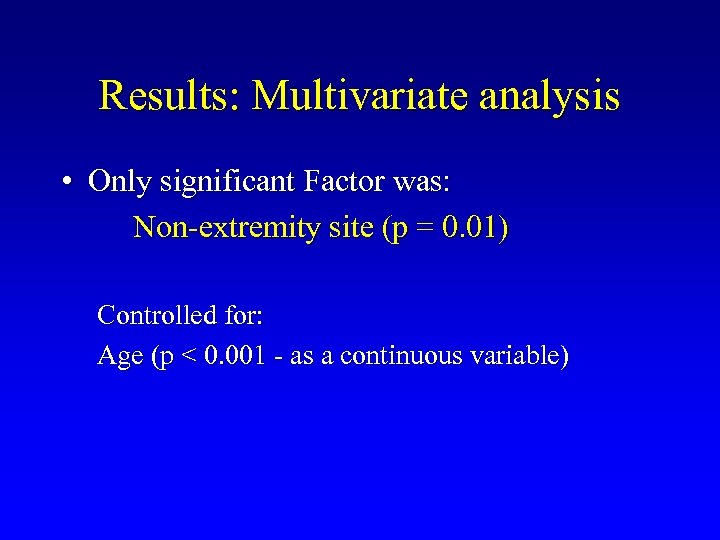 Results: Multivariate analysis • Only significant Factor was: Non-extremity site (p = 0. 01) Controlled for: Age (p < 0. 001 - as a continuous variable)
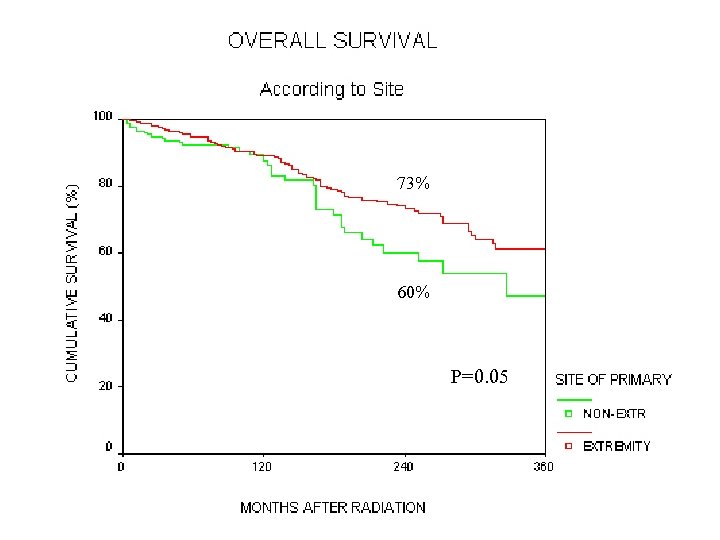 73% 60% P=0. 05
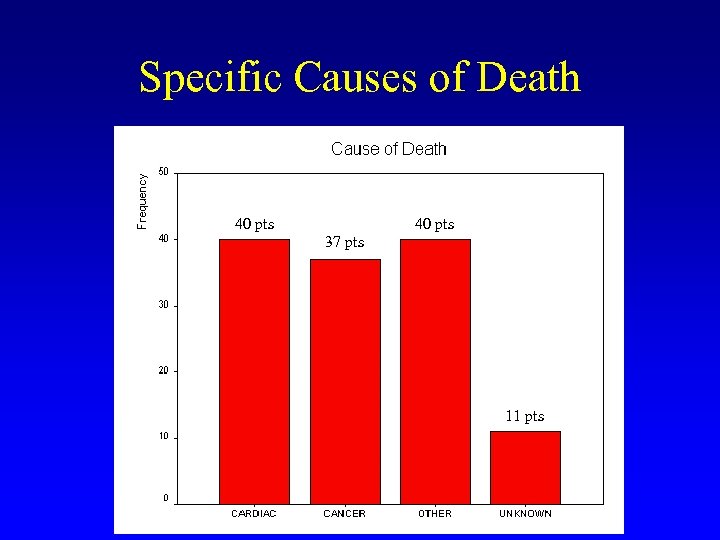 Specific Causes of Death 40 pts 37 pts 11 pts
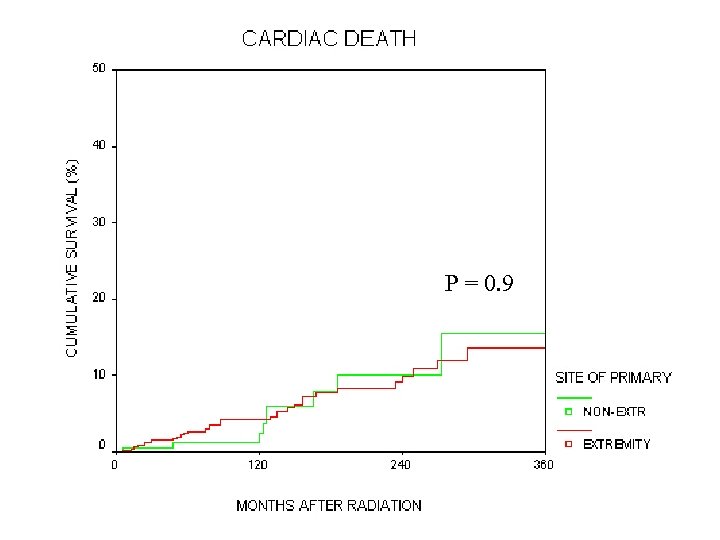 P = 0. 9
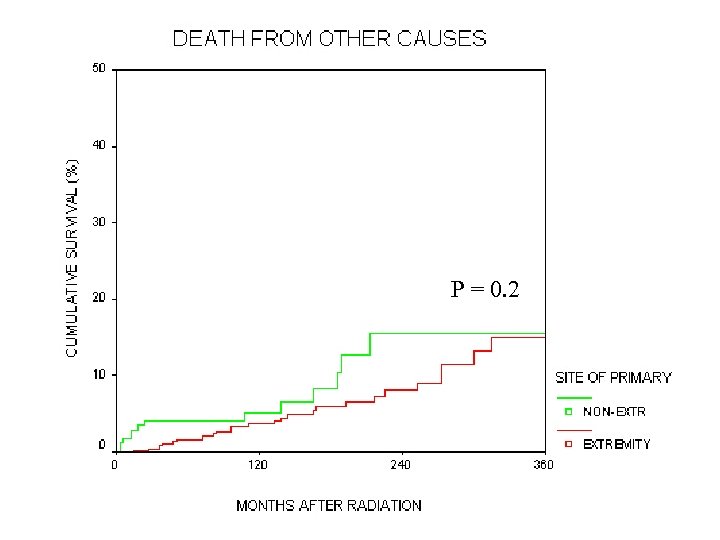 P = 0. 2
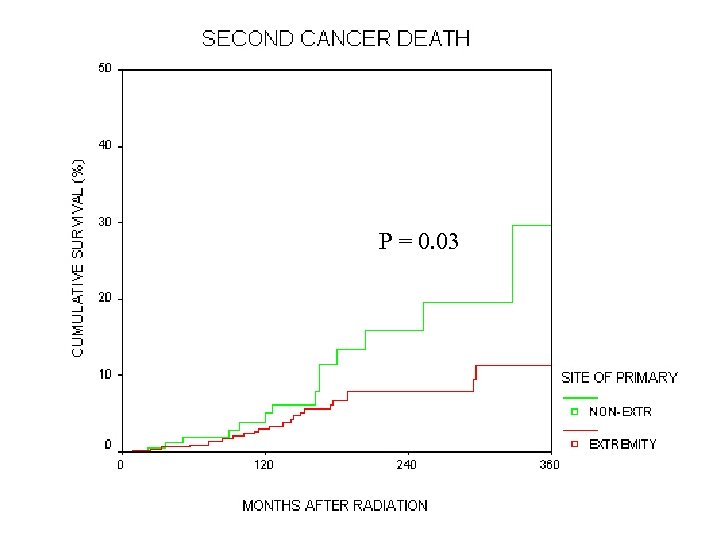 P = 0. 03
 Results: Standardized Mortality Ratios • • Confirmatory SMR analysis US male/female age-specific mortality data US race-specific mortality data US cause specific mortality data – “Heart Disease” (non-PVD, CVD, PE) – “Malignant Neoplasm” (non-skin) • All published in 10 -year intervals
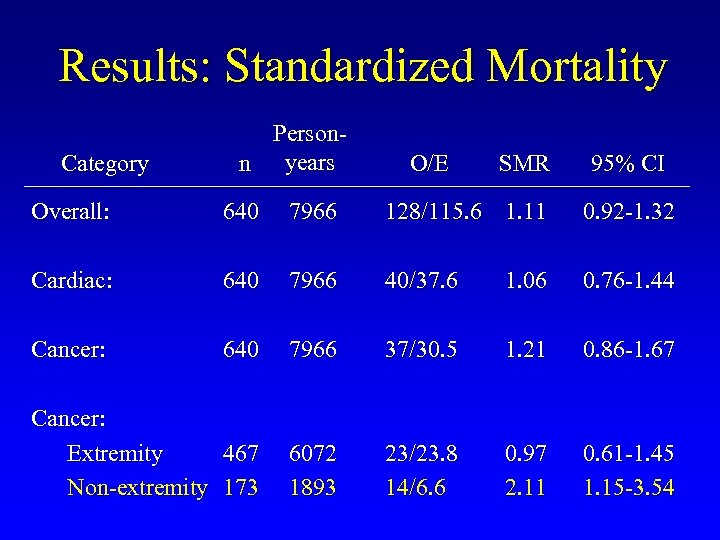 Results: Standardized Mortality Category Personn years O/E SMR 95% CI Overall: 640 7966 128/115. 6 1. 11 0. 92 -1. 32 Cardiac: 640 7966 40/37. 6 1. 06 0. 76 -1. 44 Cancer: 640 7966 37/30. 5 1. 21 0. 86 -1. 67 Cancer: Extremity 467 Non-extremity 173 6072 1893 23/23. 8 14/6. 6 0. 97 2. 11 0. 61 -1. 45 1. 15 -3. 54
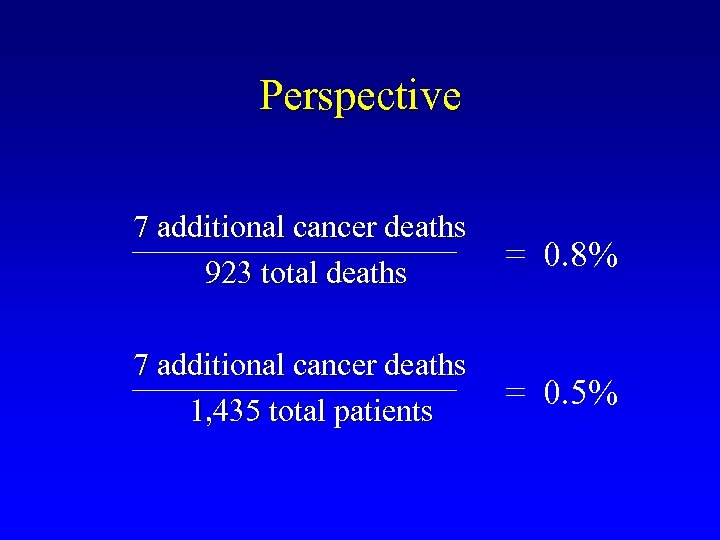 Perspective 7 additional cancer deaths 923 total deaths = 0. 8% 7 additional cancer deaths 1, 435 total patients = 0. 5%
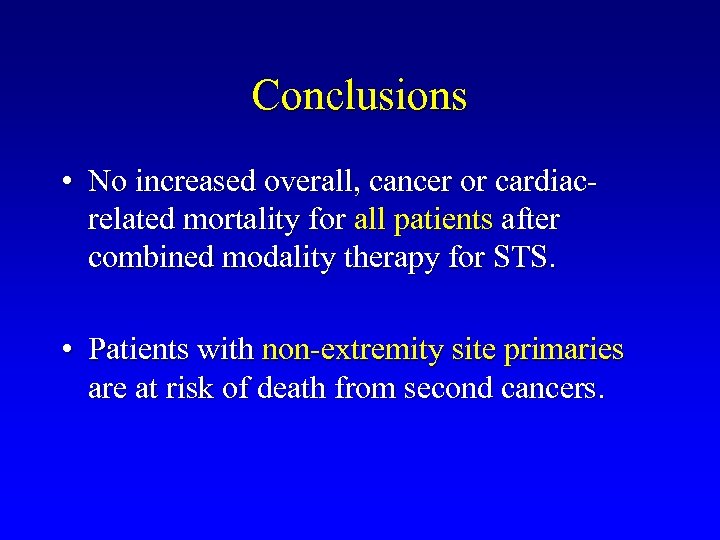 Conclusions • No increased overall, cancer or cardiacrelated mortality for all patients after combined modality therapy for STS. • Patients with non-extremity site primaries are at risk of death from second cancers.
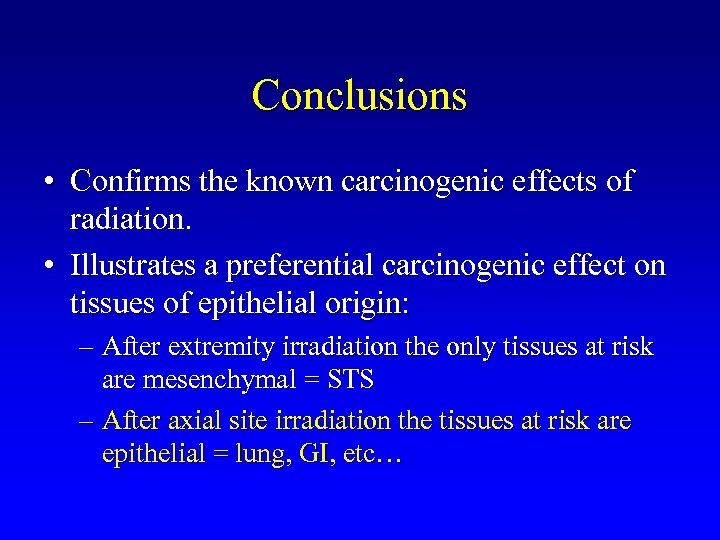 Conclusions • Confirms the known carcinogenic effects of radiation. • Illustrates a preferential carcinogenic effect on tissues of epithelial origin: – After extremity irradiation the only tissues at risk are mesenchymal = STS – After axial site irradiation the tissues at risk are epithelial = lung, GI, etc…
 Conclusions • Benefits of XRT need to outweight the risks. – True for extremities. – What about retroperitoneum, H/N or trunk? • We should decrease XRT dose to non-target tissues as much as possible. – Protons?
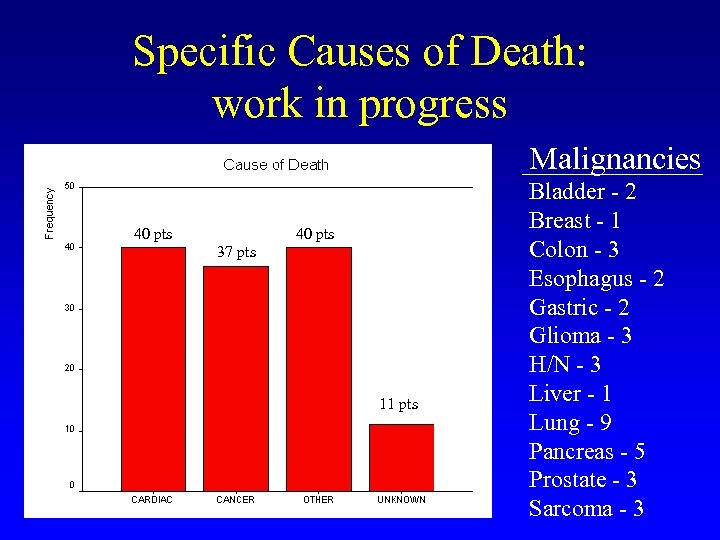 Specific Causes of Death: work in progress Malignancies 40 pts 37 pts 11 pts Bladder - 2 Breast - 1 Colon - 3 Esophagus - 2 Gastric - 2 Glioma - 3 H/N - 3 Liver - 1 Lung - 9 Pancreas - 5 Prostate - 3 Sarcoma - 3