


 Скачать презентацию Morning Report Jieli Li 05 17 05 Chief Complaint
171813da8b73c9b0326146ccf8c90358.ppt
- Количество слайдов: 37
 Morning Report Jieli Li 05/17/05
 Chief Complaint o AMS, HA, n/v, left-sided weakness
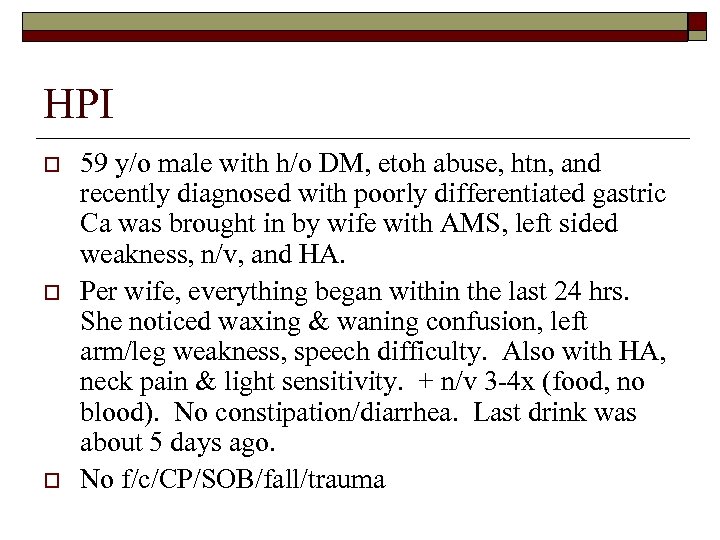 HPI o o o 59 y/o male with h/o DM, etoh abuse, htn, and recently diagnosed with poorly differentiated gastric Ca was brought in by wife with AMS, left sided weakness, n/v, and HA. Per wife, everything began within the last 24 hrs. She noticed waxing & waning confusion, left arm/leg weakness, speech difficulty. Also with HA, neck pain & light sensitivity. + n/v 3 -4 x (food, no blood). No constipation/diarrhea. Last drink was about 5 days ago. No f/c/CP/SOB/fall/trauma
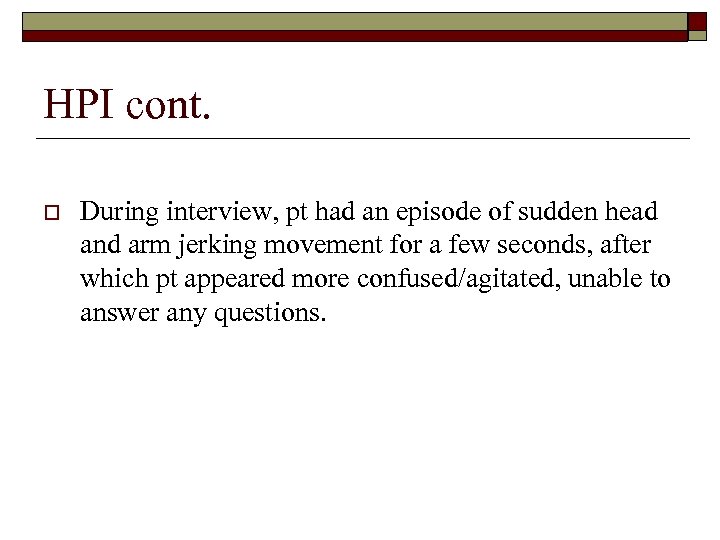 HPI cont. o During interview, pt had an episode of sudden head and arm jerking movement for a few seconds, after which pt appeared more confused/agitated, unable to answer any questions.
 PMH o o DM with neuropathy and retinopathy Htn Etoh abuse Gastric Ca (recently diagnosed) n n o EGD - diffuse thickened gastric folds throughout the stomach with biopsy findings consistent with poorly differentiated gastric adenocarcinoma Abd CT - marked thickening and heterogeneity of the gastric wall and regional LAD GERD
 History cont. o All: n o NKDA Meds: n n Benazepril 5 qd Insulin NPH 20 u q. AM 20 u q. HS Loratadine 10 qd Metformin 500 bid
 History cont. o SH: n n o Former welder, on disability b/c of DM, back pain, lives with wife Etoh – 12 -24 beers/day until 1 month ago, then started drinking 1 bottle of wine per day, last drink 5 days PTA Tobacco – quit 10 yrs ago Drugs – none per wife FH: n Unable to obtain
 Physical Exam o o o o VS – T: 97. 6, P: 91, BP: 129/64, RR: 20 Gen – thin hispanic male lying in bed, agitated following jerking movements. Fluctuating cooperation with exam. HEENT – NC/AT, anicteric, no oral lesions Neck – + nuchal rigidity, unable to touch chin to chest, c/o significant pain with this maneuver Heart – rrr, s 1 s 2, no m/r/g Lungs – cta bilaterally Abd – Soft, NT/ND, no mass appreciated, +BS Ext – no e/c/c
 PE cont. o Neuro n Confused and agitated, oriented to name only. Unable to follow commands consistently. Mild left facial droop. Babinsky down-going bilaterally. Withdraws all 4 extremities with noxious stimuli. Mild weakness of LLE and decreased movement and dexterity of LUE.
 Labs o LP results: n n CSF opening pressure – 15 CSF chemistry – glucose 15 (low), protein 122 CSF cell count – 10 WBC, 90% lymphs, 1 RBC, 45% atypical cells, sent for cytology CSF cytology - “possible malignant cells vs. reactive pleocytosis”.
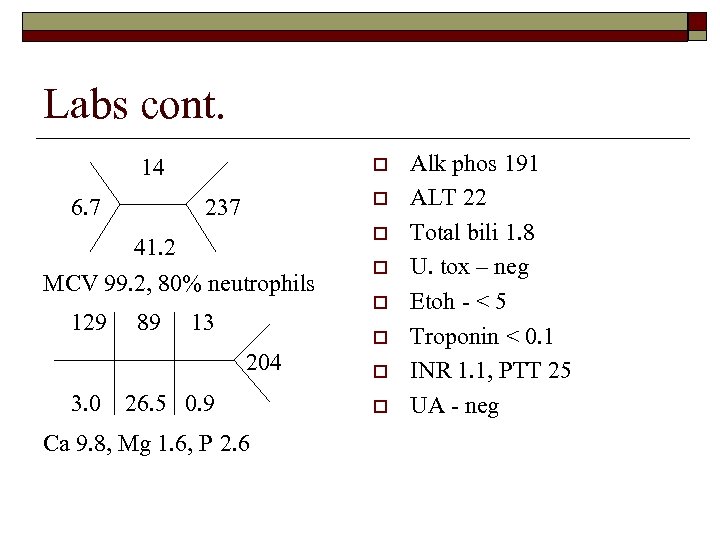 Labs cont. 14 6. 7 o o 237 41. 2 MCV 99. 2, 80% neutrophils 129 89 13 o o o 204 3. 0 o 26. 5 0. 9 Ca 9. 8, Mg 1. 6, P 2. 6 o o Alk phos 191 ALT 22 Total bili 1. 8 U. tox – neg Etoh - < 5 Troponin < 0. 1 INR 1. 1, PTT 25 UA - neg
 Head CT o o o Mild microvascular deep white matter ischemic disease No cortical infarct, mass, bleed, or midline shift 6 mm calcification in right parietal white matter. May represent old cysticercosis vs. vascular malformation such as cavernous hemangioma. No surrounding edema or mass effect.
 MRI/MRA of Brain o o Mild microvascular deep white matter ischemic disease Small focus of hypodensity in the right parietal white matter, consistent with the focus of calcification seen on CT No acute infarct, early subacute ischemia, mass, or bleed. Unremarkable MRA
 Hospital Course o Neurology evaluated pt in ER. Pt was admitted to HICU, loaded on dilantin and started on banana bag and seizure precautions. He was initally started on ceftriaxone, vanco, ampicillin, acyclovir and dexamethasone but all cx’s and serologies came back negative. Per ID recs all abx and antivirals were stopped. o Repeat MRI 1 week later showed “abnormal diffuse dural and leptomeningeal enhancement of the cerebrum and cerebellum consistent with leptomeningitis”
 Hospital Course cont. o Cytology from repeat LP showed malignant cells consistent with metastatic poorly-differentiated gastric adenocarcinoma o Pt’s symptoms improved within days without any treatment. His n/v/HA resolved and so did his leftsided weakness. No further seizure episodes while in house. Heme/onc was consulted and gave 1 dose of intrathecal methotrexate for carcinomatous meningitis. Pt was discussed in Tumor Board. On discharge, pt was AAO x 3, but confused about details.
 Hospital Course cont. o Pt was readmitted 1 month later from home hospice for AMS, but again mental status improved without intervention. o Pt received another dose of intrathecal methotrexate on GMED and was then discharged back to home hospice. o Pt died 2 months later
 Carcinomatous and Lymphomatous Meningitis
 Introduction o Definition: n o Neoplastic involvement of leptomeninges when malignant cells gain entry into CSF. Prevalence: n n 4 -7% of all cancer pts Asymptomatic involvement is more common 20% in autopsy series Most common solid tumors include breast Ca, lung Ca, melanoma
 Anatomy o Meninges – dura mater, arachnoid and pia mater o Leptomeninges – arachnoid and pia mater o CSF runs in the subarachnoid space o Normal adult has about 140 cc of CSF, replaced more than 5 x daily
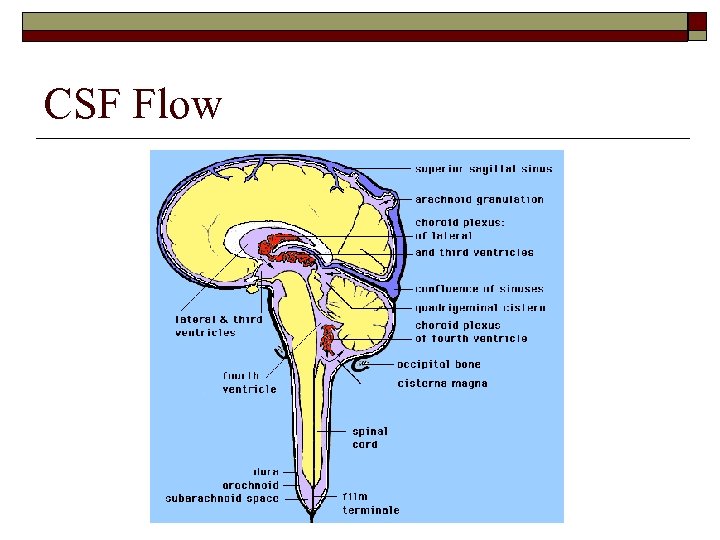 CSF Flow
 Pathophysiology o Tumor cells can gain access to the CSF by: n n n Hematogenously through penetration of arachnoid vessels Direct invasion through choroid plexus Direct extension from either subdural, epidural, or intraparenchymal mets Tracking along peripheral nerves Tumor directly arise within meninges o o o Primary CSF lymphoma Primary meningeal melanoma Primary meningeal sarcomas
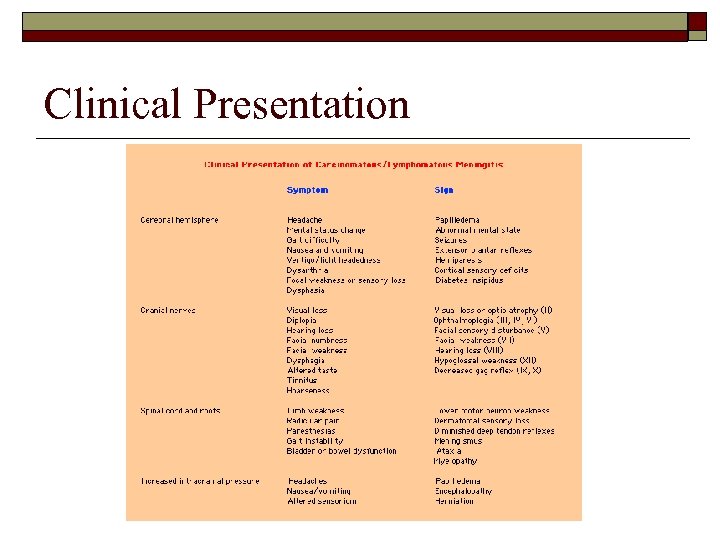 Clinical Presentation
 Diagnosis o CSF cytology n n n o CSF biological markers n n n o diagnostic gold standard Excellent specificity, not very good sensitivity 20% of cases remain cytology neg despite proper handling of specimen and repeating LP at least once CSF assays for tumor antigens (CSF > serum) CSF flow cytometry PCR Radiographic studies
 Radiographic Studies o o o Gadolinium-enhanced MRI PET Most common sites of radiographic and pathologic leptomeningeal tumor involvement: n Base of the brain o o n basilar cisterns posterior fossa Base of the spine o cauda equina
 Treatment o Treatment Goals n n o improvement or stabilaization of neurologic status Prolonging survival Selection of Regimen n Poor risk patients n Good risk patients
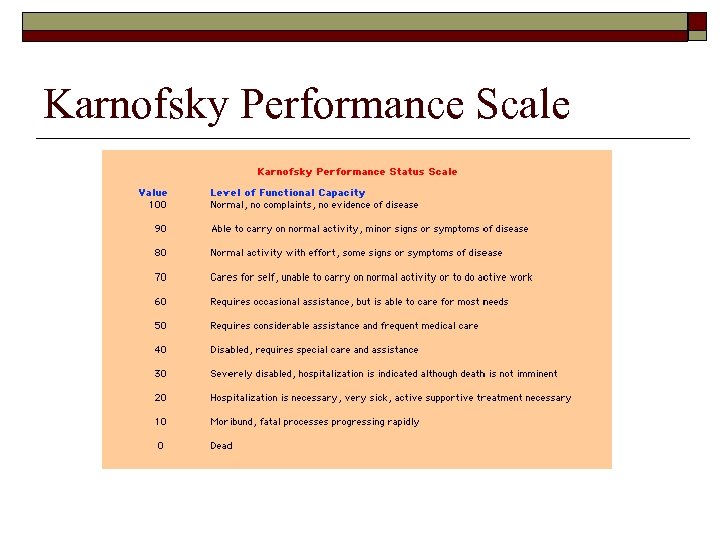 Karnofsky Performance Scale
 Poor Risk Patients n n Karnofsky score < 60 Multiple, serious, fixed neurologic deficits Extensive systemic Ca with few therapeutic options Treatment geared towards palliation o o Focused XRT for symptomatic relief Analgesics/Corticosteroids for pain Anticonvulsants (for pts with seizures) SSRI or stimulants for depression or fatigue
 Good Risk Patients o o o Karnofsky performance score > 60 Absence of or modest fixed neurologic deficits Minimal disease burden or Systemic cancer for which there are reasonable treatment options Treatment n n n XRT to bulky or symptomatic areas of leptomeningeal disease Intrathecal therapy Optimal systemic tx for the extraneural disease component
 Pretreatment Evaluation o o Prior to IT treatment, a CSF flow study via a radionuclide cisternogram is imperative Abnormal flow is seen in up to 2/3 of pts, frequently in the absence of hydrocephalus or other abnormalities on neuroimaging Disturbed CSF flow interfere with the distribution of intrathecally administered agents, can alter both efficacy and toxicity XRT to the sites of abnormal CSF flow can reverse the flow abnormality and allow safe administration of IT chemo
 Intrathecal Chemotherapy o o Goal is to forestall progression of disease & the appearance of new neurologic symptoms Injection of chemo agents directly into CSF through: n n o o A subcutaneous reservoir and ventricular catheter Into the lumbar thecal sac via LP Efficacious for small leptomeningeal deposits & individual tumor cells floating in the CSF Not good for bulky disease 2/2 limited diffusion of drug
 Technique of IT Administration o Important! n o o Intra-CSF fluid volume should NOT be greater following chemotherapy than at the start of IT administration Otherwise pt may suddenly develop HA, n/v, obtundation, herniation Therefore small amount of CSF should be removed prior to chemo instillation to account for the volume fo administered chemo
 IT Agents o Methotrexate n n Most frequently used for solid tumors Toxicity o o n o Myelosuppression leukoencephalopathy Relative contraindications: renal insufficiency, large pleural effusions, ascites, or abnormal CSF flow Thiotepa n n n More myelosuppressive Neurotoxicity slightly less Considered in pts who have failed prior MTX or have MTX-induced leukoencephalopathy
 IT Agents cont. o Cytarabine n n o Most frequently used for lymphomatous meningitis Oral dexamethasone is often added for its lympholytic effect Sustained-release Cytarabine (Depo. Cyt) n n n Major advantage is long half-life within CSF Also has shown modest activity in some pts with solid tumor Oral dexamethasone should always be used in combo because of high incidence of chemical meningitis when oral steroids is not given
 Systemic Chemotherapy o Advantages n n o Risk of surgery for placement of a ventricular reservoir and reservoir-associated complications are avoided Pts with an obstruction to normal CSF flow can be treated without correction of the flow abnormality May provide a more uniform distribution of drug Bulky disease may also respond Agents n n High-dose methotrexate cytarabine
 Radiation Therapy o o Provides more rapid relief of symptoms than does chemo XRT can be used for: n n o Sites of symptomatic or bulky disease Sites of CSF flow block as demonstrated by radionuclide flow study Major Adverse Effects n n n Myelosuppresion Mucositis/esophagitis Leukoencephalopathy – esp common when used in combo with IT or systemic chemo, particularly methotrexate
 Emerging Therapies o Intrathecal Interferon n n Particularly for lymphomatous meningitis Toxicity: o o Severe fatigue Chemical meningitis Encephalopathy Monoclonal antibody therapy (IV rituximab) n n In CNS lymphomas Mild reversible side effects
 Prognosis o o Median survival is 3 -4 months Reasons for poor outcome: n n n o Delayed diagnosis of leptomeningeal involvement Irreversible neurologic deficits at the time of diagnosis Progressive extraneural disease Best median survival is 6 -7 months for women with breast Ca who are treated aggressively