 Скачать презентацию Monkeys benefit from reciprocity without the cognitive burden
monkeys_benefit_final.pptx
- Количество слайдов: 26



Monkeys benefit from reciprocity without the cognitive burden ARTICLE BY M. SUCHAK AND F. DE WAAL, 2012 Group 5: Sivova Sasha, Steblovskaya Ksusha, Konik Nastya, Dmitrieva Masha, Ponizovsky Vova, Dankbaar Maartje.
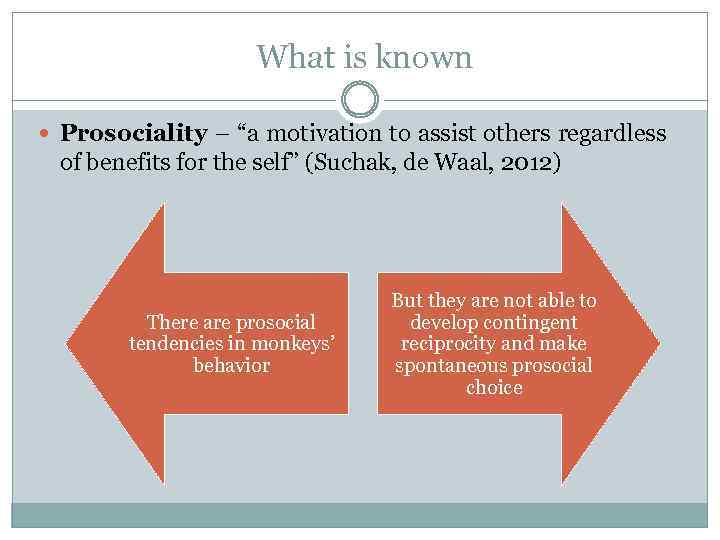
What is known Prosociality – “a motivation to assist others regardless of benefits for the self” (Suchak, de Waal, 2012) There are prosocial tendencies in monkeys’ behavior But they are not able to develop contingent reciprocity and make spontaneous prosocial choice
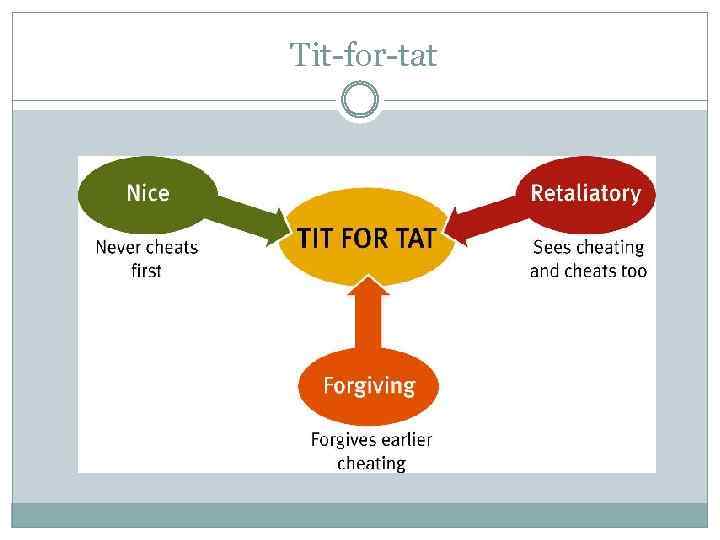
Tit-for-tat
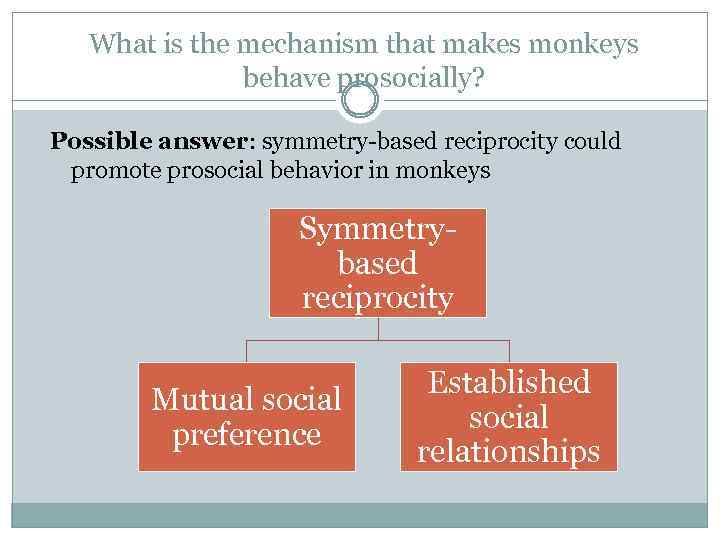
What is the mechanism that makes monkeys behave prosocially? Possible answer: symmetry-based reciprocity could promote prosocial behavior in monkeys Symmetrybased reciprocity Mutual social preference Established social relationships
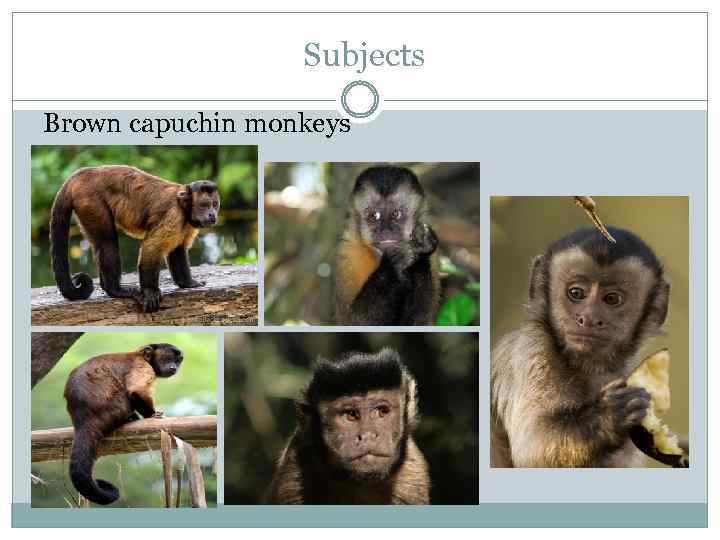
Subjects Brown capuchin monkeys
Subjects’ characteristics N = 12 (8 adult female and 4 adolescent male monkeys) They were housed in two separate groups Same-sex pairs Capuchin monkeys are more spontaneously prosocial + sensitive to inequity + hostile toward out-group members
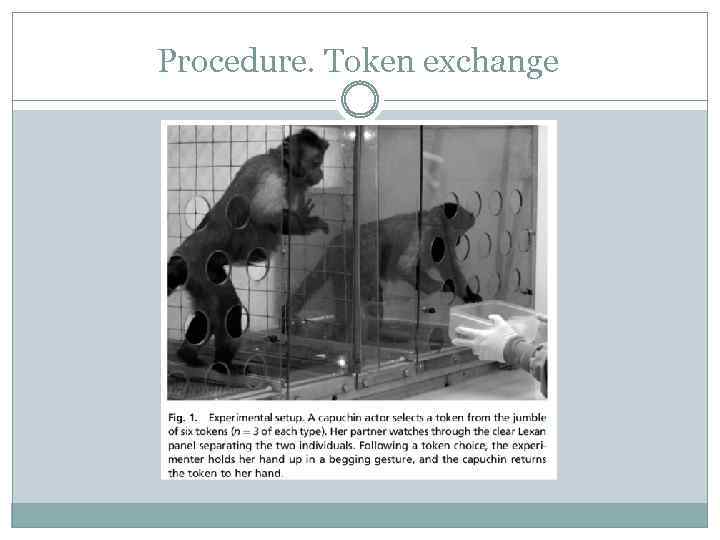
Procedure. Token exchange
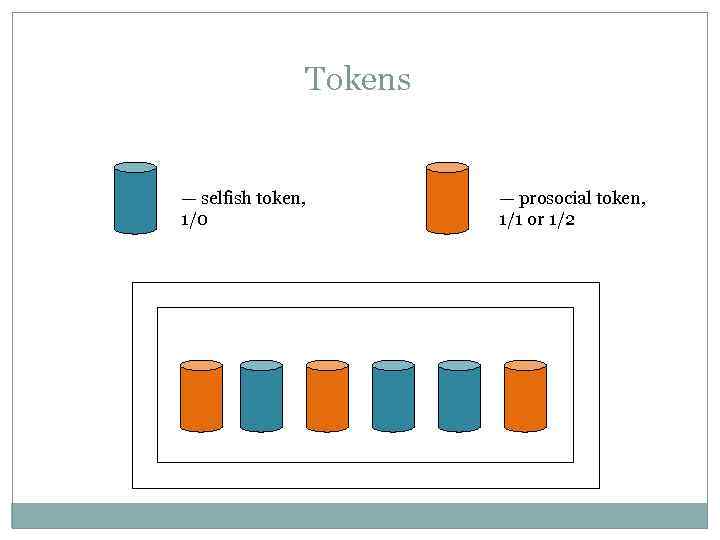
Tokens — selfish token, 1/0 — prosocial token, 1/1 or 1/2
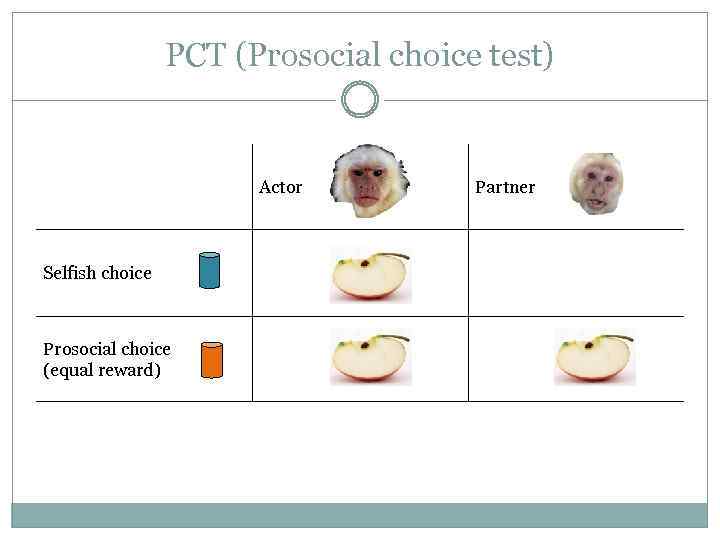
PCT (Prosocial choice test) Actor Selfish choice Prosocial choice (equal reward) Partner
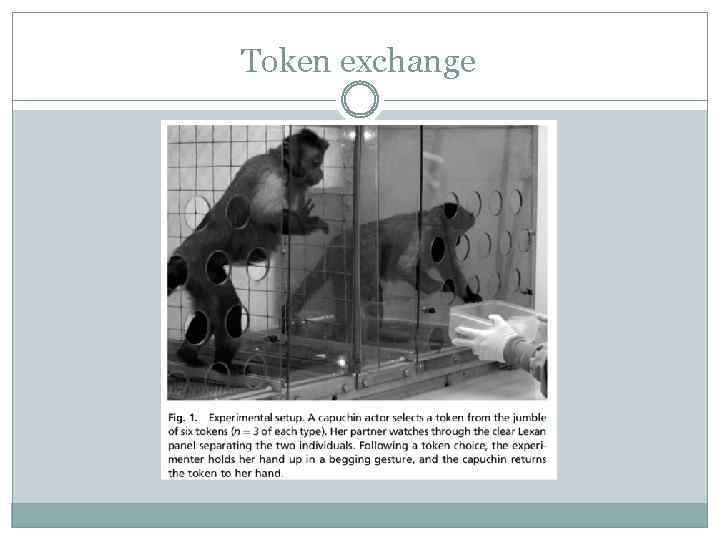
Token exchange
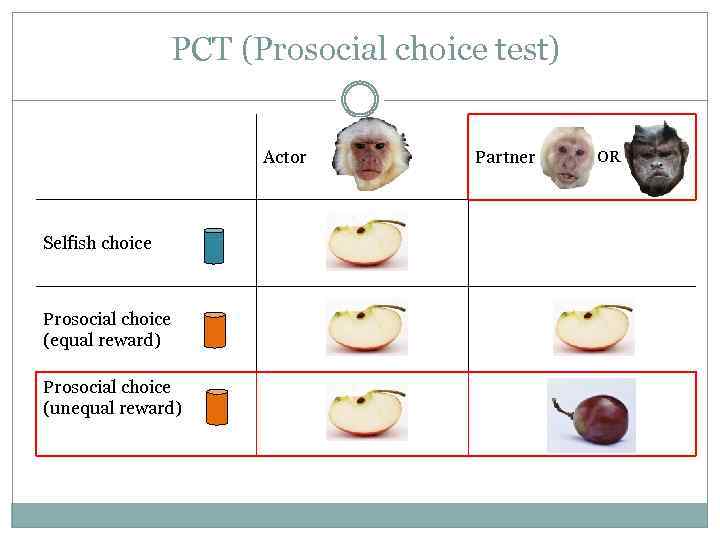
PCT (Prosocial choice test) Actor Selfish choice Prosocial choice (equal reward) Prosocial choice (unequal reward) Partner OR
Procedure Token familiarization (to assimilate the rules)
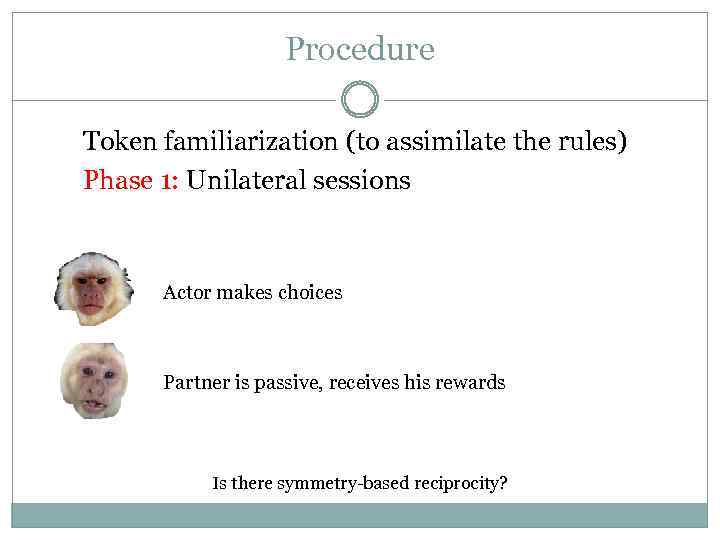
Procedure Token familiarization (to assimilate the rules) Phase 1: Unilateral sessions Actor makes choices Partner is passive, receives his rewards Is there symmetry-based reciprocity?
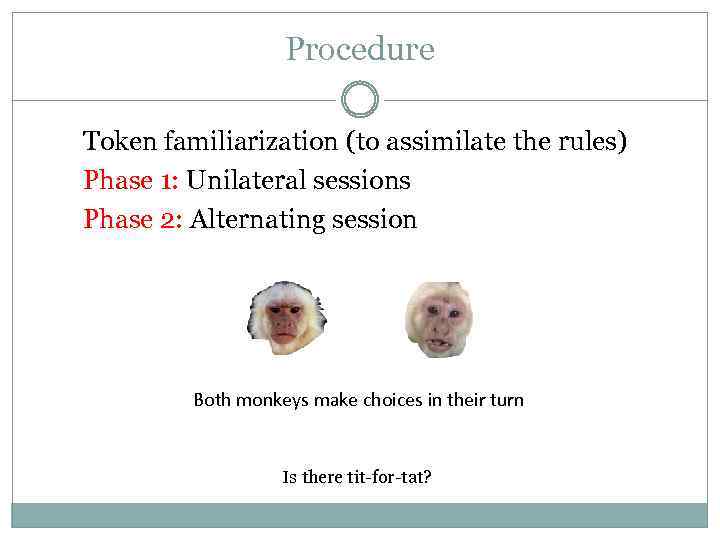
Procedure Token familiarization (to assimilate the rules) Phase 1: Unilateral sessions Phase 2: Alternating session Both monkeys make choices in their turn Is there tit-for-tat?
Procedure Token familiarization (to assimilate the rules) Phase 1: Unilateral sessions Phase 2: Alternating session Phase 3, 4: Control conditions
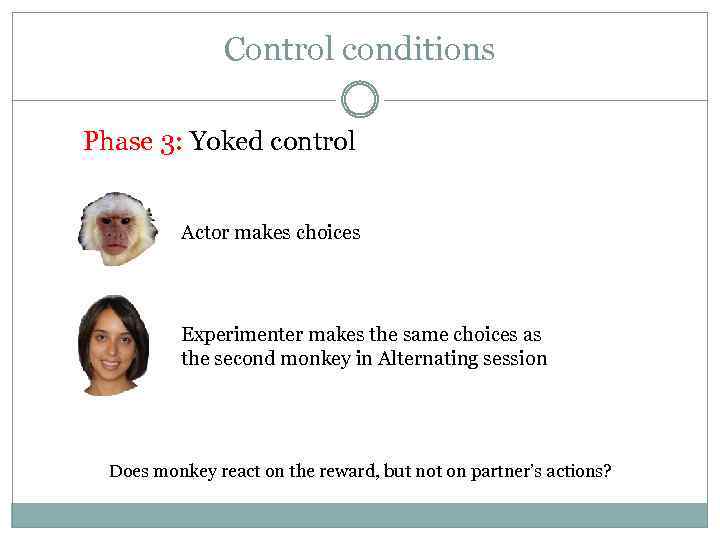
Control conditions Phase 3: Yoked control Actor makes choices Experimenter makes the same choices as the second monkey in Alternating session Does monkey react on the reward, but not on partner’s actions?
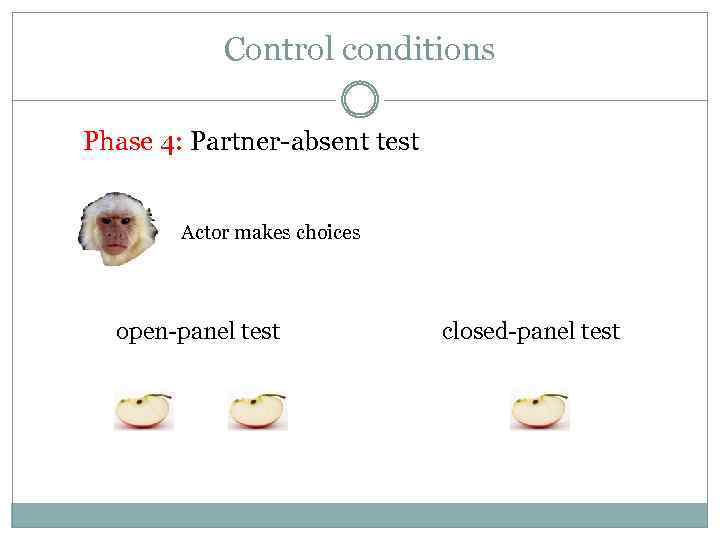
Control conditions Phase 4: Partner-absent test Actor makes choices open-panel test closed-panel test
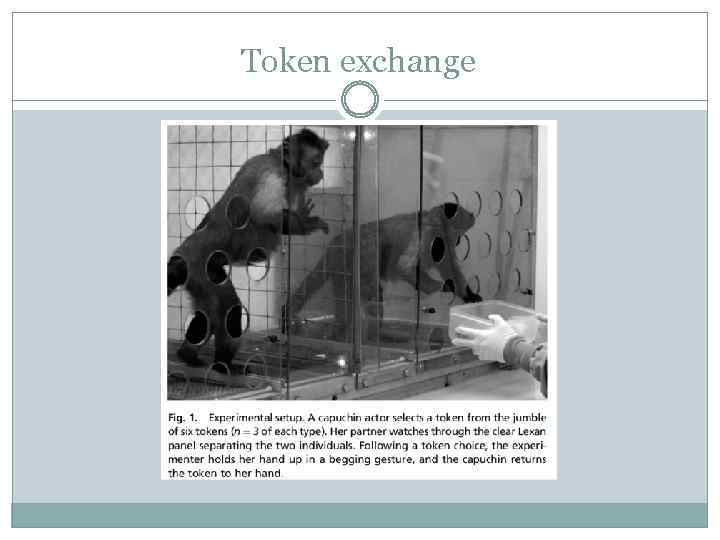
Token exchange
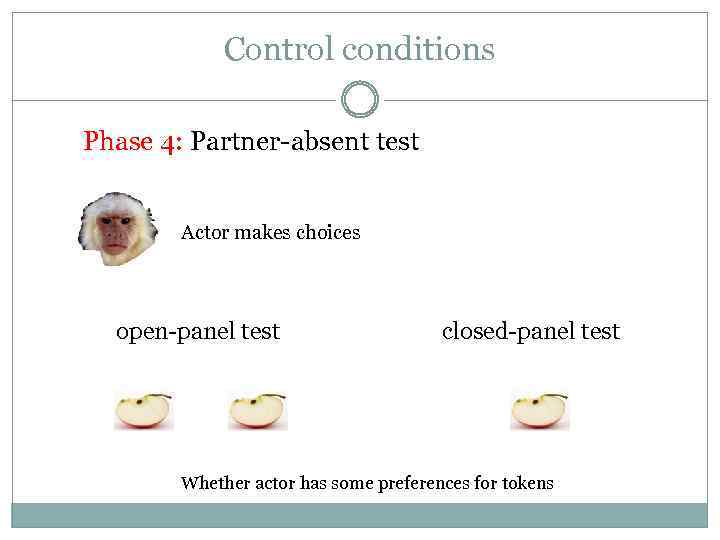
Control conditions Phase 4: Partner-absent test Actor makes choices open-panel test closed-panel test Whether actor has some preferences for tokens
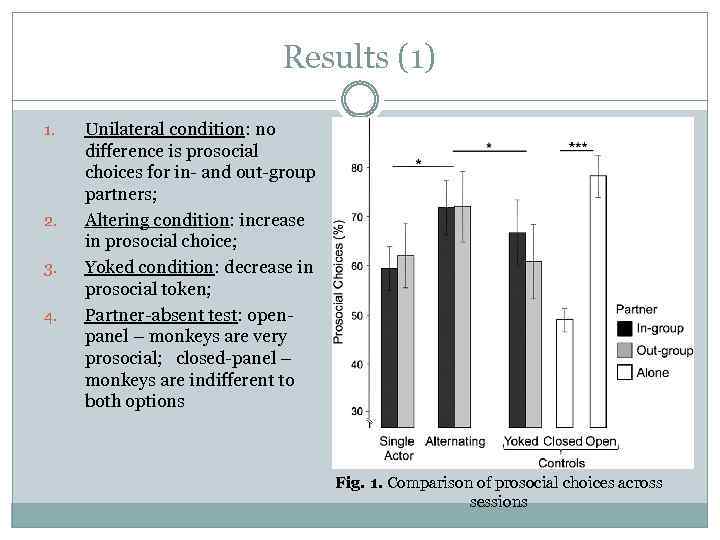
Results (1) 1. 2. 3. 4. Unilateral condition: no difference is prosocial choices for in- and out-group partners; Altering condition: increase in prosocial choice; Yoked condition: decrease in prosocial token; Partner-absent test: openpanel – monkeys are very prosocial; closed-panel – monkeys are indifferent to both options Fig. 1. Comparison of prosocial choices across sessions
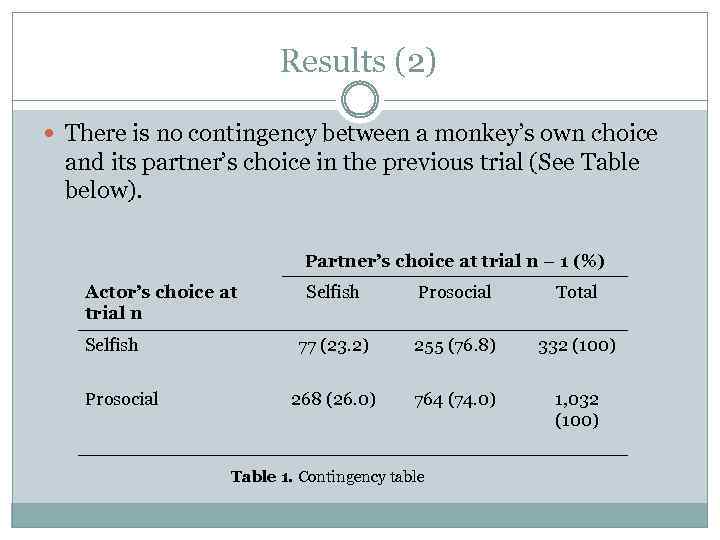
Results (2) There is no contingency between a monkey’s own choice and its partner’s choice in the previous trial (See Table below). Partner’s choice at trial n − 1 (%) Actor’s choice at trial n Selfish Prosocial Total 77 (23. 2) 255 (76. 8) 332 (100) 268 (26. 0) 764 (74. 0) 1, 032 (100) Table 1. Contingency table
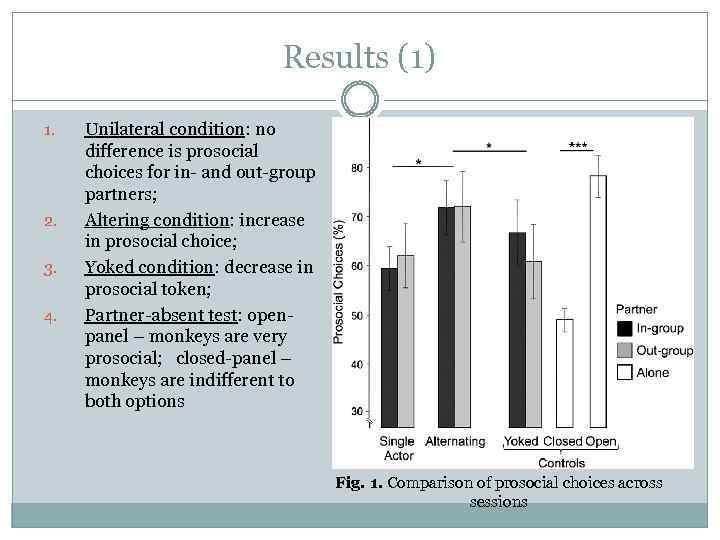
Results (1) 1. 2. 3. 4. Unilateral condition: no difference is prosocial choices for in- and out-group partners; Altering condition: increase in prosocial choice; Yoked condition: decrease in prosocial token; Partner-absent test: openpanel – monkeys are very prosocial; closed-panel – monkeys are indifferent to both options Fig. 1. Comparison of prosocial choices across sessions
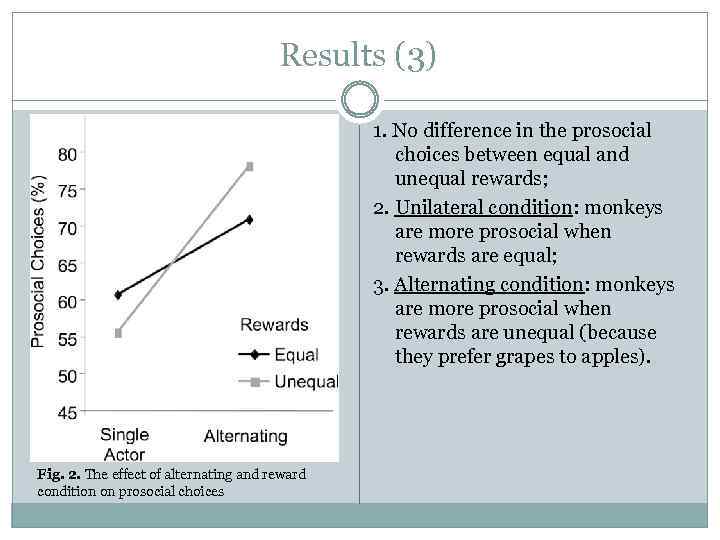
Results (3) 1. No difference in the prosocial choices between equal and unequal rewards; 2. Unilateral condition: monkeys are more prosocial when rewards are equal; 3. Alternating condition: monkeys are more prosocial when rewards are unequal (because they prefer grapes to apples). Fig. 2. The effect of alternating and reward condition on prosocial choices
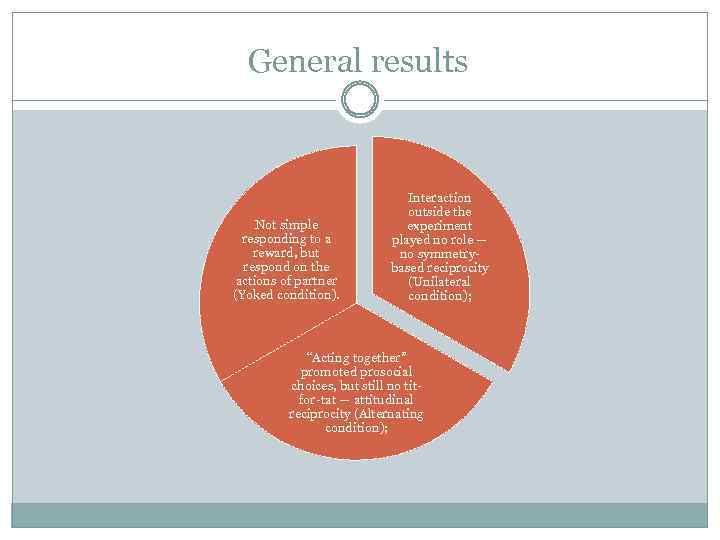
General results Not simple responding to a reward, but respond on the actions of partner (Yoked condition). Interaction outside the experiment played no role — no symmetrybased reciprocity (Unilateral condition); “Acting together” promoted prosocial choices, but still no titfor-tat — attitudinal reciprocity (Alternating condition);
Conclusion Spontaneous tendency in capuchin monkeys for prosocial actions 2. Ability to maximize valuable rewards 3. No evidence for tit-for-tat strategy 1. => Maximization of benefits without cognitive burden
Thank you for your attention!
Скачать презентацию Monkeys benefit from reciprocity without the cognitive burden
monkeys_benefit_final.pptx