


 Скачать презентацию Monitoring The Human Condition Study — 2009
73dbfb659bbae395b4f0ccaab4549cdd.ppt
- Количество слайдов: 51
 Monitoring The Human Condition Study - 2009 ** TRENDS ** Presented By: Warren Smith, Data Analyst Barnstable County Dept. of Human Services June 25, 2009 1
 Background • Monitoring The Human Condition on Cape Cod Study: – – – – Health & Human Services Needs Assessment Annual Cape Cod Community Survey Findings Five Years of Data (2004 -2008) Latest US Census Statistics Findings Report in April Findings Presented at May HHSAC Meeting TRENDS Report in June 2
 Today’s Presentation • Demographic Trends • Affordability Trends: – Trade-Offs – Central Issues • Trends in Eleven Key Areas: – Statistically-significant changes 3
 Trends in Eleven Key Areas 1. Food/Nutrition 2. Housing 3. Leisure Time/Recreation 4. Medical/Dental 5. Mental Health 6. Overweight/Obesity 7. Childcare 8. Legal Assistance 9. Transportation 10. Discrimination 11. Work/Employment 4
 Key Demographic Trends ** Changes in the Population ** 5
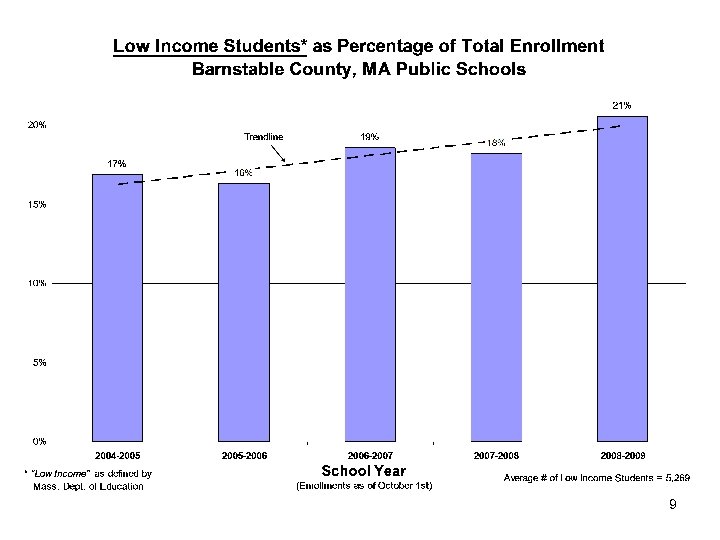
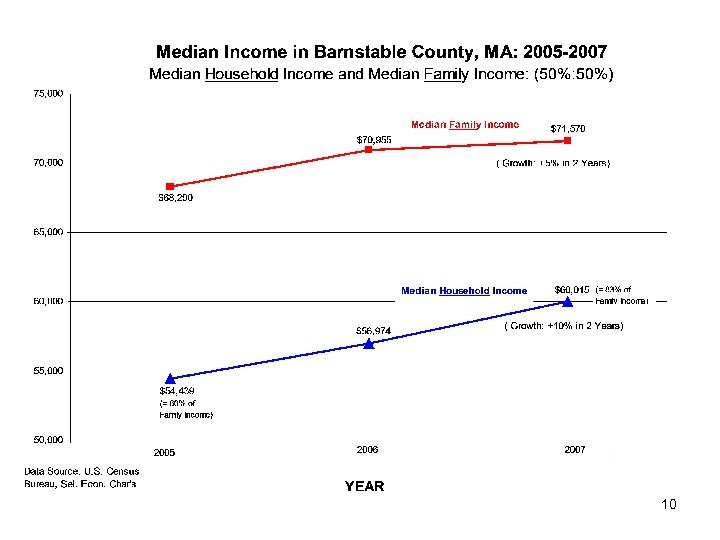
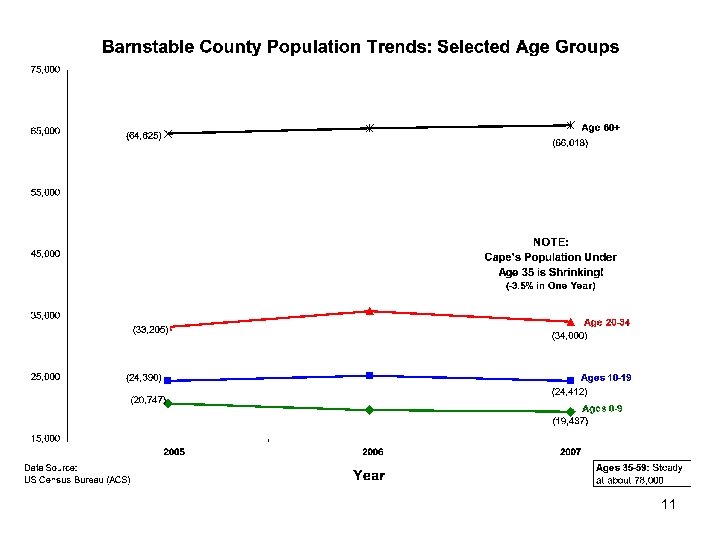
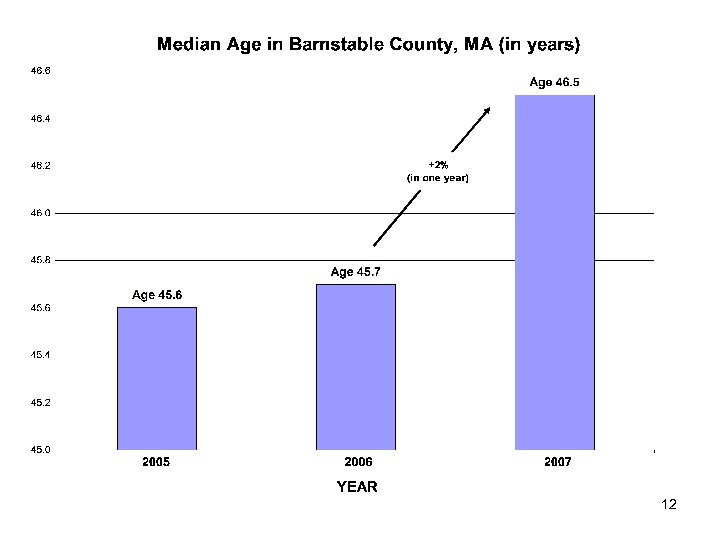
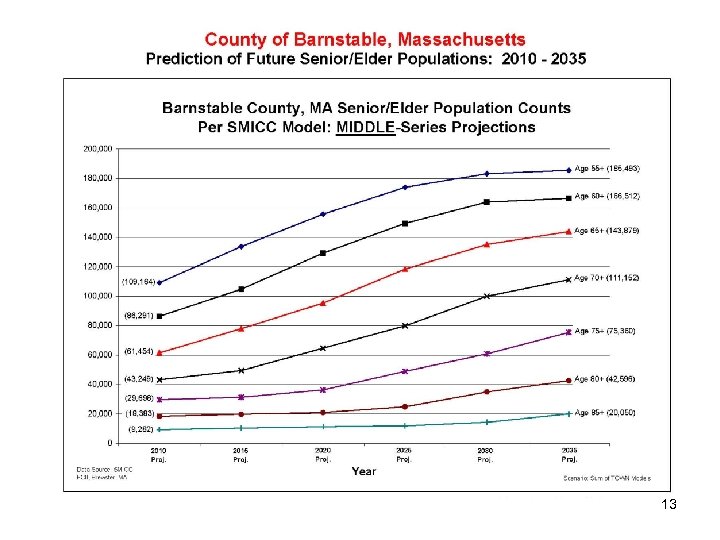
 Population Changes • • Births Public School Enrollment Child Poverty Median Income Age Distributions Median Age Future Projections (Seniors/Elders) 6
 7
7
 8
8
 9
9
 10
10
 11
11
 12
12
 13
13
 Notes: 14
 Trends in Human Need on Cape Cod 15
 Maslow's Hierarchy of Needs 16
 2 nd and 1 st Levels of Need 2. Health and Well-Being 1. Air, Water, Food, Sleep, Clothing, Shelter 17
 Affordability Key to Overcoming Unmet Health and Human Services Needs 18
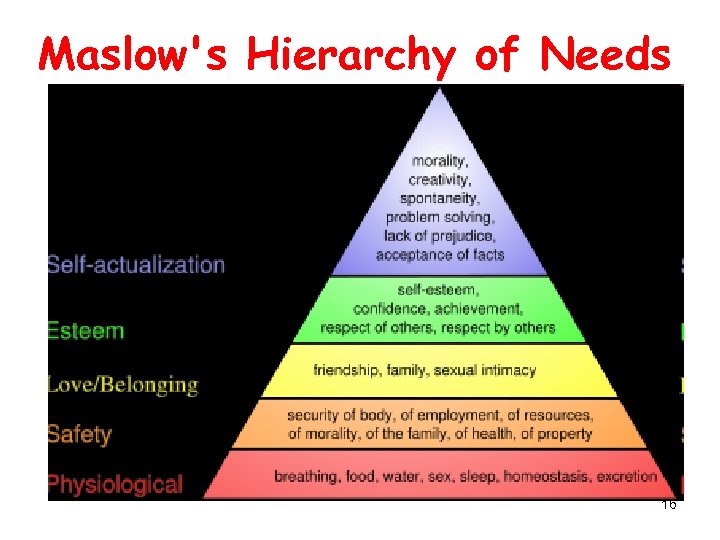
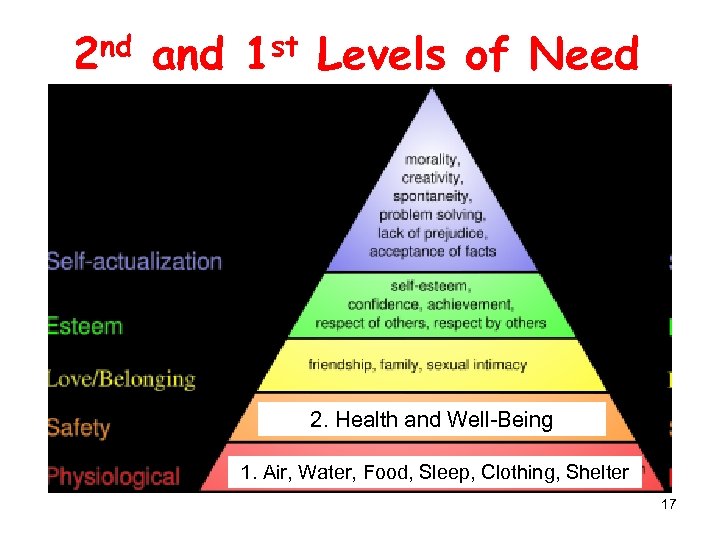
 Affordability Trends (2 nd and 1 st Level Items) • Healthcare Affordability: (2 nd level) – Health and Well-Being • Basic Needs Affordability: (1 st level) – Food – Clothing – Shelter 19
 Notes: 20
 21
21
 (“The” Central Issue!) 22
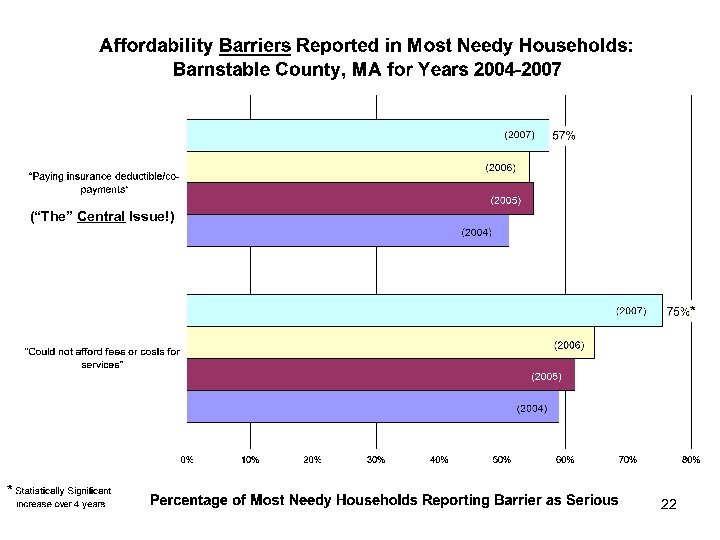
 “The” Central Issue • “Paying insurance deductible/co-payment” – Strongly related to key affordability problems – Correlated with “Could not afford fees or costs for services” (combined with it? ) – 58% of Most Needy households report this as a barrier to accessing needed services – Statistical analysis (correlation) confirms strong links to affordability of nutritious food, dental care, and leisure time/recreation. 23
 Trade-Offs ** Affordability ** 24
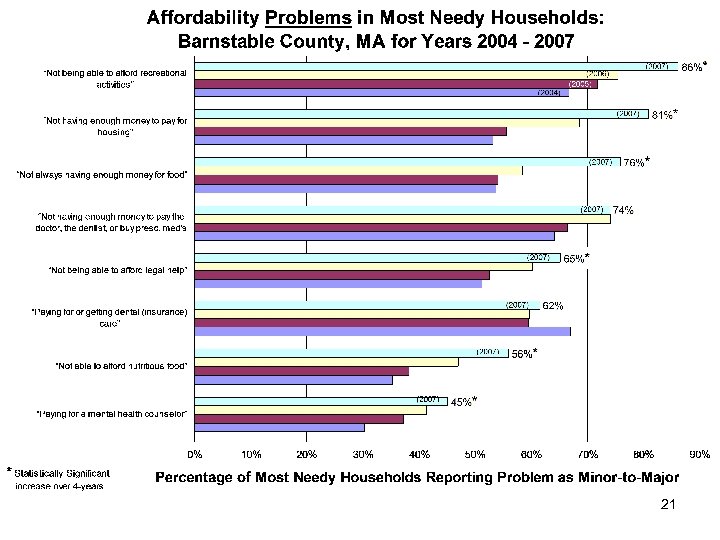
 Historical Trade-Offs (Time Period: 2004 -2007) • Historically Inter-Related Affordability Cluster: – – – – “Not able to afford nutritious food” “Not always having enough money for food” “Not being able to afford recreational activities” “Not having enough money to pay for housing” “Paying for a mental health counselor” “Paying for or getting dental [insurance] care” “Could not afford fees or costs for services” “Paying insurance deductible/co-payments” 25
 Today’s Trade-Offs (Latest 3 -Years: 2006 -2007 -2008) • Current Affordability Cluster: – – – “Not able to afford nutritious food” “Not being able to afford recreational activities” “Paying for or getting dental [insurance] care” “Could not afford fees or costs for services” “Paying insurance deductible/co-payments” 26
 Trade-Offs Shown By Survey Cost of Living Responses (Most Needy Households in 2008) • To Afford Food: Trading Off – – – Telephone service Clothing store items (all) Rent or lease payments Car/truck insurance Transit services • To Afford Nutritious Food: Trading Off – Telephone service – Out-of-home fun activities – Clothing store items – In-home fun activities – Transit services 27
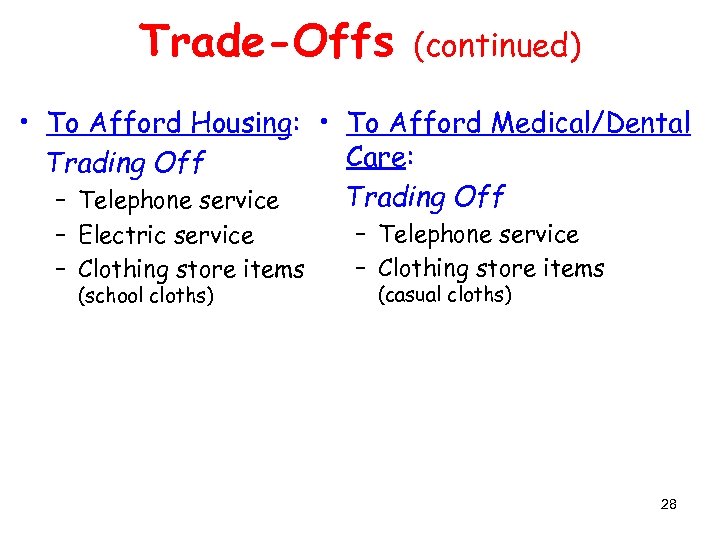 Trade-Offs (continued) • To Afford Housing: • To Afford Medical/Dental Care: Trading Off – Telephone service – Electric service – Clothing store items (school cloths) – Telephone service – Clothing store items (casual cloths) 28
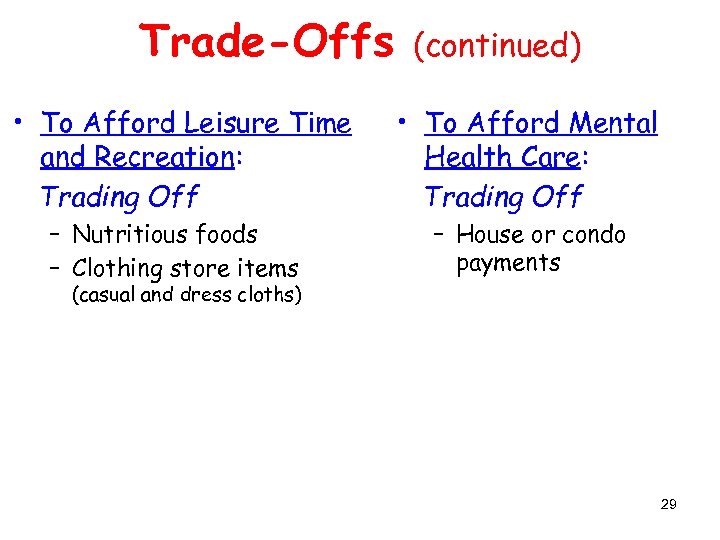 Trade-Offs • To Afford Leisure Time and Recreation: Trading Off – Nutritious foods – Clothing store items (continued) • To Afford Mental Health Care: Trading Off – House or condo payments (casual and dress cloths) 29
 Trends in Unmet Need Among Our Most Needy Households (2004 – 2007) 30
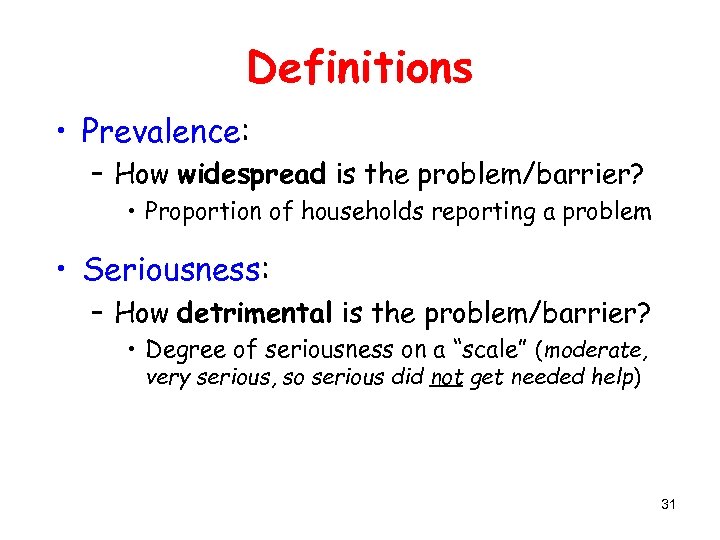 Definitions • Prevalence: – How widespread is the problem/barrier? • Proportion of households reporting a problem • Seriousness: – How detrimental is the problem/barrier? • Degree of seriousness on a “scale” (moderate, very serious, so serious did not get needed help) 31
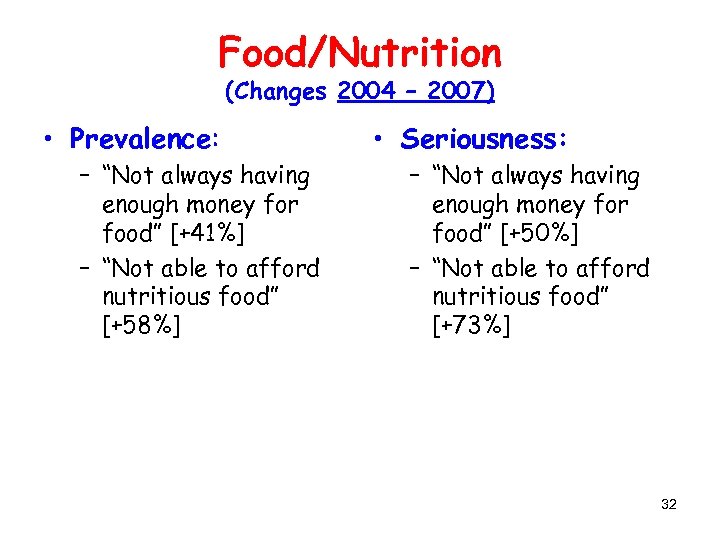 Food/Nutrition (Changes 2004 – 2007) • Prevalence: – “Not always having enough money for food” [+41%] – “Not able to afford nutritious food” [+58%] • Seriousness: – “Not always having enough money for food” [+50%] – “Not able to afford nutritious food” [+73%] 32
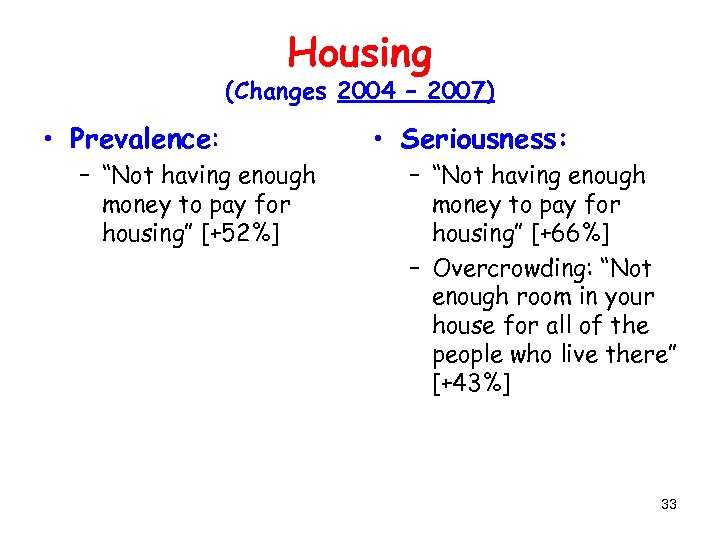 Housing (Changes 2004 – 2007) • Prevalence: – “Not having enough money to pay for housing” [+52%] • Seriousness: – “Not having enough money to pay for housing” [+66%] – Overcrowding: “Not enough room in your house for all of the people who live there” [+43%] 33
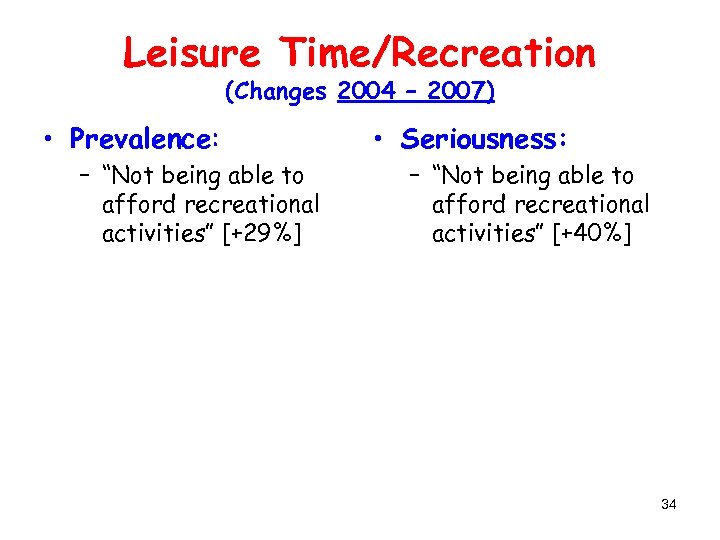 Leisure Time/Recreation (Changes 2004 – 2007) • Prevalence: – “Not being able to afford recreational activities” [+29%] • Seriousness: – “Not being able to afford recreational activities” [+40%] 34
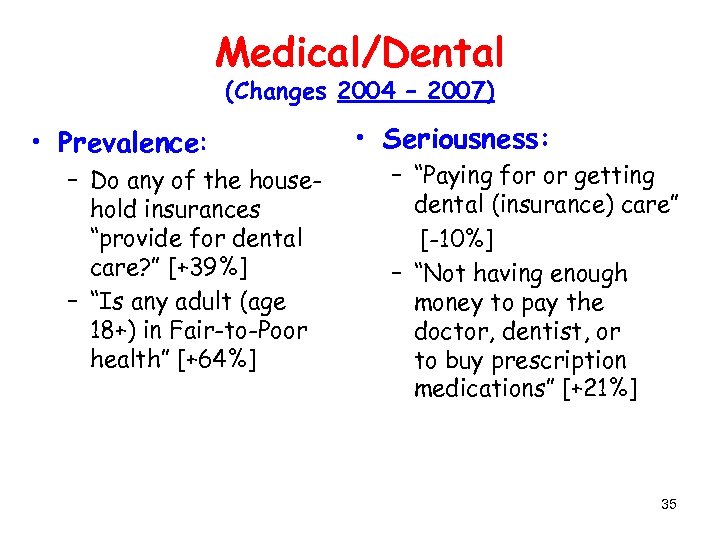 Medical/Dental (Changes 2004 – 2007) • Prevalence: – Do any of the household insurances “provide for dental care? ” [+39%] – “Is any adult (age 18+) in Fair-to-Poor health” [+64%] • Seriousness: – “Paying for or getting dental (insurance) care” [-10%] – “Not having enough money to pay the doctor, dentist, or to buy prescription medications” [+21%] 35
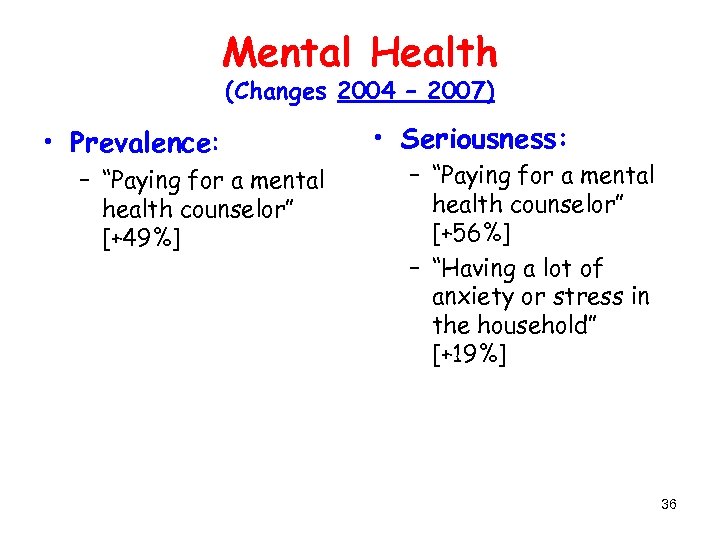 Mental Health (Changes 2004 – 2007) • Prevalence: – “Paying for a mental health counselor” [+49%] • Seriousness: – “Paying for a mental health counselor” [+56%] – “Having a lot of anxiety or stress in the household” [+19%] 36
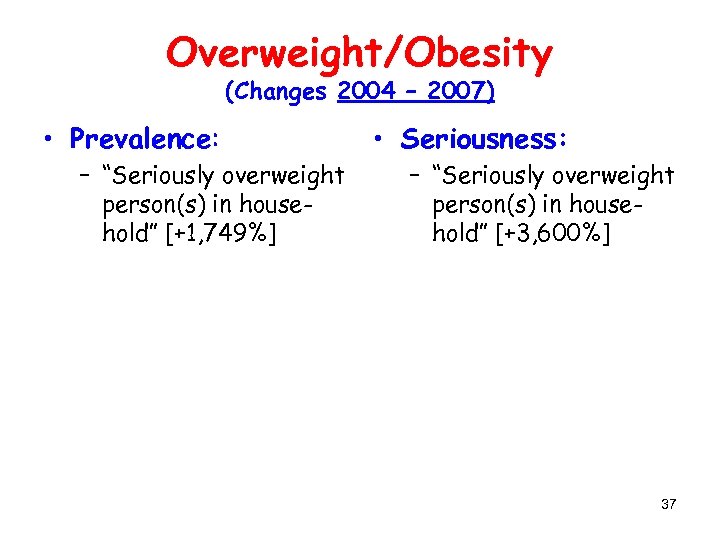 Overweight/Obesity (Changes 2004 – 2007) • Prevalence: – “Seriously overweight person(s) in household” [+1, 749%] • Seriousness: – “Seriously overweight person(s) in household” [+3, 600%] 37
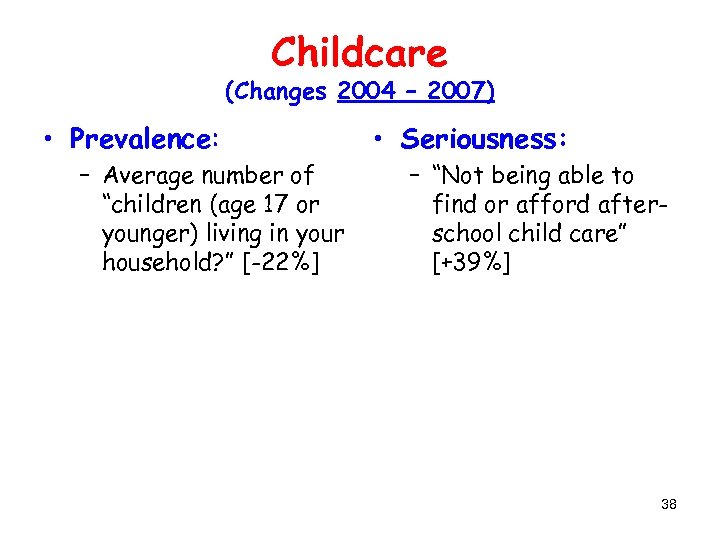 Childcare (Changes 2004 – 2007) • Prevalence: – Average number of “children (age 17 or younger) living in your household? ” [-22%] • Seriousness: – “Not being able to find or afford afterschool child care” [+39%] 38
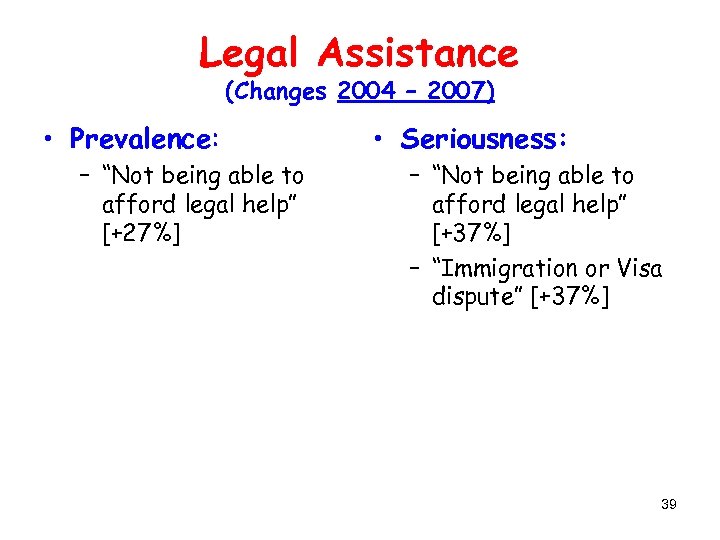 Legal Assistance (Changes 2004 – 2007) • Prevalence: – “Not being able to afford legal help” [+27%] • Seriousness: – “Not being able to afford legal help” [+37%] – “Immigration or Visa dispute” [+37%] 39
![Transportation (Changes 2004 – 2007) • Prevalence: – “Lack of transportation” [+76%] • Seriousness:](https://present5.com/presentation/73dbfb659bbae395b4f0ccaab4549cdd/image-40.jpg "Transportation (Changes 2004 – 2007) • Prevalence: – “Lack of transportation” [+76%] • Seriousness:") Transportation (Changes 2004 – 2007) • Prevalence: – “Lack of transportation” [+76%] • Seriousness: – “Lack of transportation” [+79%] 40
Transportation (Changes 2004 – 2007) • Prevalence: – “Lack of transportation” [+76%] • Seriousness: – “Lack of transportation” [+79%] 40
![Discrimination (Changes 2004 – 2007) • Prevalence: – “Feelings of discrimination” [+47%] • Seriousness:](https://present5.com/presentation/73dbfb659bbae395b4f0ccaab4549cdd/image-41.jpg "Discrimination (Changes 2004 – 2007) • Prevalence: – “Feelings of discrimination” [+47%] • Seriousness:") Discrimination (Changes 2004 – 2007) • Prevalence: – “Feelings of discrimination” [+47%] • Seriousness: – “Feelings of discrimination” [+69%] – “Discrimination (due to race, age, language, sexual identity/orientation, etc. )” [+142%] 41
Discrimination (Changes 2004 – 2007) • Prevalence: – “Feelings of discrimination” [+47%] • Seriousness: – “Feelings of discrimination” [+69%] – “Discrimination (due to race, age, language, sexual identity/orientation, etc. )” [+142%] 41
 Work/Employment (Changes 2004 – 2007) • Prevalence: – “All adults (age 18+) in your household are employed” [-31%] • Seriousness: – “Unable to take time away from work to go to services” [+17%] 42
 Comment on 2008 Most Needy • Due to a much broader-based demographic profile of the 2008 Most Needy households: – Household incomes are higher than usual: • Fewer affordability issues – Education levels are higher – Fewer children and child-related issues: • Fewer problems getting after-school child care – Fewer housing issues and less overcrowding – Fewer employed household members: • Fewer work-related access issues • Fewer leisure time/recreation issues • Fewer job training/skills upgrade issues • More retiree households – More households have a working vehicle: • Fewer transportation issues – Fewer feelings of discrimination – Fewer system capacity complaints ("not accepting new clients”) 43
 Q & A • • What surprised you? What made you happy? What made you sad? What is most positive? What is most negative? What additional info do you need? What should be next? . . . 44
 Notes: 45
 The “Most Needy” 46
 Who Are “Most Needy” • Compared to Overall Cape Cod Sample: – Problems and Service Barriers: • 2. 5 x to 3 x Times More Households Report Problems/Barriers also, • 2. 5 x to 3 x Times More Seriousness Reported 47
 Historically “Most Needy” Cape Cod Households (Four Well-Defined Population “Groups”) 48
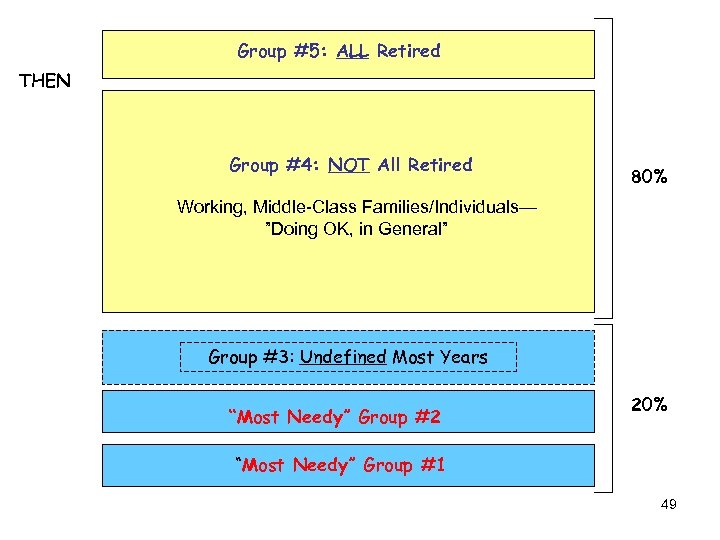 Group #5: ALL Retired THEN Group #4: NOT All Retired 80% Working, Middle-Class Families/Individuals— ”Doing OK, in General” Group #3: Undefined Most Years “Most Needy” Group #2 20% “Most Needy” Group #1 49
 What Happened? Where Were These New Arrivals Last Year? 50
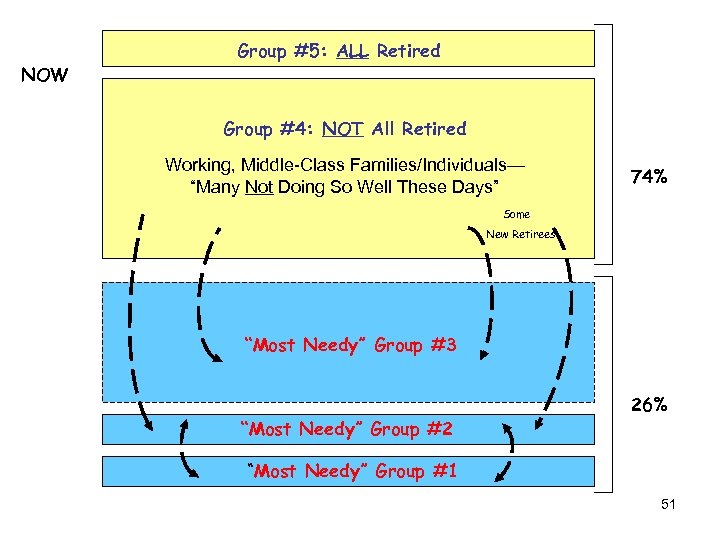 NOW Group #5: ALL Retired Group #4: NOT All Retired Working, Middle-Class Families/Individuals— “Many Not Doing So Well These Days” 74% Some New Retirees “Most Needy” Group #3 “Most Needy” Group #2 26% “Most Needy” Group #1 51