 Скачать презентацию Monitoring and understanding current changes in the global
457ee9a6fe2b5d7deb4a12dc592d9c47.ppt
- Количество слайдов: 27



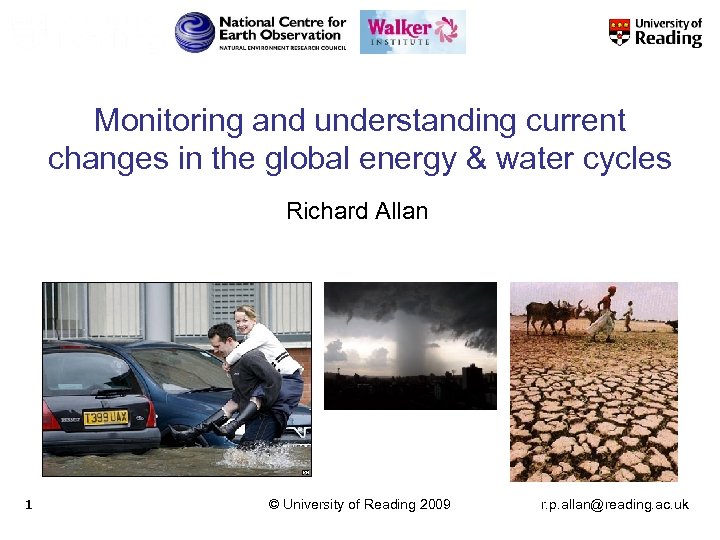
Monitoring and understanding current changes in the global energy & water cycles Richard Allan 1 © University of Reading 2009 r. p. allan@reading. ac. uk
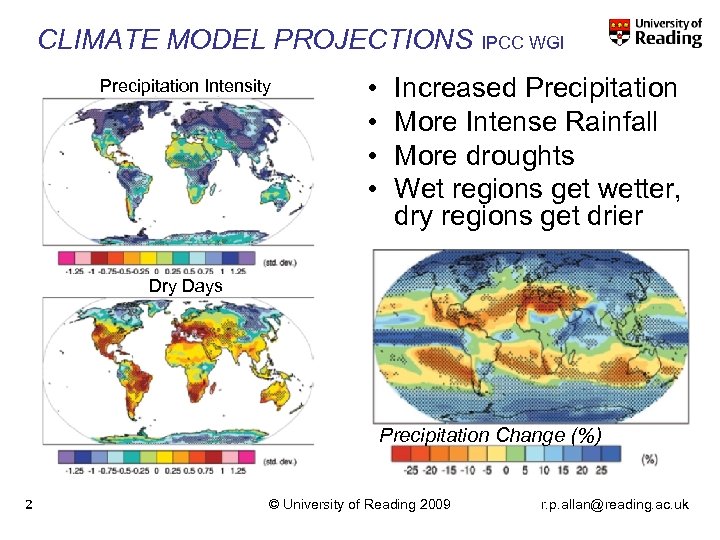
CLIMATE MODEL PROJECTIONS IPCC WGI Precipitation Intensity • • Increased Precipitation More Intense Rainfall More droughts Wet regions get wetter, dry regions get drier Dry Days Precipitation Change (%) 2 © University of Reading 2009 r. p. allan@reading. ac. uk
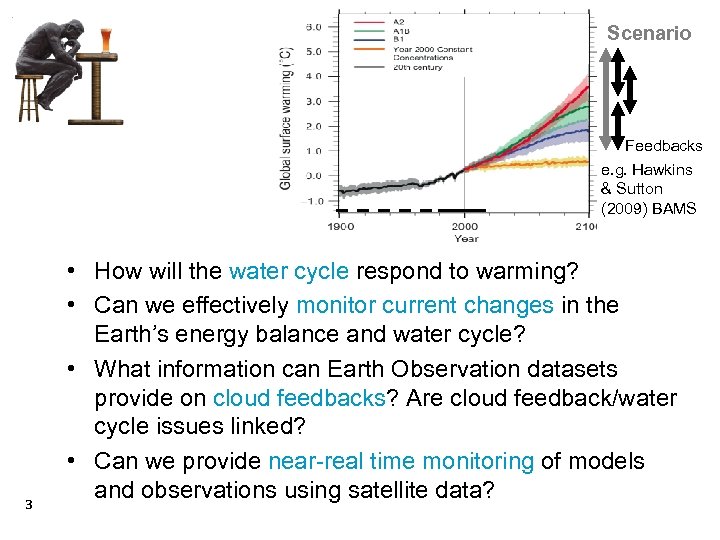
Scenario Feedbacks e. g. Hawkins & Sutton (2009) BAMS 3 • How will the water cycle respond to warming? • Can we effectively monitor current changes in the Earth’s energy balance and water cycle? • What information can Earth Observation datasets provide on cloud feedbacks? Are cloud feedback/water cycle issues linked? • Can we provide near-real time monitoring of models and observations University satellite data? using of Reading 2009 © r. p. allan@reading. ac. uk

Some background • Joke slide “Does anyone want to buy my nearly-new research student? ” 4 © University of Reading 2009 r. p. allan@reading. ac. uk

Some background Winning my freedom from Met Office…(but only as far as ESSC) 5 © University of Reading 2009 r. p. allan@reading. ac. uk
Some background Important numbers! Winning my freedom from Met Office…(but only as far as ESSC) 6 © University of Reading 2009 r. p. allan@reading. ac. uk
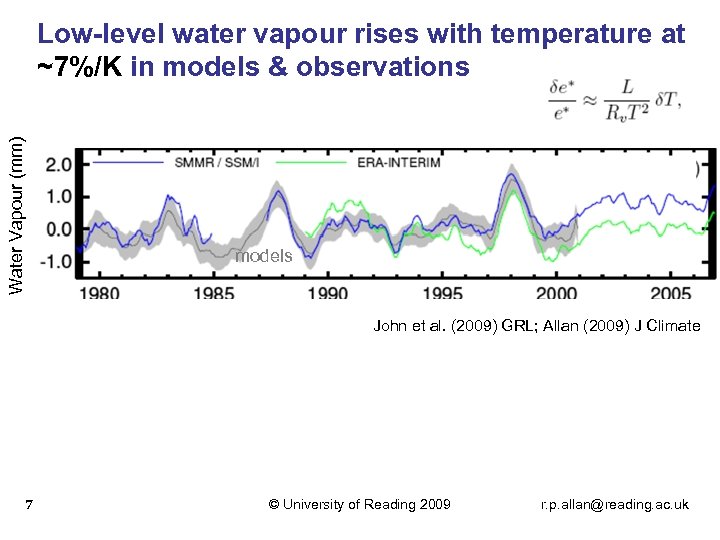
Water Vapour (mm) Low-level water vapour rises with temperature at ~7%/K in models & observations models John et al. (2009) GRL; Allan (2009) J Climate 7 © University of Reading 2009 r. p. allan@reading. ac. uk
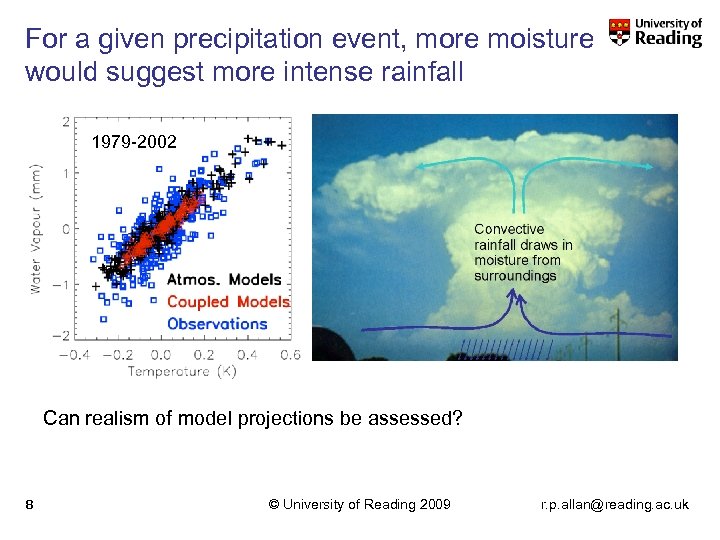
For a given precipitation event, more moisture would suggest more intense rainfall 1979 -2002 Can realism of model projections be assessed? 8 © University of Reading 2009 r. p. allan@reading. ac. uk
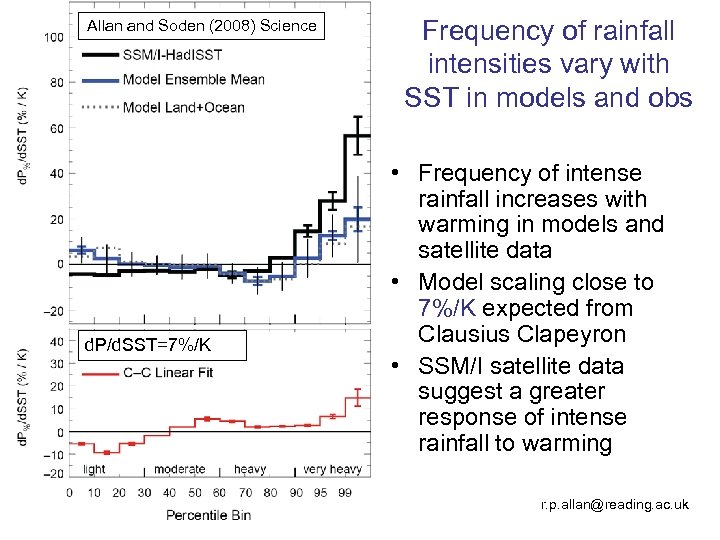
Allan and Soden (2008) Science d. P/d. SST=7%/K 9 Frequency of rainfall intensities vary with SST in models and obs • Frequency of intense rainfall increases with warming in models and satellite data • Model scaling close to 7%/K expected from Clausius Clapeyron • SSM/I satellite data suggest a greater response of intense rainfall to warming © University of Reading 2009 r. p. allan@reading. ac. uk
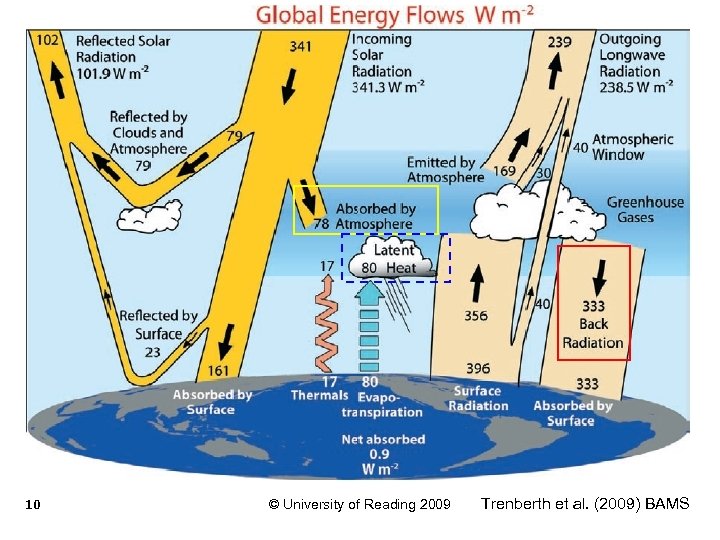
10 © University of Reading 2009 Trenberth et al. (2009) BAMS r. p. allan@reading. ac. uk
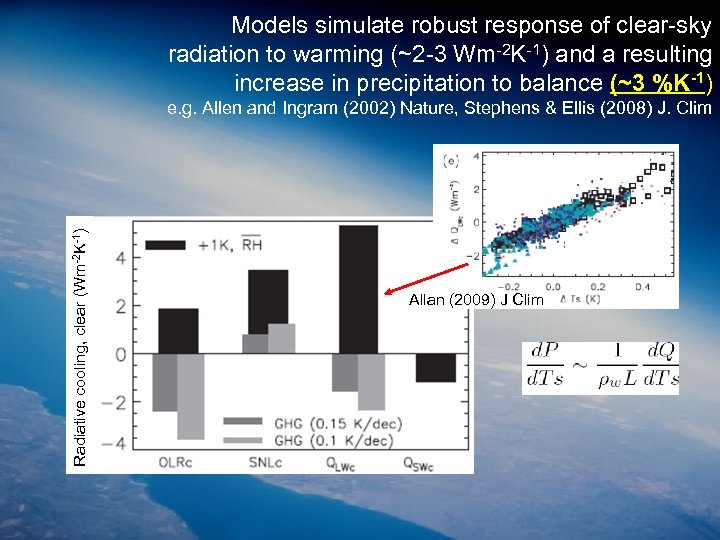
Models simulate robust response of clear-sky radiation to warming (~2 -3 Wm-2 K-1) and a resulting increase in precipitation to balance (~3 %K-1) Radiative cooling, clear (Wm-2 K-1) e. g. Allen and Ingram (2002) Nature, Stephens & Ellis (2008) J. Clim 11 Allan (2009) J Clim © University of Reading 2009 r. p. allan@reading. ac. uk
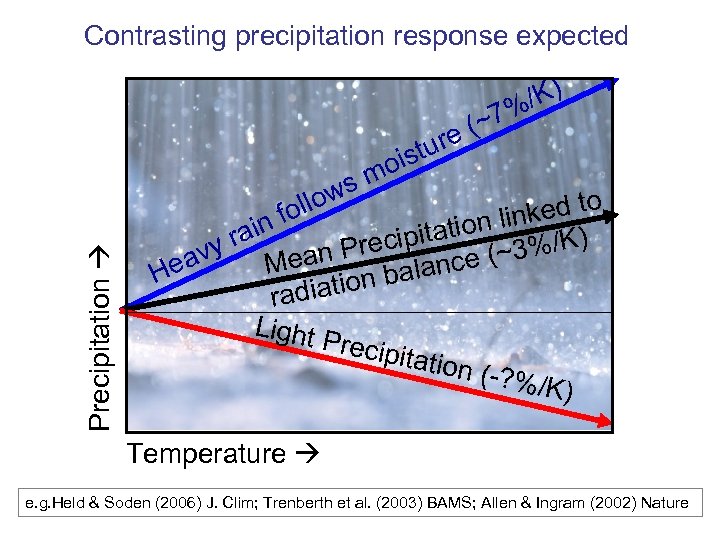
Contrasting precipitation response expected istu o (~7 re /K) % Precipitation sm w ollo ked to in f tion lin /K) a ra recipit e (~3% avy Mean P alanc He b iation rad Light Precip itation (-? %/K ) Temperature e. g. Held & Soden (2006) J. Clim; Trenberth etof Reading 2009 © University al. (2003) BAMS; Allen & Ingram (2002) Nature r. p. allan@reading. ac. uk 12
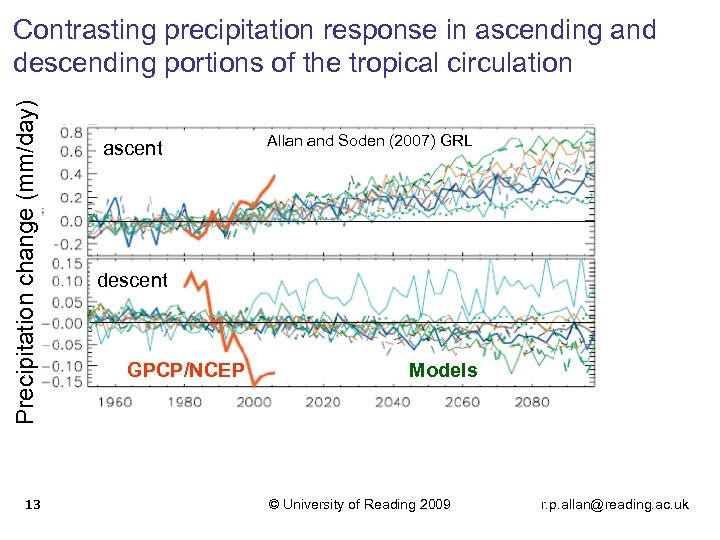
Precipitation change (mm/day) Contrasting precipitation response in ascending and descending portions of the tropical circulation 13 ascent Allan and Soden (2007) GRL descent GPCP/NCEP Models © University of Reading 2009 r. p. allan@reading. ac. uk

Future Plans 14 © University of Reading 2009 r. p. allan@reading. ac. uk
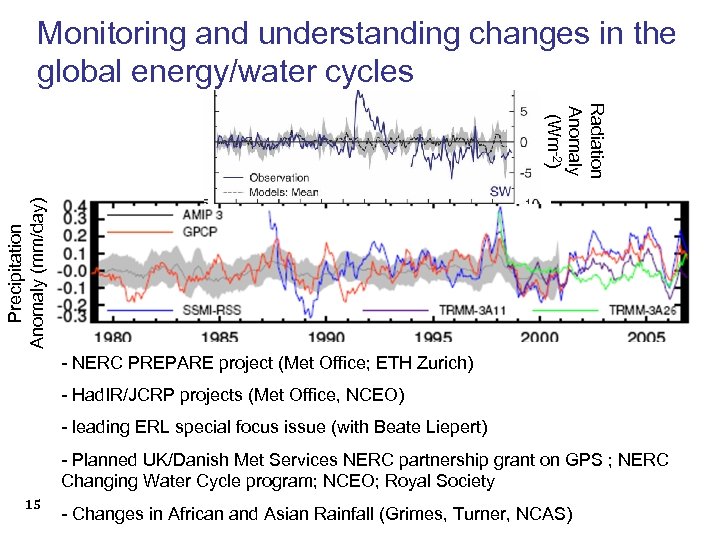
Monitoring and understanding changes in the global energy/water cycles Precipitation Anomaly (mm/day) Radiation Anomaly (Wm-2) - NERC PREPARE project (Met Office; ETH Zurich) - Had. IR/JCRP projects (Met Office, NCEO) - leading ERL special focus issue (with Beate Liepert) - Planned UK/Danish Met Services NERC partnership grant on GPS ; NERC Changing Water Cycle program; NCEO; Royal Society 15 © University of Reading 2009 r. p. allan@reading. ac. uk - Changes in African and Asian Rainfall (Grimes, Turner, NCAS)
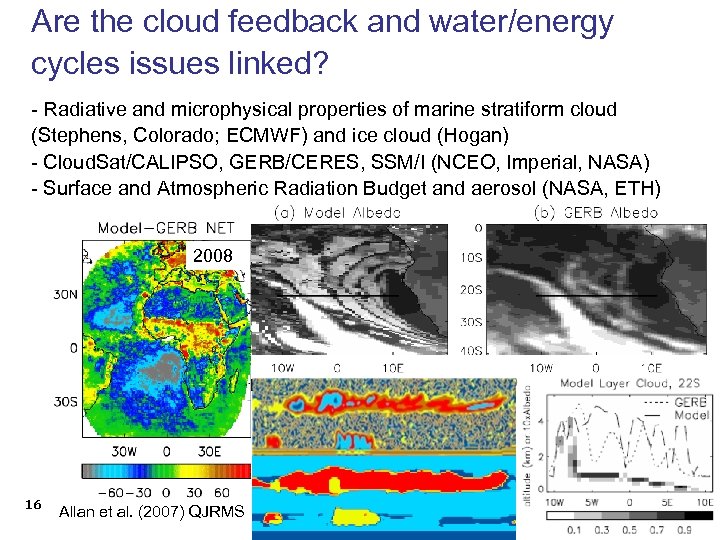
Are the cloud feedback and water/energy cycles issues linked? - Radiative and microphysical properties of marine stratiform cloud (Stephens, Colorado; ECMWF) and ice cloud (Hogan) - Cloud. Sat/CALIPSO, GERB/CERES, SSM/I (NCEO, Imperial, NASA) - Surface and Atmospheric Radiation Budget and aerosol (NASA, ETH) 2008 16 Allan et al. (2007) QJRMS © University of Reading 2009 r. p. allan@reading. ac. uk
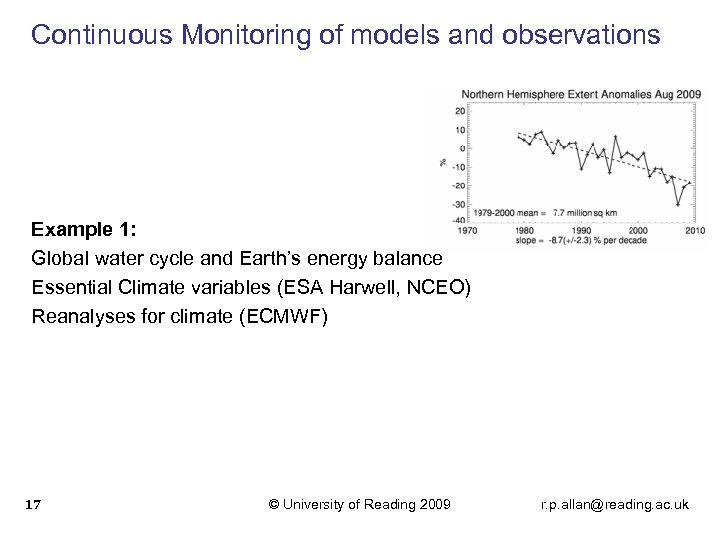
Continuous Monitoring of models and observations Example 1: Global water cycle and Earth’s energy balance Essential Climate variables (ESA Harwell, NCEO) Reanalyses for climate (ECMWF) 17 © University of Reading 2009 r. p. allan@reading. ac. uk
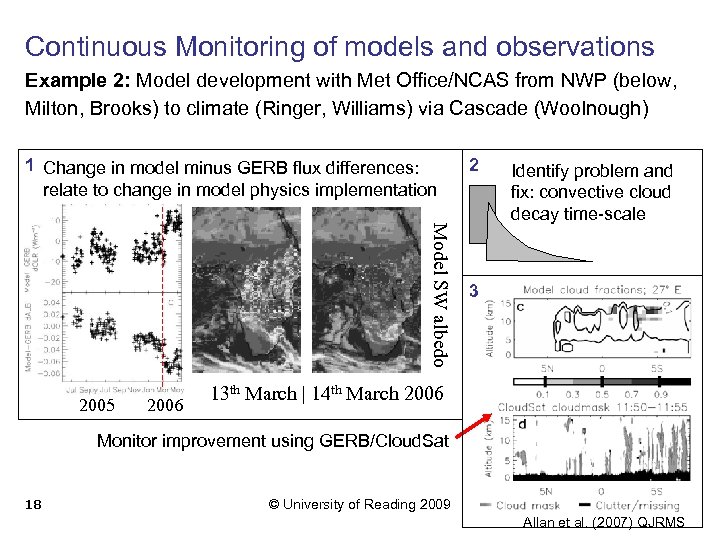
Continuous Monitoring of models and observations Example 2: Model development with Met Office/NCAS from NWP (below, Milton, Brooks) to climate (Ringer, Williams) via Cascade (Woolnough) 1 Change in model minus GERB flux differences: relate to change in model physics implementation Model SW albedo 2005 2006 2 Identify problem and fix: convective cloud decay time-scale 3 13 th March | 14 th March 2006 Monitor improvement using GERB/Cloud. Sat 18 © University of Reading 2009 r. p. allan@reading. ac. uk Allan et al. (2007) QJRMS
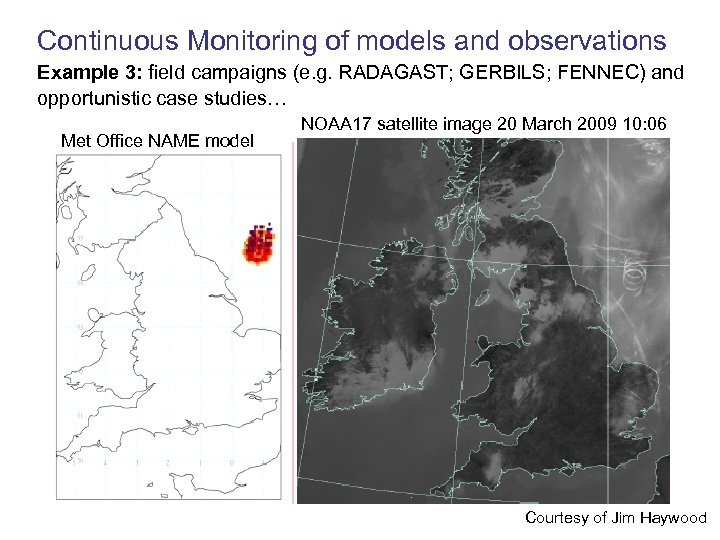
Continuous Monitoring of models and observations Example 3: field campaigns (e. g. RADAGAST; GERBILS; FENNEC) and opportunistic case studies… Met Office NAME model 19 NOAA 17 satellite image 20 March 2009 10: 06 © University of Reading 2009 r. p. allan@reading. ac. uk Courtesy of Jim Haywood
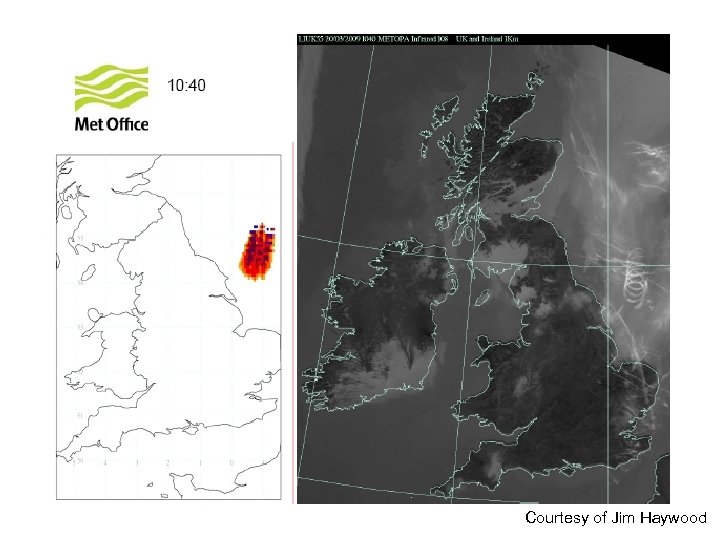
20 © University of Reading 2009 r. p. allan@reading. ac. uk Courtesy of Jim Haywood
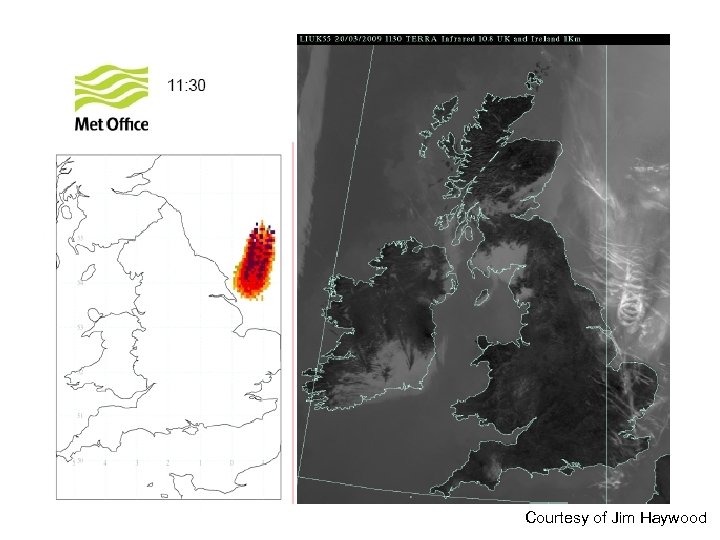
21 © University of Reading 2009 r. p. allan@reading. ac. uk Courtesy of Jim Haywood
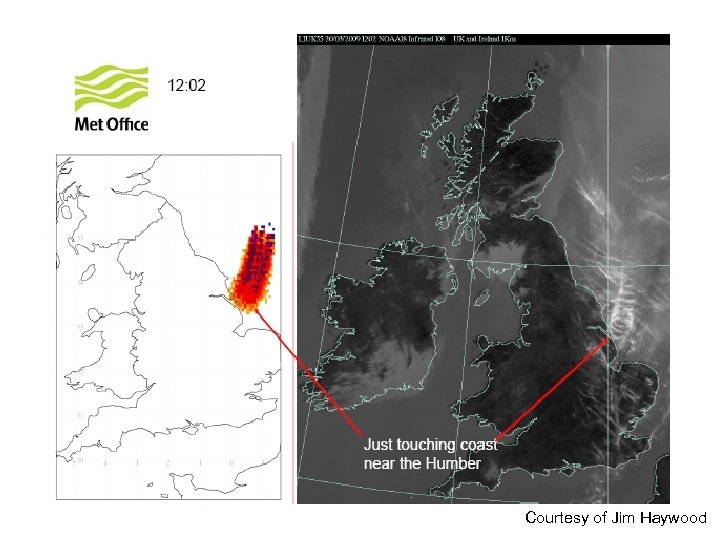
22 © University of Reading 2009 r. p. allan@reading. ac. uk Courtesy of Jim Haywood
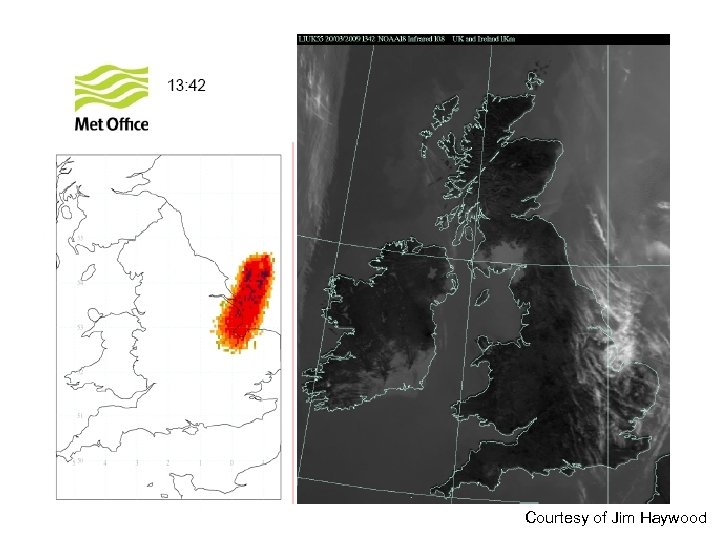
23 © University of Reading 2009 r. p. allan@reading. ac. uk Courtesy of Jim Haywood
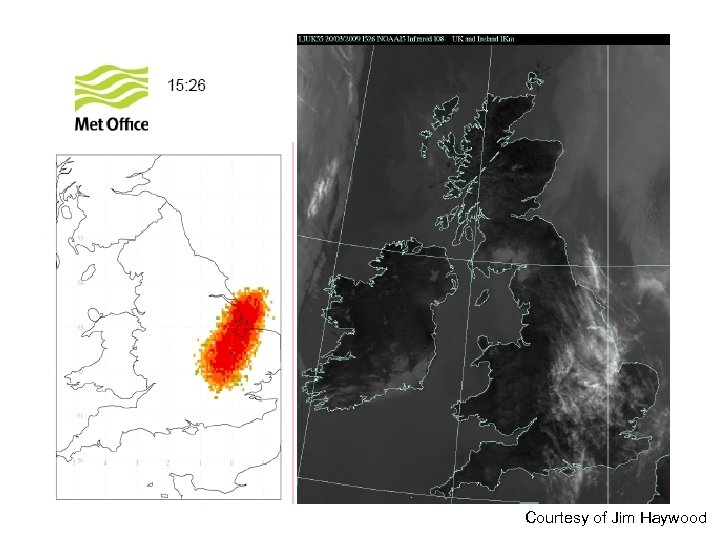
24 © University of Reading 2009 r. p. allan@reading. ac. uk Courtesy of Jim Haywood
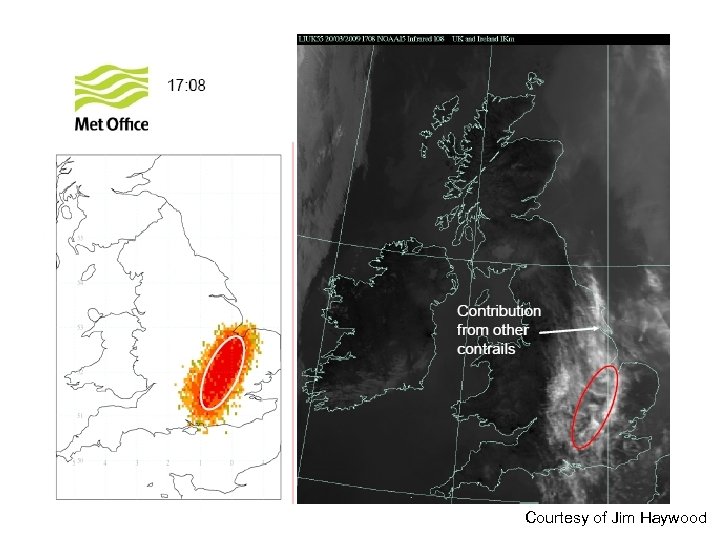
25 © University of Reading 2009 r. p. allan@reading. ac. uk Courtesy of Jim Haywood
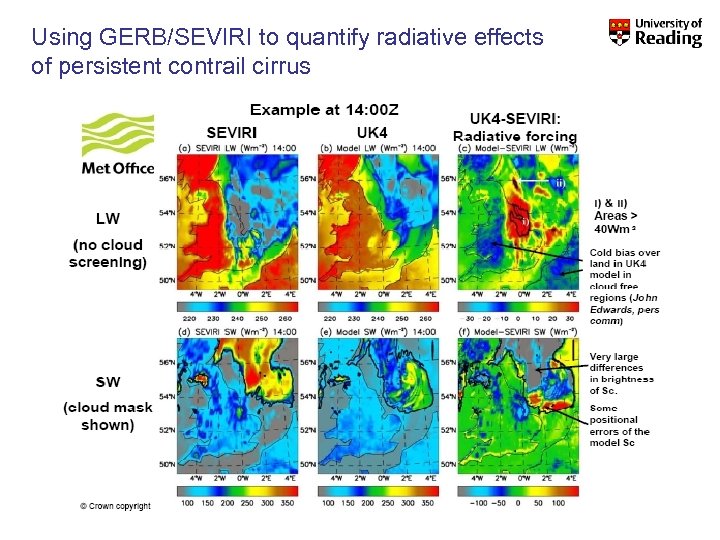
Using GERB/SEVIRI to quantify radiative effects of persistent contrail cirrus 26 © University of Reading 2009 r. p. allan@reading. ac. uk
Conclusions • Radiative energy and water cycles – fundamentally linked – crucial for climate impacts • Combining observations with models and a robust physical basis is essential for – understanding current changes in climate – quantifying and assessing feedbacks operating – improving confidence in predictions • Continuous monitoring of observations and model simulations enable us to – track current trajectory of climate change – detect surprises in the climate system – link and develop seamless prediction systems 27 © University of Reading 2009 r. p. allan@reading. ac. uk
Скачать презентацию Monitoring and understanding current changes in the global
457ee9a6fe2b5d7deb4a12dc592d9c47.ppt