 Скачать презентацию Monitoring and Evaluation of Tuberculosis Control Programs
11eaa1dbc8e707f51b9f4cda5df92420.ppt
- Количество слайдов: 32



Monitoring and Evaluation of Tuberculosis Control Programs
Learning Objectives § Understand the global threat and key drivers of the TB epidemic § Discuss the DOTS strategy and its implementation § Apply TB M&E tools and methodologies § Use and interpret key TB indicators
Session Outline § Global Threat of TB § TB Prevention and Control Strategies § Implementation of TB Strategies § Monitoring & Evaluation § Small Group Exercise
TB Facts § TB kills § TB affects poor countries § TB is treatable and can be cured § TB can be controlled
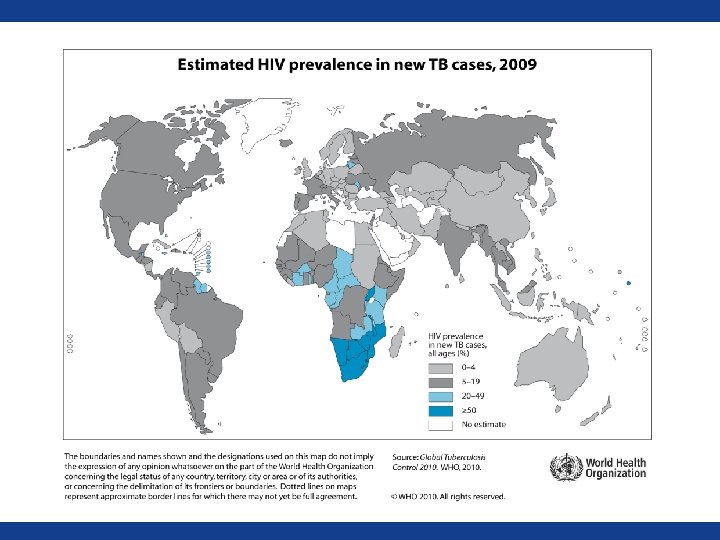
The Global Threat of TB 1 § More than 2 billion people (1/3 of the world’s population) are infected with TB bacilli— 1 in 10 will develop active TB § TB major health threat and economic burden: 1. 7 million deaths each year—primarily the poor in developing and transitional countries § TB leading cause of death among people living with HIV/AIDS; HIV important driver of TB epidemic, although not the only one § Multidrug resistant (MDR) and extensively drug resistant (XDR) TB is on the rise and major threat § 80% of TB burden is concentrated in 22 countries § 4 -10 cases are not properly detected and treated 1 WHO. 2008. Tuberculosis Facts (www. who. int/tb)
Challenges of TB Control § Global emergency - Rising incidence of TB - HIV pandemic - MDR-TB § Gaps in coverage, case detection and treatment success
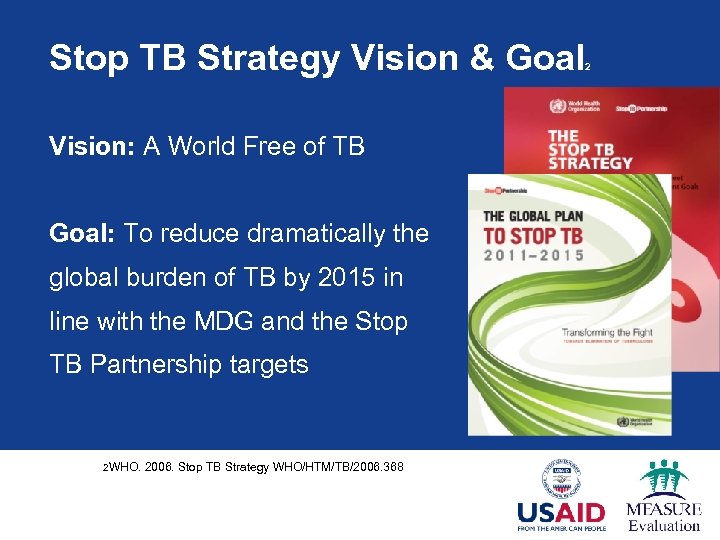
Stop TB Strategy Vision & Goal Vision: A World Free of TB Goal: To reduce dramatically the global burden of TB by 2015 in line with the MDG and the Stop TB Partnership targets 2 WHO. 2006. Stop TB Strategy WHO/HTM/TB/2006. 368 2
Stop TB Objectives § To achieve universal access to high-quality diagnosis and patient-centered treatment § To reduce the suffering and socioeconomic burden associated with TB § To protect poor and vulnerable populations from TB, TB/HIV and MDR-TB § To support the development of new tools and enable their timely and effective use
Six Principal Components of Stop TB Strategy 1. Pursue high-quality DOTS expansion and enhancement 2. Address TB/HIV, MDR-TB and other challenges 3. Contribute to health system strengthening 4. Engage all care providers 5. Empower people with TB, and communities 6. Enable and promote research
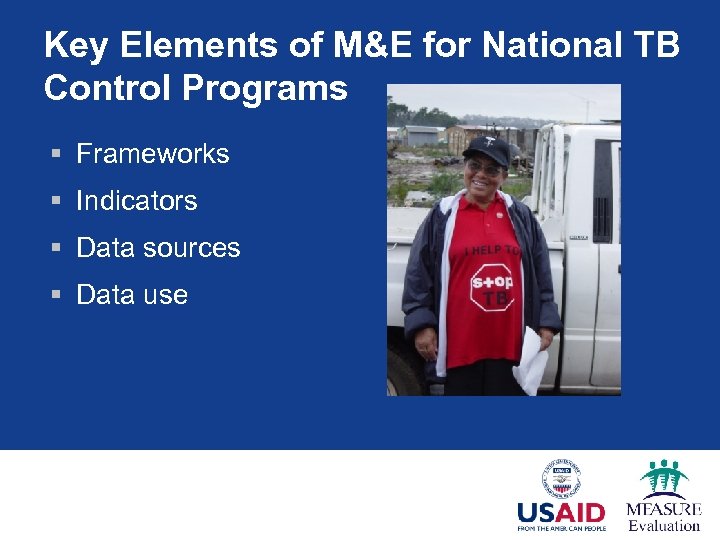
Key Elements of M&E for National TB Control Programs § Frameworks § Indicators § Data sources § Data use
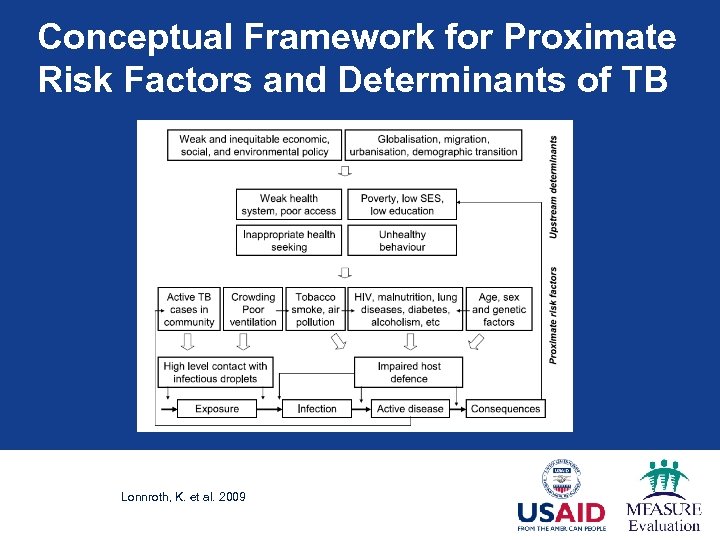
Conceptual Framework for Proximate Risk Factors and Determinants of TB Lonnroth, K. et al. 2009
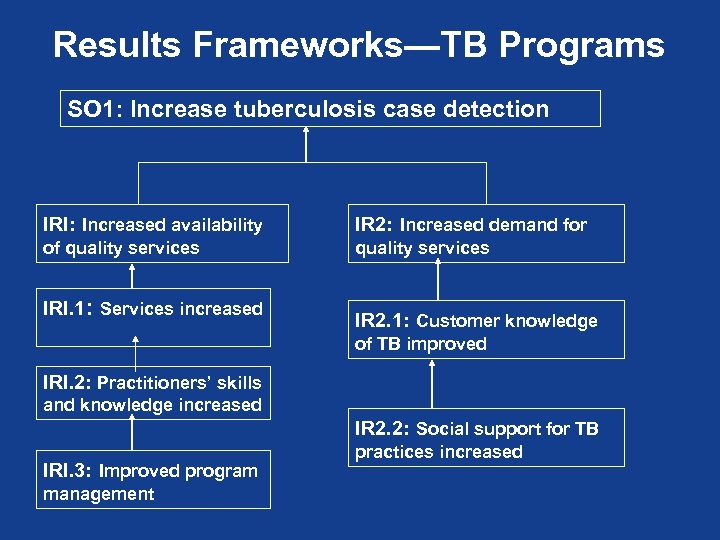
Results Frameworks—TB Programs SO 1: Increase tuberculosis case detection IRl: Increased availability IR 2: Increased demand for of quality services IRl. 1: Services increased IR 2. 1: Customer knowledge of TB improved IRl. 2: Practitioners’ skills and knowledge increased IR 2. 2: Social support for TB IRl. 3: Improved program management practices increased
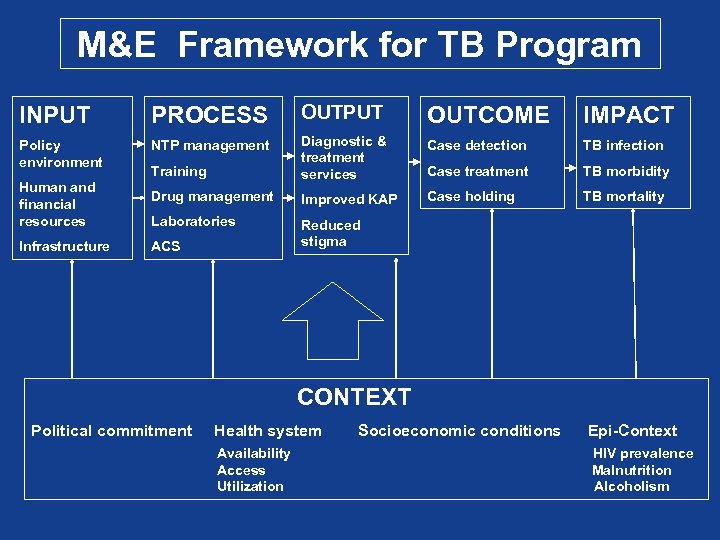
M&E Framework for TB Program INPUT PROCESS OUTPUT OUTCOME IMPACT Policy environment NTP management Case detection TB infection Training Diagnostic & treatment services Case treatment TB morbidity Drug management Improved KAP Case holding TB mortality Laboratories Reduced stigma Human and financial resources Infrastructure ACS CONTEXT Political commitment Health system Availability Access Utilization Socioeconomic conditions Epi-Context HIV prevalence Malnutrition Alcoholism
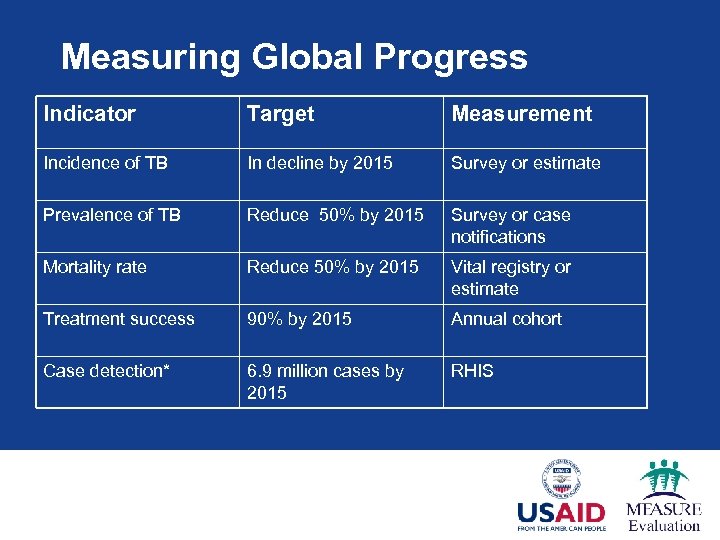
Measuring Global Progress Indicator Target Measurement Incidence of TB In decline by 2015 Survey or estimate Prevalence of TB Reduce 50% by 2015 Survey or case notifications Mortality rate Reduce 50% by 2015 Vital registry or estimate Treatment success 90% by 2015 Annual cohort Case detection* 6. 9 million cases by 2015 RHIS
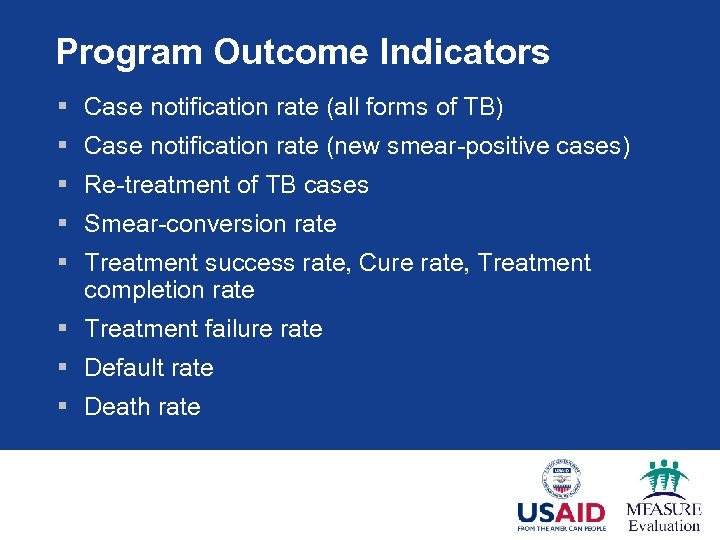
Program Outcome Indicators § Case notification rate (all forms of TB) § Case notification rate (new smear-positive cases) § Re-treatment of TB cases § Smear-conversion rate § Treatment success rate, Cure rate, Treatment completion rate § Treatment failure rate § Default rate § Death rate
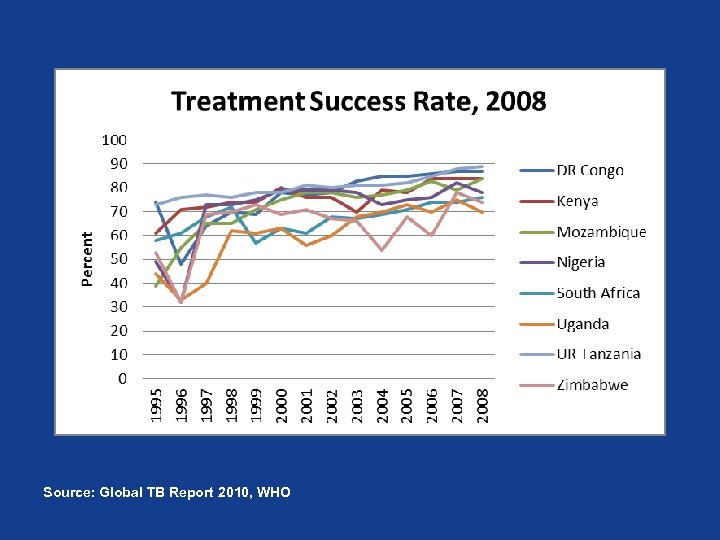
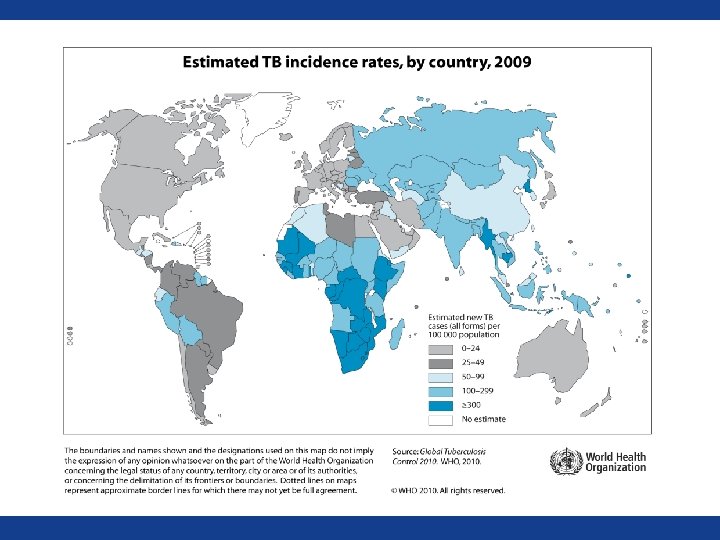
Source: Global TB Report 2010, WHO
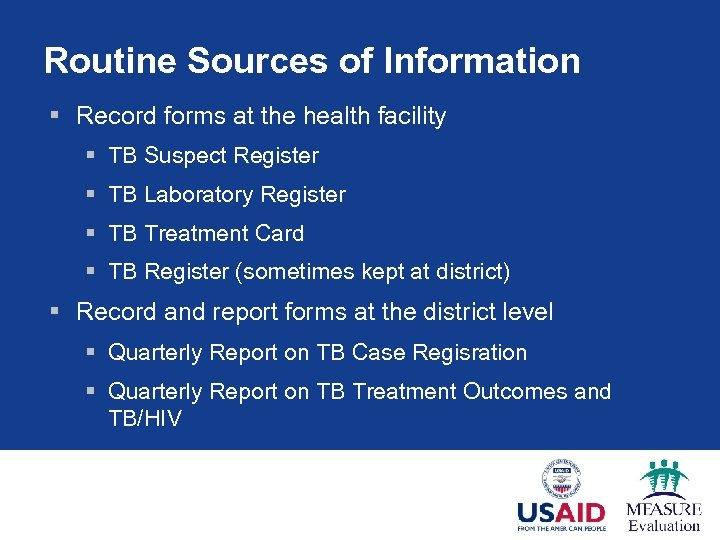
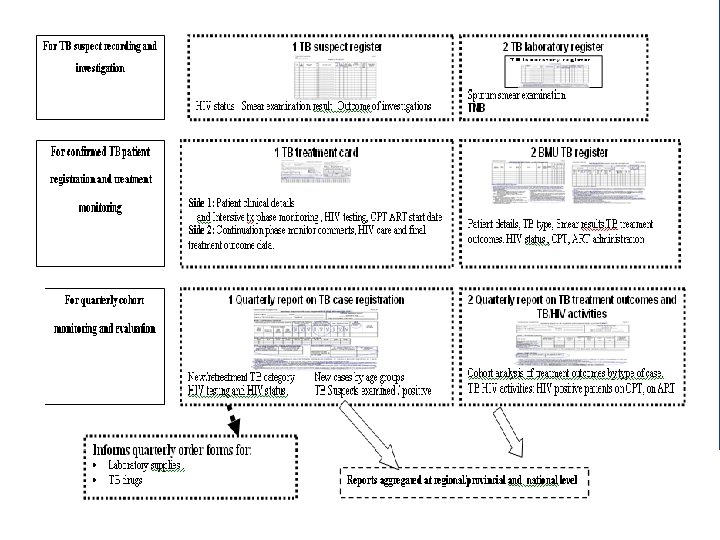
Routine Sources of Information § Record forms at the health facility § TB Suspect Register § TB Laboratory Register § TB Treatment Card § TB Register (sometimes kept at district) § Record and report forms at the district level § Quarterly Report on TB Case Regisration § Quarterly Report on TB Treatment Outcomes and TB/HIV
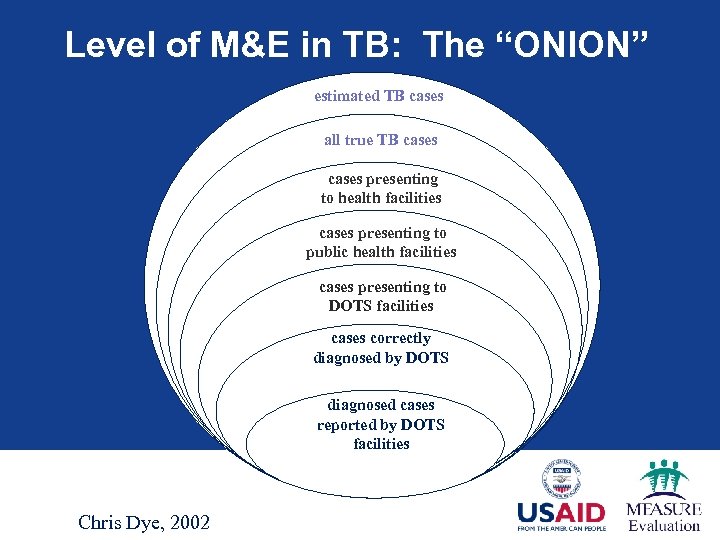
Level of M&E in TB: The “ONION” estimated TB cases all true TB cases presenting to health facilities cases presenting to public health facilities cases presenting to DOTS facilities cases correctly diagnosed by DOTS facilities diagnosed cases reported by DOTS facilities Chris Dye, 2002
M&E tools for TB Programs § Supervision checklist - checklist for program management - checklist for health facility § Review meeting - annual and semi-annual - central, regional and district § External quality assurance
Additional Sources of Information (Special Studies) § Prevalence surveys § Population-based surveys § Health-facility surveys § Vital registration surveys § Tuberculin surveys § Drug-resistance surveys
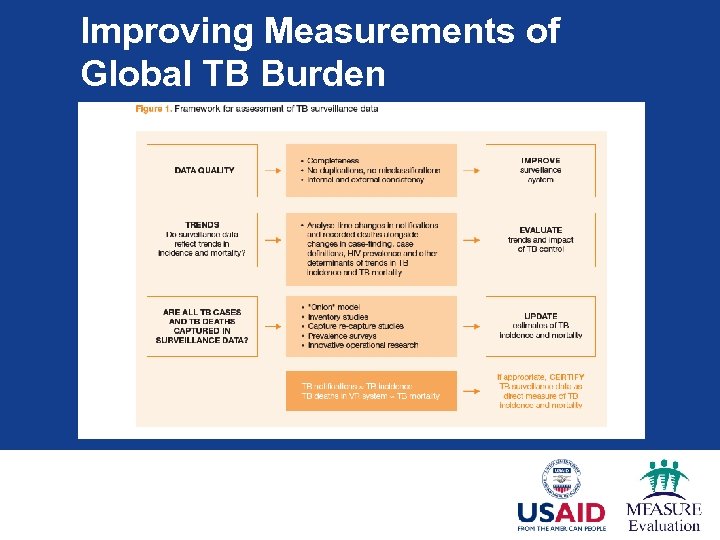
Improving Measurements of Global TB Burden
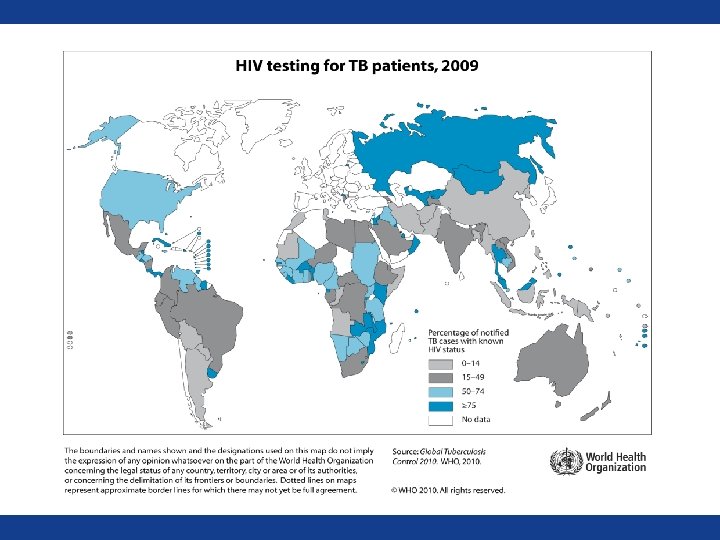
Key TB/HIV Targets in High HIV Prevalence Settings § 100% people living with HIV and attending HIV Services screened for TB in 2015 § 31 m. newly diagnosed and eligible people living with HIV placed on IPT annually § 85% of TB patients in DOTS programs HIV-tested and counseled annually § 57% of HIV-positive TB patients placed on ART annually
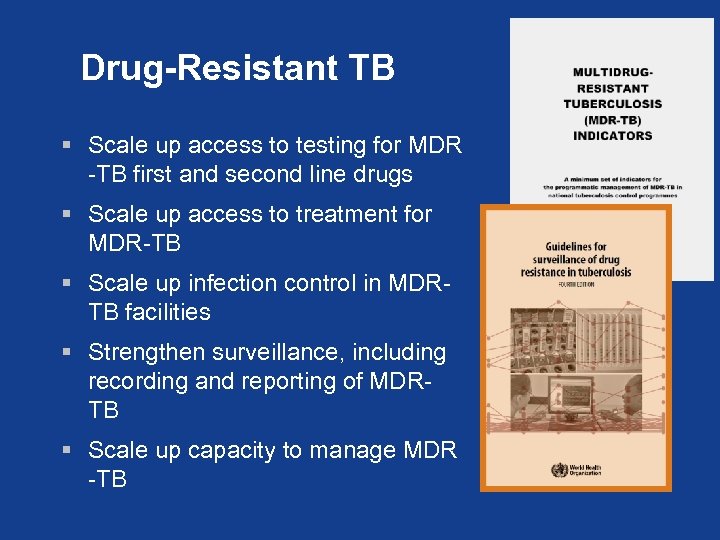
Drug-Resistant TB § Scale up access to testing for MDR -TB first and second line drugs § Scale up access to treatment for MDR-TB § Scale up infection control in MDRTB facilities § Strengthen surveillance, including recording and reporting of MDRTB § Scale up capacity to manage MDR -TB
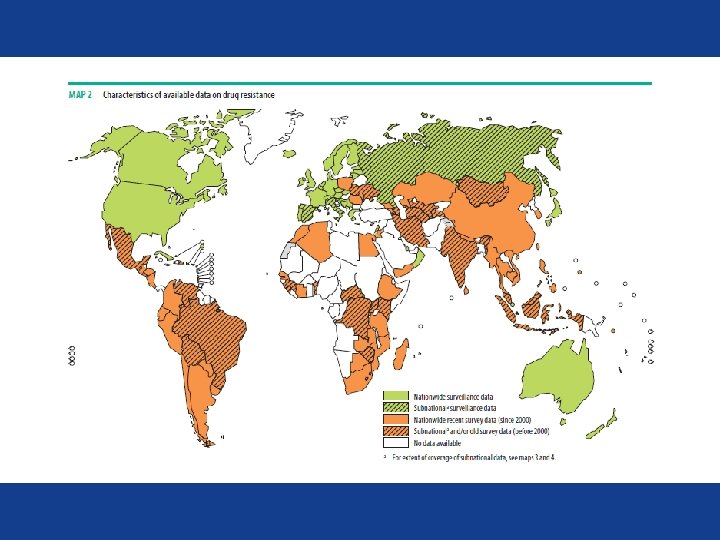
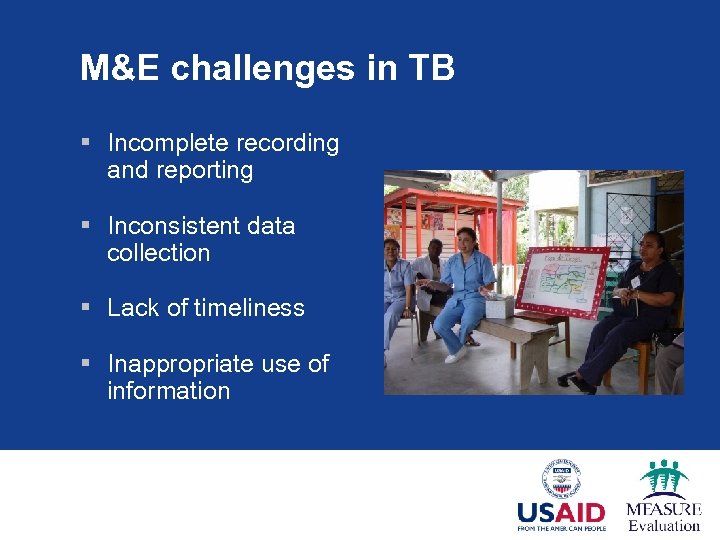
M&E challenges in TB § Incomplete recording and reporting § Inconsistent data collection § Lack of timeliness § Inappropriate use of information
Strengthening M&E including Impact § Assessments of the quality and coverage of case notification and vital registration data § Development and strengthening of VR systems § Prevalence surveys in selected countries § Development of electronic recording and reporting systems § Strengthening TB/HIV and MDR-TB surveillance systems § Harmonize TB R&R with national HMIS
Resources 1. Compendium of Indicators for Monitoring and Evaluating National TB Programmes. Stop TB Partnership, August 2004. 2. Toman’s Tuberculosis Case Detection, Treatment, and Monitoring. Second Edition. WHO Geneva, 2004 3. WHO REPORT 2005 GLOBAL TB CONTROL Surveillance, Planning, Financing
MEASURE Evaluation is funded by the U. S. Agency for International Development (USAID) and implemented by the Carolina Population Center at the University of North Carolina at Chapel Hill in partnership with Futures Group, ICF Macro, John Snow, Inc. , Management Sciences for Health, and Tulane University. Views expressed in this presentation do not necessarily reflect the views of USAID or the U. S. government. MEASURE Evaluation is the USAID Global Health Bureau's primary vehicle for supporting improvements in monitoring and evaluation in population, health and nutrition worldwide.
Скачать презентацию Monitoring and Evaluation of Tuberculosis Control Programs
11eaa1dbc8e707f51b9f4cda5df92420.ppt