


 Скачать презентацию Monetary Policy in Singapore Understanding the Singapore Economy
5334e1693059dcf1b96c96fa700aa144.ppt
- Количество слайдов: 19
 Monetary Policy in Singapore Understanding the Singapore Economy Seminar Economic Society of Singapore 27 July 2002 Ms Celine Sia, Lead Economist Monetary Policy Division, Economics Department, MAS
 Why are we here today? To find out how to get an “A” for the econs exam? To find out more about monetary policy: – – – Why do we need it (inflation, growth) How does it work (in Singapore) Monetary policy in action (Monetary Policy Statement)
 Why do we need monetary policy? § Nowadays, primarily used to pursue goal of price stability, as there are costs to high inflation § In some countries other goals include economic growth or full employment
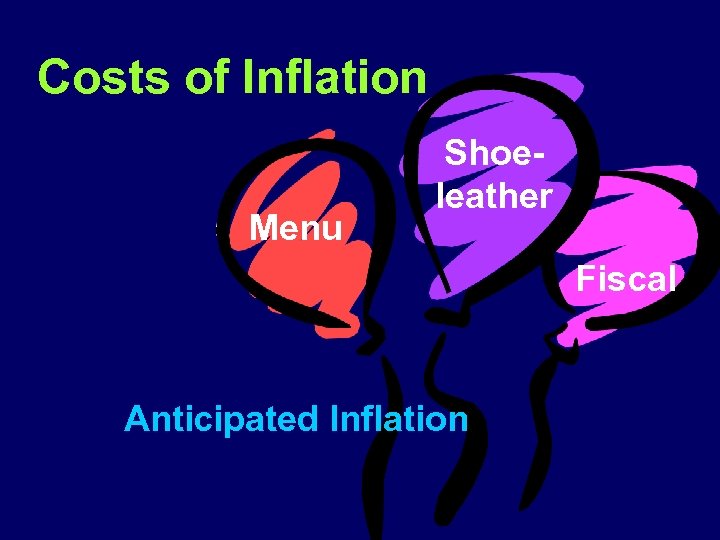 Costs of Inflation Menu Shoeleather Fiscal Anticipated Inflation
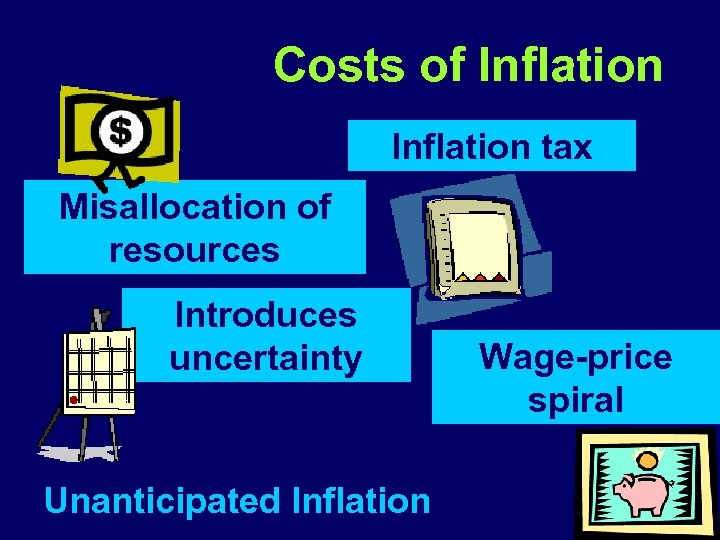 Costs of Inflation tax Misallocation of resources Introduces uncertainty Unanticipated Inflation Wage-price spiral
 Inflation is bad; but what about deflation? ref: Economics Explorer #3 MAS website: www. mas. gov. sg
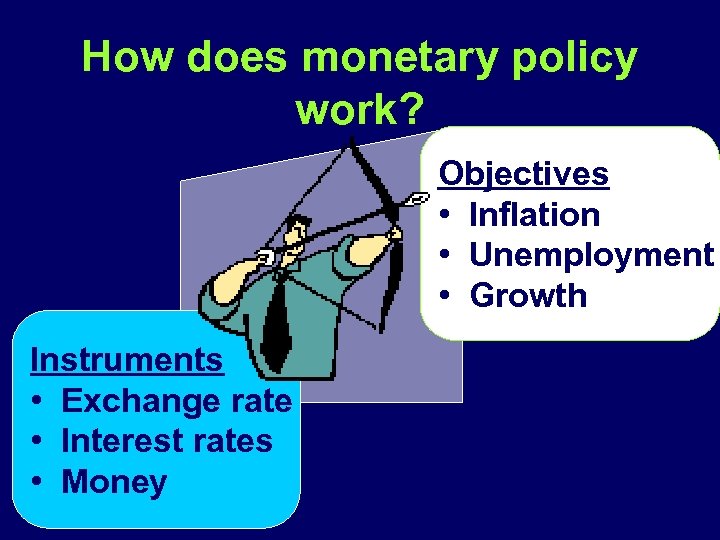 How does monetary policy work? Objectives • Inflation • Unemployment • Growth Instruments • Exchange rate • Interest rates • Money
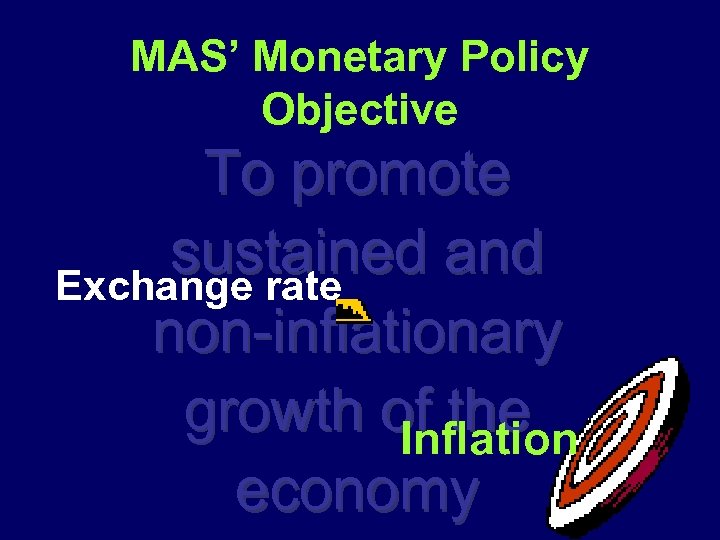 MAS’ Monetary Policy Objective To promote sustained and Exchange rate non-inflationary growth of the Inflation economy
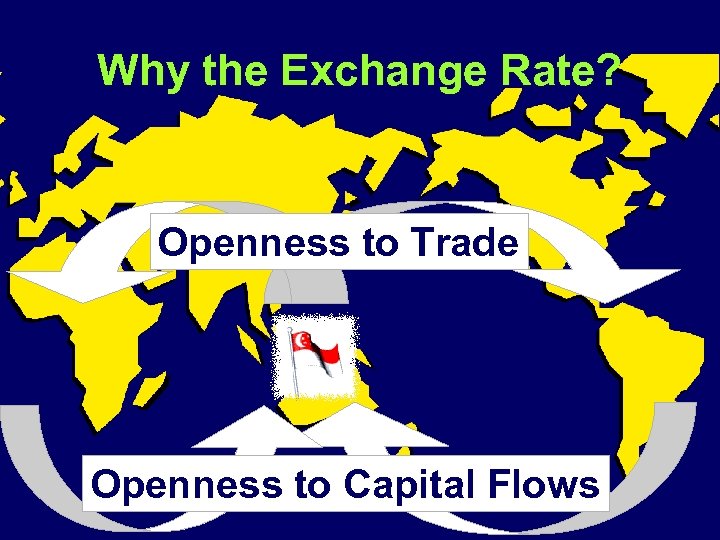 Why the Exchange Rate? Openness to Trade Openness to Capital Flows
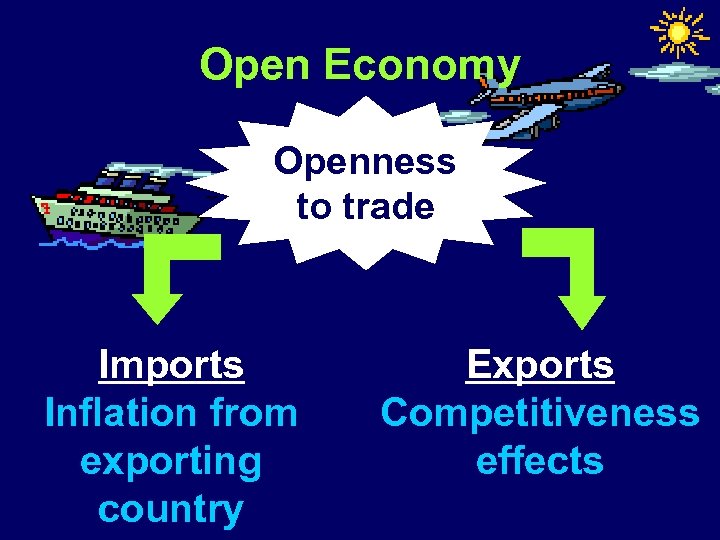 Open Economy Openness to trade Imports Inflation from exporting country Exports Competitiveness effects
 What about reserve requirements and money market operations? ref: Economics Explorer #2, 4, 5
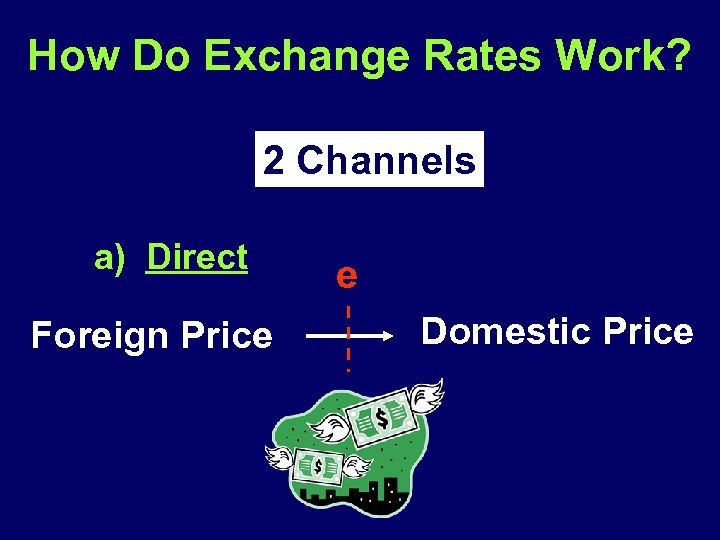 How Do Exchange Rates Work? 2 Channels a) Direct Foreign Price e Domestic Price
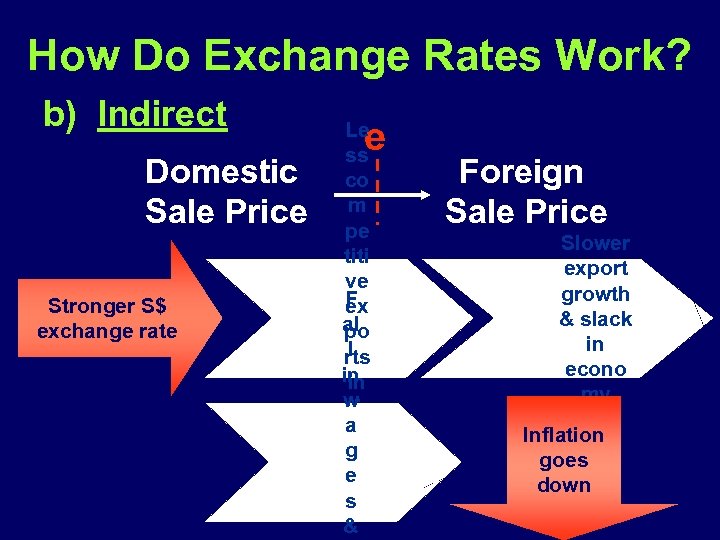 How Do Exchange Rates Work? b) Indirect Domestic Sale Price Stronger S$ exchange rate e Le ss co m pe titi ve F ex al po l rts in in w sh a ort ge ru s n & Foreign Sale Price Slower export growth & slack in econo my Inflation goes down
 Medium Term Orientation On Price Stability • Transmission lags – Can be long and variable • Cushion shocks? – Depends on nature of shock – Double-edged sword
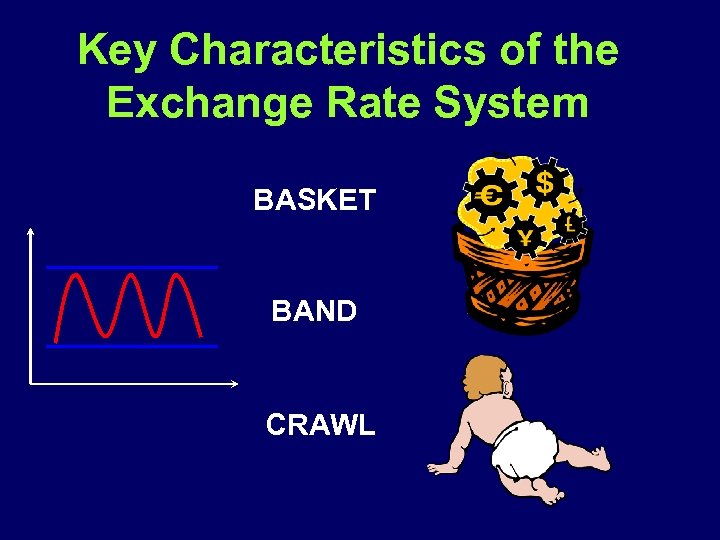 Key Characteristics of the Exchange Rate System BASKET BAND CRAWL
 Monetary Policy Framework since 1981 Exchange rate centred monetary policy Managed against a trade-weighted basket of currencies Trade-weighted S$ allowed to float within an undisclosed target band Exchange rate reviewed on a half-yearly cycle to ensure it remains consistent with underlying economic conditions
 Why not fixed or floating exchange rates for Singapore? ref: “Singapore’s Exchange Rate Policy”
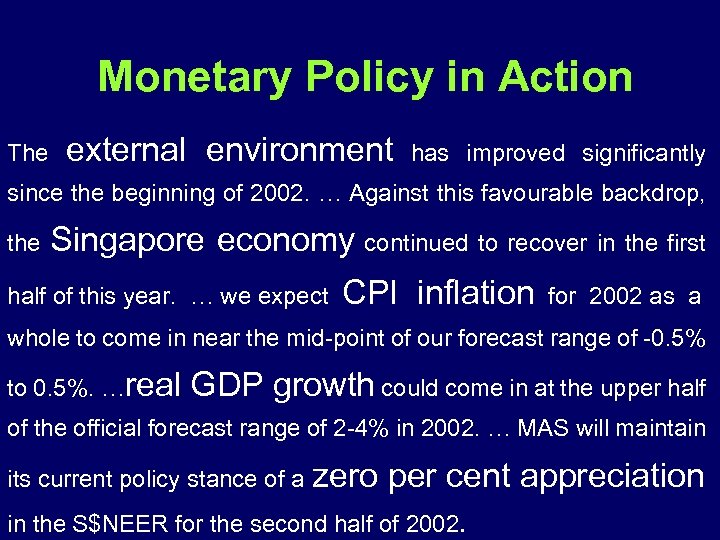 Monetary Policy in Action The external environment has improved significantly since the beginning of 2002. … Against this favourable backdrop, the Singapore economy continued to recover in the first half of this year. … we expect CPI inflation for 2002 as a whole to come in near the mid-point of our forecast range of -0. 5% to 0. 5%. …real GDP growth could come in at the upper half of the official forecast range of 2 -4% in 2002. … MAS will maintain its current policy stance of a zero per cent appreciation in the S$NEER for the second half of 2002.
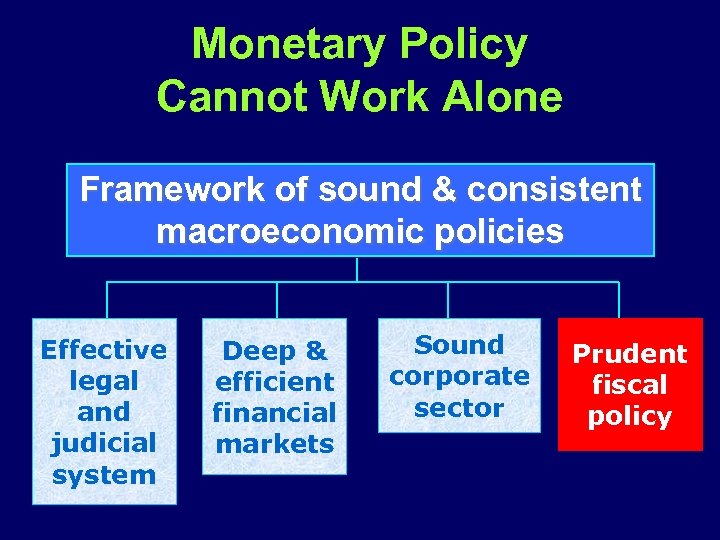 Monetary Policy Cannot Work Alone Framework of sound & consistent macroeconomic policies Effective legal and judicial system Deep & efficient financial markets Sound corporate sector Prudent fiscal policy