 Скачать презентацию MOLECULAR SUBTYPES OF BREAST CANCER Presented By Mazloom
subtypes of breast cancer.pptx
- Количество слайдов: 23




MOLECULAR SUBTYPES OF BREAST CANCER Presented By Mazloom Daneil
Why molecular subtypes need to be characterized ? How is molecular characterization done ? What is the molecular classification ? Prognostic relevance of molecular classification ? Predictive relevance of molecular classification ?

OUR EMPHASIS- Early stage Breast Cancer CHALLENGE- Despite surgery, cytotoxic chemotherapy, hormonal therapy, and/or regional radiotherapy, ~ 30% of patients will eventually experience disease recurrence The biologic reasons for recurrence and resistance to treatment are poorly understood PREDICT CHANCES OF RELAPSE

Standard Prognostic Factors Histologic subtype Axillary lymph node status Tumor size Grade Age Comorbidities
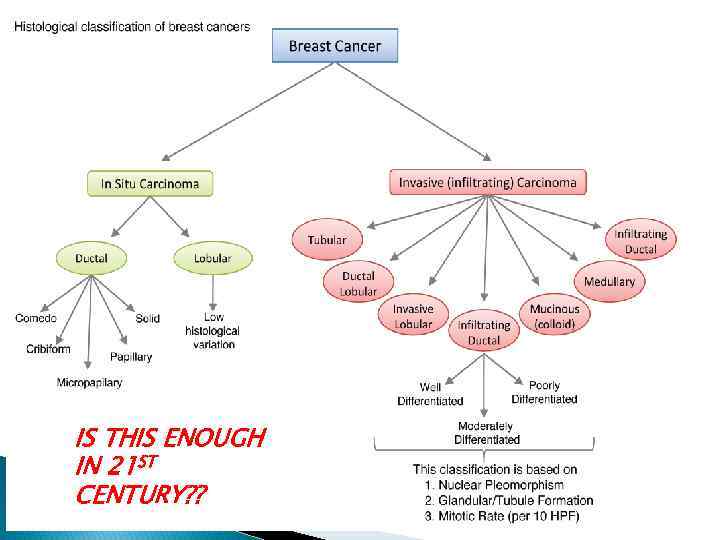
IS THIS ENOUGH IN 21 ST CENTURY? ?
Historically, breast cancers were divided into hormone receptor positive and negative tumours. Up to half of all hormone receptor positive breast cancers do not respond to endocrine treatment at initial presentation (intrinsic resistance) or there is inevitable development of resistance over time (acquired resistance) Osborne CK. Tamoxifen in the treatment of breast cancer. N Engl J Med 1998; 339: 1609 e 18.

THUS, CLASSIFYING BREAST TUMOR HISTOLOGICALLY AND ON HORMONE SENSITIVITY IS IMPORTANT BUT NOT SUFFICIENT
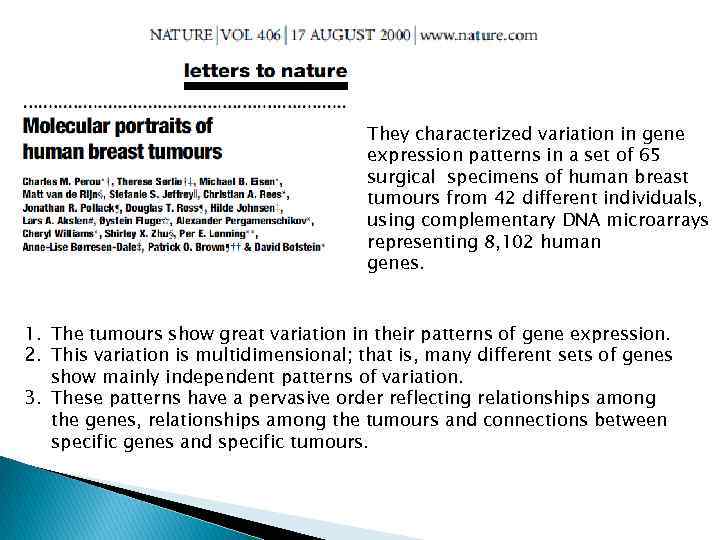
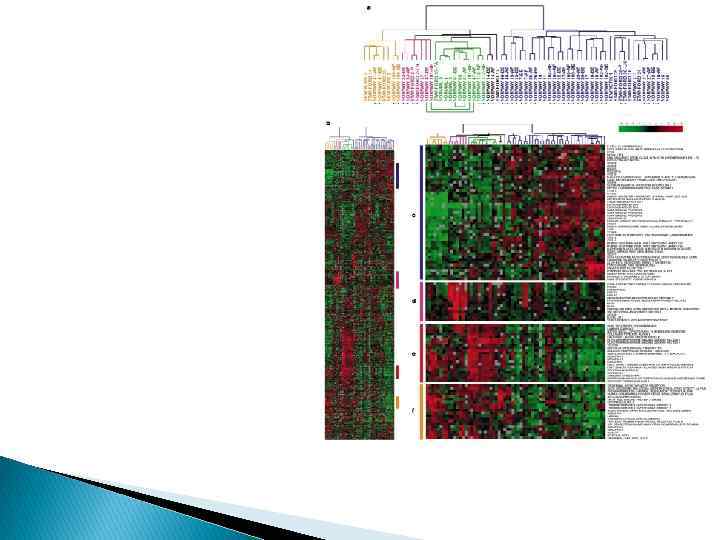
They characterized variation in gene expression patterns in a set of 65 surgical specimens of human breast tumours from 42 different individuals, using complementary DNA microarrays representing 8, 102 human genes. 1. The tumours show great variation in their patterns of gene expression. 2. This variation is multidimensional; that is, many different sets of genes show mainly independent patterns of variation. 3. These patterns have a pervasive order reflecting relationships among the genes, relationships among the tumours and connections between specific genes and specific tumours.
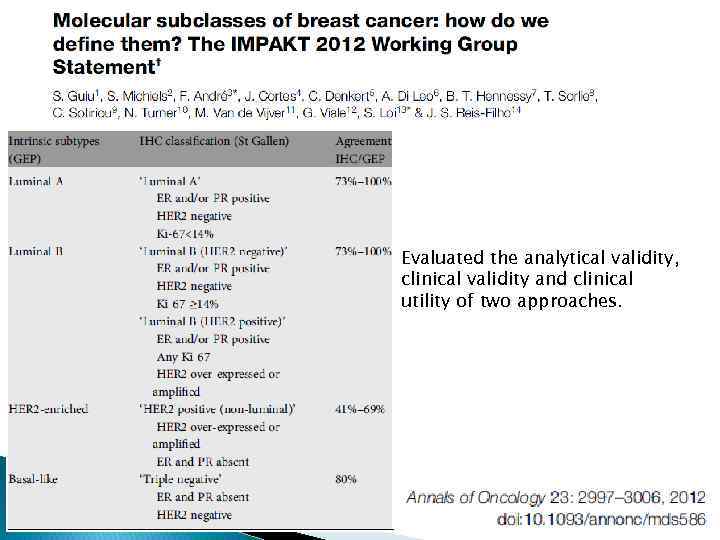
Evaluated the analytical validity, clinical validity and clinical utility of two approaches.
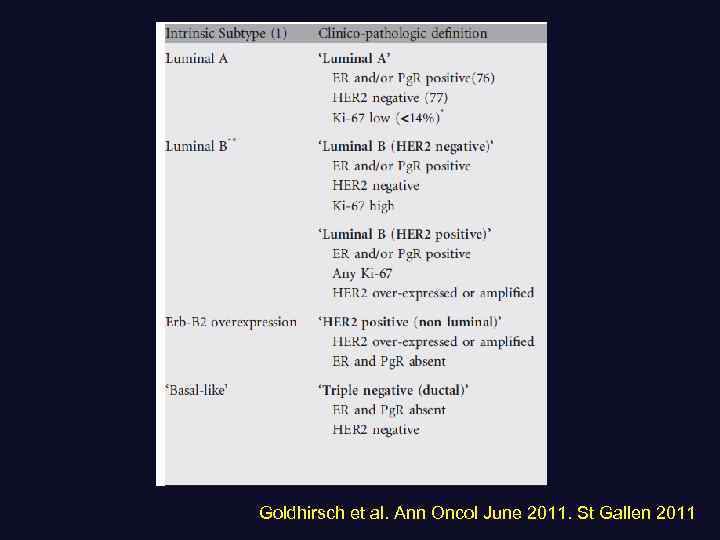
Goldhirsch et al. Ann Oncol June 2011. St Gallen 2011
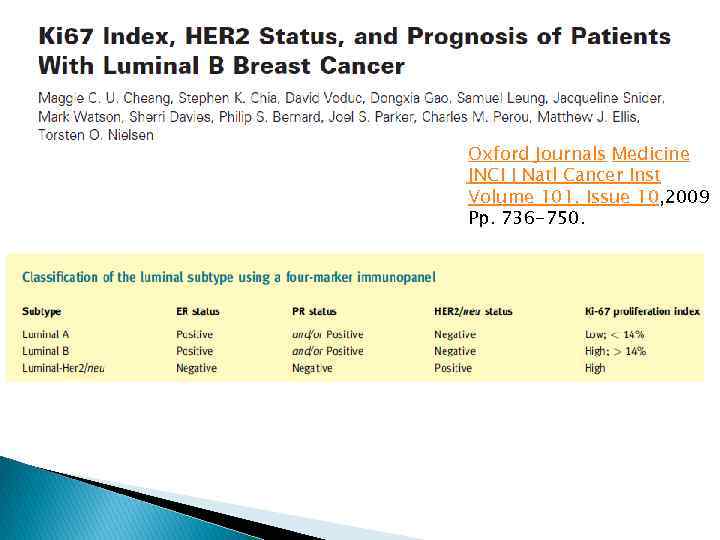
Oxford Journals Medicine JNCI J Natl Cancer Inst Volume 101, Issue 10, 2009 Pp. 736 -750.
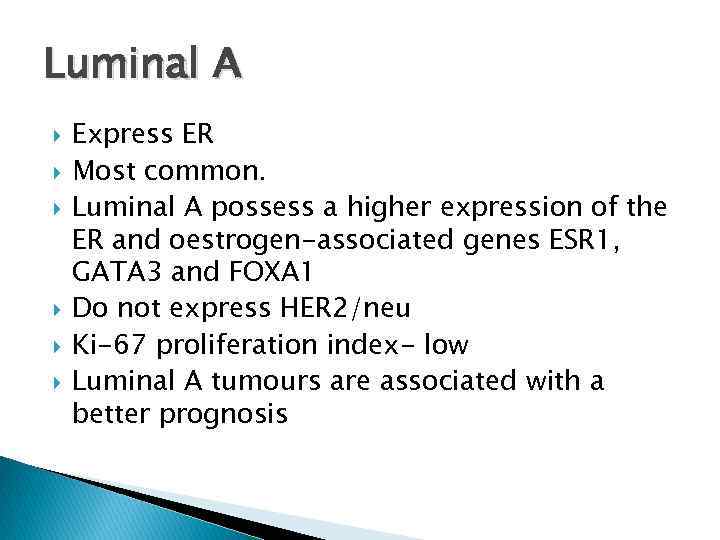
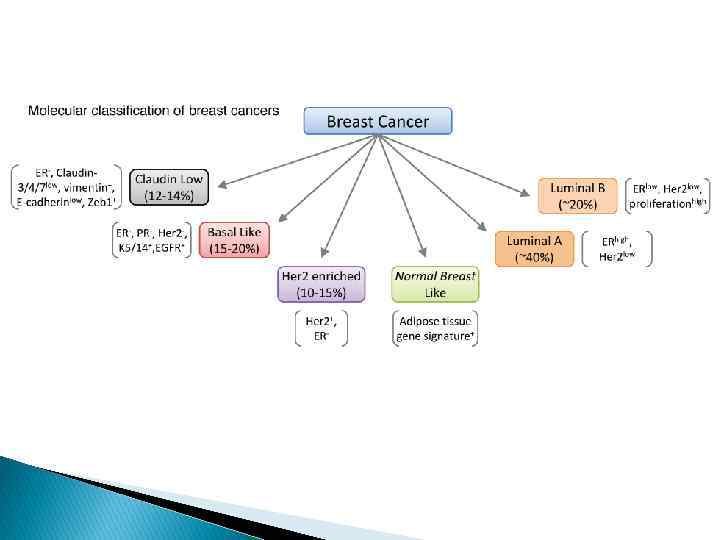
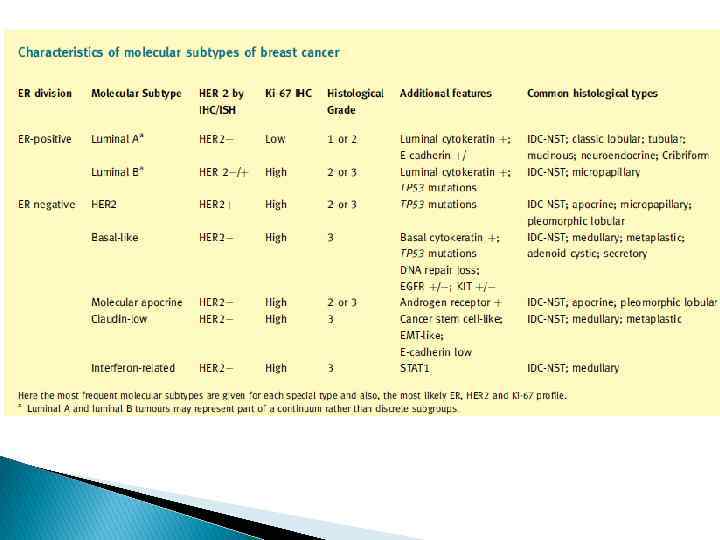
Luminal A Express ER Most common. Luminal A possess a higher expression of the ER and oestrogen-associated genes ESR 1, GATA 3 and FOXA 1 Do not express HER 2/neu Ki-67 proliferation index- low Luminal A tumours are associated with a better prognosis
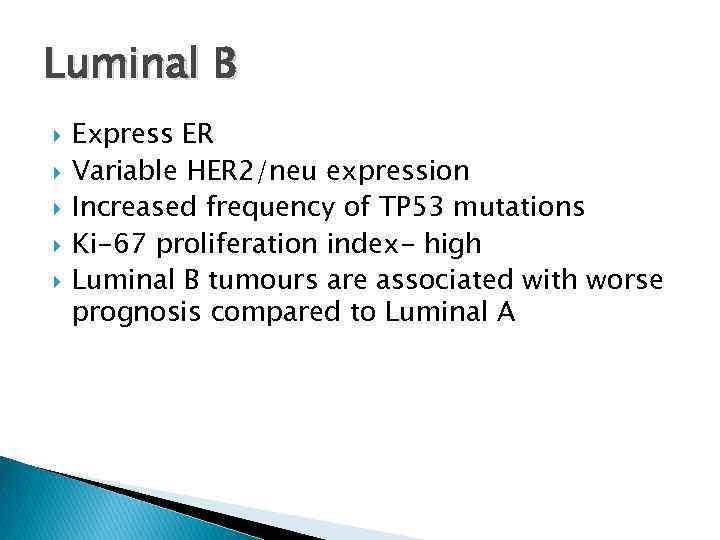
Luminal B Express ER Variable HER 2/neu expression Increased frequency of TP 53 mutations Ki-67 proliferation index- high Luminal B tumours are associated with worse prognosis compared to Luminal A
Basal-like subtype Hormone receptor (ER and PR) and HER 2/neu receptor negative Expression of genes associated with myoepithelial cells: KRT 5 (keratin 5), KRT 17 (keratin 17), CNN 1 (calponin 1), CAV 1 (caveolin) and LAMB 1 (laminin) Aggressive with a poorer disease-free and overall survival than the other breast cancer subtypes
HER 2/neu over-expressing subtype Increased expression of genes located in the same region on chromosome 17 q: human epidermal growth factor receptor 2, ERBB 2, and growth factor receptor bound protein 7, GRB 7 Associated with a high histological grade, low expression of ER and PR Poor clinical outcome.
In the past decade, microarray-based gene expression profiling has been extensively applied to the study of breast cancer. ◦ Metastatic propensity (Wang et al. , 2005; van’t Veer et al. , 2002; van de Vijver et al. , 2002) ◦ To identify signatures associated with prognosis (Sotiriou et al. , 2006; Wang et al. , 2005; van’t Veer et al. , 2002; van de Vijver et al. , 2002) ◦ Response to therapy (Potti et al. , 2006).
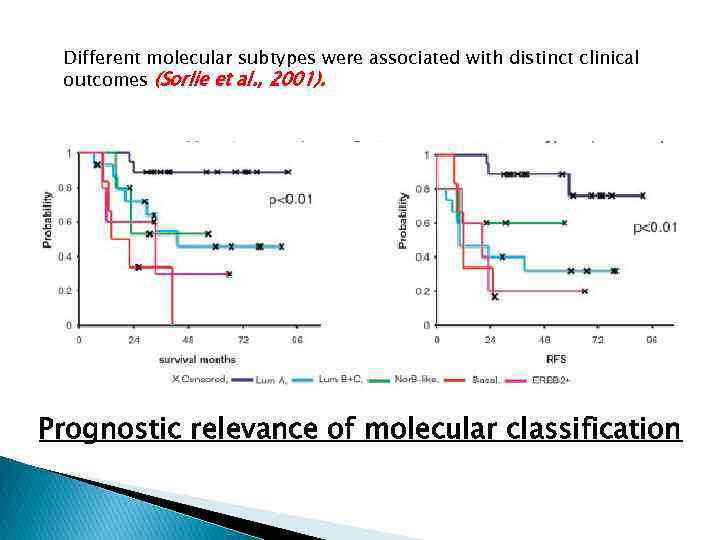
Different molecular subtypes were associated with distinct clinical outcomes (Sorlie et al. , 2001). Prognostic relevance of molecular classification
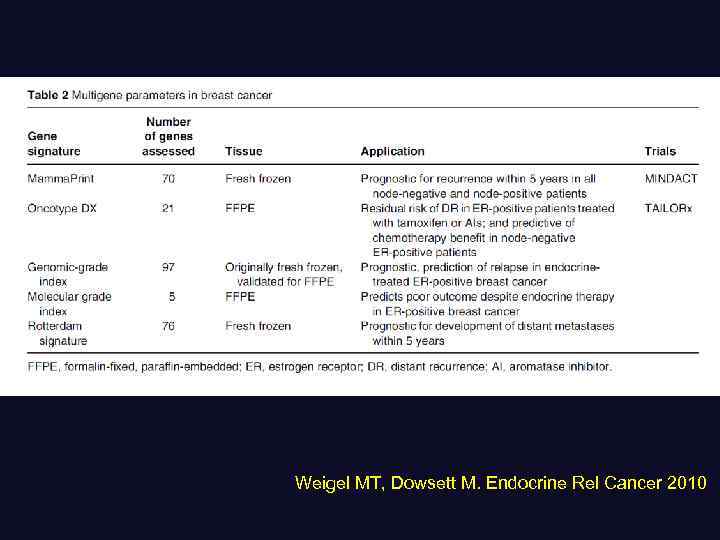
Weigel MT, Dowsett M. Endocrine Rel Cancer 2010
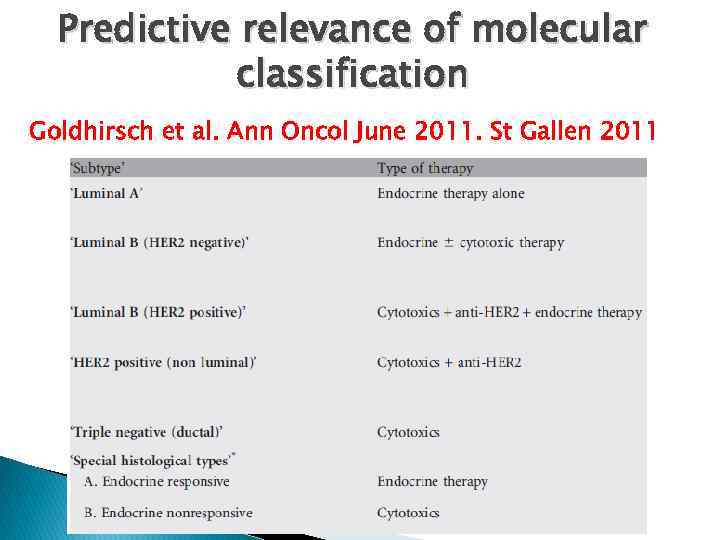
Predictive relevance of molecular classification Goldhirsch et al. Ann Oncol June 2011. St Gallen 2011

Thank You
Скачать презентацию MOLECULAR SUBTYPES OF BREAST CANCER Presented By Mazloom
subtypes of breast cancer.pptx