


 Скачать презентацию Molecular Computing Machine Uses its Input as Fuel
1f14e8b9056ecce7bde3925d749b4e38.ppt
- Количество слайдов: 35
 Molecular Computing Machine Uses its Input as Fuel Kobi Benenson Joint work with Rivka Adar, Tamar Paz-Elizur, Zvi Livneh and Ehud Shapiro Department of Computer Science and Applied Math & Department of Biological Chemistry Weizmann Institute of Science, Rehovot, Israel
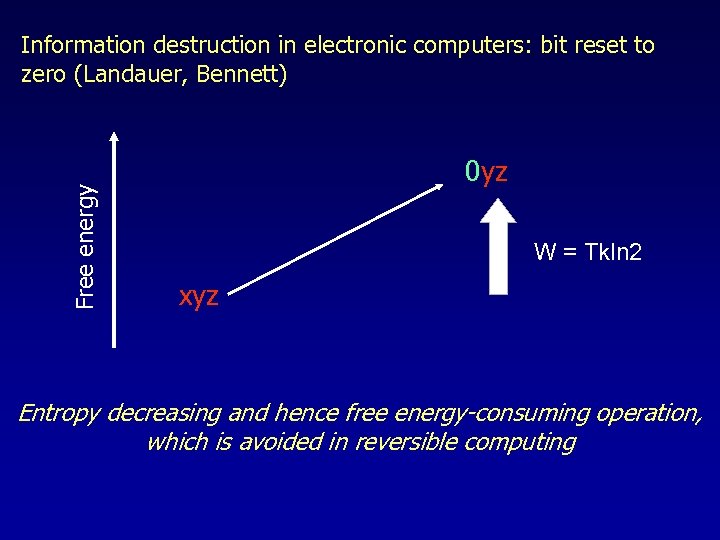 Free energy Information destruction in electronic computers: bit reset to zero (Landauer, Bennett) 0 yz W = Tkln 2 xyz Entropy decreasing and hence free energy-consuming operation, which is avoided in reversible computing
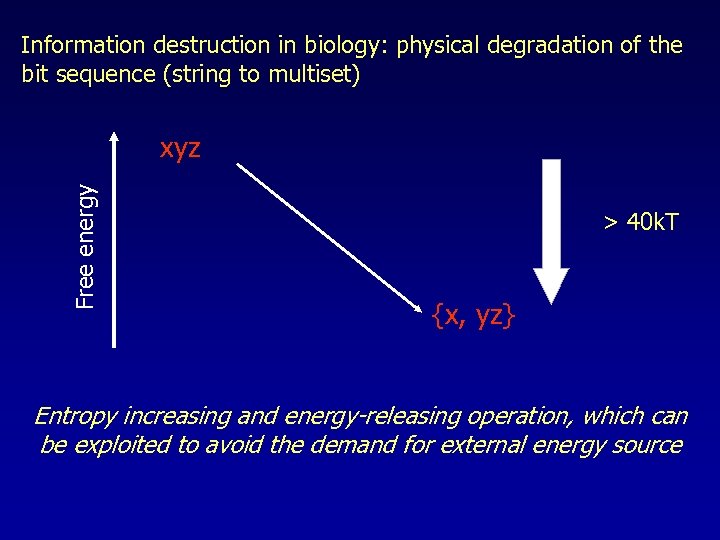 Information destruction in biology: physical degradation of the bit sequence (string to multiset) Free energy xyz > 40 k. T {x, yz} Entropy increasing and energy-releasing operation, which can be exploited to avoid the demand for external energy source
 • Input destruction can be used as a source of energy • If output is smaller than input (e. g. yes/no questions), computation can be accomplished without external energy • We realized this theoretical possibility
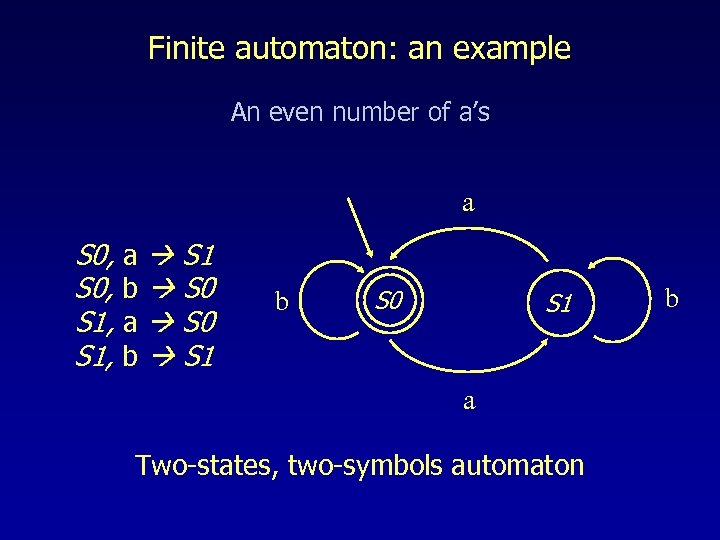 Finite automaton: an example An even number of a’s a S 0, a S 1 S 0, b S 0 S 1, a S 0 S 1, b S 1 b S 0 S 1 a Two-states, two-symbols automaton b
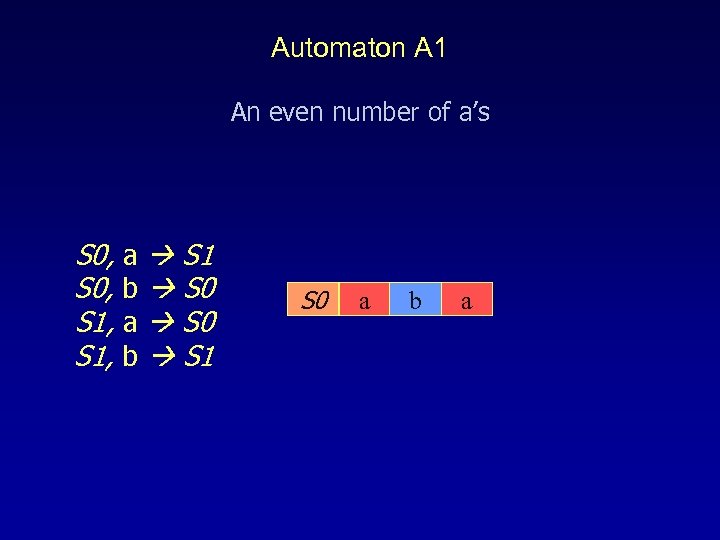 Automaton A 1 An even number of a’s S 0, a S 1 S 0, b S 0 S 1, a S 0 S 1, b S 1 S 0 a b a
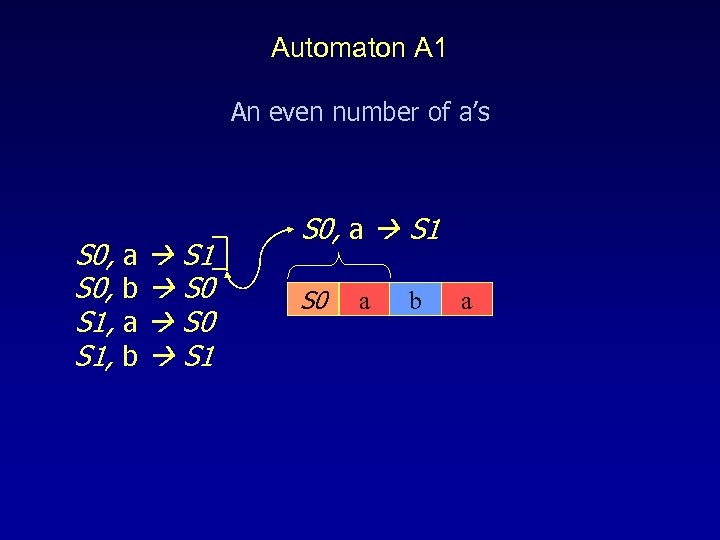 Automaton A 1 An even number of a’s S 0, a S 1 S 0, b S 0 S 1, a S 0 S 1, b S 1 S 0, a S 1 S 0 a b a
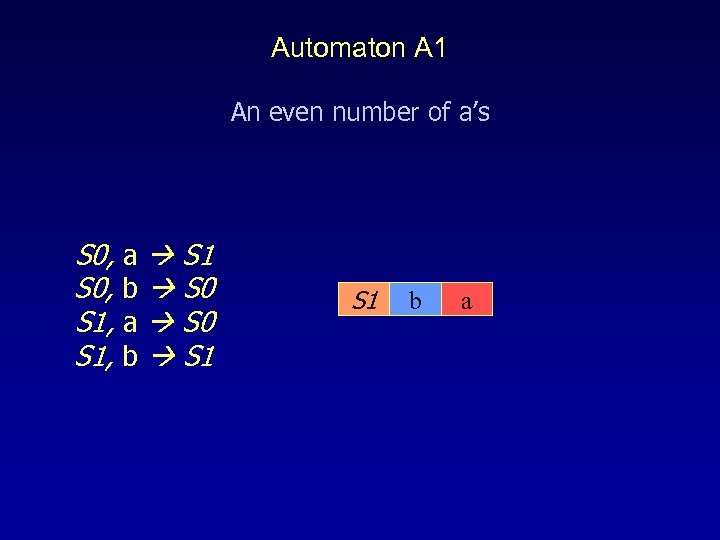 Automaton A 1 An even number of a’s S 0, a S 1 S 0, b S 0 S 1, a S 0 S 1, b S 1 b a
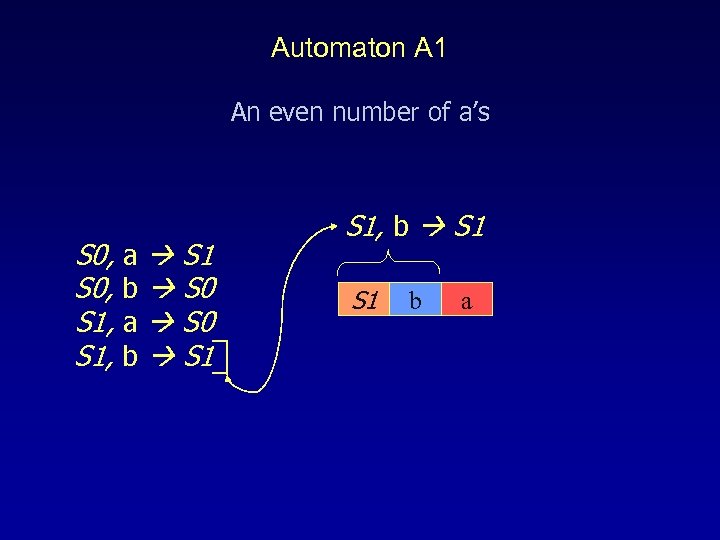 Automaton A 1 An even number of a’s S 0, a S 1 S 0, b S 0 S 1, a S 0 S 1, b S 1 S 1 b a
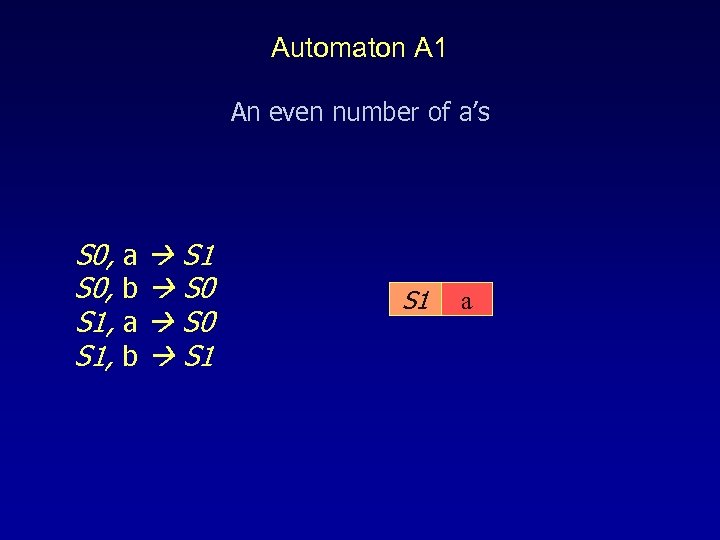 Automaton A 1 An even number of a’s S 0, a S 1 S 0, b S 0 S 1, a S 0 S 1, b S 1 a
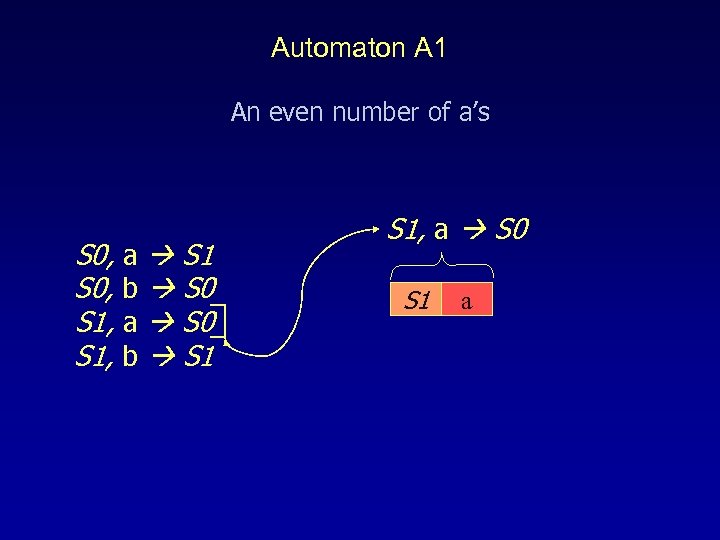 Automaton A 1 An even number of a’s S 0, a S 1 S 0, b S 0 S 1, a S 0 S 1, b S 1, a S 0 S 1 a
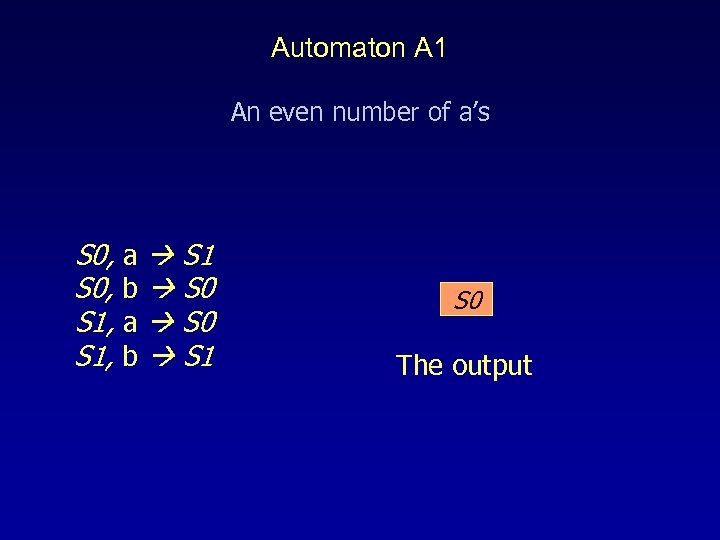 Automaton A 1 An even number of a’s S 0, a S 1 S 0, b S 0 S 1, a S 0 S 1, b S 1 S 0 The output
 Previous molecular finite automaton Benenson, Paz-Elizur, Adar, Keinan, Livneh & Shapiro, Nature 414, 430 (2001)
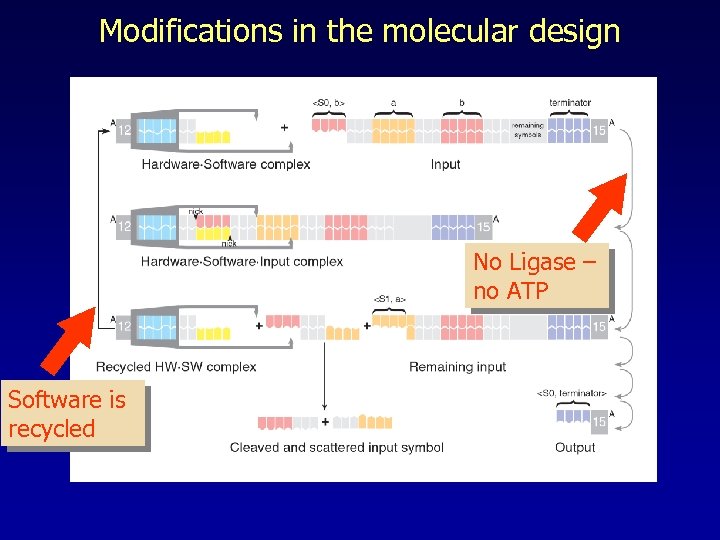
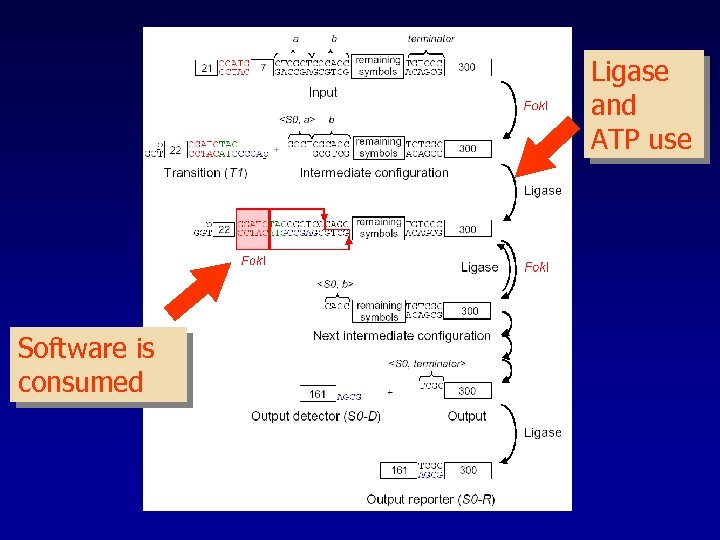 Ligase and ATP use Software is consumed
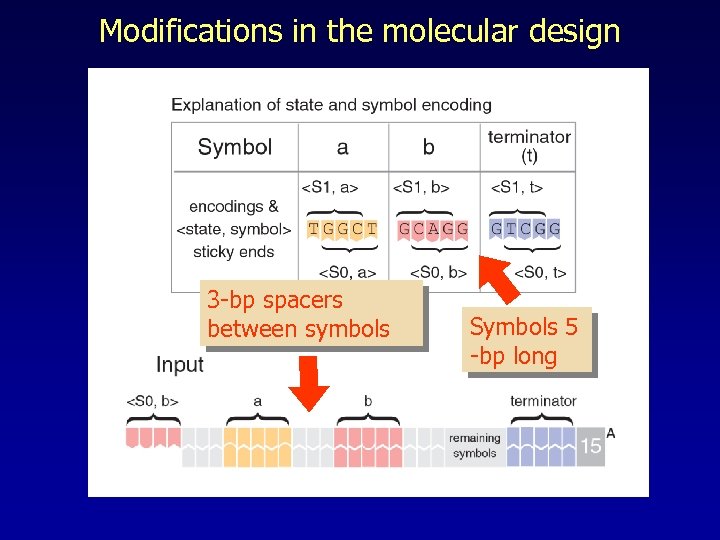
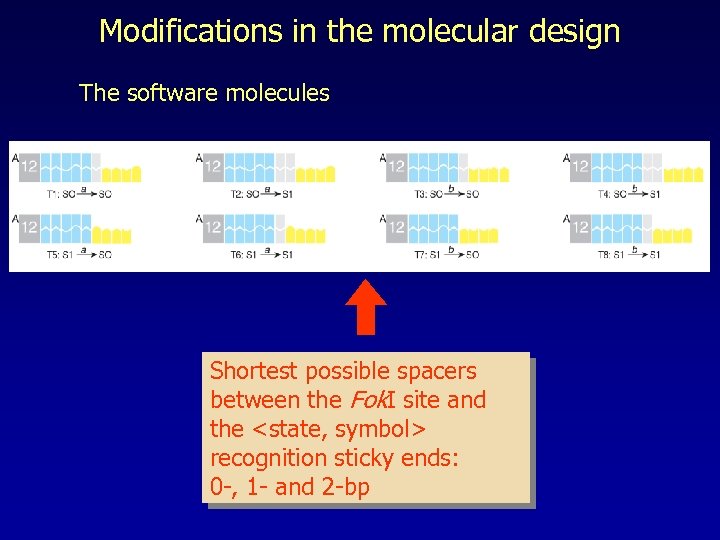
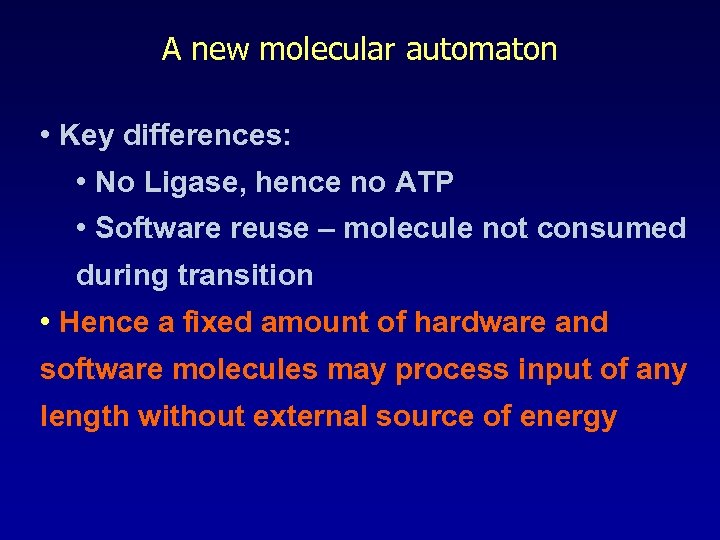 A new molecular automaton • Key differences: • No Ligase, hence no ATP • Software reuse – molecule not consumed during transition • Hence a fixed amount of hardware and software molecules may process input of any length without external source of energy
 A new molecular automaton • Significant improvement of yields and performance
 Modifications in the molecular design No Ligase – no ATP Software is recycled
 Problems of the previous design • Evidence of Ligase-free computation, but inefficient • Often Fok. I cuts only one input DNA strand • Computation stalled after a few steps
 Modifications in the molecular design 3 -bp spacers between symbols Symbols 5 -bp long
 Modifications in the molecular design The software molecules Shortest possible spacers between the Fok. I site and the
 Experimental implementation
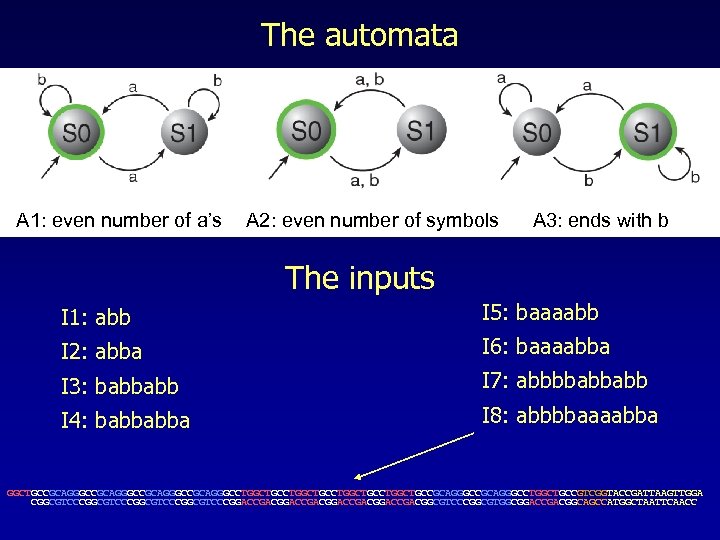 The automata A 1: even number of a’s A 2: even number of symbols A 3: ends with b The inputs I 1: abb I 5: baaaabb I 2: abba I 6: baaaabba I 3: babbabb I 7: abbbbabbabb I 4: babbabba I 8: abbbbaaaabba GGCTGCCGCAGGGCCGCAGGGCCTGGCTGCCTGGCTGCCGCAGGGCCTGGCTGCCGTCGGTACCGATTAAGTTGGA CGGCGTCCCGGCGTCCCGGACCGACGGACCGACGGCGTCCCGGCGTGGCGGACCGACGGCAGCCATGGCTAATTCAACC
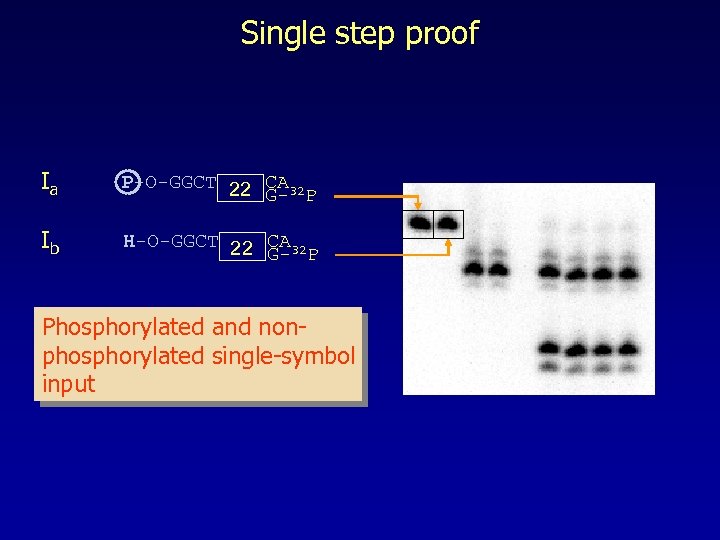 Single step proof Ia P-O-GGCT 22 CA 32 G- P Ib H-O-GGCT 22 CA 32 G- P Phosphorylated and nonphosphorylated single-symbol input
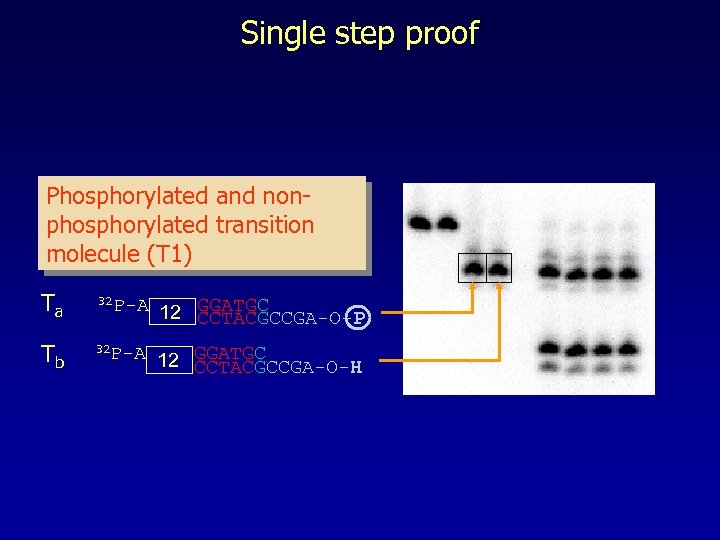 Single step proof Phosphorylated and nonphosphorylated transition molecule (T 1) Ta 32 P-A 12 GGATGC CCTACGCCGA-O-P Tb 32 P-A 12 GGATGC CCTACGCCGA-O-H
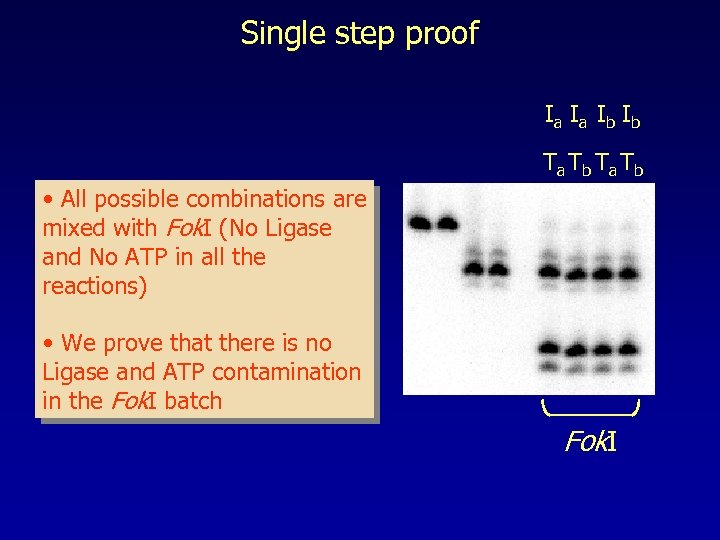 Single step proof Ia Ia Ib Ib Ta Tb • All possible combinations are mixed with Fok. I (No Ligase and No ATP in all the reactions) • We prove that there is no Ligase and ATP contamination in the Fok. I batch Fok. I
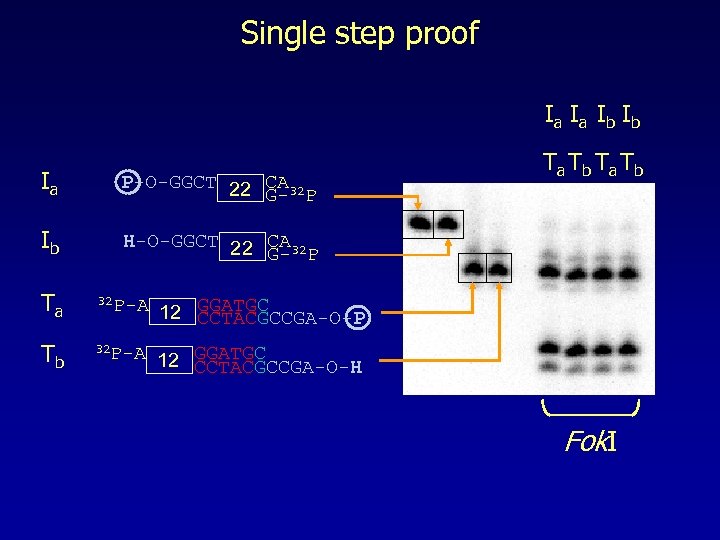 Single step proof Ia Ia Ib Ib Ia P-O-GGCT 22 CA 32 G- P Ib Ta Tb H-O-GGCT 22 CA 32 G- P Ta 32 P-A 12 GGATGC CCTACGCCGA-O-P Tb 32 P-A 12 GGATGC CCTACGCCGA-O-H Fok. I
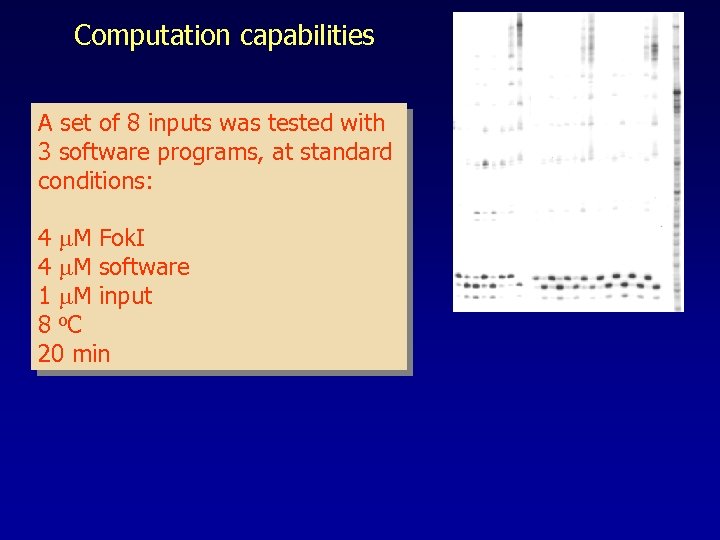 Computation capabilities A set of 8 inputs was tested with 3 software programs, at standard conditions: 4 m. M Fok. I 4 m. M software 1 m. M input 8 o. C 20 min
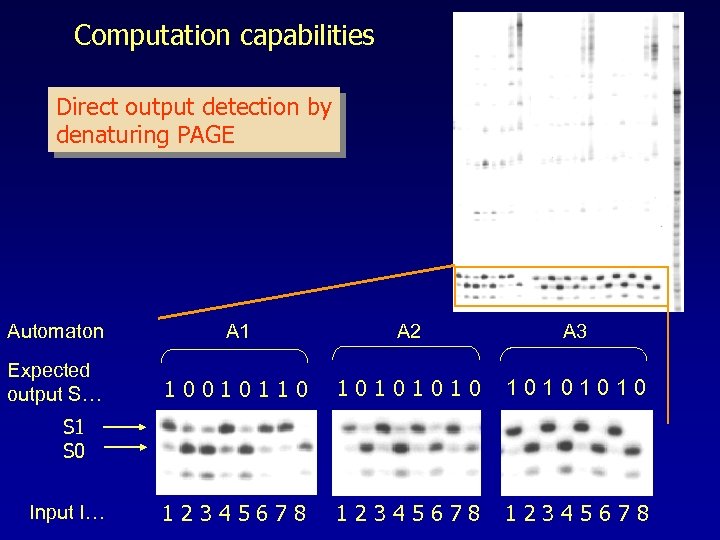 Computation capabilities Direct output detection by denaturing PAGE Automaton A 1 A 2 A 3 Expected output S… 10010110 10101010 12345678 S 1 S 0 Input I…
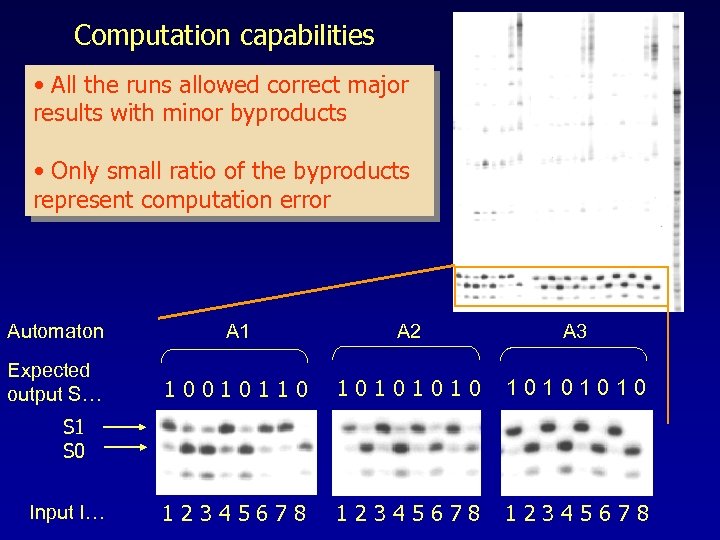 Computation capabilities • All the runs allowed correct major results with minor byproducts • Only small ratio of the byproducts represent computation error Automaton A 1 A 2 A 3 Expected output S… 10010110 10101010 12345678 S 1 S 0 Input I…
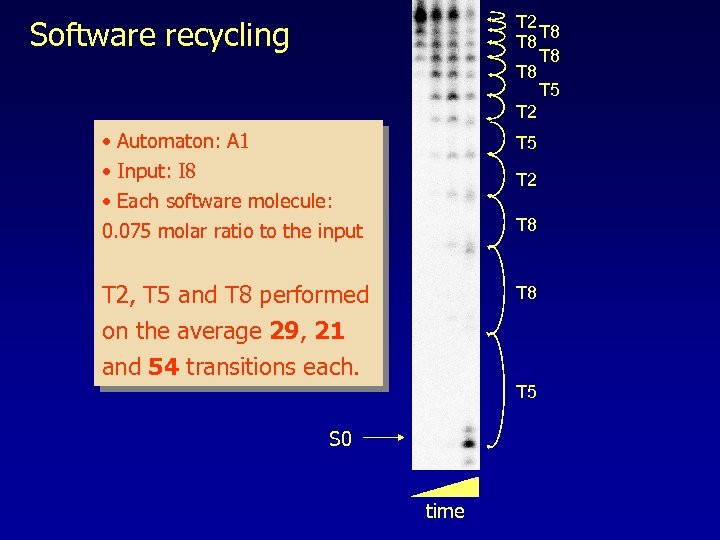 T 2 T 8 T 8 T 5 T 2 Software recycling • Automaton: A 1 • Input: I 8 • Each software molecule: 0. 075 molar ratio to the input T 5 T 2, T 5 and T 8 performed on the average 29, 21 and 54 transitions each. T 8 T 2 T 8 T 5 S 0 time
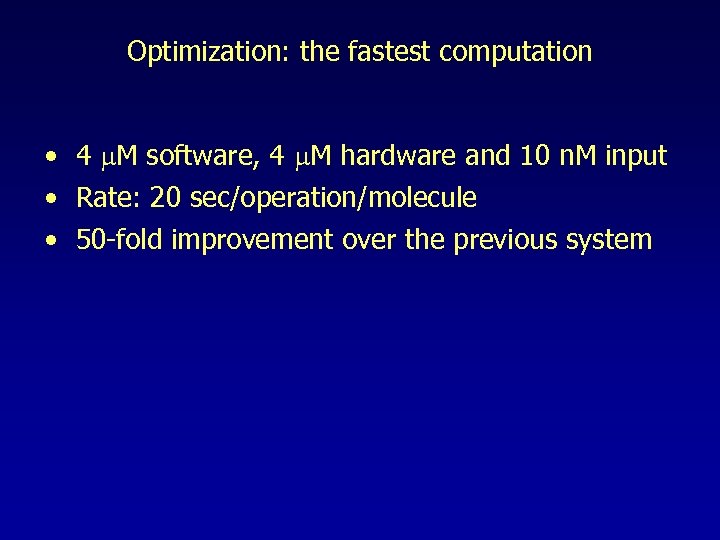 Optimization: the fastest computation • 4 m. M software, 4 m. M hardware and 10 n. M input • Rate: 20 sec/operation/molecule • 50 -fold improvement over the previous system
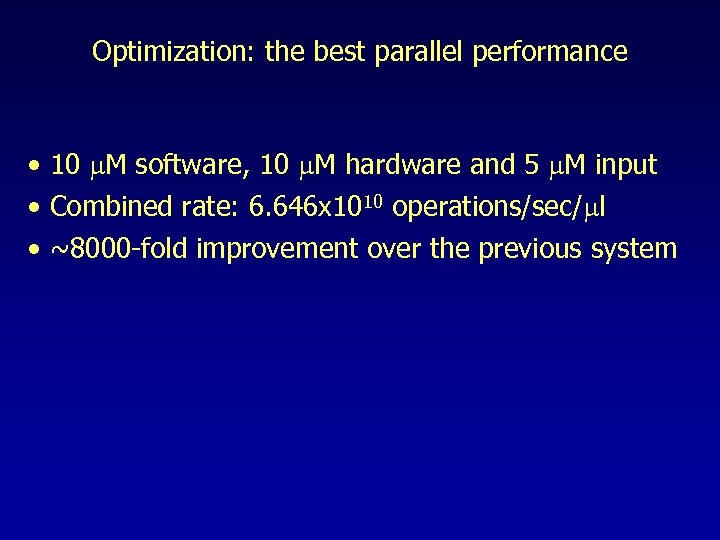 Optimization: the best parallel performance • 10 m. M software, 10 m. M hardware and 5 m. M input • Combined rate: 6. 646 x 1010 operations/sec/ml • ~8000 -fold improvement over the previous system
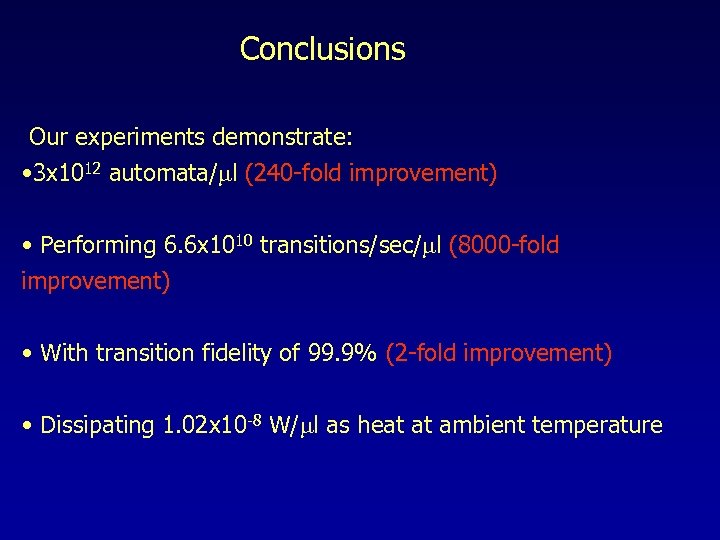 Conclusions Our experiments demonstrate: • 3 x 10¹² automata/ml (240 -fold improvement) • Performing 6. 6 x 10¹⁰ transitions/sec/ml (8000 -fold improvement) • With transition fidelity of 99. 9% (2 -fold improvement) • Dissipating 1. 02 x 10 -8 W/ml as heat at ambient temperature
 Conclusions We developed a molecular finite automaton that realizes theoretical possibility using the input as the sole source of energy
 Thanks for your attention!