


 Скачать презентацию Module 3 Policies practice of mitigation
e5de4ff26b0836f31c8b5a373fde2ea7.ppt
- Количество слайдов: 35
 Module 3: Policies & practice of mitigation & adaptation: Relevance to health
 Key messages in Module 3 • Two climate change responses – mitigation & adaptation • Many mitigation & adaptation activities are relevant to the health sector • If emissions are reduced (mitigation), health of the population is improved (cobenefits/win-win) 2
 Key messages in Module 3 • The health sector plays an important role in adaptation - requires multi-sectoral collaboration • Strong need for health sector to influence mitigation activities in other sectors 3
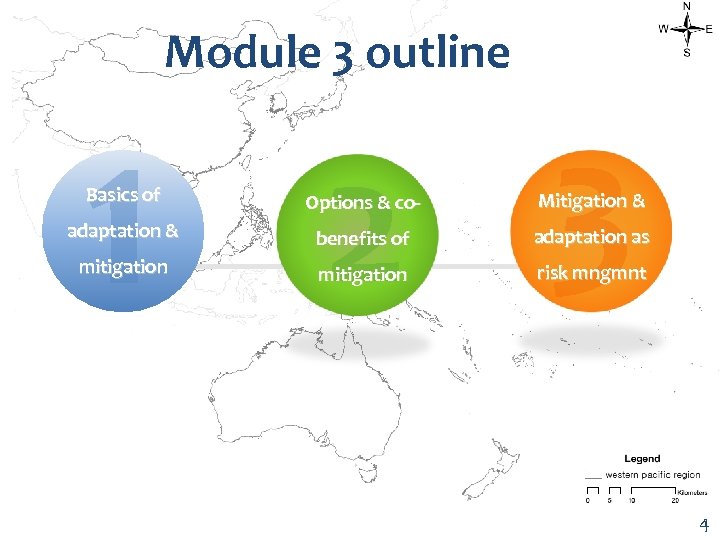 1 Module 3 outline 3 2 Basics of Options & co- Mitigation & adaptation & benefits of adaptation as mitigation risk mngmnt 4
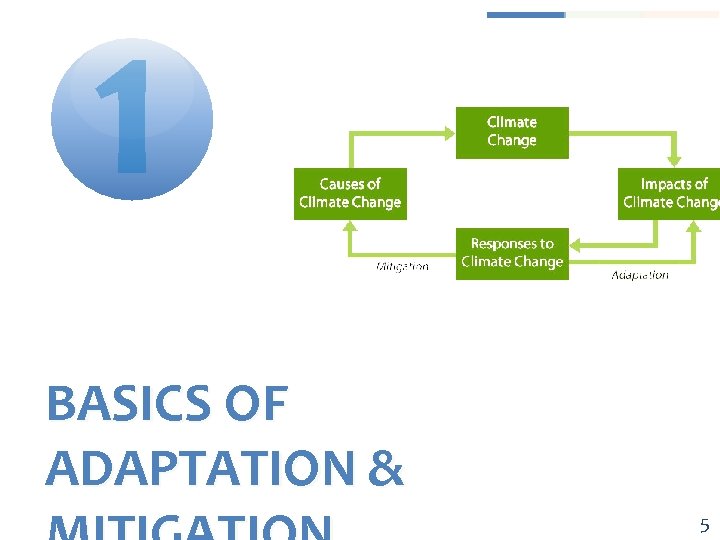 1 BASICS OF ADAPTATION & 5
 Really. Important. Science. Announcement. 6
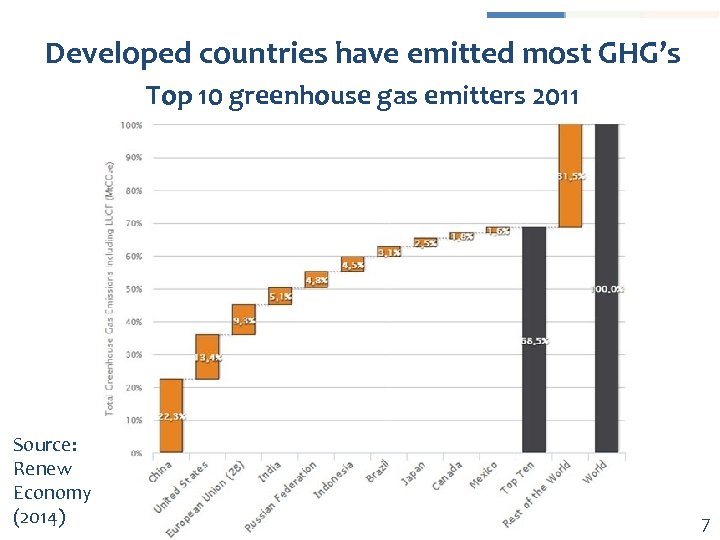 Developed countries have emitted most GHG’s Top 10 greenhouse gas emitters 2011 Source: Renew Economy (2014) 7
 Overview of health & climate change – Adaptation examples 8
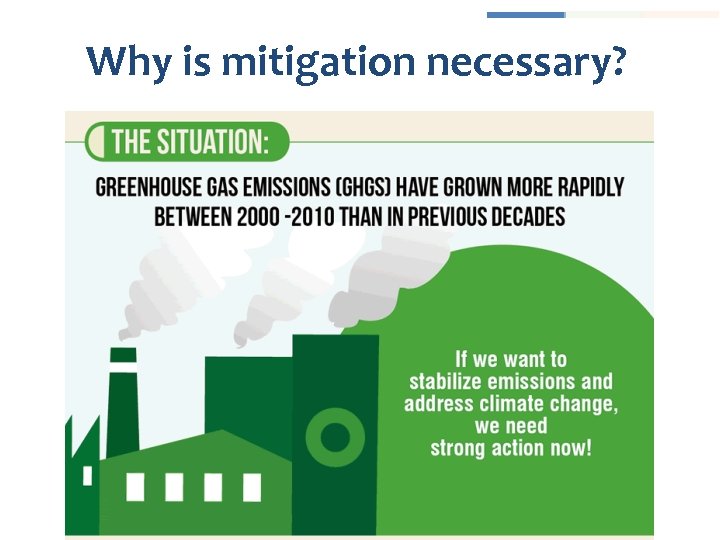 Why is mitigation necessary?
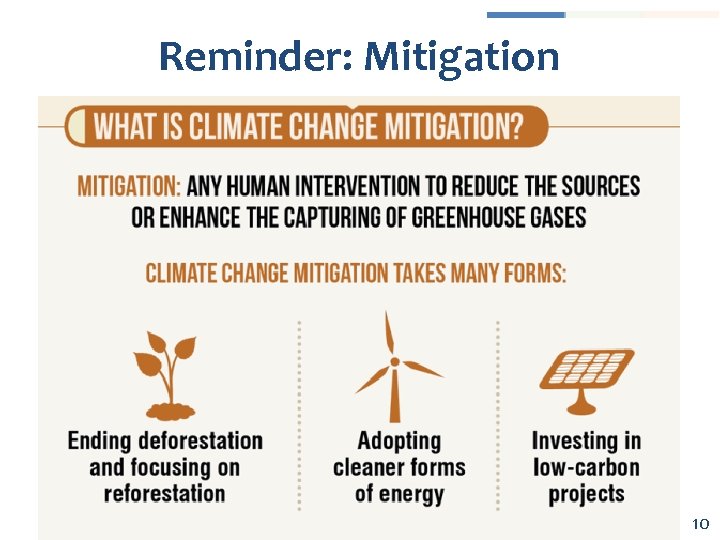 Reminder: Mitigation 10
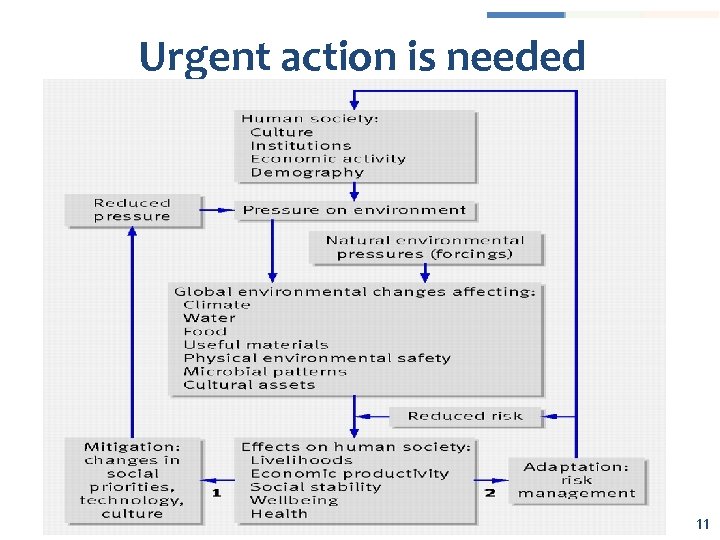 Urgent action is needed 11
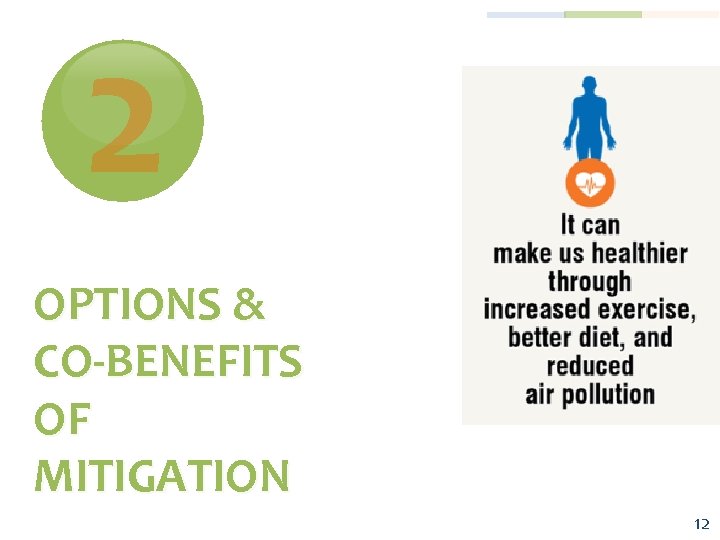 2 OPTIONS & CO-BENEFITS OF MITIGATION 12
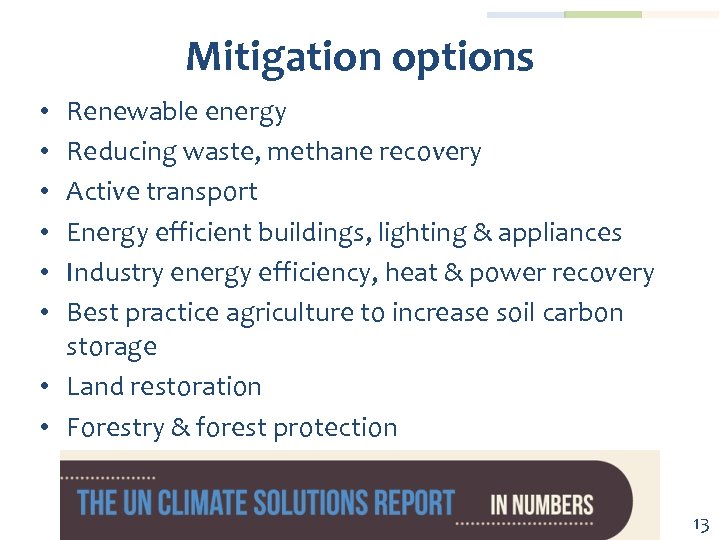 Mitigation options Renewable energy Reducing waste, methane recovery Active transport Energy efficient buildings, lighting & appliances Industry energy efficiency, heat & power recovery Best practice agriculture to increase soil carbon storage • Land restoration • Forestry & forest protection • • • 13
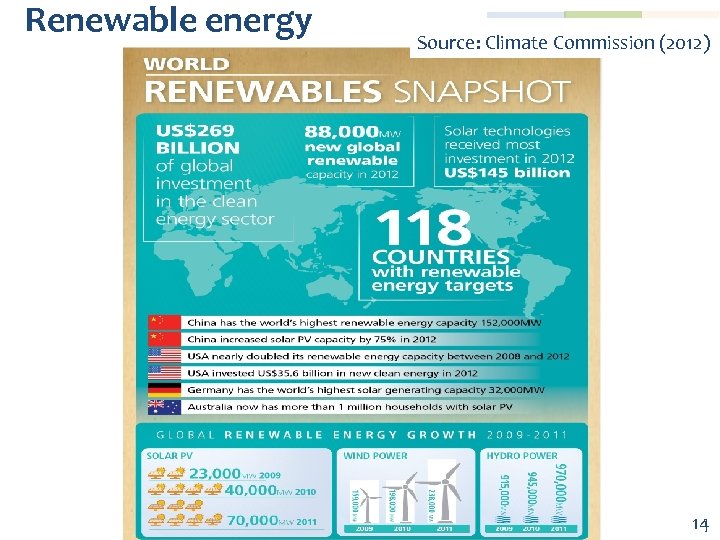 Renewable energy Source: Climate Commission (2012) 14
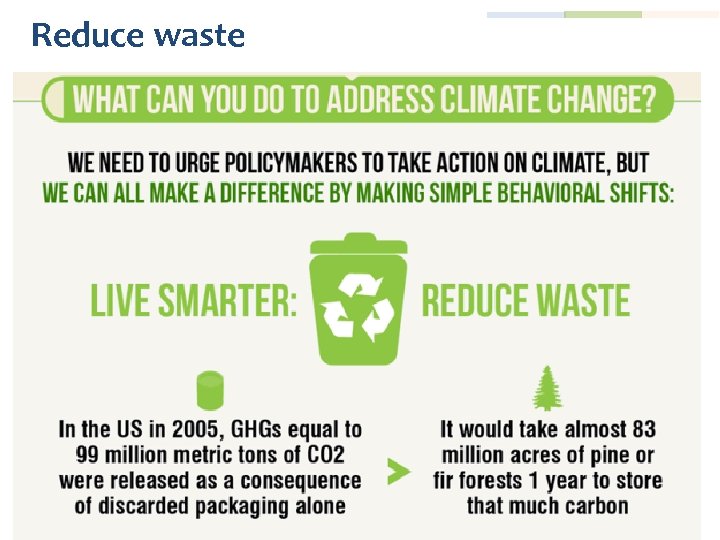 Reduce waste
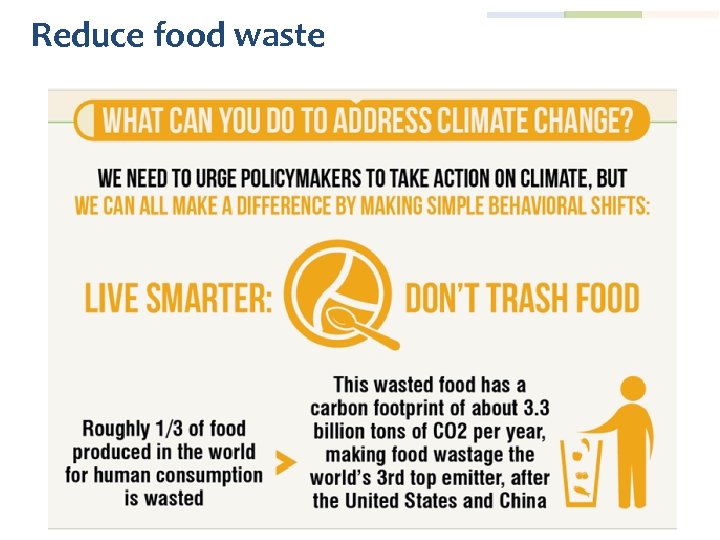 Reduce food waste
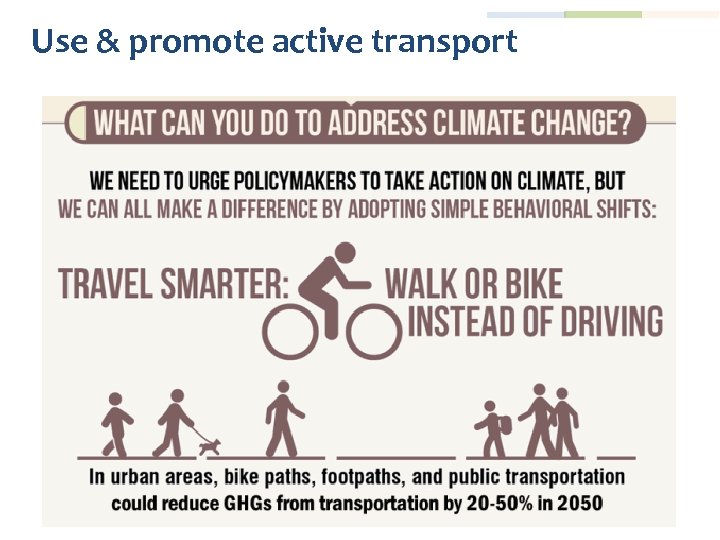 Use & promote active transport
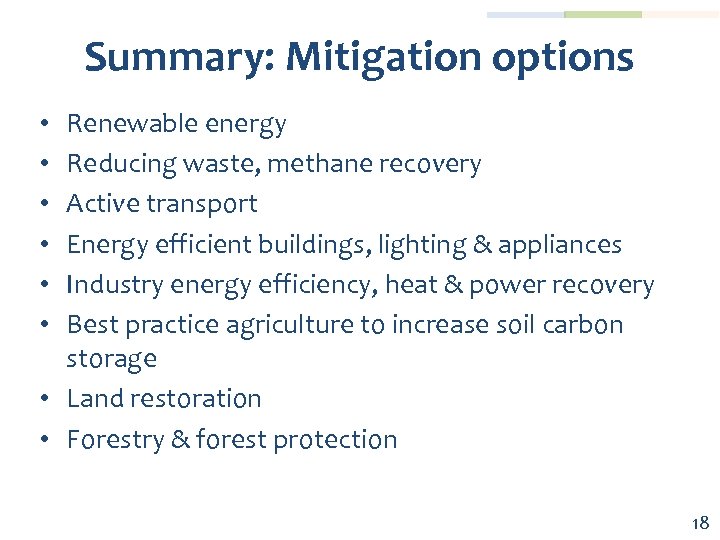 Summary: Mitigation options Renewable energy Reducing waste, methane recovery Active transport Energy efficient buildings, lighting & appliances Industry energy efficiency, heat & power recovery Best practice agriculture to increase soil carbon storage • Land restoration • Forestry & forest protection • • • 18
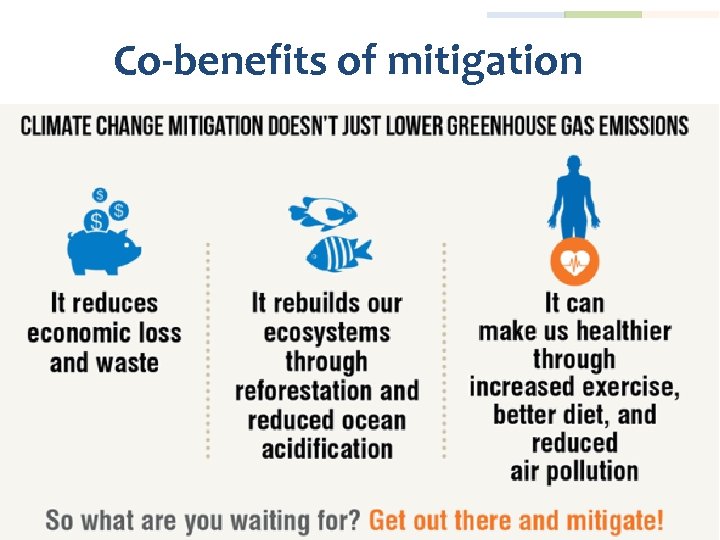 Co-benefits of mitigation
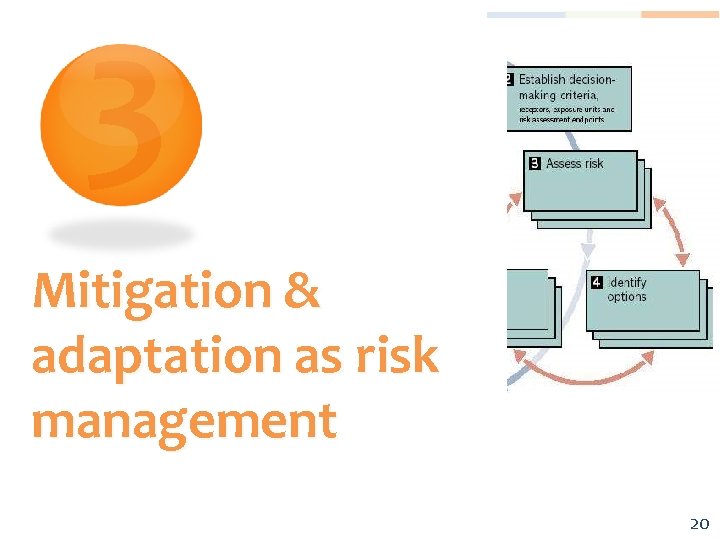 3 Mitigation & adaptation as risk management 20
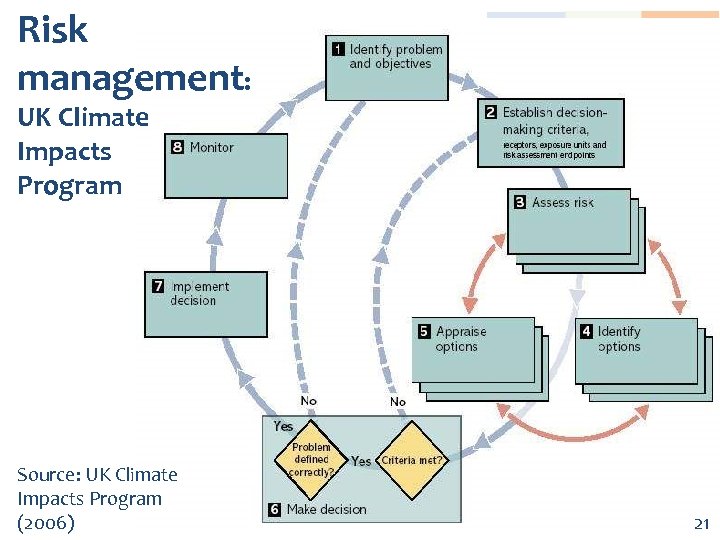 Risk management: UK Climate Impacts Program Source: UK Climate Impacts Program (2006) 21
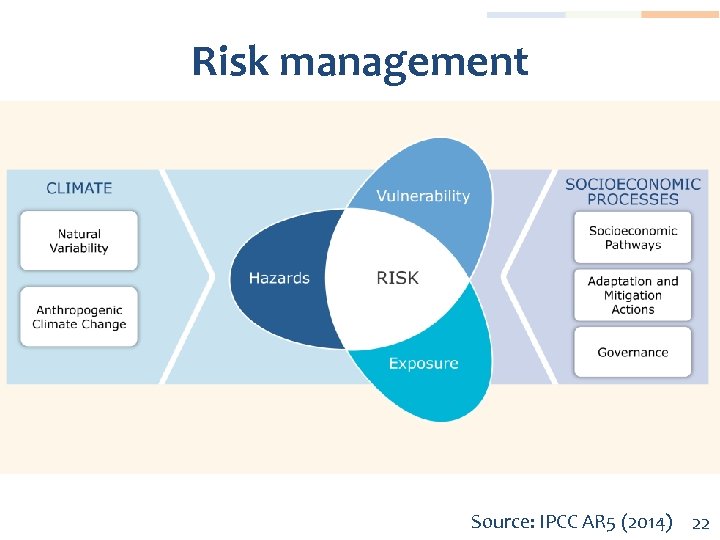 Risk management Source: IPCC AR 5 (2014) 22
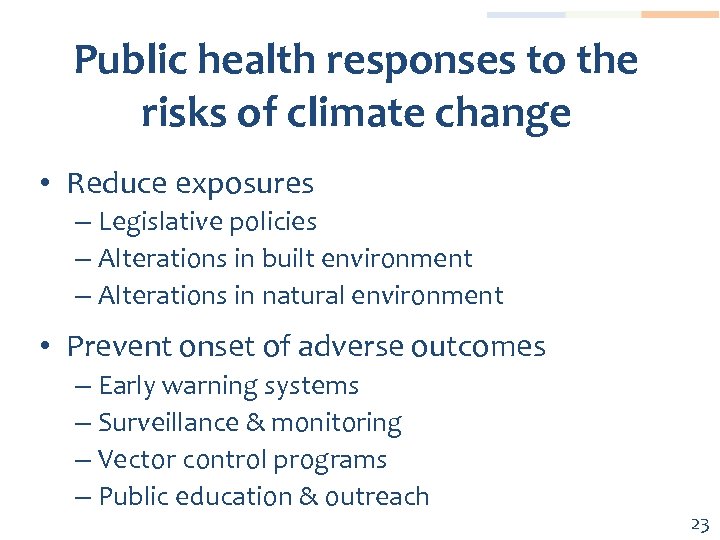 Public health responses to the risks of climate change • Reduce exposures – Legislative policies – Alterations in built environment – Alterations in natural environment • Prevent onset of adverse outcomes – Early warning systems – Surveillance & monitoring – Vector control programs – Public education & outreach 23
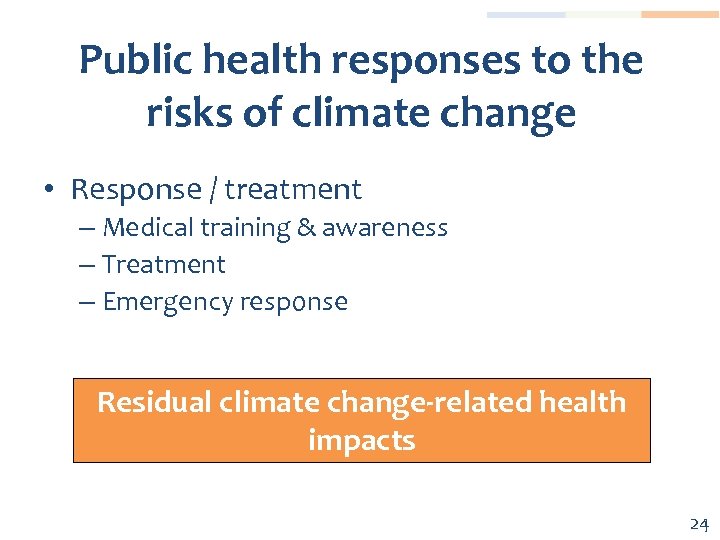 Public health responses to the risks of climate change • Response / treatment – Medical training & awareness – Treatment – Emergency response Residual climate change-related health impacts 24
 Adaptation Actions taken by individuals, institutions, & governments • Anticipatory (actions taken in advance of climate change effects) • Reactive (taken in response to experienced climate change effects) The severity of impacts will depend on the capacity to adapt & its effective deployment 25
 Questions for designing adaptation policies & measures • Adaptation to what? • What is currently being done to reduce the burden of disease? – How effective are these policies & measures? – Are additional interventions needed? • What are the projections for the outcome? – Who is vulnerable? 26
 Questions for designing adaptation policies & measures • Who adapts? How does adaptation occur? • When should interventions be implemented? • How good or likely is the adaptation? • Apply win/win or no-regrets strategies 27
 Example: Adaptation measures to reduce vector-borne diseases • Decision support tools – Early warning systems • Technology development – Vaccines & more rapid diagnostic tests • Surveillance & monitoring – Effective vector surveillance & control programs that incorporate climate change concerns • Infrastructure development – Consider possible impacts of infrastructure development, such as water storage tanks 28
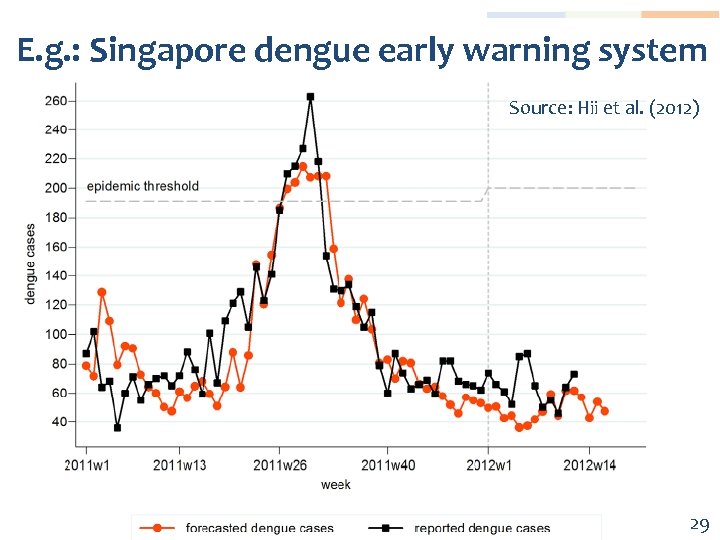 E. g. : Singapore dengue early warning system Source: Hii et al. (2012) 29
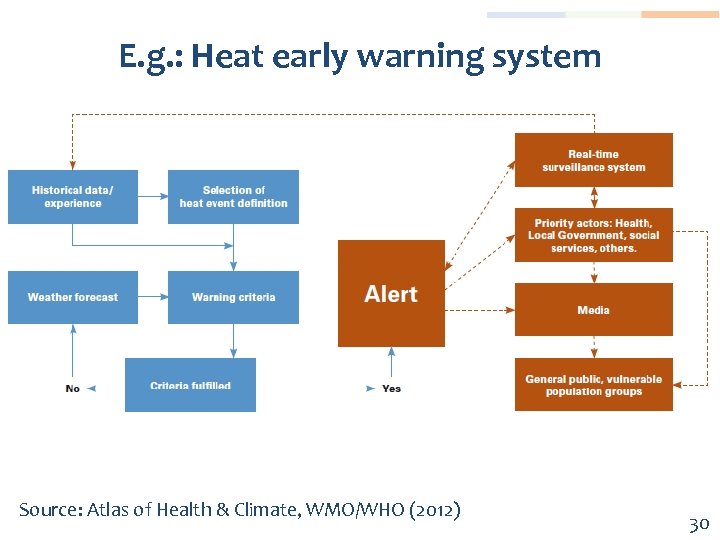 E. g. : Heat early warning system Source: Atlas of Health & Climate, WMO/WHO (2012) 30
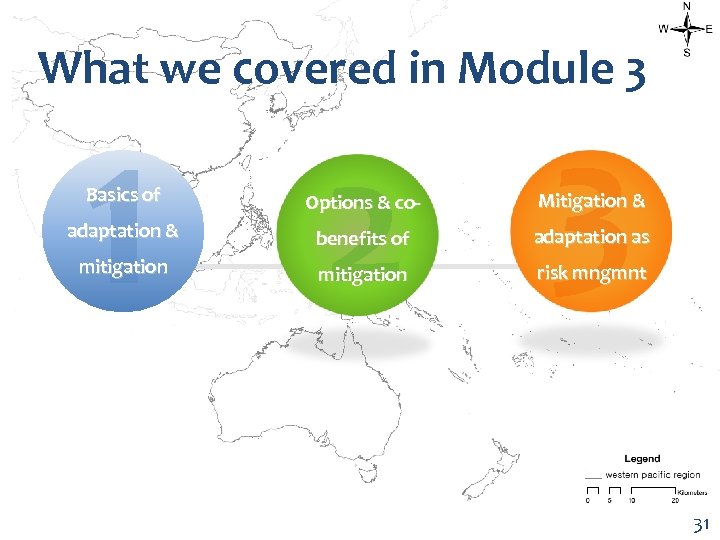 What we covered in Module 3 1 3 2 Basics of Options & co- Mitigation & adaptation & benefits of adaptation as mitigation risk mngmnt 31
 Learning from Module 3 • Two climate change responses – mitigation & adaptation • Many mitigation & adaptation activities are relevant to the health sector • Strong need for health sector to influence mitigation activities in other sectors 32
 Learning from Module 3 • If emissions are reduced (mitigation), health of the population is improved (cobenefits/win-win) • Health sector plays an important role in adaptation - requires multi-sectoral collaboration 33
 What action will you take in your work, given what you learnt in Module 3?
 Coming up next… Module 14: UNFCCC & international IPCC negotiations 35