


 Скачать презентацию Module 13 External Quality Assessment EQA On-site Evaluation
cd3d1bd13187968769093f85caa30d01.ppt
- Количество слайдов: 41
 Module 13: External Quality Assessment (EQA) On-site Evaluation and Re-Testing
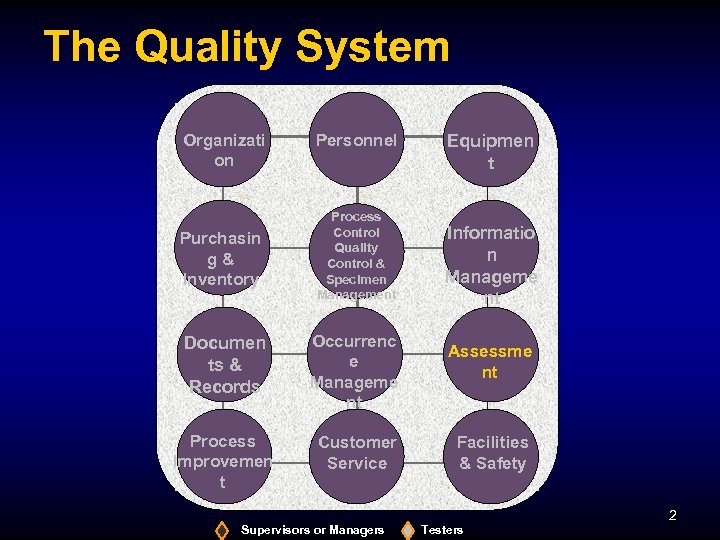 The Quality System Organizati on Purchasin g& Inventory Personnel Process Control Quality Control & Specimen Management Documen ts & Records Occurrenc e Manageme nt Process Improvemen t Customer Service Equipmen t Informatio n Manageme nt Assessme nt Facilities & Safety 2 Supervisors or Managers Testers
 Learning Objectives At the end of this module, you will be able to: • Assess operations at test site to determine if quality requirements are met • Take corrective actions following External Quality Assessment (EQA) • Keep appropriate records related to EQA • Avoid common problems associated with EQA specimen management 3 Supervisors or Managers Testers
 Content Overview • What is EQA and why is it important? • EQA Responsibilities • EQA Methods § Proficiency Testing § On-Site Evaluation § Re-testing • How to implement EQA 4 Supervisors or Managers Testers
 External Quality Assessment (EQA): Definition Objective assessment of a test site’s operations and performance by an external agency or personnel 5 Supervisors or Managers Testers
 Why EQA? • Allows comparison of performance and results among different test sites • Provides early warning for systematic problems associated with kits or operations • Provides objective evidence of testing quality • Indicates areas that need improvement • Identifies training needs 6 Supervisors or Managers Testers
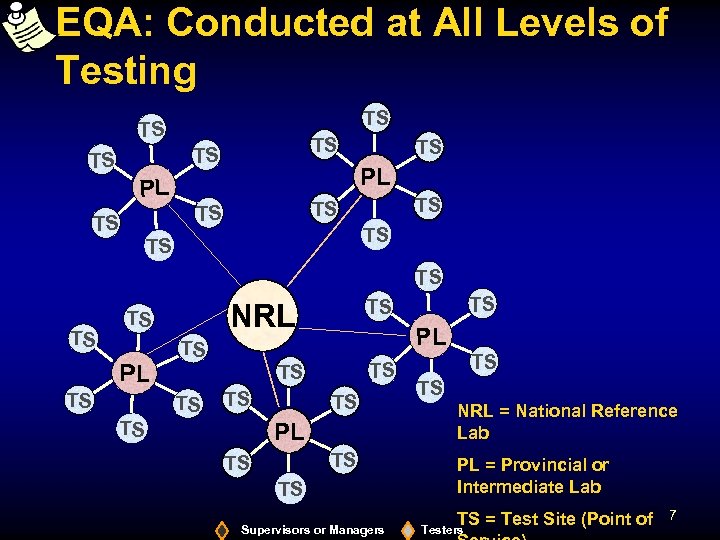 EQA: Conducted at All Levels of Testing TS TS TS PL PL TS TS TS NRL TS PL TS TS TS Supervisors or Managers TS TS NRL = National Reference Lab PL = Provincial or Intermediate Lab TS = Test Site (Point of Testers 7
 Management Responsibilities: Overview • Determines policies for EQA (WHO, WHAT, WHEN, HOW) • Assigns responsibility • Establishes and maintains a system for assessment visits § § Schedules visits Conducts evaluations • Receives EQA results and supports corrective action measures • Monitors and maintains records • Investigates deficiencies • Manages corrective action efforts • Communicates outcomes 8 Supervisors or Managers Testers
 Testing Personnel’s Responsibilities: Overview • • Participate in the EQA program Take corrective actions Maintain EQA records Communicate outcomes to supervisors 9 Supervisors or Managers Testers
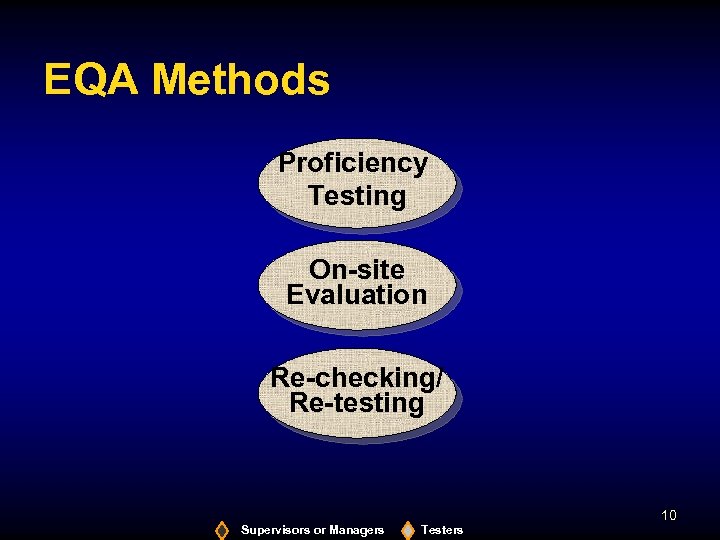 EQA Methods Proficiency Testing On-site Evaluation Re-checking/ Re-testing 10 Supervisors or Managers Testers
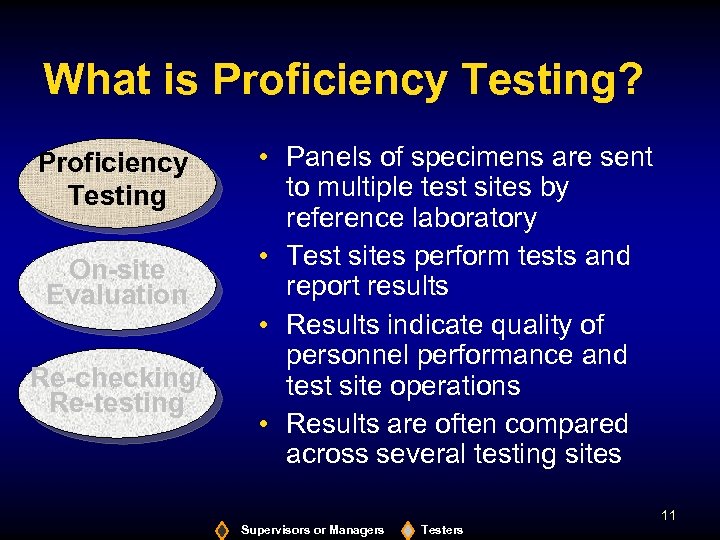 What is Proficiency Testing? Proficiency Testing On-site Evaluation Re-checking/ Re-testing • Panels of specimens are sent to multiple test sites by reference laboratory • Test sites perform tests and report results • Results indicate quality of personnel performance and test site operations • Results are often compared across several testing sites 11 Supervisors or Managers Testers
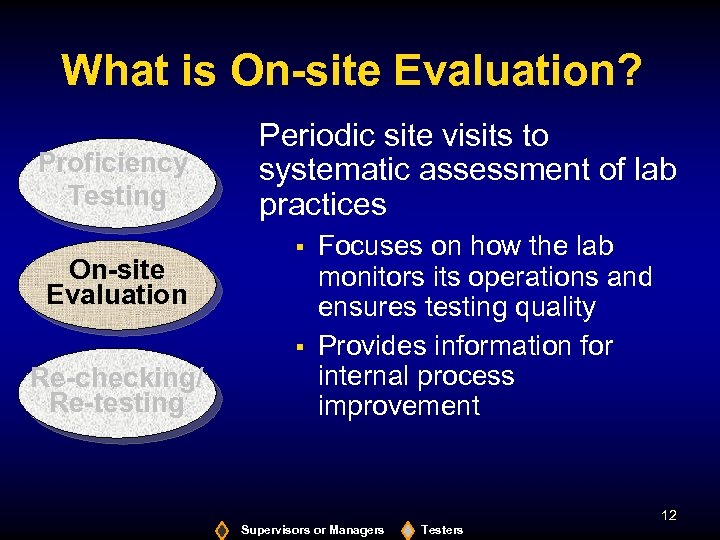 What is On-site Evaluation? Proficiency Testing On-site Evaluation Periodic site visits to systematic assessment of lab practices § § Re-checking/ Re-testing Focuses on how the lab monitors its operations and ensures testing quality Provides information for internal process improvement 12 Supervisors or Managers Testers
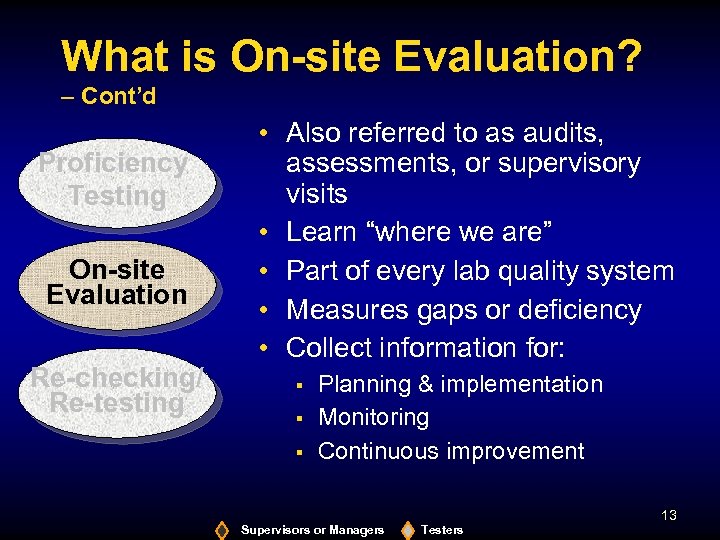 What is On-site Evaluation? – Cont’d Proficiency Testing On-site Evaluation Re-checking/ Re-testing • Also referred to as audits, assessments, or supervisory visits • Learn “where we are” • Part of every lab quality system • Measures gaps or deficiency • Collect information for: § § § Planning & implementation Monitoring Continuous improvement 13 Supervisors or Managers Testers
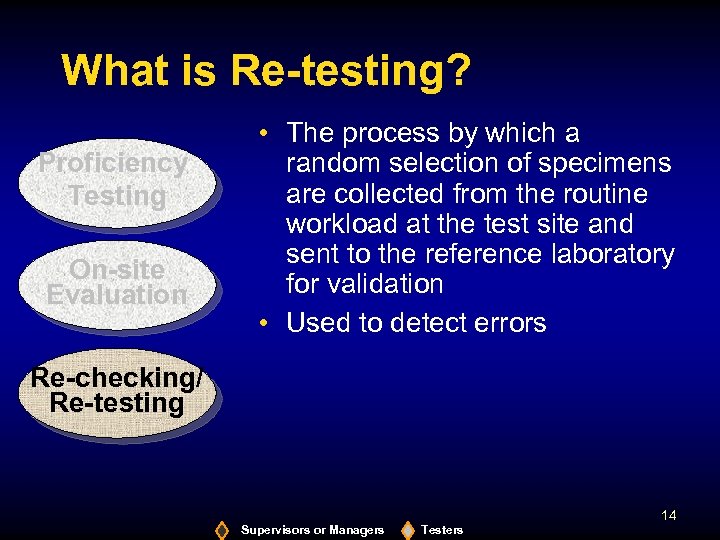 What is Re-testing? Proficiency Testing On-site Evaluation • The process by which a random selection of specimens are collected from the routine workload at the test site and sent to the reference laboratory for validation • Used to detect errors Re-checking/ Re-testing 14 Supervisors or Managers Testers
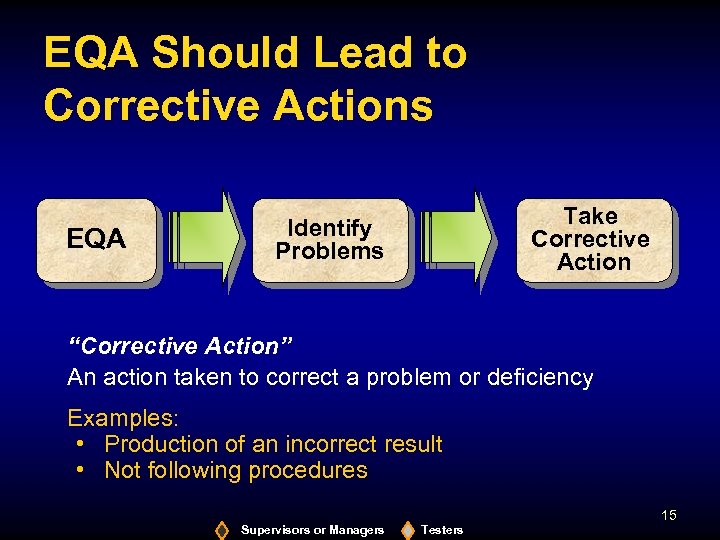 EQA Should Lead to Corrective Actions EQA Take Corrective Action Identify Problems “Corrective Action” An action taken to correct a problem or deficiency Examples: • Production of an incorrect result • Not following procedures 15 Supervisors or Managers Testers
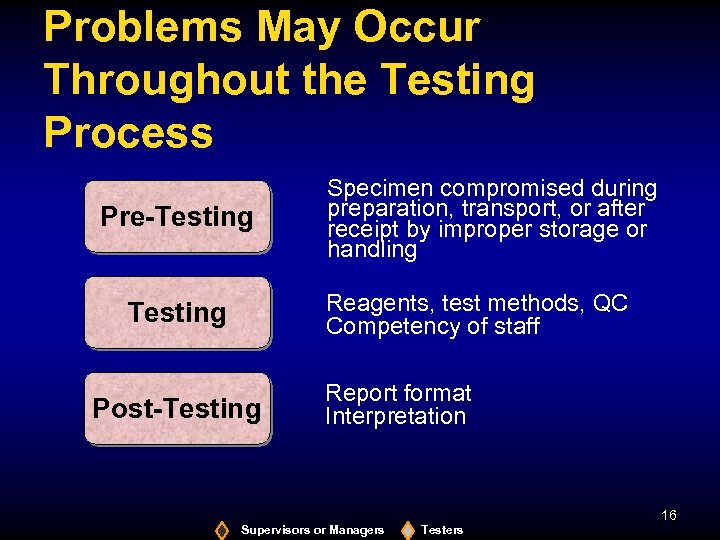 Problems May Occur Throughout the Testing Process Pre-Testing Specimen compromised during preparation, transport, or after receipt by improper storage or handling Reagents, test methods, QC Competency of staff Testing Post-Testing Report format Interpretation 16 Supervisors or Managers Testers
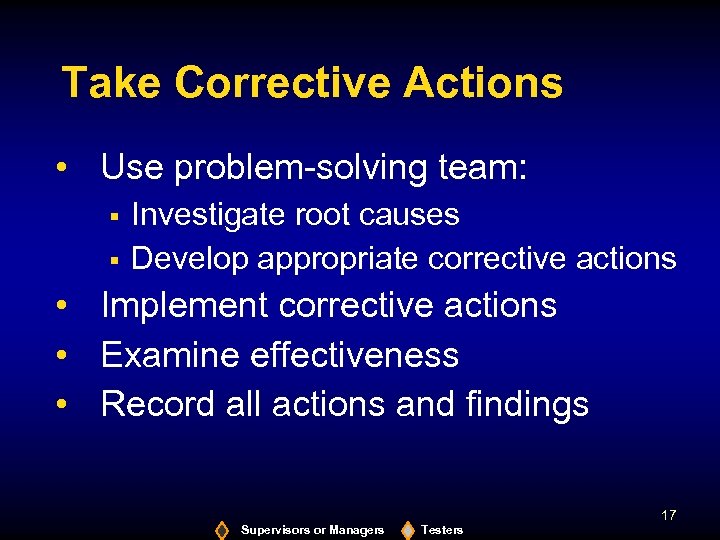 Take Corrective Actions • Use problem-solving team: § § Investigate root causes Develop appropriate corrective actions • Implement corrective actions • Examine effectiveness • Record all actions and findings 17 Supervisors or Managers Testers
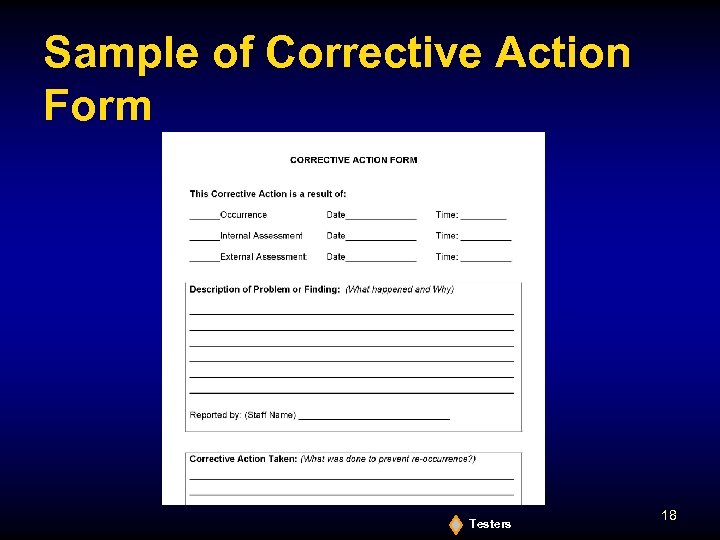 Sample of Corrective Action Form Testers 18
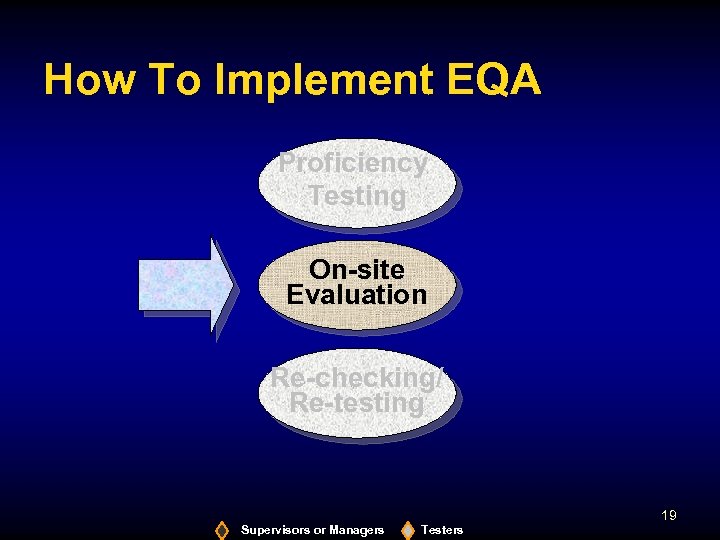 How To Implement EQA Proficiency Testing On-site Evaluation Re-checking/ Re-testing 19 Supervisors or Managers Testers
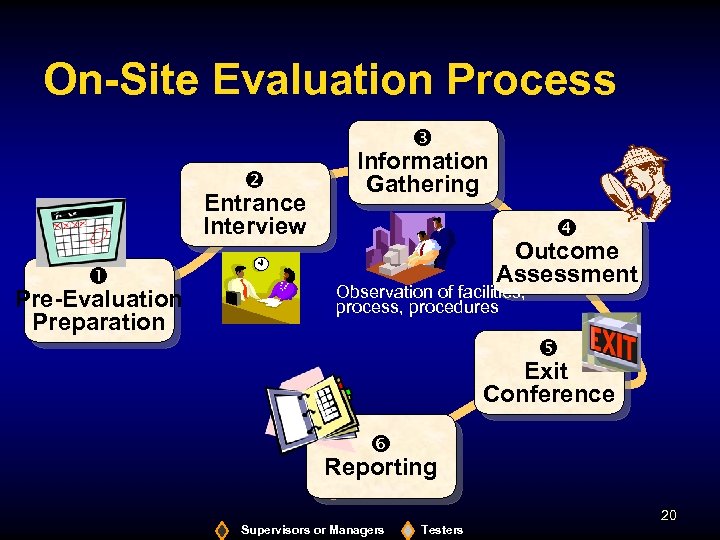 On-Site Evaluation Process Entrance Interview Pre-Evaluation Preparation Information Gathering Outcome Assessment Observation of facilities, process, procedures Exit Conference Reporting 20 Supervisors or Managers Testers
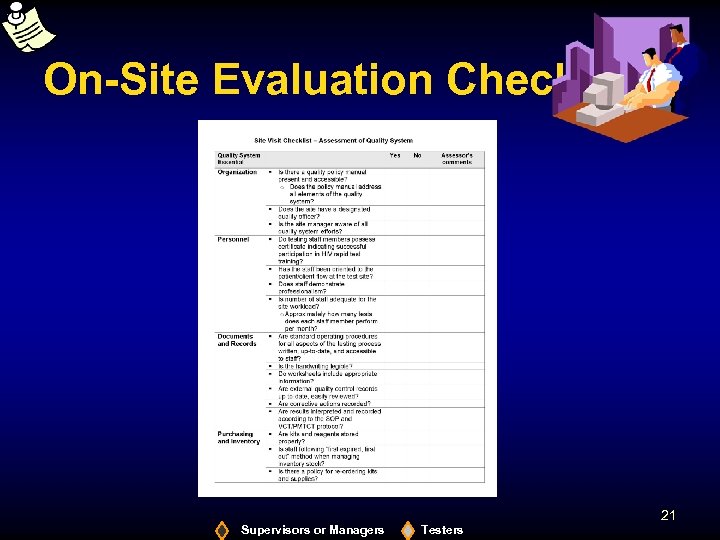 On-Site Evaluation Checklist 21 Supervisors or Managers Testers
 Tester Responsibilities: Ensuring a Productive Site Visit • Before Visit: § § Record keeping is essential. Get organized Confirm date of visit Review written policies and procedures Conduct internal assessment in preparation of site visit • During Visit § § Participate in visits – cooperate Ask questions of site assessors • After Visit § Take corrective actions, where necessary Remember – visits are instructive, not punitive 22 Supervisors or Managers Testers
 On-site Evaluation: Pre-Evaluation Preparation § Assign Responsibility § § Laboratory management Quality Manager Use Integrated team approach Determine who will conduct on-site evaluations § Select auditors with necessary skills: § § Attention to detail Ability to communicate effectively Diplomacy Provide appropriate training • Schedule site visits 23 Supervisors or Managers
 On-site Evaluation: Pre-Evaluation Preparation • Determine site visit frequency: § Established sites - At least twice per year § New Sites - Quarterly • For efficiency, cluster evaluations geographically • Schedule in advance § Announced or unannounced visits 24 Supervisors or Managers
 On-site Evaluation: Entrance Interview The entrance interview sets the tone for the entire visit • Be prepared, positive and courteous • Introduce evaluation team - show identification • Provide overview of process in terms of what will be done § § § Review of facility Record review Observation Interview with testing staff Use of proficiency panel Exit interview Supervisors or Managers 25
 On-site Evaluation: Information Gathering • Observe physical layout of the site • Evaluate testing operations § § § Specimen collection Observation of test performance Quality control Inventory of kits Record-keeping • Use quality systems checklist • Conduct in an instructional, not punitive, manner. 26 Supervisors or Managers
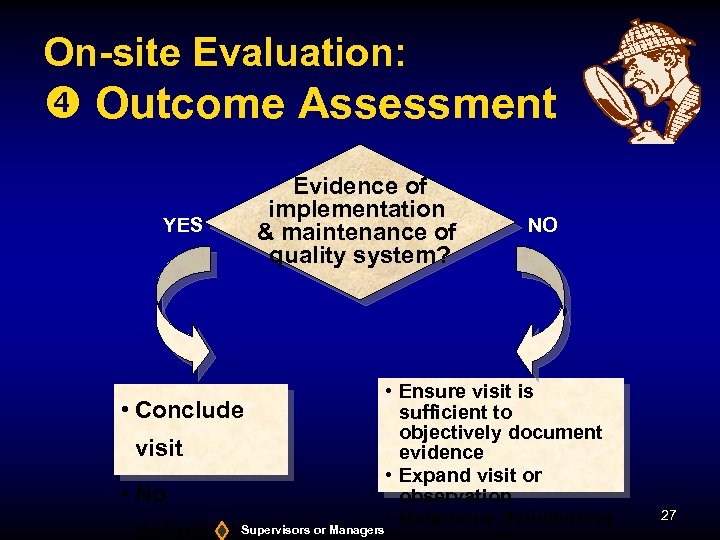 On-site Evaluation: Outcome Assessment YES Evidence of implementation & maintenance of quality system? NO • Ensure visit is • Conclude sufficient to objectively document visit evidence • Expand visit or • No observation • Reference deficiencies Supervisors or Managers deficiencies 27
 On-Site Evaluation: Exit Conference Review findings with supervisory and testing staff • Make positive statements first – acknowledge staff cooperation and support • Address negative findings – allow test site to discuss findings and provide additional information • Provide instructions and timeframe for submitting plan for correcting problems 28 Supervisors or Managers
 On-site Evaluation: Reporting • Include information: § § § Site Name & Location Date of Visit Assessment Team Members Major Findings Recommendations for corrective actions • Submit completed checklist and report to relevant authorities 29 Supervisors or Managers
 Example: Assessment Report 30 Supervisors or Managers Testers
 Role Play: On-site Evaluation Visit • Objective: To experience situations which may compromise test results that an evaluator may observe • Volunteers to play the following roles: § § Patient/Client Quality Manager Laboratory Manager Person performing tests • Rest of the group will observe • Role play time: 20 minutes 31 Supervisors or Managers Testers
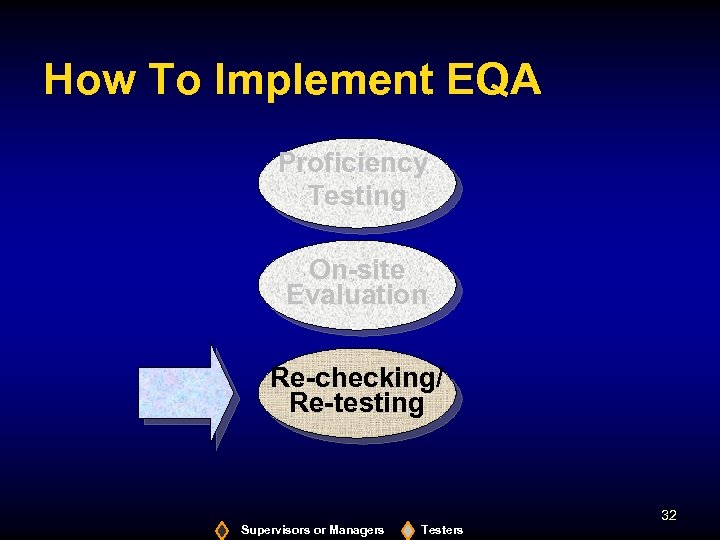 How To Implement EQA Proficiency Testing On-site Evaluation Re-checking/ Re-testing 32 Supervisors or Managers Testers
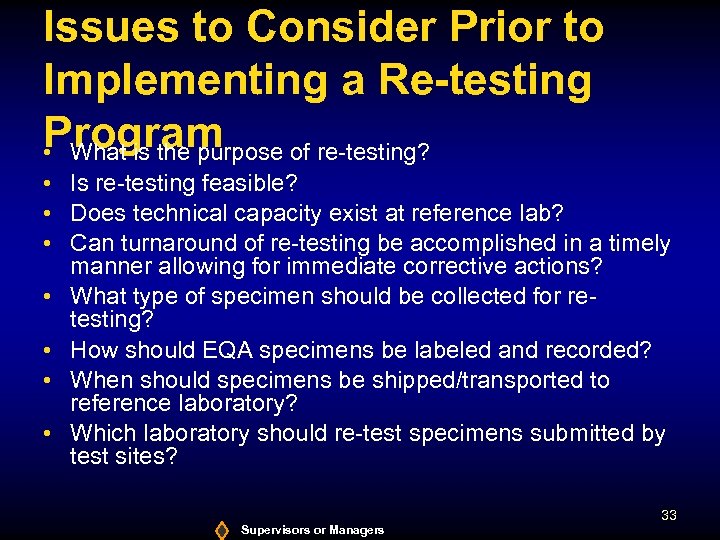 Issues to Consider Prior to Implementing a Re-testing Program • What is the purpose of re-testing? • Is re-testing feasible? • Does technical capacity exist at reference lab? • Can turnaround of re-testing be accomplished in a timely manner allowing for immediate corrective actions? • What type of specimen should be collected for retesting? • How should EQA specimens be labeled and recorded? • When should specimens be shipped/transported to reference laboratory? • Which laboratory should re-test specimens submitted by test sites? 33 Supervisors or Managers
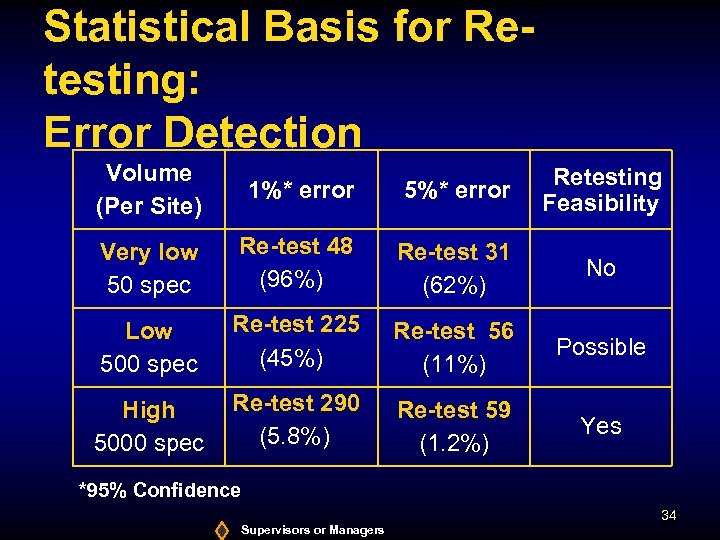 Statistical Basis for Retesting: Error Detection Volume (Per Site) 1%* error 5%* error Retesting Feasibility Very low 50 spec Re-test 48 (96%) Re-test 31 (62%) No Low 500 spec Re-test 225 (45%) Re-test 56 (11%) Possible High 5000 spec Re-test 290 (5. 8%) Re-test 59 (1. 2%) Yes *95% Confidence 34 Supervisors or Managers
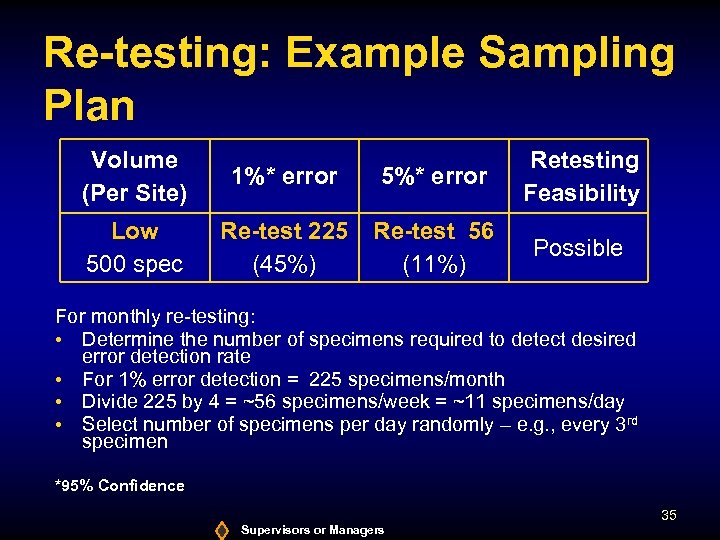 Re-testing: Example Sampling Plan Volume (Per Site) 1%* error 5%* error Retesting Feasibility Low 500 spec Re-test 225 (45%) Re-test 56 (11%) Possible For monthly re-testing: • Determine the number of specimens required to detect desired error detection rate • For 1% error detection = 225 specimens/month • Divide 225 by 4 = ~56 specimens/week = ~11 specimens/day • Select number of specimens per day randomly – e. g. , every 3 rd specimen *95% Confidence 35 Supervisors or Managers
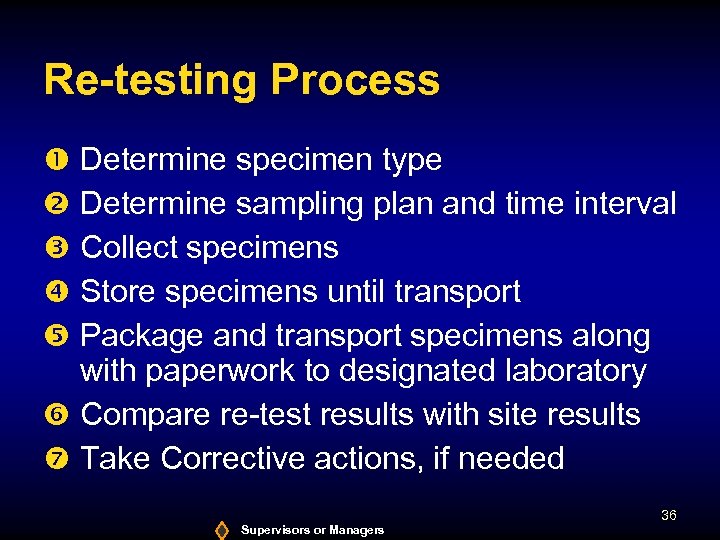 Re-testing Process Determine specimen type Determine sampling plan and time interval Collect specimens Store specimens until transport Package and transport specimens along with paperwork to designated laboratory Compare re-test results with site results Take Corrective actions, if needed 36 Supervisors or Managers
 Tester Responsibilities: Retesting Follow written policies and procedures Collect appropriate specimen Record keeping is essential Take necessary precautions to avoid transcription errors • Package and transport EQA specimens to designated reference laboratory • Take necessary corrective actions • • Supervisors or Managers 37 Testers
 Specimen Requirements • Dried Blood Spots (DBS) § § 100 µl collected on labeled filter paper Store refrigerated in appropriately packaged re-sealable plastic bag • Serum or Plasma § § § 0. 5 ml aliquot in labeled cryovial Store at 2 -8ºC for up to 1 week Store at -20ºC or below if longer than 1 week 38 Supervisors or Managers Testers
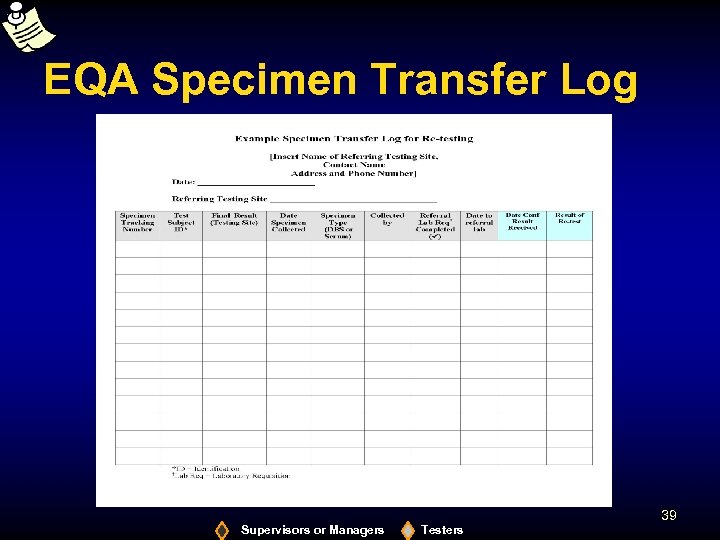 EQA Specimen Transfer Log 39 Supervisors or Managers Testers
 Specimen Management : Common Problems • Transcription errors § Mislabeling cryovial or DBS card § From Lab register to specimen transfer log § From reference lab to testing site § Inadequate specimens 40 Supervisors or Managers Testers
 Summary • Describe your responsibilities in EQA. • What is proficiency testing? On-site evaluation? Re-testing? • Explain the process for on-site evaluation. • What are some issues to consider prior to implementing a re-testing program? • Explain the process for re-testing. • What are some common problems associated with specimen management? 41 Supervisors or Managers Testers