

Modes of Transportation in Supply Chain Trey Lynn

 Скачать презентацию Modes of Transportation in Supply Chain Trey Lynn
15268-modes_of_transportation_2.ppt
- Количество слайдов: 22
Modes of Transportation in Supply Chain Trey Lynn Brigham Young University BusM 361 Professor S. Tom Foster
Agenda Transportation defined Brainstorming Modes of transportation Strengths and weaknesses of each mode Pricing UPS example Exercise Summary
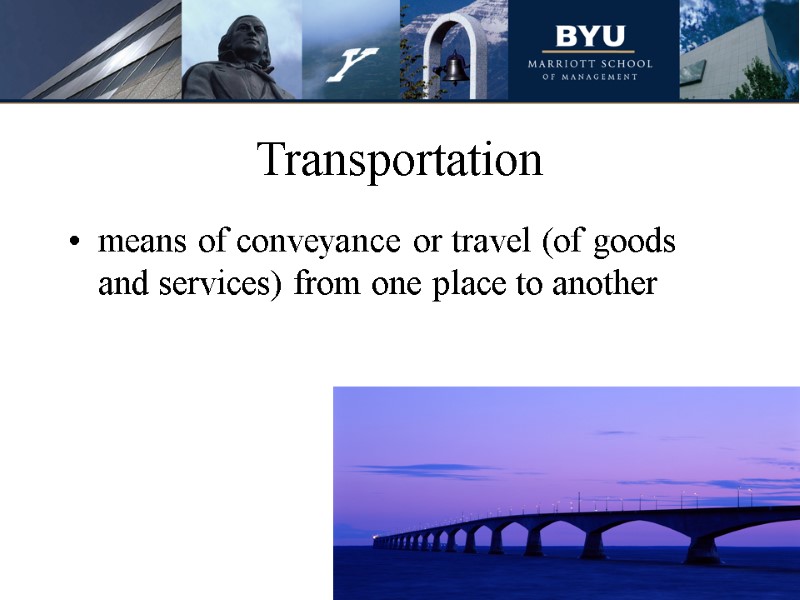
Transportation means of conveyance or travel (of goods and services) from one place to another
Brainstorming What types of products require transportation in your organization? How far are these products required to travel? How important is the speed of delivery for these products?
Modes of Transportation Motor Air Rail Water Pipeline Intermodal
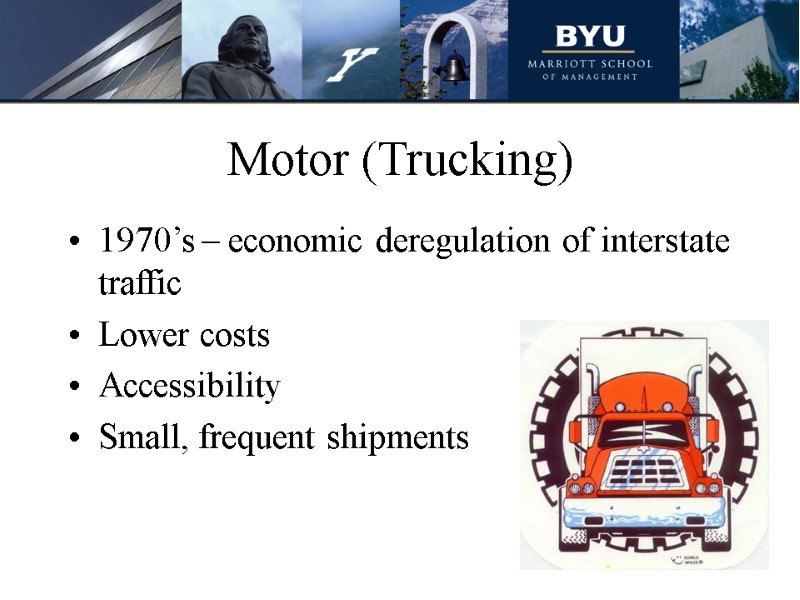
Motor (Trucking) 1970’s – economic deregulation of interstate traffic Lower costs Accessibility Small, frequent shipments
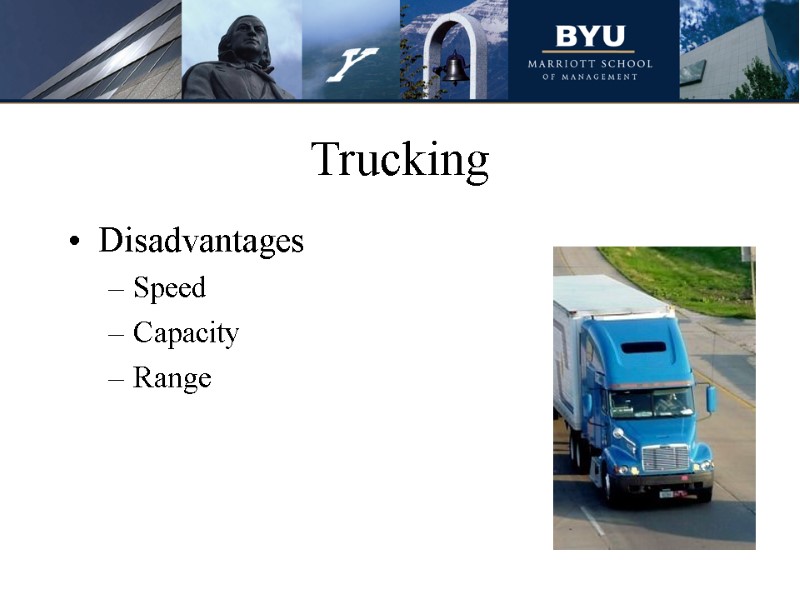
Trucking Disadvantages Speed Capacity Range
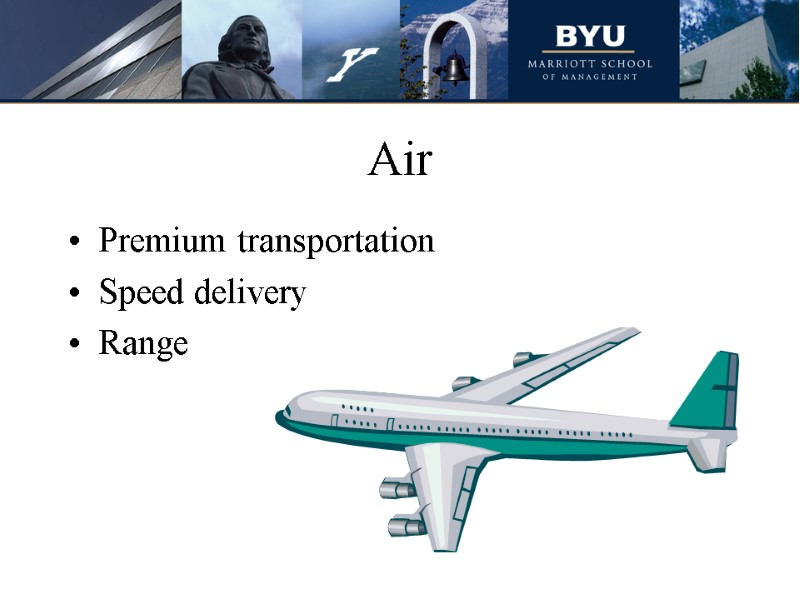
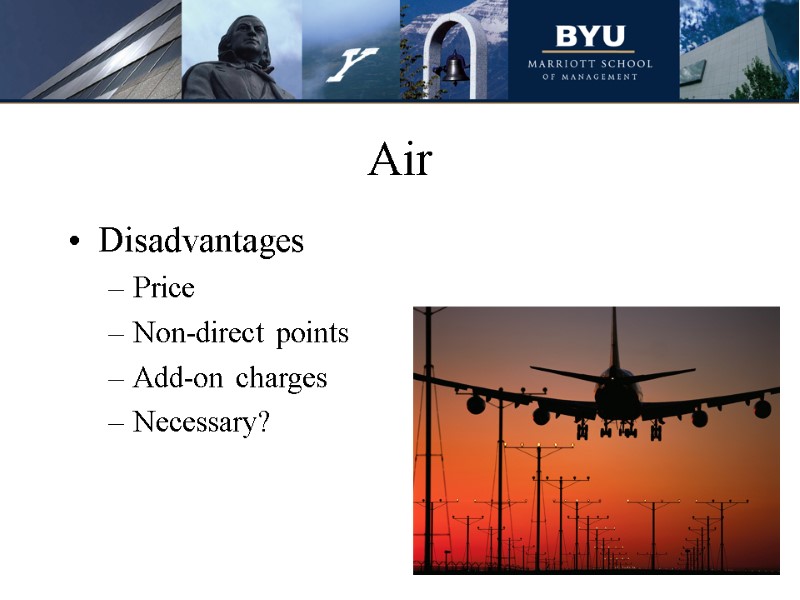
Air Premium transportation Speed delivery Range
Air Disadvantages Price Non-direct points Add-on charges Necessary?
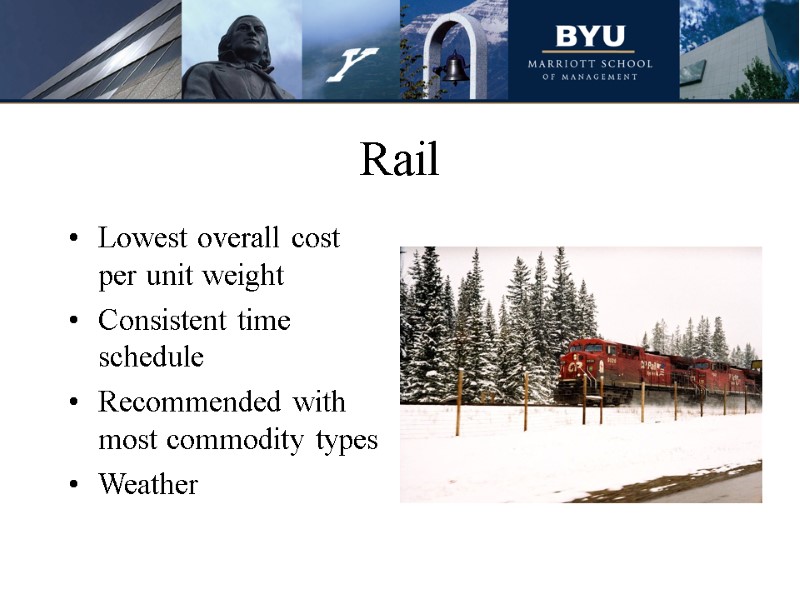
Rail Lowest overall cost per unit weight Consistent time schedule Recommended with most commodity types Weather
Rail Disadvantages Inflexibility Potential damage of goods Ineffective with small shipments
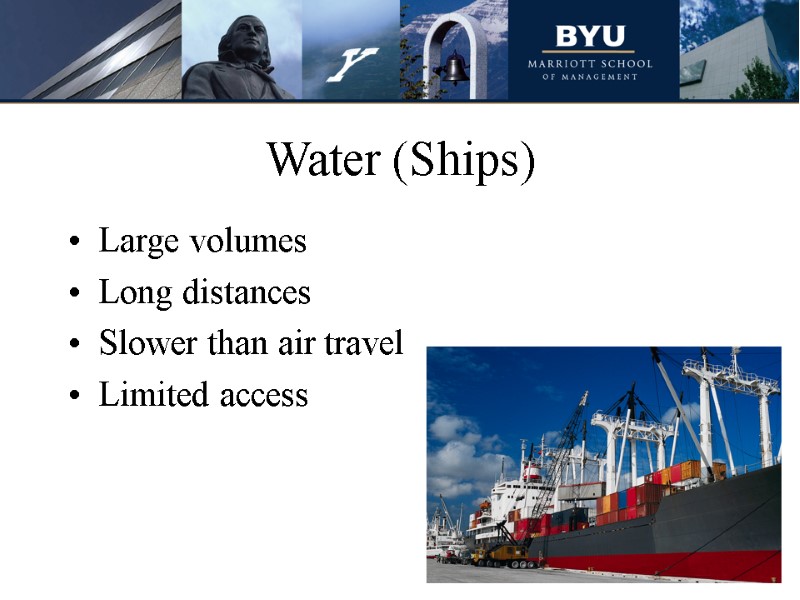
Water (Ships) Large volumes Long distances Slower than air travel Limited access
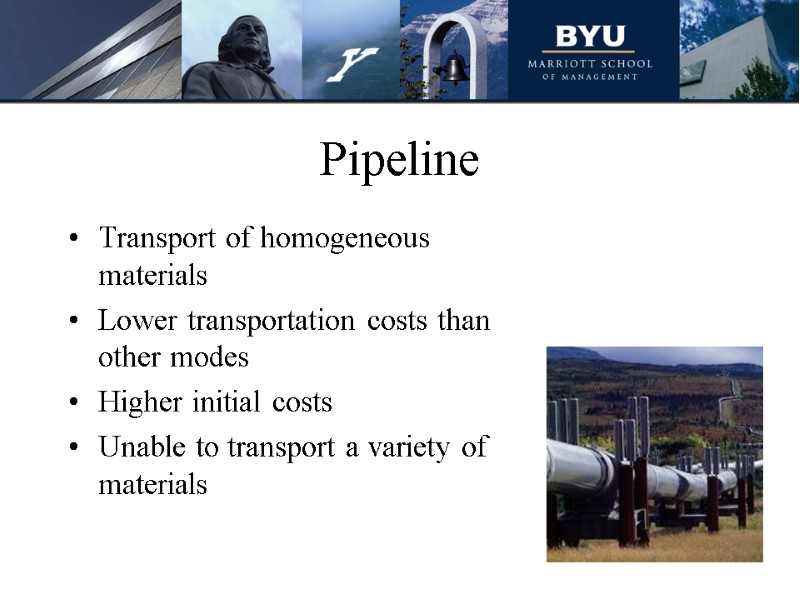
Pipeline Transport of homogeneous materials Lower transportation costs than other modes Higher initial costs Unable to transport a variety of materials
Intermodal Use of various transportation modes Containers More popular due to globalization
Pricing Handling characteristics Distance freight is moved Weight of freight Costs inversely related to speed of service
United Parcel Service Small package shipper Business built around transportation Effective intermodal transportation
UPS - Methods Trucks Small, frequent shipments Deliver directly to homes and businesses Air Time sensitive shipments Small packages (long distances)
UPS - Methods Rail Transcontinental distances Used primarily in intermodal transport Sea Door to door ocean shipping Weekly departures between major ports
UPS Provides expertise as a resource to businesses http://www.ups-scs.com/transportation/
Exercise Take ideas from brainstorming and decide which modes of transportation would be best for your company. List circumstances which would require using alternate modes of transportation and consequences your company would encounter.
Summary Each mode of transportation has its own strengths and weaknesses The effectiveness of each mode depends on several factors including distance, price, and timeliness Services exist to help choose the best modes of transportation
Bibliography Cavinato, Joseph L, Ralph G Kauffman. The Purchasing Handbook. The McGraw-Hill Companies, 2002, New York, NY. Copacino, William C. and James F. Robeson. The Logistics Handbook. The Free Press, 1994, New York, NY. Taylor, David. Global Cases in Logistics and Supply Chain Management. International Thomson Business Press, 1997, London, UK. http://www.ups-scs.com/transportation/