


 Скачать презентацию Modernity and Today s Japan with reference to Woman
2a7751933be7cada4b34e126f6945444.ppt
- Количество слайдов: 33
 Modernity and Today’s Japan (with reference to Woman in the Dunes) Peter Nosco May 30, 2013
 “The Japanese Miracle” • As recently as fifty years ago, Japan was the only Asian country universally agreed to have achieved “modernity”. • The manner in which this came about was perceived by many to be a kind of miracle. • This launched a quest to duplicate the accomplishment elsewhere. • But was it a “miracle” and could it be reproduced?
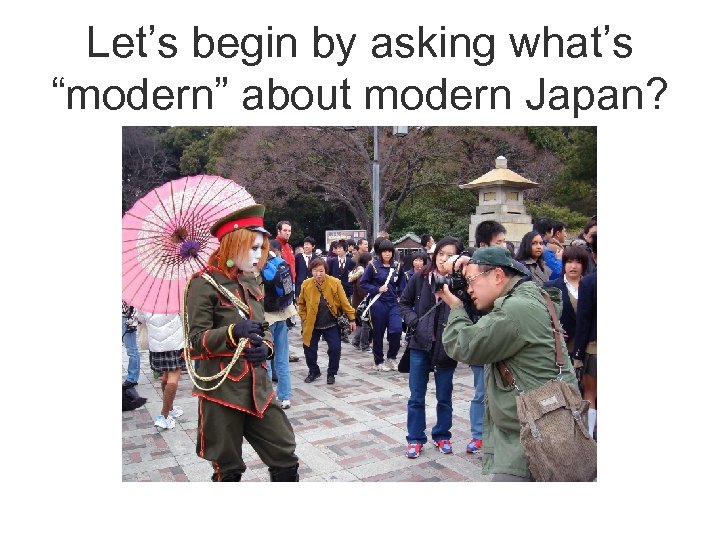 Let’s begin by asking what’s “modern” about modern Japan?
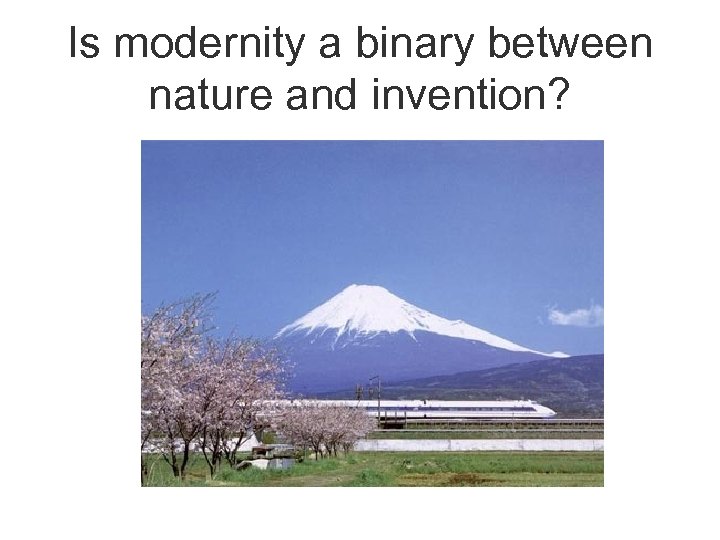 Is modernity a binary between nature and invention?
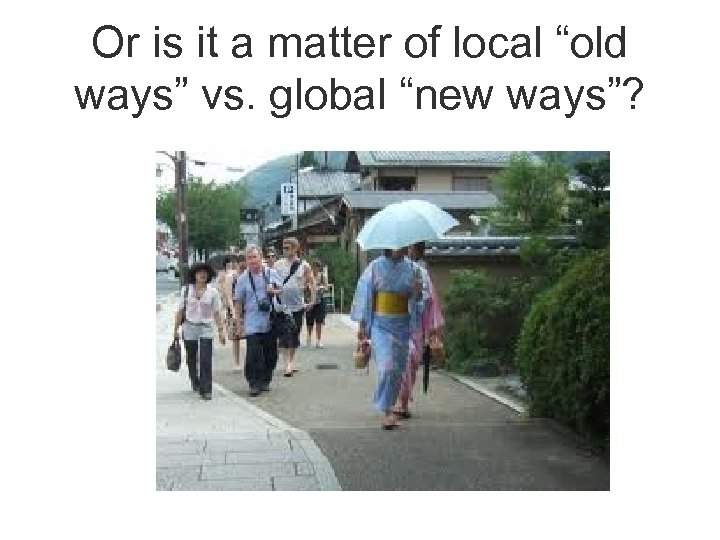 Or is it a matter of local “old ways” vs. global “new ways”?
 To what extent is modernity social and cultural?
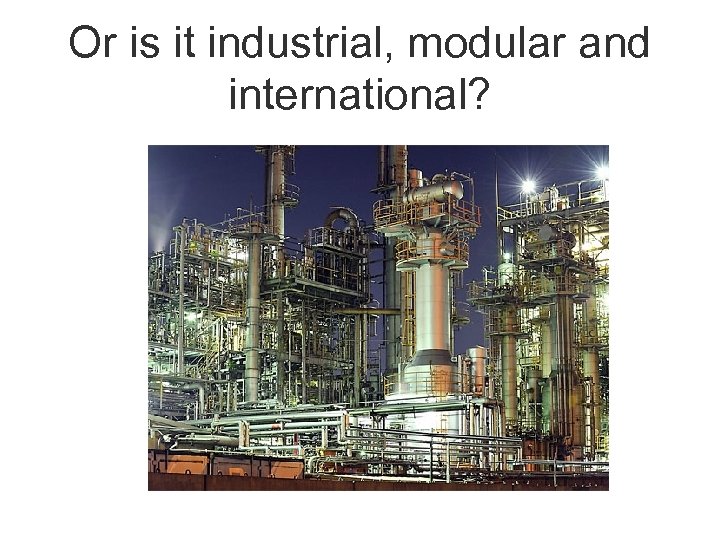 Or is it industrial, modular and international?
 Japan blurs the binary of premodern and modern As we’ve seen, 200 years ago, as now, one finds: ü High levels of literacy ü Surplus wealth distributed broadly, but not equitably ü Superb resource mobilization ü Excellent transportation and communication infrastructure
 More continuities • Strong sense of national (collective) identity • Weak sense of public sphere, with samurai as only true citizens. – What Robert Ward called a “subject political culture” • Status society – An organic (organism-like) understanding of society
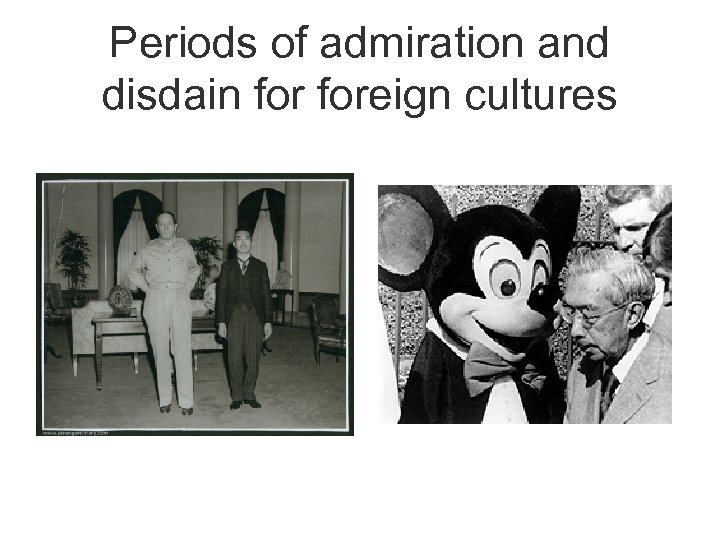 Periods of admiration and disdain foreign cultures
 Embracing modernity vs. overcoming modernity • Goto-Jones writes of “embracing” modernity on the one hand, and “overcoming” modernity on the other. • The basis for this ambivalence depends on who is doing the defining of modernity. • The allure and challenge of modernity thus conflicts with the problem of modernity.
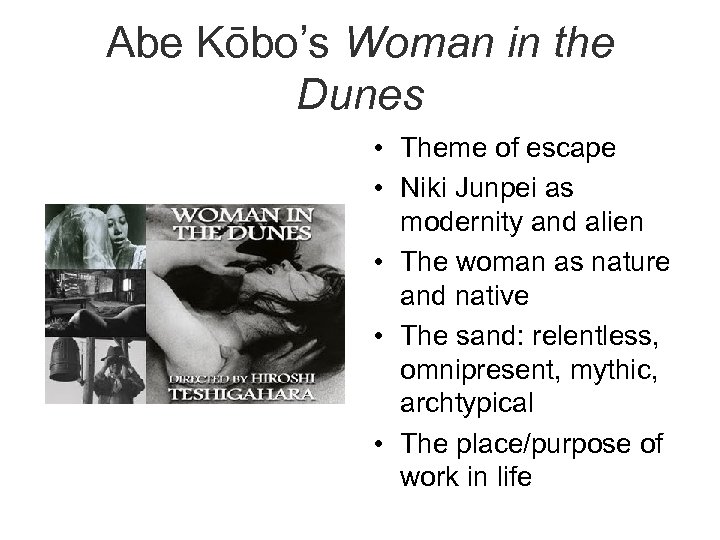 Abe Kōbo’s Woman in the Dunes • Theme of escape • Niki Junpei as modernity and alien • The woman as nature and native • The sand: relentless, omnipresent, mythic, archtypical • The place/purpose of work in life
 Woman in the Dunes • “An amateur entomologist searching for insects by the sea is trapped by local villagers into living with a mysterious woman who spends almost all her time preventing her home from being swallowed up by advancing sand dunes. The woman and the trapped man begin a strange and erotic relationship that stretches over years, as the man's hope for escape dims. ” by Vince Mattaliano”
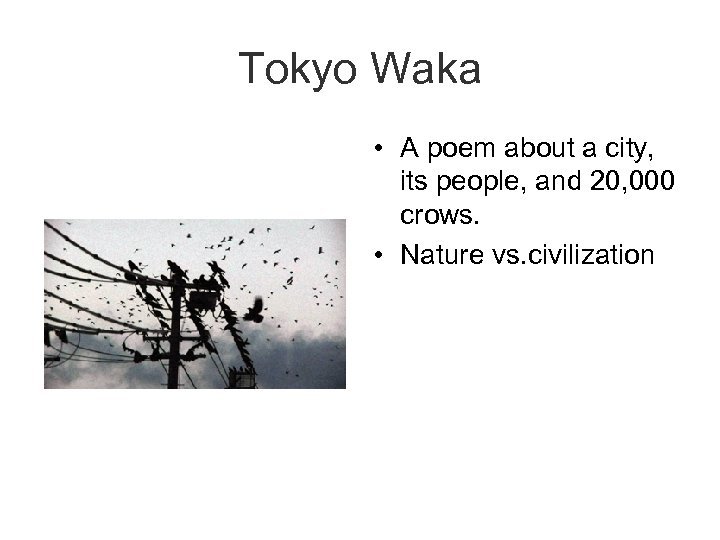 Tokyo Waka • A poem about a city, its people, and 20, 000 crows. • Nature vs. civilization
 Tokyo Waka (April 2012) • From the press kit: “TOKYO WAKA is as much a carefully etched, lyrical portrait of Tokyo and its denizens as it is a fullfledged rendering of the surprisingly rich life of crows. It’s an evocative encapsulation of post-bubble Tokyo, when people caught in the flux of change seek their own precarious perches in an uncertain future. ”
 Two of Japan’s modern myths • Ideology of hard work and sacrifice for tomorrow has been challenged by the shin jinrui (“new, new human beings”). • The myth of a harmonious “Trust society”, rooted in Confucianism (note vertical trust vs horizontal trust) has been seriously challenged. – The triple Tōhoku (Fukushima) disaster of 3/2011
 Serious Social and Developmental Issues • • The “graying” of the society. A shortage of inexpensive labor vs. a distrust of foreign labor and residents. A declining birthrate, with a sharp increase in the number of single-person households headed by a woman. Average of first-time mothers was 30. 1 in 2011, up from 25. 7 in 1975.
 Women and the economy • A 2010 Goldman Sachs report estimated that Japanese GDP could jump by 15% if female participation in the workforce — currently at around 60% — was to match the 80% of men who are employed. • 70% of women leave the workforce after giving birth to their first child. • Female employees make only 60%of what men earn.
 Under-15 population declines steadily • The number of kids under 15 in Japan has declined each year since 1980, standing at a record-low 16. 6 million as of April 1 2012, down 120, 000 from a year earlier. • The % of children in this age-group fell for the 38 th straight year to a record-low 13%. • Japan will no longer have children under the age of 15 in 999 years, researchers at Tohoku University Graduate School estimate!
 Suicide rate and suicidal thoughts • Persistently high suicide rate – over 30, 000 suicides again in 2011 • – – – Finally a drop in 2012? Roughly 1: 4000 for 14 consecutive years; Roughly 40% are men 40 -69; The leading cause of death for men 20 -39. • In January 2012, 23. 4% of people 20 or older percent had thought of committing suicide, up 4. 3 percentage points from the first such survey conducted in 2008.
 The despair of young adults • “An aging population is clogging the nation’s economy with the vested interests of older generations, young people and social experts warn, making an already hierarchical society even more rigid and conservative. The result is that Japan is holding back and marginalizing its youth at a time when it actually needs them to help create the new products, companies and industries that a mature economy requires to grow. ” -- Martin Fackler, NYT 01. 27. 2011
 64% of Japanese say spiritual fulfillment more important • A public opinion survey on national livelihood released August 2012 showed the proportion of Japanese people placing priority on "spiritual fulfillment" rather than "material richness" rose to 64 percent, the highest level since the first such poll was taken in 1972.
 Who is Japan’s “other” today? • A new binary – the “West” or the “States” being the old one. • More than 84 percent of Japanese have “unfavorable” impressions of China, while 64. 5 percent of Chinese feel the same about Japan (June 2012 Asahi Shinbun).
 Other Social and Cultural Issues • • The role of the group in decision making and the construction of personal identity The individual as the total of the macrocosms in which (s)he participates rather than the microcosm of the self. The importance of vertical (sempai/kôhai) and horizontal (dôhai) relationships A repressed individuality
 Still Other Social and Cultural Issues • • • The ambiguous place of organized religion in modern Japan, and its relationship to the state. The generalized belief in an animistic spirit (kami) world Ethical relativism (as opposed to universalistic ethics)
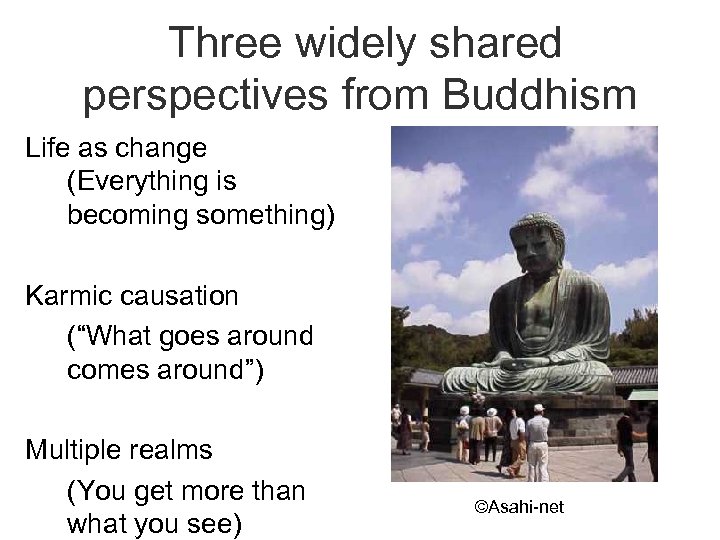 Three widely shared perspectives from Buddhism Life as change (Everything is becoming something) Karmic causation (“What goes around comes around”) Multiple realms (You get more than what you see) ©Asahi-net
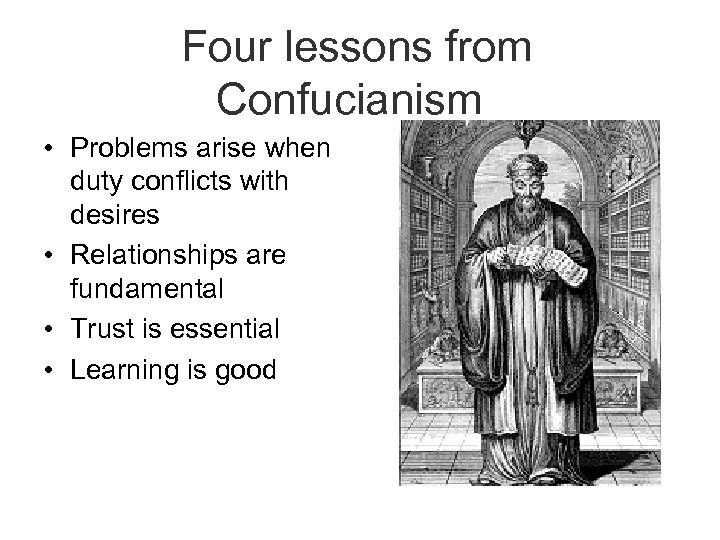 Four lessons from Confucianism • Problems arise when duty conflicts with desires • Relationships are fundamental • Trust is essential • Learning is good
 How has March 11 2011 and shaped the Japan of today? – Distrust of government and politicians – Radical expansion of civil society and voluntary associations • Recall the aftermath of the 1995 Kobe earthquake – Loss of confidence in nuclear energy – Remarkable change of ruling party back to LDP – Ongoing question of whether government will honor public opinion – The double-edged sword of putting things into perspective
 Some Contemporary Japanese Cultural Contributions • Japan’s “soft power” • Popular culture (Film, J-Pop, Anime, Manga) • Cuisine: sushi, sashimi, udon, ramen, etc. • Martial arts: judô, karate, jujitsu, aikidô, etc. • Manufacturing design • The “Asian aesthetic”
 So what is Japan’s place in the world today? • A few years ago despite some clouds here and there on the horizon, Japan’s place in the world seemed fairly stable and quite secure. • After brilliant post-WWII recovery and reentry on the world stage in the 1960 s and 1970 s, Japan was an A+ country in the 1980 s and could do no wrong. • But events sometimes make a mockery of our expectations, and recent events in Japan, the Korean peninsula, China, Taiwan, the United States and around the world have transformed what should be relatively simple into something more challenging, and what until recently seemed relatively clear has grown much more uncertain
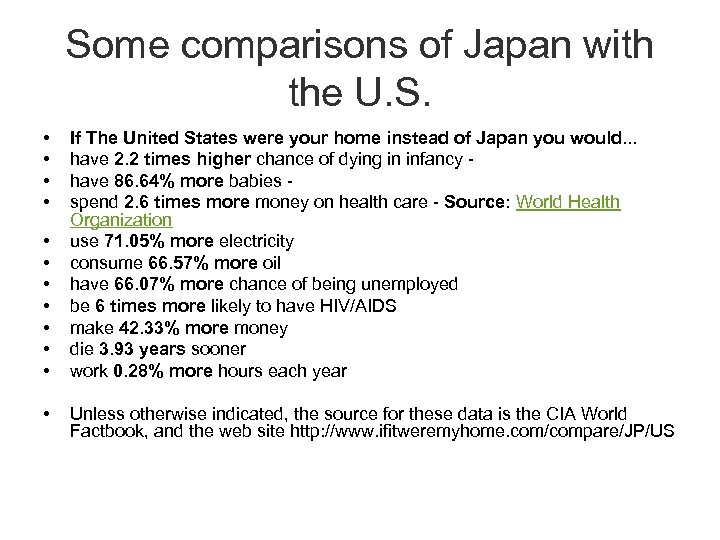 Some comparisons of Japan with the U. S. • • • If The United States were your home instead of Japan you would. . . have 2. 2 times higher chance of dying in infancy have 86. 64% more babies spend 2. 6 times more money on health care - Source: World Health Organization use 71. 05% more electricity consume 66. 57% more oil have 66. 07% more chance of being unemployed be 6 times more likely to have HIV/AIDS make 42. 33% more money die 3. 93 years sooner work 0. 28% more hours each year Unless otherwise indicated, the source for these data is the CIA World Factbook, and the web site http: //www. ifitweremyhome. com/compare/JP/US
 Modern or Post-Modern? • In the end, does Japan seem to us more modern or post-modern? Hint: Consider the degree of agency. • What does Goto-Jones mean when he speaks of Japan’s “quest for normalcy”?
 Suggestions for further reading and investigation • Andrew Gordon. A Modern History of Japan from Tokugawa Times to the Present (Oxford 2013) • Marius Jansen, The Making of Modern Japan (Harvard 2002) • For country comparisons: • http: //www. ifitweremyhome. com/index/CA • http: //www. nationmaster. com/index. php