


 Скачать презентацию Modern Systems Analysis and Design Chapter 1 The
7a6e416275fd41acfb0dd7c2a01b2e0d.ppt
- Количество слайдов: 39
 Modern Systems Analysis and Design Chapter 1 The Systems Development Environment
 Learning Objectives ü ü ü Define information systems analysis and design. Describe the information Systems Development Life Cycle (SDLC). Explain Rapid Application Development (RAD), prototyping, Computer Aided Software Engineering (CASE), and Service-Oriented Architecture (SOA). Describe agile methodologies and e. Xtreme programming. Explain Object Oriented Analysis and Design and the Rational Unified Process (RUP). 2
 Introduction n Information Systems Analysis and Design ¨ Complex organizational process ¨ Used to develop and maintain computerbased information systems ¨ Used by a team of business and systems professionals 3
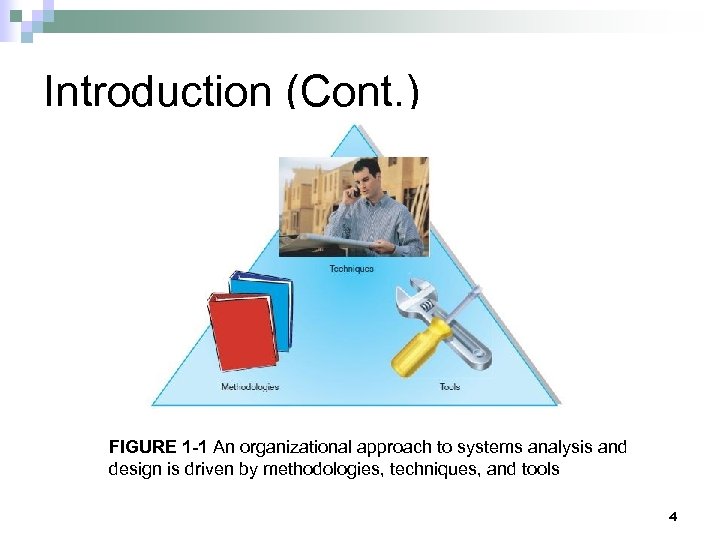 Introduction (Cont. ) FIGURE 1 -1 An organizational approach to systems analysis and design is driven by methodologies, techniques, and tools 4
 A Modern Approach to Systems Analysis and Design 1950 s: focus on efficient automation of existing processes n 1960 s: advent of 3 GL, faster and more reliable computers n 1970 s: system development becomes more like an engineering discipline n 5
 A Modern Approach to Systems Analysis and Design (Cont. ) 1980 s: major breakthrough with 4 GL, CASE tools, object oriented methods n 1990 s: focus on system integration, GUI applications, client/server platforms, Internet n The new century: Web application development, wireless PDAs, componentbased applications n 6
 A Modern Approach to Systems Analysis and Design (Cont. ) n Application Software ¨ Computer software designed to support organizational functions or processes n Systems Analyst ¨ Organizational role most responsible for analysis and design of information systems 7
 Developing Information Systems n System Development Methodology is a standard process followed in an organization to conduct all the steps necessary to analyze, design, implement, and maintain information systems. 8
 Systems Development Life Cycle (SDLC) n n Traditional methodology used to develop, maintain, and replace information systems. Phases in SDLC: ¨ Planning ¨ Analysis ¨ Design ¨ Implementation ¨ Maintenance 9
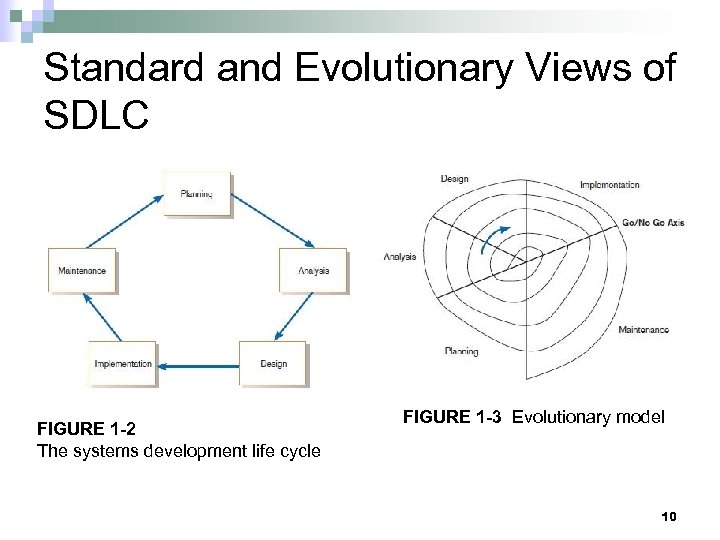 Standard and Evolutionary Views of SDLC FIGURE 1 -2 The systems development life cycle FIGURE 1 -3 Evolutionary model 10
 Systems Development Life Cycle (SDLC) (Cont. ) Planning – an organization’s total information system needs are identified, analyzed, prioritized, and arranged n Analysis – system requirements are studied and structured n 11
 Systems Development Life Cycle (SDLC) (Cont. ) Design – a description of the recommended solution is converted into logical and then physical system specifications n Logical design – all functional features of the system chosen for development in analysis are described independently of any computer platform n 12
 Systems Development Life Cycle (SDLC) (Cont. ) n Physical design – the logical specifications of the system from logical design are transformed into the technology -specific details from which all programming and system construction can be accomplished 13
 Systems Development Life Cycle (SDLC) (Cont. ) Implementation – the information system is coded, tested, installed and supported in the organization n Maintenance – an information system is systematically repaired and improved n 14
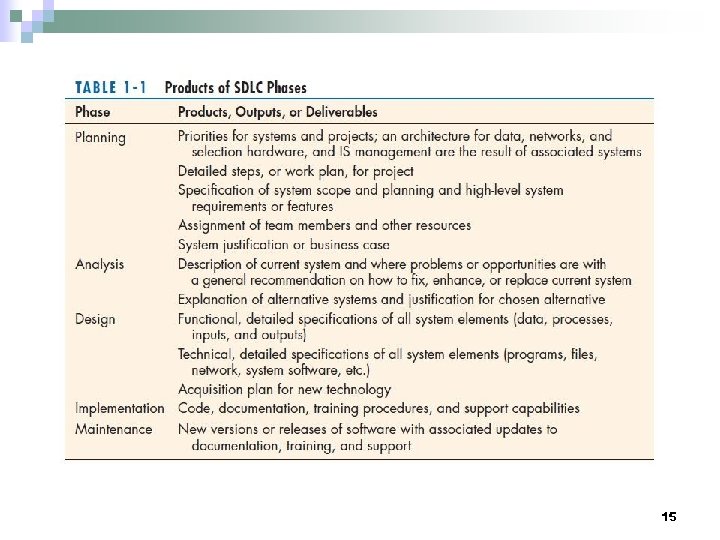 15
15
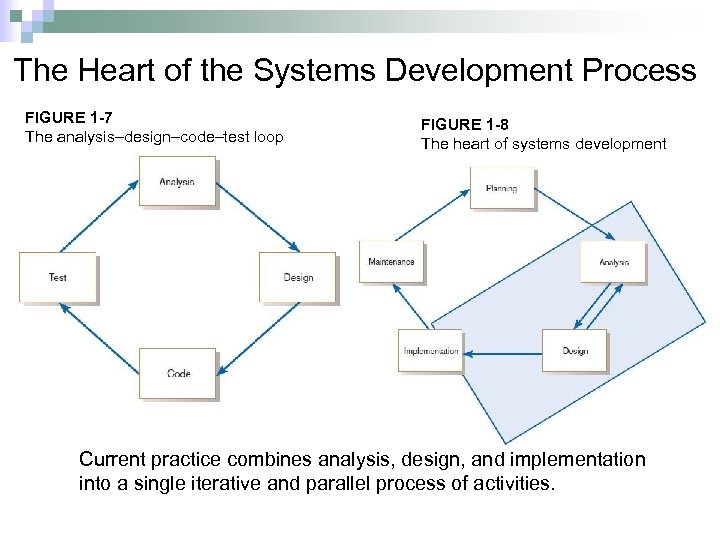 The Heart of the Systems Development Process FIGURE 1 -7 The analysis–design–code–test loop FIGURE 1 -8 The heart of systems development Current practice combines analysis, design, and implementation into a single iterative and parallel process of activities.
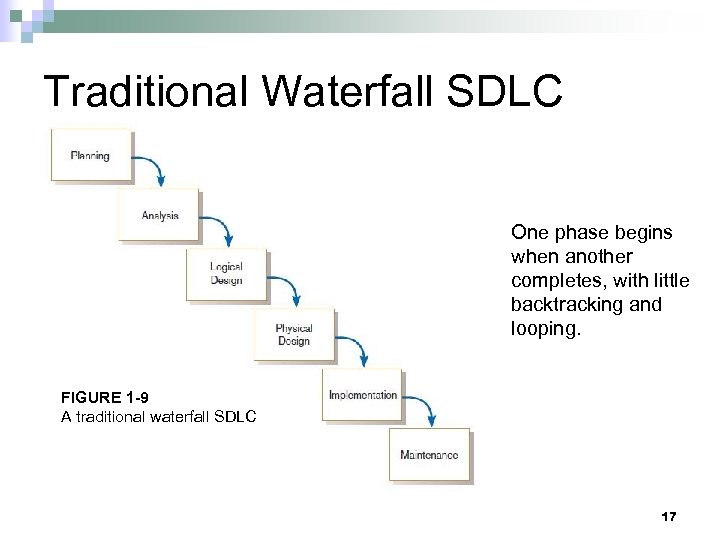 Traditional Waterfall SDLC One phase begins when another completes, with little backtracking and looping. FIGURE 1 -9 A traditional waterfall SDLC 17
 Problems with Waterfall Approach System requirements “locked in” after being determined (can't change) n Limited user involvement (only in requirements phase) n Too much focus on milestone deadlines of SDLC phases to the detriment of sound development practices n 18
 Different Approaches to Improving Development n Prototyping n CASE Tools n Rapid Application Development (RAD) n Agile Methodologies n e. Xtreme Programming 19
 Prototyping n Prototyping ¨ Is a form of Rapid Application Development. ¨ Building a scaled-down working version of the ¨ Advantages: n Users are involved in design n Captures requirements in concrete form system 20
 Computer-Aided Software Engineering (CASE) Tools Diagramming tools enable graphical representation. n Computer displays and report generators help prototype how systems “look and feel”. n 21
 Computer-Aided Software Engineering (CASE) Tools (Cont. ) Analysis tools automatically check for consistency in diagrams, forms, and reports. n A central repository provides integrated storage of diagrams, reports, and project management specifications. n 22
 Computer-Aided Software Engineering (CASE) Tools (Cont. ) Documentation generators standardize technical and user documentation. n Code generators enable automatic generation of programs and database code directly from design documents, diagrams, forms, and reports. n 23
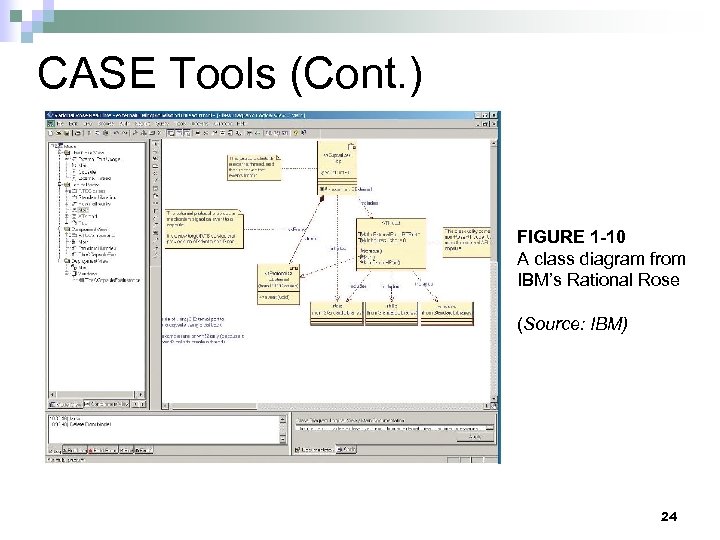 CASE Tools (Cont. ) FIGURE 1 -10 A class diagram from IBM’s Rational Rose (Source: IBM) 24
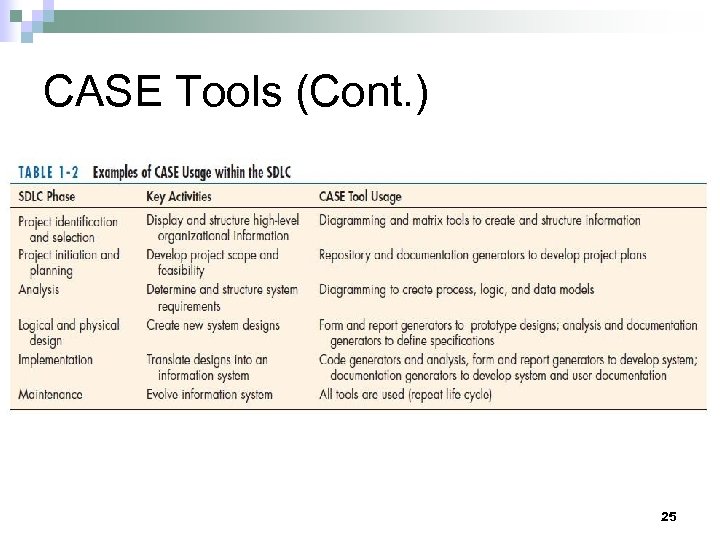 CASE Tools (Cont. ) 25
 Rapid Application Development (RAD) n Methodology to radically decrease design and implementation time n Involves: extensive user involvement, prototyping, JAD sessions, integrated CASE tools, and code generators 26
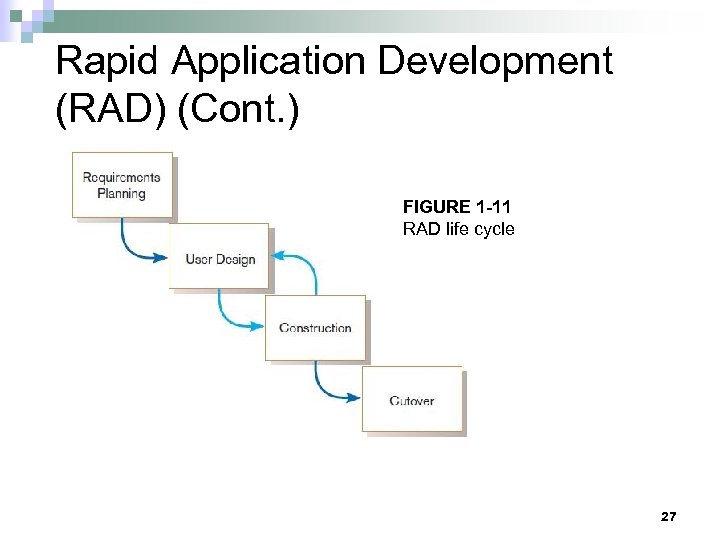 Rapid Application Development (RAD) (Cont. ) FIGURE 1 -11 RAD life cycle 27
 Service-Oriented Architecture (SOA) n An approach to systems development based on building complete systems through assembling software components, each of which model generic business functions 28
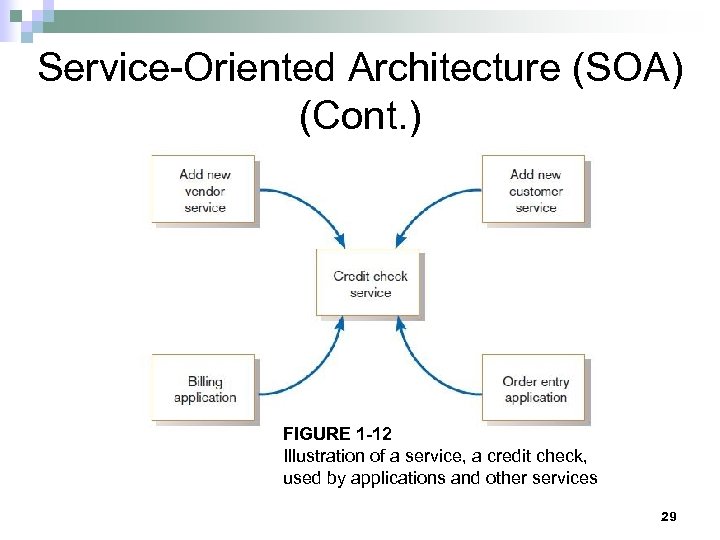 Service-Oriented Architecture (SOA) (Cont. ) FIGURE 1 -12 Illustration of a service, a credit check, used by applications and other services 29
 Agile Methodologies Motivated by recognition of software development as fluid, unpredictable, and dynamic n Three key principles n ¨ Adaptive rather than predictive ¨ Emphasize people rather than roles ¨ Self-adaptive processes 30
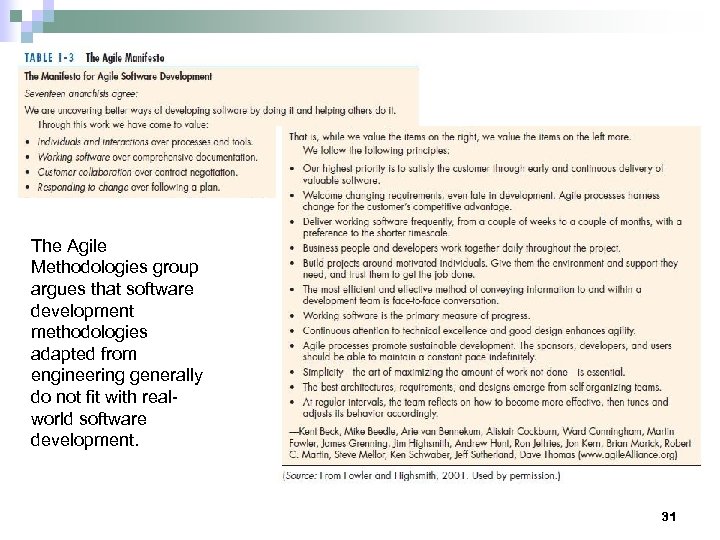 The Agile Methodologies group argues that software development methodologies adapted from engineering generally do not fit with realworld software development. 31
 When to use Agile Methodologies n If your project involves: ¨ Unpredictable or dynamic requirements ¨ Responsible and motivated developers ¨ Customers who understand the process and will get involved 32
 e. Xtreme Programming Short, incremental development cycles n Automated tests n Two-person programming teams n 33
 e. Xtreme Programming (Cont. ) Coding and testing operate together n Advantages: n ¨ Communication between developers ¨ High level of productivity ¨ High-quality code 34
 Object-Oriented Analysis and Design (OOAD) n Based on objects rather than data or processes n Object: a structure encapsulating attributes and behaviors of a realworld entity 35
 Object-Oriented Analysis and Design (OOAD) (Cont. ) n Object class: a logical grouping of objects sharing the same attributes and behaviors n Inheritance: hierarchical arrangement of classes enable subclasses to inherit properties of superclasses 36
 Rational Unified Process (RUP) An object-oriented systems development methodology n RUP establishes four phase of development: inception, elaboration, construction, and transition. n Each phase is organized into a number of separate iterations. n 37
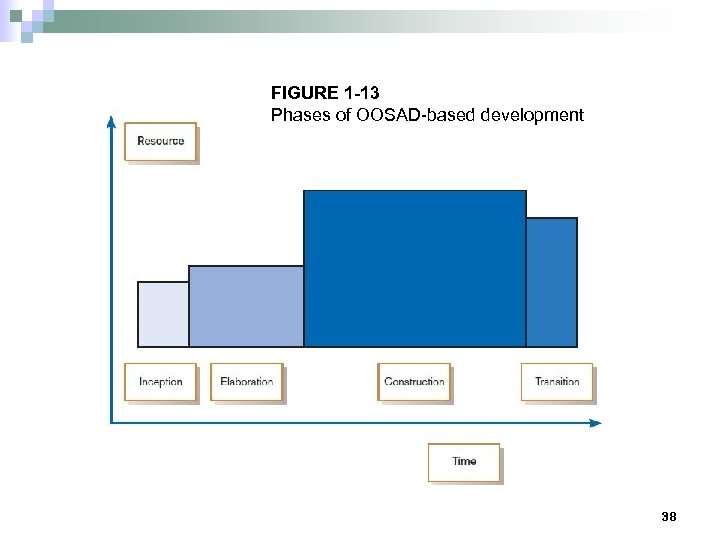 FIGURE 1 -13 Phases of OOSAD-based development 38
 Our Approach to Systems Development The SDLC is an organizing and guiding principle in this book. n We may construct artificial boundaries or artificially separate activities and processes for learning purposes. n Our intent is to help you understand all the pieces and how to assemble them. n 39