


 Скачать презентацию Modern Procurement Yossi Sheffi Mass Inst of Tech
b0597720e00400ce50868d97d85c8171.ppt
- Количество слайдов: 48
 Modern Procurement Yossi Sheffi Mass Inst of Tech Cambridge, MA ESD. 260 J/15. 770 J
 Outline Role of procurement “Make vs. buy” Strategic considerations Case study: IBM Combinatorial procurement Case Study: Rite Aid
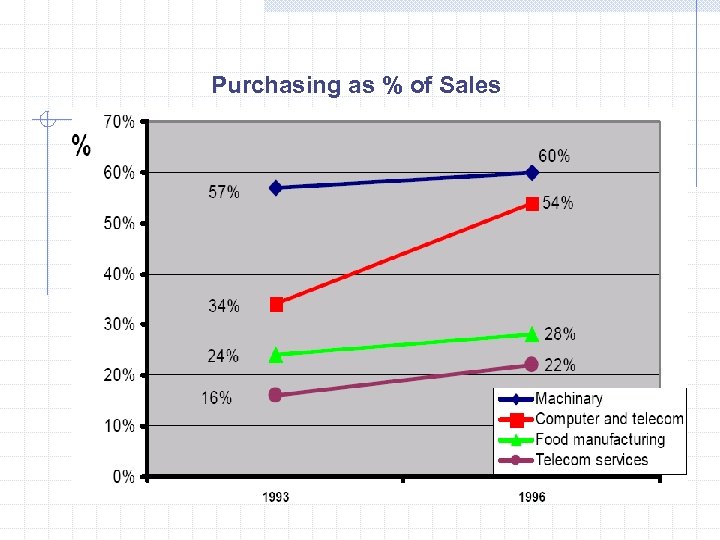 Purchasing as % of Sales
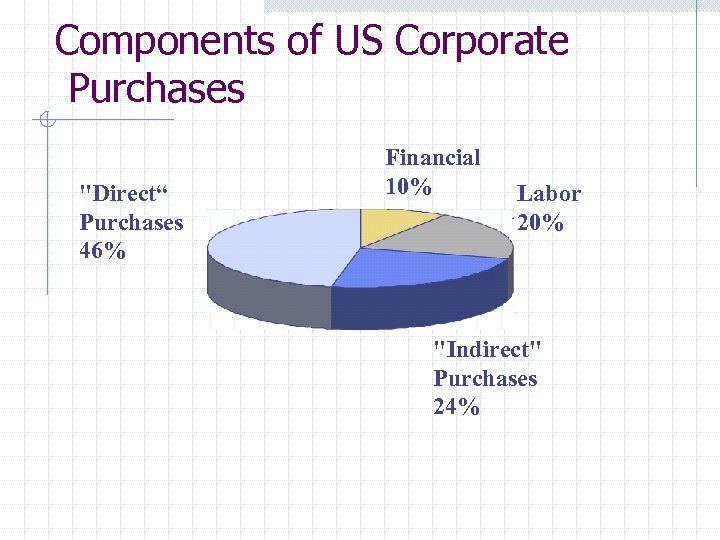 Components of US Corporate Purchases "Direct“ Purchases 46% Financial 10% Labor 20% "Indirect" Purchases 24%
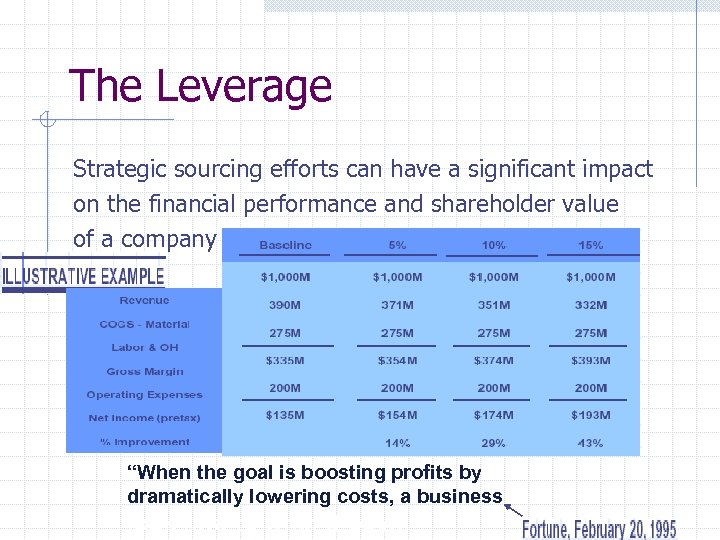 The Leverage Strategic sourcing efforts can have a significant impact on the financial performance and shareholder value of a company “When the goal is boosting profits by dramatically lowering costs, a business look first to what it buys. ”
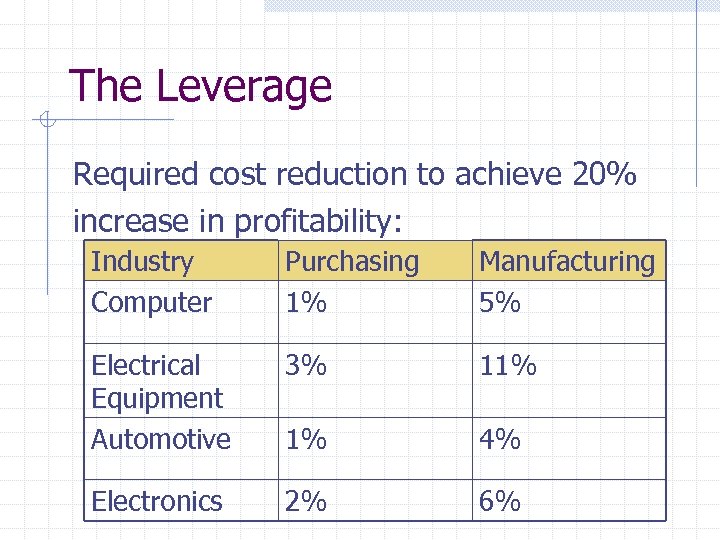 The Leverage Required cost reduction to achieve 20% increase in profitability: Industry Computer Purchasing 1% Manufacturing 5% Electrical Equipment Automotive 3% 11% 1% 4% Electronics 2% 6%
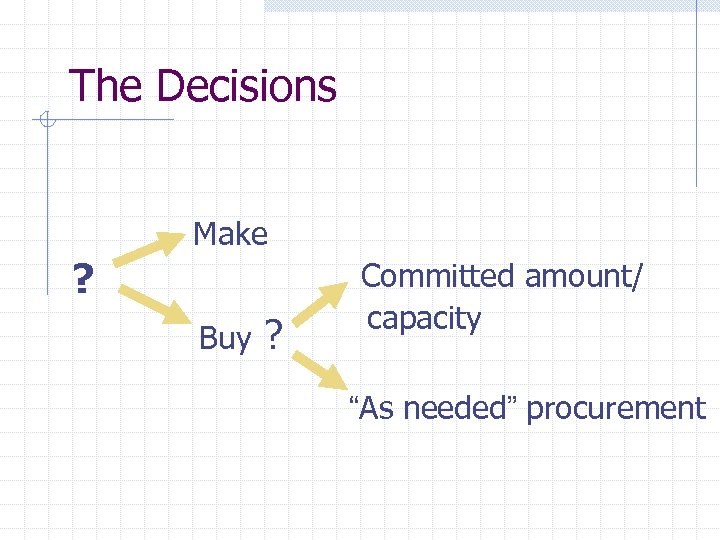 The Decisions Make ? Buy ? Committed amount/ capacity “As needed” procurement
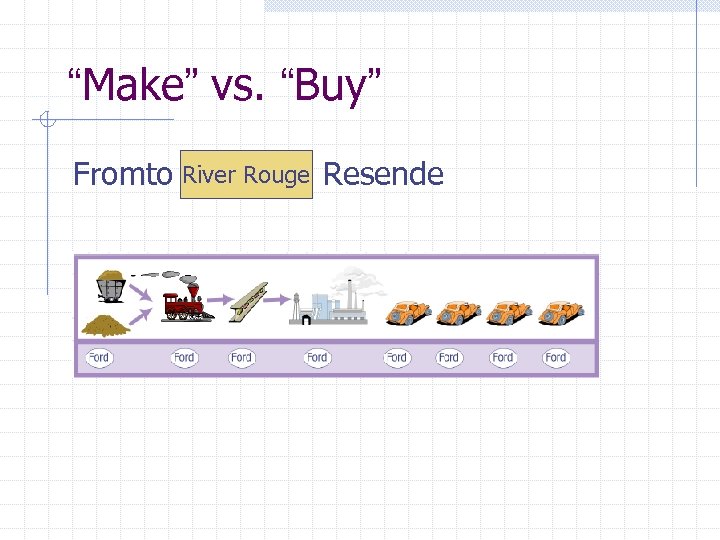 “Make” vs. “Buy” Fromto River Rouge Resende
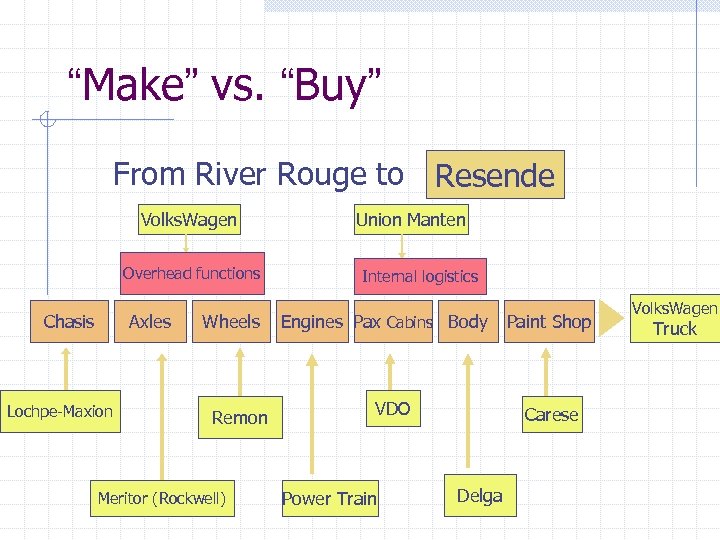 “Make” vs. “Buy” From River Rouge to Resende Volks. Wagen Overhead functions Chasis Axles Lochpe-Maxion Wheels Remon Meritor (Rockwell) Union Manten Internal logistics Engines Pax Cabins Body VDO Power Train Paint Shop Carese Delga Volks. Wagen Truck
 Advantages of Outsourcing
 Problems with Outsourcing
 The Strategic Risk
 The New Balance Story A long term supplier – Horace Chang – went into business for itself Selling NB shoes at 1/3 the wholesale price �Making “bottom of the line” model and flooding the market 1 st in China and then worldwide �Robbing NB of revenue �Damaging the brand association with high-performance athletic shoes Actions: �China’s Administration for Industry and Commerce (AIC) agreed to raid five factories in 2000 netting 100, 000 shoes �Dec 2000 filed suit in Shenzhen. Feb 2002 a judge rules against NB. NB is appealing
 Example: Ford CT 20 Project In early 1990 Ford outsourced product development and relied on manufacturing help for the CT 20 (platforms for the Ford Escort and mercury Tracer) Ford owned 25% of Mazda and had long relationships with them (including the 1988 Probe and Festival) Steps to limit exposure: �Joint efforts limited to subcompact and compact only (Mazda’s strong suit and Ford’s weakest). Based on the 323 platform �Ford staff was on site in Hiroshima to learn and trasnfer knowledge �Two manufacturing plants: heavy involvement of Mazda in the Hermosillo, Mexico plant; another plant in Wayne, Michigan �Later the Wayne plant modified its processes based on the Hermosillo experience
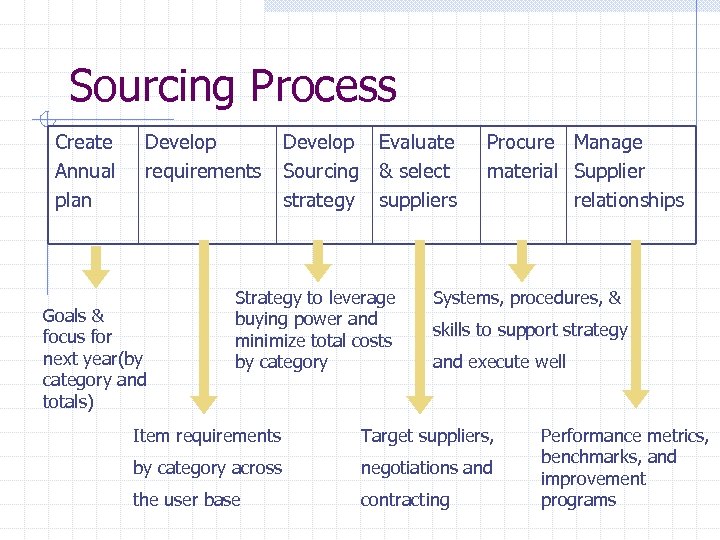 Sourcing Process Create Annual plan Develop requirements Goals & focus for next year(by category and totals) Develop Evaluate Sourcing & select strategy suppliers Strategy to leverage buying power and minimize total costs by category Procure Manage material Supplier relationships Systems, procedures, & skills to support strategy and execute well Item requirements Target suppliers, by category across negotiations and the user base contracting Performance metrics, benchmarks, and improvement programs
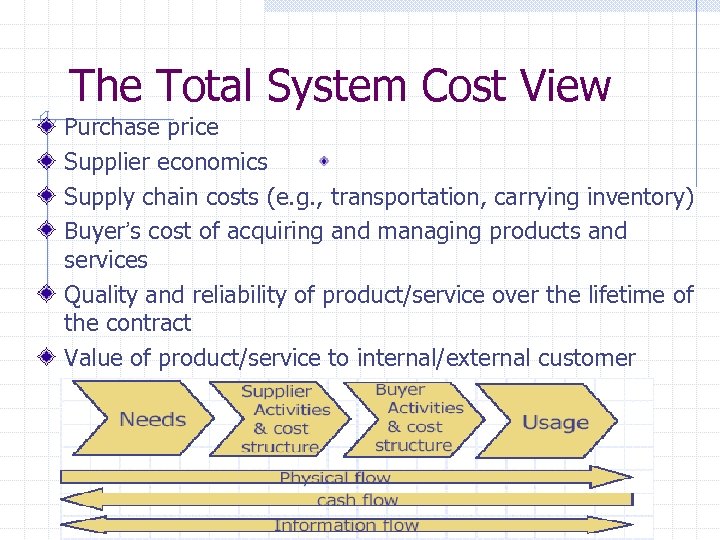 The Total System Cost View Purchase price Supplier economics Supply chain costs (e. g. , transportation, carrying inventory) Buyer’s cost of acquiring and managing products and services Quality and reliability of product/service over the lifetime of the contract Value of product/service to internal/external customer
 Complete Cost Consideration Starting in ’ 98 moved purchasing overseas Severed relationships with long time suppliers who would not agree to procure in the Far East
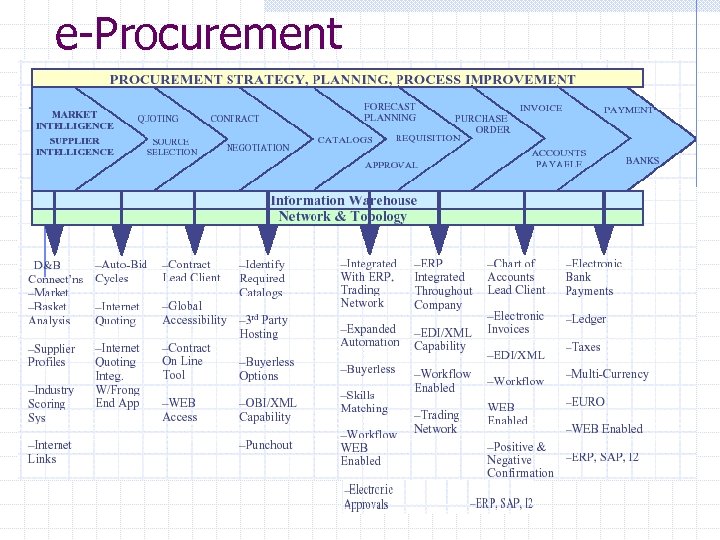
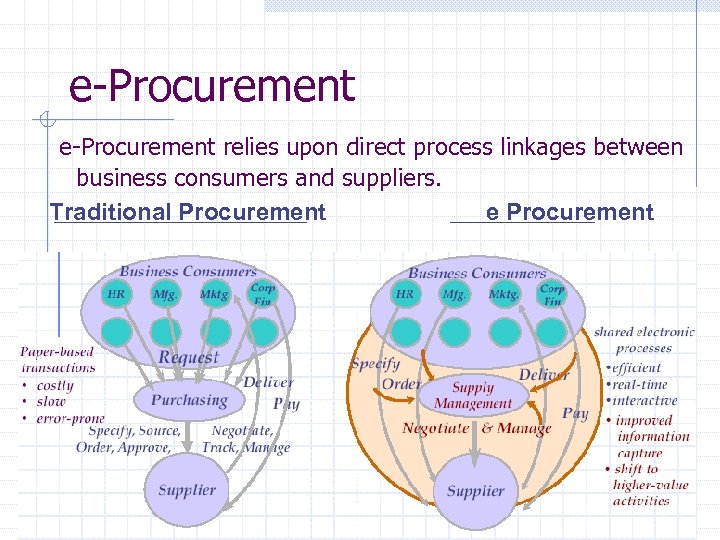 e-Procurement relies upon direct process linkages between business consumers and suppliers. Traditional Procurement e Procurement
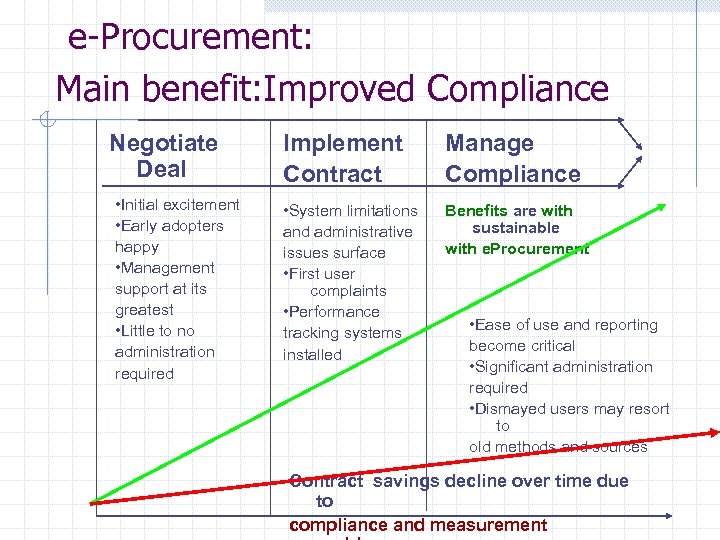 e-Procurement: Main benefit: Improved Compliance Negotiate Deal • Initial excitement • Early adopters happy • Management support at its greatest • Little to no administration required Implement Contract Manage Compliance • System limitations and administrative issues surface • First user complaints • Performance tracking systems installed Benefits are with sustainable with e. Procurement • Ease of use and reporting become critical • Significant administration required • Dismayed users may resort to old methods and sources Contract savings decline over time due to compliance and measurement
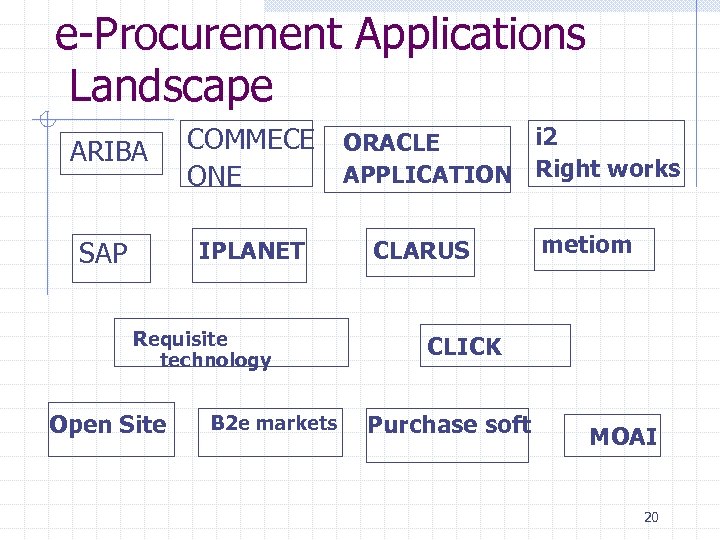 e-Procurement Applications Landscape ARIBA COMMECE ONE SAP IPLANET Requisite technology Open Site B 2 e markets i 2 ORACLE APPLICATION Right works CLARUS metiom CLICK Purchase soft MOAI 20
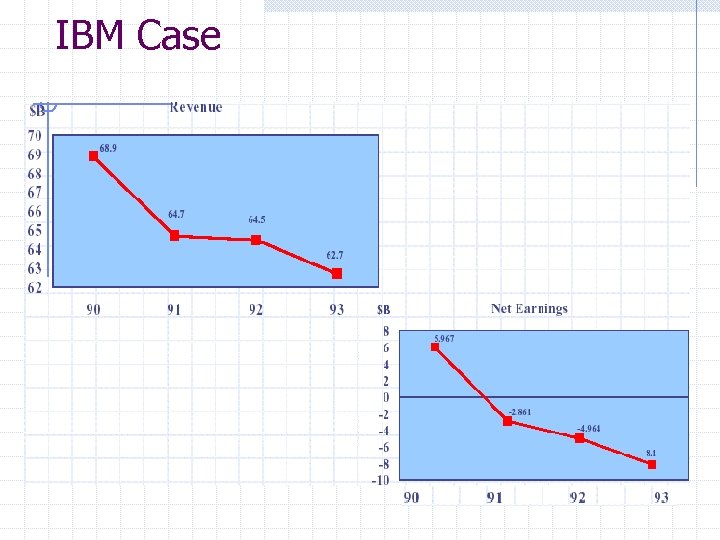 IBM Case
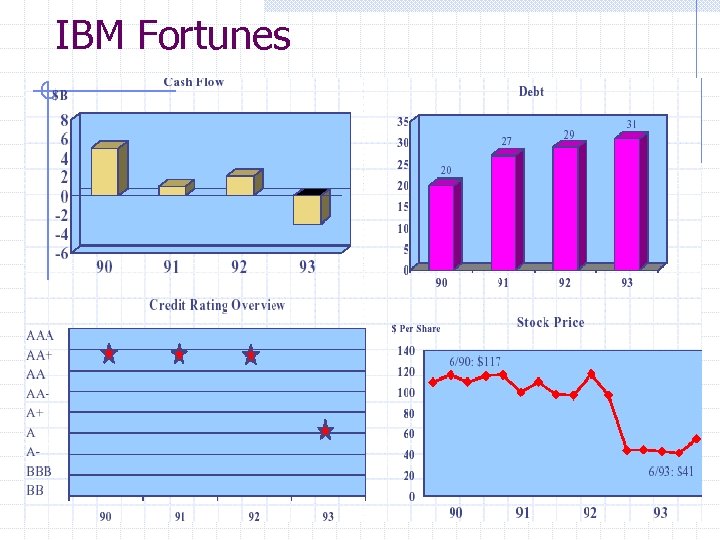 IBM Fortunes
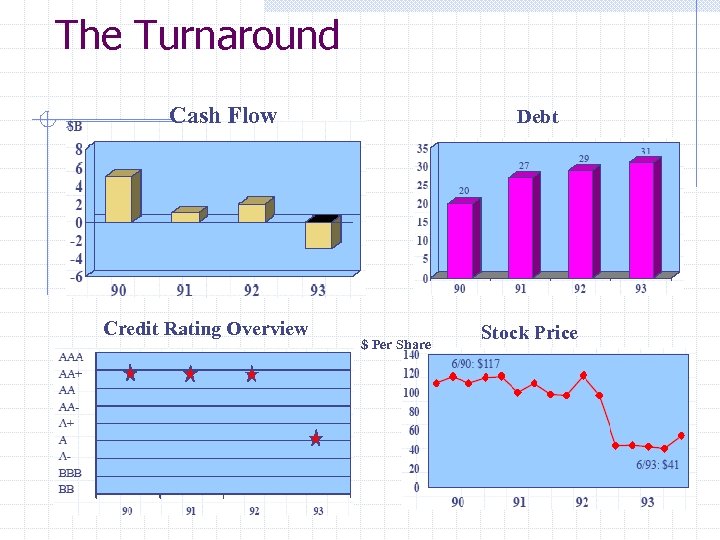 The Turnaround Cash Flow Credit Rating Overview Debt $ Per Share Stock Price
 Wall Street Journal, Jan. 8, 2002 “IBM SIGNED a $5 billion outsourcing contract and plans to sell some operations as it looks to cut costs in its personal-computer business. ”
 e-Procurement
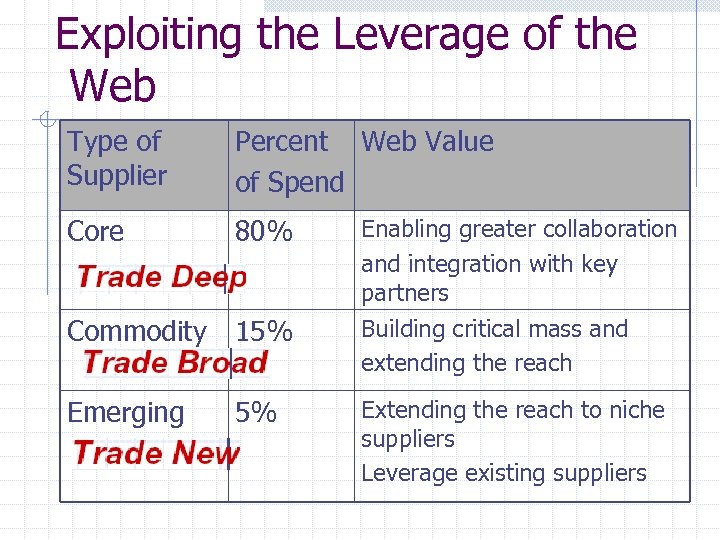 Exploiting the Leverage of the Web Type of Supplier Percent Web Value of Spend Core 80% Enabling greater collaboration and integration with key partners Commodity 15% Building critical mass and extending the reach Emerging 5% Extending the reach to niche suppliers Leverage existing suppliers
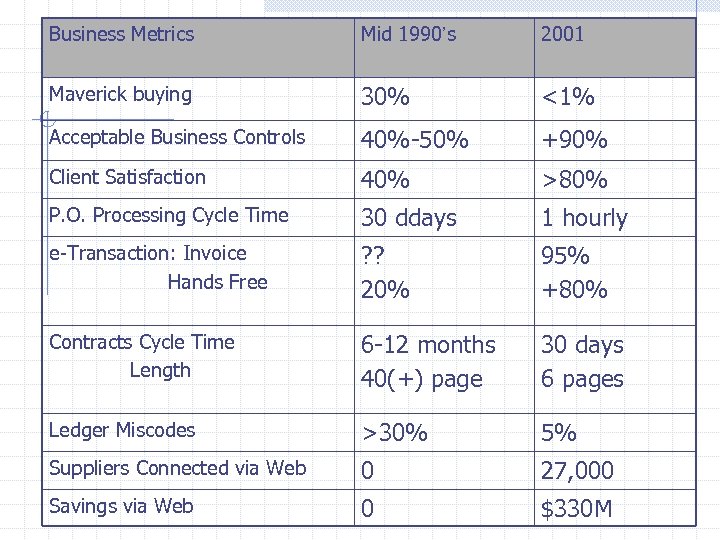 Results Business Metrics Mid 1990’s 2001 Maverick buying 30% <1% Acceptable Business Controls 40%-50% +90% Client Satisfaction 40% >80% P. O. Processing Cycle Time 30 ddays 1 hourly e-Transaction: Invoice Hands Free ? ? 20% 95% +80% Contracts Cycle Time Length 6 -12 months 40(+) page 30 days 6 pages Ledger Miscodes >30% 5% Suppliers Connected via Web 0 27, 000 Savings via Web 0 $330 M
 Combinatorial Auctions: The Transportation Example
 Transportation Procurement Is Different Controlling economics: economies of scope, not only scale There are many dimensions to transportation services Forecasting transportation is difficult Complex administration
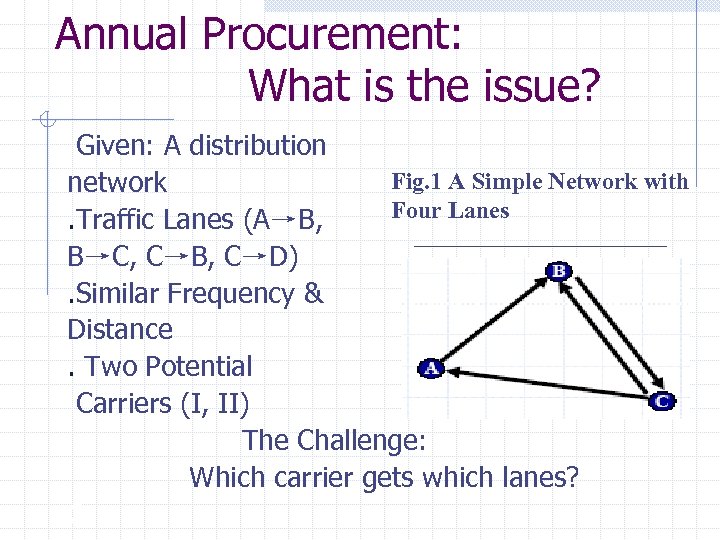 Annual Procurement: What is the issue? Given: A distribution Fig. 1 A Simple Network with network Four Lanes. Traffic Lanes (A→B, B→C, C→B, C→D). Similar Frequency & Distance. Two Potential Carriers (I, II) The Challenge: Which carrier gets which lanes? C
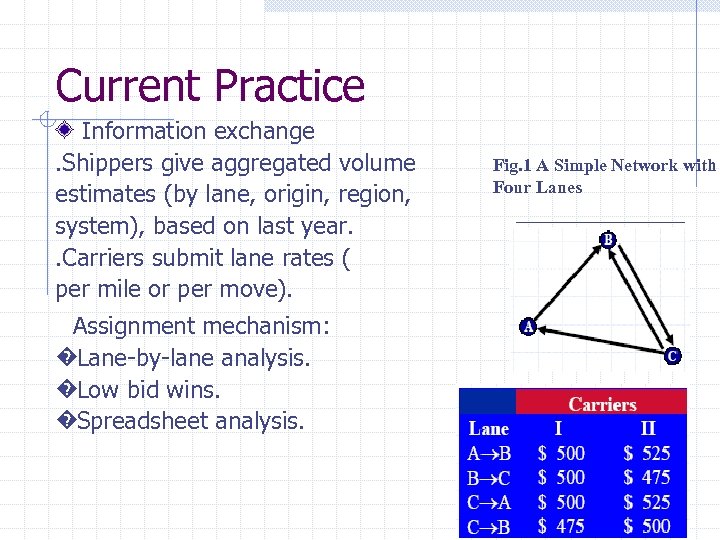 Current Practice Information exchange. Shippers give aggregated volume estimates (by lane, origin, region, system), based on last year. . Carriers submit lane rates ( per mile or per move). Assignment mechanism: �Lane-by-lane analysis. �Low bid wins. �Spreadsheet analysis. Fig. 1 A Simple Network with Four Lanes
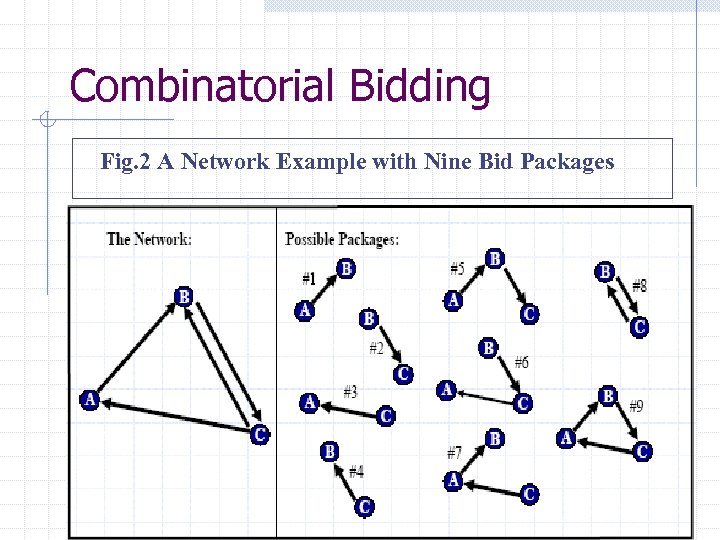 Combinatorial Bidding Fig. 2 A Network Example with Nine Bid Packages
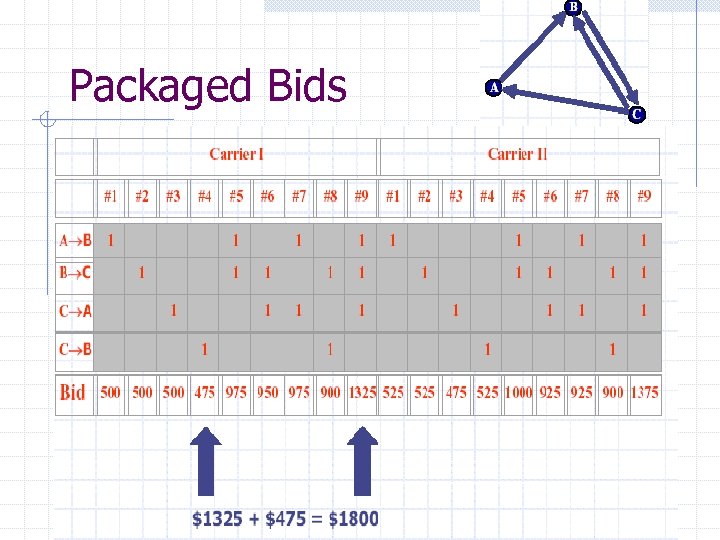 Packaged Bids
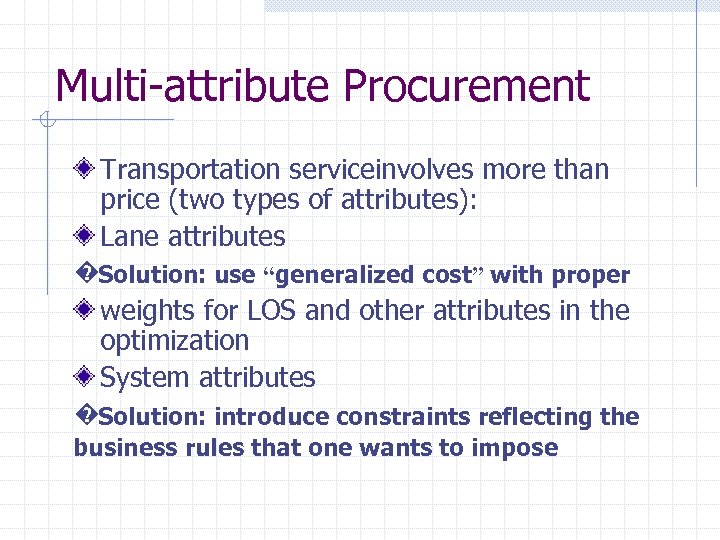 Multi-attribute Procurement Transportation serviceinvolves more than price (two types of attributes): Lane attributes �Solution: use “generalized cost” with proper weights for LOS and other attributes in the optimization System attributes �Solution: introduce constraints reflecting the business rules that one wants to impose
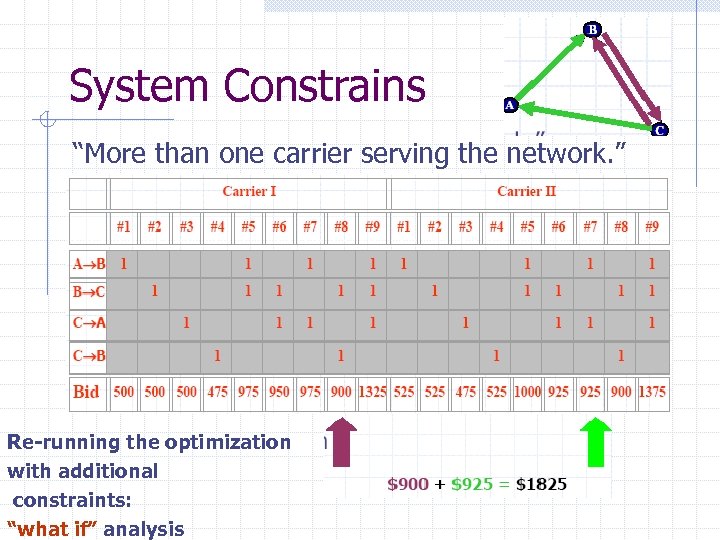 System Constrains “More than one carrier serving the network. ” Re-running the optimization with additional constraints: “what if” analysis
 Users of Conditional Bidding with Optimized Awards
 System Requirement Example: Core Carrier Programs Carrier selection How to reduce the base from 200 carriers to 10? Costs and Benefits How much does it cost to reduce the carrier base?
 System Requirement Example: Core Carrier Programs
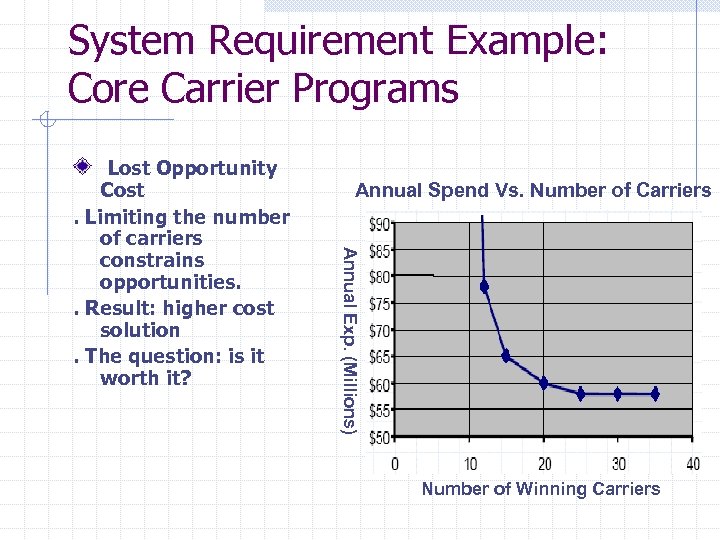 System Requirement Example: Core Carrier Programs Annual Spend Vs. Number of Carriers Annual Exp. (Millions) Lost Opportunity Cost. Limiting the number of carriers constrains opportunities. . Result: higher cost solution. The question: is it worth it? Number of Winning Carriers
 RITE AID. . One of the nation’s leading drugstore chains Modern store base Strong brand Modern distribution centers Superior pharmacy technology 77, 000 full and part-time associates 3600 stores in 30 states and DC $14. 5 B at end of FY 2001
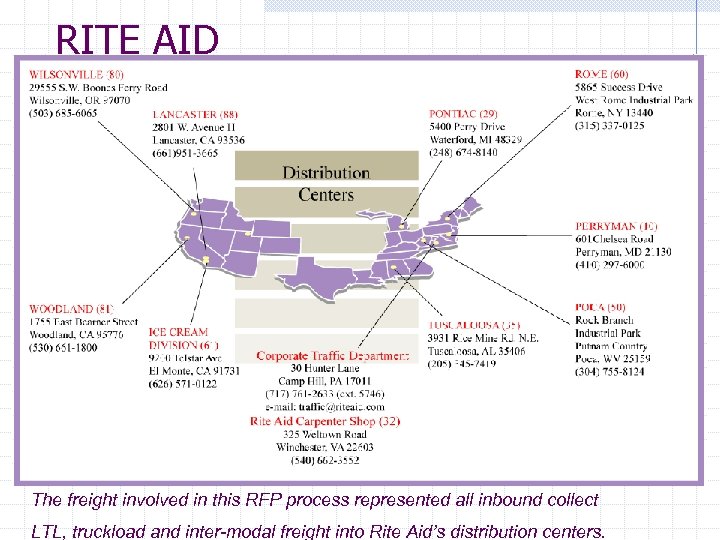 RITE AID The freight involved in this RFP process represented all inbound collect LTL, truckload and inter-modal freight into Rite Aid’s distribution centers.
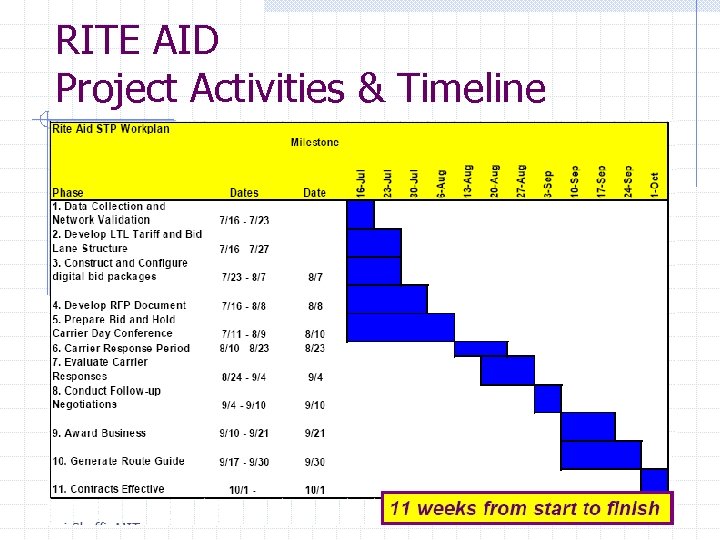 RITE AID Project Activities & Timeline
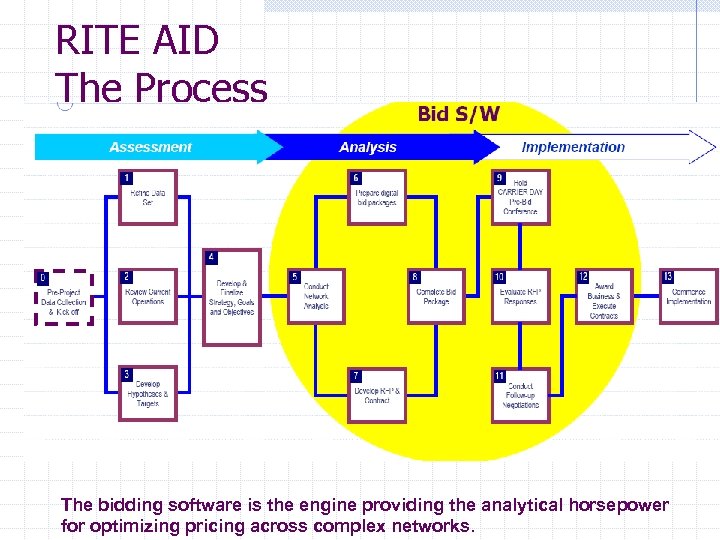 RITE AID The Process The bidding software is the engine providing the analytical horsepower for optimizing pricing across complex networks.
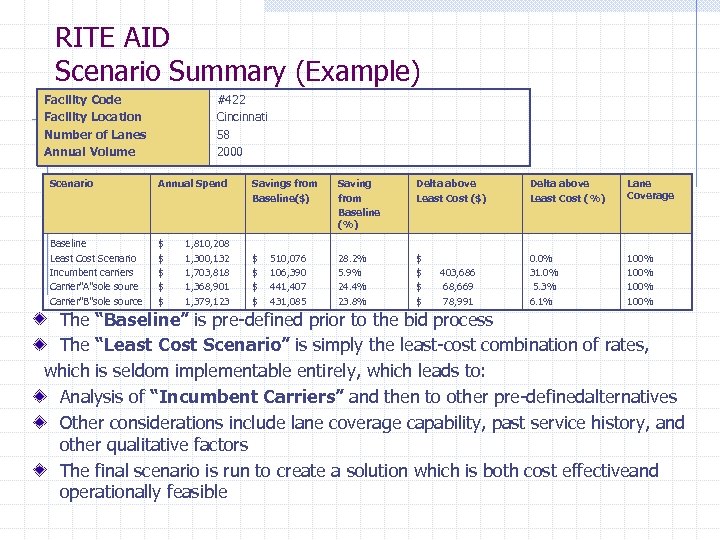 RITE AID Scenario Summary (Example) Facility Code Facility Location Number of Lanes Annual Volume #422 Cincinnati 58 2000 Scenario Annual Spend Baseline Least Cost Scenario Incumbent carriers Carrier”A”sole soure Carrier”B”sole source $ $ $ 1, 810, 208 1, 300, 132 1, 703, 818 1, 368, 901 1, 379, 123 Savings from Baseline($) Saving from Baseline (%) Delta above Least Cost ($) Delta above Least Cost (%) Lane Coverage $ $ 28. 2% 5. 9% 24. 4% 23. 8% $ $ 0. 0% 31. 0% 5. 3% 6. 1% 100% 510, 076 106, 390 441, 407 431, 085 403, 686 68, 669 78, 991 The “Baseline” is pre-defined prior to the bid process The “Least Cost Scenario” is simply the least-cost combination of rates, which is seldom implementable entirely, which leads to: Analysis of “Incumbent Carriers” and then to other pre-definedalternatives Other considerations include lane coverage capability, past service history, and other qualitative factors The final scenario is run to create a solution which is both cost effectiveand operationally feasible
 RITE AID Realized Benefits Reduced freight costs for inbound transportation. LTL savings exceeded 10%. TL/ Intermodal savings exceeded 7%. Leveraged volume from prepaid to collect conversion project. Holistic bid involving current and new carriers Standardize and simplify administrative functions and procedures. Standardized Contracts format and terms. Selected one standard LTL Tariff. Standardized tiered FAK structure. Standardized accessorial charges Enhance service. 3 of 4 LTL successful carriers were incumbent providers with a history of strong service with Rite Aid. Largest Incumbent Truckload and Intermodal providers with strong service records were retained. Benefits tracking process was developed to track project savings
 Lessons Transportation is Different. Strong economies of scope (requires conditional bidding). . Multi-attribute evaluation process (requires generalized “costs” and system constraints). . A difficult forecasting problem (nonbinding contracts). . A burdensome administrative challenge (requires a single round Optimization-based Conditional Bidding. Allows carriers to achieve better economics. . LOS can be handled rigorously. . External conditions can be incorporated. . Allows for special forecasting methods. . Allows one-round process - preferred to multiple rounds (but requires optimization). . Automated administrative process.
 Lessons Need for a contract-augmenting procedure Need for tender-rejection management. Replace “dialing for diesels” Need for TMS that can execute sophisticatedbid results (e. g. , Surge pricing) Some conditional bid results are surprising Problems with Carrier participation: . Complicated. Actual awards. Timing
 Any Questions? Yossi Sheff