Скачать презентацию Modern History of South Africa Main Idea Statements
cb6115e3e9cc20ee62bdc0bdb87cb723.ppt
- Количество слайдов: 96
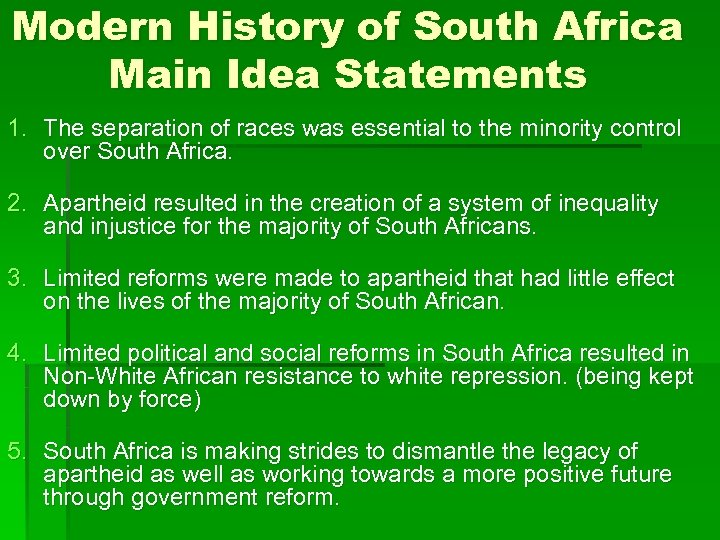 Modern History of South Africa Main Idea Statements 1. The separation of races was essential to the minority control over South Africa. 2. Apartheid resulted in the creation of a system of inequality and injustice for the majority of South Africans. 3. Limited reforms were made to apartheid that had little effect on the lives of the majority of South African. 4. Limited political and social reforms in South Africa resulted in Non-White African resistance to white repression. (being kept down by force) 5. South Africa is making strides to dismantle the legacy of apartheid as well as working towards a more positive future through government reform.
 Closure § A fundamental CAUSE of apartheid was…. . § A major EFFECT of apartheid was/is….
 World Revolution DVD § Intro to Imperialism 7: 00 minutes § (start at : 59)
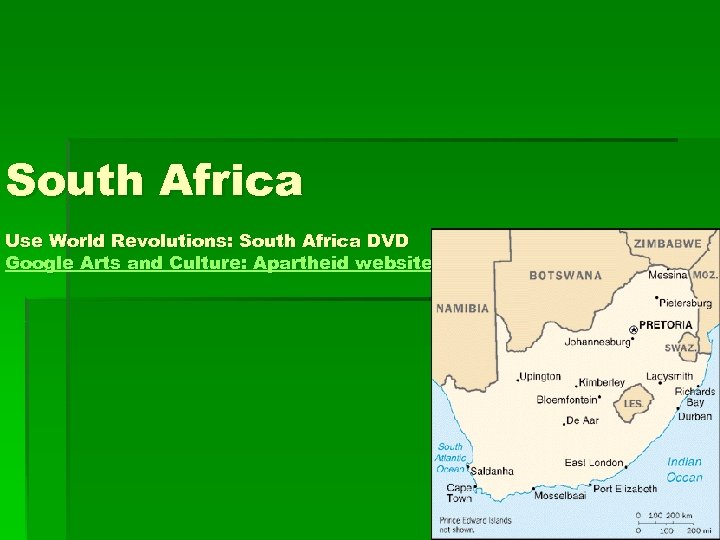 South Africa Use World Revolutions: South Africa DVD Google Arts and Culture: Apartheid website
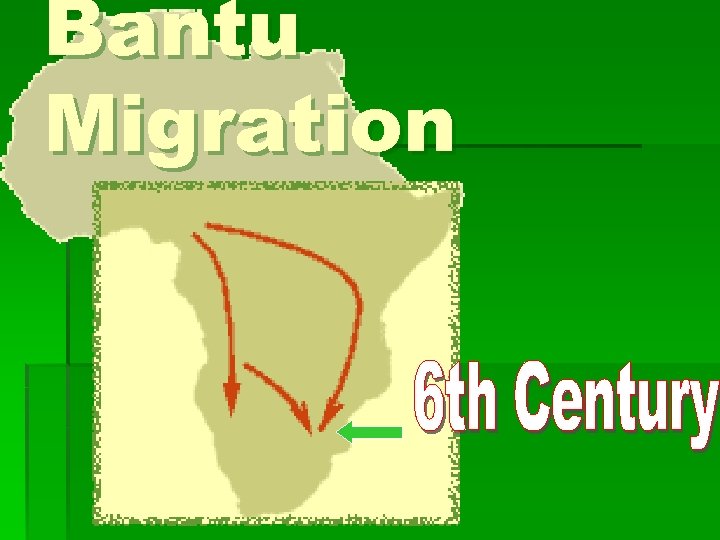 Bantu Migration
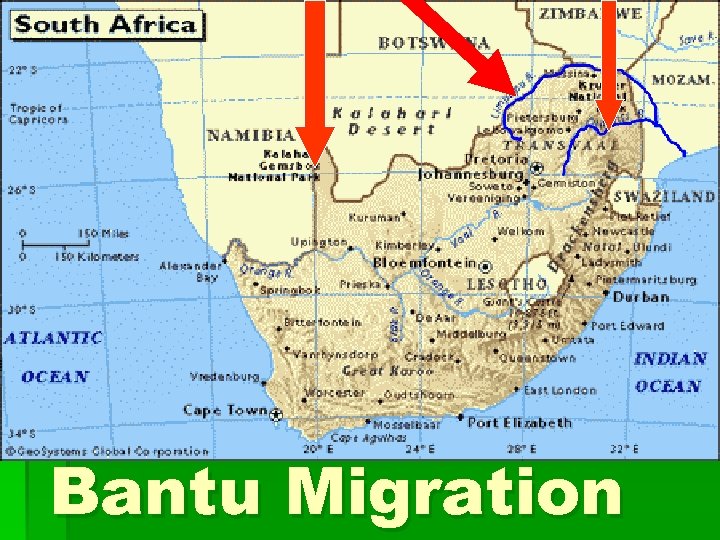 Bantu Migration
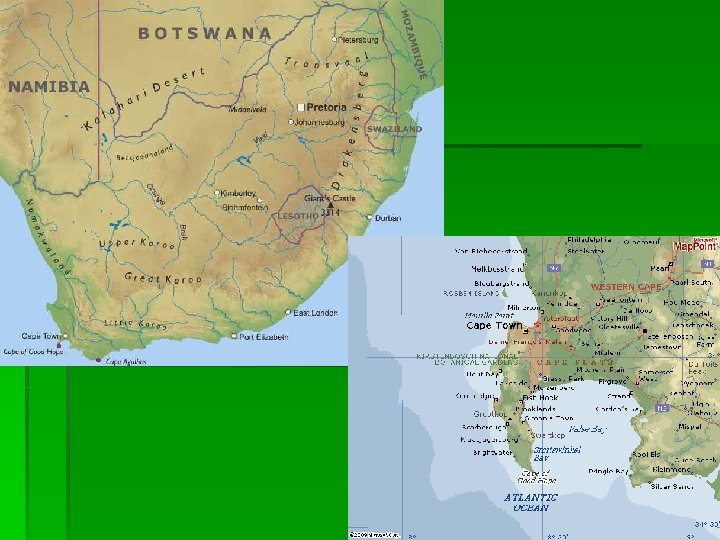
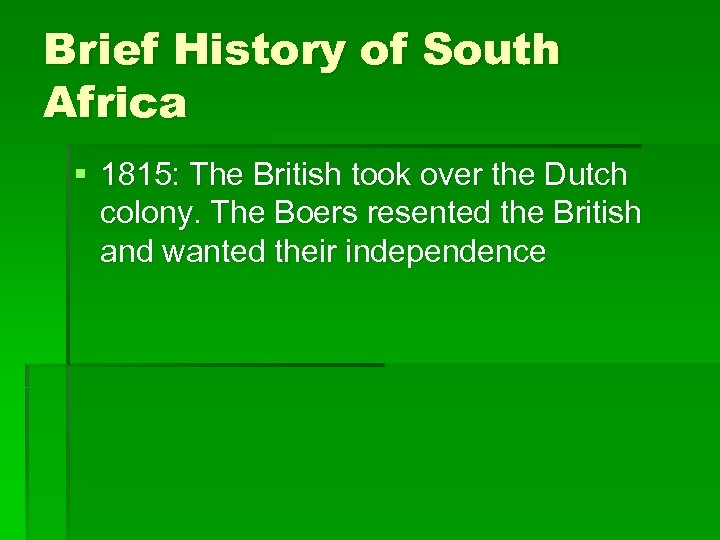
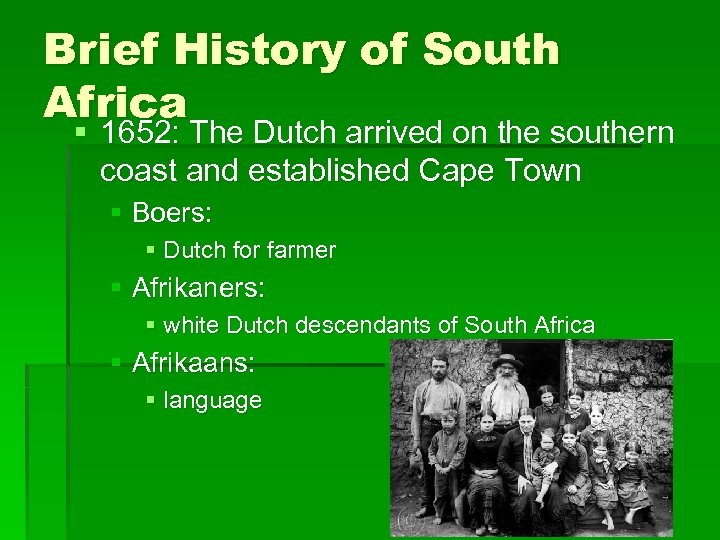 Brief History of South Africa § 1652: The Dutch arrived on the southern coast and established Cape Town § Boers: § Dutch for farmer § Afrikaners: § white Dutch descendants of South Africa § Afrikaans: § language
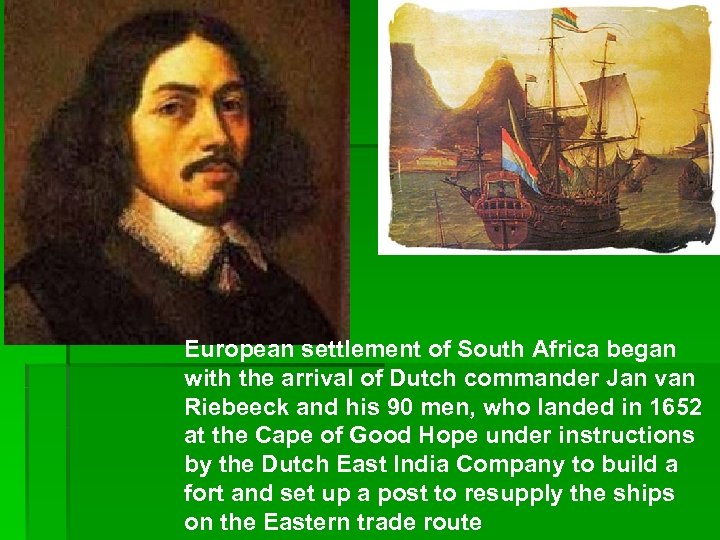 European settlement of South Africa began with the arrival of Dutch commander Jan van Riebeeck and his 90 men, who landed in 1652 at the Cape of Good Hope under instructions by the Dutch East India Company to build a fort and set up a post to resupply the ships on the Eastern trade route
 Brief History of South Africa § 1815: The British took over the Dutch colony. The Boers resented the British and wanted their independence
 Brief History of South Africa § 1834: The British end slavery in all of their colonies. The Dutch farming economy depends on slaves for labor, so they rebel against the British anti-slavery laws.
 Brief History of South Africa § 1836: The Boer Trek or Great Trek § Cause: When the British ended slavery, thousands of Boers left the south and headed north § saw as a threat to their way of life § Separatists
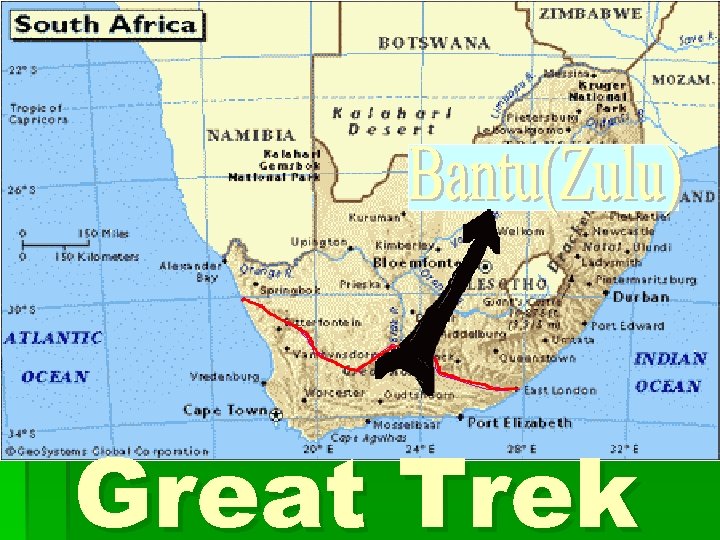 Great Trek
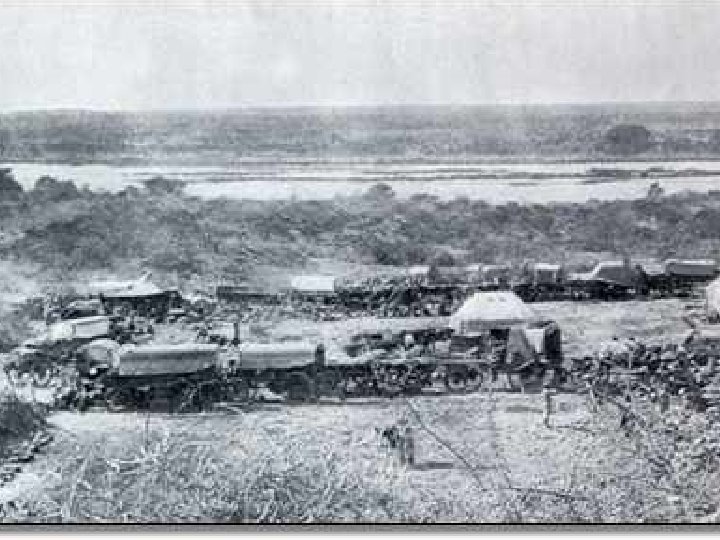
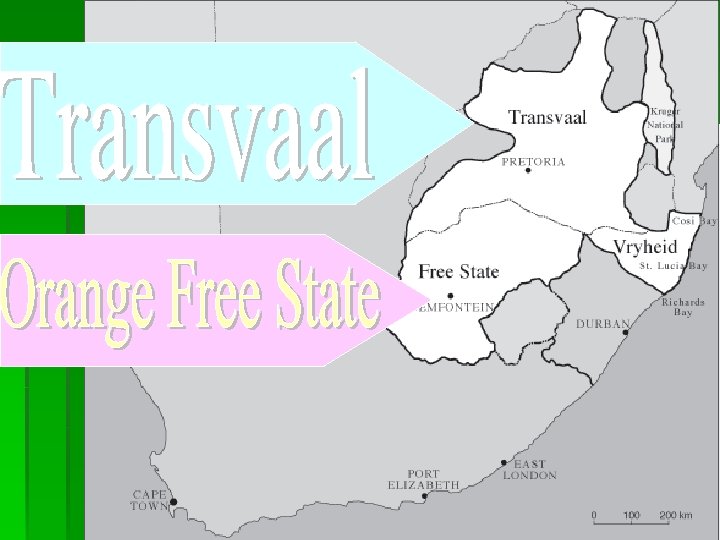
 Brief History of South Africa § Great Trek § Effects: § 1850 s: The Boers established independent republics in the north. § Orange Free State & Transvaal § clashed with the Zulu, who had migrated to the same area and owned the best farmland. § the British defeated the Zulu for land/diamonds § Anglo – Zulu War 1879
 Shaka’s Military Innovations § iklwa - Short spear was the principal weapon requiring close hand to hand combat. § Large cowhide shield was introduced. Different colors. § Constant drilling to keep warriors physically fit. § Boys six and over were apprentice warriors who carried rations. They were highly organized. § Impi - Regiments were given various tasks based on the age range of the men making up the regiment. § “Buffalo horn formation” is credited to Shaka.
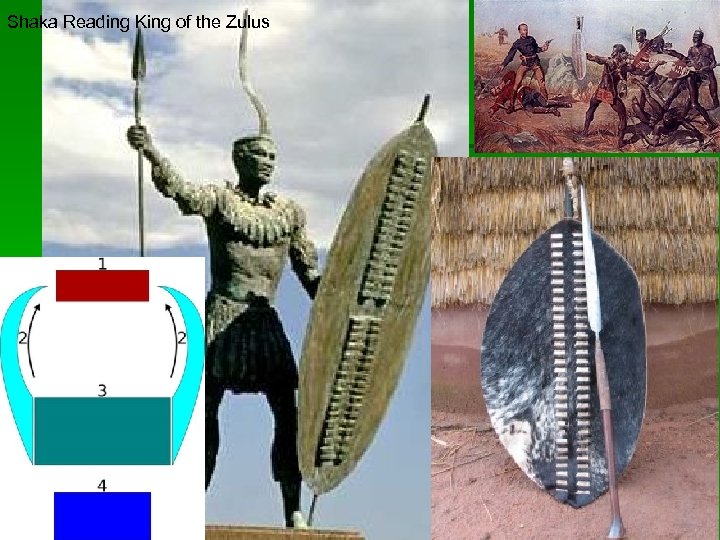 Shaka Reading King of the Zulus
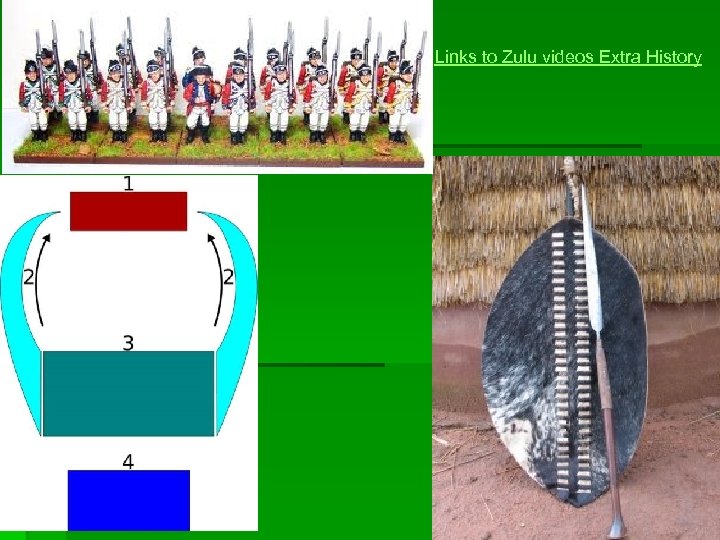 Links to Zulu videos Extra History
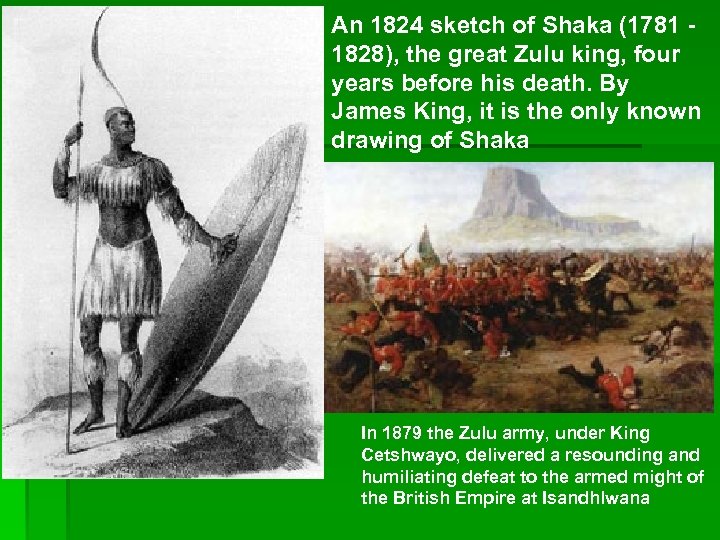 An 1824 sketch of Shaka (1781 1828), the great Zulu king, four years before his death. By James King, it is the only known drawing of Shaka In 1879 the Zulu army, under King Cetshwayo, delivered a resounding and humiliating defeat to the armed might of the British Empire at Isandhlwana
 Shaka Assassinated § In 1827, Shaka's mother, Nandi, died, and the Zulu leader lost his mind. § In his grief, Shaka had hundreds of Zulus killed, and he outlawed the planting of crops and the use of milk for a year. § All women found pregnant were murdered along with their husbands. § He sent his army on an extensive military operation, and when they returned exhausted he immediately ordered them out again. § On September 22, 1828, his half-brothers murdered Shaka. § Dingane, one of the brothers, then became king of the Zulus
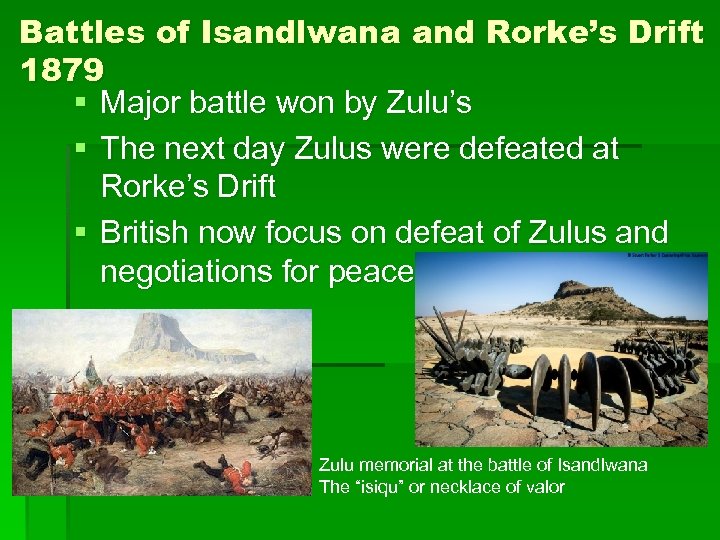 Battles of Isandlwana and Rorke’s Drift 1879 § Major battle won by Zulu’s § The next day Zulus were defeated at Rorke’s Drift § British now focus on defeat of Zulus and negotiations for peace Zulu memorial at the battle of Isandlwana The “isiqu” or necklace of valor
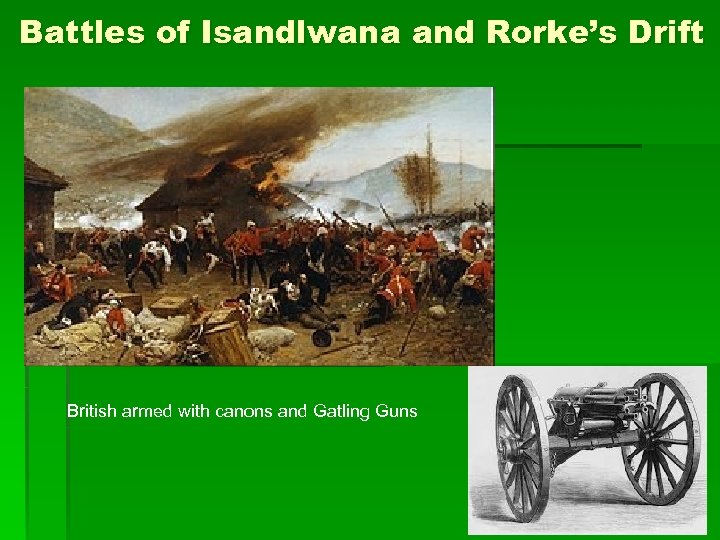 Battles of Isandlwana and Rorke’s Drift British armed with canons and Gatling Guns
 Brief History of South Africa § 1867: Diamonds were discovered in the Boers republic § 1884: Gold was discovered in the Boer republic
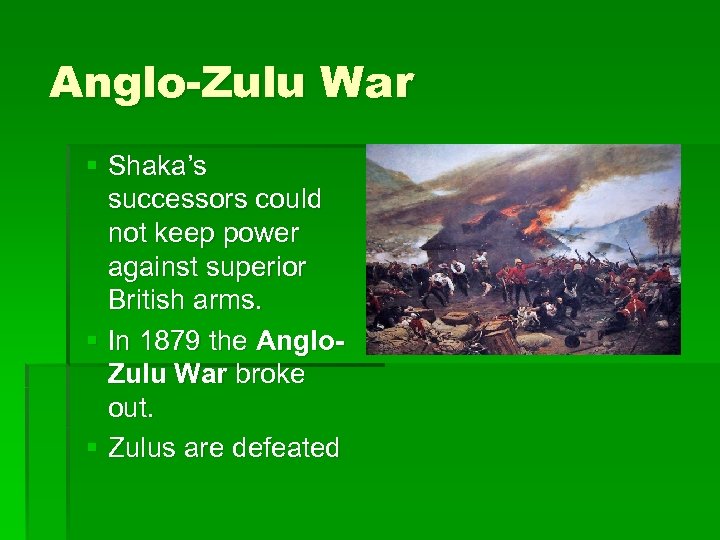 Anglo-Zulu War § Shaka’s successors could not keep power against superior British arms. § In 1879 the Anglo. Zulu War broke out. § Zulus are defeated
 Brief History of South Africa § 1899 -1902: The Boer War § Boers vs. British § Causes § British wanted control of the diamonds and gold. The Boers fought back for their independence. § Effects § ended with the British in control of all of South Africa § 1910: Britain granted self-government to the Union of South Africa
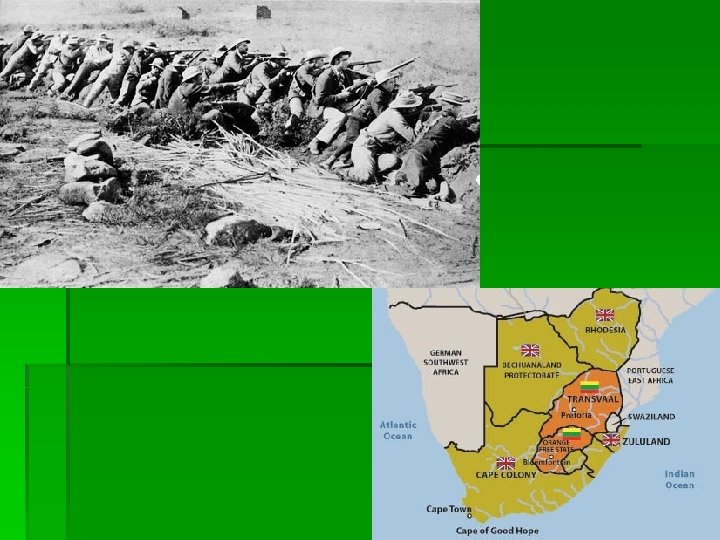
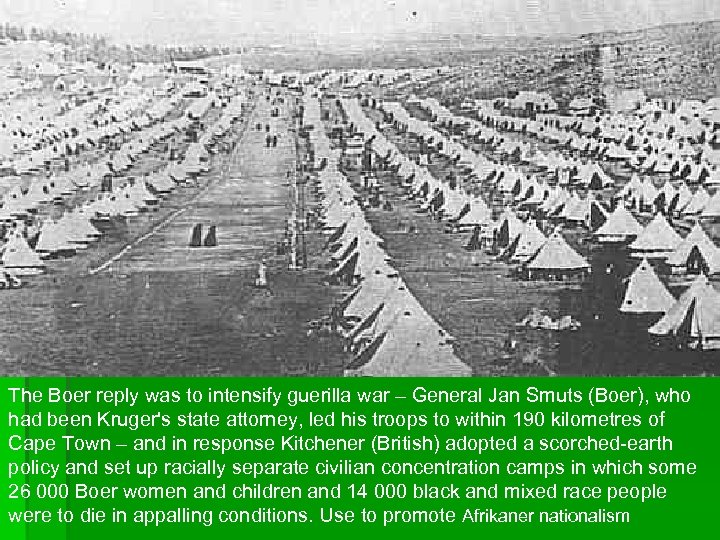 The Boer reply was to intensify guerilla war – General Jan Smuts (Boer), who had been Kruger's state attorney, led his troops to within 190 kilometres of Cape Town – and in response Kitchener (British) adopted a scorched-earth policy and set up racially separate civilian concentration camps in which some 26 000 Boer women and children and 14 000 black and mixed race people were to die in appalling conditions. Use to promote Afrikaner nationalism
 Brief History of South Africa § 1910: Britain granted self-government to the Union of South Africa § Effects: whites controlled the government § only Whites voted § Boers were the majority, they gained control
 World Revolution DVD § Formal Apartheid 6: 00
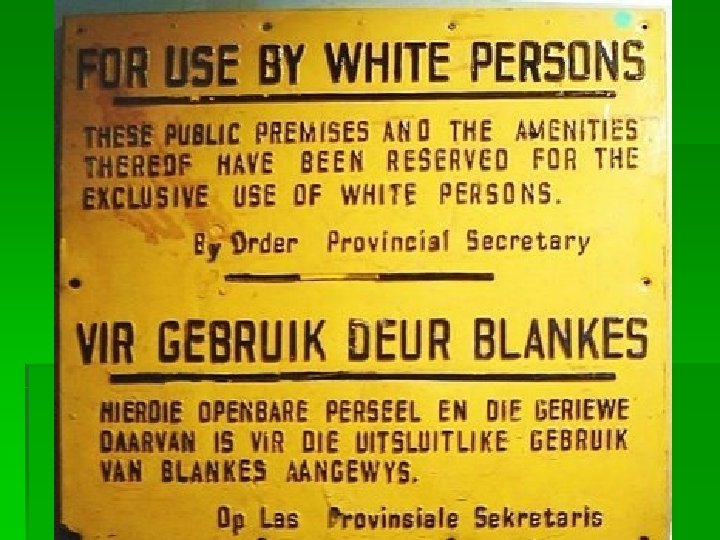
 1948: Apartheid § Apartheid began in 1948, under the National Party § Rigid separation of races – forced segregation § Afrikaans: "separateness” § All South Africans were classified: White, Black, Mixed races or Asian (Indians mostly) § White South Africans – 10% § Black South Africans – 79% § Mixed – 9% § Asians – 2%
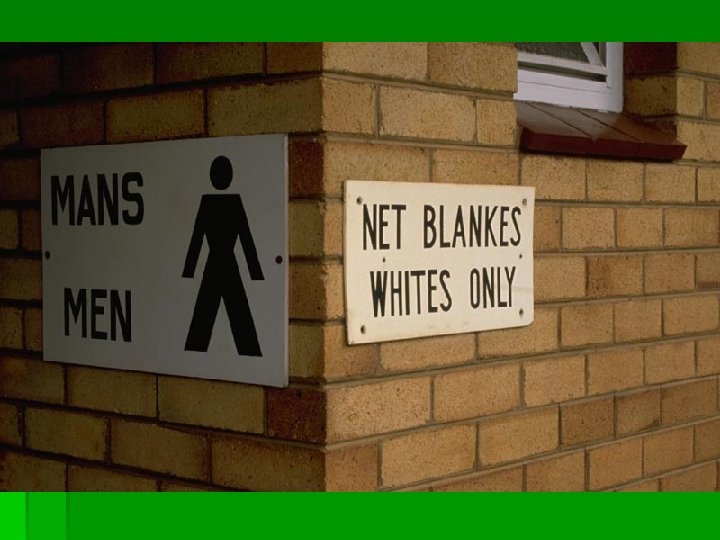
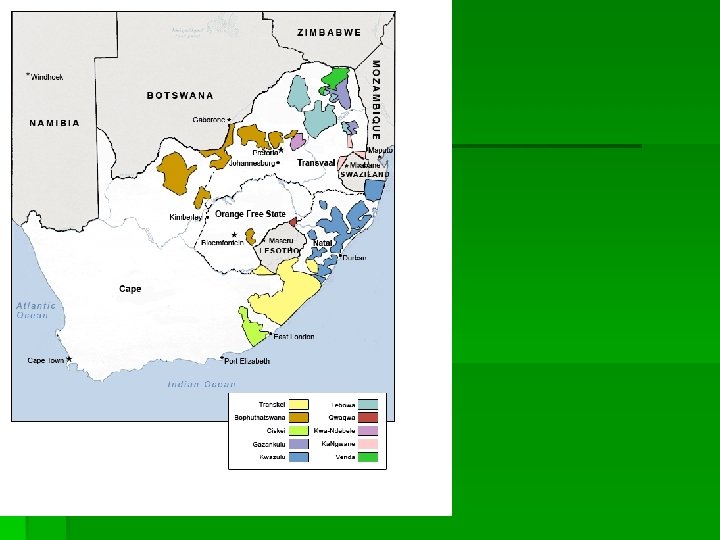
 Apartheid Laws § Separate development = justification § Bantustans/Homelands – § was a territory set aside for South Africans Blacks § Pass laws § enacted to allowed South African Blacks out of their homelands for work = hated Passbooks § Could not officially live in cities (townships - Soweto) § Bantu Education § designed to ensure under achievement only preparing students for unskilled labor.
 Apartheid Laws § No voting for non-whites § Population Registration Act of 1950 § Register by race § Group Areas Act § people of a “certain” group could live – still issue today § Supported Ethnic divisions everywhere – divided families § Job classification
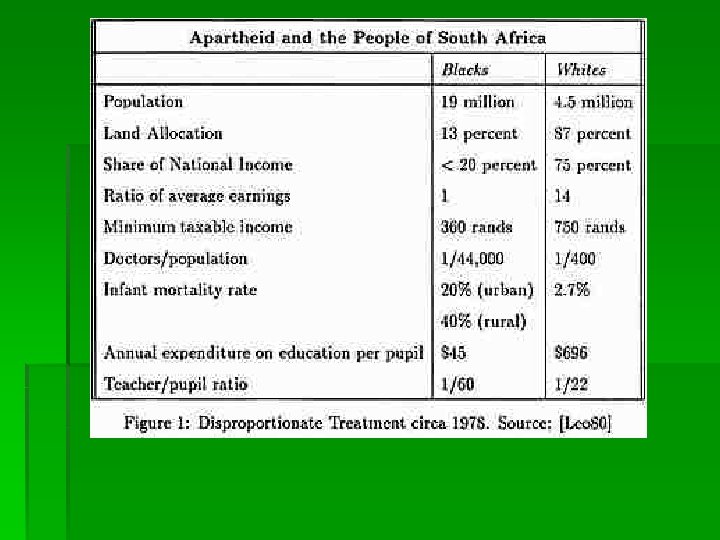
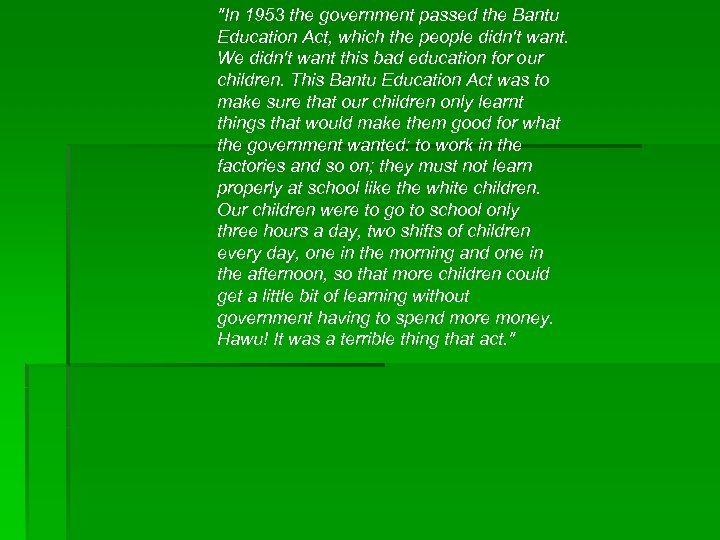 "In 1953 the government passed the Bantu Education Act, which the people didn't want. We didn't want this bad education for our children. This Bantu Education Act was to make sure that our children only learnt things that would make them good for what the government wanted: to work in the factories and so on; they must not learn properly at school like the white children. Our children were to go to school only three hours a day, two shifts of children every day, one in the morning and one in the afternoon, so that more children could get a little bit of learning without government having to spend more money. Hawu! It was a terrible thing that act. "
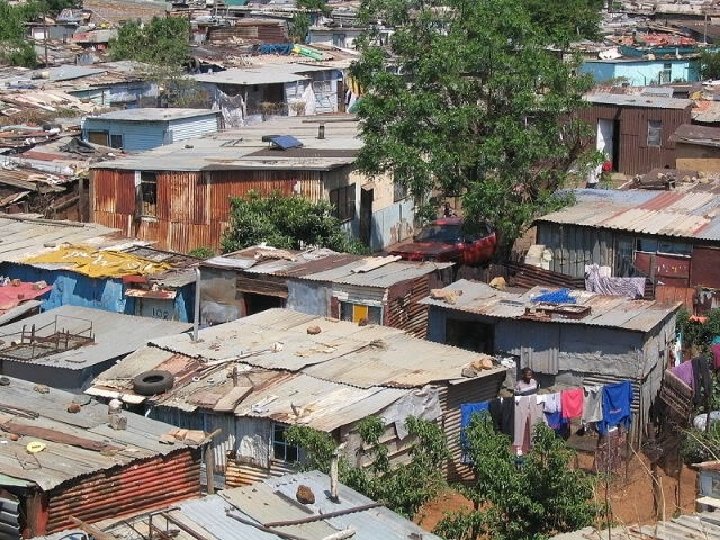
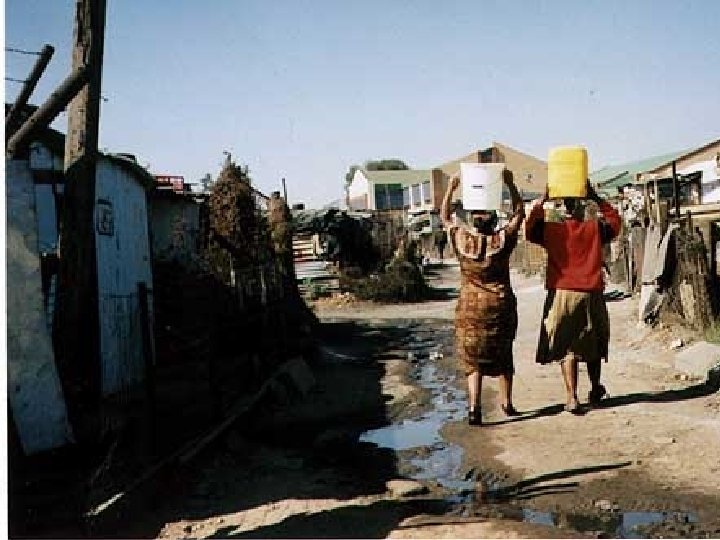
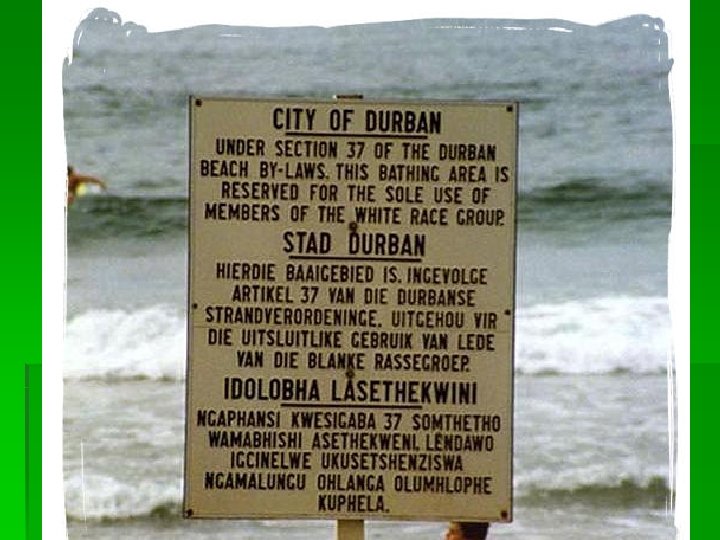
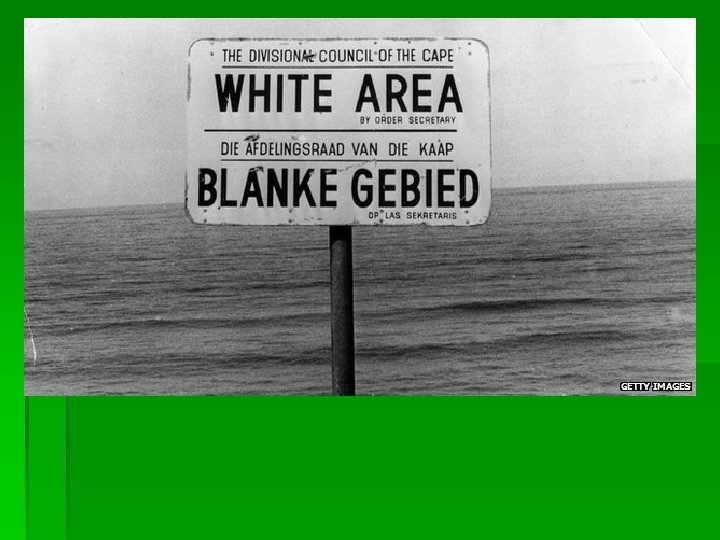
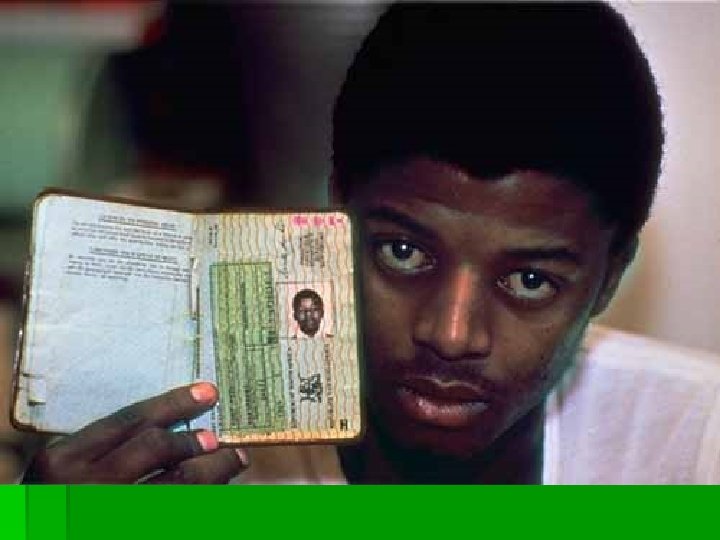
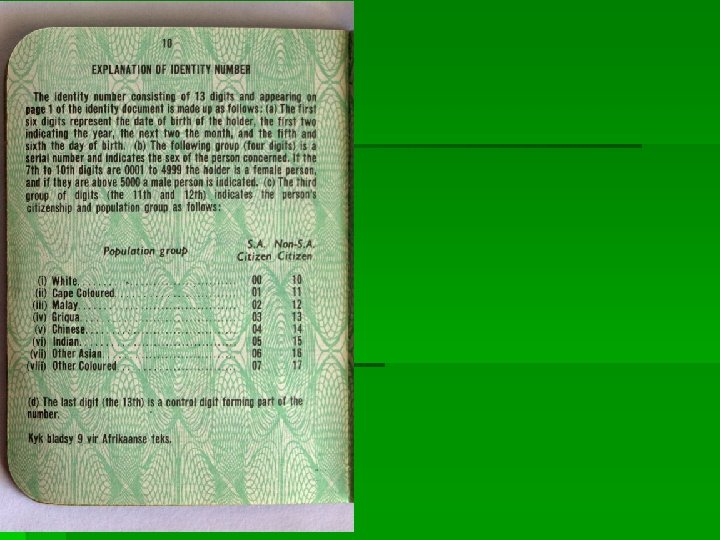
 Effects of Apartheid § Created a system of inequality and injustice § Guaranteed minority rule § South African Blacks = labor = basis of economy § Divided families § Opposition to apartheid
 World Revolution DVD § Anti Apartheid Movement 13: 37 -18: 00 § 5: 00 minutes
 Brief History of South Africa § 1950 s: Opposition to apartheid forms § National and International
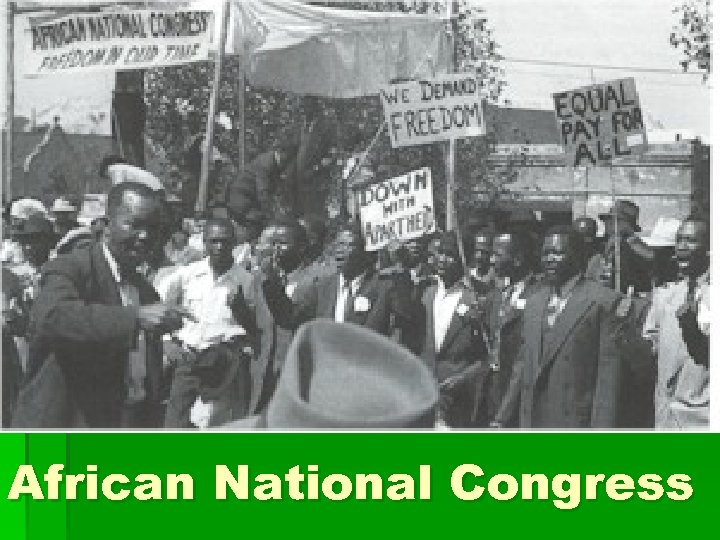
 National Opposition § African National Congress formed 1912 § Defiance Campaign 1952 § Mass Non-violence/ civil disobedience against unjust laws – strikes and boycotts § Spear of the Nation: militant branch § Opposed minority government § Formed first multiracial democratically elected government § Nkosi Sikelel' i. Afrika § The song was the official anthem for the African National Congress during the apartheid era and was a symbol of the anti-apartheid movement – song § Now South Africa National Anthem
 Defiance Campaign in 1952 § The Defiance Campaign in 1952 § was the first large-scale, multi-racial political mobilization against apartheid laws under a common leadership – by the African National Congress, South African Indian Congress, and the Coloured People’s Congress. § More than 8, 000 trained volunteers went to jail for “defying unjust laws, ” laws that had grown worse since the National Party came to power in 1948. Volunteers were jailed for failing to carry passes, violating the curfew on Africans, and entering locations and public facilities designated for one race only
 African National Congress
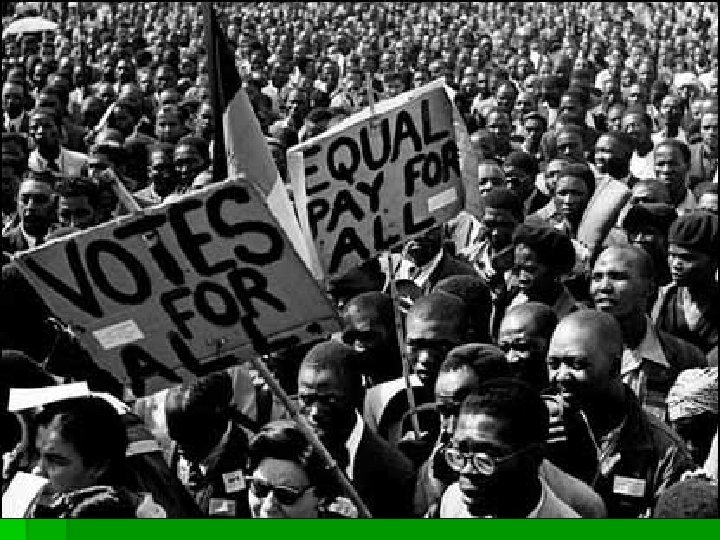
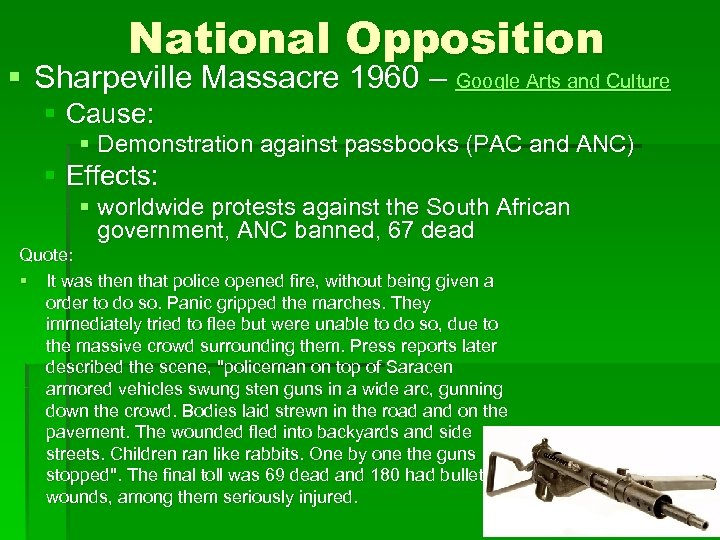 National Opposition § Sharpeville Massacre 1960 – Google Arts and Culture § Cause: § Demonstration against passbooks (PAC and ANC) § Effects: § worldwide protests against the South African government, ANC banned, 67 dead Quote: § It was then that police opened fire, without being given a order to do so. Panic gripped the marches. They immediately tried to flee but were unable to do so, due to the massive crowd surrounding them. Press reports later described the scene, "policeman on top of Saracen armored vehicles swung sten guns in a wide arc, gunning down the crowd. Bodies laid strewn in the road and on the pavement. The wounded fled into backyards and side streets. Children ran like rabbits. One by one the guns stopped". The final toll was 69 dead and 180 had bullet wounds, among them seriously injured.
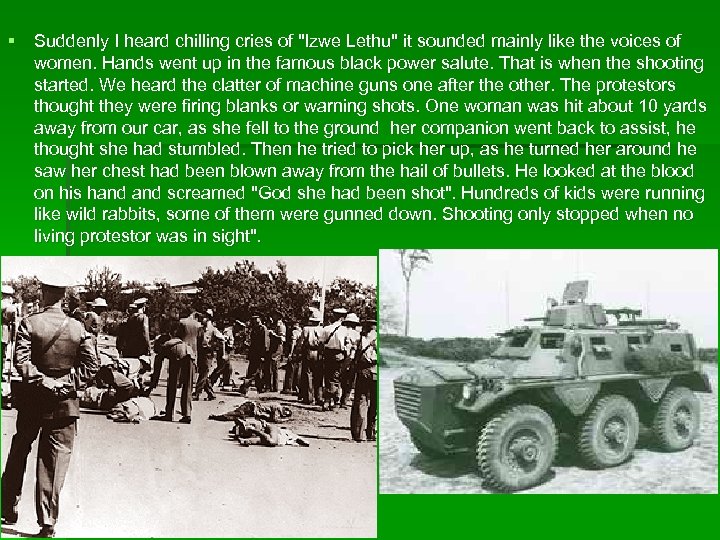 § Suddenly I heard chilling cries of "Izwe Lethu" it sounded mainly like the voices of women. Hands went up in the famous black power salute. That is when the shooting started. We heard the clatter of machine guns one after the other. The protestors thought they were firing blanks or warning shots. One woman was hit about 10 yards away from our car, as she fell to the ground her companion went back to assist, he thought she had stumbled. Then he tried to pick her up, as he turned her around he saw her chest had been blown away from the hail of bullets. He looked at the blood on his hand screamed "God she had been shot". Hundreds of kids were running like wild rabbits, some of them were gunned down. Shooting only stopped when no living protestor was in sight".
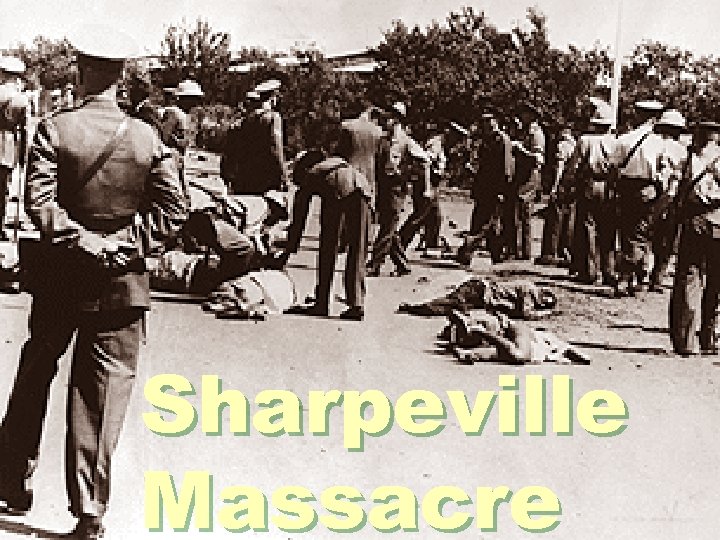 Sharpeville Massacre
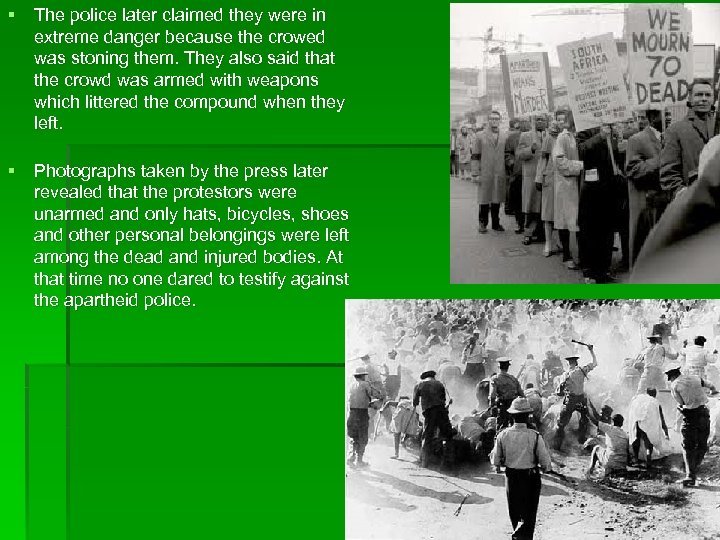 § The police later claimed they were in extreme danger because the crowed was stoning them. They also said that the crowd was armed with weapons which littered the compound when they left. § Photographs taken by the press later revealed that the protestors were unarmed and only hats, bicycles, shoes and other personal belongings were left among the dead and injured bodies. At that time no one dared to testify against the apartheid police.
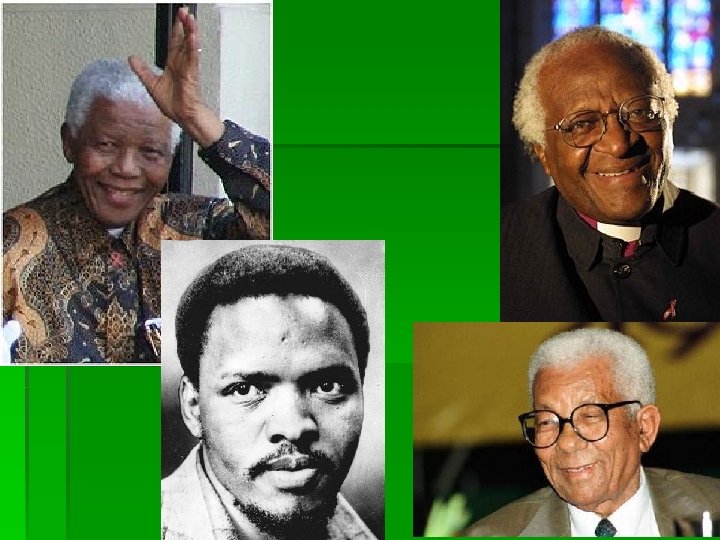
 Anti-Apartheid Leaders § Albert Luthuli: § 1960 winner of the Nobel Prize for Peace, president of the ANC (1951), nonviolent resistance § Walter Sisulu: § ANC, planning role in the "Spear of the Nation“, 26 years prison § Stephen Biko - Google Arts and Culture § Black Consciousness Movement § focused on the ability of black people to change the oppressive situation in South Africa by rejecting the system of apartheid
 Anti-Apartheid Leaders § Archbishop Desmond Tutu: § winner of the Nobel Prize for Peace, nonviolent resistance, (1980’s) § Nelson Mandela (1918 -2013) § § § § see Biography questions Nelson Mandela's Life Story: Mandela Foundation 14: 00 Brief CNN Video Mandela Feb 4, 1994 Video 4: 00 Mandala Pictures and Quotes Timeline NYTimes Timeline Remembering Mandela 18: 00 Madiba - a sign of respect and affection
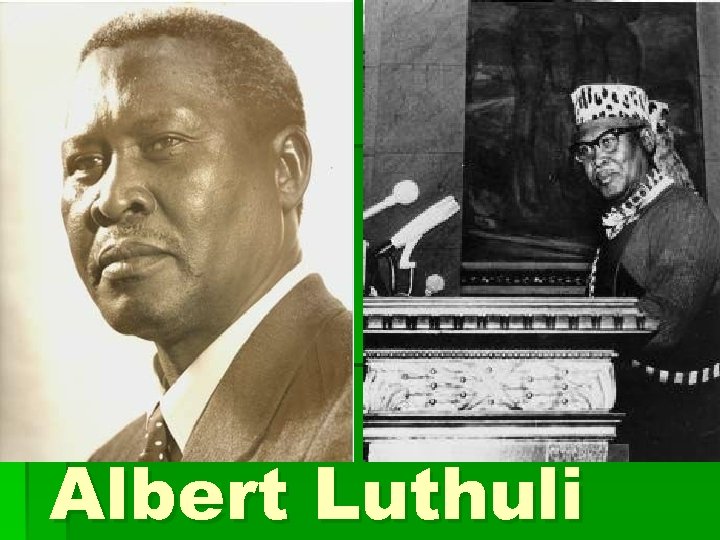 Albert Luthuli
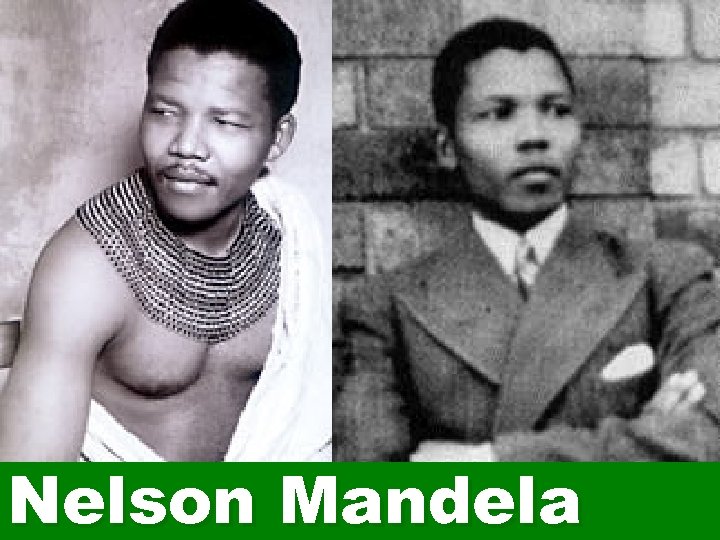 Nelson Mandela
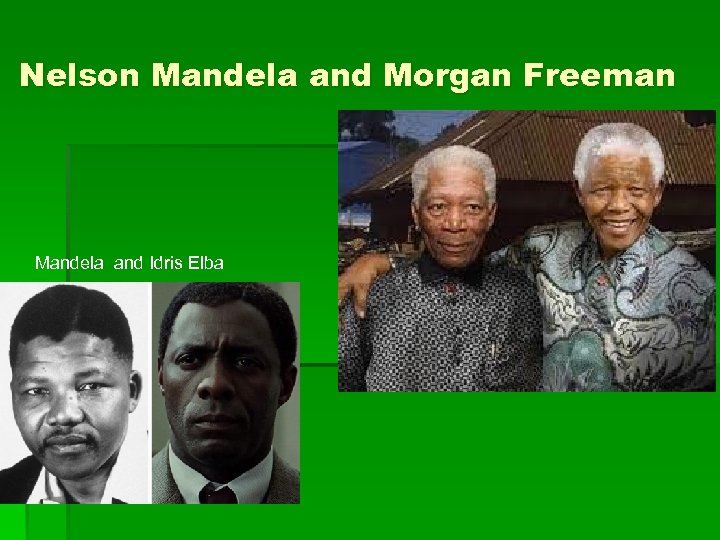 Nelson Mandela and Morgan Freeman Mandela and Idris Elba
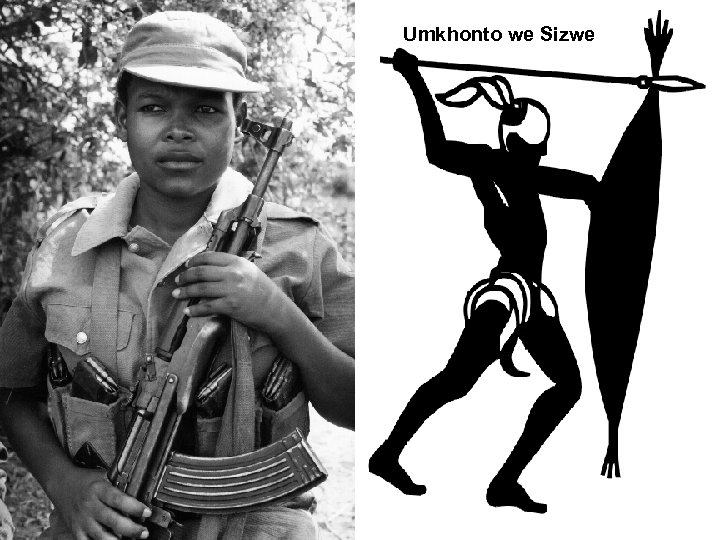 Umkhonto we Sizwe
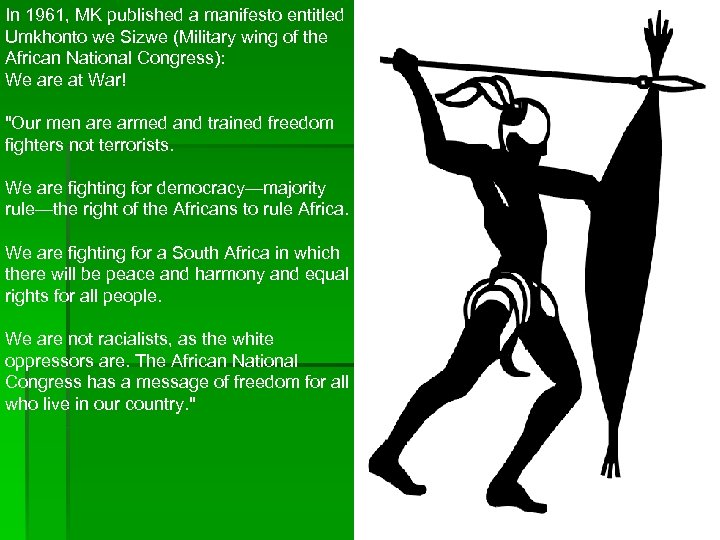 In 1961, MK published a manifesto entitled Umkhonto we Sizwe (Military wing of the African National Congress): We are at War! "Our men are armed and trained freedom fighters not terrorists. We are fighting for democracy—majority rule—the right of the Africans to rule Africa. We are fighting for a South Africa in which there will be peace and harmony and equal rights for all people. We are not racialists, as the white oppressors are. The African National Congress has a message of freedom for all who live in our country. "
 Brief History of South Africa § 1962 - 1964: Nelson Mandela, the leader of the African National Congress, was imprisoned § § In 1962, Mandela returns to South Africa and is arrested and charged with illegal exit of the country and incitement to strike. convicted and sentenced to five years in prison. Two years later, while he was still incarcerated, the government convicts him of treason and sentences him to life in prison on Robben Island. § World opinion turns against the South African government – Free Mandela Song 1984
 I have fought against white domination, and I have fought against black domination. I have cherished the ideal of a democratic and free society in which all persons will live together in harmony and with equal opportunities. It is an ideal which I hope to live for and to see realized. But if it needs be, it is an ideal for which I am prepared to die. — Mandela's speech 1964 http: //www. bbc. com/news/world-africa-23618727
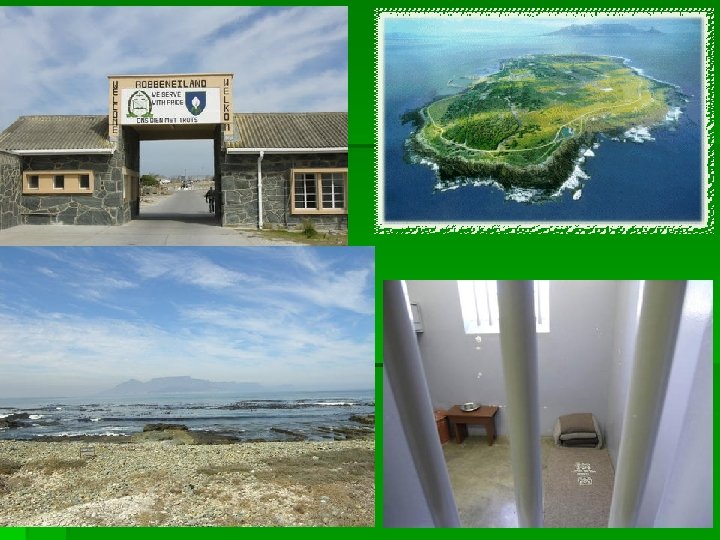
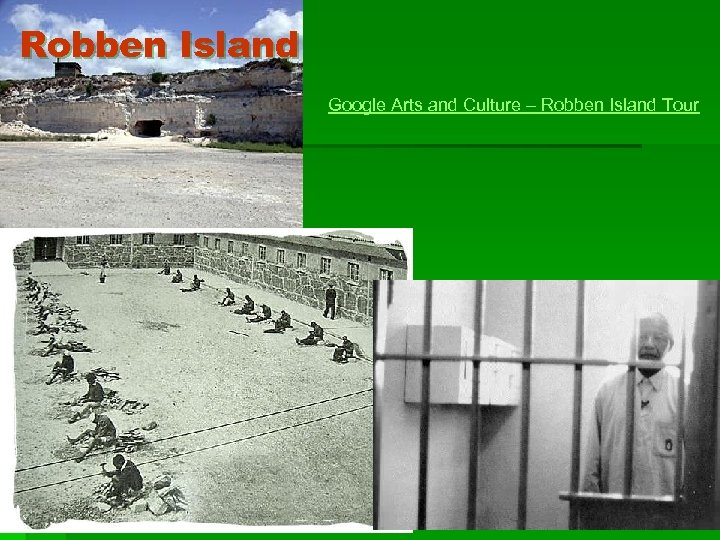 Robben Island Google Arts and Culture – Robben Island Tour
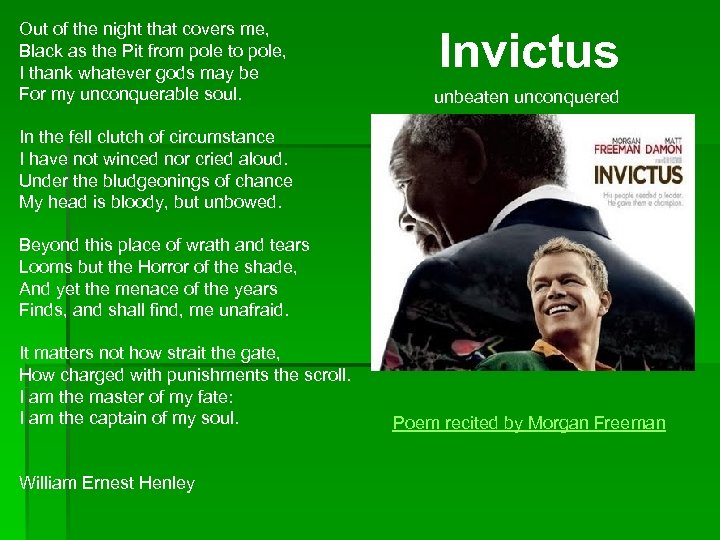 Out of the night that covers me, Black as the Pit from pole to pole, I thank whatever gods may be For my unconquerable soul. Invictus unbeaten unconquered In the fell clutch of circumstance I have not winced nor cried aloud. Under the bludgeonings of chance My head is bloody, but unbowed. Beyond this place of wrath and tears Looms but the Horror of the shade, And yet the menace of the years Finds, and shall find, me unafraid. It matters not how strait the gate, How charged with punishments the scroll. I am the master of my fate: I am the captain of my soul. William Ernest Henley Poem recited by Morgan Freeman
 National Opposition § Soweto Riots 1976 § Cause: Students joined the protest when a new law went into affect requiring Afrikaans in all public school; symbol of white rule § Effects § Violence, arrests, Biko murdered § Causes Final push to end Apartheid
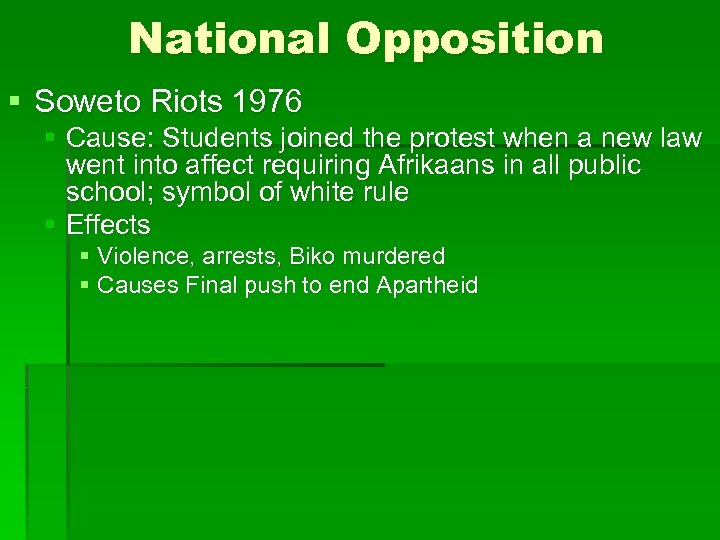
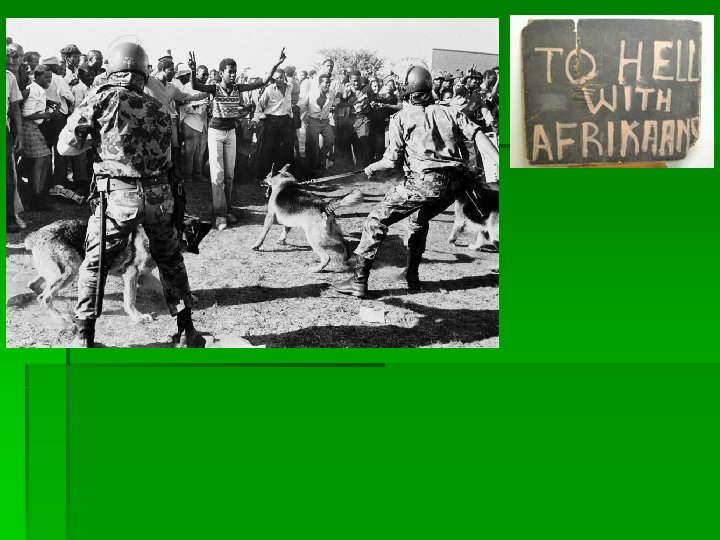
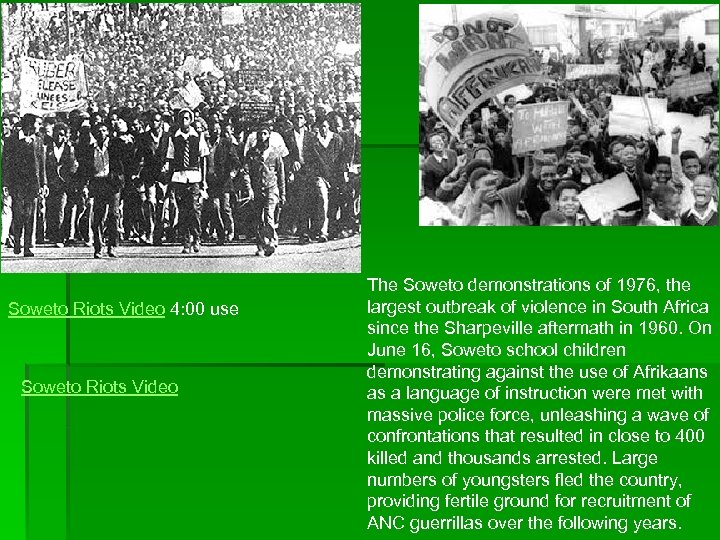 Soweto Riots Video 4: 00 use Soweto Riots Video The Soweto demonstrations of 1976, the largest outbreak of violence in South Africa since the Sharpeville aftermath in 1960. On June 16, Soweto school children demonstrating against the use of Afrikaans as a language of instruction were met with massive police force, unleashing a wave of confrontations that resulted in close to 400 killed and thousands arrested. Large numbers of youngsters fled the country, providing fertile ground for recruitment of ANC guerrillas over the following years.
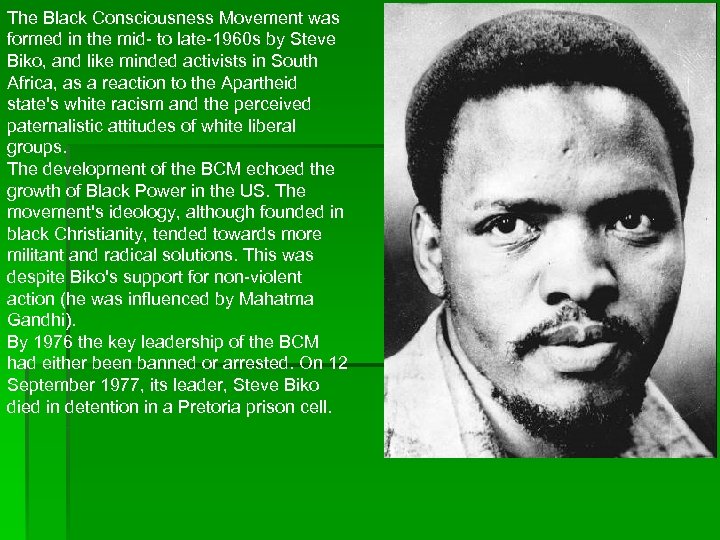 The Black Consciousness Movement was formed in the mid- to late-1960 s by Steve Biko, and like minded activists in South Africa, as a reaction to the Apartheid state's white racism and the perceived paternalistic attitudes of white liberal groups. The development of the BCM echoed the growth of Black Power in the US. The movement's ideology, although founded in black Christianity, tended towards more militant and radical solutions. This was despite Biko's support for non-violent action (he was influenced by Mahatma Gandhi). By 1976 the key leadership of the BCM had either been banned or arrested. On 12 September 1977, its leader, Steve Biko died in detention in a Pretoria prison cell.
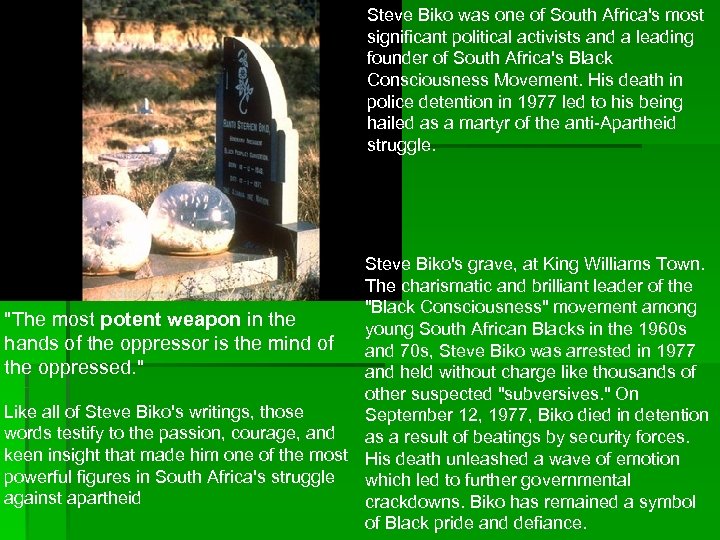 Steve Biko was one of South Africa's most significant political activists and a leading founder of South Africa's Black Consciousness Movement. His death in police detention in 1977 led to his being hailed as a martyr of the anti-Apartheid struggle. Steve Biko's grave, at King Williams Town. The charismatic and brilliant leader of the "Black Consciousness" movement among "The most potent weapon in the young South African Blacks in the 1960 s hands of the oppressor is the mind of and 70 s, Steve Biko was arrested in 1977 the oppressed. " and held without charge like thousands of other suspected "subversives. " On Like all of Steve Biko's writings, those September 12, 1977, Biko died in detention words testify to the passion, courage, and as a result of beatings by security forces. keen insight that made him one of the most His death unleashed a wave of emotion powerful figures in South Africa's struggle which led to further governmental against apartheid crackdowns. Biko has remained a symbol of Black pride and defiance.
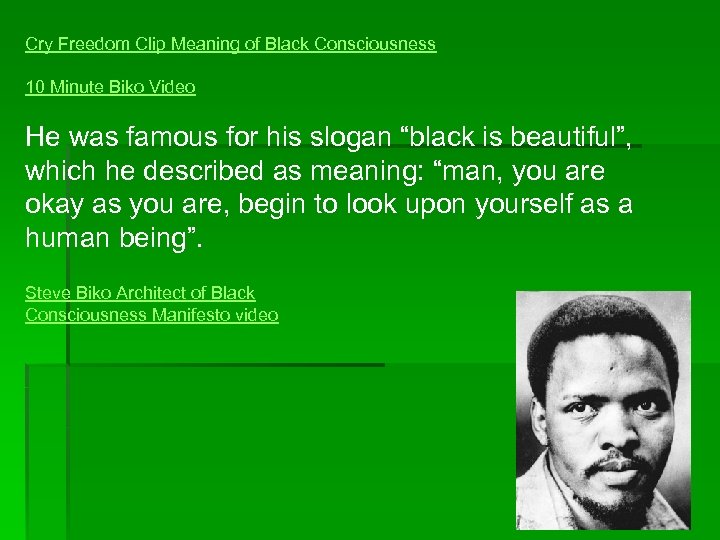 Cry Freedom Clip Meaning of Black Consciousness 10 Minute Biko Video He was famous for his slogan “black is beautiful”, which he described as meaning: “man, you are okay as you are, begin to look upon yourself as a human being”. Steve Biko Architect of Black Consciousness Manifesto video
 Biko – Peter Gabriel - 1980 § September '77 Port Elizabeth weather fine It was business as usual In police room 619 Oh Biko, because Biko Yihla Moja, Yihla Moja -The man is dead When I try to sleep at night I can only dream in red The outside world is black and white With only one colour dead Oh Biko, because Biko Yihla Moja, Yihla Moja -The man is dead § You can blow out a candle But you can't blow out a fire Once the flames begin to catch The wind will blow it higher Oh Biko, because Biko Yihla Moja, Yihla Moja -The man is dead And the eyes of the world are watching now § Play Song § We are the World
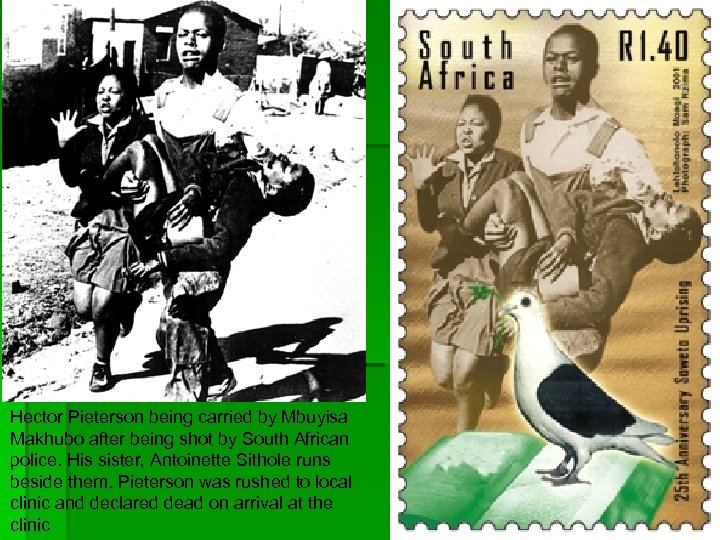 Hector Pieterson being carried by Mbuyisa Makhubo after being shot by South African police. His sister, Antoinette Sithole runs beside them. Pieterson was rushed to local clinic and declared dead on arrival at the clinic
 Limited Reforms to Apartheid 1982 - 1983 § Semantics: § apartheid = separate development § Passbooks = identity cards § Laws with limited impact – no real changes § Asian and mixed race into government with no power – limited participation § legal to have racially mixed marriages but illegal to live together -1986 – Trevor Noah NPR § Organizations not banned but forbidden to hold meetings § Removal of examples of “Petty Apartheid” § Changed signs to blue and white figures
 International Opposition § economic sanction and isolation § punitive measures to punish a country § United Nations placed an arms embargo on South Africa § South Africa suspended from UN - 1974 § Olympic Committee barred South African athletes from competition/Expelled from FIFA § United States imposed economic sanctions § Could not borrow from international lending organizations
 International Opposition § divestment § economic boycott to pressure a government, industry, or company towards a change in policy § financial, ethical, or political objectives § although it hit the poor hardest § divestment threw blacks out of work § Tutu argued § “at least South African Blacks would be suffering with a purpose"
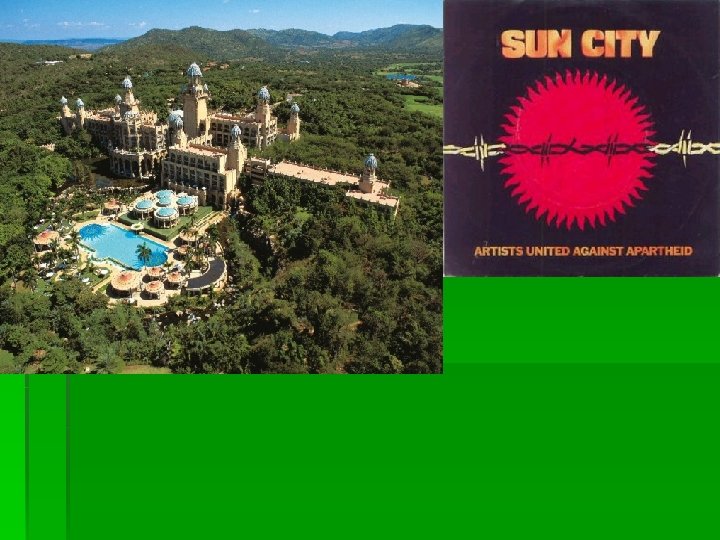
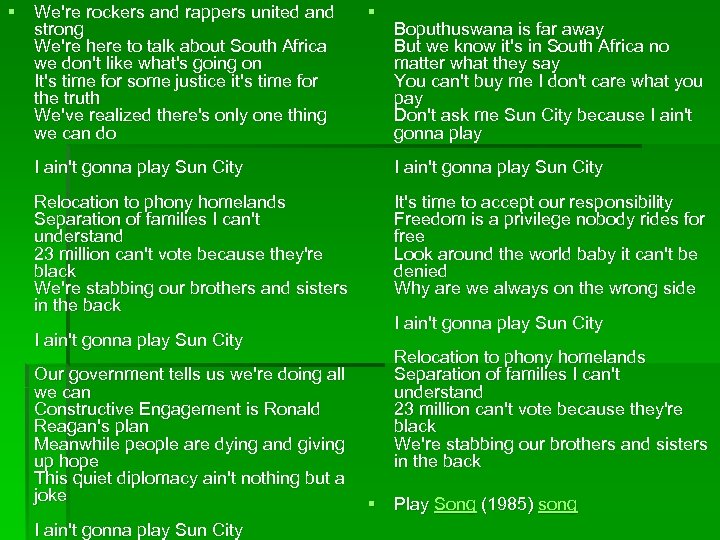 § We're rockers and rappers united and strong We're here to talk about South Africa we don't like what's going on It's time for some justice it's time for the truth We've realized there's only one thing we can do § Boputhuswana is far away But we know it's in South Africa no matter what they say You can't buy me I don't care what you pay Don't ask me Sun City because I ain't gonna play Sun City Relocation to phony homelands Separation of families I can't understand 23 million can't vote because they're black We're stabbing our brothers and sisters in the back It's time to accept our responsibility Freedom is a privilege nobody rides for free Look around the world baby it can't be denied Why are we always on the wrong side I ain't gonna play Sun City Relocation to phony homelands Separation of families I can't understand 23 million can't vote because they're black We're stabbing our brothers and sisters in the back Our government tells us we're doing all we can Constructive Engagement is Ronald Reagan's plan Meanwhile people are dying and giving up hope This quiet diplomacy ain't nothing but a joke § Play Song (1985) song I ain't gonna play Sun City
 Effects § Sanctions slowed South Africa’s economy § Consolidated Gold Fields (British) played a key role in ending apartheid in South Africa; Michael Young, the company's public affairs director embarked on the controversial course of initiating secret discussions between the South African government and the ANC at the company's estate in Somerset, Mells Park House. This ultimately resulted in the release of Nelson Mandela in 1990 and the handover of power to majority rule: the events are described in the 2009 television film "Endgame". § A growing number of white South Africans came to believe that apartheid must end in order for the country to grow
 Show End of Apartheid: Revolutions § 18 - 24 to end
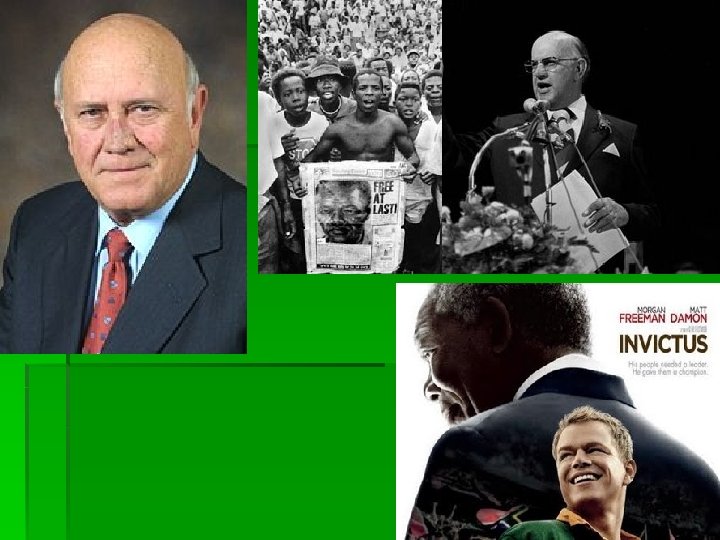
 End of Apartheid § F. W. de Klerk (1989) § Lifted bans on opposition groups § Government repeals pass laws § They opened segregated facilities to ALL South Africans § Mandela’s release from prison (1990) § New constitution – officially ends apartheid, guaranteeing non-whites rights, § 1994: 1 st all-race election = Mandela = ANC (speech)
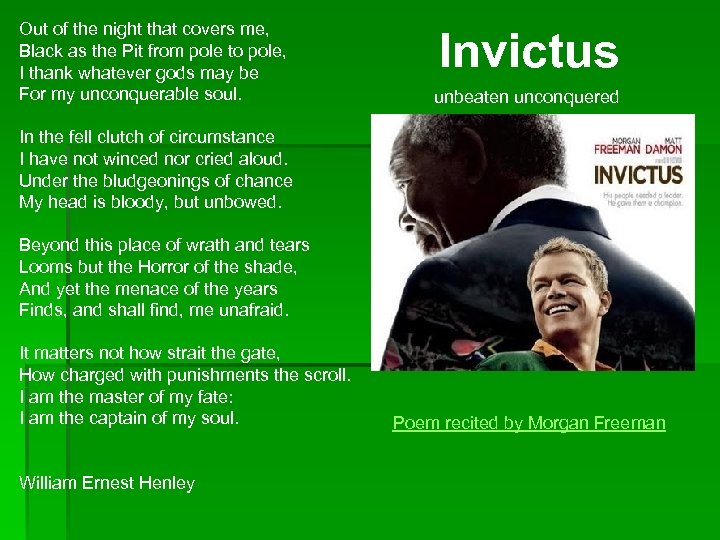 Out of the night that covers me, Black as the Pit from pole to pole, I thank whatever gods may be For my unconquerable soul. Invictus unbeaten unconquered In the fell clutch of circumstance I have not winced nor cried aloud. Under the bludgeonings of chance My head is bloody, but unbowed. Beyond this place of wrath and tears Looms but the Horror of the shade, And yet the menace of the years Finds, and shall find, me unafraid. It matters not how strait the gate, How charged with punishments the scroll. I am the master of my fate: I am the captain of my soul. William Ernest Henley Poem recited by Morgan Freeman
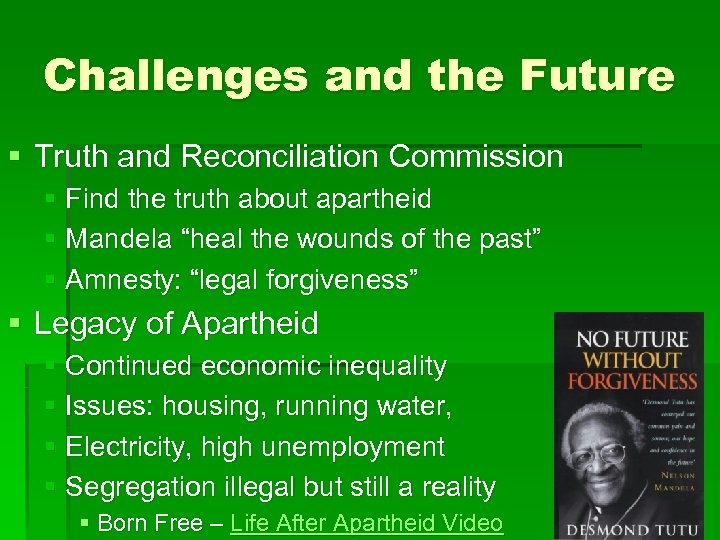 Challenges and the Future § Truth and Reconciliation Commission § Find the truth about apartheid § Mandela “heal the wounds of the past” § Amnesty: “legal forgiveness” § Legacy of Apartheid § Continued economic inequality § Issues: housing, running water, § Electricity, high unemployment § Segregation illegal but still a reality § Born Free – Life After Apartheid Video
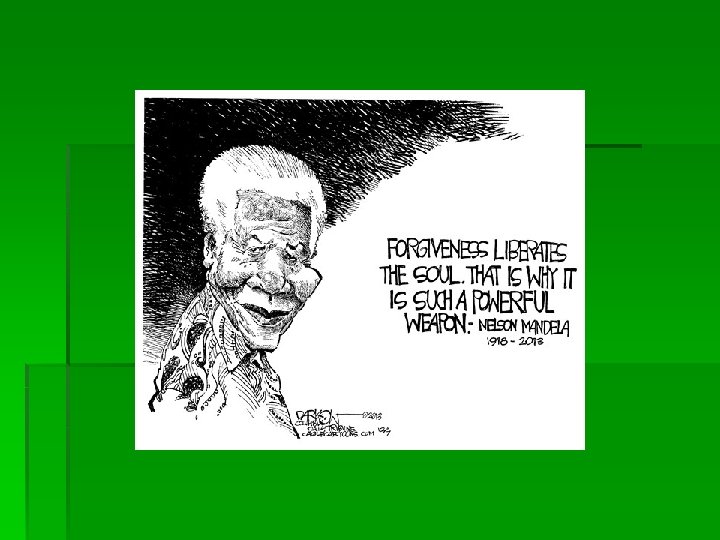
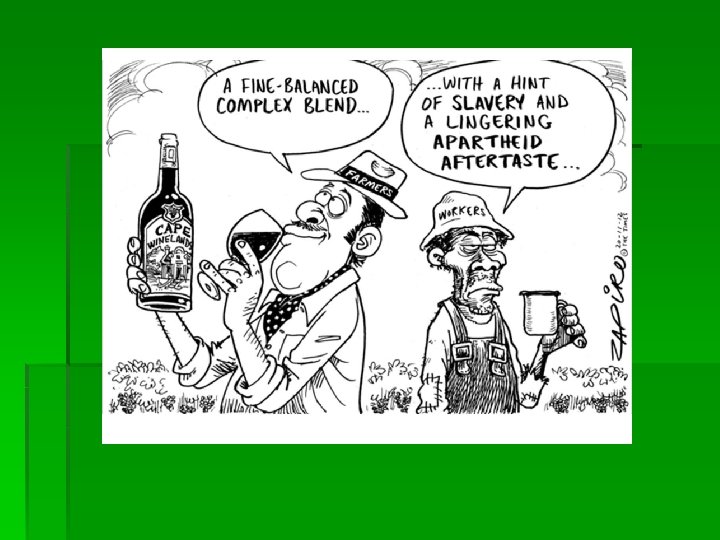
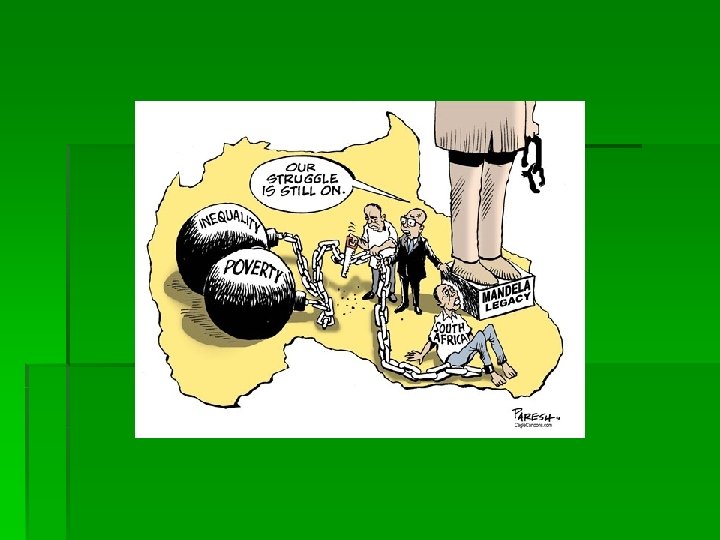
 § Born Free 1/13/2014 § Born Free Video
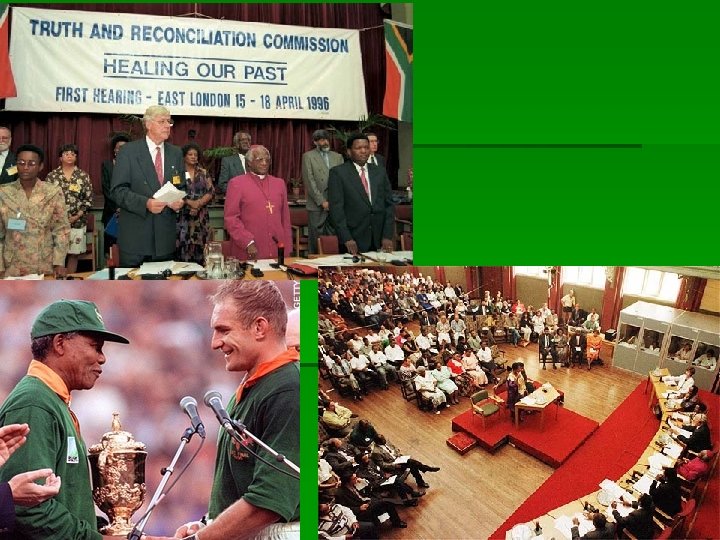
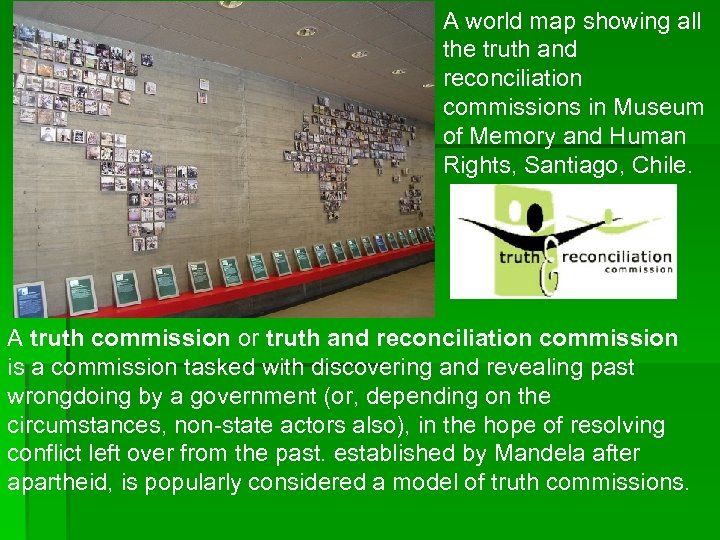 A world map showing all the truth and reconciliation commissions in Museum of Memory and Human Rights, Santiago, Chile. A truth commission or truth and reconciliation commission is a commission tasked with discovering and revealing past wrongdoing by a government (or, depending on the circumstances, non-state actors also), in the hope of resolving conflict left over from the past. established by Mandela after apartheid, is popularly considered a model of truth commissions.
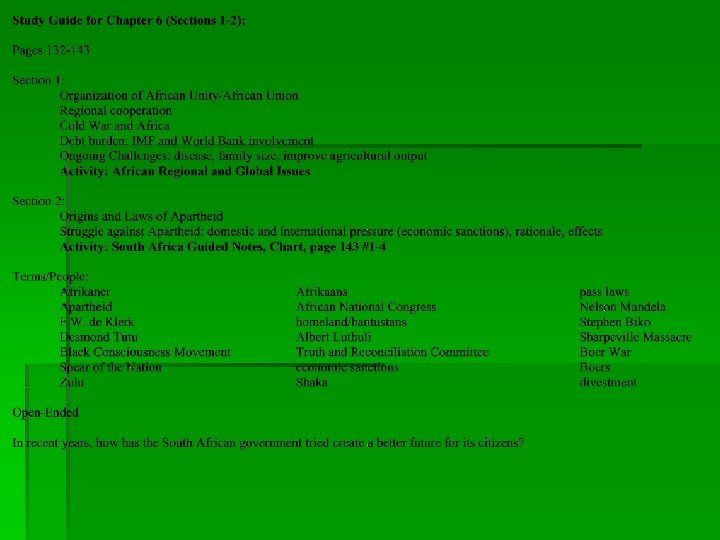
 In recent years, how has the South African government tried to create a better future for its citizens? § Democracy § New Government/Constitution – Preamble Link § antidiscrimination laws § protection of human rights § Try to improve healthcare, unemployment, education § End corruption
 Constitution of the Republic of South Africa (1996) Preamble We, the people of South Africa, Recognise the injustices of our past; Honour those who suffered for justice and freedom in our land; Respect those who have worked to build and develop our country; and Believe that South Africa belongs to all who live in it, united in our diversity. We therefore, through our freely elected representatives, adopt this Constitution as the supreme law of the Republic so as to. Heal the divisions of the past and establish a society based on democratic values, social justice and fundamental human rights; Lay the foundations for a democratic and open society in which government is based on the will of the people and every citizen is equally protected by law; Improve the quality of life of all citizens and free the potential of each person; and Build a united and democratic South Africa able to take its rightful place as a sovereign state in the family of nations.