 Скачать презентацию MODELS ACTION-RESEARCH BTC Health Sector Days 2014
c1f44ea53bf55cef1b5d18862bc510c1.ppt
- Количество слайдов: 57



MODELS & ACTION-RESEARCH BTC Health Sector Days 2014
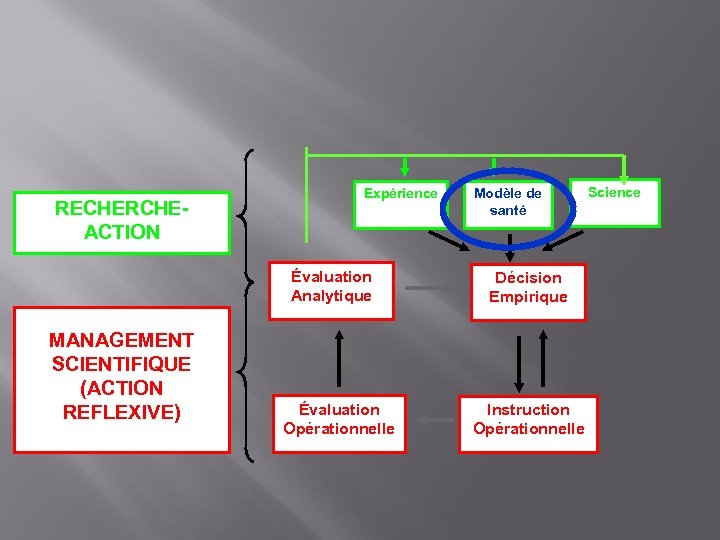
RECHERCHEACTION Expérience Évaluation Analytique MANAGEMENT SCIENTIFIQUE (ACTION REFLEXIVE) Évaluation Opérationnelle Modèle de santé Décision Empirique Instruction Opérationnelle Science
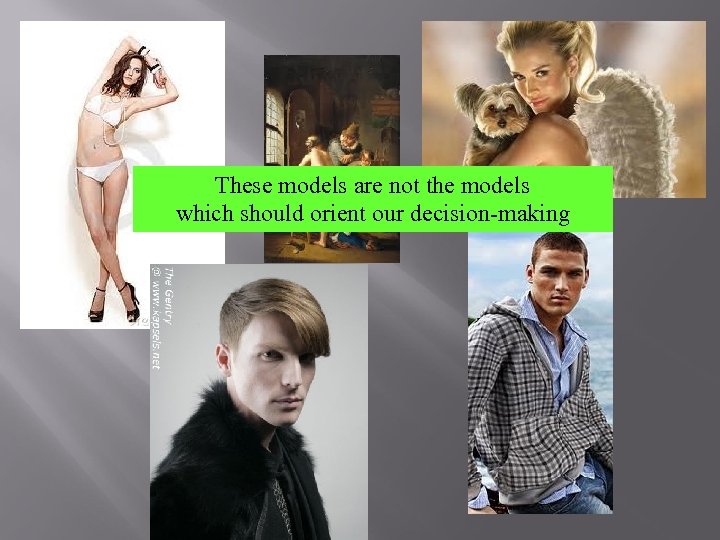
These models are not the models which should orient our decision-making
? 1 Do you use models? 1. 2. 3. Never Always Sometimes applause-prezi. mp 3

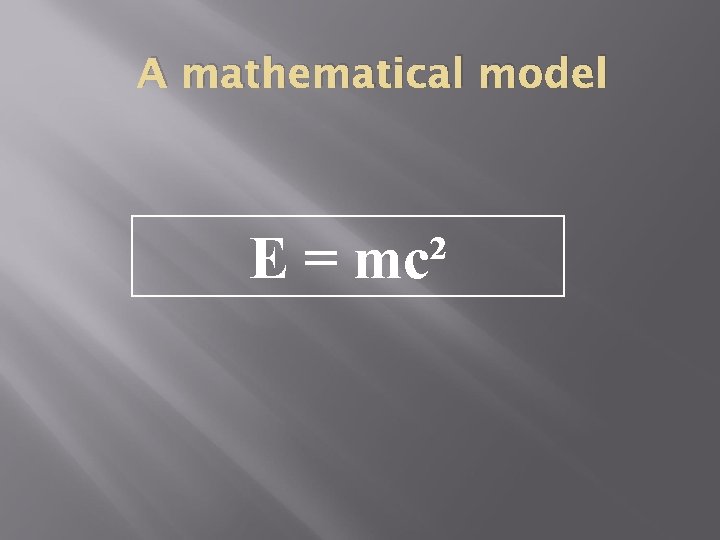
A mathematical model E = mc²
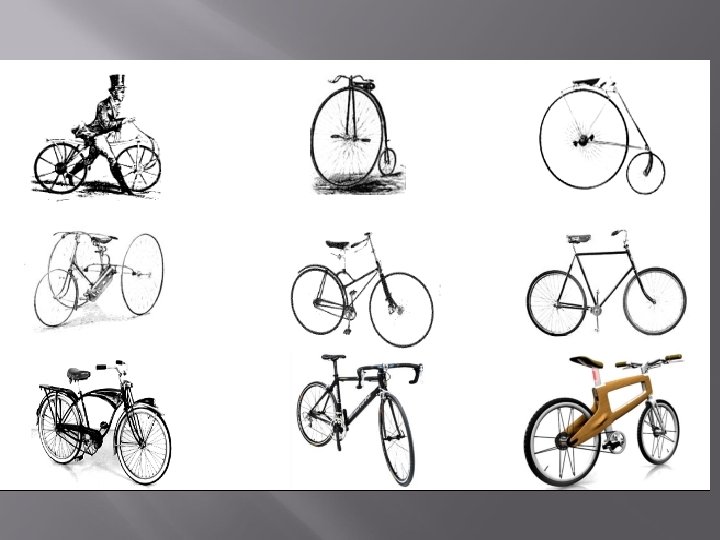
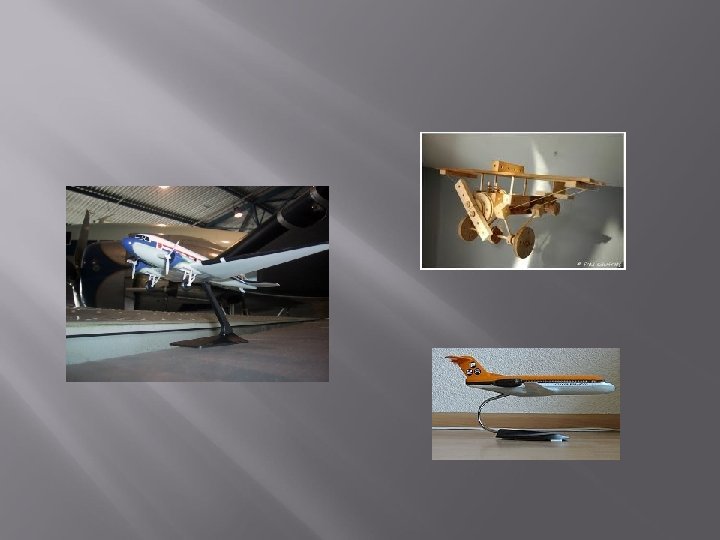
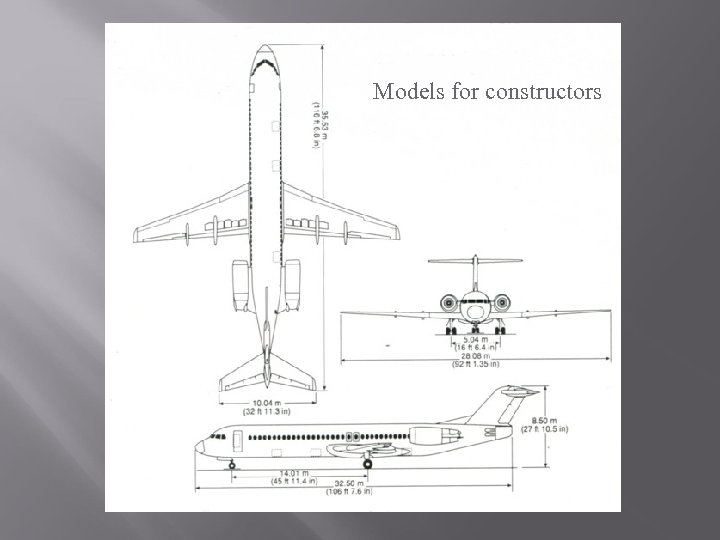
Models for constructors
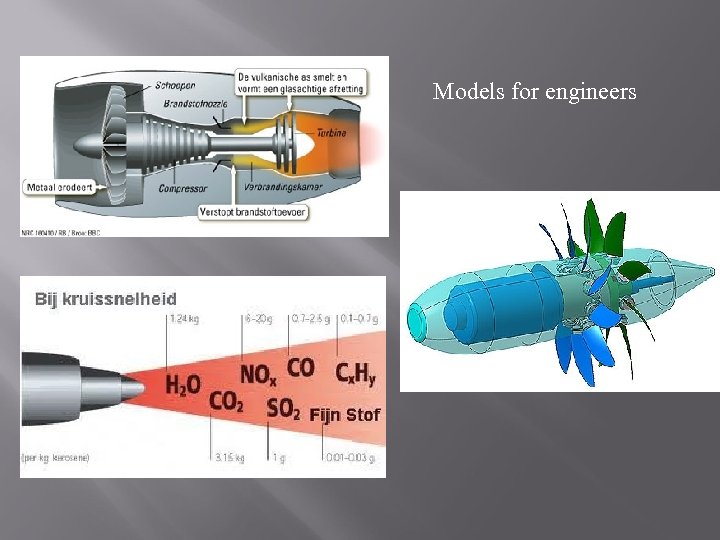
Models for engineers
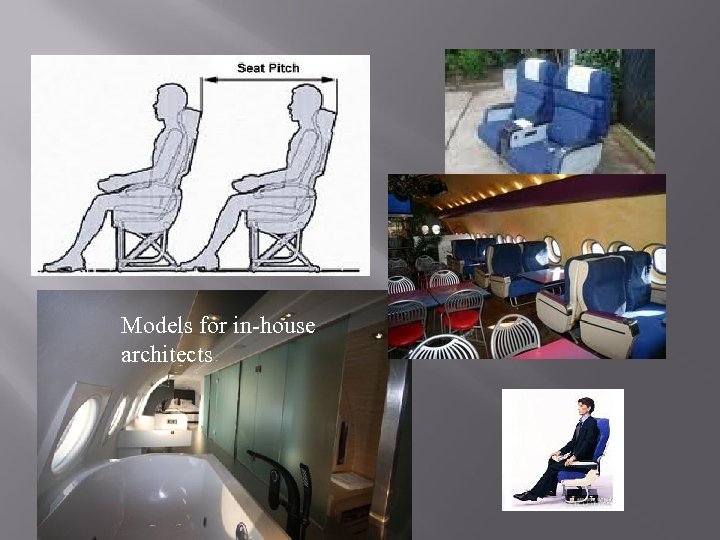
Models for in-house architects
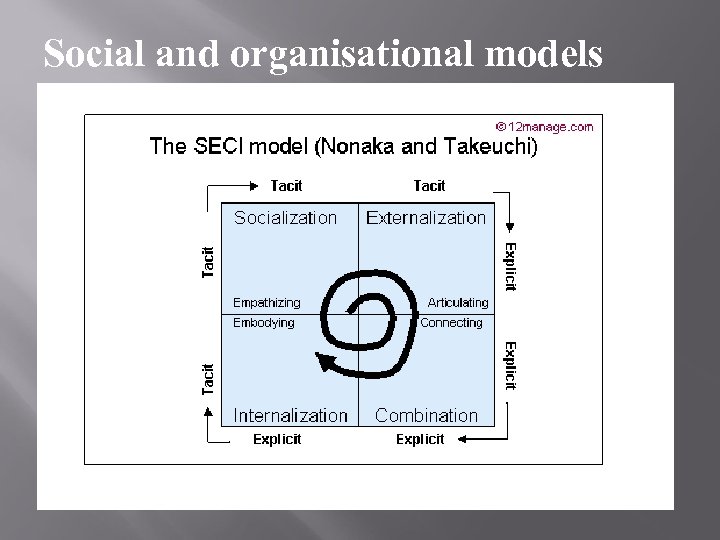
Social and organisational models
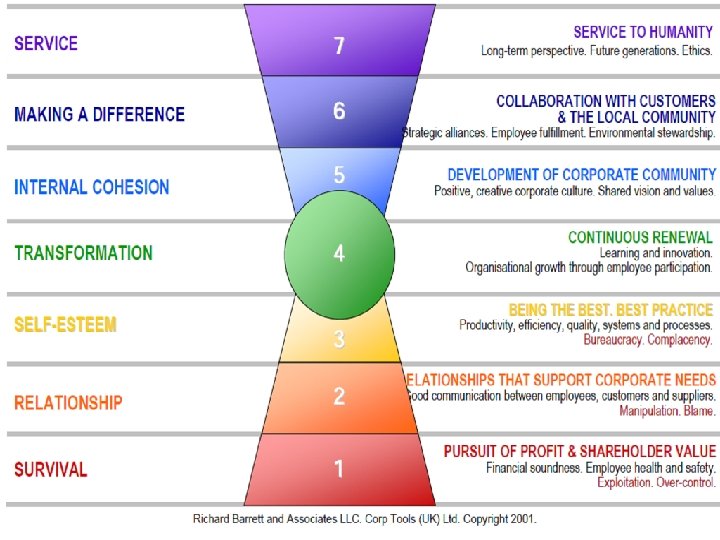
? 2 Why do we use models? Because they are necessary 2. Because they are inevitable 3. Because they are desirable 4. Because they are inevitable, necessary and desirable applause-prezi. mp 3 1.
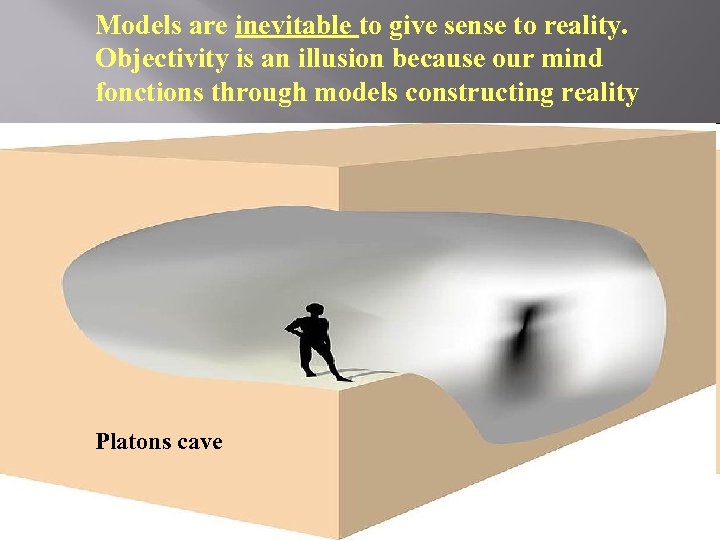
Models are inevitable to give sense to reality. Objectivity is an illusion because our mind fonctions through models constructing reality Platons cave
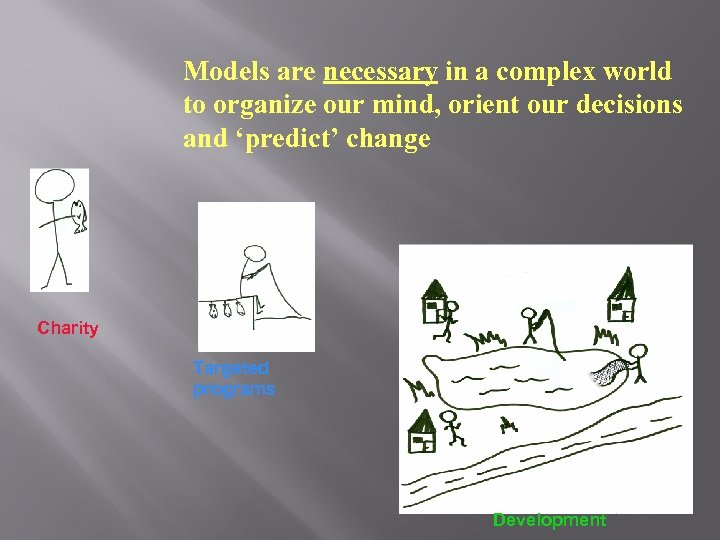
Models are necessary in a complex world to organize our mind, orient our decisions and ‘predict’ change Charity Targeted programs Development
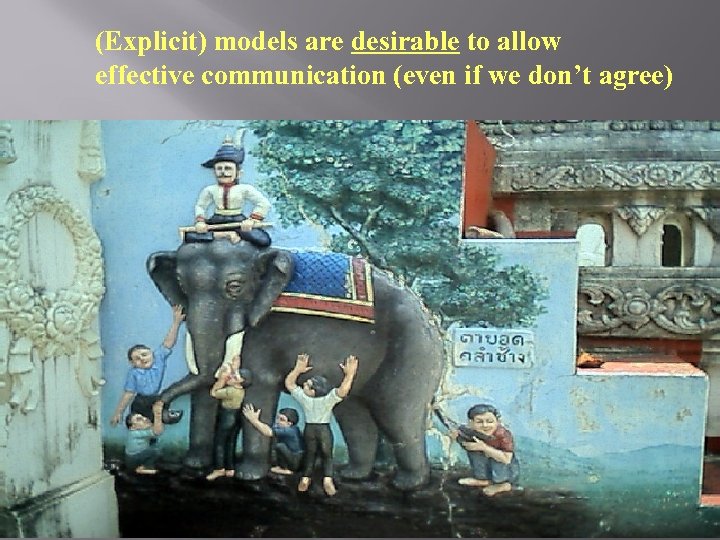
(Explicit) models are desirable to allow effective communication (even if we don’t agree)
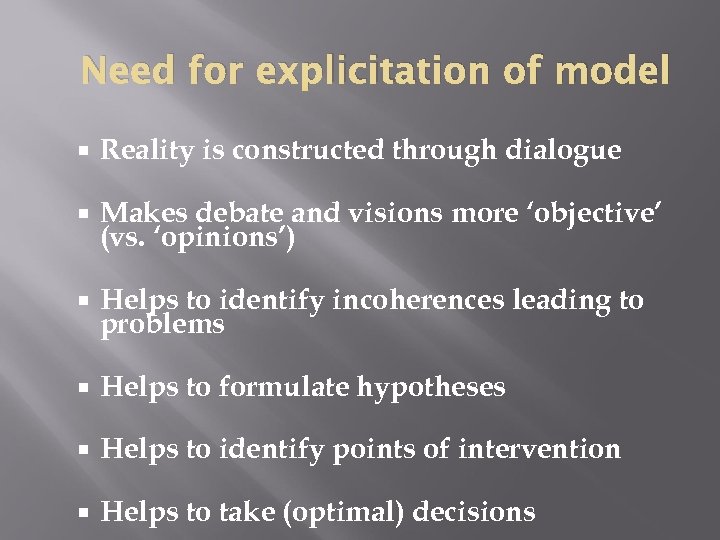
Need for explicitation of model Reality is constructed through dialogue Makes debate and visions more ‘objective’ (vs. ‘opinions’) Helps to identify incoherences leading to problems Helps to formulate hypotheses Helps to identify points of intervention Helps to take (optimal) decisions
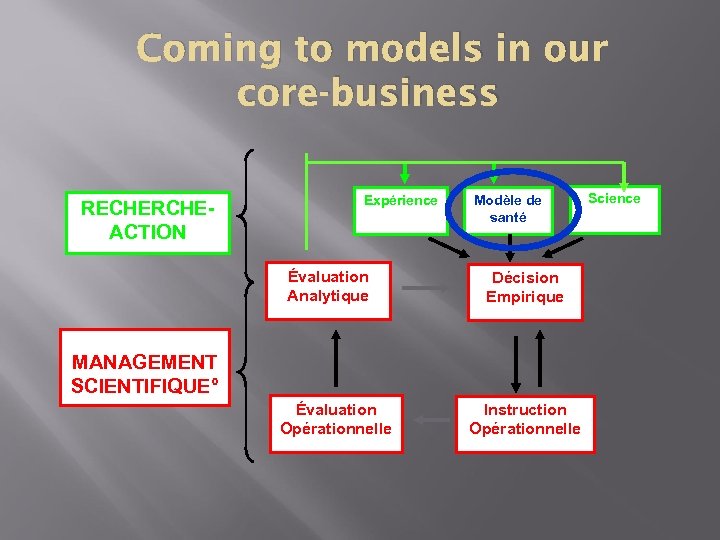
Coming to models in our core-business RECHERCHEACTION Expérience Évaluation Analytique Modèle de santé Décision Empirique MANAGEMENT SCIENTIFIQUE° Évaluation Opérationnelle Instruction Opérationnelle Science
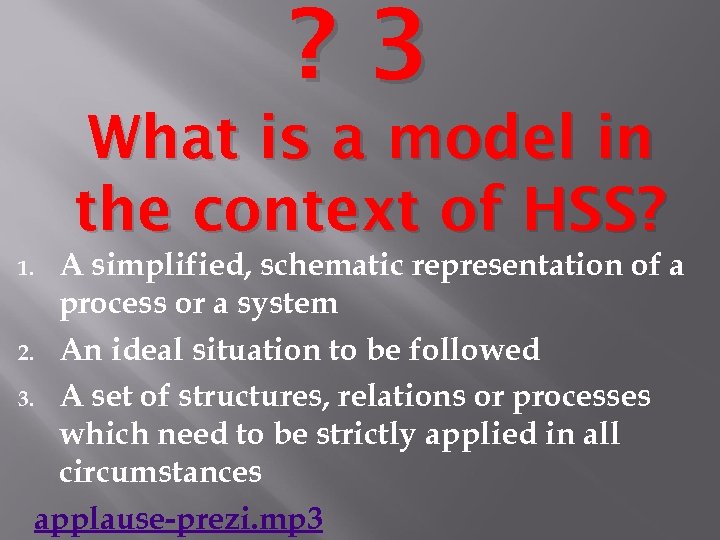
? 3 What is a model in the context of HSS? A simplified, schematic representation of a process or a system 2. An ideal situation to be followed 3. A set of structures, relations or processes which need to be strictly applied in all circumstances applause-prezi. mp 3 1.
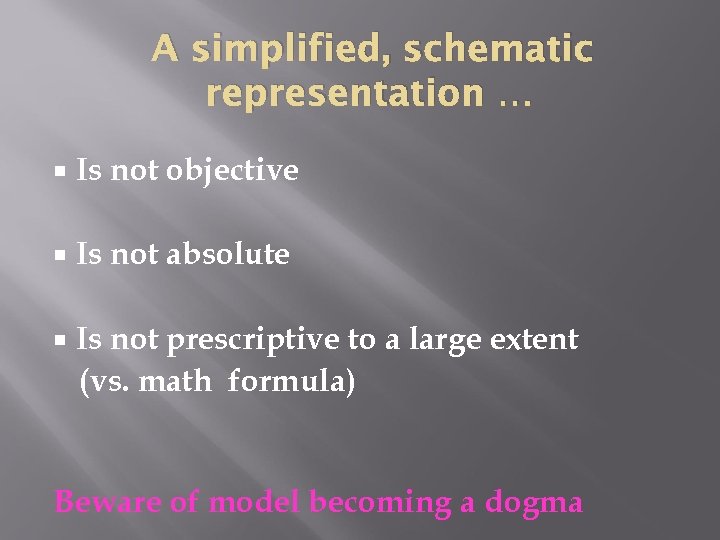
A simplified, schematic representation … Is not objective Is not absolute Is not prescriptive to a large extent (vs. math formula) Beware of model becoming a dogma
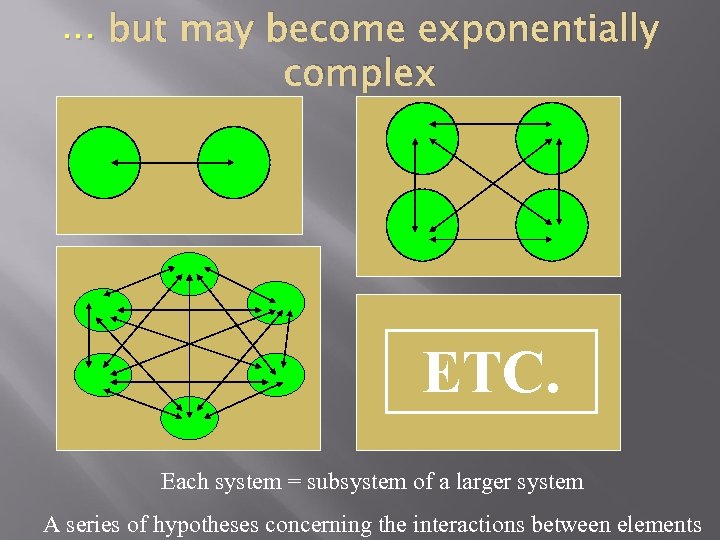
. . . but may become exponentially complex ETC. Each system = subsystem of a larger system A series of hypotheses concerning the interactions between elements
Building models in health Model of Local Health System The elements within a system (in terms of actors): Communities, families, individuals Health care providers (gov/ngo/private; modern/traditional; legal/illegal; . …. ) Health care structures (health centres, hospitals, . . ) Health administration (gov/ngo/private; decentralised/centralised; …. ) Supporting (techn/fin) agencies (internal/external; …. ) The wider environment (social, political, economical)
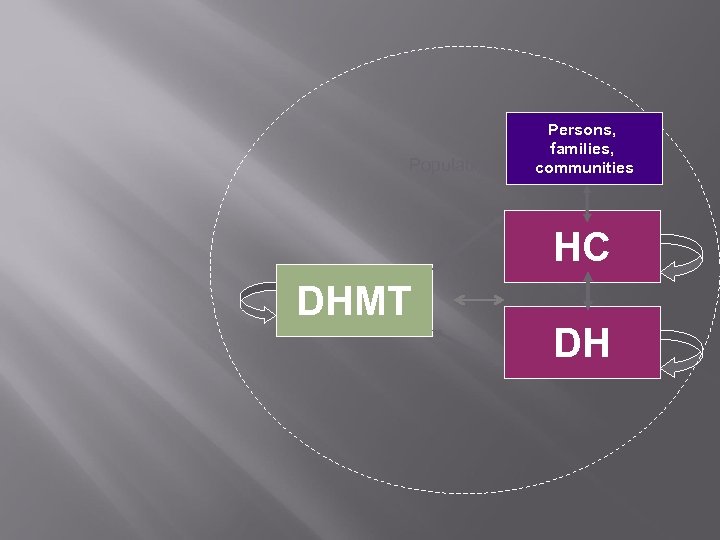
Population Persons, families, communities HC DHMT DH
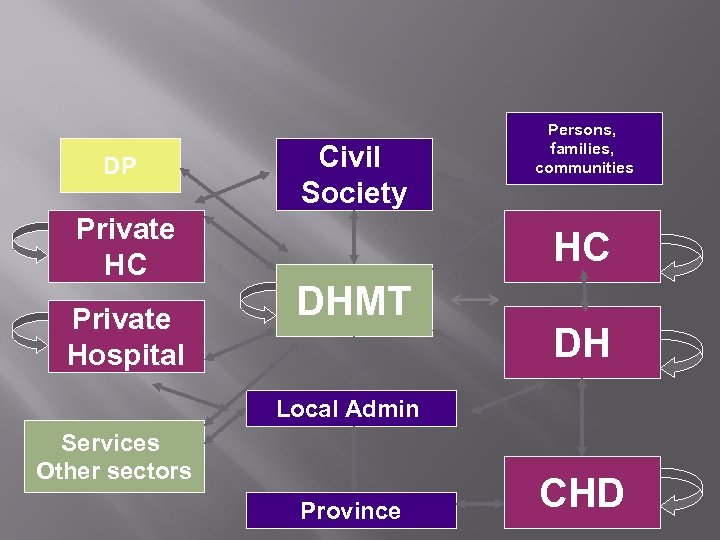
DP Private HC Private Hospital Civil Society Persons, families, communities HC DHMT DH Local Admin Services Other sectors Province CHD
Building models in health Model of Local Health System The interactions between these elements: Deliberately organised as a whole Regulated by a MT in order to have a complementary package of services + an optimal flux of patients & info) Coordinated management of resources (HR/fin/log/SIS) Management of quality (intervision, training, AR, control, . . )
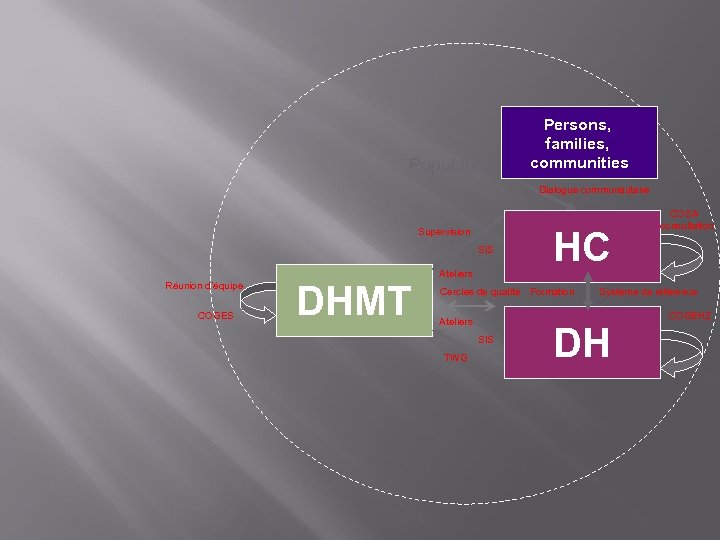
Population Persons, families, communities Dialogue communautaire Supervision SIS Réunion d’équipe COGES DHMT Ateliers HC Cercles de qualité Formation Ateliers SIS TWG COSA consultation Système de référence DH COGEHZ
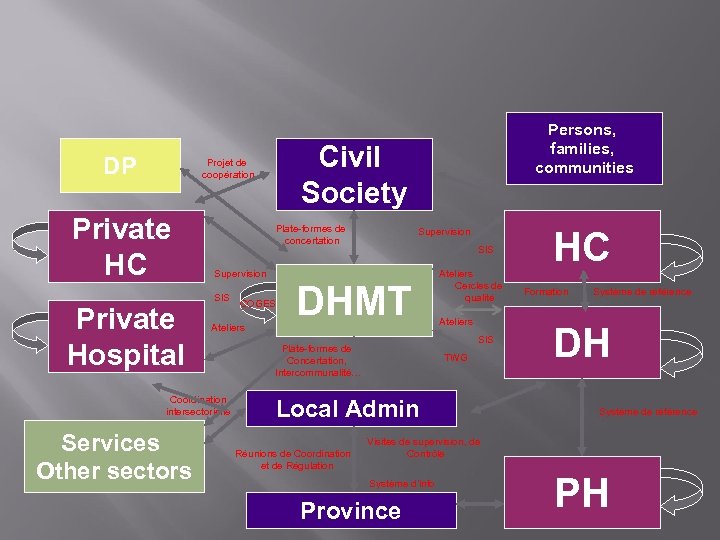
DP Civil Society Projet de coopération Private HC Private Hospital Plate-formes de concertation Supervision SIS Coordination intersectorielle Services Other sectors COGES Ateliers Persons, families, communities Supervision SIS DHMT Ateliers Cercles de qualité Ateliers SIS Plate-formes de Concertation, Intercommunalité… TWG Local Admin Réunions de Coordination et de Régulation HC Formation Système de référence DH Système de référence Visites de supervision, de Contrôle Système d’info Province PH
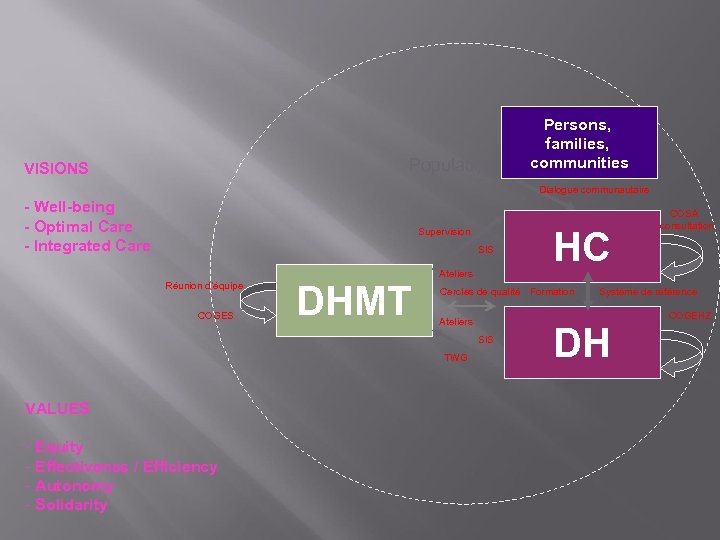
Population VISIONS Persons, families, communities Dialogue communautaire - Well-being - Optimal Care - Integrated Care Supervision SIS Réunion d’équipe COGES DHMT Ateliers Cercles de qualité Formation Ateliers SIS TWG VALUES - Equity - Effectivenss / Efficiency - Autonomy - Solidarity HC COSA consultation Système de référence DH COGEHZ
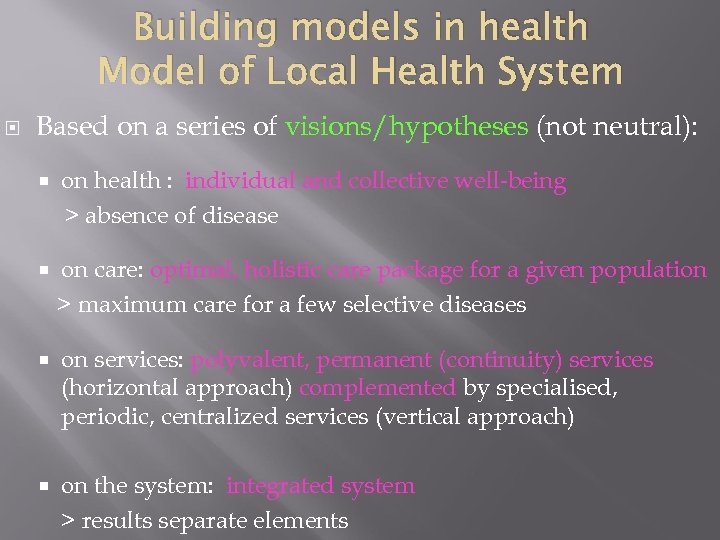
Building models in health Model of Local Health System Based on a series of visions/hypotheses (not neutral): on health : individual and collective well-being > absence of disease on care: optimal, holistic care package for a given population > maximum care for a few selective diseases on services: polyvalent, permanent (continuity) services (horizontal approach) complemented by specialised, periodic, centralized services (vertical approach) on the system: integrated system > results separate elements
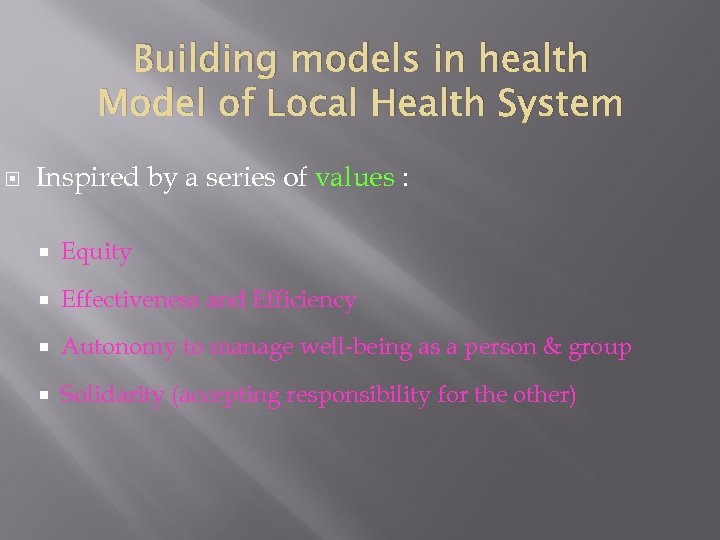
Building models in health Model of Local Health System Inspired by a series of values : Equity Effectiveness and Efficiency Autonomy to manage well-being as a person & group Solidarity (accepting responsibility for the other)
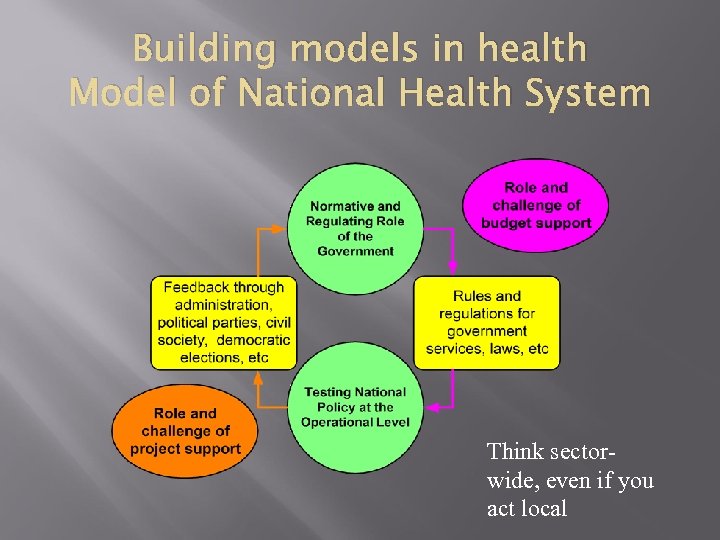
Building models in health Model of National Health System Think sectorwide, even if you act local
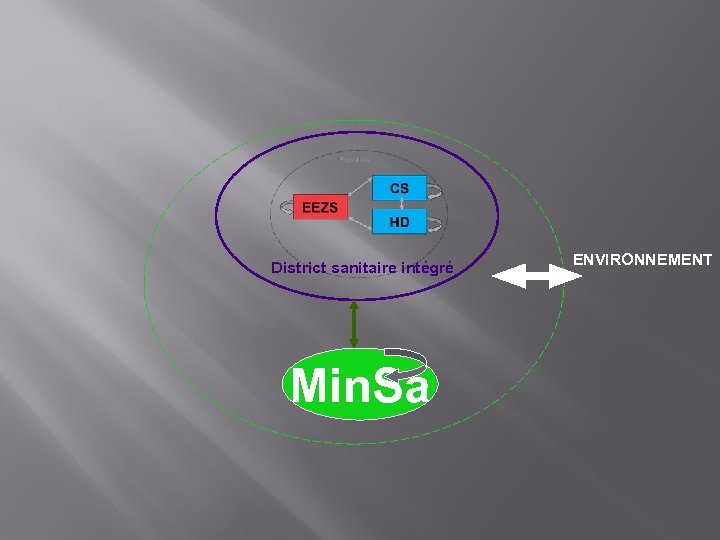
District sanitaire intégré Min. Sa ENVIRONNEMENT
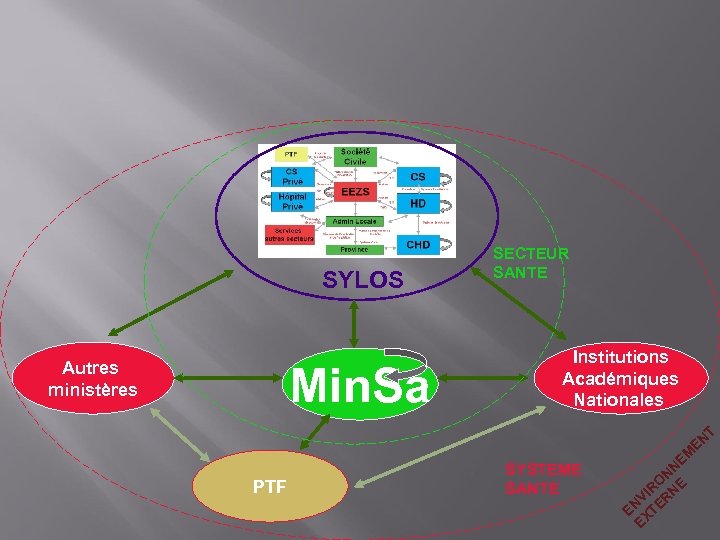
SYLOS Autres ministères Min. Sa SECTEUR SANTE Institutions Académiques Nationales T EN PTF SYSTEME SANTE EM N N O E R VI ERN EN XT E
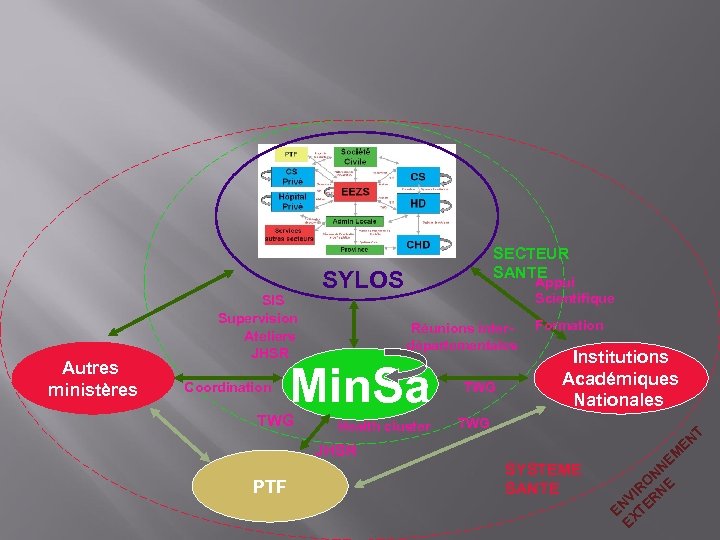
Autres ministères SIS Supervision Ateliers JHSR Coordination SECTEUR SANTE SYLOS Appui Scientifique Réunions interdépartementales Min. Sa TWG Health cluster TWG Formation Institutions Académiques Nationales TWG T EN JHSR PTF SYSTEME SANTE EM N N O E R VI ERN EN XT E
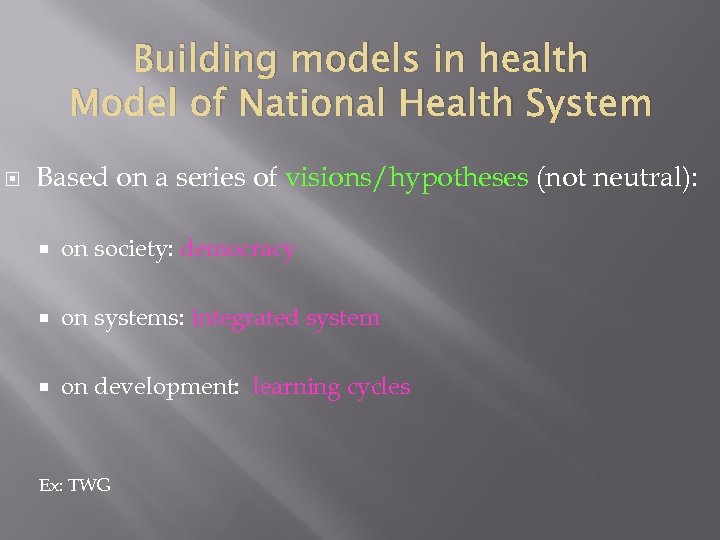
Building models in health Model of National Health System Based on a series of visions/hypotheses (not neutral): on society: democracy on systems: integrated system on development: learning cycles Ex: TWG
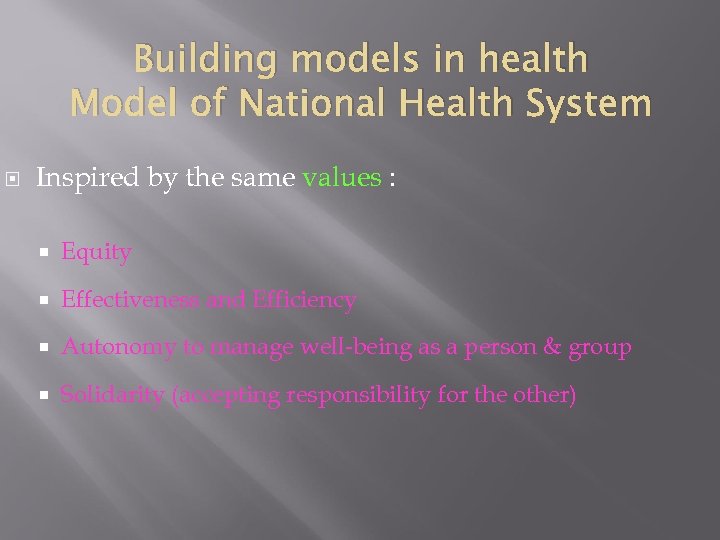
Building models in health Model of National Health System Inspired by the same values : Equity Effectiveness and Efficiency Autonomy to manage well-being as a person & group Solidarity (accepting responsibility for the other)
? 4 Which of the following statements is/are true? 1. 2. 3. 4. 5. The Kasongo district model is no longer valid The Sylos model is not based on the same visions and values as Kasongo The integrated district model is valid for cities Two of them All of them applause-prezi. mp 3
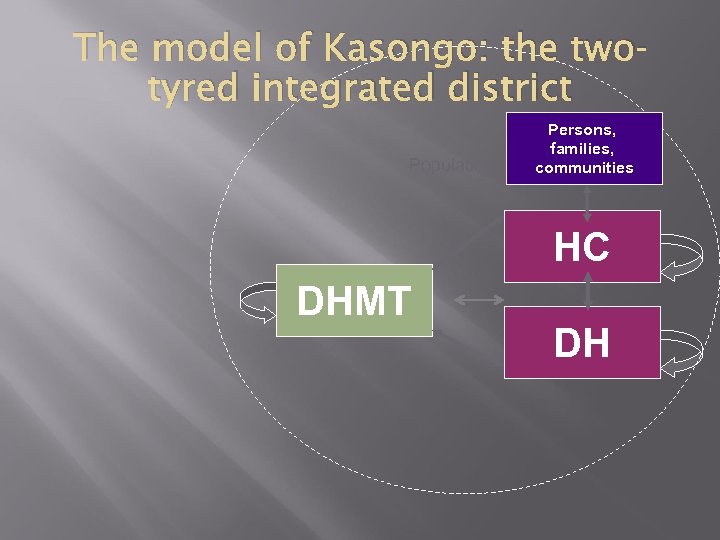
The model of Kasongo: the twotyred integrated district Population Persons, families, communities HC DHMT DH
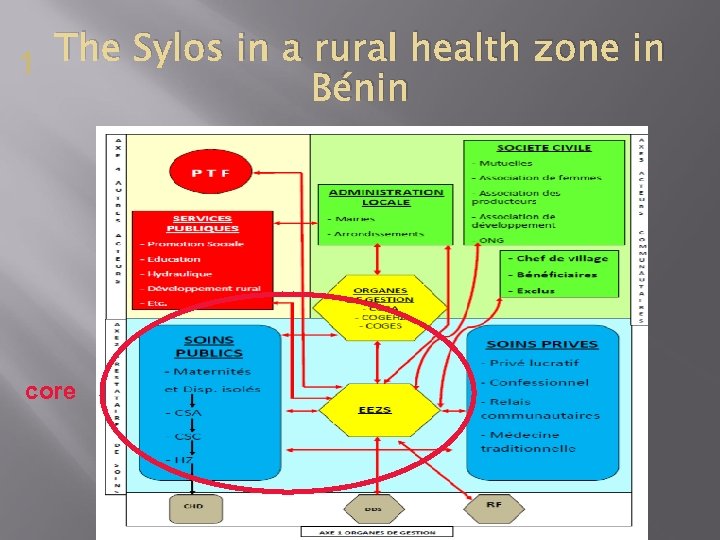
The Sylos in a rural health zone in 1 Bénin core
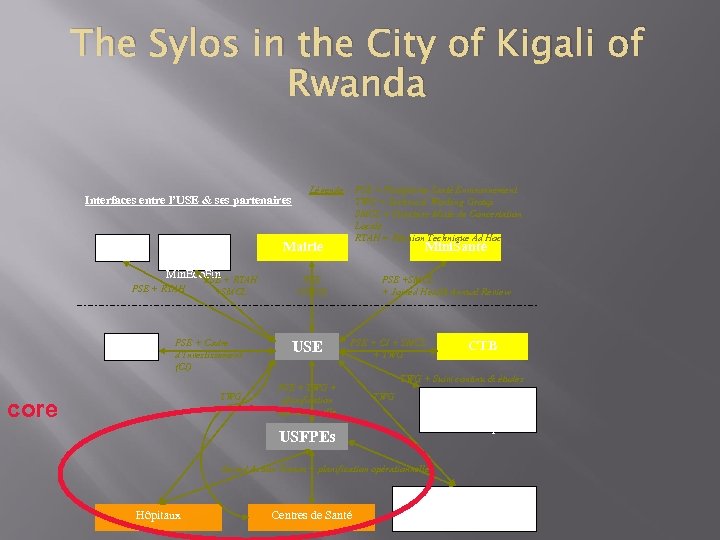
The Sylos in the City of Kigali of Rwanda Interfaces entre l’USE & ses partenaires Minaloc Min. Aff. Et & Min. Eco. Fin PSE + RTAH Parten de développ +SMCL PSE + Cadre d’Investissement (CI) TWG core Légende : PSE = Plateforme Santé Environnement TWG = Technical Working Group SMCL = Structure Mixte de Concertation Locale RTAH = Réunion Technique Ad Hoc Mairie Mini. Santé PSE +SMCL USE PSE +SMCL + Joined Health Annual Review PSE + CI + SMCL + TWG PSE + TWG + planification opérationnelle USFPEs CTB TWG + Suivi continu & études TWG Institut national et international de suivi scientifique Joined Action Forum + planification opérationnelle Hôpitaux Centres de Santé Autres acteurs opérationnels (coopé bi- & multilatérale, ONGs, autres)
Robustness of a model Vision and values remain valid …. but may change over time when paradigm changes (cf. Einstein and Newton) Diversity of expression of model ~ context Adaptation of model ~ changing context
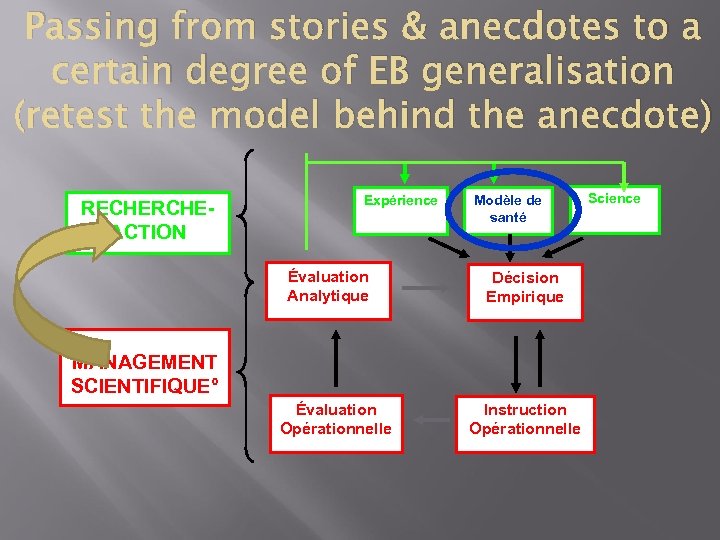
Passing from stories & anecdotes to a certain degree of EB generalisation (retest the model behind the anecdote) RECHERCHEACTION Expérience Évaluation Analytique Modèle de santé Décision Empirique MANAGEMENT SCIENTIFIQUE° Évaluation Opérationnelle Instruction Opérationnelle Science
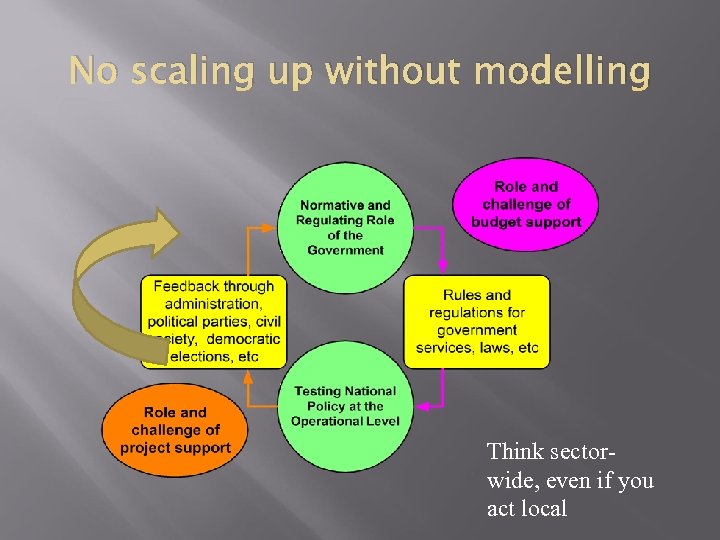
No scaling up without modelling Think sectorwide, even if you act local
? 5 Is a model…? 1. 2. 3. 4. 5. 6. Descriptive? Predictive? All of them? Two of them? None of them? applause-prezi. mp 3
How do we work with models? General Fonctions Descriptive: Looks at reality in a organized way…. … but not an objective way (=illusion) -> cave dogma
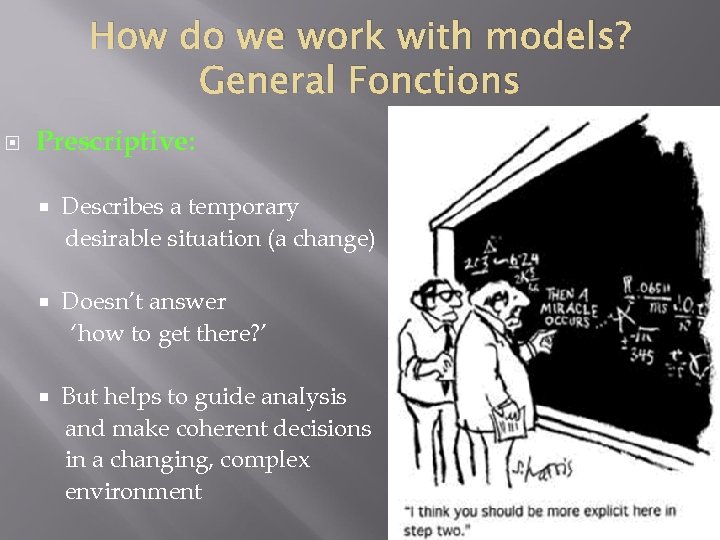
How do we work with models? General Fonctions Prescriptive: Describes a temporary desirable situation (a change) Doesn’t answer ‘how to get there? ’ But helps to guide analysis and make coherent decisions in a changing, complex environment
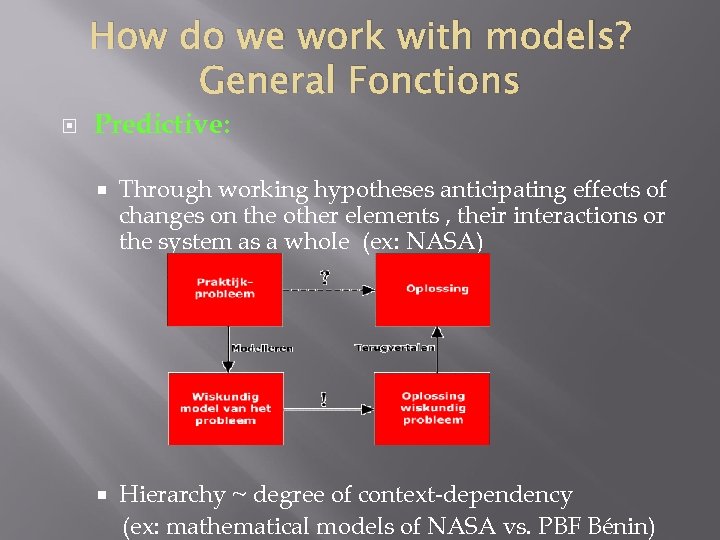
How do we work with models? General Fonctions Predictive: Through working hypotheses anticipating effects of changes on the other elements , their interactions or the system as a whole (ex: NASA) Hierarchy ~ degree of context-dependency (ex: mathematical models of NASA vs. PBF Bénin)
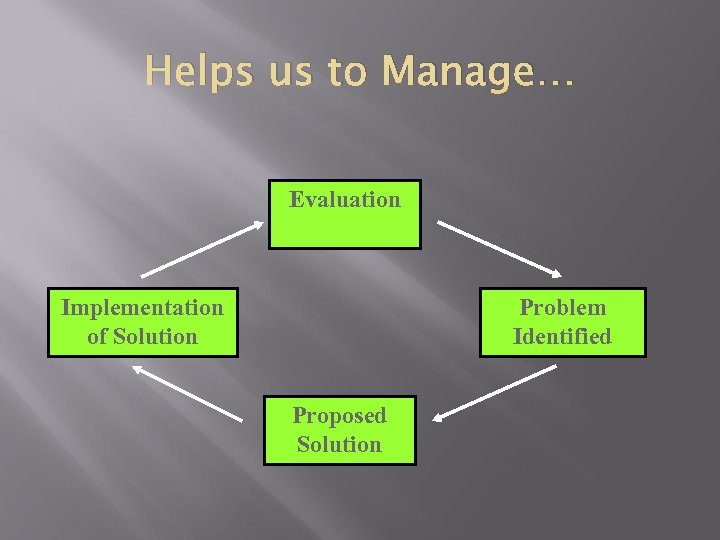
Helps us to Manage… Evaluation Implementation of Solution Problem Identified Proposed Solution
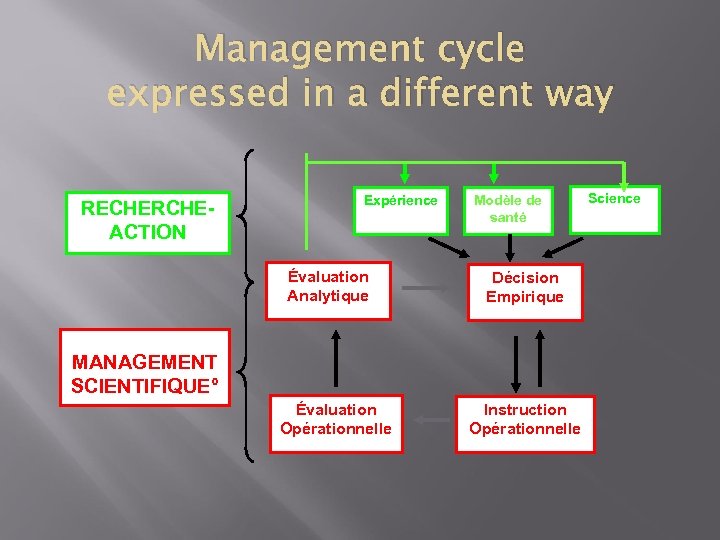
Management cycle expressed in a different way RECHERCHEACTION Expérience Évaluation Analytique Modèle de santé Décision Empirique MANAGEMENT SCIENTIFIQUE° Évaluation Opérationnelle Instruction Opérationnelle Science
? 6 Which of the following are a model? 1. 2. 3. 4. 5. SYLOS PBF Paris Declaration Two of them All of them applause-prezi. mp 3
PBF is not a model as such PBF is a financing modality But implementation of PBF might vary depending on the model used PBF is an entry point to potentially reinforce the health system
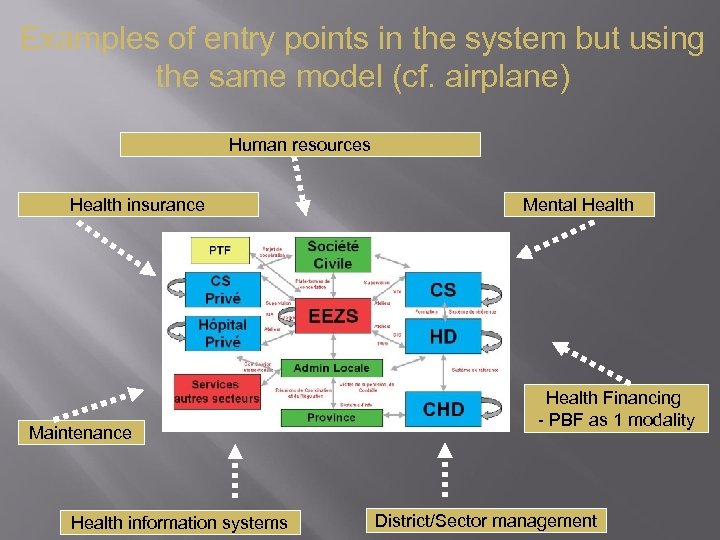
Examples of entry points in the system but using the same model (cf. airplane) Human resources Health insurance Maintenance Health information systems Mental Health Financing - PBF as 1 modality District/Sector management
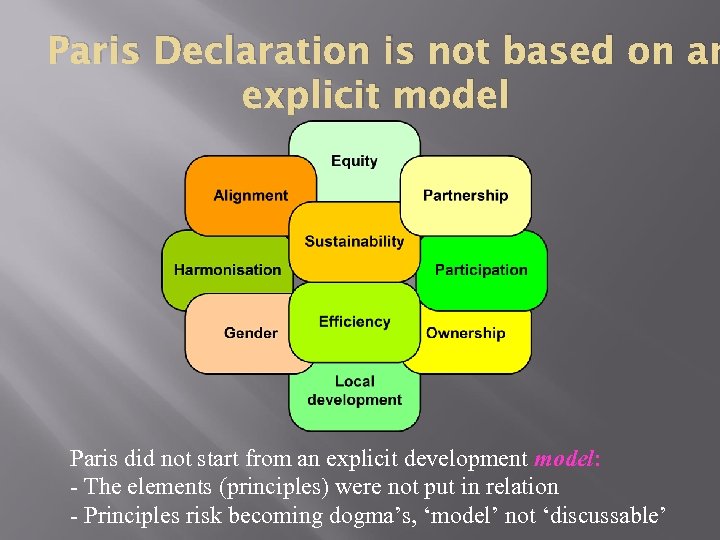
Paris Declaration is not based on an explicit model Paris did not start from an explicit development model: - The elements (principles) were not put in relation - Principles risk becoming dogma’s, ‘model’ not ‘discussable’
Risks if no model No model -> no communication -> no progress Paris. Declaration: No alignment: partner has no system, no direction No critical alignment: agency has no system, no ‘objective’ debate No harmonisation: no overview of gaps&overlaps, risk of sterile debates (cf. HP vs. VP) No aid effectiveness: no measure to assess changes (and direction of change) of decisions, no results ? ? No mutual accountability: ? ? ?
« We cannot solve problems by using the same kind of thinking we used when we created them. » (Albert Einstein)
Do we have a model in our programs (cooperation) to allow coherent decisions to be taken oriented towards results?
Скачать презентацию MODELS ACTION-RESEARCH BTC Health Sector Days 2014
c1f44ea53bf55cef1b5d18862bc510c1.ppt