


 Скачать презентацию Modeling and Analysis of e-Learning Advisor Dr Nandana
cabfd3af0b786dadbf0eb70b81677477.ppt
- Количество слайдов: 40
 Modeling and Analysis of e-Learning Advisor: Dr. Nandana Rajatheva Surya Bahadur Kathayat 1
 E-Learning q q q q q 2 dicole. org moodle. org Our. Web (Kurhila, 2006) EDUCO (Kurhila et al. 2003) Web. CT. com APPLE (Jin et al. , 2004) LL 2 (Brue et al. , 2005) Edutella (Nilsson et al. , 2005) ALM for group communication (Scribe, Bayeux, Brog)
 E-Learning GROUPING OF LEARNERS TECHNOLOGIES MANAGEMENT MECHANISMS 3 E-LEARNING CONTENTS & SERVICES
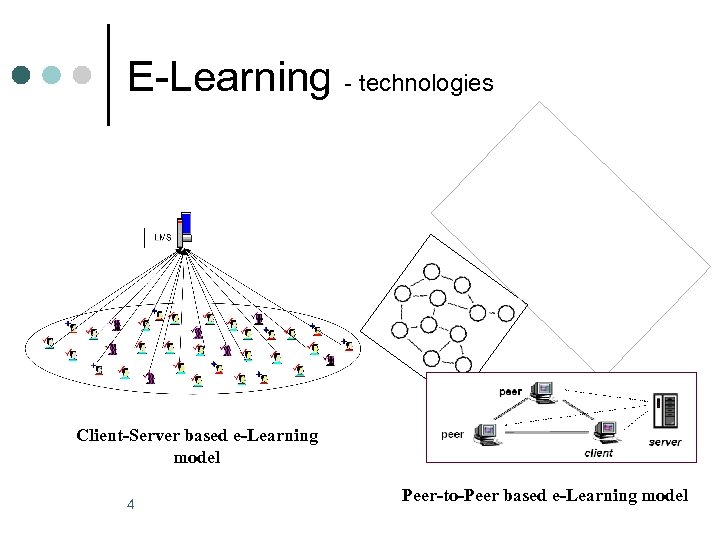 E-Learning - technologies Client-Server based e-Learning model 4 Peer-to-Peer based e-Learning model
 E-Learning - technologies Limitations of C/S based systems: content/infrastructure based; overhead, scalability, interactivity, collaboration; resource sharing • Lack of efficient use of P 2 P technologies in e-Learning, lack of consideration of the Interest of users in the elearning environment, almost all the present day groups require apriori planning. • Existing grouping mechanism in structured P 2 P are either based on tree or mesh. No existing models for group merging, group splitting. Existing mechanisms are having limited fault tolerance level. No group adaptation mechanisms for e-Learning • 5 (Resource. Net, USA. , 2005; Keegan et al. , 2005; Kurhila et al. , 2003, Paulsen 2003 , , Fernando, 2005; Rowstronand Druschel, 2001; Nowell et al. , 2003; Clarke, 2000; Clarke, 2001. Jin et al. , 2004; Brue et al. , 2005; Nilsson et al. , 2005)
 Objective MVRING BASED GROUP COMMUNICATION PROTOCOL (design, implementation and evaluation) CONSISTING OF GROUP ADAPTATION ALGORITHMS (interest based grouping, number of virtual groups formation, merging/splitting of common interest groups, group maintenance etc) FOR THE ELEARNING DESIGN USING STRUCTURED PEER-TO-PEER TECHNOLOGIES 6
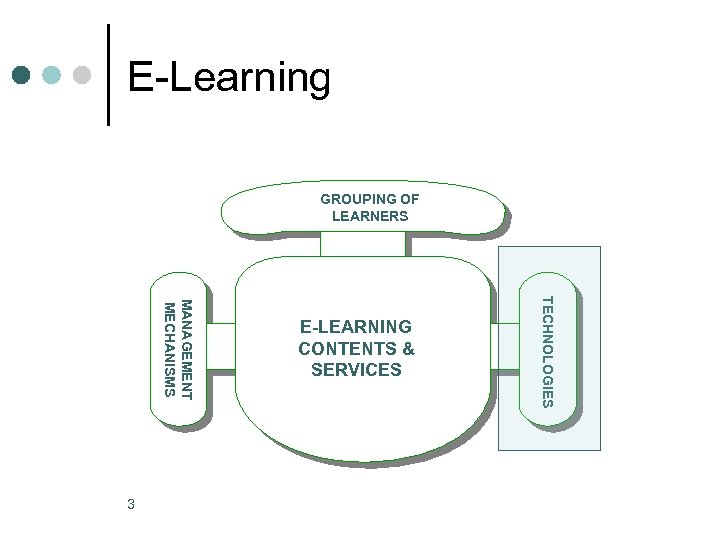
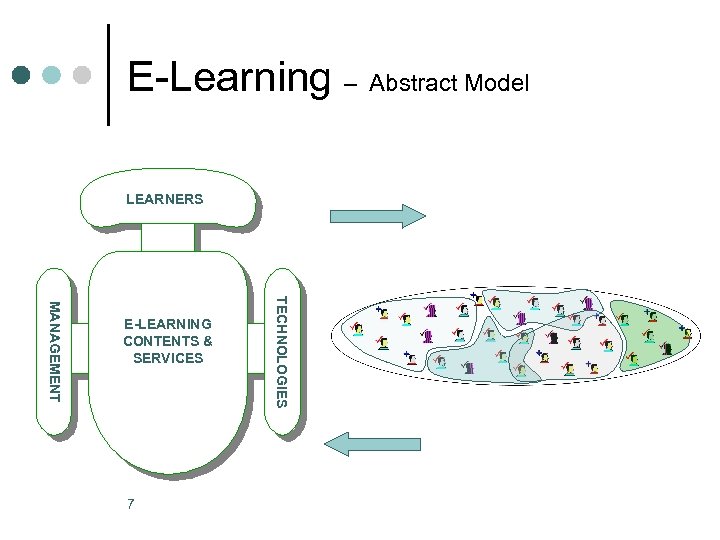 E-Learning – Abstract Model LEARNERS 7 TECHNOLOGIES MANAGEMENT E-LEARNING CONTENTS & SERVICES
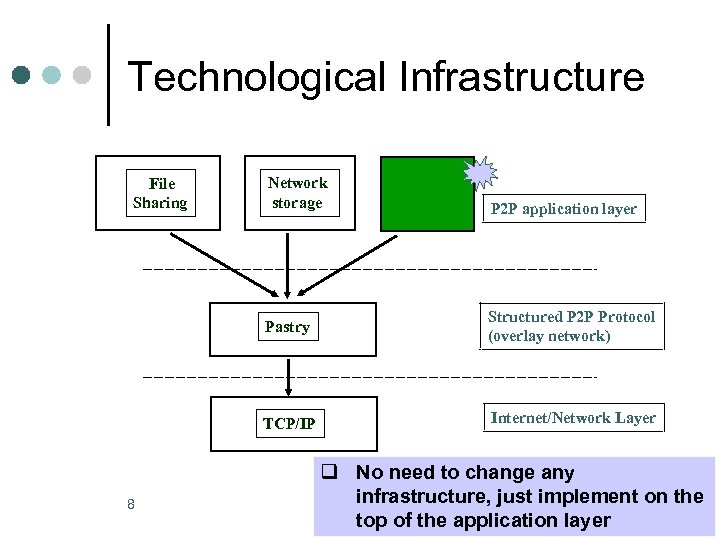 Technological Infrastructure File Sharing Network storage * P 2 P application layer Pastry TCP/IP 8 Structured P 2 P Protocol (overlay network) Internet/Network Layer q No need to change any infrastructure, just implement on the top of the application layer
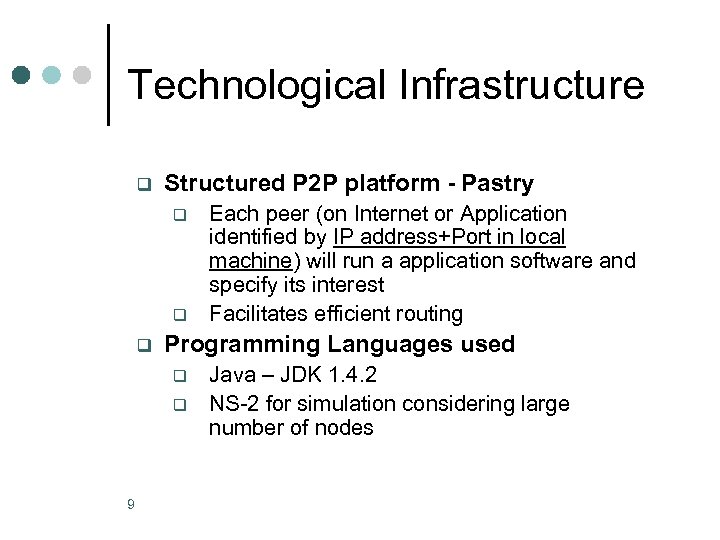 Technological Infrastructure q Structured P 2 P platform - Pastry q q q Programming Languages used q q 9 Each peer (on Internet or Application identified by IP address+Port in local machine) will run a application software and specify its interest Facilitates efficient routing Java – JDK 1. 4. 2 NS-2 for simulation considering large number of nodes
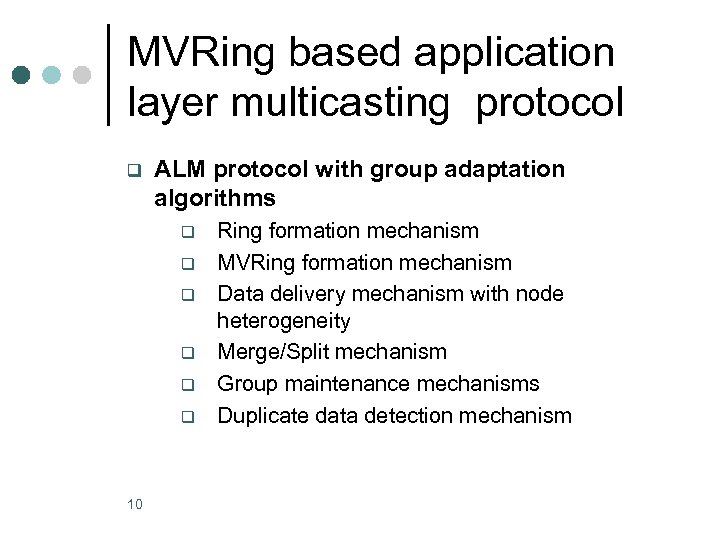 MVRing based application layer multicasting protocol q ALM protocol with group adaptation algorithms q q q 10 Ring formation mechanism MVRing formation mechanism Data delivery mechanism with node heterogeneity Merge/Split mechanism Group maintenance mechanisms Duplicate data detection mechanism
 Quantitative analysis Definitions q q Propositions Theorems q Summary q 17 Tree, Ring, Chordal Ring, MVRing, Fault tolerance level, Hop count Using TDP, delivery of packet from source node to destinations traveling across ‘E’ links takes ‘ 2 E-1’ Time Frames (TFs) Network delay bound (NDB) of a ring having N number of nodes is of the order of O(N) Network delay bound (NDB) of a tree having N number of nodes is of the order of O(log. N)
 Quantitative analysis q Theorems q Definitions Propositions q Theorems q Summary Higher fault tolerance level and Comparable latency 18 NDB of MVRing is comparable with that of general tree (with proposed data delivery mechanism with duplicate data rejection) Data delivery mechanism proposed MVRing is twice fault tolerant than that of general Tree Routing delay in MVRing scheme will be improved by ‘X’ times (no of MVR neighbors) compared to original single ring provided that all single-hop path length are equal.
 Performance Evaluation q CASE A: Internet Environment (Tested In Tc LAB) q q CASE B: Network simulator (Large Number of Nodes) - 50 Routers q q q 1 to 35 Users in a group having internet connection 50, 150, 500 nodes as hosts in groups T-S Topology for Internet Modeling (GT-ITM) Concentrate on q latency, fault tolerance, node degree, node stress/traffic q Comparison of the result with the traditional group communication models (if applicable) - Tree Based protocol in the Structured P 2 P Network 33
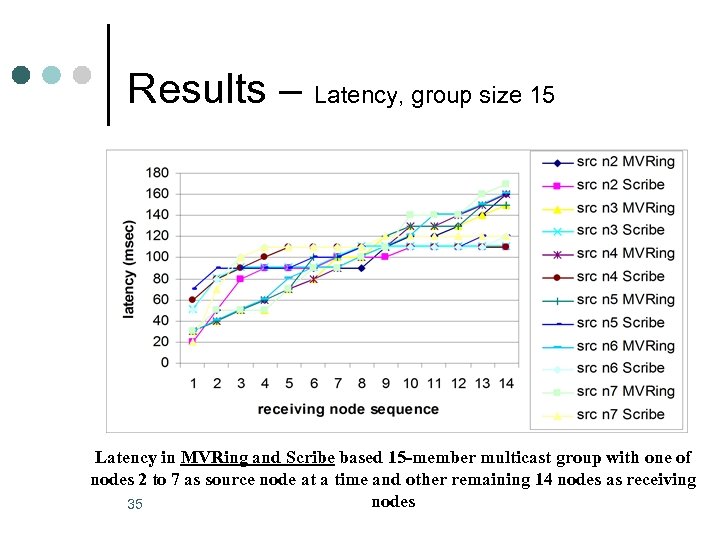 Results – Latency, group size 15 Latency in MVRing and Scribe based 15 -member multicast group with one of nodes 2 to 7 as source node at a time and other remaining 14 nodes as receiving nodes 35
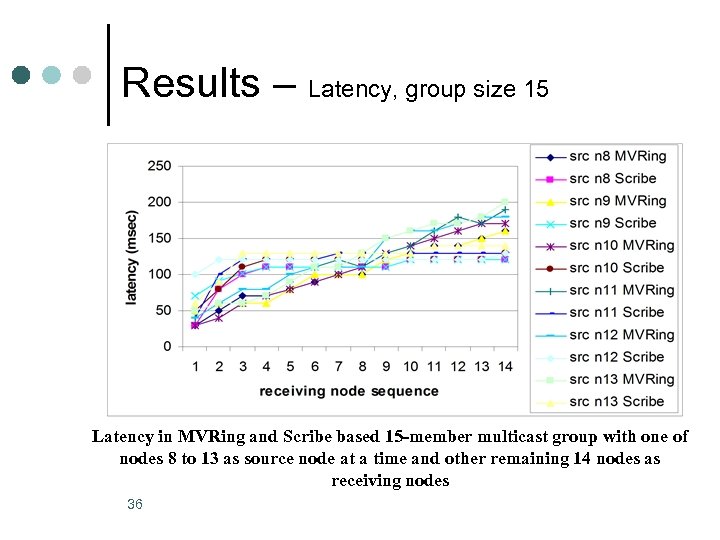 Results – Latency, group size 15 Latency in MVRing and Scribe based 15 -member multicast group with one of nodes 8 to 13 as source node at a time and other remaining 14 nodes as receiving nodes 36
 Results – latency summary Average group multicast latency in a MVRing and Scribe based group of size n=10 Average group multicast latency in a MVRing and Scribe based group of size n=15 37 Average group multicast latency in a MVRing and Scribe based group of size n=20 Average group multicast latency in a MVRing and Scribe based group of size n=25
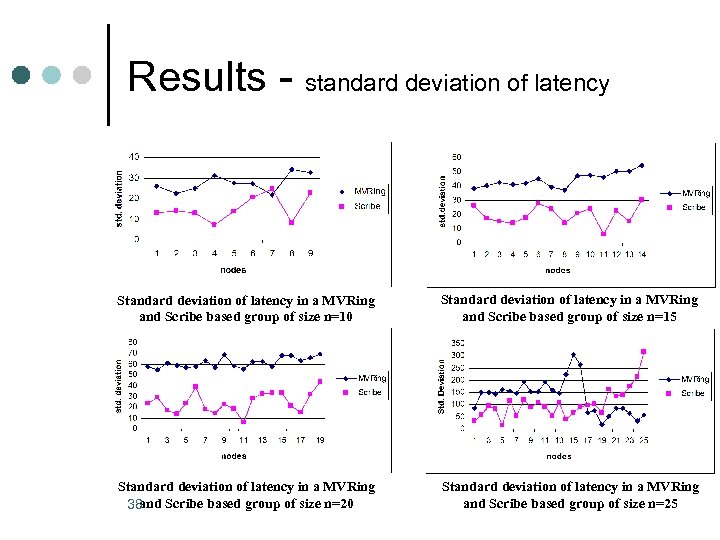 Results - standard deviation of latency Standard deviation of latency in a MVRing and Scribe based group of size n=10 Standard deviation of latency in a MVRing and Scribe based group of size n=15 Standard deviation of latency in a MVRing and Scribe based group of size n=20 38 Standard deviation of latency in a MVRing and Scribe based group of size n=25
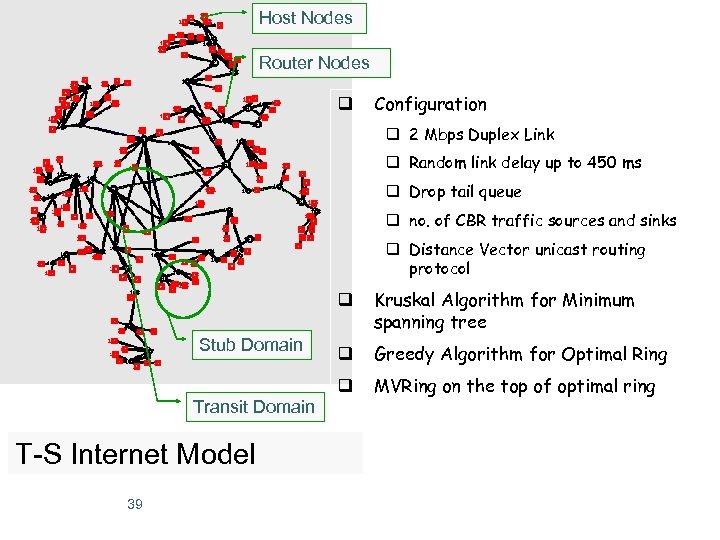 Host Nodes Router Nodes q Configuration q 2 Mbps Duplex Link q Random link delay up to 450 ms q Drop tail queue q no. of CBR traffic sources and sinks q Distance Vector unicast routing protocol q Transit Domain T-S Internet Model 39 q Greedy Algorithm for Optimal Ring q Stub Domain Kruskal Algorithm for Minimum spanning tree MVRing on the top of optimal ring
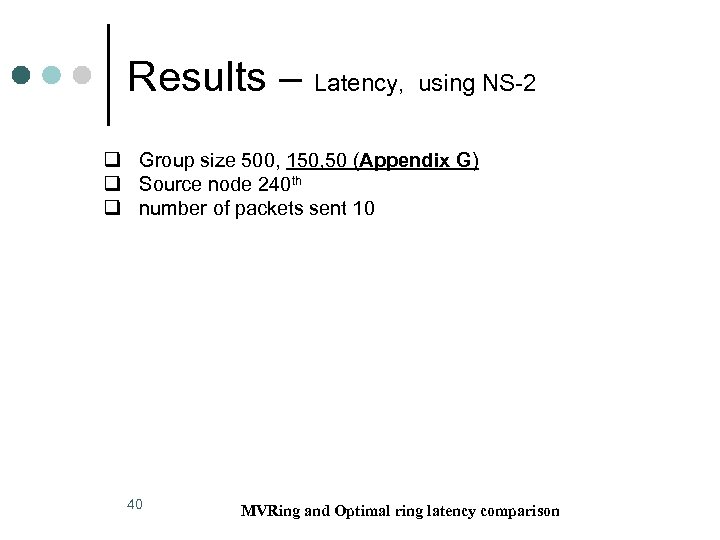 Results – Latency, using NS-2 q Group size 500, 150, 50 (Appendix G) q Source node 240 th q number of packets sent 10 40 MVRing and Optimal ring latency comparison
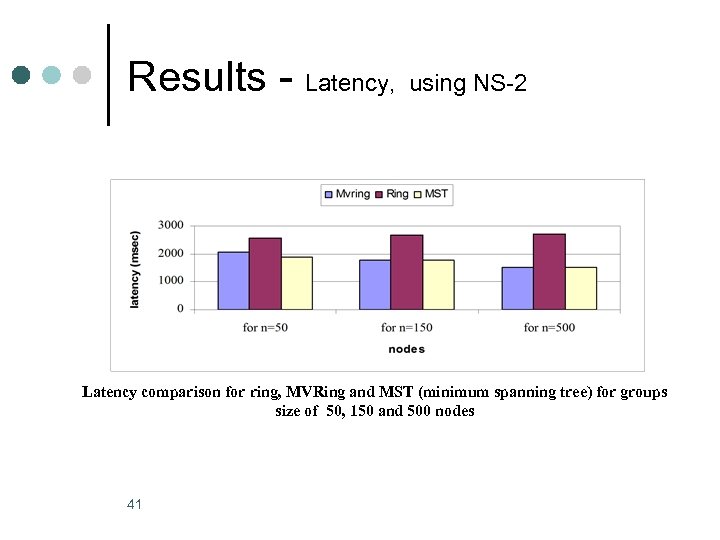 Results - Latency, using NS-2 Latency comparison for ring, MVRing and MST (minimum spanning tree) for groups size of 50, 150 and 500 nodes 41
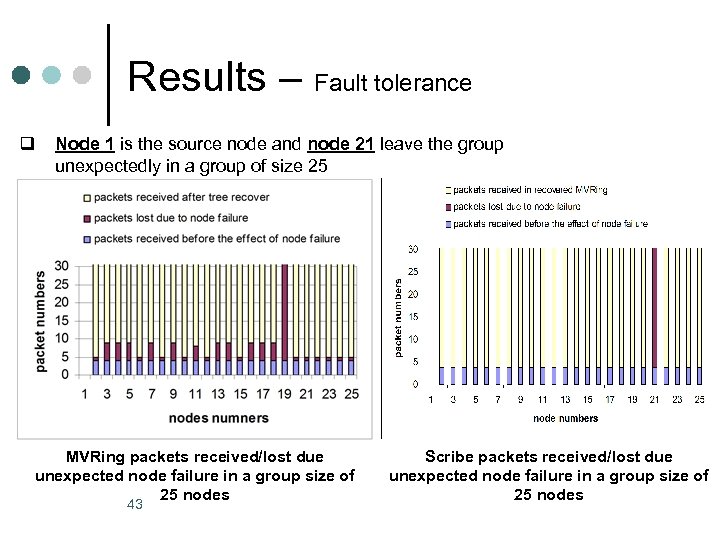 Results – Fault tolerance q Node 1 is the source node and node 21 leave the group unexpectedly in a group of size 25 MVRing packets received/lost due unexpected node failure in a group size of 25 nodes 43 Scribe packets received/lost due unexpected node failure in a group size of 25 nodes
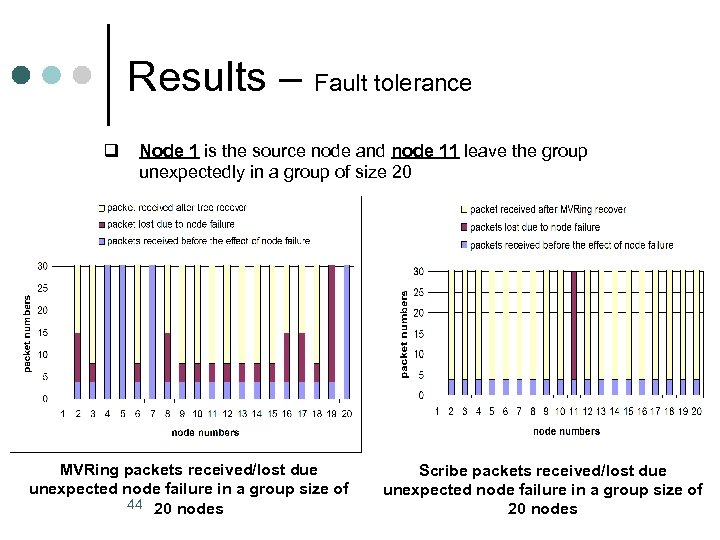 Results – Fault tolerance q Node 1 is the source node and node 11 leave the group unexpectedly in a group of size 20 MVRing packets received/lost due unexpected node failure in a group size of 44 20 nodes Scribe packets received/lost due unexpected node failure in a group size of 20 nodes
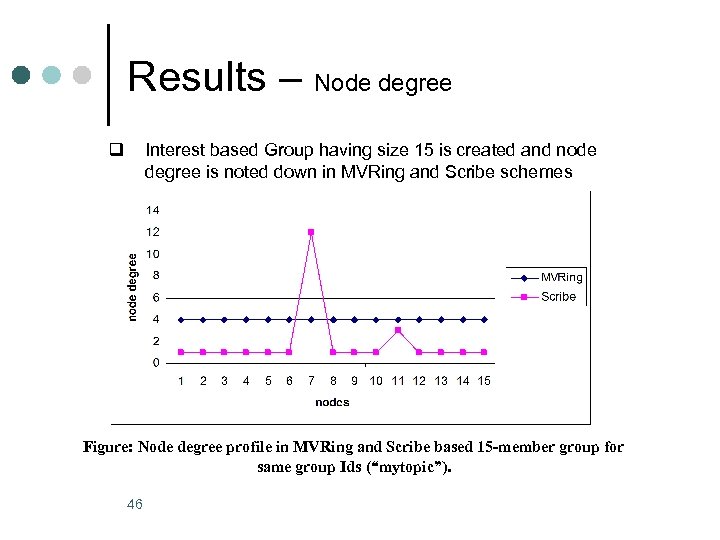 Results – Node degree q Interest based Group having size 15 is created and node degree is noted down in MVRing and Scribe schemes Figure: Node degree profile in MVRing and Scribe based 15 -member group for same group Ids (“mytopic”). 46
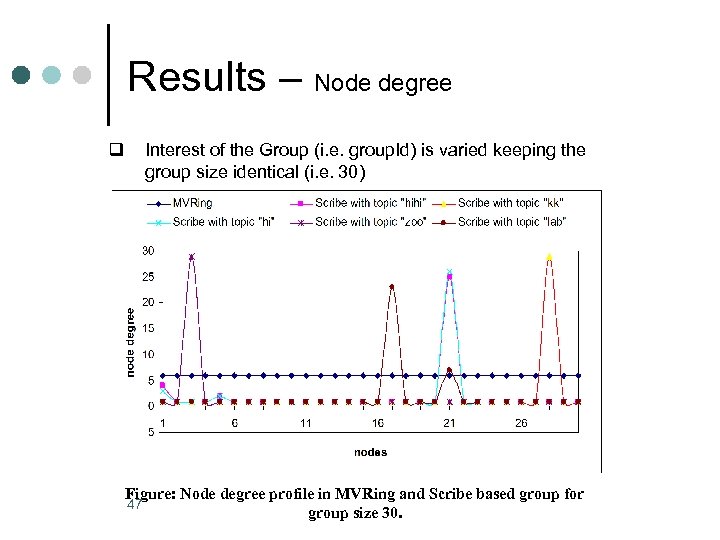 Results – Node degree q Interest of the Group (i. e. group. Id) is varied keeping the group size identical (i. e. 30) Figure: Node degree profile in MVRing and Scribe based group for 47 group size 30.
 Results – Joining traffic profile q Two scenarios 1. 2. q 48 One node is made to join to already existing group (of sizes 4, 9, 14 and 19) and joining traffic is measured in case of MVRing and Scribe Numbers of users are made to join the group having only a group creator as existing user. Joining traffic profile is measured for different groups of sizes 5, 10, 15 and 20 More results on Appendix J
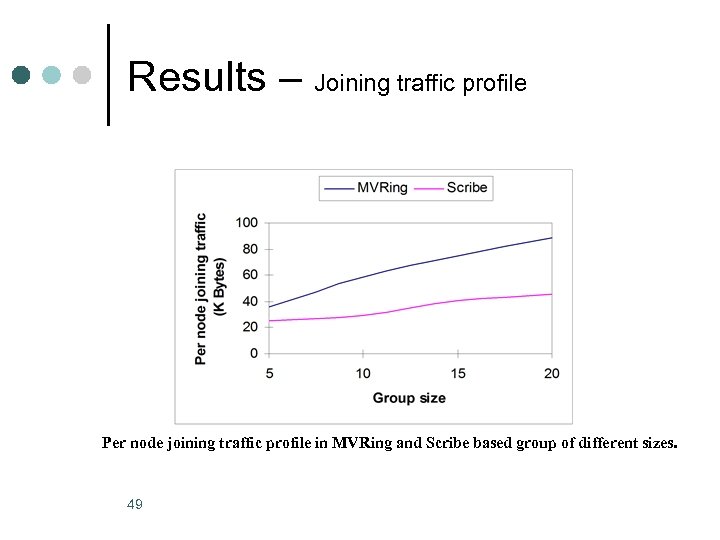 Results – Joining traffic profile Per node joining traffic profile in MVRing and Scribe based group of different sizes. 49
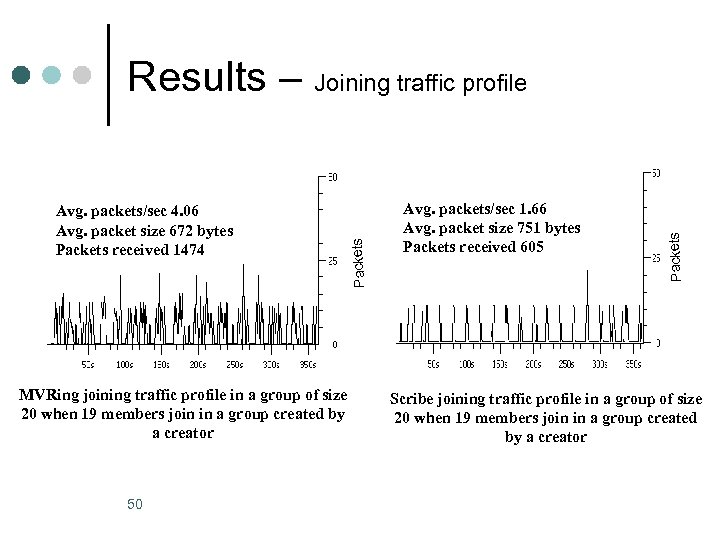 MVRing joining traffic profile in a group of size 20 when 19 members join in a group created by a creator 50 Avg. packets/sec 1. 66 Avg. packet size 751 bytes Packets received 605 Packets Avg. packets/sec 4. 06 Avg. packet size 672 bytes Packets received 1474 Packets Results – Joining traffic profile Scribe joining traffic profile in a group of size 20 when 19 members join in a group created by a creator
 Results – Multicast traffic profile q Two scenarios for groups of size 5, 10, 15 and 20 1. 2. q 51 Firstly, multicast traffic on a node is measured that sends the data to the multicast group Secondly, any one source node is made to multicast the data in to the group and traffic profile at non-source nodes is observed and measured More results on Appendix K
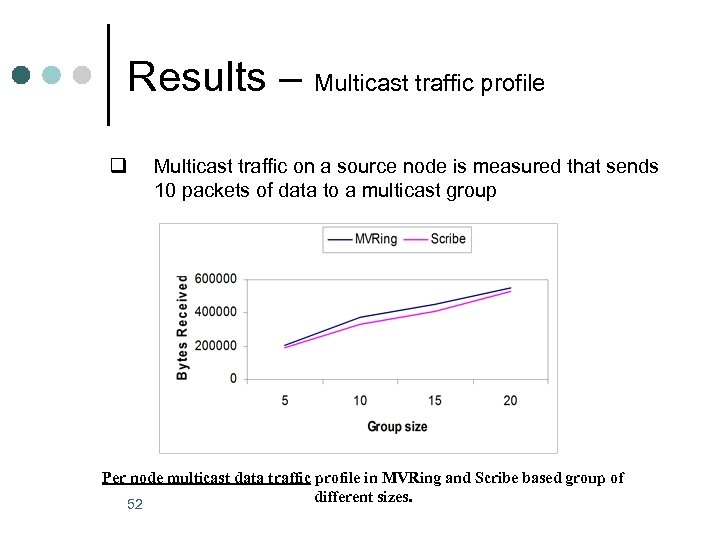 Results – Multicast traffic profile q Multicast traffic on a source node is measured that sends 10 packets of data to a multicast group Per node multicast data traffic profile in MVRing and Scribe based group of different sizes. 52
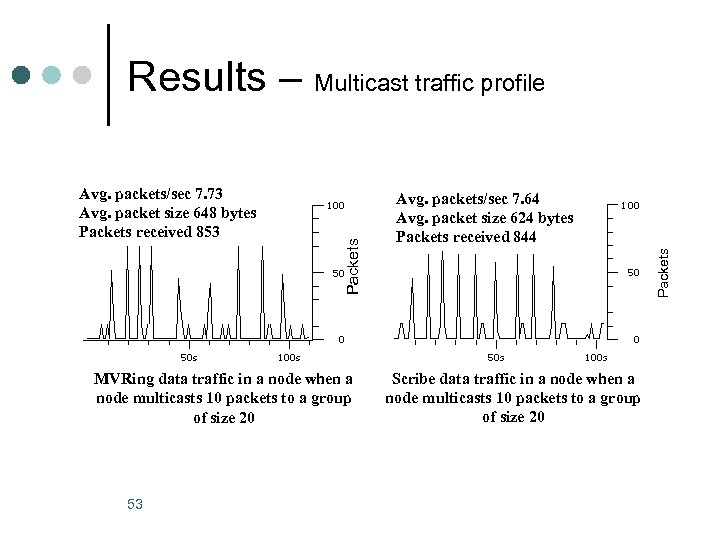 MVRing data traffic in a node when a node multicasts 10 packets to a group of size 20 53 Avg. packets/sec 7. 64 Avg. packet size 624 bytes Packets received 844 Packets Avg. packets/sec 7. 73 Avg. packet size 648 bytes Packets received 853 Packets Results – Multicast traffic profile Scribe data traffic in a node when a node multicasts 10 packets to a group of size 20
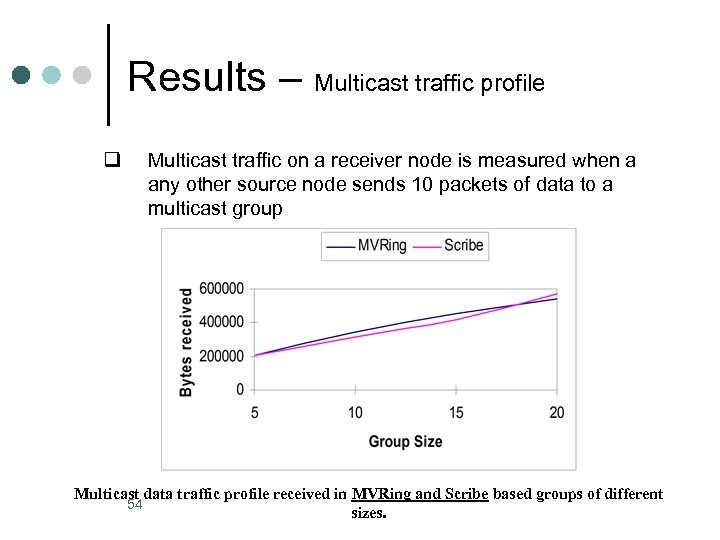 Results – Multicast traffic profile q Multicast traffic on a receiver node is measured when a any other source node sends 10 packets of data to a multicast group Multicast data traffic profile received in MVRing and Scribe based groups of different 54 sizes.
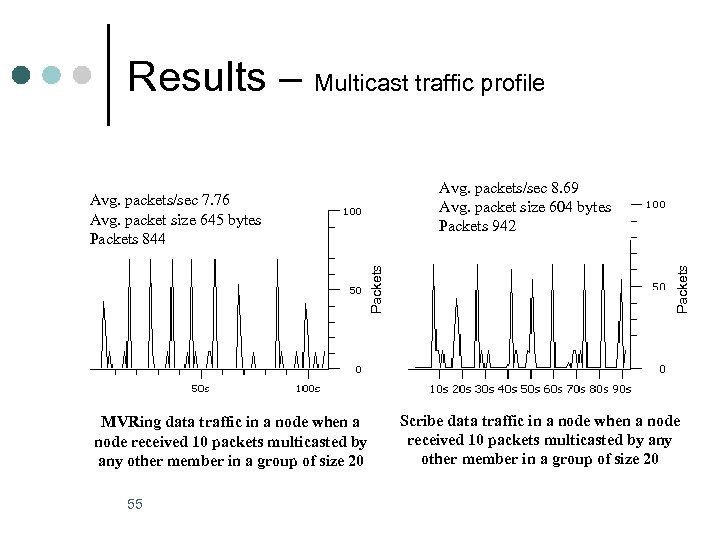 Results – Multicast traffic profile Packets MVRing data traffic in a node when a node received 10 packets multicasted by any other member in a group of size 20 55 Packets Avg. packets/sec 8. 69 Avg. packet size 604 bytes Packets 942 Avg. packets/sec 7. 76 Avg. packet size 645 bytes Packets 844 Scribe data traffic in a node when a node received 10 packets multicasted by any other member in a group of size 20
 Results - Node heterogeneity Allowing the node to mention whether it has sufficient resources or not Under the identical scenario (same group. Id, same number of users in a group, same amount of data multicasting in a group, same source node in a group, etc), traffic overhead on a node is measured in two modes i. e. firstly node is considered to have sufficient resources and secondly node is considered as weak node and has insufficient resources. Detail results on Appendix L q q q 56
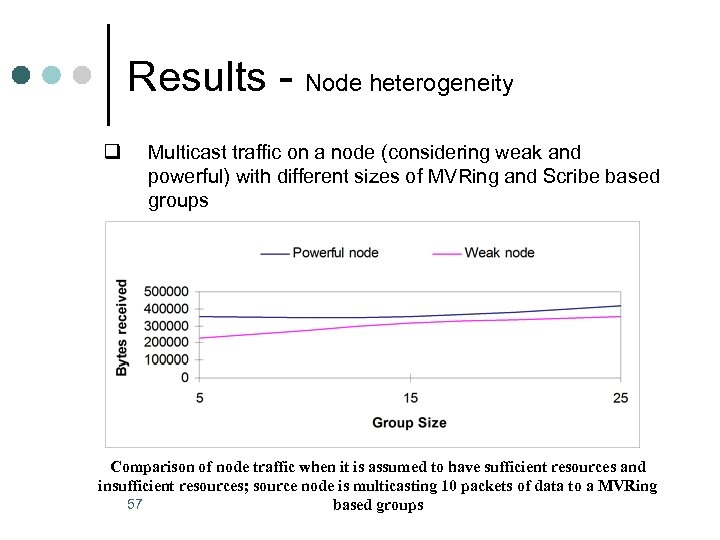 Results - Node heterogeneity q Multicast traffic on a node (considering weak and powerful) with different sizes of MVRing and Scribe based groups Comparison of node traffic when it is assumed to have sufficient resources and insufficient resources; source node is multicasting 10 packets of data to a MVRing 57 based groups
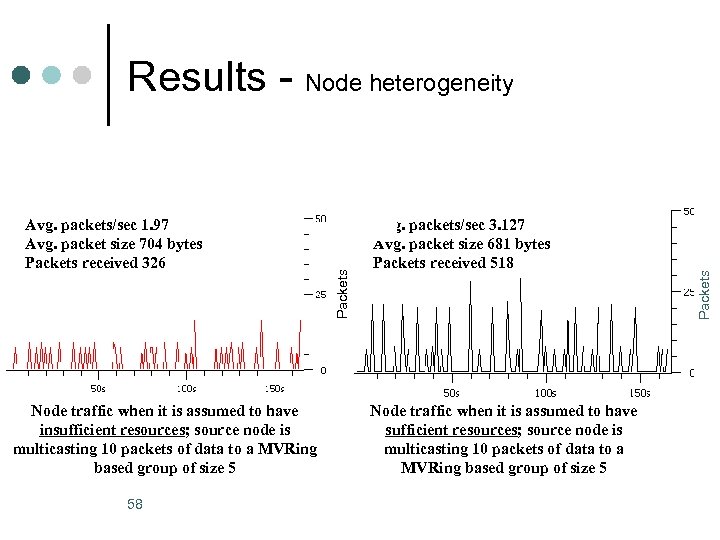 Node traffic when it is assumed to have insufficient resources; source node is multicasting 10 packets of data to a MVRing based group of size 5 58 Avg. packets/sec 3. 127 Avg. packet size 681 bytes Packets received 518 Node traffic when it is assumed to have sufficient resources; source node is multicasting 10 packets of data to a MVRing based group of size 5 Packets Avg. packets/sec 1. 97 Avg. packet size 704 bytes Packets received 326 Packets Results - Node heterogeneity
 Result - Implementations q Group Merging q q Group Splitting q q Two groups at a time Any member of group can initiate to split Group Maintenance Expected/unexpected node departure from group q RP shifting q Merging/Splitting and etc More results in Appendix M, example of group merging implementation & validation process is below. q q 59 RP, new leader, updated neighbors, number of users in a group etc are checked and verified
 Conclusion q E-Learning in P 2 P environment q New MV Ring based Approach for ALM q q q 63 More fault tolerant Better node degree distribution Comparable latency Comparable multicast traffic profile with high joining traffic For synchronous, more interactive learning, efficient resource utilization than traditional e. Learning Strong Alternative to traditional class room based learning…that current C/S based e. Learning lacking to be.
 Conclusion q Limitations/Extension q Consideration of Security and Privacy as major issues q Reducing the joining traffic cost q Future work : E-Learning GRID q Modified MVRing based protocol to grid environment will provide an extremely powerful infrastructure allowing users to collaborate in various learning contexts and to share learning materials, learning processes, learning systems, and experiences 64
 Papers/Presentations q Published/Accepted/Submitted q South Asian Network Operators Group –SANOG 7 (Accepted for workshop Presentation), Mumbai, India q Published: International Conference On Distance Education – ICODE 2006 Conference, Mascot, Oman q Published: Web Information Systems and Technologies – WEBIST 2006 Conference, Setúbal, Portugal q IEEE Conference on Networks (ICON -2006), Singapore (Submitted) 65
 Thank You 66