 Скачать презентацию Model Checking Orna Grumberg Technion Haifa Israel Taiwan
11df2707924425ed63d9baae6c467757.ppt
- Количество слайдов: 70



Model Checking Orna Grumberg Technion Haifa, Israel Taiwan, October 8, 2009 1
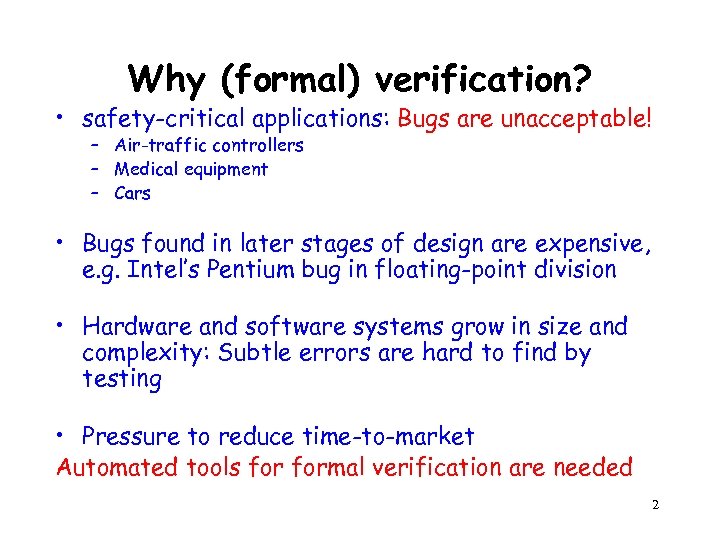
Why (formal) verification? • safety-critical applications: Bugs are unacceptable! – Air-traffic controllers – Medical equipment – Cars • Bugs found in later stages of design are expensive, e. g. Intel’s Pentium bug in floating-point division • Hardware and software systems grow in size and complexity: Subtle errors are hard to find by testing • Pressure to reduce time-to-market Automated tools formal verification are needed 2
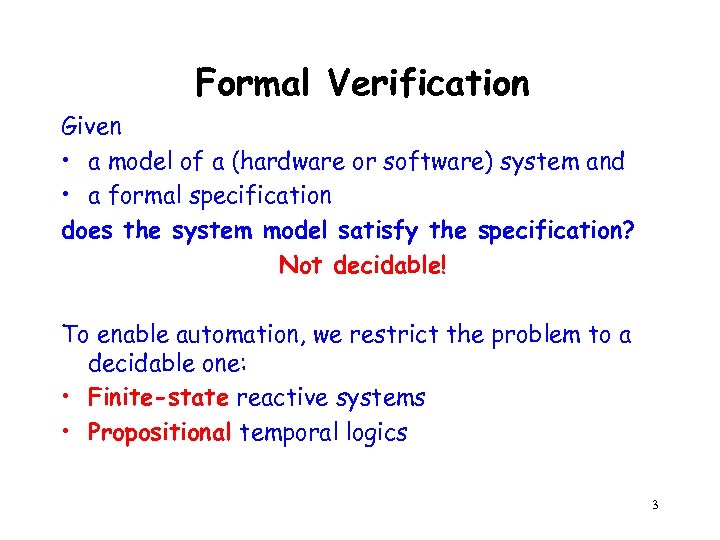
Formal Verification Given • a model of a (hardware or software) system and • a formal specification does the system model satisfy the specification? Not decidable! To enable automation, we restrict the problem to a decidable one: • Finite-state reactive systems • Propositional temporal logics 3
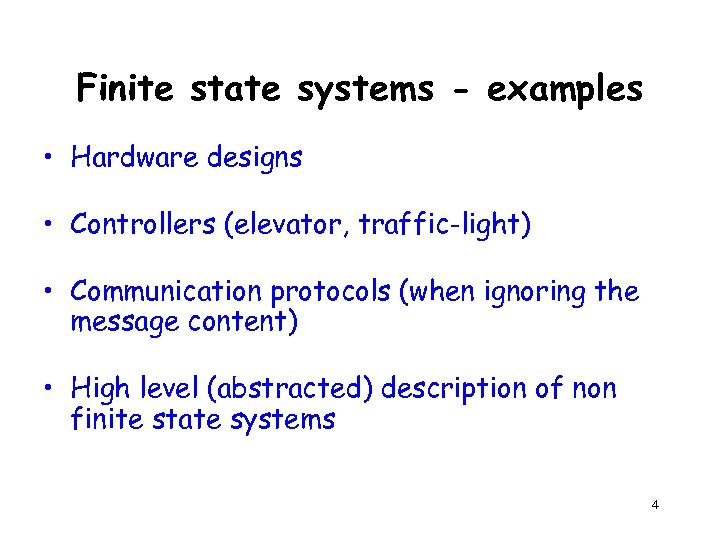
Finite state systems - examples • Hardware designs • Controllers (elevator, traffic-light) • Communication protocols (when ignoring the message content) • High level (abstracted) description of non finite state systems 4
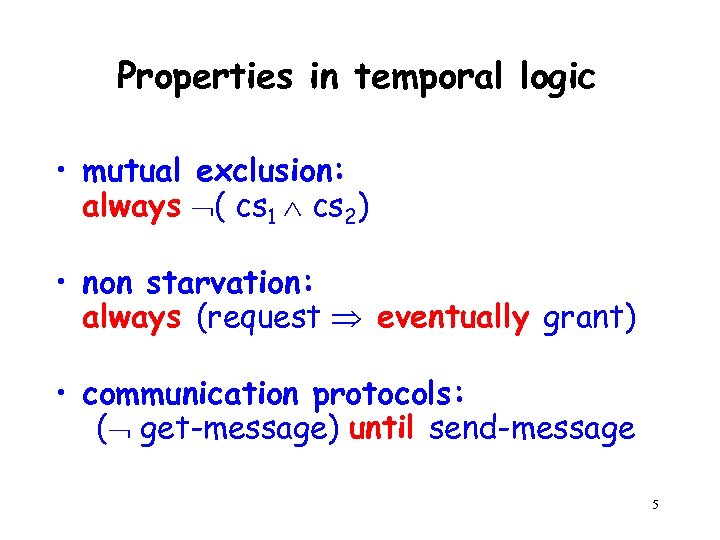
Properties in temporal logic • mutual exclusion: always ( cs 1 cs 2) • non starvation: always (request eventually grant) • communication protocols: ( get-message) until send-message 5
![Model Checking [EC 81, QS 82] An efficient procedure that receives: § A finite-state](https://present5.com/presentation/11df2707924425ed63d9baae6c467757/image-6.jpg "Model Checking [EC 81, QS 82] An efficient procedure that receives: § A finite-state")
Model Checking [EC 81, QS 82] An efficient procedure that receives: § A finite-state model describing a system § A temporal logic formula describing a property It returns yes, if the system has the property no + Counterexample, otherwise 6
Model Checking § Emerging as an industrial standard tool for verification of hardware designs: Intel, IBM, Cadence, … § Recently applied successfully also for software verification: SLAM (Microsoft), Java Path. Finder and SPIN (NASA), BLAST (EPFL), CBMC (Oxford), … 7
Clarke, Emerson, and Sifakis won the 2007 Turing award for their contribution to Model Checking 8
Overview • • Temporal logics Model Checking BDD-based (symbolic) model checking SAT-based (bounded) model checking 9
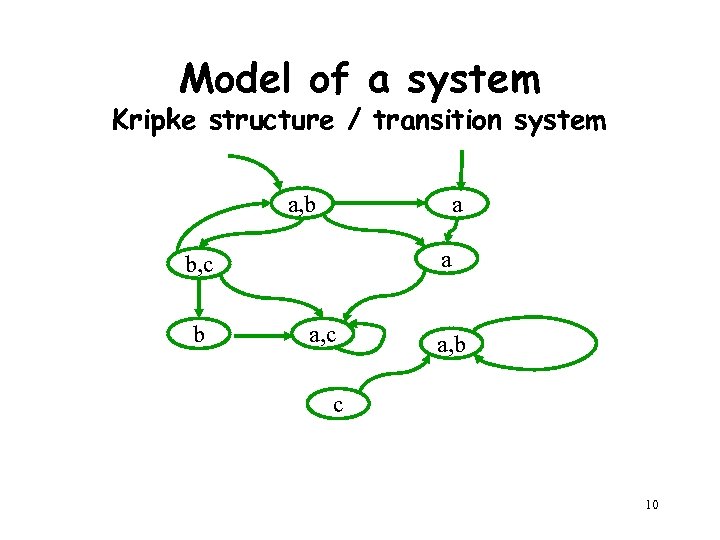
Model of a system Kripke structure / transition system a, b a a b, c b a, c a, b c 10
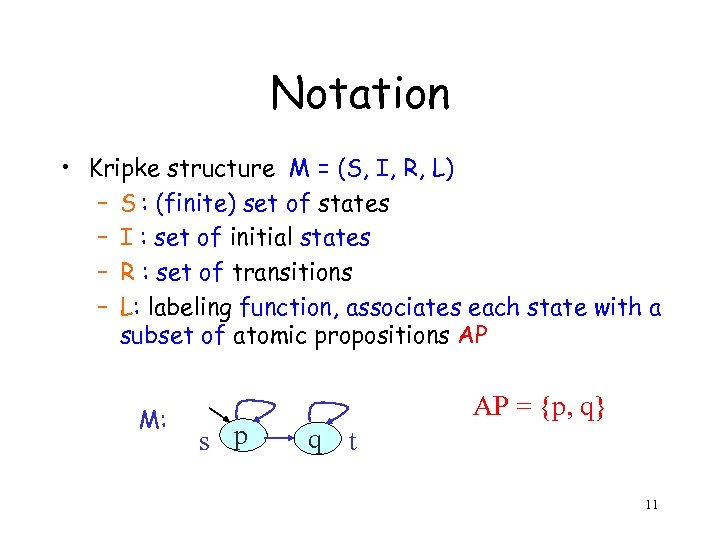
Notation • Kripke structure M = (S, I, R, L) – S : (finite) set of states – I : set of initial states – R : set of transitions – L: labeling function, associates each state with a subset of atomic propositions AP M: s p AP = {p, q} q t 11
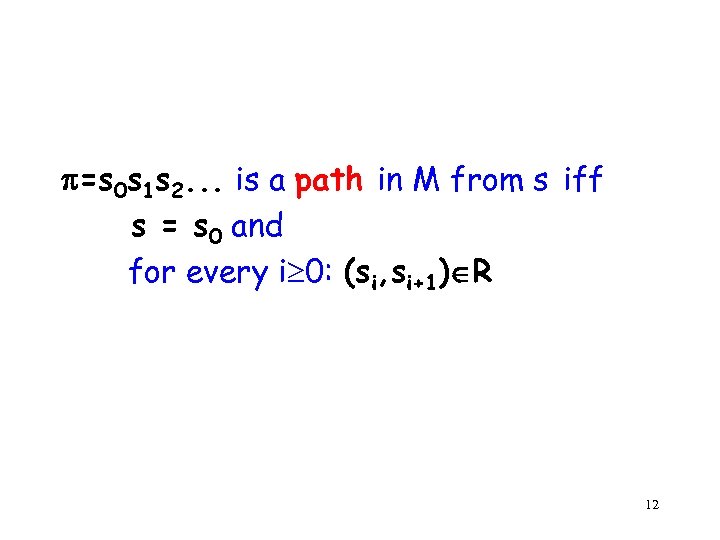
=s 0 s 1 s 2. . . is a path in M from s iff s = s 0 and for every i 0: (si, si+1) R 12
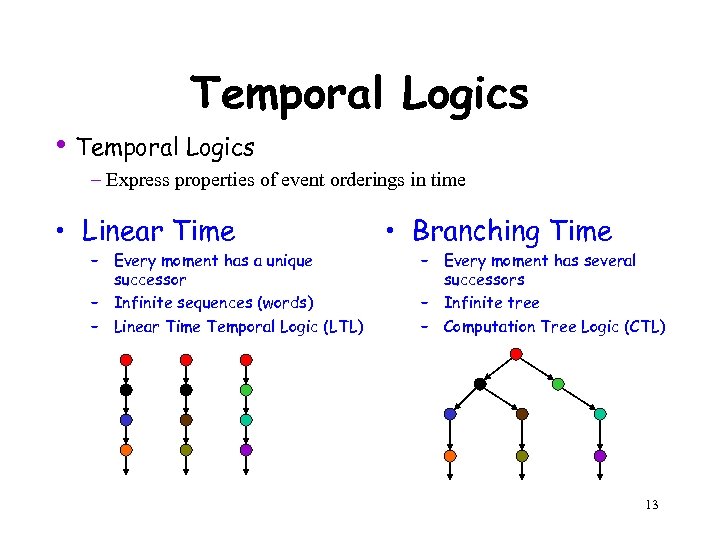
Temporal Logics • Temporal Logics – Express properties of event orderings in time • Linear Time – Every moment has a unique successor – Infinite sequences (words) – Linear Time Temporal Logic (LTL) • Branching Time – Every moment has several successors – Infinite tree – Computation Tree Logic (CTL) 13
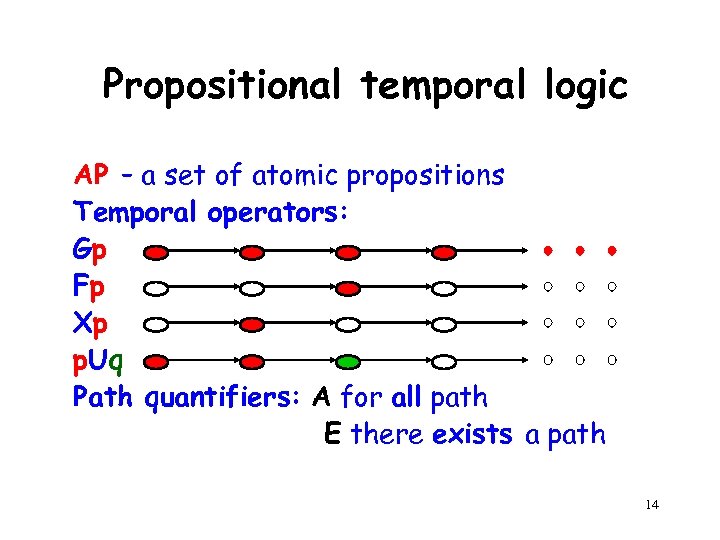
Propositional temporal logic AP – a set of atomic propositions Temporal operators: Gp Fp Xp p. Uq Path quantifiers: A for all path E there exists a path 14
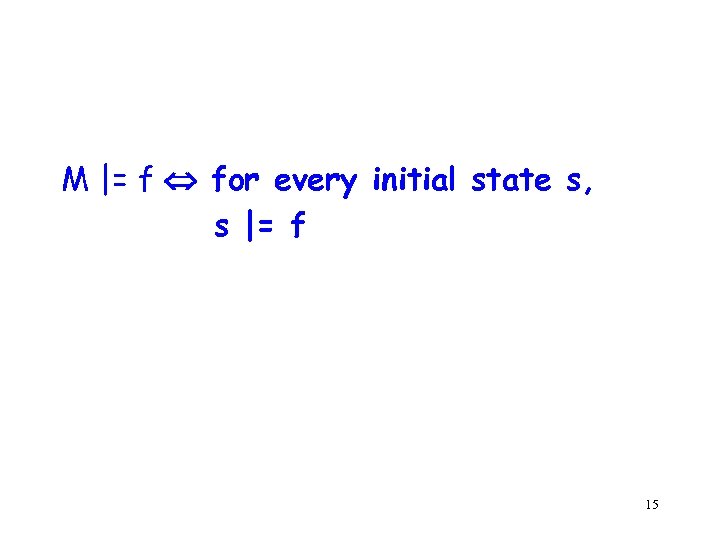
M |= f for every initial state s, s |= f 15
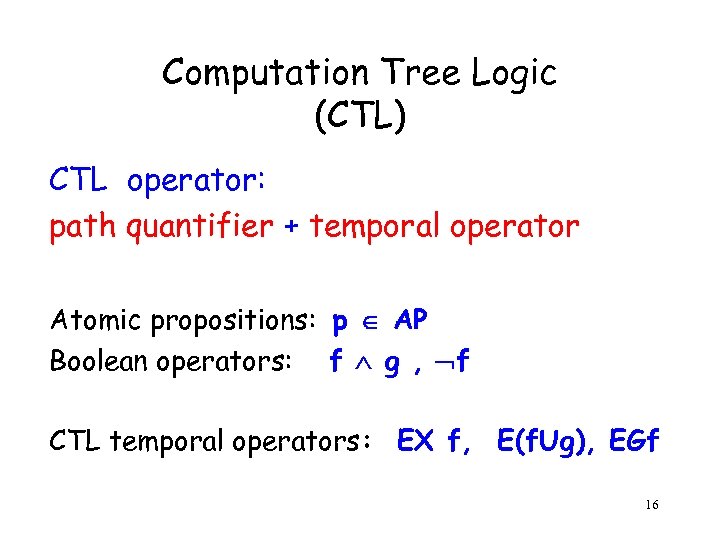
Computation Tree Logic (CTL) CTL operator: path quantifier + temporal operator Atomic propositions: p AP Boolean operators: f g , f CTL temporal operators: EX f, E(f. Ug), EGf 16
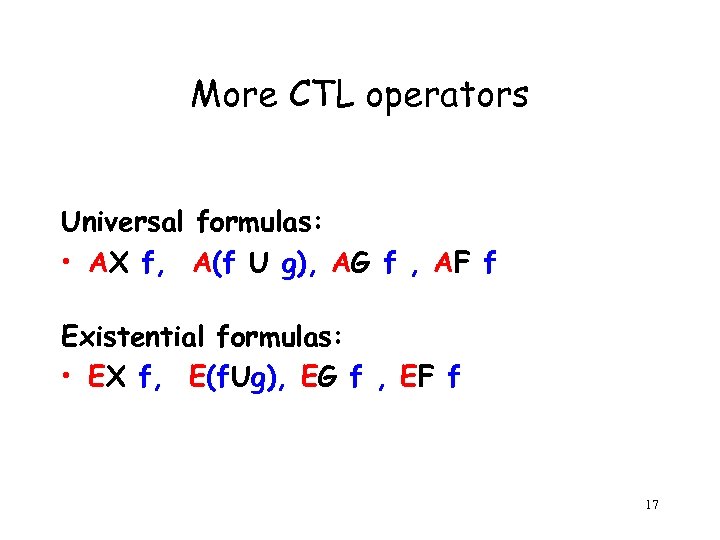
More CTL operators Universal formulas: • AX f, A(f U g), AG f , AF f Existential formulas: • EX f, E(f. Ug), EG f , EF f 17
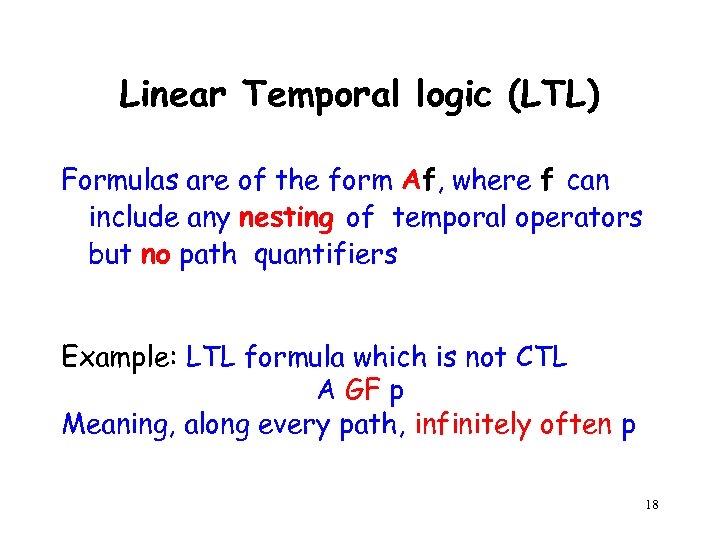
Linear Temporal logic (LTL) Formulas are of the form Af, where f can include any nesting of temporal operators but no path quantifiers Example: LTL formula which is not CTL A GF p Meaning, along every path, infinitely often p 18
CTL* Includes LTL and CTL and more 19
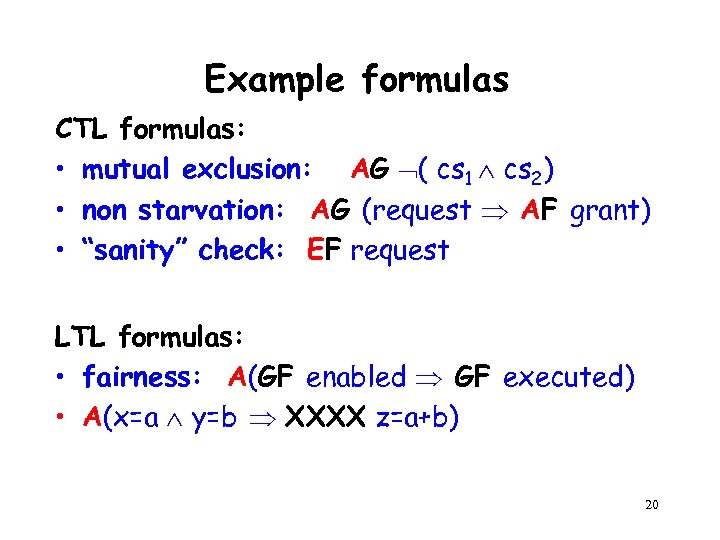
Example formulas CTL formulas: • mutual exclusion: AG ( cs 1 cs 2) • non starvation: AG (request AF grant) • “sanity” check: EF request LTL formulas: • fairness: A(GF enabled GF executed) • A(x=a y=b XXXX z=a+b) 20
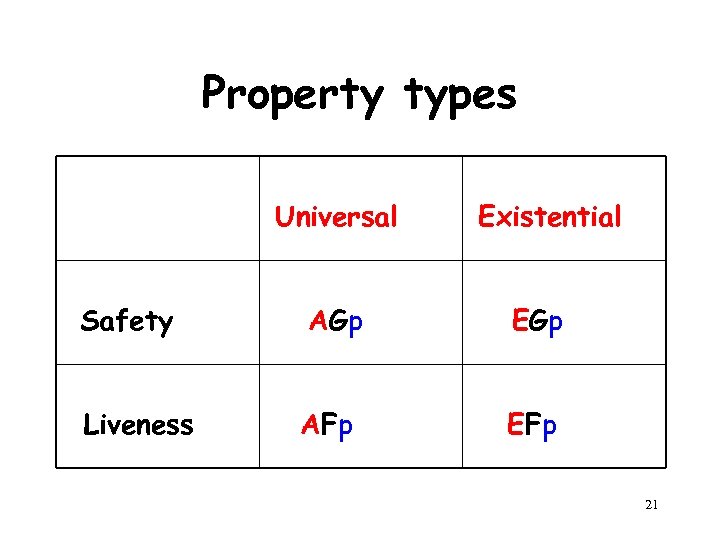
Property types Universal Existential Safety AGp EGp Liveness AFp EFp 21
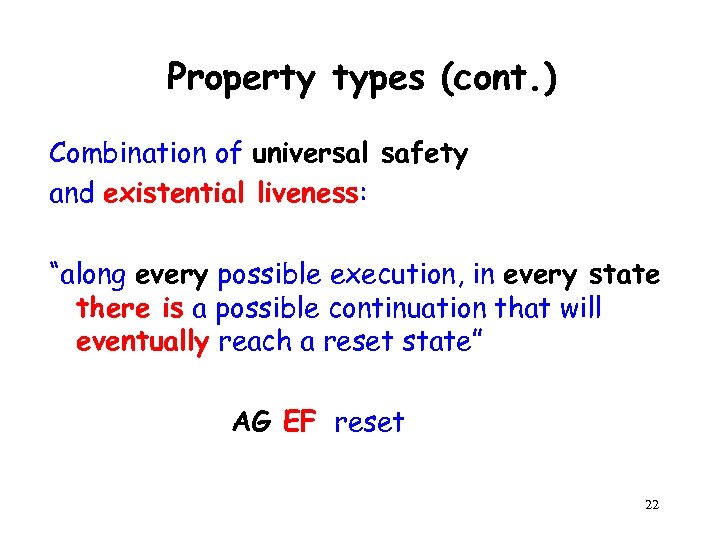
Property types (cont. ) Combination of universal safety and existential liveness: “along every possible execution, in every state there is a possible continuation that will eventually reach a reset state” AG EF reset 22
![Mutual Exclusion Example [by Willem Visser] • Two process mutual exclusion with shared semaphore](https://present5.com/presentation/11df2707924425ed63d9baae6c467757/image-23.jpg "Mutual Exclusion Example [by Willem Visser] • Two process mutual exclusion with shared semaphore")
Mutual Exclusion Example [by Willem Visser] • Two process mutual exclusion with shared semaphore • Each process has three states • Non-critical (N) • Trying (T) • Critical (C) • Semaphore can be available (S 0) or taken (S 1) • Initially both processes are in the Non-critical state and the semaphore is available --- N 1 N 2 S 0 N 1 T 1 S 0 C 1 S 1 C 1 N 1 S 0 || N 2 T 2 S 0 C 2 S 1 C 2 N 2 S 0 23
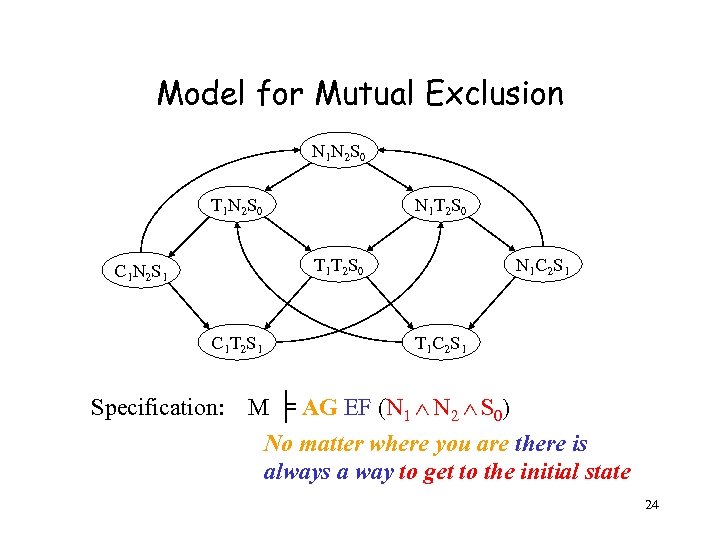
Model for Mutual Exclusion N 1 N 2 S 0 T 1 N 2 S 0 N 1 T 2 S 0 T 1 T 2 S 0 C 1 N 2 S 1 C 1 T 2 S 1 Specification: N 1 C 2 S 1 T 1 C 2 S 1 M ╞ AG EF (N 1 N 2 S 0) No matter where you are there is always a way to get to the initial state 24
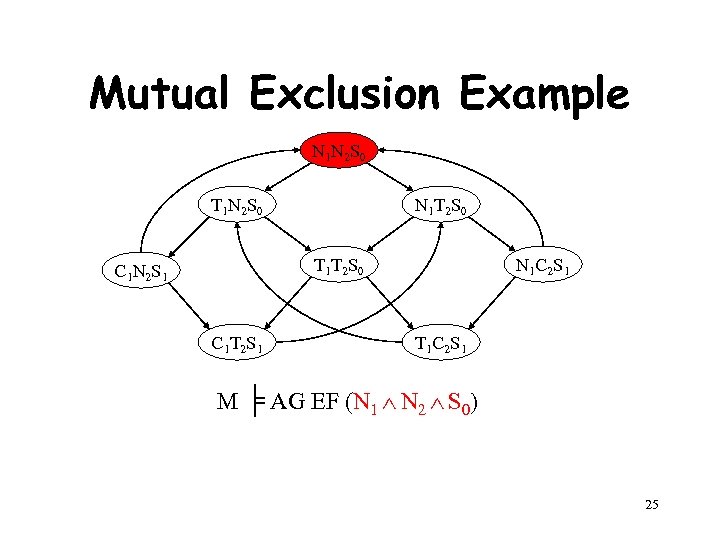
Mutual Exclusion Example N 1 N 2 S 0 T 1 N 2 S 0 N 1 T 2 S 0 T 1 T 2 S 0 C 1 N 2 S 1 C 1 T 2 S 1 N 1 C 2 S 1 T 1 C 2 S 1 M ╞ AG EF (N 1 N 2 S 0) 25
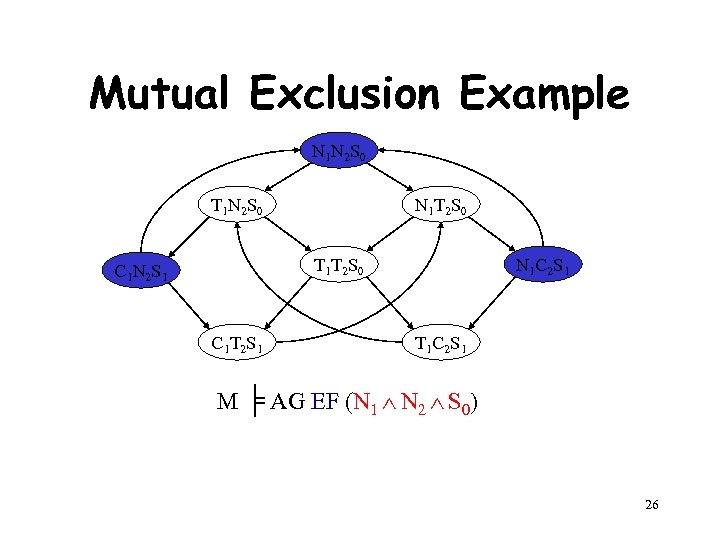
Mutual Exclusion Example N 1 N 2 S 0 T 1 N 2 S 0 N 1 T 2 S 0 T 1 T 2 S 0 C 1 N 2 S 1 C 1 T 2 S 1 N 1 C 2 S 1 T 1 C 2 S 1 M ╞ AG EF (N 1 N 2 S 0) 26
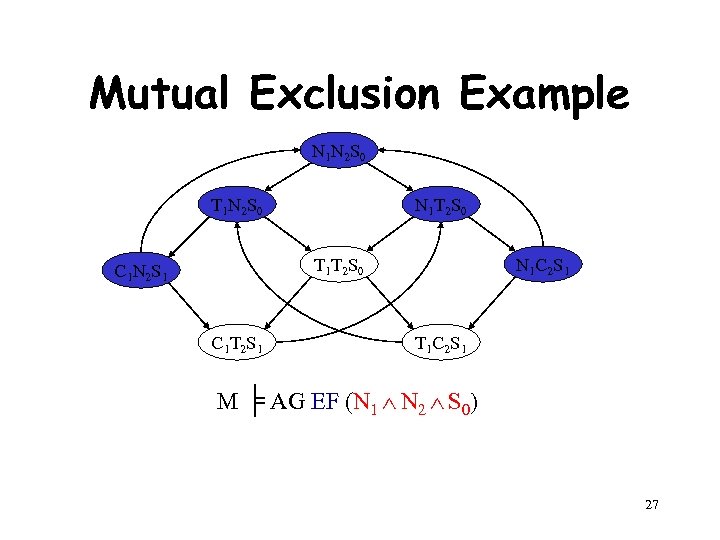
Mutual Exclusion Example N 1 N 2 S 0 T 1 N 2 S 0 N 1 T 2 S 0 T 1 T 2 S 0 C 1 N 2 S 1 C 1 T 2 S 1 N 1 C 2 S 1 T 1 C 2 S 1 M ╞ AG EF (N 1 N 2 S 0) 27
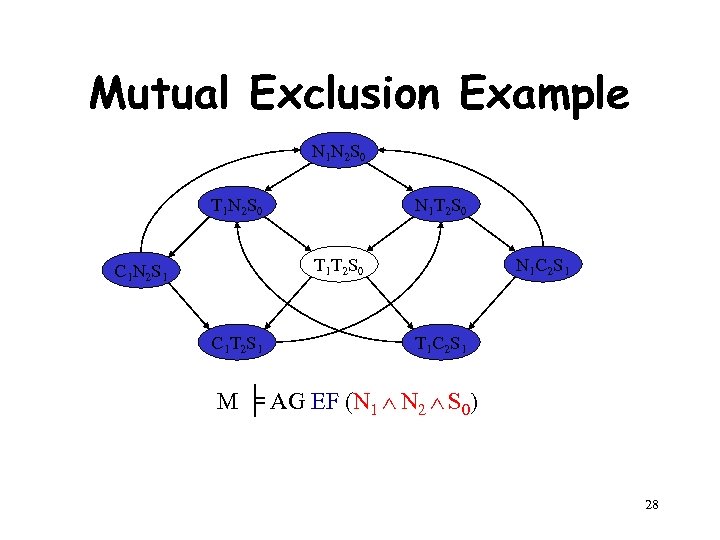
Mutual Exclusion Example N 1 N 2 S 0 T 1 N 2 S 0 N 1 T 2 S 0 T 1 T 2 S 0 C 1 N 2 S 1 C 1 T 2 S 1 N 1 C 2 S 1 T 1 C 2 S 1 M ╞ AG EF (N 1 N 2 S 0) 28
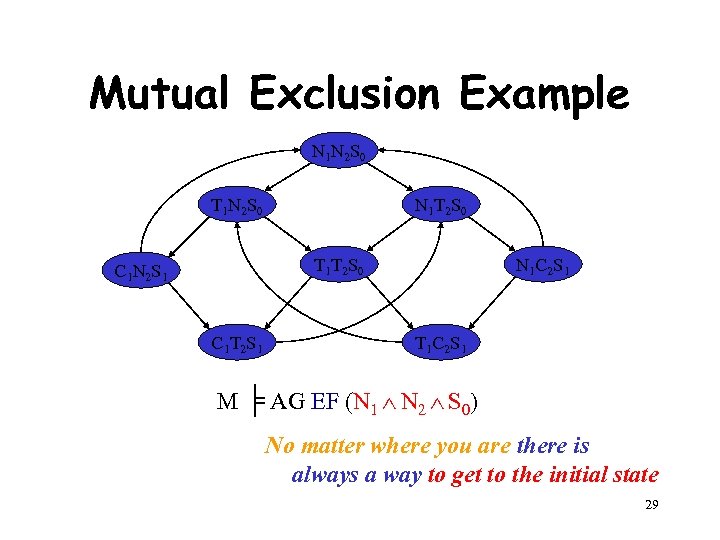
Mutual Exclusion Example N 1 N 2 S 0 T 1 N 2 S 0 N 1 T 2 S 0 T 1 T 2 S 0 C 1 N 2 S 1 C 1 T 2 S 1 N 1 C 2 S 1 T 1 C 2 S 1 M ╞ AG EF (N 1 N 2 S 0) No matter where you are there is always a way to get to the initial state 29
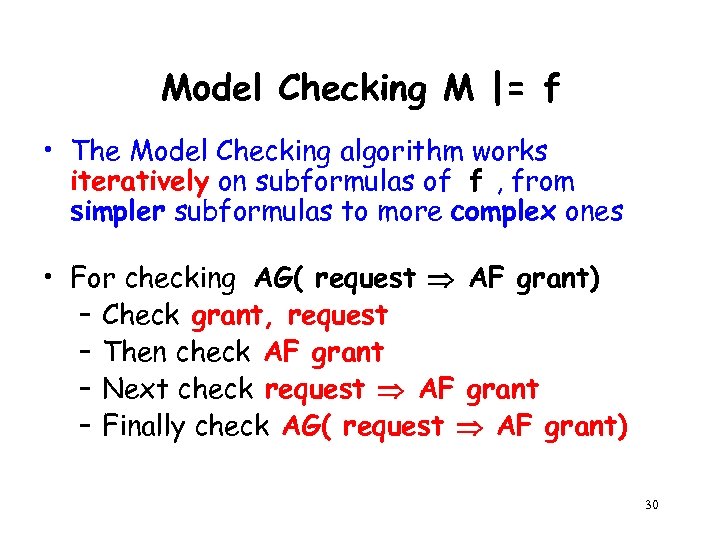
Model Checking M |= f • The Model Checking algorithm works iteratively on subformulas of f , from simpler subformulas to more complex ones • For checking AG( request AF grant) – Check grant, request – Then check AF grant – Next check request AF grant – Finally check AG( request AF grant) 30
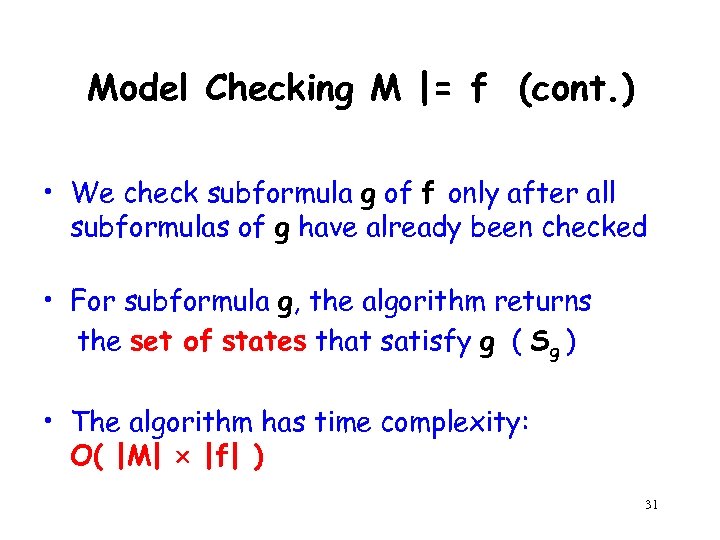
Model Checking M |= f (cont. ) • We check subformula g of f only after all subformulas of g have already been checked • For subformula g, the algorithm returns the set of states that satisfy g ( Sg ) • The algorithm has time complexity: O( |M| |f| ) 31
Model Checking M |= f (cont. ) • M |= f if and only if all initial states of M are contained in Sf. 32
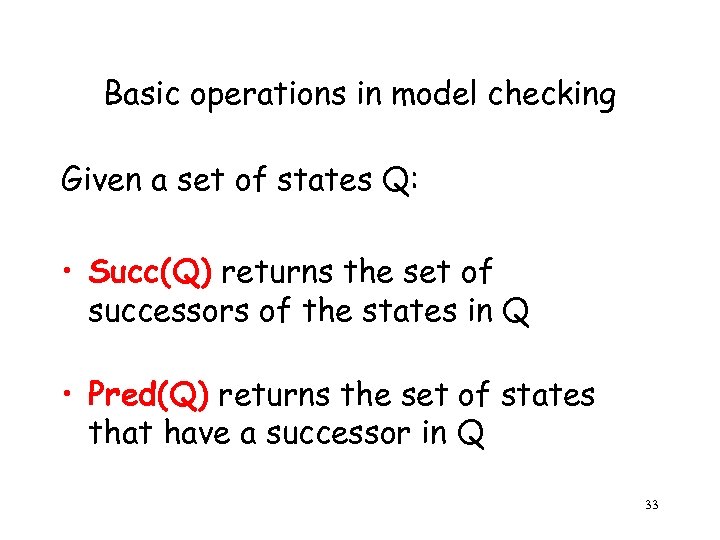
Basic operations in model checking Given a set of states Q: • Succ(Q) returns the set of successors of the states in Q • Pred(Q) returns the set of states that have a successor in Q 33
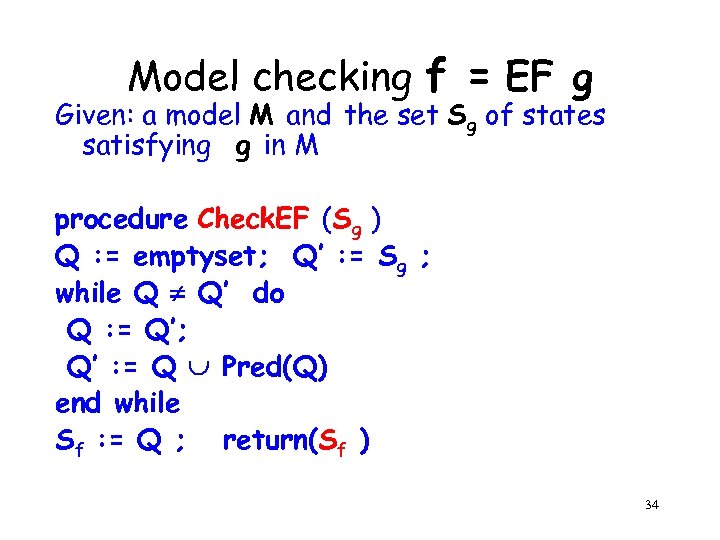
Model checking f = EF g Given: a model M and the set Sg of states satisfying g in M procedure Check. EF (Sg ) Q : = emptyset; Q’ : = Sg ; while Q Q’ do Q : = Q’; Q’ : = Q Pred(Q) end while Sf : = Q ; return(Sf ) 34
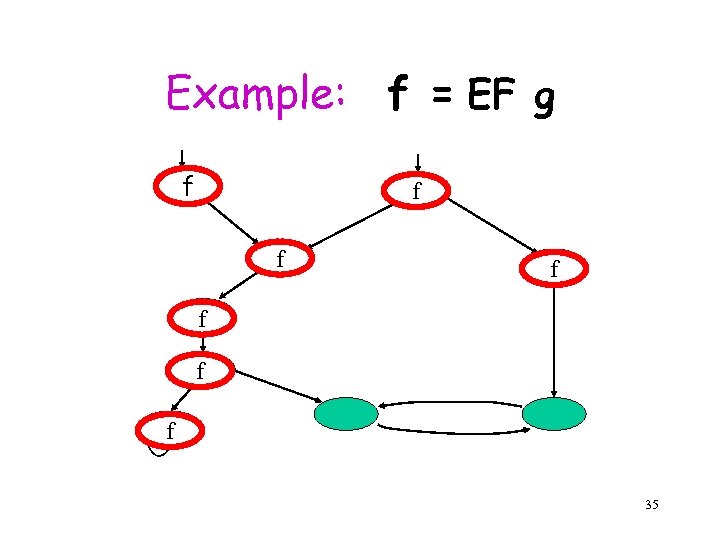
Example: f = EF g f f f g f 35
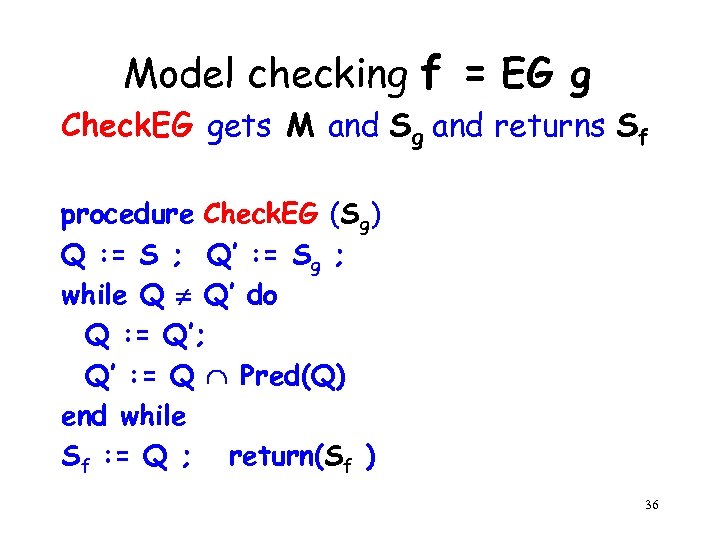
Model checking f = EG g Check. EG gets M and Sg and returns Sf procedure Check. EG (Sg) Q : = S ; Q’ : = Sg ; while Q Q’ do Q : = Q’; Q’ : = Q Pred(Q) end while Sf : = Q ; return(Sf ) 36
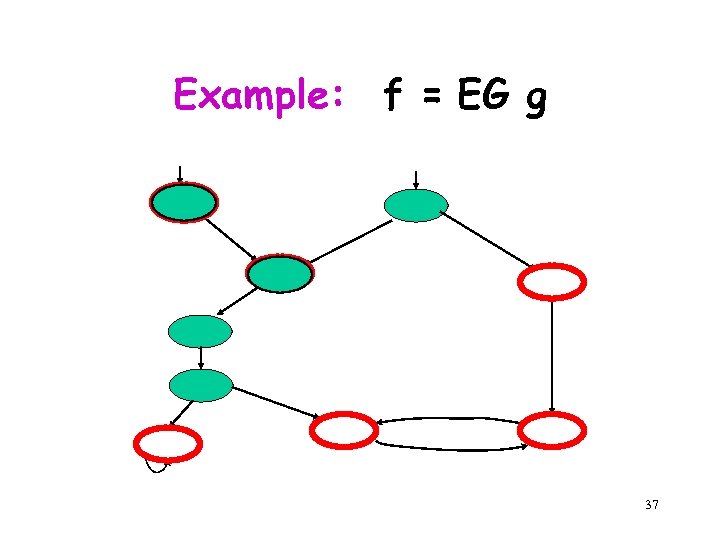
Example: f = EG g g g g 37
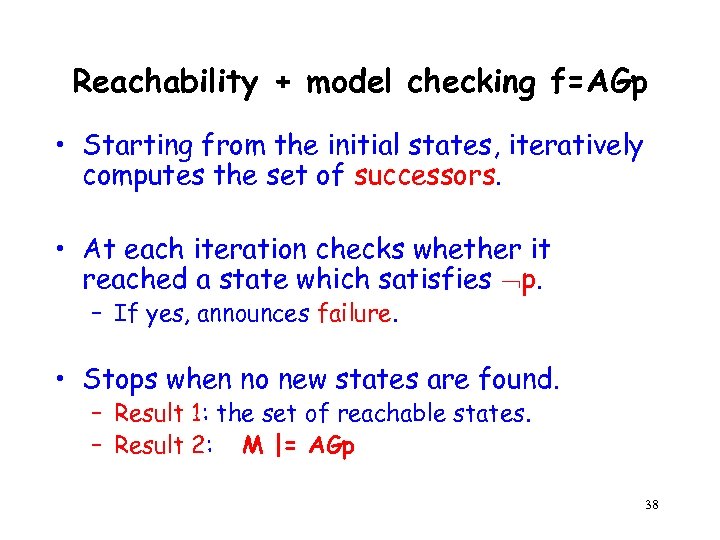
Reachability + model checking f=AGp • Starting from the initial states, iteratively computes the set of successors. • At each iteration checks whether it reached a state which satisfies p. – If yes, announces failure. • Stops when no new states are found. – Result 1: the set of reachable states. – Result 2: M |= AGp 38
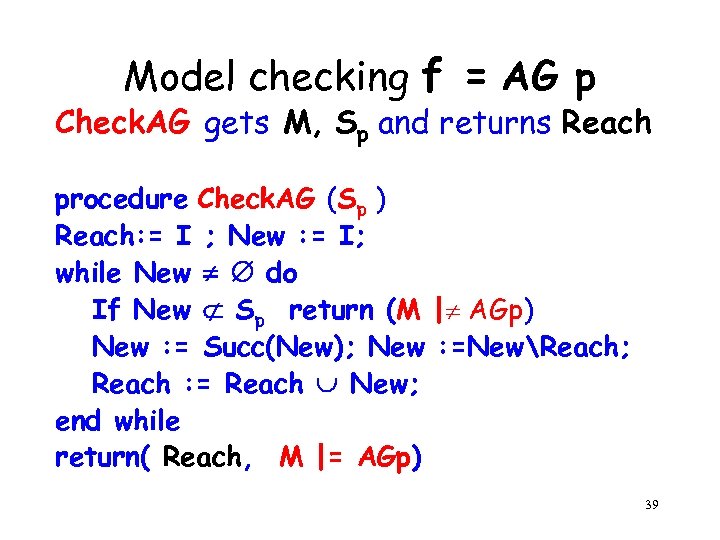
Model checking f = AG p Check. AG gets M, Sp and returns Reach procedure Check. AG (Sp ) Reach: = I ; New : = I; while New do If New Sp return (M | AGp) New : = Succ(New); New : =NewReach; Reach : = Reach New; end while return( Reach, M |= AGp) 39
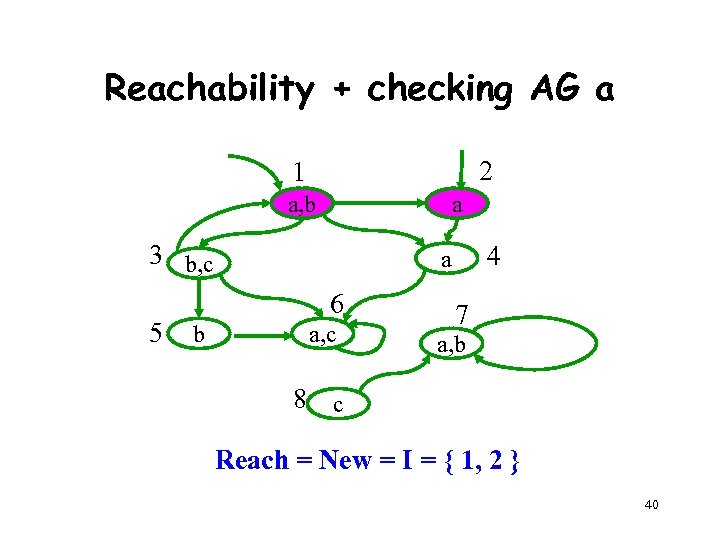
Reachability + checking AG a 2 1 a, b a 3 b, c 5 6 b 4 a a, c 7 a, b 8 c Reach = New = I = { 1, 2 } 40
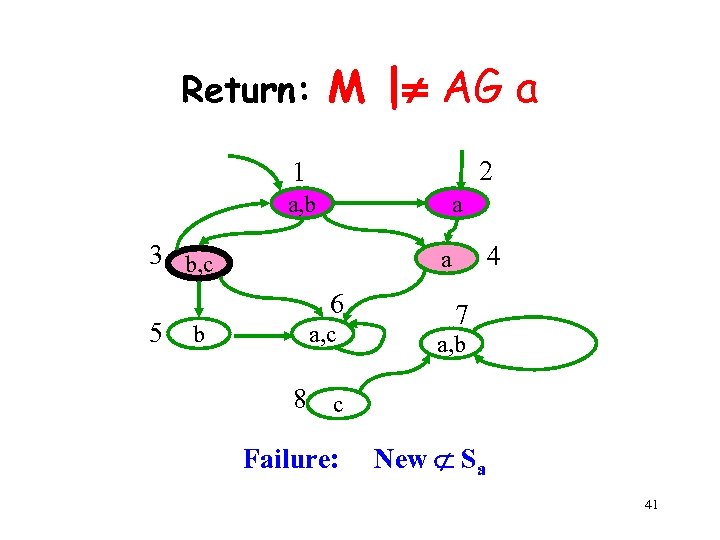
Return: M | AG a 2 1 a, b a 3 b, c 5 6 b 4 a a, c 7 a, b 8 c Failure: New Sa 41
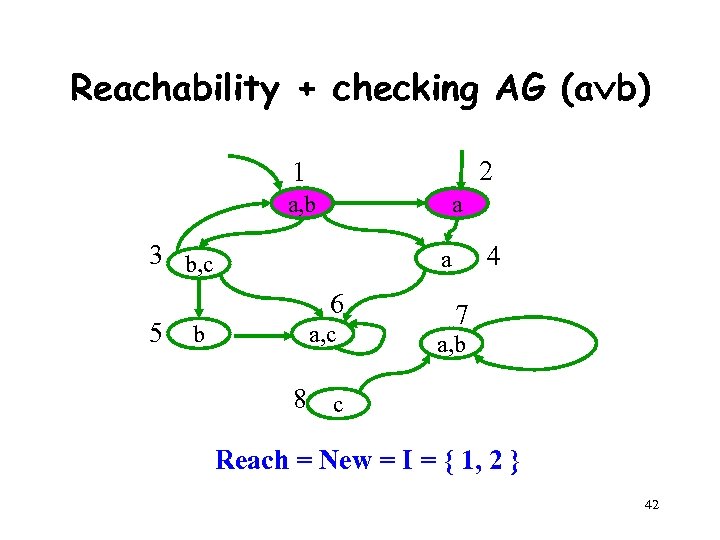
Reachability + checking AG (a b) 2 1 a, b a 3 b, c 5 6 b 4 a a, c 7 a, b 8 c Reach = New = I = { 1, 2 } 42
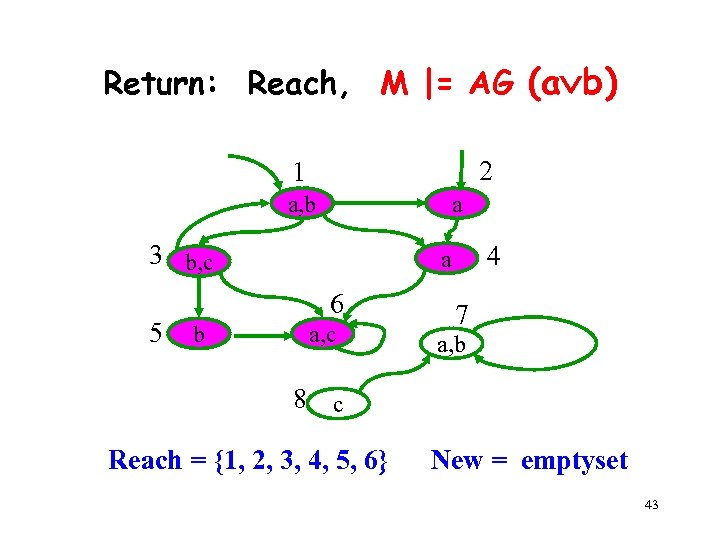
Return: Reach, M |= AG (a b) 2 1 a, b a 3 b, c 5 6 b 4 a a, c 7 a, b 8 c Reach = {1, 2, 3, 4, 5, 6} New = emptyset 43
Main limitation: The state explosion problem: Model checking is efficient in time but suffers from high space requirements: The number of states in the system model grows exponentially with § the number of variables § the number of components in the system 44
If the model is given explicitly (e. g. by adjacent matrix) then only systems of restricted size can be handled. • Strong reduction techniques are needed, e. g. Partial Order Reduction 45
Symbolic model checking A solution to the state explosion problem: BDD-based model checking • Binary Decision Diagrams ( BDDs ) are used to represent the model and sets of states. • It can handle systems with hundreds of Boolean variables. 46
Binary decision diagrams (BDDs) • Data structure for representing Boolean functions • Often concise in memory • Canonical representation • Most Boolean operations can be performed on BDDs in polynomial time in the BDD size 47
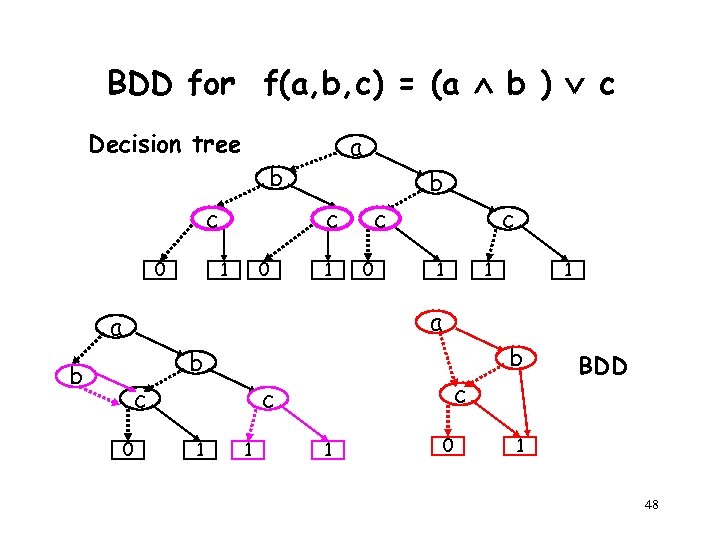
BDD for f(a, b, c) = (a b ) c Decision tree a b c 0 b c 1 0 1 c 0 c 1 1 1 a a b b b c 0 c c 1 1 1 0 BDD 1 48
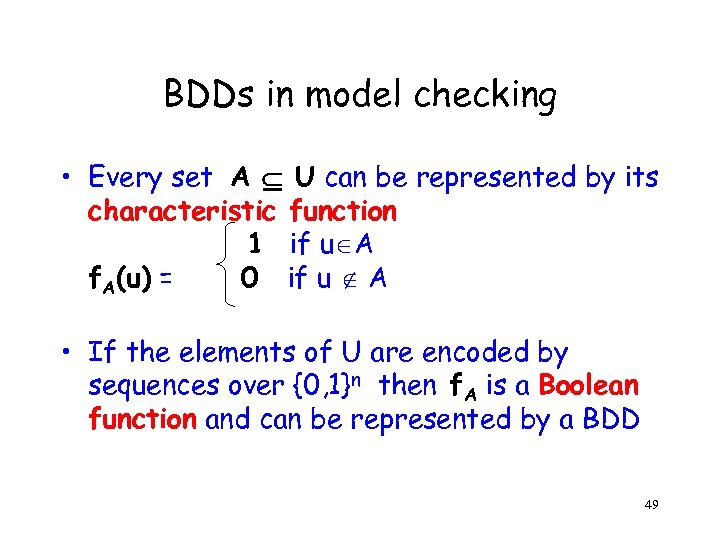
BDDs in model checking • Every set A U can be represented by its characteristic function 1 if u A f. A(u) = 0 if u A • If the elements of U are encoded by sequences over {0, 1}n then f. A is a Boolean function and can be represented by a BDD 49
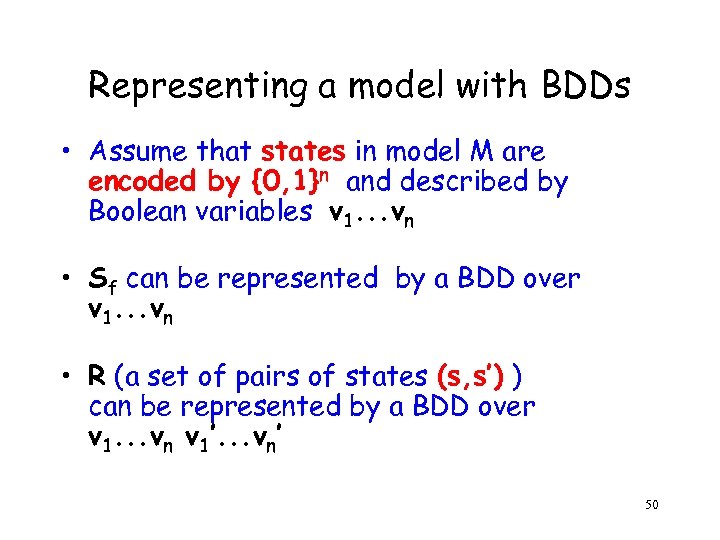
Representing a model with BDDs • Assume that states in model M are encoded by {0, 1}n and described by Boolean variables v 1. . . vn • Sf can be represented by a BDD over v 1. . . vn • R (a set of pairs of states (s, s’) ) can be represented by a BDD over v 1. . . vn v 1’. . . vn’ 50
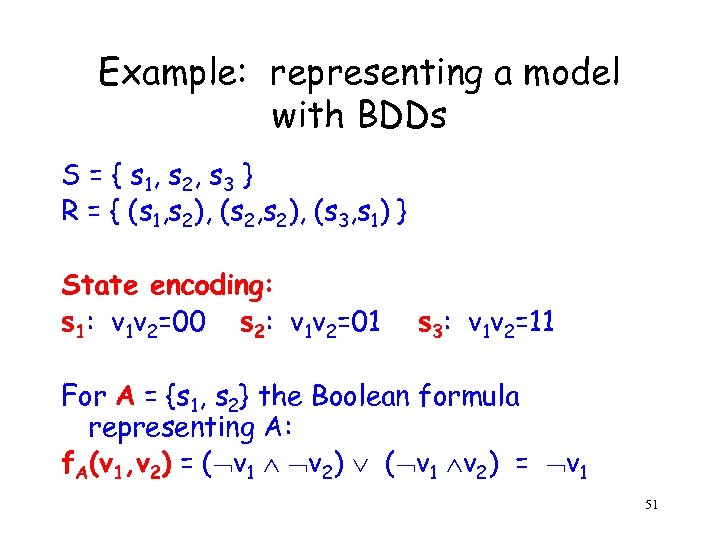
Example: representing a model with BDDs S = { s 1, s 2 , s 3 } R = { (s 1, s 2), (s 2, s 2), (s 3, s 1) } State encoding: s 1: v 1 v 2=00 s 2: v 1 v 2=01 s 3: v 1 v 2=11 For A = {s 1, s 2} the Boolean formula representing A: f. A(v 1, v 2) = ( v 1 v 2) ( v 1 v 2) = v 1 51
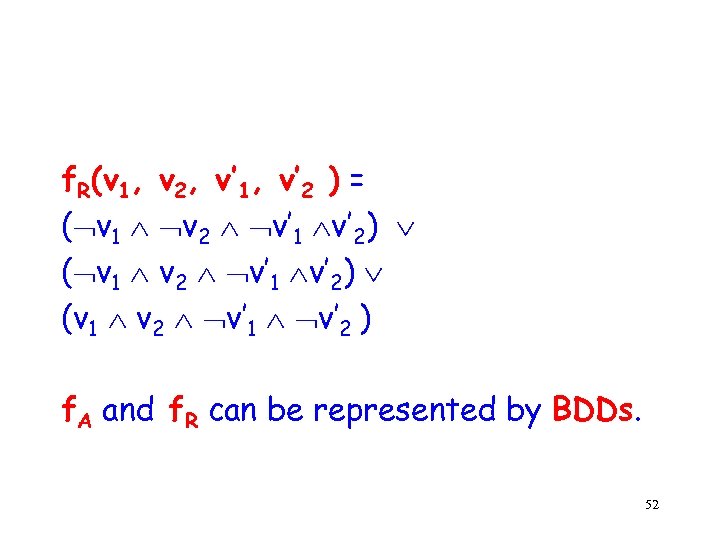
f. R(v 1, v 2, v’ 1, v’ 2 ) = ( v 1 v 2 v’ 1 v’ 2) (v 1 v 2 v’ 1 v’ 2 ) f. A and f. R can be represented by BDDs. 52
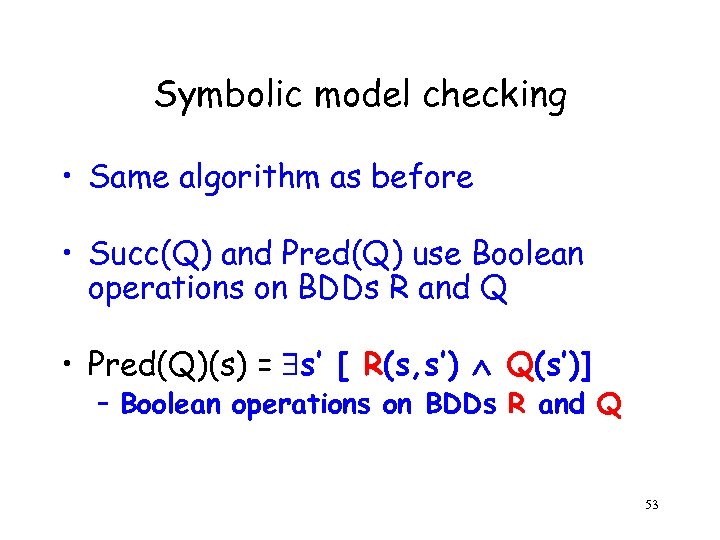
Symbolic model checking • Same algorithm as before • Succ(Q) and Pred(Q) use Boolean operations on BDDs R and Q • Pred(Q)(s) = s’ [ R(s, s’) Q(s’)] – Boolean operations on BDDs R and Q 53
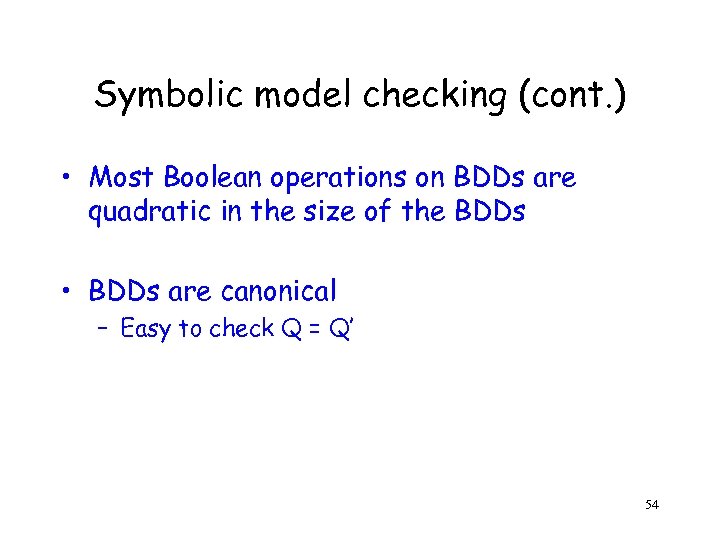
Symbolic model checking (cont. ) • Most Boolean operations on BDDs are quadratic in the size of the BDDs • BDDs are canonical – Easy to check Q = Q’ 54
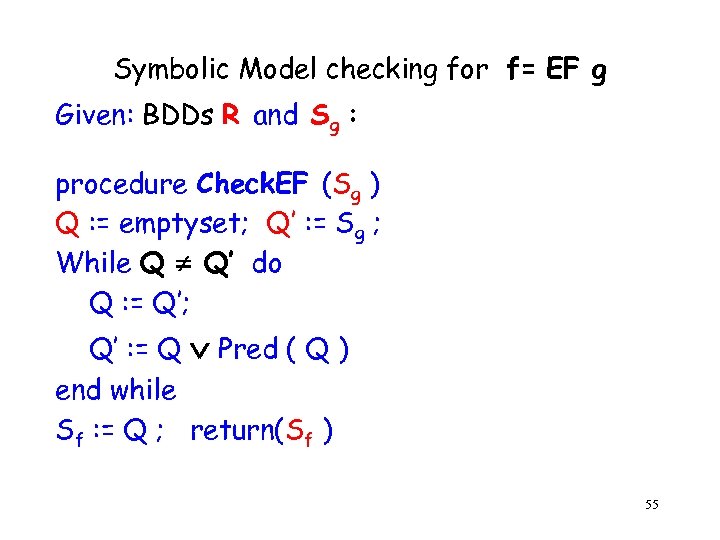
Symbolic Model checking for f= EF g Given: BDDs R and Sg : procedure Check. EF (Sg ) Q : = emptyset; Q’ : = Sg ; While Q Q’ do Q : = Q’; Q’ : = Q Pred ( Q ) end while Sf : = Q ; return(Sf ) 55
State explosion problem revisited • state of the art symbolic model checking can handle effectively designs with a few hundreds of Boolean variables Other solutions for the state explosion problem are needed! 56
SAT-based model checking • Translates the model and the specification to a propositional formula • Uses efficient tools for solving the satisfiability problem Since the satisfiability problem is NPcomplete, SAT solvers are based on heuristics. 57
SAT tools • Using heuristics, SAT tools can solve very large problems fast. • They can handle systems with 1000 variables that create formulas with a few millions of variables. GRASP (Silva, Sakallah) Prover (Stalmark) Chaff (Malik) Mini. SAT 58
The developers of GRASP and Chaff won the 2009 CAV award • for their contribution to model checking 59
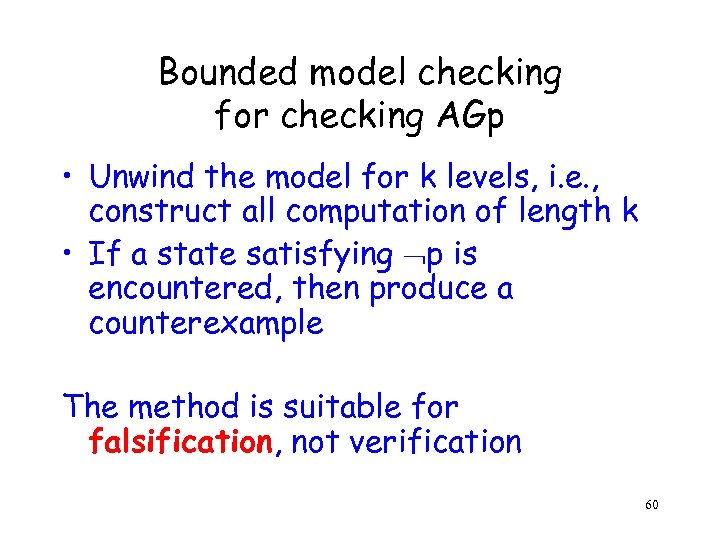
Bounded model checking for checking AGp • Unwind the model for k levels, i. e. , construct all computation of length k • If a state satisfying p is encountered, then produce a counterexample The method is suitable for falsification, not verification 60
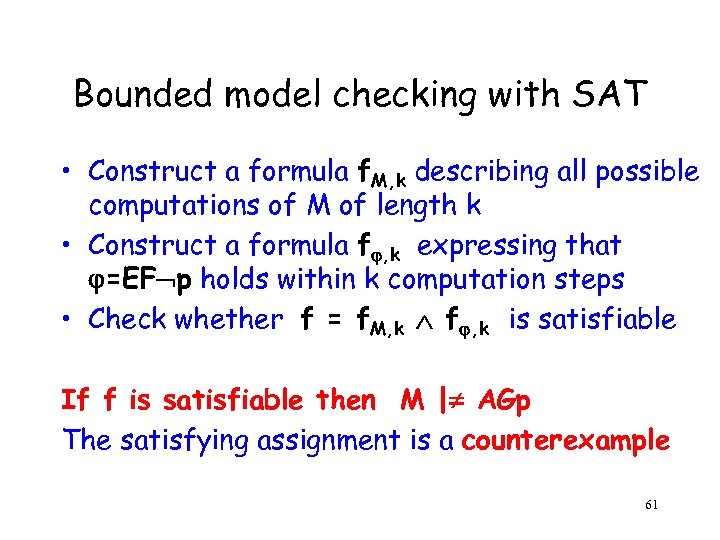
Bounded model checking with SAT • Construct a formula f. M, k describing all possible computations of M of length k • Construct a formula f , k expressing that =EF p holds within k computation steps • Check whether f = f. M, k f , k is satisfiable If f is satisfiable then M | AGp The satisfying assignment is a counterexample 61
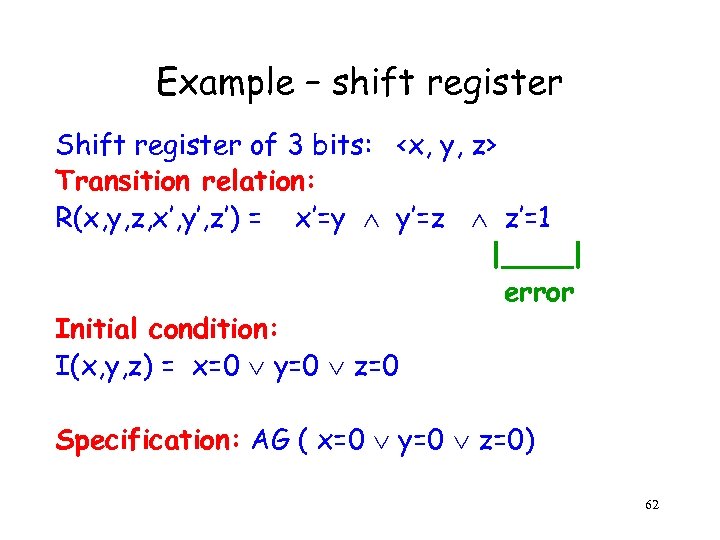
Example – shift register Shift register of 3 bits: <x, y, z> Transition relation: R(x, y, z, x’, y’, z’) = x’=y y’=z z’=1 |____| error Initial condition: I(x, y, z) = x=0 y=0 z=0 Specification: AG ( x=0 y=0 z=0) 62
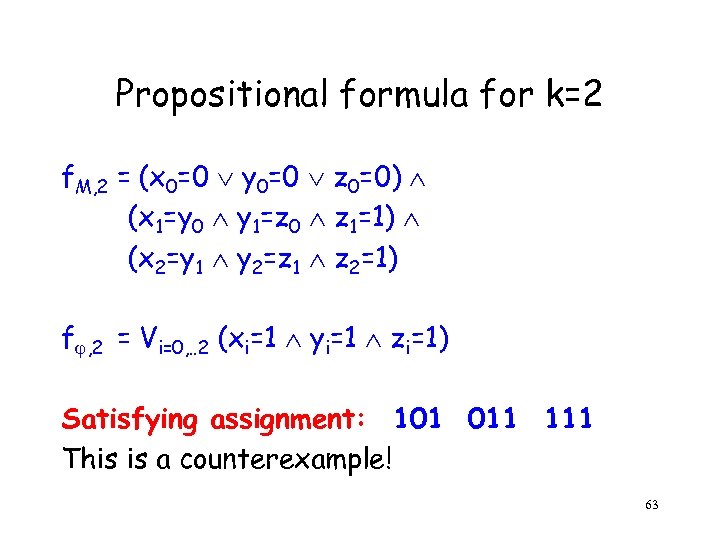
Propositional formula for k=2 f. M, 2 = (x 0=0 y 0=0 z 0=0) (x 1=y 0 y 1=z 0 z 1=1) (x 2=y 1 y 2=z 1 z 2=1) f , 2 = Vi=0, . . 2 (xi=1 yi=1 zi=1) Satisfying assignment: 101 011 111 This is a counterexample! 63
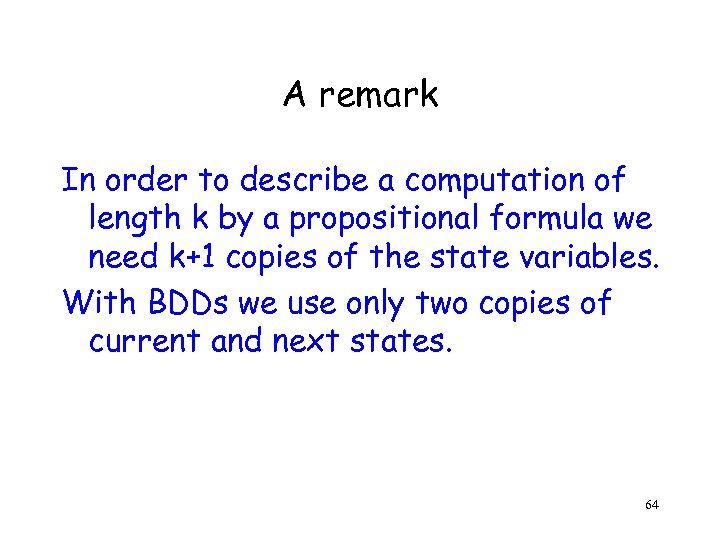
A remark In order to describe a computation of length k by a propositional formula we need k+1 copies of the state variables. With BDDs we use only two copies of current and next states. 64
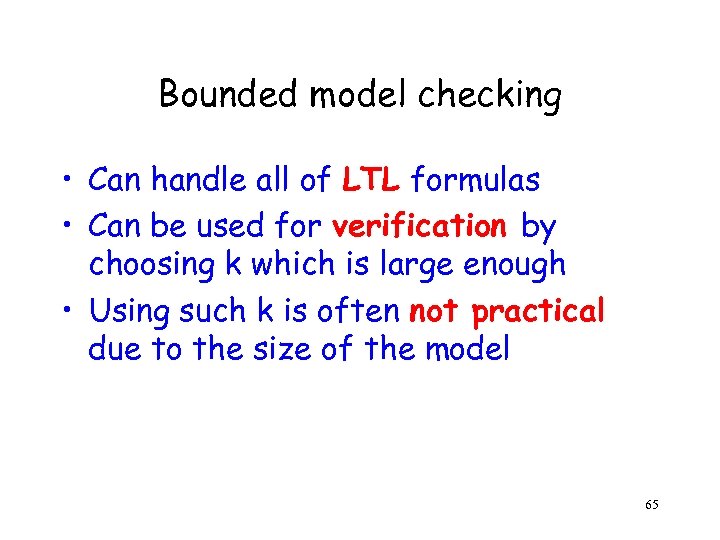
Bounded model checking • Can handle all of LTL formulas • Can be used for verification by choosing k which is large enough • Using such k is often not practical due to the size of the model 65
SAT-based verification • Induction • interpolation 66
Other solutions to the state explosion problem • • • Abstraction Modular verification Partial order reduction Symmetry Distributed model checking 67
References Model Checking • Model checking E. Clarke, O. Grumberg, D. Peled, MIT Press, 1999. Temporal Logic • The Temporal Logic of Programs A. Pnueli, FOCS 1977 68
• BDDs: R. E. Bryant, Graph-based Algorithms for Boolean Function Manipulation, IEEE transactions on Computers, 1986 • BDD-based model checking: J. R. Burch, E. M. Clarke, K. L. Mc. Millan, D. L. Dill, L. J. Hwang, Symbolic Model Checking: 10^20 States and Beyond, LICS’ 90 • SAT-based Bounded model checking: Symbolic model checking using SAT procedures instead of BDDs, A. Biere, A. Cimatti, E. M. Clarke, M. Fujita, Y. Zhu, DAC'99 69

Thank you! 70
Скачать презентацию Model Checking Orna Grumberg Technion Haifa Israel Taiwan
11df2707924425ed63d9baae6c467757.ppt