


 Скачать презентацию Modals Carmen Torres Creative commons What
175466_633753118712860000.pptx
- Количество слайдов: 12
 Modals Carmen Torres © Creative commons
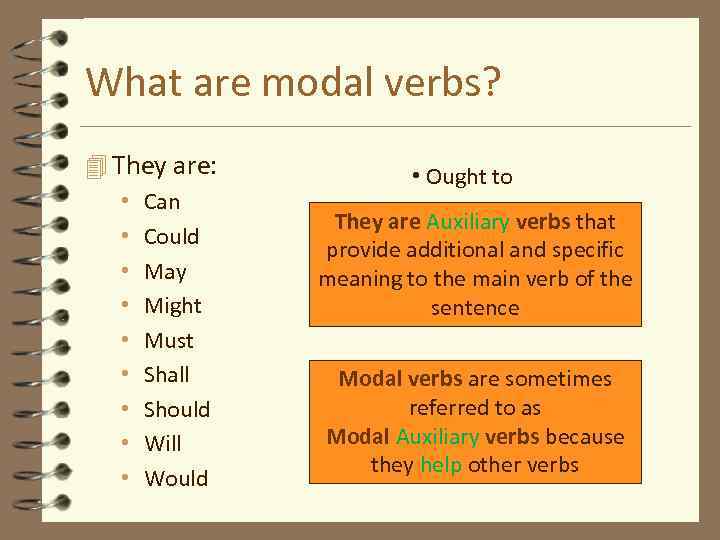 What are modal verbs? 4 They are: • Can • Could • May • Might • Must • Shall • Should • Will • Would • Ought to They are Auxiliary verbs that provide additional and specific meaning to the main verb of the sentence Modal verbs are sometimes referred to as Modal Auxiliary verbs because they help other verbs
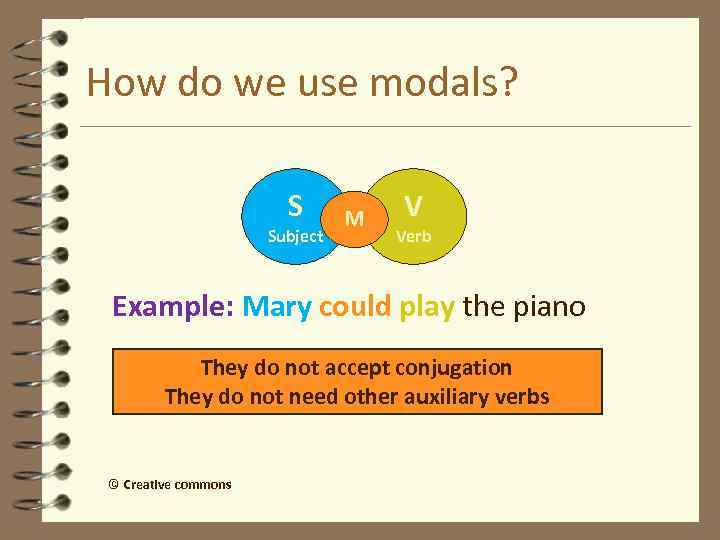 How do we use modals? S Subject M V Verb Example: Mary could play the piano They do not accept conjugation They do not need other auxiliary verbs © Creative commons
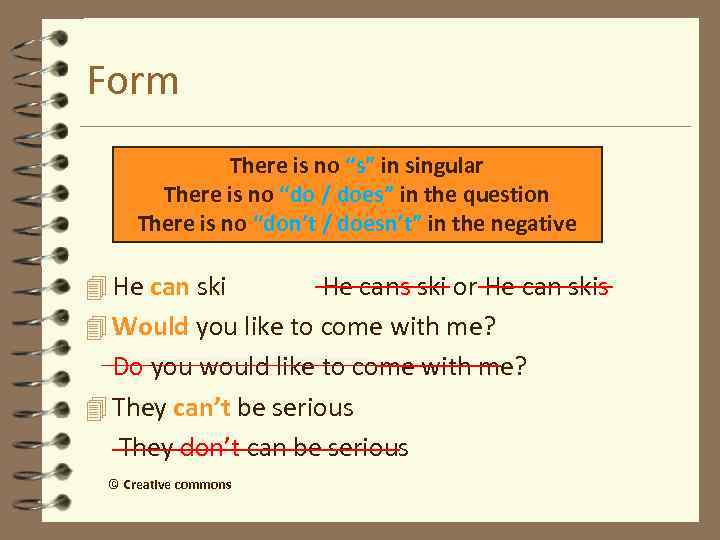 Form There is no “s” in singular There is no “do / does” in the question There is no “don’t / doesn’t” in the negative 4 He can ski He cans ski or He can skis 4 Would you like to come with me? Do you would like to come with me? 4 They can’t be serious They don’t can be serious © Creative commons
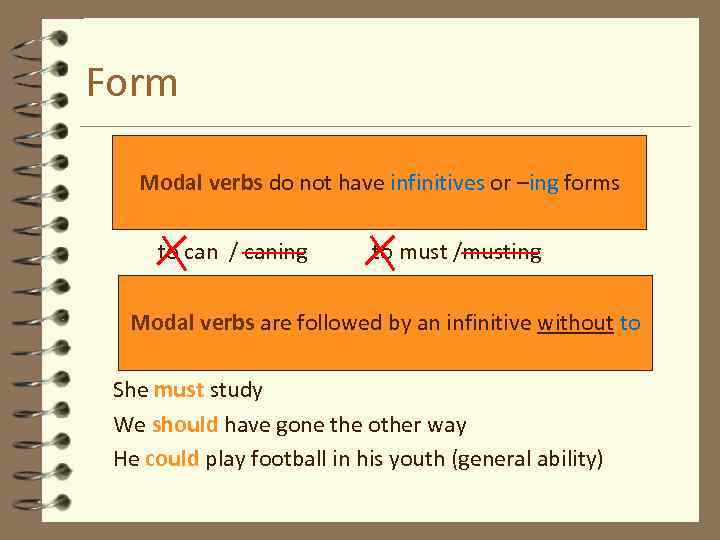 Form Modal verbs do not have infinitives or –ing forms to can / caning to must /musting Modal verbs are followed by an infinitive without to She must study We should have gone the other way He could play football in his youth (general ability)
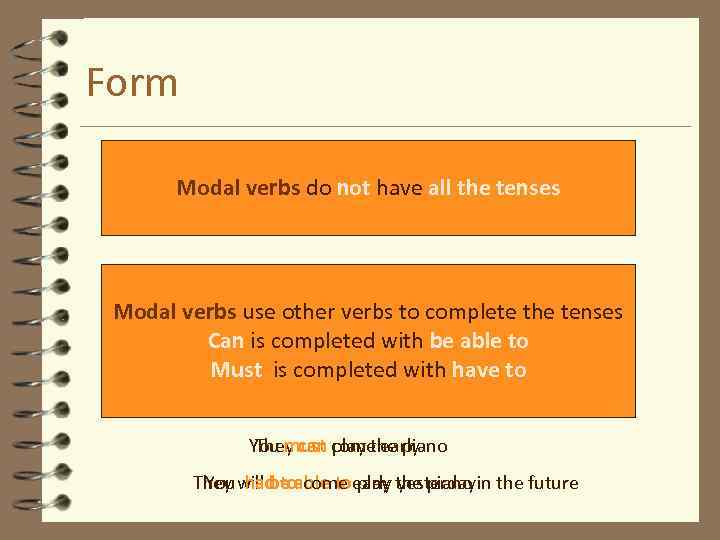 Form Modal verbs do not have all the tenses Modal verbs use other verbs to complete the tenses Can is completed with be able to Must is completed with have to You must come early They can play the piano They will be able toearly the piano in the future You had to come play yesterday
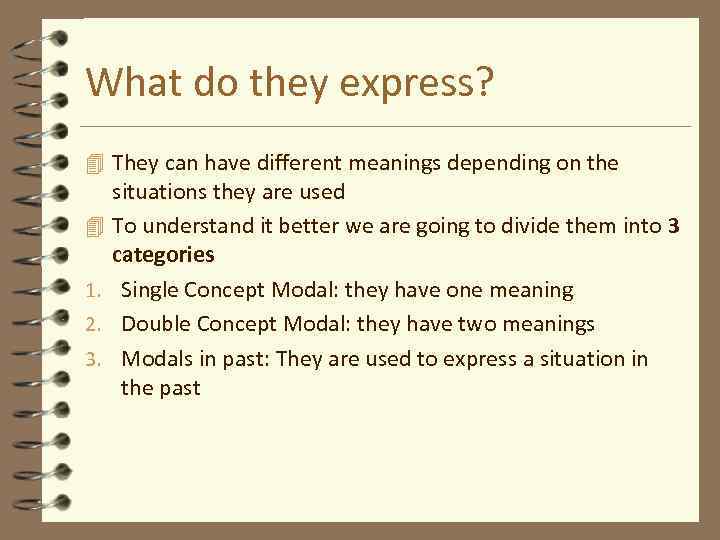 What do they express? 4 They can have different meanings depending on the 4 1. 2. 3. situations they are used To understand it better we are going to divide them into 3 categories Single Concept Modal: they have one meaning Double Concept Modal: they have two meanings Modals in past: They are used to express a situation in the past
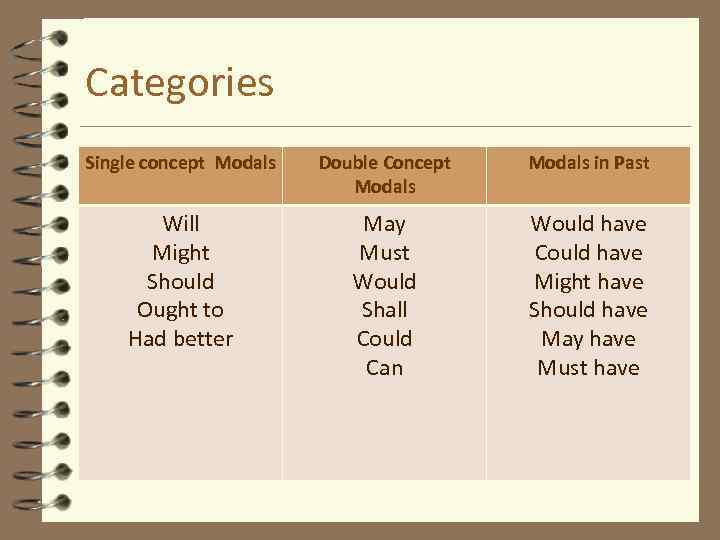 Categories Single concept Modals Double Concept Modals in Past Will Might Should Ought to Had better May Must Would Shall Could Can Would have Could have Might have Should have May have Must have
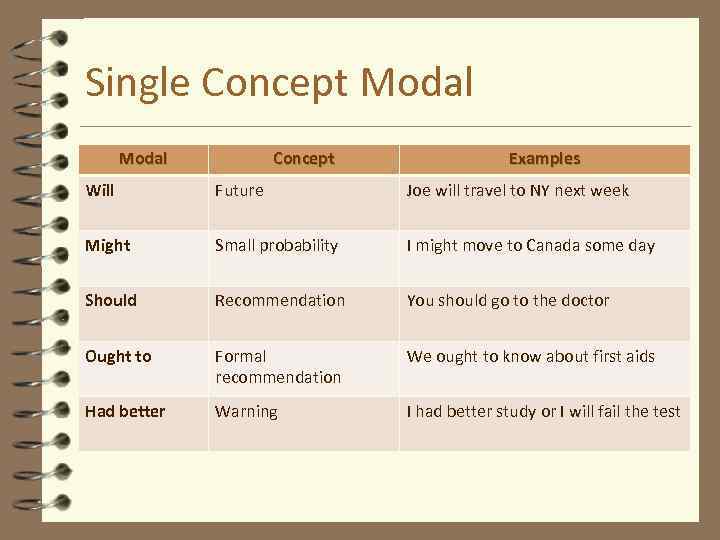 Single Concept Modal Concept Examples Will Future Joe will travel to NY next week Might Small probability I might move to Canada some day Should Recommendation You should go to the doctor Ought to Formal recommendation We ought to know about first aids Had better Warning I had better study or I will fail the test
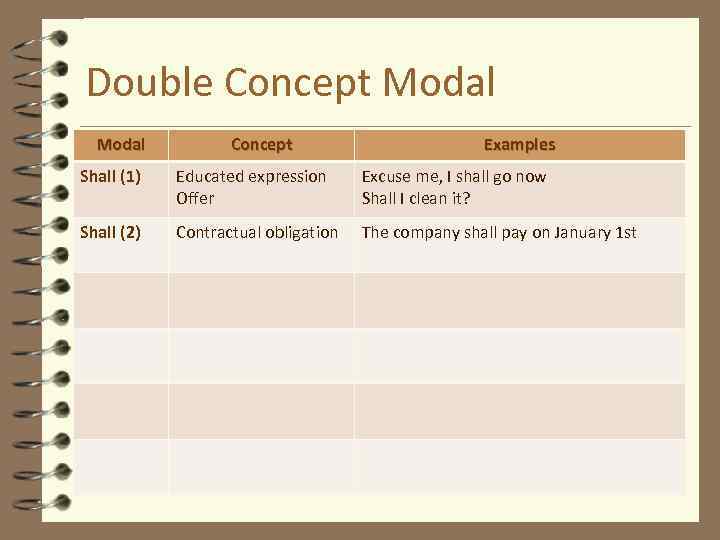 Double Concept Modal Concept Examples Shall (1) Educated expression Offer Excuse me, I shall go now Shall I clean it? Shall (2) Contractual obligation The company shall pay on January 1 st
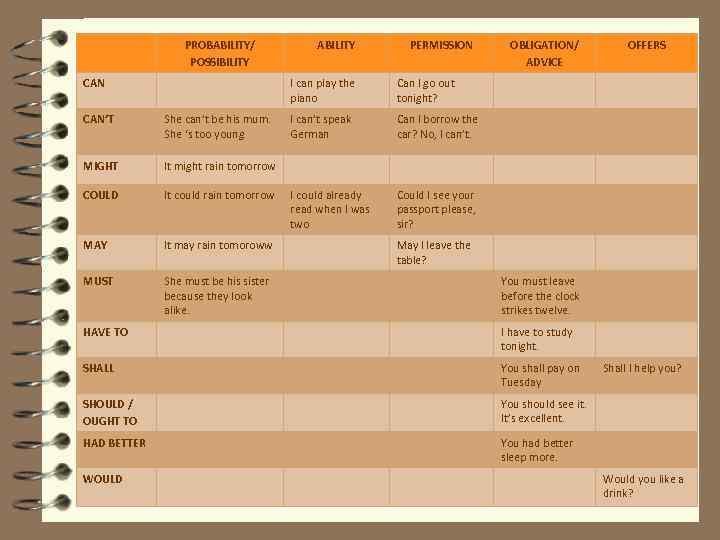 PROBABILITY/ POSSIBILITY CAN ABILITY PERMISSION I can play the piano CAN’T She can’t be his mum. She ‘s too young MIGHT It could rain tomorrow MAY It may rain tomoroww MUST She must be his sister because they look alike. Can I borrow the car? No, I can’t. I could already read when I was two Could I see your passport please, sir? It might rain tomorrow COULD OFFERS Can I go out tonight? I can’t speak German OBLIGATION/ ADVICE May I leave the table? You must leave before the clock strikes twelve. HAVE TO I have to study tonight. SHALL You shall pay on Tuesday SHOULD / OUGHT TO You should see it. It’s excellent. HAD BETTER You had better sleep more. WOULD Shall I help you? Would you like a drink?
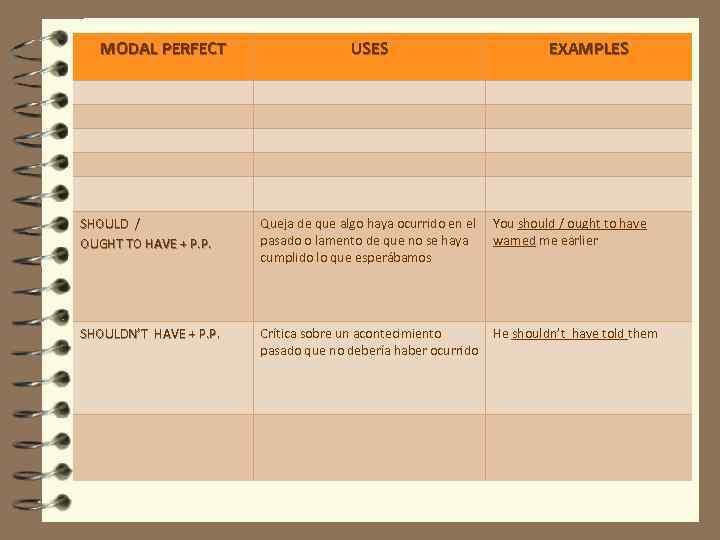 MODAL PERFECT USES EXAMPLES SHOULD / OUGHT TO HAVE + P. P. Queja de que algo haya ocurrido en el pasado o lamento de que no se haya cumplido lo que esperábamos You should / ought to have warned me earlier SHOULDN’T HAVE + P. P. Crítica sobre un acontecimiento pasado que no debería haber ocurrido He shouldn’t have told them