 Скачать презентацию Mobsters in the 1920 s By Nessarose and
9760a71da3f86928ca6b37d90a7cb3f0.ppt
- Количество слайдов: 14



Mobsters in the 1920 s By Nessarose and Sarah
Organized Crime in the 1920 s • Organized crime is defined as organizations that collaborate to make profit through illegal business enterprises using illegal business tactics • EX: Violence employed to secure a monopoly in a certain industry • Organized crime rose enormously in the 1920 s
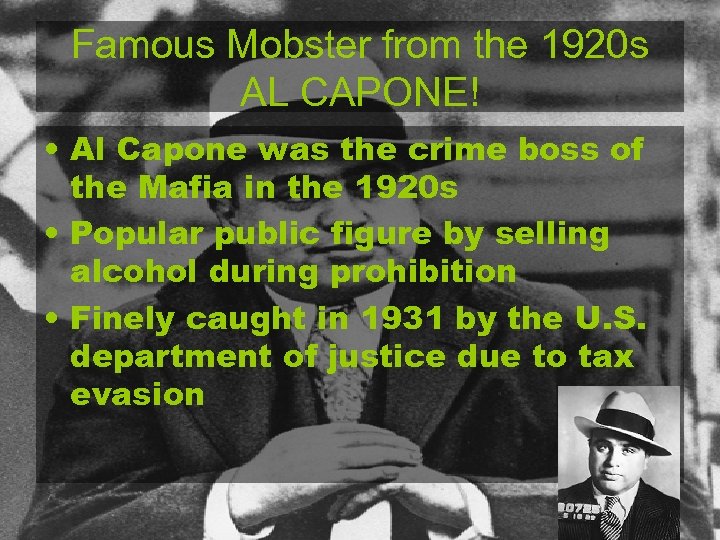
Famous Mobster from the 1920 s AL CAPONE! • Al Capone was the crime boss of the Mafia in the 1920 s • Popular public figure by selling alcohol during prohibition • Finely caught in 1931 by the U. S. department of justice due to tax evasion
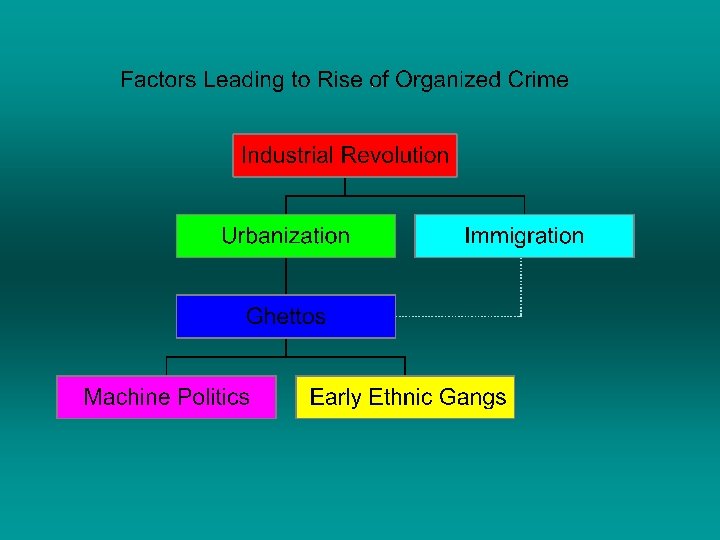
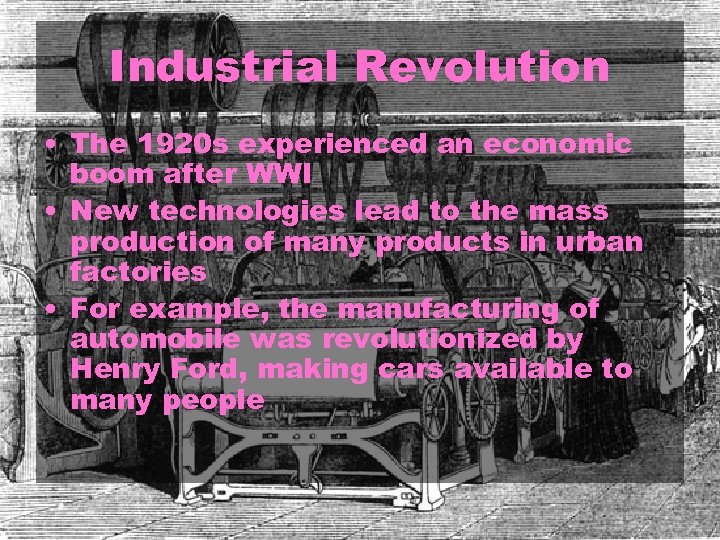
Industrial Revolution • The 1920 s experienced an economic boom after WWI • New technologies lead to the mass production of many products in urban factories • For example, the manufacturing of automobile was revolutionized by Henry Ford, making cars available to many people
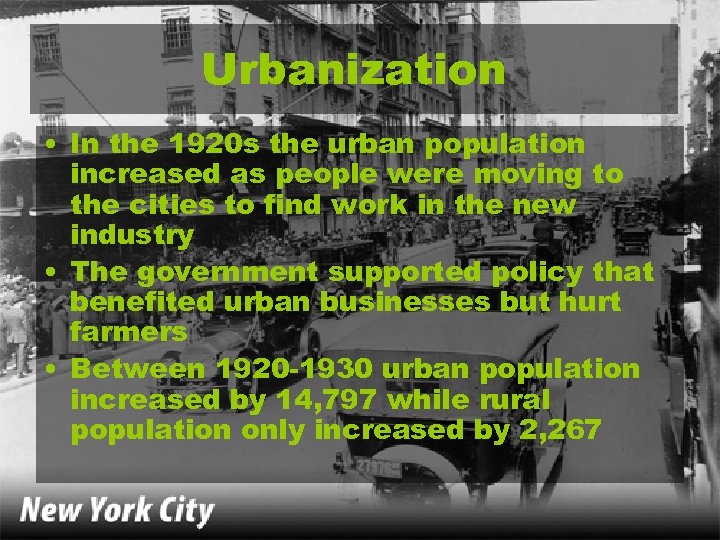
Urbanization • In the 1920 s the urban population increased as people were moving to the cities to find work in the new industry • The government supported policy that benefited urban businesses but hurt farmers • Between 1920 -1930 urban population increased by 14, 797 while rural population only increased by 2, 267
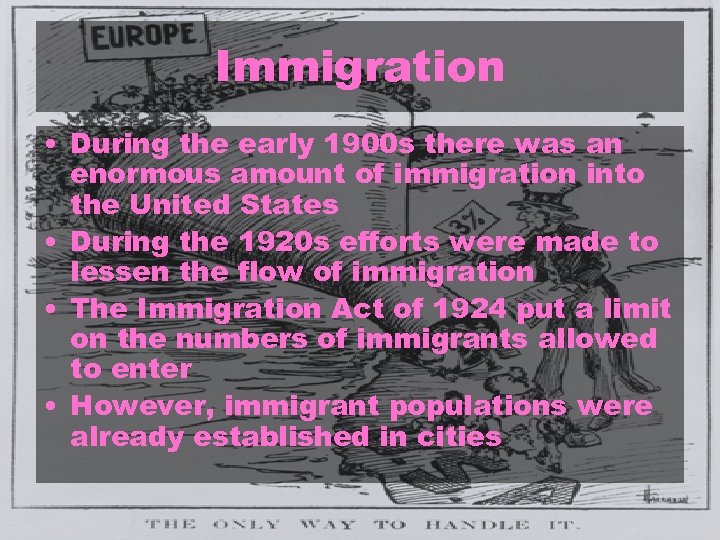
Immigration • During the early 1900 s there was an enormous amount of immigration into the United States • During the 1920 s efforts were made to lessen the flow of immigration • The Immigration Act of 1924 put a limit on the numbers of immigrants allowed to enter • However, immigrant populations were already established in cities
Ghettos • Ghettos and slums were created to house all the new factory workers • Migrant and Immigrants were forced to live in these urban ghettos and were separated by ethnic group • Many conservative (native born) American despised the culture and traditions of these new immigrants
Ethnic Gangs and Machine Politics • In these urban ghettos, small gangs formed between ethnic groups and families. • Street gang leaders were employed by politicians to secure votes through campaigning and violence • Machine politicians used these corrupt methods to win elections
THE PROHIBITION
The Prohibition • The 18 th amendment, which banned the sale, transportation, and production of alcohol, sparked an colossal increase in organized crime • Suddenly gangs could provide a service, alcohol, that made them extremely popular in their communities • Many mobsters, such as Al Capone, became admired celebrities to some people • “If I break the law, my customers… some of the best people in Chicago, are a guilty as me” ~Al Capone
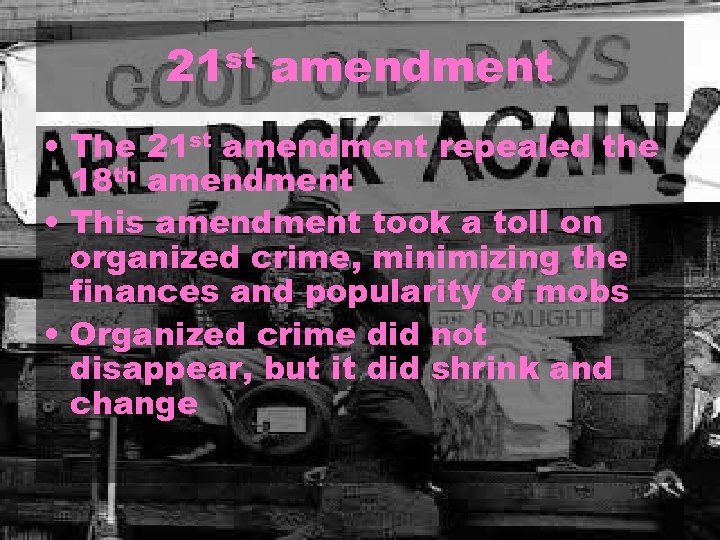
21 st amendment • The 21 st amendment repealed the 18 th amendment • This amendment took a toll on organized crime, minimizing the finances and popularity of mobs • Organized crime did not disappear, but it did shrink and change
Works Cited • • • • 1. "Prohibition. " American History. 2008. ABC-CLIO. 22 Oct. 2008 <http: //www. americanhistory. abc-clio. com>. Summary of prohibition 2. "organized crime. " American History. 2008. ABC-CLIO. 22 Oct. 2008 <http: //www. americanhistory. abc-clio. com>. Summary of historical organized crime and definition 3. "Al Capone. " American History. 2008. ABC-CLIO. 22 Oct. 2008 <http: //www. americanhistory. abc-clio. com>. Summary of Al Capone and his role as a gang leader 4. "Eighteenth Amendment. " American History. 2008. ABC-CLIO. 22 Oct. 2008 <http: //www. americanhistory. abc-clio. com>. Primary source copy of the 18 th amendment prohibiting alcohol usage, sale ect 5. "crime. " American History. 2008. ABC-CLIO. 22 Oct. 2008 <http: //www. americanhistory. abc-clio. com>. Contained a sections on the rising crime in the 1920 because of urbanization 6. "Federal Bureau of Investigation. " American History. 2008. ABC-CLIO. 22 Oct. 2008 <http: //www. americanhistory. abc-clio. com>. Summary about how the FBI grew in the 1920 s in response to crime rise 7. "Population, Urban and Rural, 1790 -2000. " American History. 2008. ABC-CLIO. 22 Oct. 2008 <http: //www. americanhistory. abcclio. com>. A chart showing the population of select decades in America from 1790 -2004 with urban population and rural population noted 8. "urbanization. " American History. 2008. ABC-CLIO. 22 Oct. 2008 <http: //www. americanhistory. abc-clio. com>. A summary of urbanization throughout American history 9. "Roaring Twenties (Overview). " American History. 2008. ABC-CLIO. 22 Oct. 2008 <http: //www. americanhistory. abc-clio. com>. A summary of the 1920 s 10. "Capone, Al. " Online Photograph. Encyclopædia Britannica Online School Edition. 25 Oct. 2008 < http: //school. eb. com/eb/art-52186>. 11. “Organized Crime”. Era of Play: 27 April. 2005. Stevenson University. 23 October. 2008. http: //www 3. vjc. edu/academics/faculty/fgianna/art 321/students/section_02/rebecca/homepage. htm 12. Rood, Karen L. Bruccoli, Matthew J. Layman, Richard. American Decades; 1920 -1929. Detroit, MI: Gale Research Inc, 1996. • Music: “Begin the Benguine” Artie Shaw • •
Works Cited (Images) • • • Chicago Historical Society. "Jury Convicts Capine. " Photo Gallery. 27 oct 2008 www. chicagohs. org/history/ capone/photos 12. html (slide 1) "Why was Prohibition repealed in december 1933? . " The great depression. 27 oct 2008 www. thegreatdepression. co. uk/ (slide 2) Mangesh&Jason. "LIfestyles of the Rich and famous. . . Criminals. " Mental_Floss. 3/5/2008. 26 oct 2008<www. mentalfloss. com/ blogs/archives/12905>. ( slide 3) Britannica. "power loom” Britannica. Verizon Wireless. 27 oct 2008< http: //www. britannica. com/EBchecked/topic-art/347754/92691/The-invention-of-power-looms-atthe-time-of-the> (slide 5) "Encyclopedia: Lincoln, Abraham. " 2004. The History Channel website. 27 OCT 2008, 12: 25 < http: //www. history. com/encyclopedia. do? article. Id=227323. > (slide 6) "ambivalent interationalists. " U. S. Diplomacy. 27 Oct 2008 www. usdiplomacy. org/ exhibit/ambivalent. php> (slide 7) Sheena. "I think this is a ghetto. . . " City-Data. com. 12/29/2007. 27 Oct 2008 <http: //www. citydata. com/forum/phoenix-area/201527 -got-some-storys-hood-4. html> (slide 8) "Stock Vector: World Flags. " i. Stockphoto. 27 Oct 2008 http: //www. istockphoto. com/file_closeup//4112262 -world-flags. php? id=4112262 (slide 9) Fisher, George R. "OUTLAWS. " Philadelphia reflections. Stumble. Upon. 27 Oct 2008 <www. philadelphia-reflections. com/ topic/10. htm> (slide 11) "Remember: December 5 th is Repeal Day!" Ardenstone. 12/2/2007. 27 Oct 2008 <www. ardenstone. com/ 2007/12/> (slide 12)
Скачать презентацию Mobsters in the 1920 s By Nessarose and
9760a71da3f86928ca6b37d90a7cb3f0.ppt