


 Скачать презентацию MN Tracking Network From Vision to Impact Tracking
fe4010f526c409ac98fa3f99a63671b1.ppt
- Количество слайдов: 43
 MN Tracking Network From Vision to Impact Tracking Facilitated Discussion May 15, 2012
 Road Map • Minnesota Tracking Network • Tracking in Action (examples) • Questions
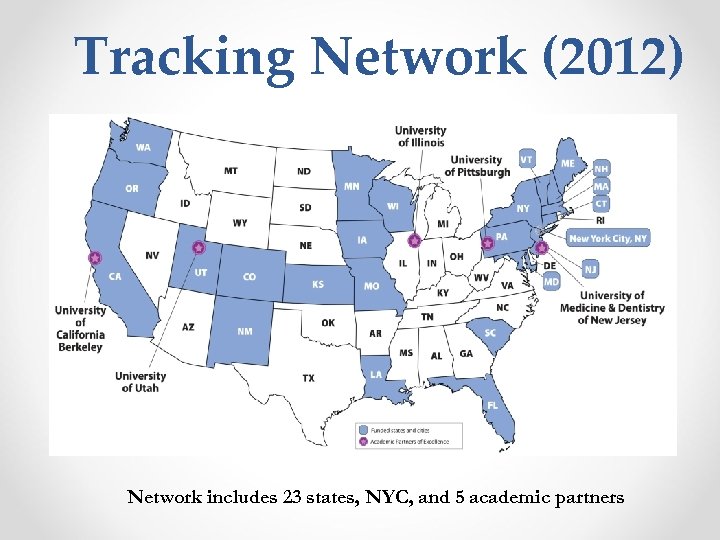 Tracking Network (2012) Network includes 23 states, NYC, and 5 academic partners
 MN Legislation • In 2007 the MN Legislature established the MN Environmental Health Tracking and Biomonitoring Program o External Advisory Panel • Goals similar to National Tracking Network; with the addition of 4 biomonitoring pilot projects
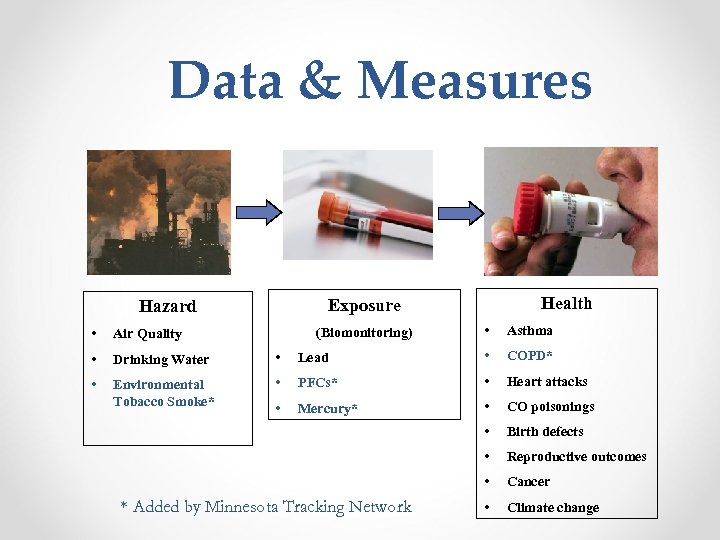 Data & Measures Health Exposure Hazard • Asthma Lead • COPD* • PFCs* • Heart attacks • Mercury* • CO poisonings • Birth defects • Reproductive outcomes • Cancer • Climate change (Biomonitoring) • Air Quality • Drinking Water • • Environmental Tobacco Smoke* * Added by Minnesota Tracking Network
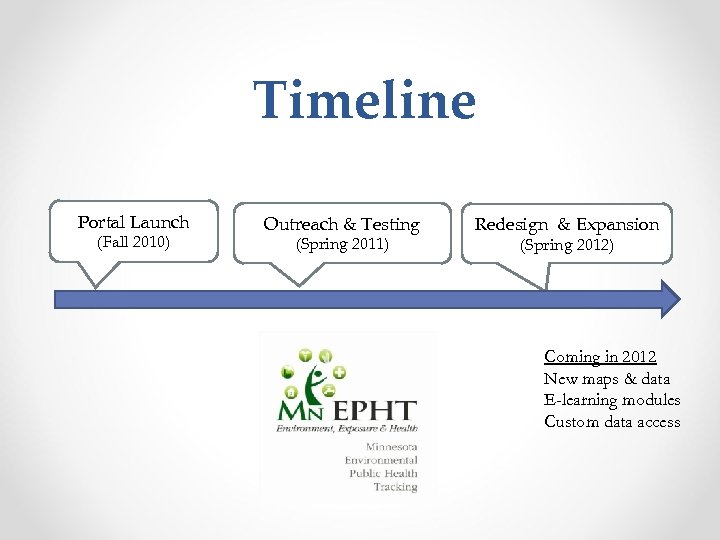 Timeline Portal Launch (Fall 2010) Outreach & Testing (Spring 2011) Redesign & Expansion (Spring 2012) Coming in 2012 New maps & data E-learning modules Custom data access
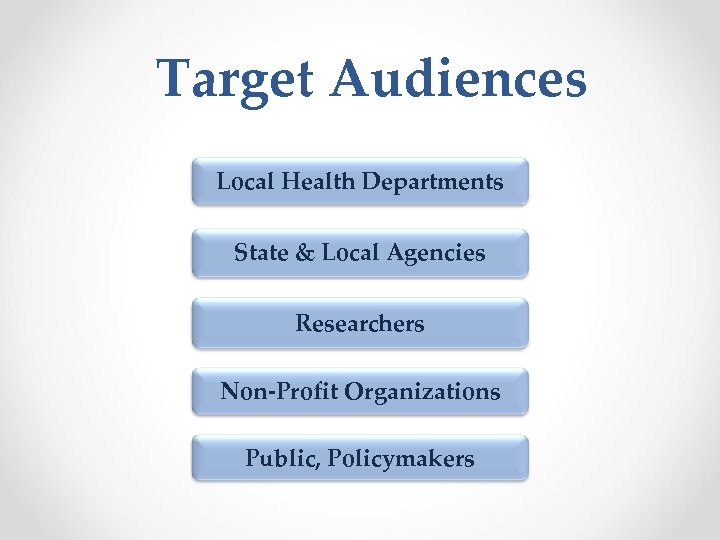 Target Audiences Local Health Departments State & Local Agencies Researchers Non-Profit Organizations Public, Policymakers
 Audiences (cont’d) • • Local Public Health Association of MN LHD data user groups City and county elected officials Legislators; house/senate research staff MN Reference Library MPCA, MDA American Lung Association MN Cancer Alliance
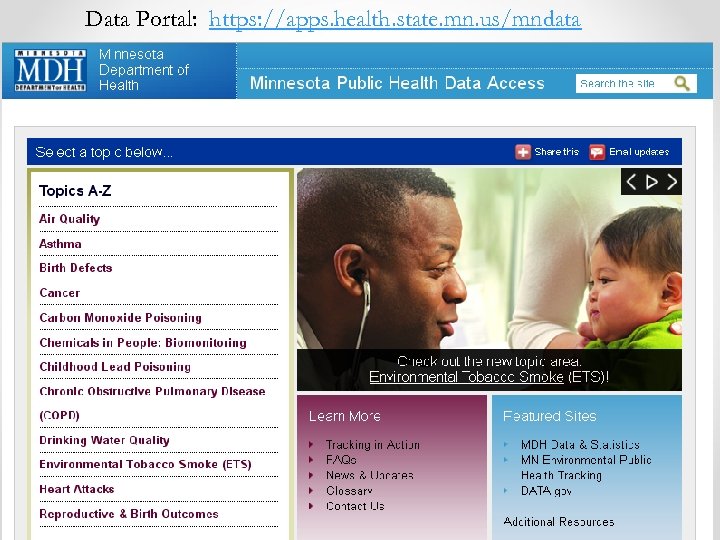 Data Portal: https: //apps. health. state. mn. us/mndata
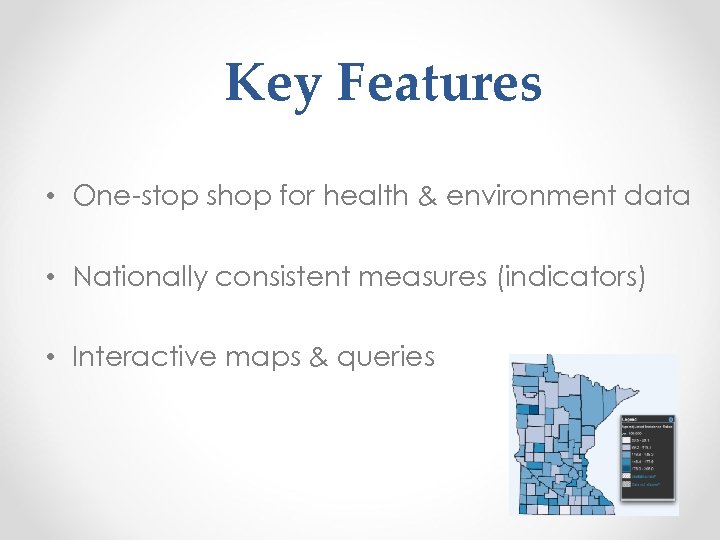 Key Features • One-stop shop for health & environment data • Nationally consistent measures (indicators) • Interactive maps & queries
 Outreach Tools • • • Webinars & demonstrations Seminars Email updates Facebook, Twitter News articles
 Usability Testing • User-centered testing (interviews) to evaluate portal content • Analyze data; look for patterns; make enhancements
 Lessons Learned • Avoid long titles • Use plain language • Focus on top tasks
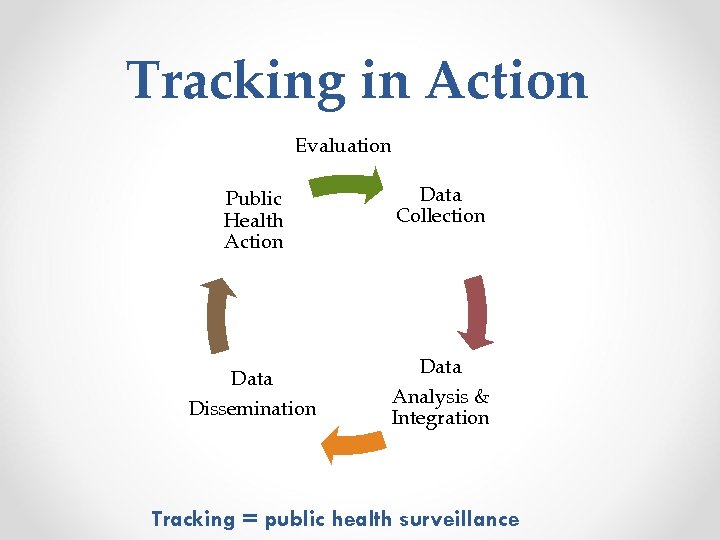 Tracking in Action Evaluation Public Health Action Data Dissemination Data Collection Data Analysis & Integration Tracking = public health surveillance
 Tracking in Action • Use data to evaluate policy: carbon monoxide poisonings o CO poisonings result in hospitalizations, emergency department visits, and deaths o In 2007 -2009 MN passed a new CO alarm law (MS 299 F. 50 to 299 F. 51) o Tracking data is used to evaluate trends & effectiveness of policy
 Tracking in Action • Use data to evaluate priorities: assessment & planning o We are facing challenging economic times; assessment and planning process requires tough choices o Tracking data is used to evaluate public health priorities; identify vulnerable areas/populations
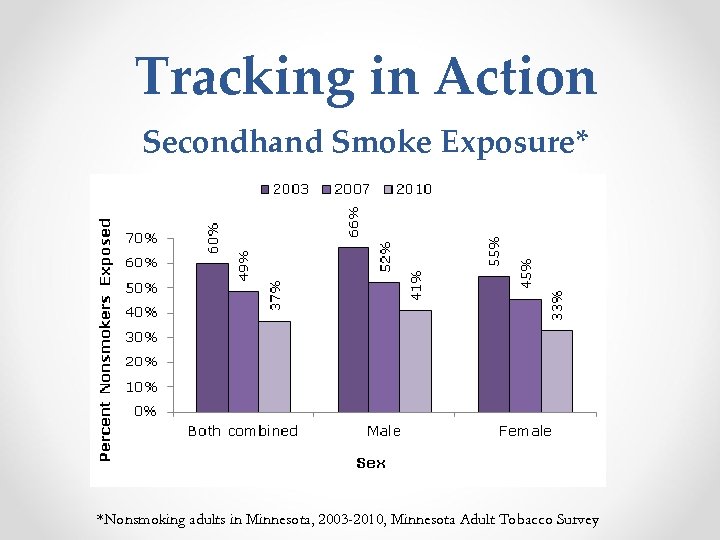 Tracking in Action Secondhand Smoke Exposure* *Nonsmoking adults in Minnesota, 2003 -2010, Minnesota Adult Tobacco Survey
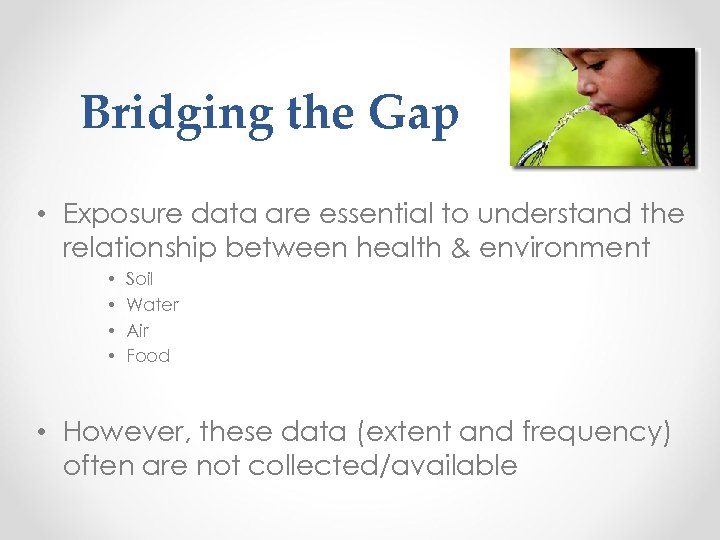 Bridging the Gap • Exposure data are essential to understand the relationship between health & environment • • Soil Water Air Food • However, these data (extent and frequency) often are not collected/available
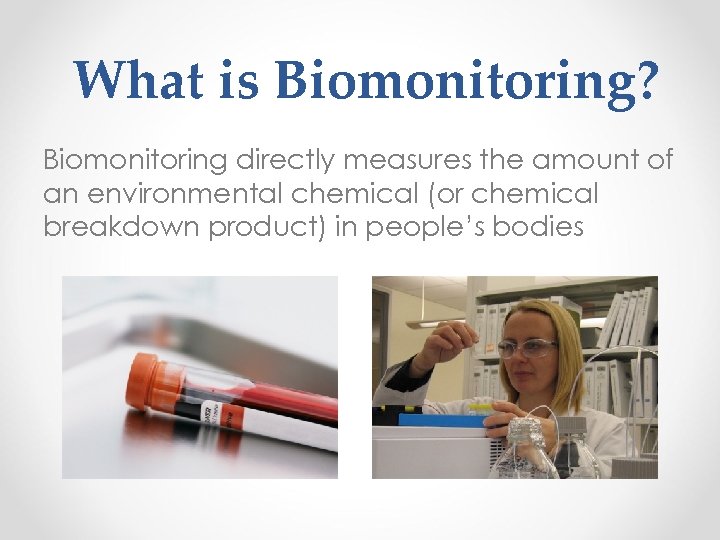 What is Biomonitoring? Biomonitoring directly measures the amount of an environmental chemical (or chemical breakdown product) in people’s bodies
 Use in Public Health Practice • Track trends over time • Identify disparities in exposure • Evaluate interventions to reduce exposure • Set priorities for public health action, research, and policy
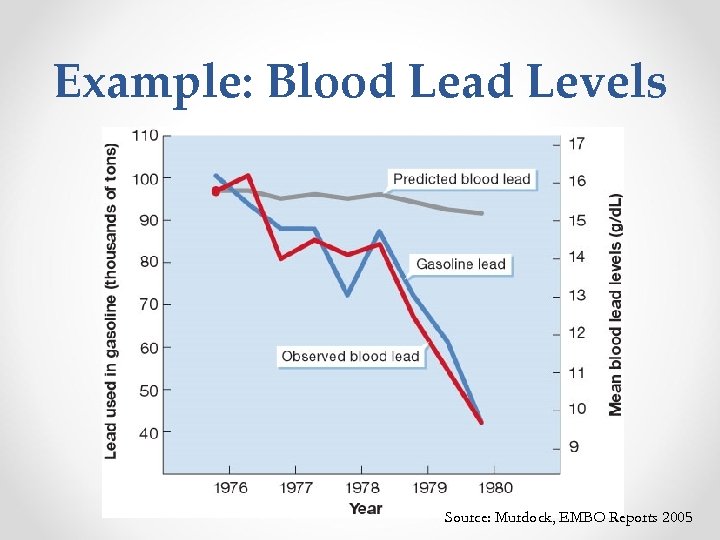 Example: Blood Lead Levels Source: Murdock, EMBO Reports 2005
 Biomonitoring in MN Environmental Health Tracking and Biomonitoring (MN Statutes 144. 995144. 998) • MDH will conduct a pilot biomonitoring program of 4 projects in communities “likely to be exposed” • Develop recommendations for an ongoing state biomonitoring program
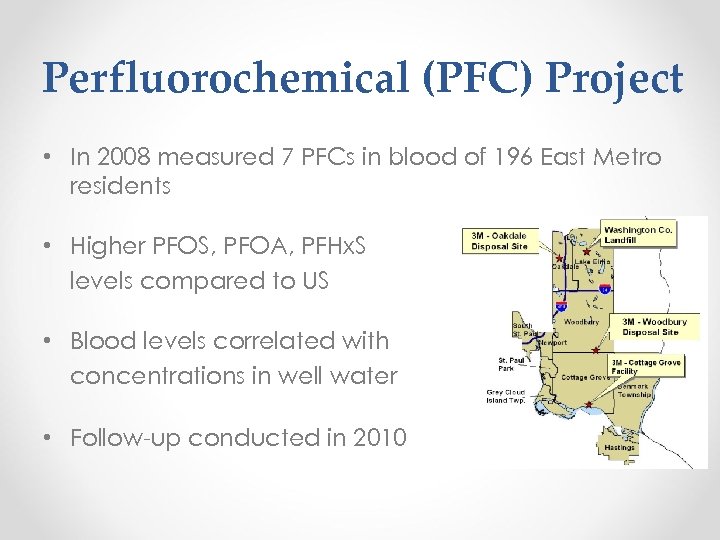 Perfluorochemical (PFC) Project • In 2008 measured 7 PFCs in blood of 196 East Metro residents • Higher PFOS, PFOA, PFHx. S levels compared to US • Blood levels correlated with concentrations in well water • Follow-up conducted in 2010
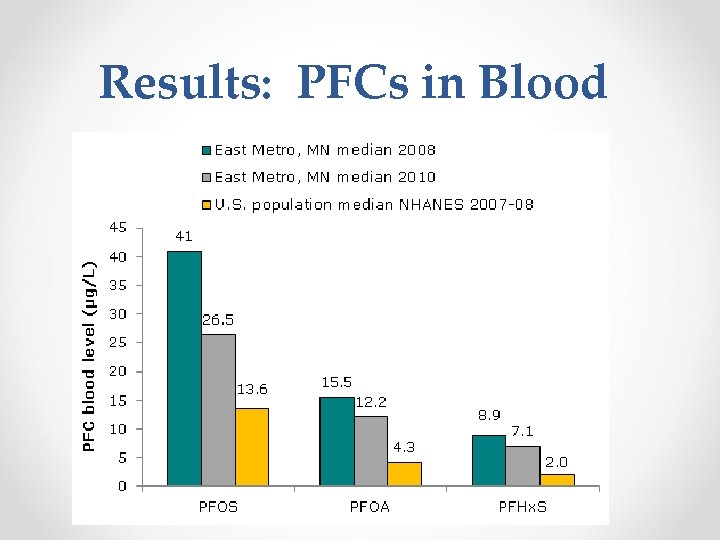 Results: PFCs in Blood
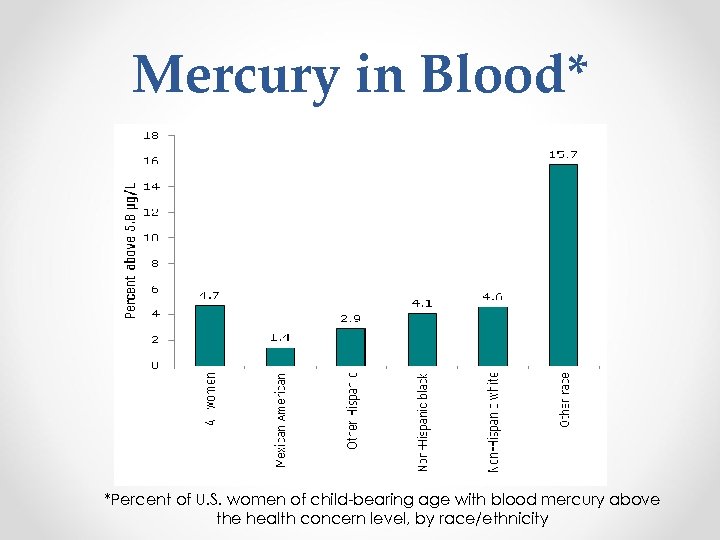 Mercury in Blood* *Percent of U. S. women of child-bearing age with blood mercury above the health concern level, by race/ethnicity
 Biomonitoring Programs • CDC’s National Biomonitoring Program (NHANES) • State/local programs: Minnesota, California, Washington, New York City http: //www. cdc. gov/exposurereport/
 Next Steps • Expand biomonitoring data on portal • Maintain program capacity • Conduct strategic planning for targeted population exposure tracking o o Gather input from stakeholders Focus on children and pregnant women Prioritize chemicals Recommend ongoing program for MN
 Measuring Impact: Air quality and Health • Air quality is associated with a variety of adverse health outcomes • Exposures to fine particles are a primary driver of air pollution alerts in MN o Sources include: cars, trucks, buses, construction equipment, electric generators, wood-burning and wildfires, coal and oil industries
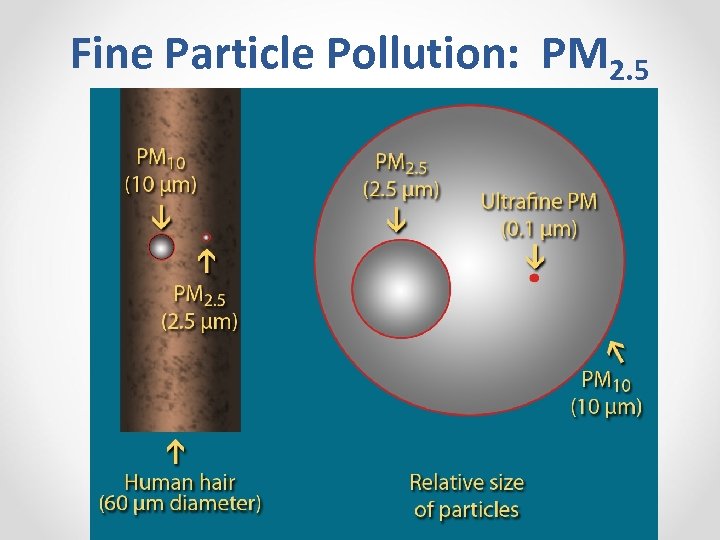 Fine Particle Pollution: PM 2. 5
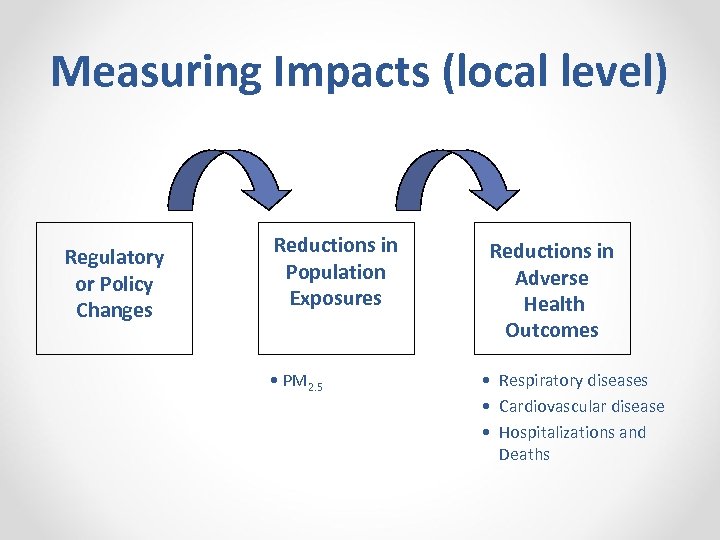 Measuring Impacts (local level) Regulatory or Policy Changes Reductions in Population Exposures • PM 2. 5 Reductions in Adverse Health Outcomes • Respiratory diseases • Cardiovascular disease • Hospitalizations and Deaths
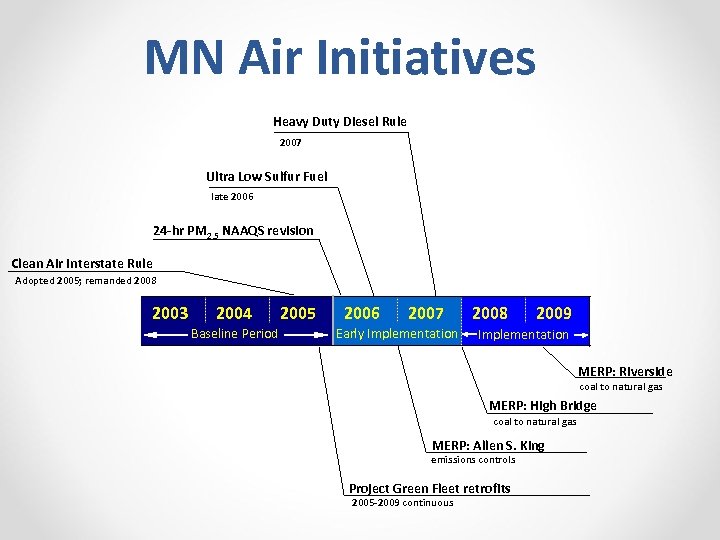 MN Air Initiatives Heavy Duty Diesel Rule 2007 Ultra Low Sulfur Fuel late 2006 24 -hr PM 2. 5 NAAQS revision Clean Air Interstate Rule Adopted 2005; remanded 2008 2003 2004 Baseline Period 2005 2006 2007 Early Implementation 2008 2009 Implementation MERP: Riverside coal to natural gas MERP: High Bridge coal to natural gas MERP: Allen S. King emissions controls Project Green Fleet retrofits 2005 -2009 continuous
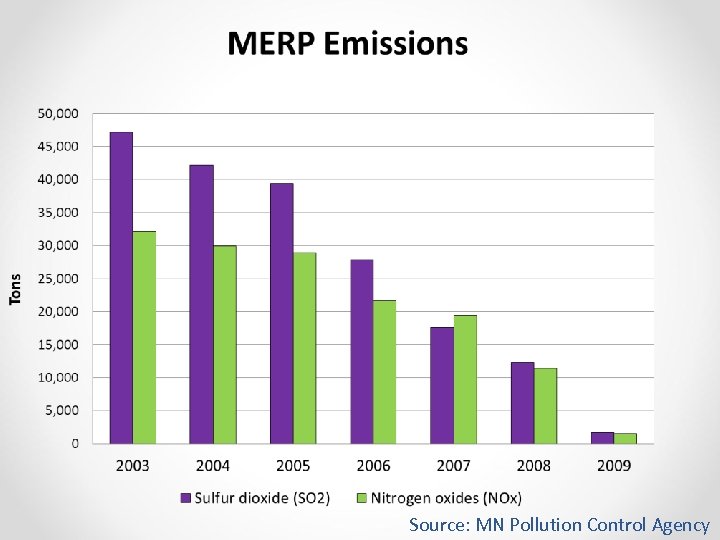 Source: MN Pollution Control Agency
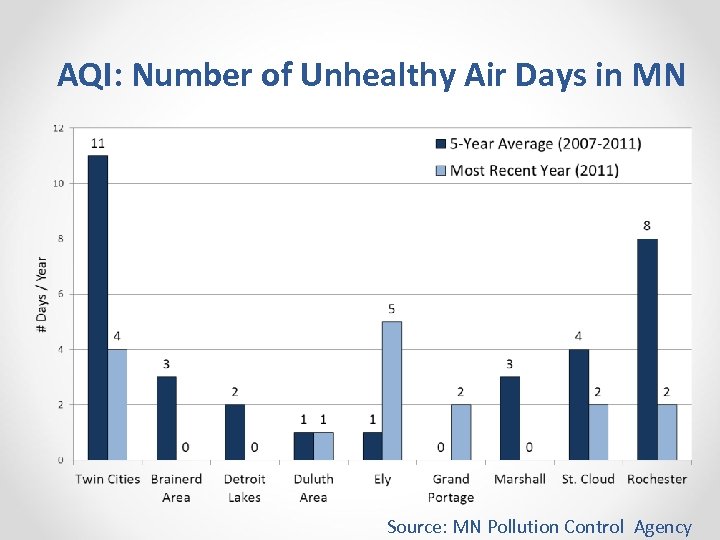 AQI: Number of Unhealthy Air Days in MN Source: MN Pollution Control Agency
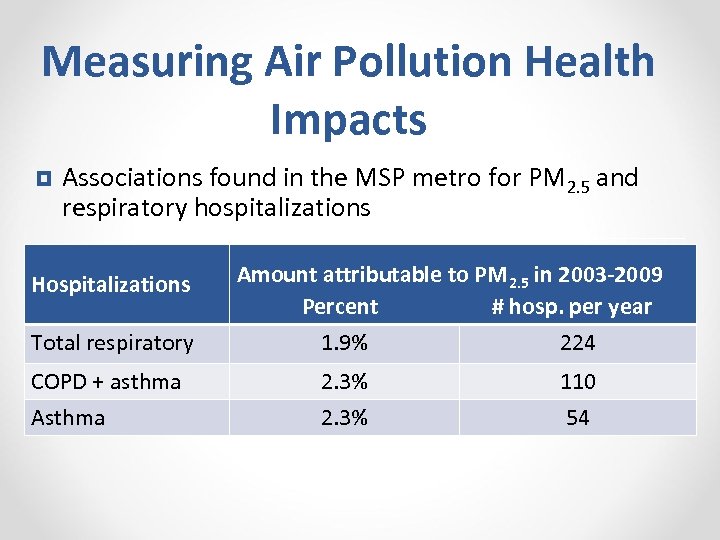 Measuring Air Pollution Health Impacts ¥ Associations found in the MSP metro for PM 2. 5 and respiratory hospitalizations Hospitalizations Amount attributable to PM 2. 5 in 2003 -2009 Percent # hosp. per year Total respiratory 1. 9% 224 COPD + asthma 2. 3% 110 Asthma 2. 3% 54
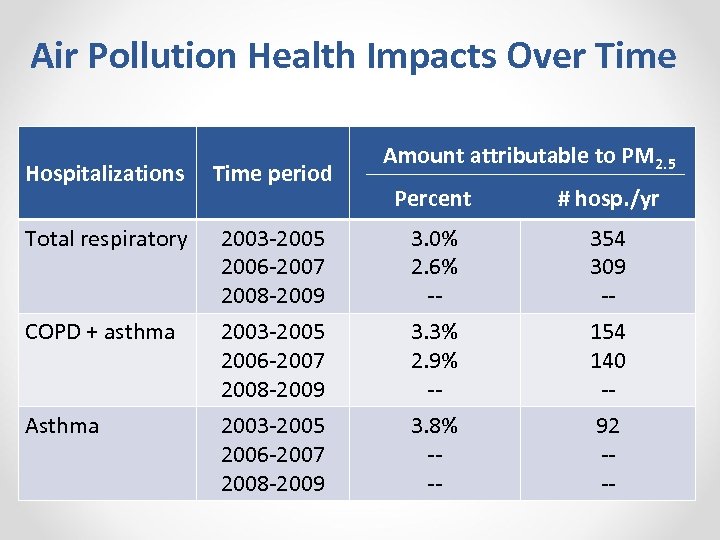 Air Pollution Health Impacts Over Time Hospitalizations Time period Total respiratory Amount attributable to PM 2. 5 Percent # hosp. /yr 2003 -2005 2006 -2007 2008 -2009 3. 0% 2. 6% -- 354 309 -- COPD + asthma 2003 -2005 2006 -2007 2008 -2009 3. 3% 2. 9% -- 154 140 -- Asthma 2003 -2005 2006 -2007 2008 -2009 3. 8% --- 92 ---
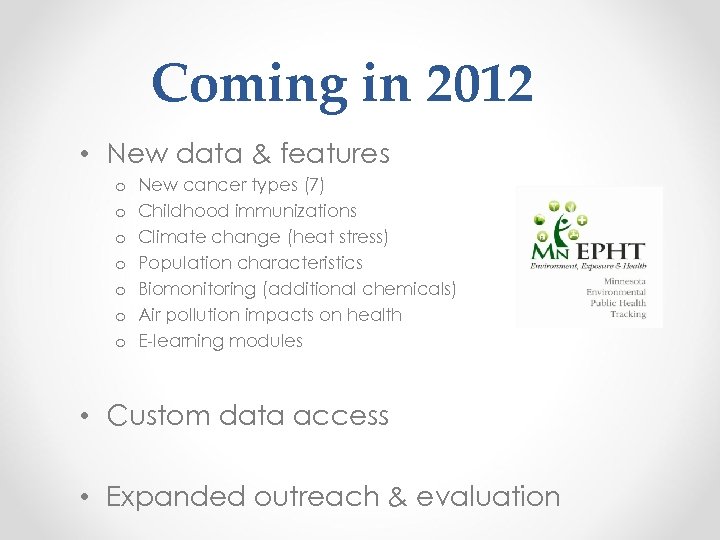 Coming in 2012 • New data & features o o o o New cancer types (7) Childhood immunizations Climate change (heat stress) Population characteristics Biomonitoring (additional chemicals) Air pollution impacts on health E-learning modules • Custom data access • Expanded outreach & evaluation
 Evaluating New Data Topics • • • Developmental disabilities (autism) Pesticide poisonings Private well water (arsenic) Radon Smoking, obesity
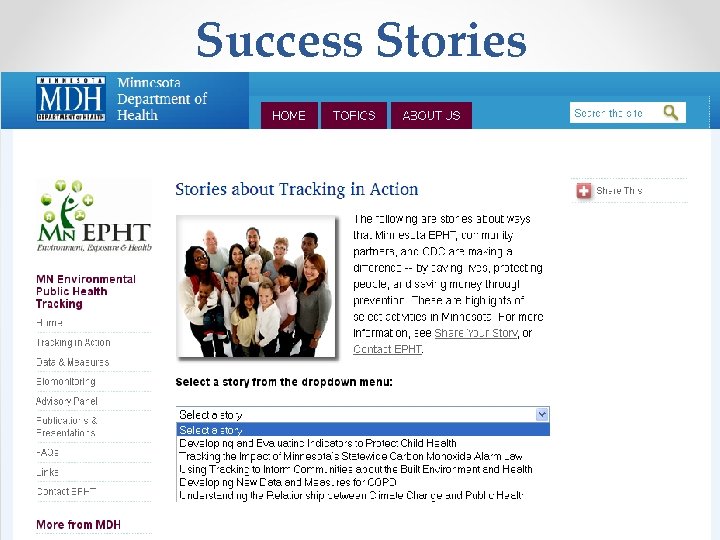 Success Stories
 Vision • Access to broad public health data sets • Inform public health actions; evaluate effectiveness • Promote healthy choices; protect future generations
 Keeping Informed • Subscribe for email updates • Attend seminars (quarterly) • Request a demonstration
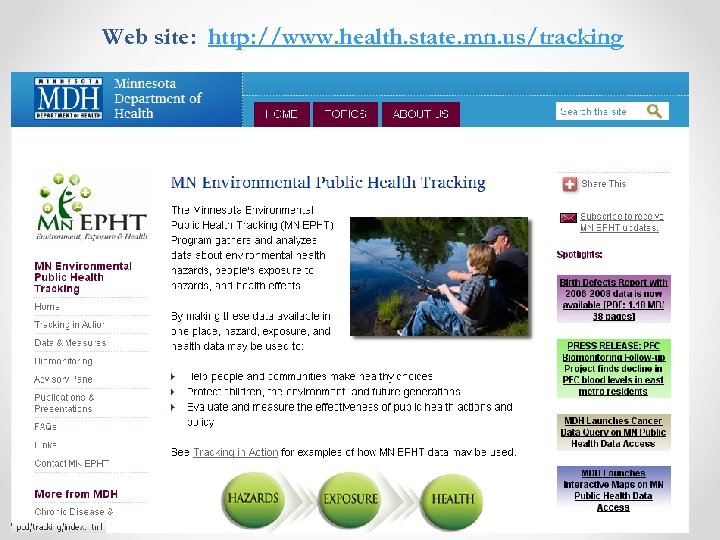 Web site: http: //www. health. state. mn. us/tracking
 Contributors (many!) • Data stewards (MDH, MPCA) • National Tracking Network (CDC, grantees) • LPHA, LHDs, NACCHO
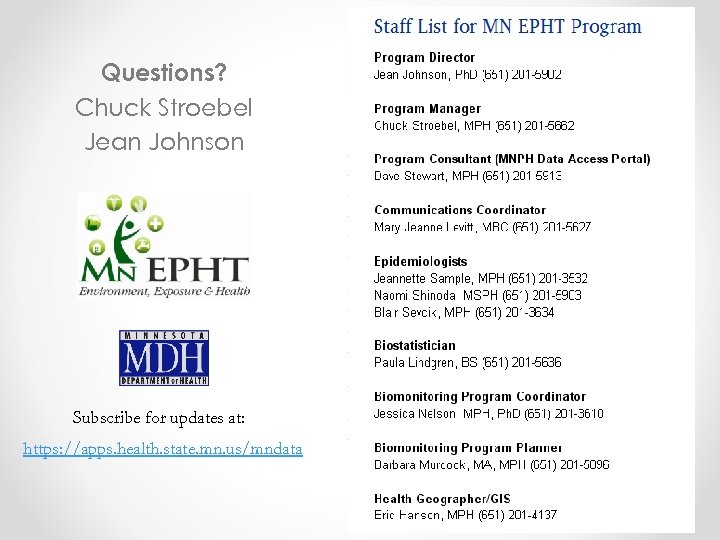 Questions? Chuck Stroebel Jean Johnson Subscribe for updates at: https: //apps. health. state. mn. us/mndata