


 Скачать презентацию Misuse and Exhaustion Intro to IP Prof
c2cb501ed95129e3a475f2125aeef6b9.ppt
- Количество слайдов: 54
 Misuse and Exhaustion Intro to IP – Prof Merges 2. 5. 09
 What can a patentee legitimately do to exercise control over a technology? • Licensing restrictions: conditions on use of a patented item • Misuse: does such a restriction exceed the market power appropriate to the patent? • Exhaustion: is such a restriction prevented by initial sale of the patented item?
 Defenses: Antitrust/Misuse • Patents confer market power • Market power can be abused • When it has been, this may provide a defense for an infringer
 Antitrust/Misuse • Centers on how the patentee deploys the technology • Numerous potential ways to abuse the market power conferred by a patent
 Examples • Use of patents to mask or hide a cartel – “Horizontal” abuse • Use of patents to exert control over dealers or customers – “Vertical” abuse
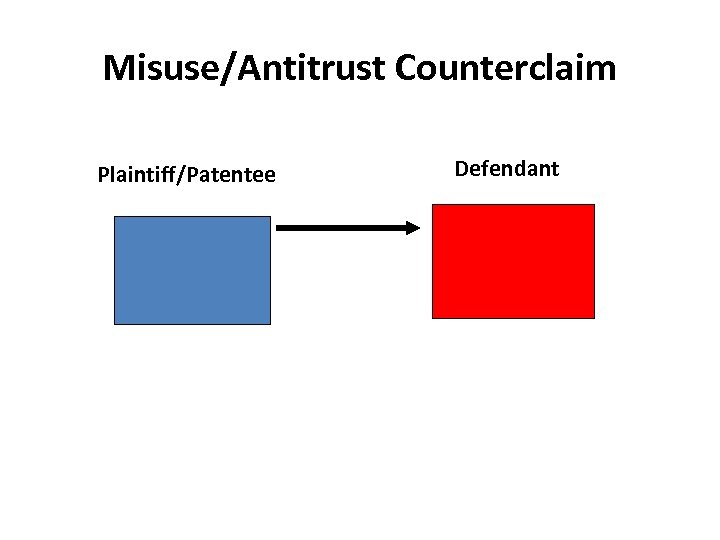 Misuse/Antitrust Counterclaim Plaintiff/Patentee Defendant
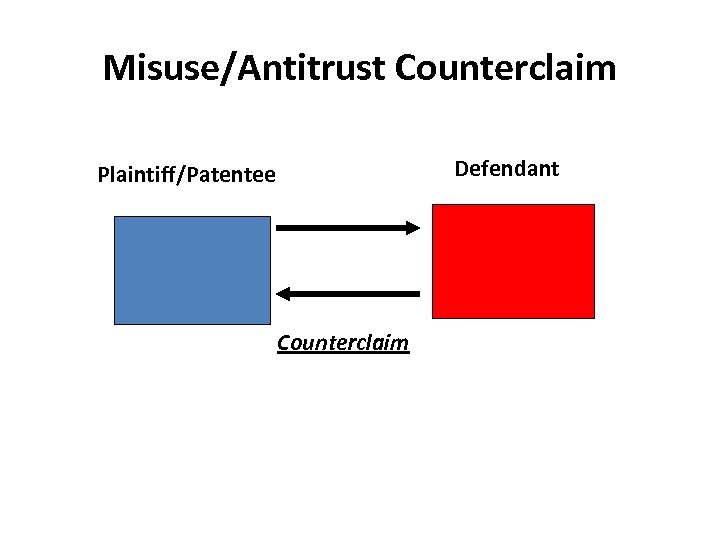 Misuse/Antitrust Counterclaim Defendant Plaintiff/Patentee Counterclaim
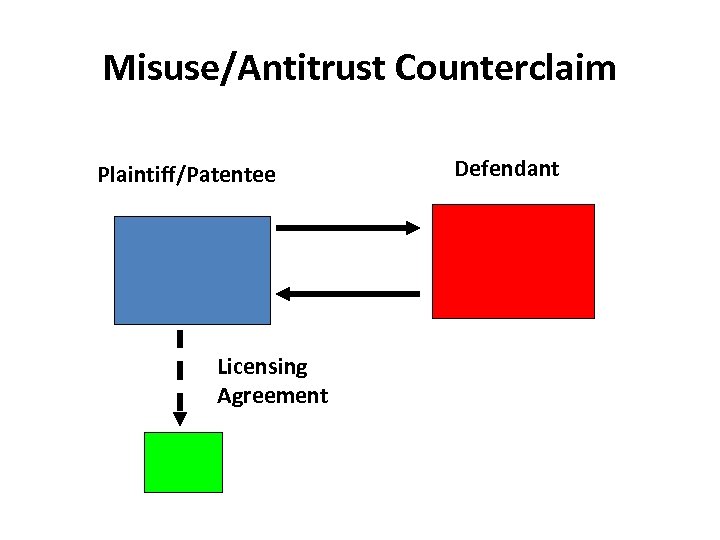 Misuse/Antitrust Counterclaim Plaintiff/Patentee Licensing Agreement Defendant
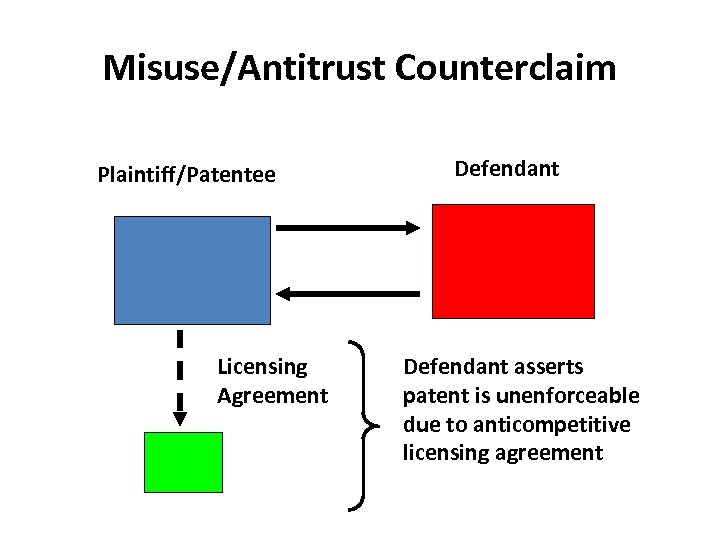 Misuse/Antitrust Counterclaim Plaintiff/Patentee Licensing Agreement Defendant asserts patent is unenforceable due to anticompetitive licensing agreement
 Typical Counterclaims • Anticompetitive acquisition of patent – Walker Process Equipment , Inc. v. Food Machinery Chemical Corp. , 382 U. S. 172 (1965); Handgards, Inc. v. Ethicon, Inc. 743 F. 2 d 1282 (9 th Cir. 1984) • Illegal tie-in – Morton Salt
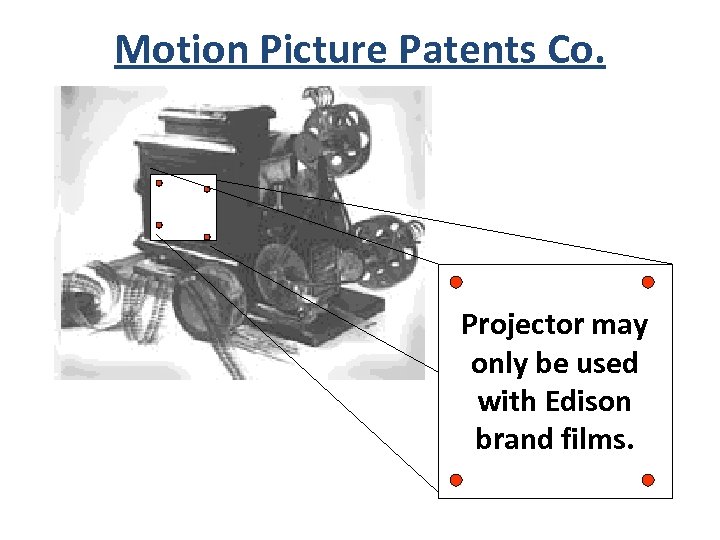 Motion Picture Patents Co. Projector may only be used with Edison brand films.
 Holding: P. 334 • Patent is limited to film feeding device for projectors • Patentee should not be allowed to extend patent to cover film not claimed in the patent • Injury to the public interest
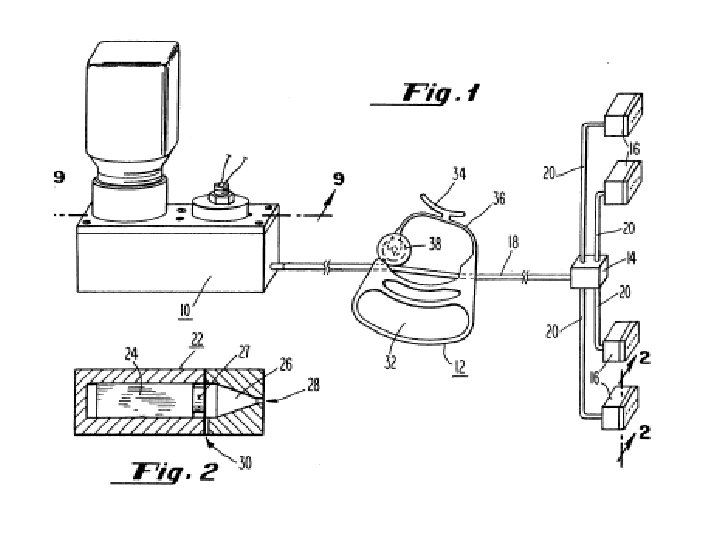
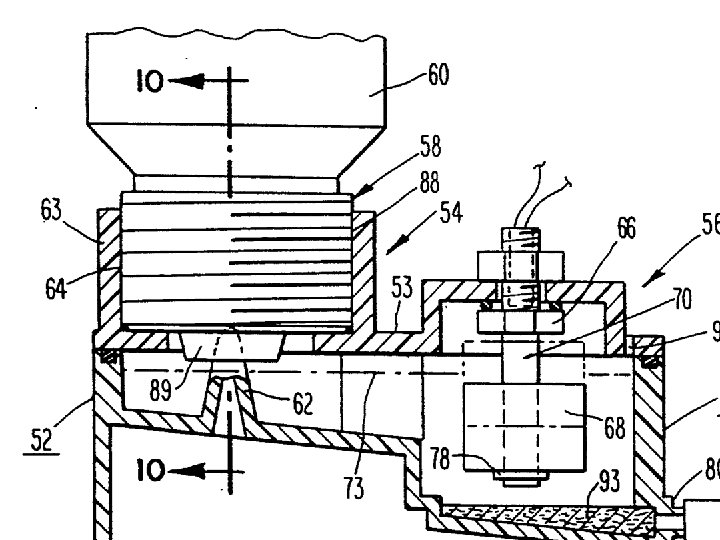
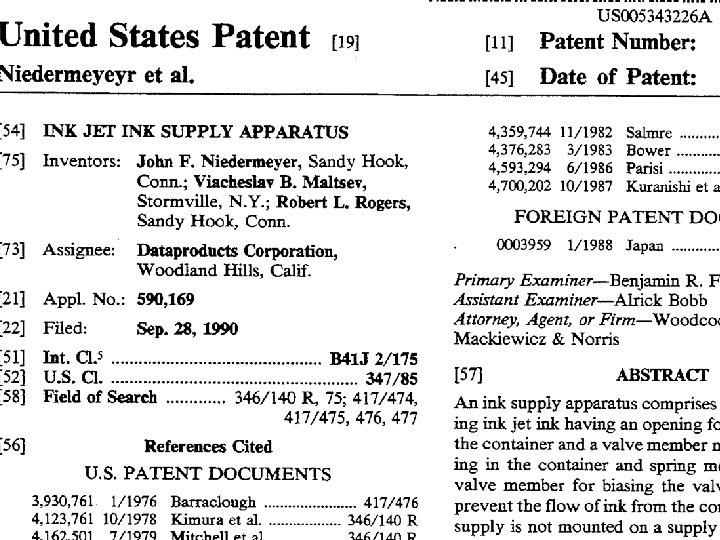
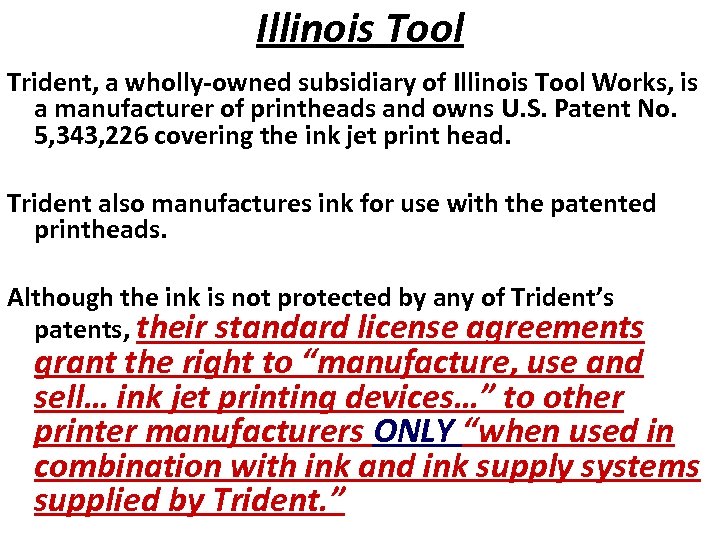 Illinois Tool Trident, a wholly-owned subsidiary of Illinois Tool Works, is a manufacturer of printheads and owns U. S. Patent No. 5, 343, 226 covering the ink jet print head. Trident also manufactures ink for use with the patented printheads. Although the ink is not protected by any of Trident’s patents, their standard license agreements grant the right to “manufacture, use and sell… ink jet printing devices…” to other printer manufacturers ONLY “when used in combination with ink and ink supply systems supplied by Trident. ”
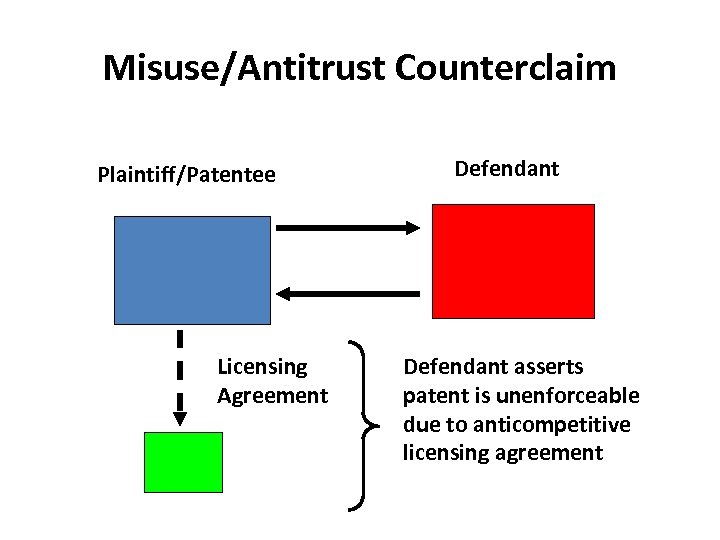 Misuse/Antitrust Counterclaim Plaintiff/Patentee Licensing Agreement Defendant asserts patent is unenforceable due to anticompetitive licensing agreement
 Independent Ink also manufactures ink useable in Trident’s patented printheads. Independent filed suit in the Central District of California against Trident and Illinois Tool Works alleging, among other things, an illegal tying arrangement in violation of section 1 of the Sherman Act. The district court, however, dismissed the case on summary judgment.
 Sherman Act: Section One 15 U. S. C. § 1 Every contract, combination in the form of trust or otherwise, or conspiracy, in restraint of trade or commerce among the several States, or with foreign nations, is declared to be illegal. Every person who shall make any contract or engage in any combination or conspiracy hereby declared to be illegal shall be deemed guilty of a felony, and, on conviction thereof, shall be punished by fine not exceeding $10, 000 if a corporation, or, if any other person, $350, 000, or by imprisonment not exceeding three years, or by both said punishments, in the discretion of the court.
 Sherman Act: Section One 15 U. S. C. § 2 Every person who shall monopolize, or attempt to monopolize, or combine or conspire with any other person or persons, to monopolize any part of the trade or commerce among the several States, or with foreign nations, shall be deemed guilty of a felony, and, on conviction thereof, shall be punished by fine not exceeding $10, 000 if a corporation, or, if any other person, $350, 000, or by imprisonment not exceeding three years, or by both said punishments, in the discretion of the court.
 Theoretical basis • “Leverage theory” – Patents being improperly leveraged by various licensing practices • For example, a tie-in
 Tie-in example • If you want my patented machine, you must buy (unpatented) materials used in the machine
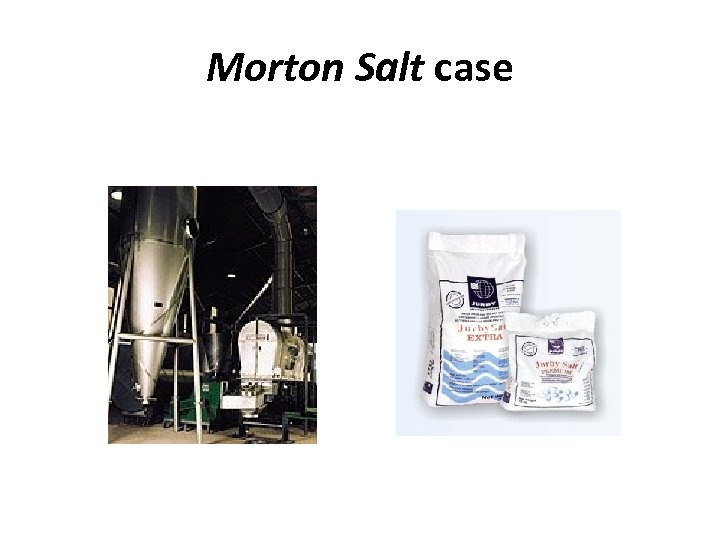 Morton Salt case
![“[R]espondent is making use of its patent monopoly to restrain competition in the marketing](https://present5.com/presentation/c2cb501ed95129e3a475f2125aeef6b9/image-25.jpg "“[R]espondent is making use of its patent monopoly to restrain competition in the marketing") “[R]espondent is making use of its patent monopoly to restrain competition in the marketing of unpatented articles, the salt tablets, for use with the patented machines. . . ”
“[R]espondent is making use of its patent monopoly to restrain competition in the marketing of unpatented articles, the salt tablets, for use with the patented machines. . . ”
 Leverage theory • “Leveraging” monopoly in machine into (separate) market for salt
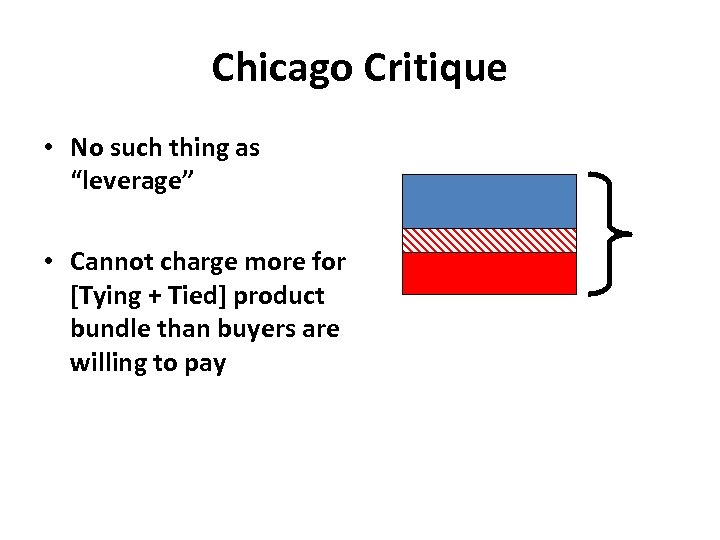 Chicago Critique • No such thing as “leverage” • Cannot charge more for [Tying + Tied] product bundle than buyers are willing to pay
 More Chicago critique • Look for more “positive” explanation of licensing practices – Patentees deserve a monopoly • How might it be good for the patentee and consumers?
 “Metering” Concept • Relates back to price discrimination idea: charge effectively different price for different classes of users: –High-value vs. low-value users
 Patent Exhaustion • To exhaust: to run out of, use up • What is “used up”? The “power” of a patent • When is it used up? When an item covered by the patent is sold on the market
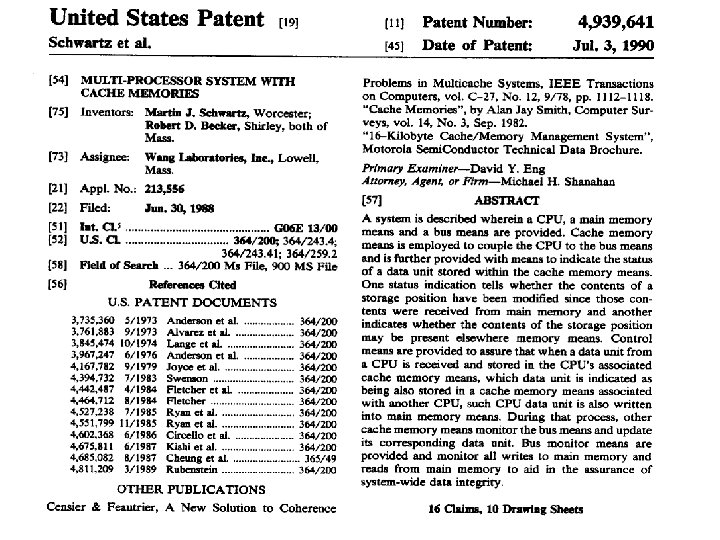
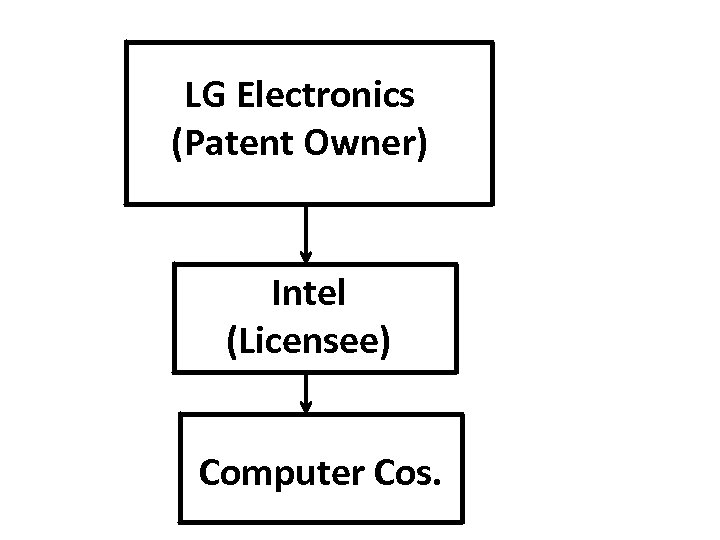 LG Electronics (Patent Owner) Intel (Licensee) Computer Cos.
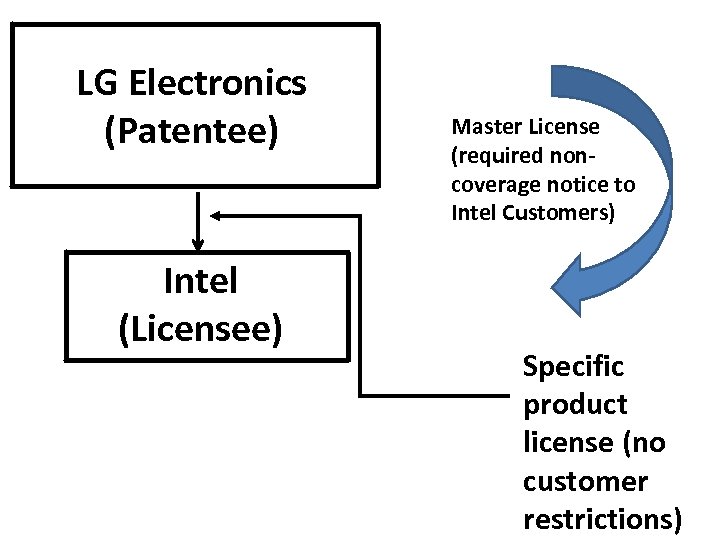 LG Electronics (Patentee) Intel (Licensee) Master License (required noncoverage notice to Intel Customers) Specific product license (no customer restrictions)
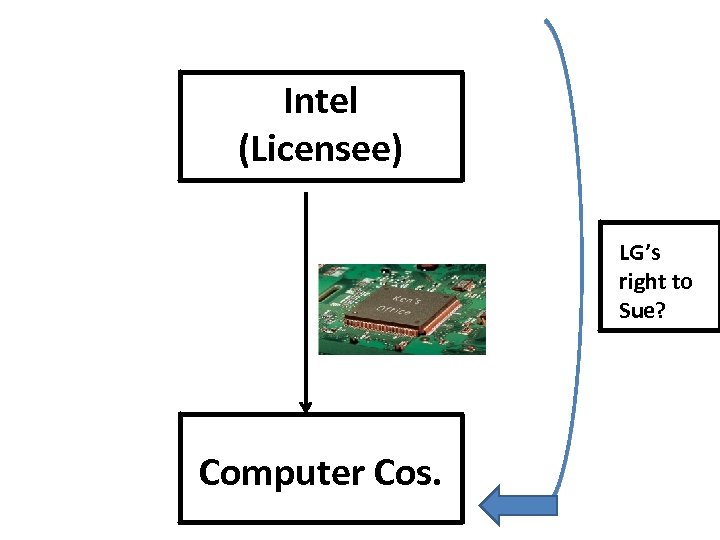 Intel (Licensee) LG’s right to Sue? Computer Cos.
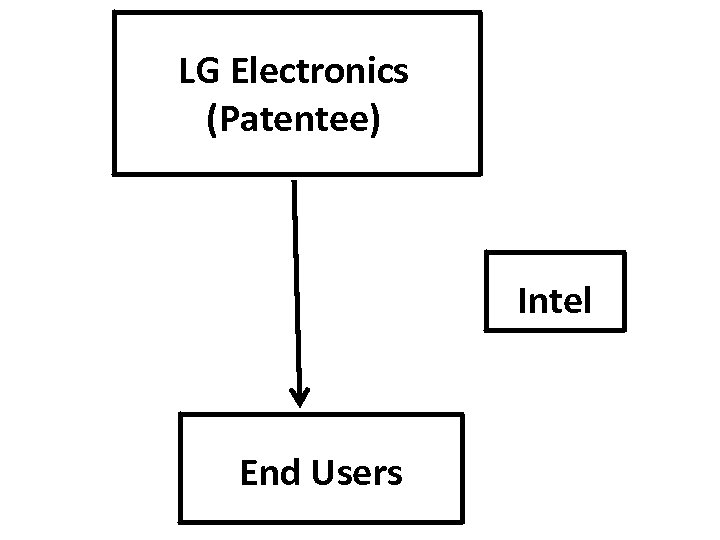 LG Electronics (Patentee) Intel End Users
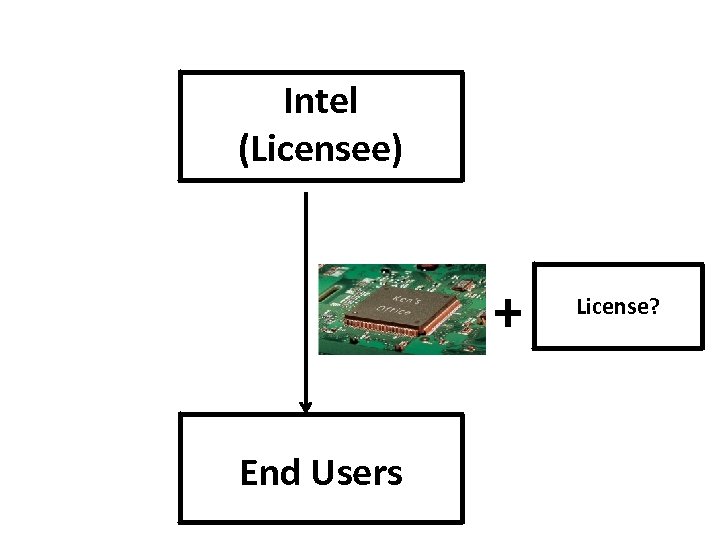 Intel (Licensee) + End Users License?
 LG Sued End Users – Bizcom, Quanta, etc. • End Users defended by claiming that they were protected against suit by virtue of the LG-Intel license agreement, and Intel’s sale of chips to them
 District Court • LG argued that end users were not protected by exhaustion, since the chips sold by Intel did not completely embody any claims in the asserted patents • District Court disagreed: held, sales of chips by Intel exhausted LG’s rights vis-à-vis end users
 Federal Circuit • Partial reversal • No exhaustion: LG did not authorize Intel to authorize endusers to combine Intel products with non-Intel products
 Quanta Computer, Inc. v. LG Electronics, Inc. • 128 S. Ct. 2109 (2008) • Held: licensee's sale of component computer parts that substantially embodied method patents held by patentee was “authorized” by patent holder, and had effect of exhausting patent holder's patents.
 Supreme Court: Holdings 1. Method claims are subject to exhaustion 2. Embodiments substantially containing claimed technology exhaust a patent 3. Sales in this case were “authorized sales” under the licensing arrangement in this case: so patents were exhausted
![128 S. Ct. 2109, 2020 [I]f [a] device practices patent A while substantially embodying](https://present5.com/presentation/c2cb501ed95129e3a475f2125aeef6b9/image-43.jpg "128 S. Ct. 2109, 2020 [I]f [a] device practices patent A while substantially embodying") 128 S. Ct. 2109, 2020 [I]f [a] device practices patent A while substantially embodying patent B, its relationship to patent A does not prevent exhaustion of patent B. For example, if the Univis lens blanks had been composed of shatter-resistant glass under patent A, the blanks would nonetheless have substantially embodied, and therefore exhausted, patent B for the finished lenses. This case is no different.
128 S. Ct. 2109, 2020 [I]f [a] device practices patent A while substantially embodying patent B, its relationship to patent A does not prevent exhaustion of patent B. For example, if the Univis lens blanks had been composed of shatter-resistant glass under patent A, the blanks would nonetheless have substantially embodied, and therefore exhausted, patent B for the finished lenses. This case is no different.
 Supreme Court: Holdings 1. Method claims are subject to exhaustion 2. Embodiments substantially containing claimed technology exhaust a patent 3. Sales in this case were “authorized sales” under the licensing arrangement in this case: so patents were exhausted
 Third holding: important for future cases • We can learn from the LG – Intel – End User arrangement • Drafting tips
 Basic exhaustion principles • “Exhaustion is triggered only by a sale authorized by the patent holder. ” –> 128 S. Ct. 2109, 2121
![Two elements here • [1] SALE only –> Licensing is outside this holding –>](https://present5.com/presentation/c2cb501ed95129e3a475f2125aeef6b9/image-47.jpg "Two elements here • [1] SALE only –> Licensing is outside this holding –>") Two elements here • [1] SALE only –> Licensing is outside this holding –> Creative licensing arrangements are still permissible
Two elements here • [1] SALE only –> Licensing is outside this holding –> Creative licensing arrangements are still permissible
![• [2] Authorized by the patent holder –> Principles of implied licensing come](https://present5.com/presentation/c2cb501ed95129e3a475f2125aeef6b9/image-48.jpg "• [2] Authorized by the patent holder –> Principles of implied licensing come") • [2] Authorized by the patent holder –> Principles of implied licensing come into play
• [2] Authorized by the patent holder –> Principles of implied licensing come into play
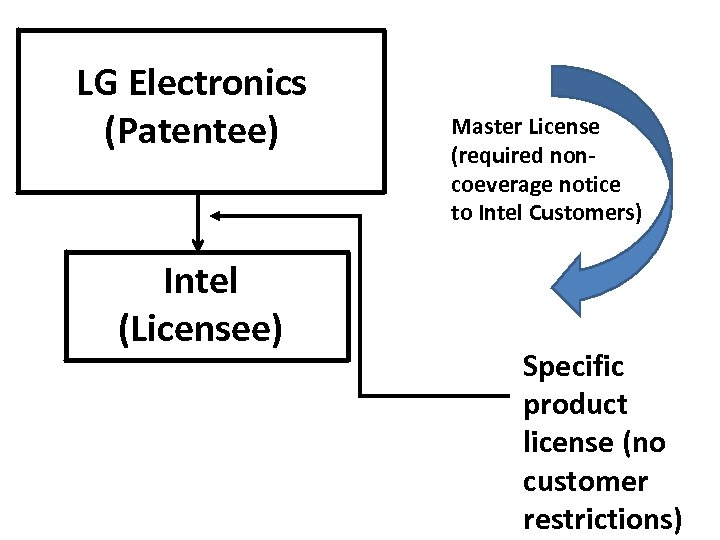 LG Electronics (Patentee) Intel (Licensee) Master License (required noncoeverage notice to Intel Customers) Specific product license (no customer restrictions)
![No restriction on customers’ use of patented technology “[T]he provision requiring notice to Quanta](https://present5.com/presentation/c2cb501ed95129e3a475f2125aeef6b9/image-50.jpg "No restriction on customers’ use of patented technology “[T]he provision requiring notice to Quanta") No restriction on customers’ use of patented technology “[T]he provision requiring notice to Quanta appeared only in the Master Agreement, and LGE does not suggest that a breach of that agreement would constitute a breach of the License Agreement. Hence, Intel's authority to sell its products embodying the LGE Patents was not conditioned on the notice or on Quanta's decision to abide by LGE's directions in that notice. ” -- 128 S. Ct. 2109, 2121 -2122
No restriction on customers’ use of patented technology “[T]he provision requiring notice to Quanta appeared only in the Master Agreement, and LGE does not suggest that a breach of that agreement would constitute a breach of the License Agreement. Hence, Intel's authority to sell its products embodying the LGE Patents was not conditioned on the notice or on Quanta's decision to abide by LGE's directions in that notice. ” -- 128 S. Ct. 2109, 2121 -2122
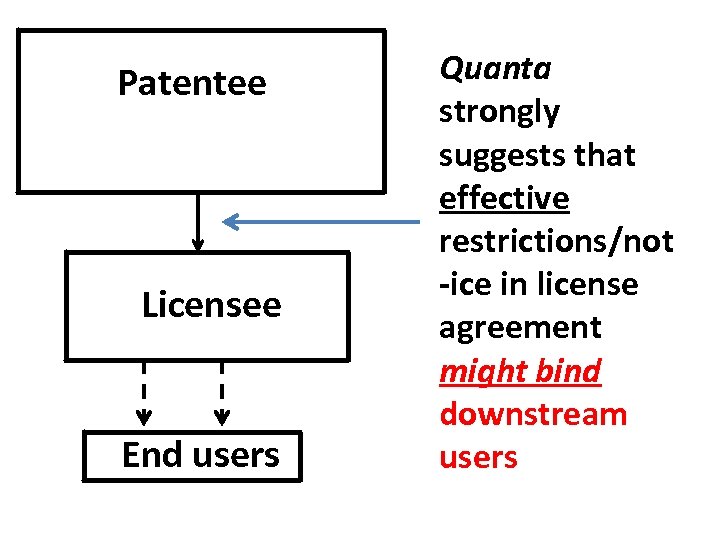 Patentee Licensee End users Quanta strongly suggests that effective restrictions/not -ice in license agreement might bind downstream users
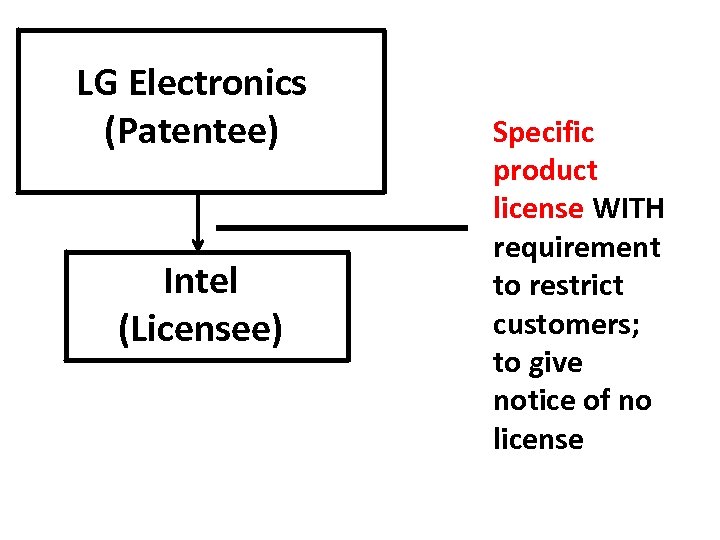 LG Electronics (Patentee) Intel (Licensee) Specific product license WITH requirement to restrict customers; to give notice of no license
 Remedies in licensing agreement “We note that the authorized nature of the sale to Quanta does not necessarily limit LGE's other contract rights. LGE's complaint does not include a breach-of-contract claim, and we express no opinion on whether contract damages might be available even though exhaustion operates to eliminate patent damages. ” – 128 S. Ct. at 2122
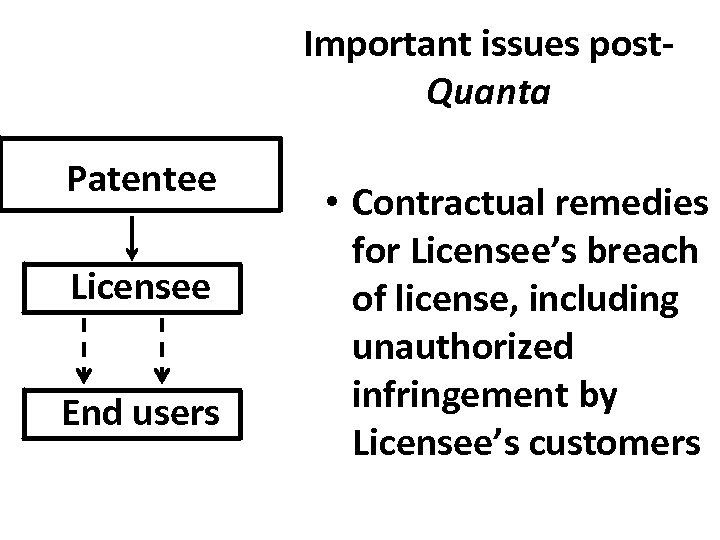 Important issues post. Quanta Patentee Licensee End users • Contractual remedies for Licensee’s breach of license, including unauthorized infringement by Licensee’s customers