 Скачать презентацию Ministry of Health of the Republic of Kazakhstan
Шт 3 кр.pptx
- Количество слайдов: 21



Ministry of Health of the Republic of Kazakhstan South Kazakhstan. State Pharmaceutical Academy Рresentation Vocabulary: Alcohol abuse. Effects of alcohol abuse. Prepared: Mametai ZҺ. B. Group: 202 SDK Checked by: Medetova B. L.
Plan I. Introduction II. The main section: 1. Alcohol abuse. 2. Effects of alcohol abuse. III. Conclusion Literature

I. Introduction Alcohol affects people in different ways. Some people can enjoy a glass of wine with food and drink moderate amounts of alcohol in social settings without any problems. Having one or fewer drinks per day for women and two or fewer drinks per day for men is considered moderate drinking, according to the Centers for Disease Control and Prevention. Drinking alcohol too much or too often, or being unable to control alcohol consumption, can be a sign of a larger problem. Two different issues that some people can develop are alcohol abuse or alcoholism, also known as alcohol dependency.
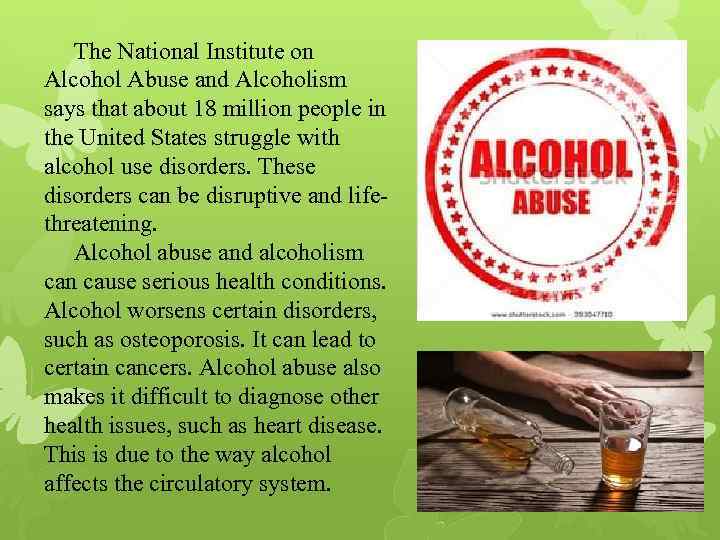
The National Institute on Alcohol Abuse and Alcoholism says that about 18 million people in the United States struggle with alcohol use disorders. These disorders can be disruptive and lifethreatening. Alcohol abuse and alcoholism can cause serious health conditions. Alcohol worsens certain disorders, such as osteoporosis. It can lead to certain cancers. Alcohol abuse also makes it difficult to diagnose other health issues, such as heart disease. This is due to the way alcohol affects the circulatory system.
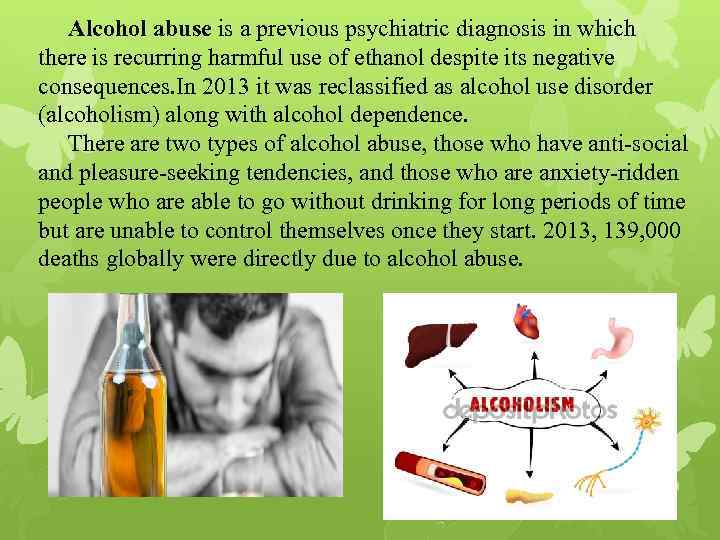
Alcohol abuse is a previous psychiatric diagnosis in which there is recurring harmful use of ethanol despite its negative consequences. In 2013 it was reclassified as alcohol use disorder (alcoholism) along with alcohol dependence. There are two types of alcohol abuse, those who have anti-social and pleasure-seeking tendencies, and those who are anxiety-ridden people who are able to go without drinking for long periods of time but are unable to control themselves once they start. 2013, 139, 000 deaths globally were directly due to alcohol abuse.
Binge drinking In the USA, binge drinking is defined as consuming more than five units in men and four units in women. It increases chances for vandalism, fights, violent behaviours, injuries, drunk driving, trouble with police, negative health, social, economic, or legal consequences to occur. Binge drinking is also associated with neurocognitive deficits of frontal lobe processing and impaired working memory as well as delayed auditory and verbal memory deficits. Binge drinking combined with the stress of returning to work is a contributing factor to Monday deaths from heart attacks. The chances of becoming dependent are increased greatly in men who have 15 or more drinks each week or women who have 12 or more drinks each week. This is known as alcohol dependency. It is believed that one way to prevent binge drinking is to raise the legal drinking age

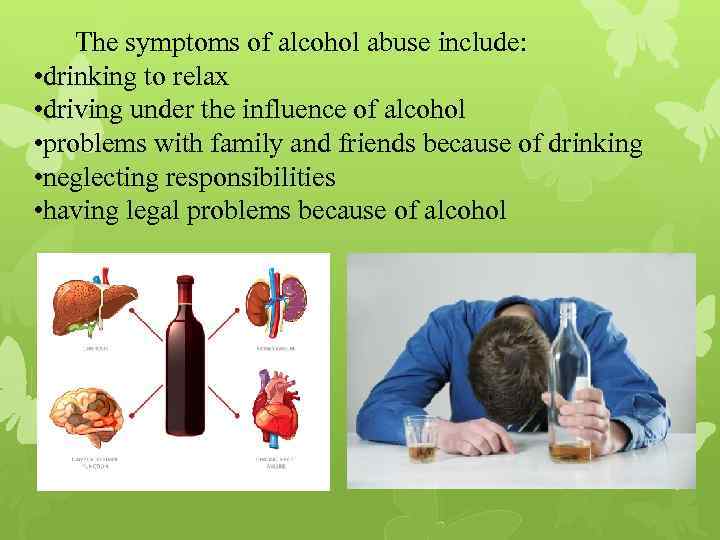
The symptoms of alcohol abuse include: • drinking to relax • driving under the influence of alcohol • problems with family and friends because of drinking • neglecting responsibilities • having legal problems because of alcohol
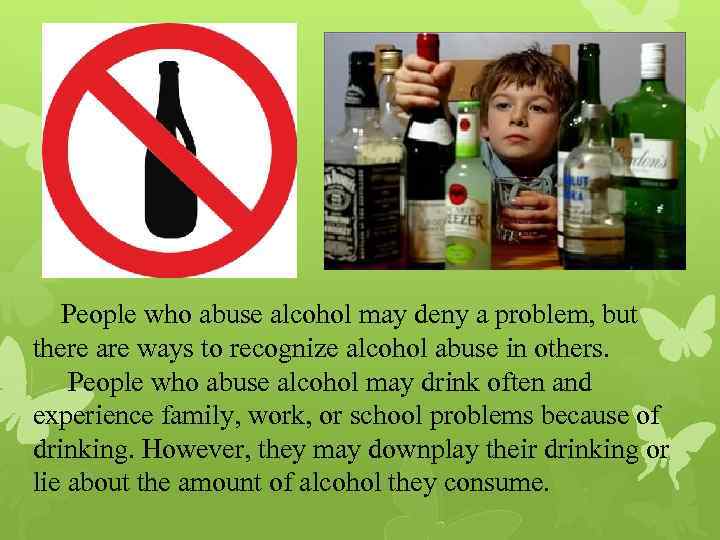
People who abuse alcohol may deny a problem, but there are ways to recognize alcohol abuse in others. People who abuse alcohol may drink often and experience family, work, or school problems because of drinking. However, they may downplay their drinking or lie about the amount of alcohol they consume.
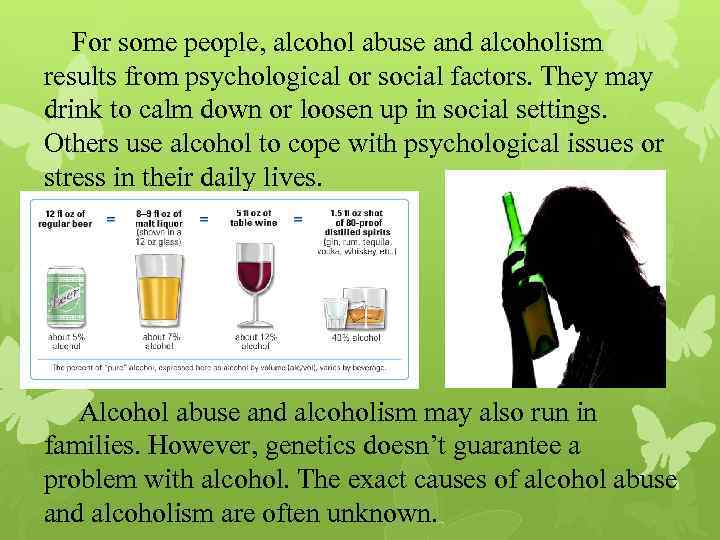
For some people, alcohol abuse and alcoholism results from psychological or social factors. They may drink to calm down or loosen up in social settings. Others use alcohol to cope with psychological issues or stress in their daily lives. Alcohol abuse and alcoholism may also run in families. However, genetics doesn’t guarantee a problem with alcohol. The exact causes of alcohol abuse and alcoholism are often unknown.
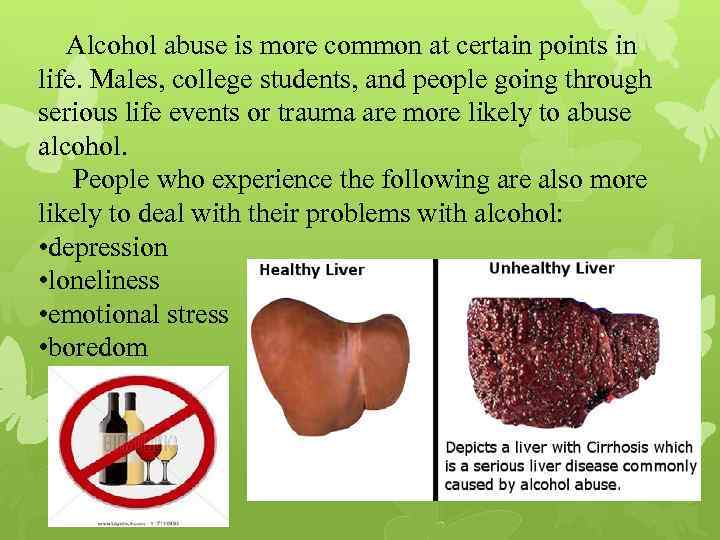
Alcohol abuse is more common at certain points in life. Males, college students, and people going through serious life events or trauma are more likely to abuse alcohol. People who experience the following are also more likely to deal with their problems with alcohol: • depression • loneliness • emotional stress • boredom
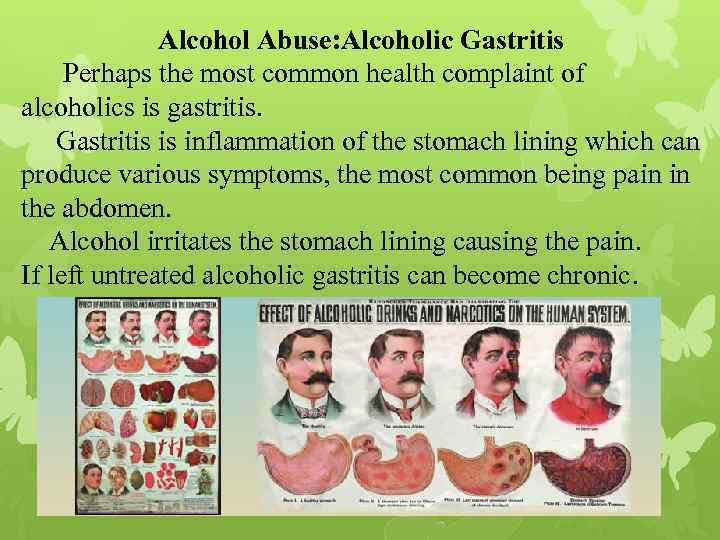
Alcohol Abuse: Alcoholic Gastritis Perhaps the most common health complaint of alcoholics is gastritis. Gastritis is inflammation of the stomach lining which can produce various symptoms, the most common being pain in the abdomen. Alcohol irritates the stomach lining causing the pain. If left untreated alcoholic gastritis can become chronic.
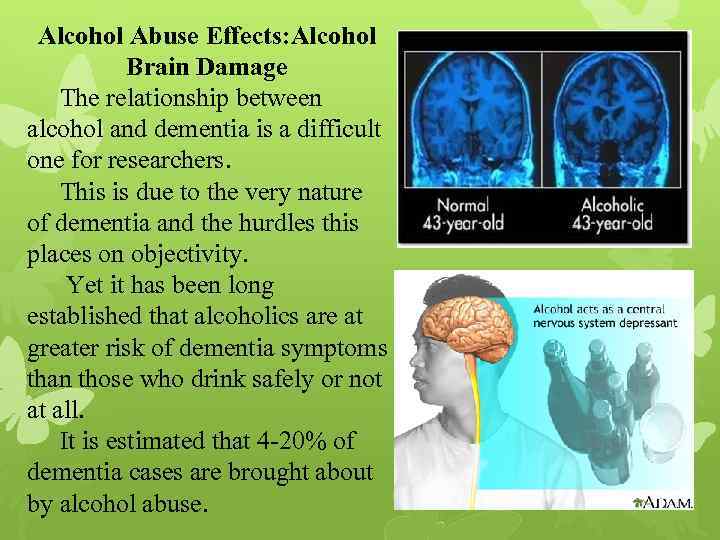
Alcohol Abuse Effects: Alcohol Brain Damage The relationship between alcohol and dementia is a difficult one for researchers. This is due to the very nature of dementia and the hurdles this places on objectivity. Yet it has been long established that alcoholics are at greater risk of dementia symptoms than those who drink safely or not at all. It is estimated that 4 -20% of dementia cases are brought about by alcohol abuse.
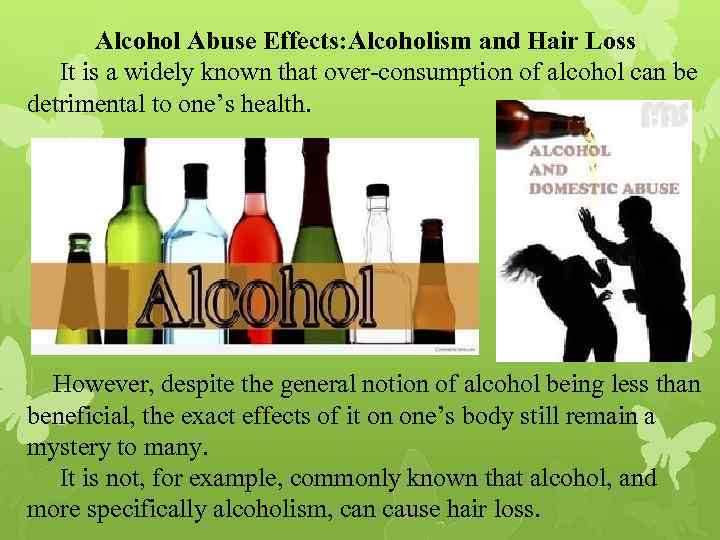
Alcohol Abuse Effects: Alcoholism and Hair Loss It is a widely known that over-consumption of alcohol can be detrimental to one’s health. However, despite the general notion of alcohol being less than beneficial, the exact effects of it on one’s body still remain a mystery to many. It is not, for example, commonly known that alcohol, and more specifically alcoholism, can cause hair loss.
Mental illness A person misusing alcohol may be doing so because they find alcohol's effects provide relief from a psychological problem, such as anxiety or depression. Often both the alcohol misuse and psychological problems need to be treated at the same time. The numbing effects of alcohol and narcotics can become a coping strategy for traumatized people who are unable to dissociate themselves from the trauma. However, the altered or intoxicated state of the abuser prevents the full consciousness necessary for healing.
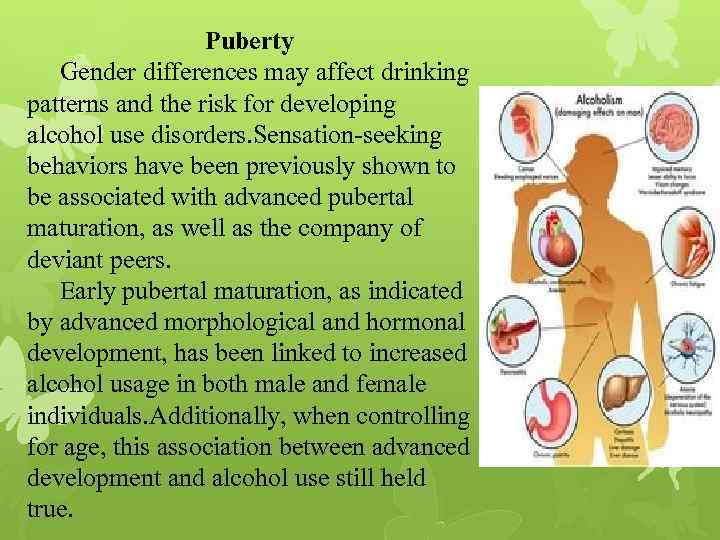
Puberty Gender differences may affect drinking patterns and the risk for developing alcohol use disorders. Sensation-seeking behaviors have been previously shown to be associated with advanced pubertal maturation, as well as the company of deviant peers. Early pubertal maturation, as indicated by advanced morphological and hormonal development, has been linked to increased alcohol usage in both male and female individuals. Additionally, when controlling for age, this association between advanced development and alcohol use still held true.
Treatment Youth treatment and intervention should focus on eliminating or reducing the effects of adverse childhood experiences, like childhood maltreatment, since these are common risk factors contributing to the early development of alcohol abuse. Approaches like contingency management and motivational interviewing have shown to be effective means of treating substance abuse in impulsive adolescents by focusing on positive rewards and redirecting them towards healthier goals.
Educating youth about what is considered heavy drinking along with helping them focus on their own drinking behaviors has been shown to effectively change their perceptions of drinking and could potentially help them to avoid alcohol abuse. Completely stopping the use of alcohol, or "abstinence, " is the ideal goal of treatment. A strong social network and family support maybe important in achieving this goal.
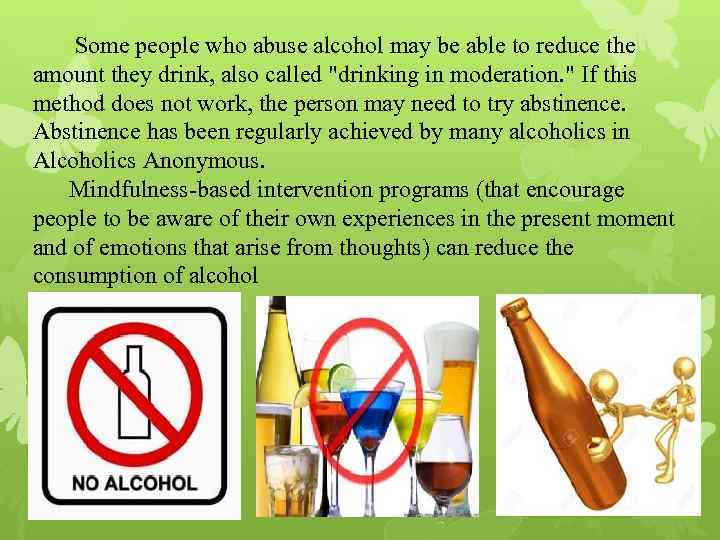
Some people who abuse alcohol may be able to reduce the amount they drink, also called "drinking in moderation. " If this method does not work, the person may need to try abstinence. Abstinence has been regularly achieved by many alcoholics in Alcoholics Anonymous. Mindfulness-based intervention programs (that encourage people to be aware of their own experiences in the present moment and of emotions that arise from thoughts) can reduce the consumption of alcohol
III. Conclusion There is a general consensus today that drinking alcohol is good for you and that drinking red wine is particularly beneficial. However this is not a green light to drink as much as you can. To get the health benefits from alcohol you need to stay within safe limits. Alcohol is good for your heart, blood circulation and relieves tension. Red wine is also good for your heart, circulation and yes, it relieves tension. On top of all this it contains Resveratrol which is a nonflavanoid that prevents arteries from getting blocked. So thumbs up to alcohol and particularly red wine. But you have to stay within drinking guidelines to get these benefits.
Literature 1)Diagnostic and statistical manual of mental disorders : DSM-5. (Fifth edition. ed. ). 2013. p. 490. 2)"Alcohol Use Disorder: A Comparison Between DSM –IV and DSM– 5". November 2013. Retrieved 9 May 2015. 3)Neil R. Carlson, C. Donald Heth. "Psychology: The Science of Behaviour". Pearson Canada Inc, 2010, p. 572. 4)Mc. Ardle, Paul (27 February 2008). "Alcohol abuse in adolescents". BMJ. 93 (6): 524– 527. 5)Diagnostic and Statistical Manual of Mental Disorders (DSM-IV), 4 th edition, Text Revision. Washington, DC: American Psychiatric Association; 2000.
Скачать презентацию Ministry of Health of the Republic of Kazakhstan
Шт 3 кр.pptx