 Скачать презентацию MINISTRY OF HEALTH OF REPUBLIC OF KAZAKHSTAN SEMEY
СРС english.pptx
- Количество слайдов: 18



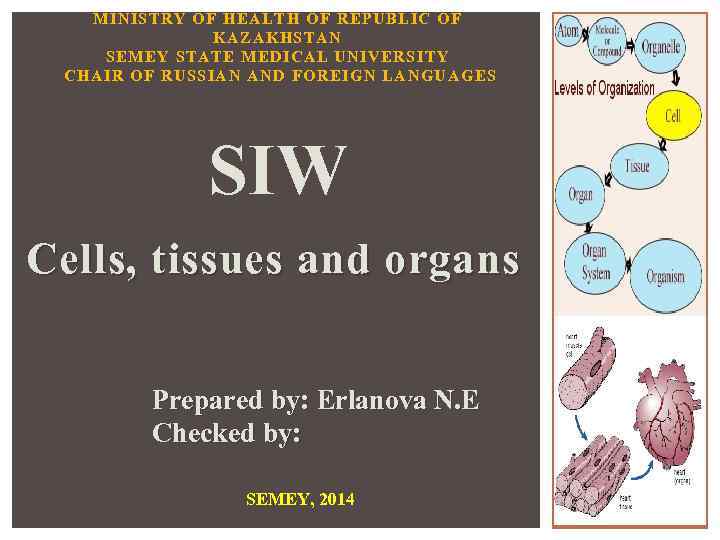
MINISTRY OF HEALTH OF REPUBLIC OF KAZAKHSTAN SEMEY STATE MEDICAL UNIVERSITY CHAIR OF RUSSIAN AND FOREIGN LANGUAGES SIW C ells, tissues and organs Prepared by: Erlanova N. E Checked by: SEMEY, 2014
PLAN: I. Introduction II. The main part: a) CELLULAR LEVEL; b) THE TISSUE ; c) TYPES OF TISSUES ; d) ORGANS ; e) ETYMOLOGY OF WORD «ORGAN» ; f) ORGAN SYSTEMS ; III. Conclusion
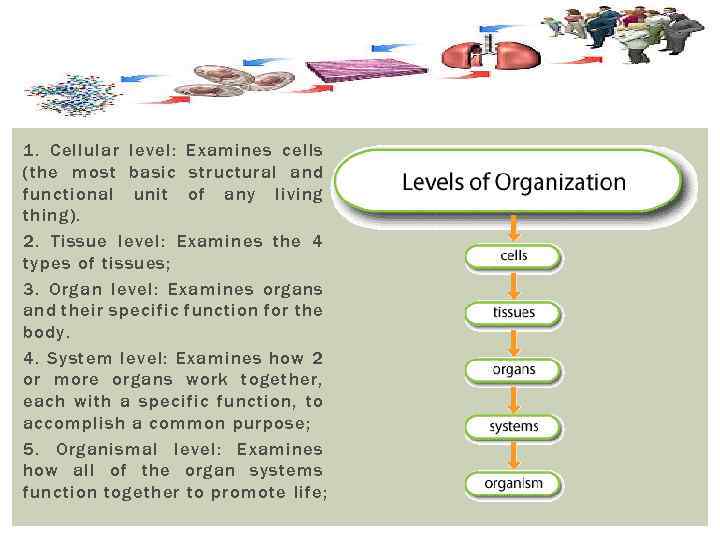
1. Cellular level: Examines cells (the most basic structural and functional unit of any living thing). 2. Tissue level: Examines the 4 types of tissues; 3. Organ level: Examines organs and their specific function for the body. 4. System level: Examines how 2 or more organs work together, each with a specific function, to accomplish a common purpose; 5. Organismal level: Examines how all of the organ systems function together to promote life;
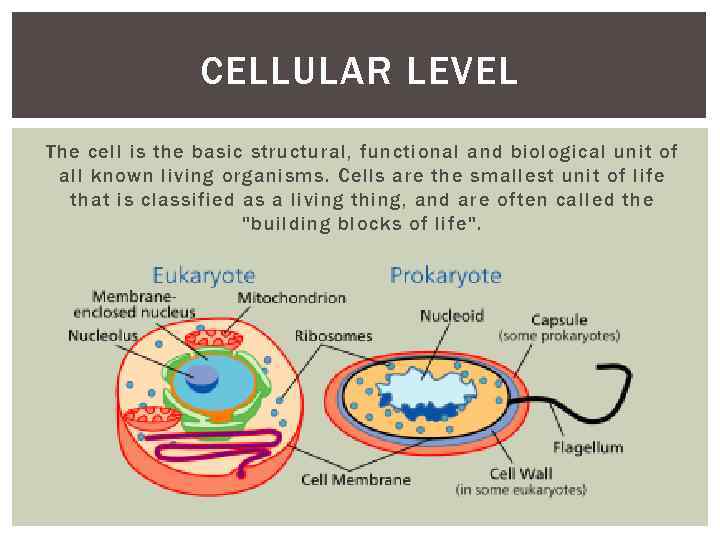
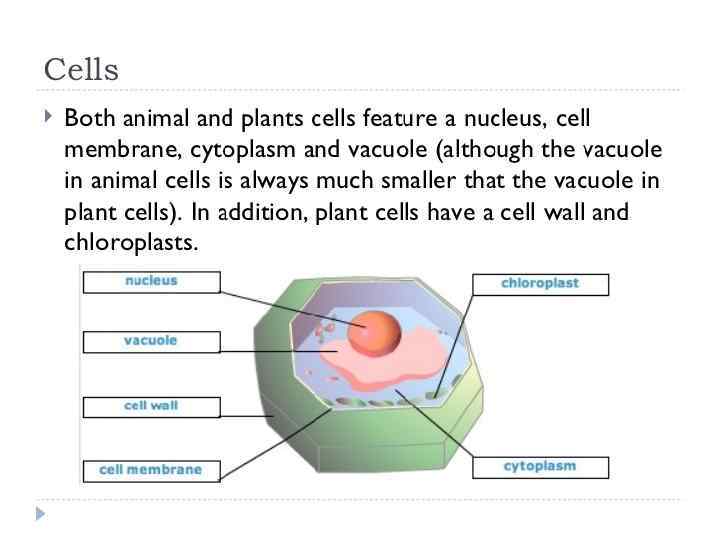
CELLULAR LEVEL The cell is the basic structural, functional and biological unit of all known living organisms. Cells are the smallest unit of life that is classified as a living thing, and are often called the "building blocks of life".
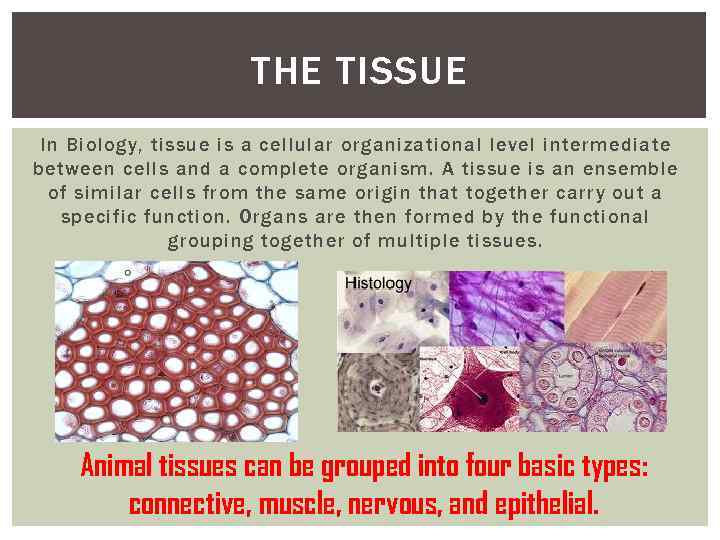
THE TISSUE In Biology, tissue is a cellular organizational level intermediate between cells and a complete organism. A tissue is an ensemble of similar cells from the same origin that together carry out a specific function. Organs are then formed by the functional grouping together of multiple tissues. Animal tissues can be grouped into four basic types: connective, muscle, nervous, and epithelial.
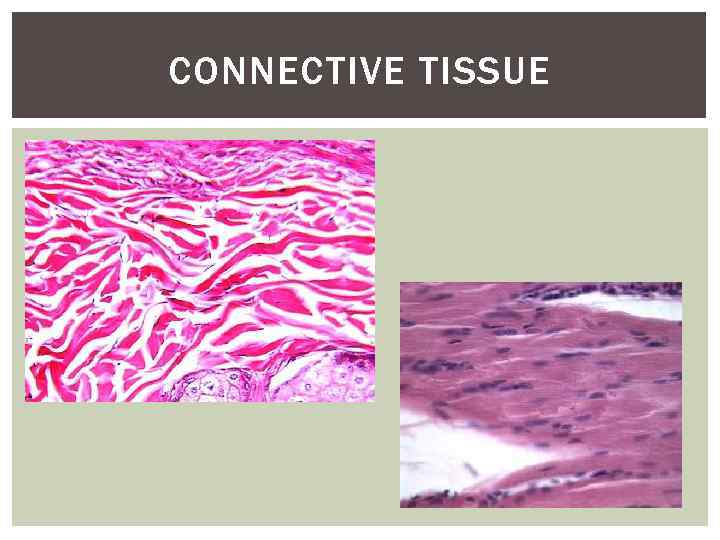
CONNECTIVE TISSUE
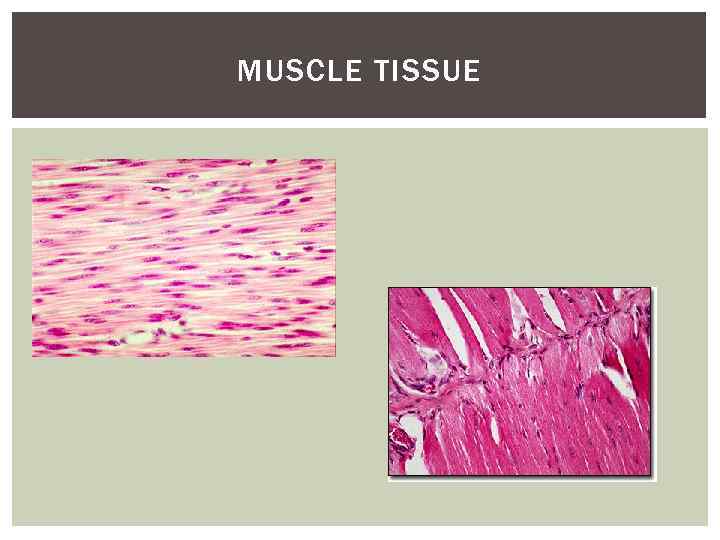
MUSCLE TISSUE
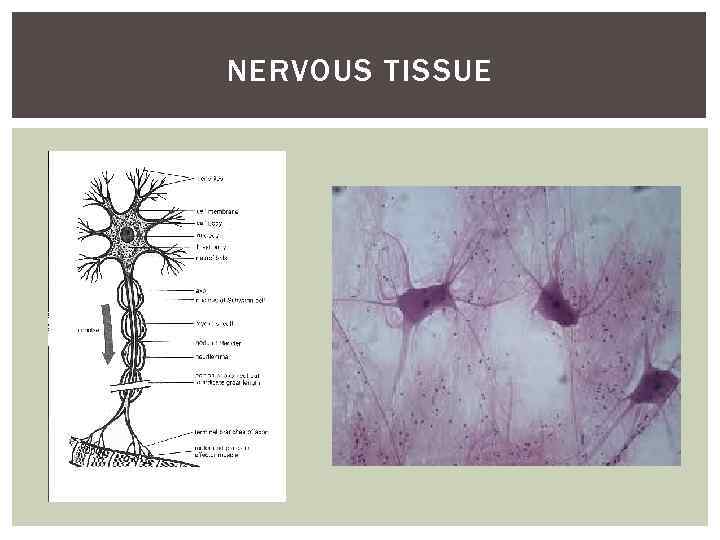
NERVOUS TISSUE
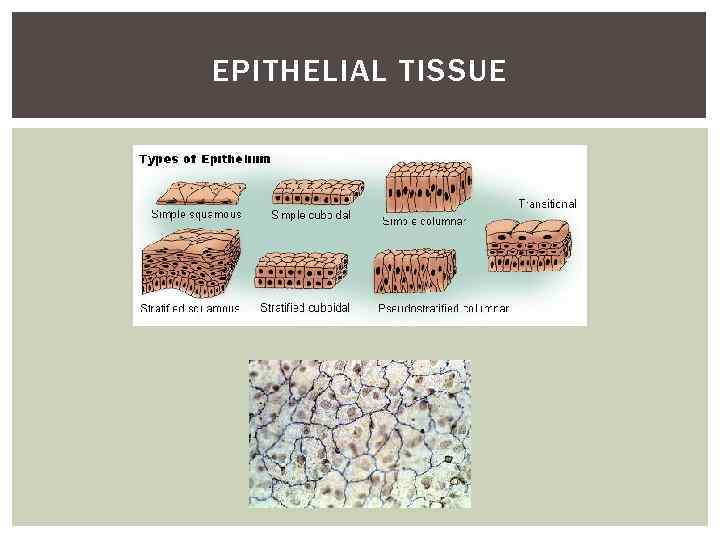
EPITHELIAL TISSUE
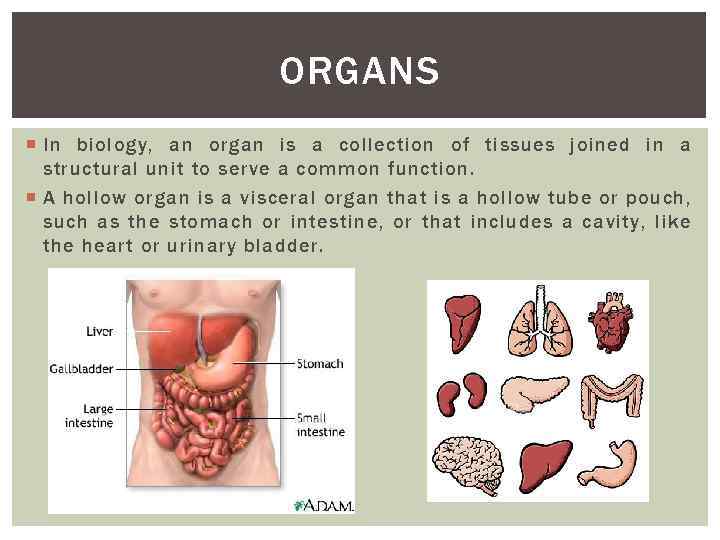
ORGANS In biology, an organ is a collection of tissues joined in a structural unit to serve a common function. A hollow organ is a visceral organ that is a hollow tube or pouch, such as the stomach or intestine, or that includes a cavity, like the heart or urinary bladder.
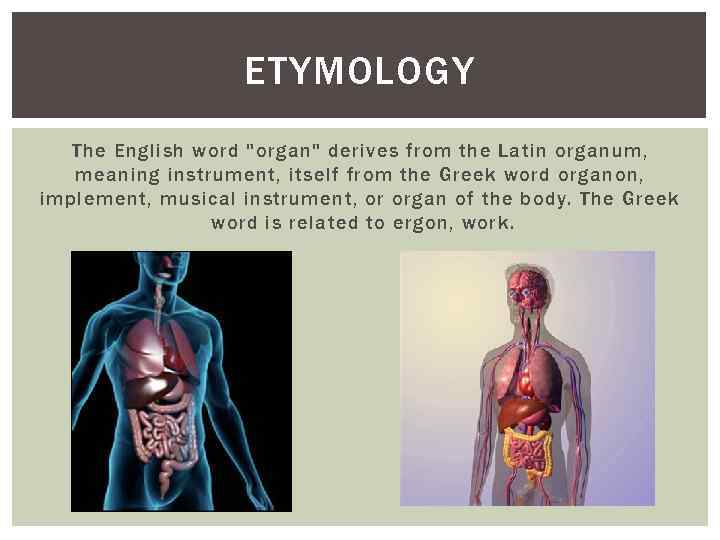
ETYMOLOGY The English word "organ" derives from the Latin organum, meaning instrument, itself from the Greek word organon, implement, musical instrument, or organ of the body. The Greek word is related to ergon, work.
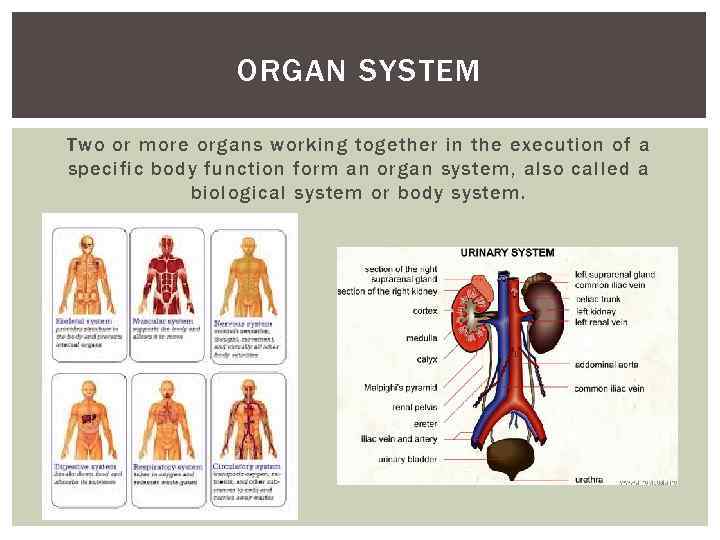
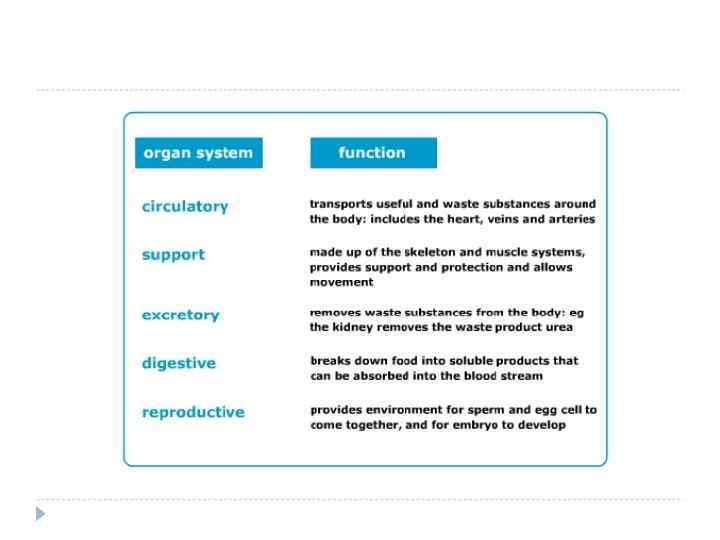
ORGAN SYSTEM Two or more organs working together in the execution of a specific body function form an organ system, also called a biological system or body system.
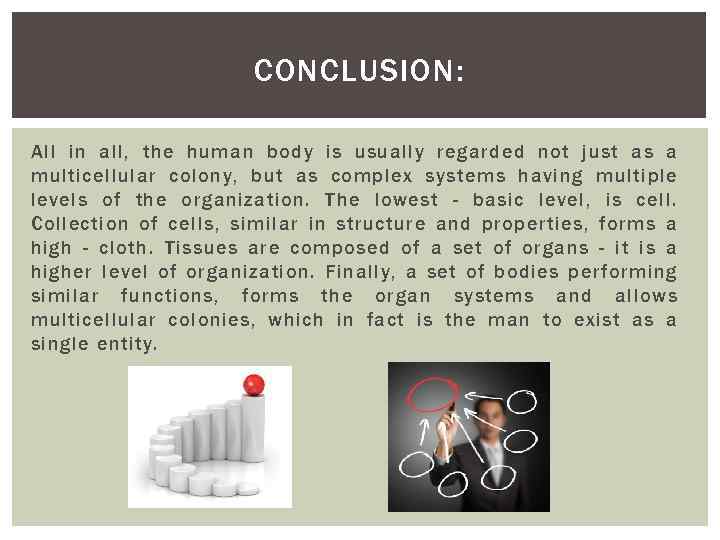
CONCLUSION: All in all, the human body is usually regarded not just as a multicellular colony, but as complex systems having multiple levels of the organization. The lowest - basic level, is cell. Collection of cells, similar in structure and properties, forms a high - cloth. Tissues are composed of a set of organs - it is a higher level of organization. Finally, a set of bodies performing similar functions, forms the organ systems and allows multicellular colonies, which in fact is the man to exist as a single entity.
TEAM GAME
REFERENCES: Widmaier EP; Raff H, and Strang KT (2003). Vander's Human Physiology (11 th ed. ). Mc. Graw-Hill. ISBN 978 -0071283663. ^ Dictionary. com > hollow organ Citing: Merriam-Webster's Medical Dictionary, 2002 ^ a b Barnhart's Concise Dictionary of Etymology http: //www. fiziolog. isu. ru/page_SYS(1). htm Raven, Peter H. , Evert, Ray F. , & Eichhorn, Susan E. (1986). Biology of Plants Cells Tissues Organsin vivo, in vitro. Editor(s): Denker H. -W. (Essen) English A. W. (Atlanta, Ga. ) http: //www. editricecompositori. it/organs/home http: //www. centreofthecell. org/centre/? page_id=26
 Скачать презентацию MINISTRY OF HEALTH OF REPUBLIC OF KAZAKHSTAN SEMEY
СРС english.pptx