


 Скачать презентацию Ministry of Forests and Range Understanding Key Applications
a27eb92d4d52532d3b396f1251516bec.ppt
- Количество слайдов: 64
 Ministry of Forests and Range Understanding Key Applications: The “Big Picture” of application inter-connections Sponsored by the Information Management Group Version 6. 1, March 2008 Original Version - Summer 2004 1
 Goal & Objectives Increase awareness of applications which support key Mo. FR business processes For each application, you will learn: Basic business process Linkages How the same data is shared & accessed among multiple applications Target user groups Critical data elements within database tables Key data dependencies between applications Note: application = computer system (e. g. FTA, RESULTS, SPAR, etc. ) 2
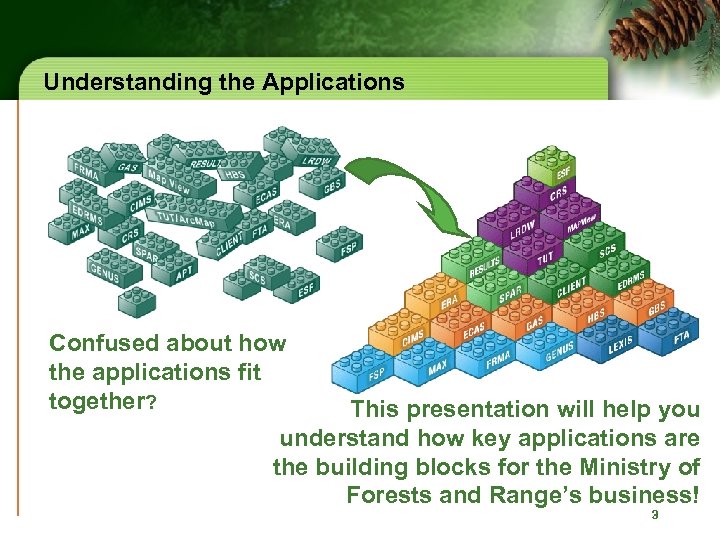 Understanding the Applications Confused about how the applications fit together? This presentation will help you understand how key applications are the building blocks for the Ministry of Forests and Range’s business! 3
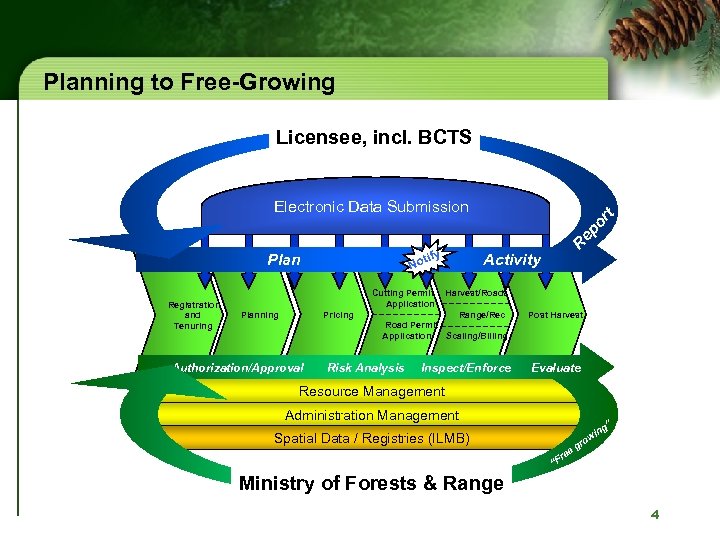 Planning to Free-Growing Electronic Data Submission tify No Plan Registration and Tenuring Cutting Permit Application Planning Pricing Authorization/Approval Activity Harvest/Roads Range/Rec Road Permit Scaling/Billing Application Risk Analysis R Re ep po orrt t Licensee, incl. BCTS Inspect/Enforce Post Harvest Evaluate Resource Management Administration Management g” Spatial Data / Registries (ILMB) e re in ow gr “F Ministry of Forests & Range 4
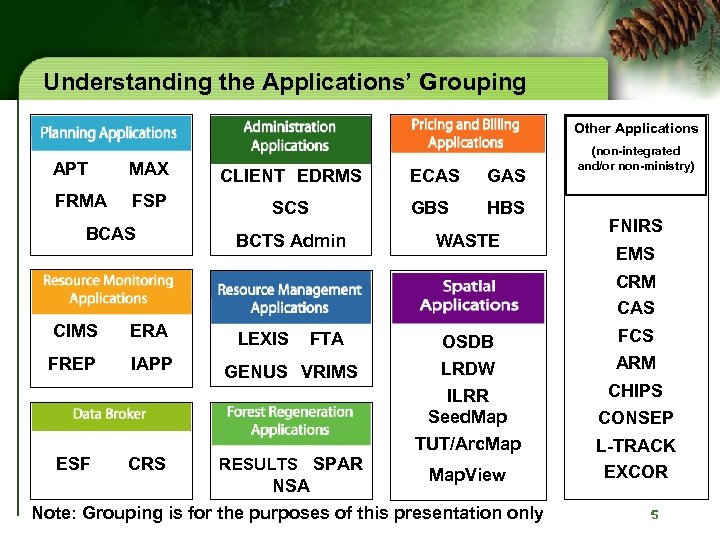 Understanding the Applications’ Grouping Other Applications APT MAX CLIENT EDRMS ECAS GAS FRMA FSP SCS GBS HBS BCAS BCTS Admin WASTE (non-integrated and/or non-ministry) FNIRS EMS CRM CAS CIMS ERA FREP IAPP ESF CRS LEXIS FTA GENUS VRIMS RESULTS SPAR NSA OSDB FCS LRDW ARM ILRR Seed. Map TUT/Arc. Map CHIPS Map. View Note: Grouping is for the purposes of this presentation only CONSEP L-TRACK EXCOR 5
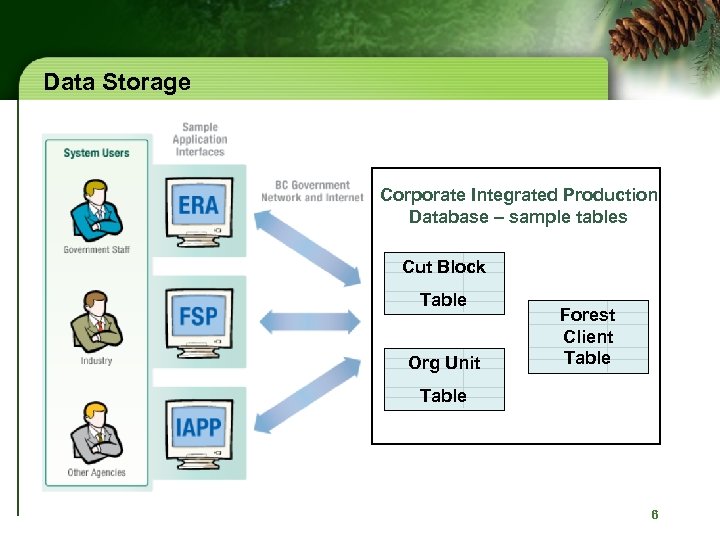 Data Storage Corporate Integrated Production Database – sample tables Cut Block Table Org Unit Forest Client Table 6
 Understanding Critical Data Elements What are critical data elements? Pieces of information that you must enter, update, & maintain correctly and in a timely manner Why are critical data elements important? They affect other applications Critical for improved, accurate, & reliable business decisions Imperative for government to meet legal requirements If you are working on a new or existing application, explore and research other existing applications What is a common critical data element shared between many ministry applications? 7
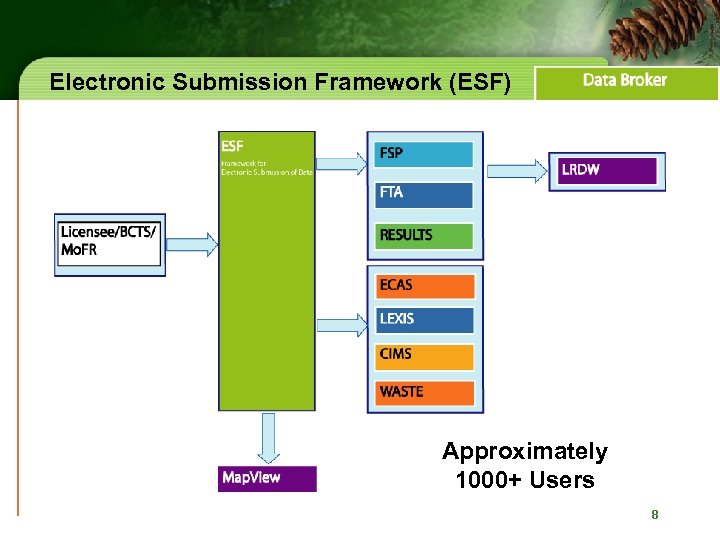 Electronic Submission Framework (ESF) Approximately 1000+ Users 8
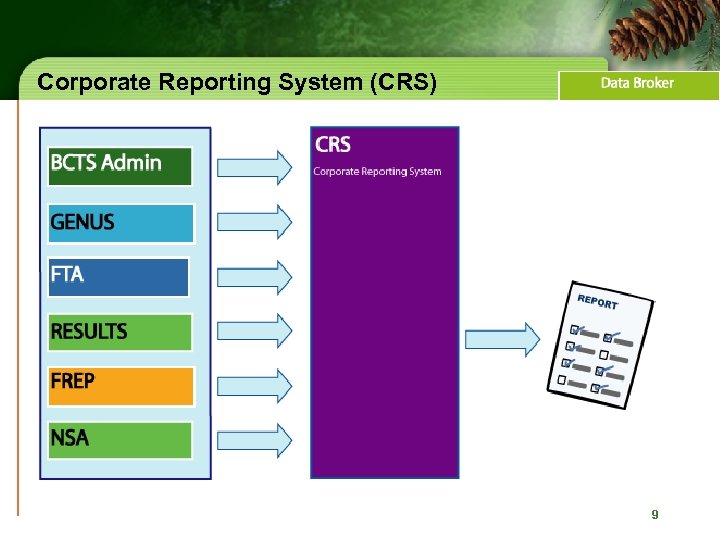 Corporate Reporting System (CRS) 9
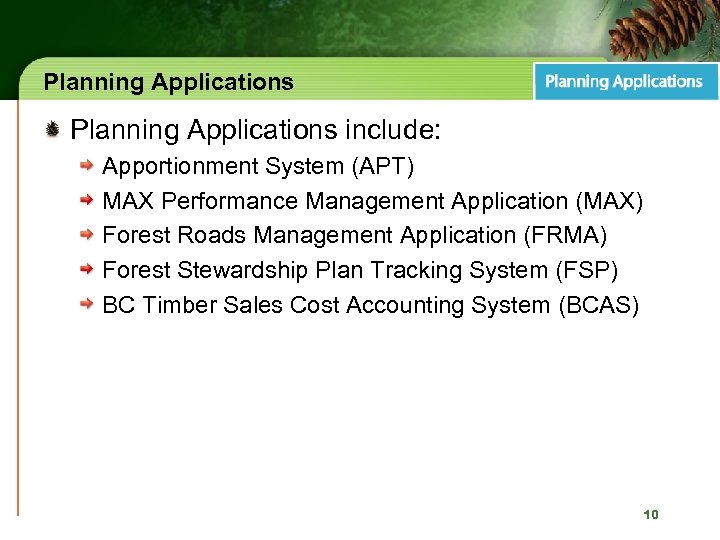 Planning Applications include: Apportionment System (APT) MAX Performance Management Application (MAX) Forest Roads Management Application (FRMA) Forest Stewardship Plan Tracking System (FSP) BC Timber Sales Cost Accounting System (BCAS) 10
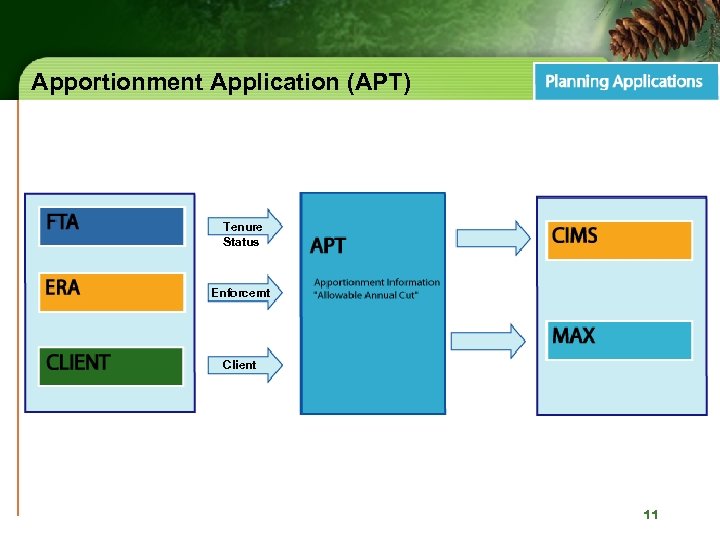 Apportionment Application (APT) Tenure Status Enforcemt Client 11
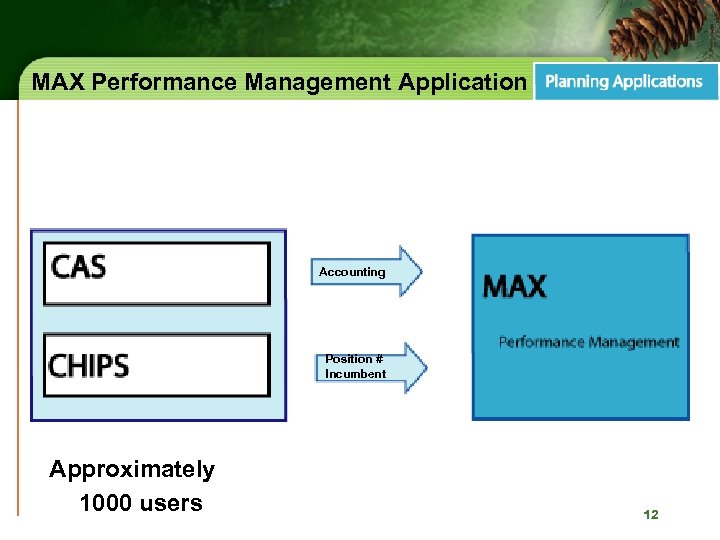 MAX Performance Management Application Accounting Position # Incumbent Approximately 1000 users 12
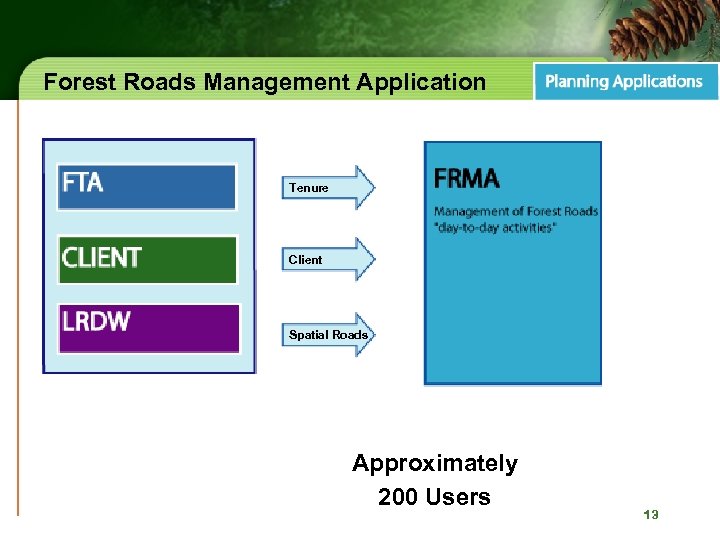 Forest Roads Management Application Tenure Client Spatial Roads Approximately 200 Users 13
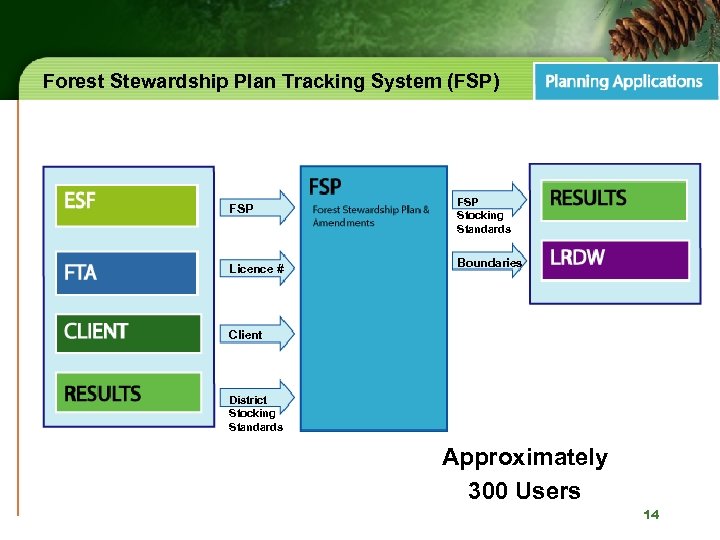 Forest Stewardship Plan Tracking System (FSP) FSP Licence # FSP Stocking Standards Boundaries Client District Stocking Standards Approximately 300 Users 14
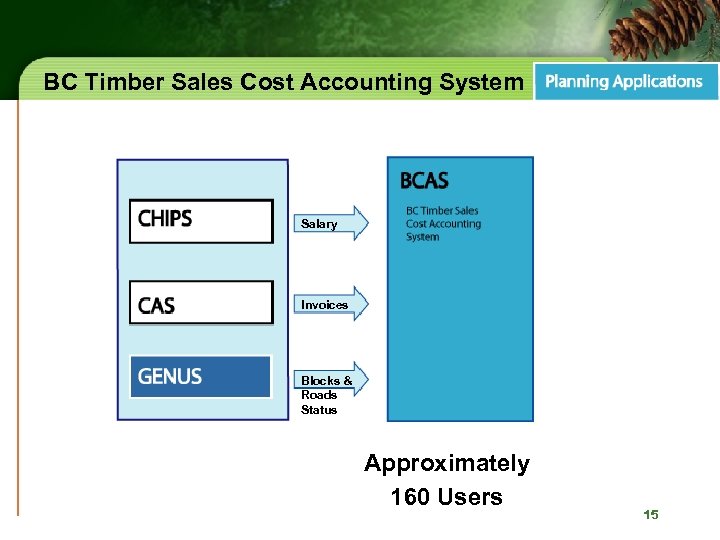 BC Timber Sales Cost Accounting System Salary Invoices Blocks & Roads Status Approximately 160 Users 15
 Review of Critical Data Elements The FSP Tracking System is the only planning application that establishes critical data elements--specifically: FSPs and amendments Stocking standards Forest Development Units and identified areas 16
 Sample Data Dependencies (cont. ) FSP Tracking System Stocking standards must be entered into the FSP application to become available for use in RESULTS (e. g. , assignment to openings) C&E personnel may not have the correct information for conducting inspections if FSP and/or amendments are not properly entered into FSP 17
 Sample Data Dependencies RESULTS If ESF submission fails, data never enters FTA/RESULTS If ESF submission passes, but contains erroneous data, then poor data in FTA/RESULTS 18
 Resource Management Applications include: Forest Tenures Administration (FTA) Log Exemption Information System (LEXIS) Genus Vegetation Resource Inventory Management System (VRIMS) 19
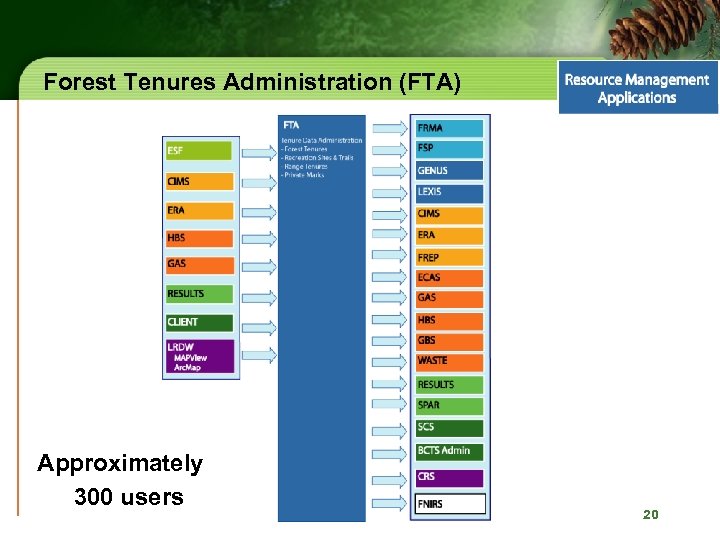 Forest Tenures Administration (FTA) Approximately 300 users 20
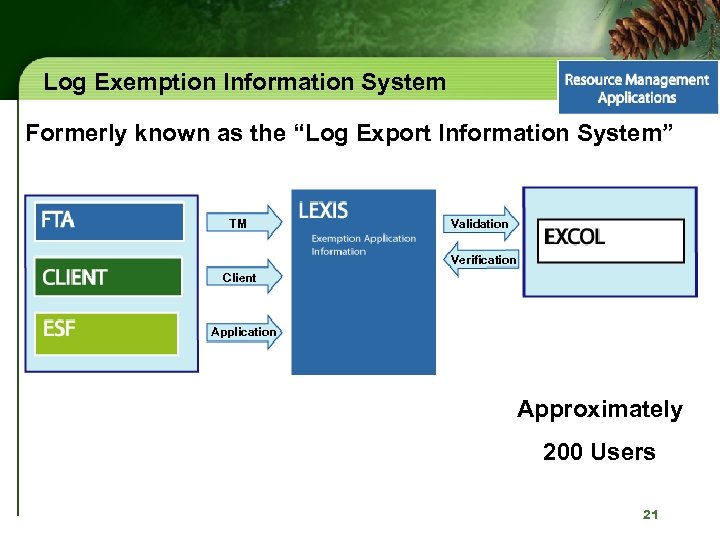 Log Exemption Information System Formerly known as the “Log Export Information System” TM Validation Verification Client Application Approximately 200 Users 21
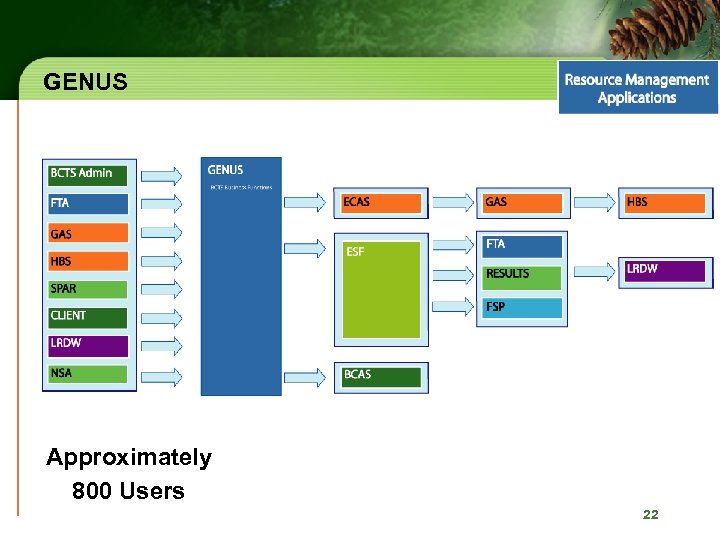 GENUS Approximately 800 Users 22
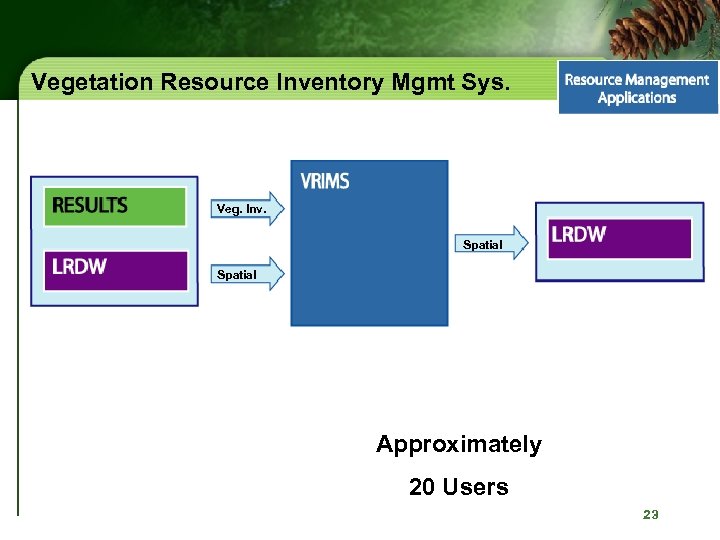 Vegetation Resource Inventory Mgmt Sys. Veg. Inv. Spatial Approximately 20 Users 23
 Review of Critical Data Elements Critical data elements established in the Resource Management Applications: Timber Mark Unique Business Key Identifier(s): Licence, Cutting Permit, Cut Block, Road Permit ID, etc. Area Road Length & Road Section Organizational Unit Management Unit ID Application, Permit and Package Numbers Dates of data entry are also important! 24
 Sample Data Dependencies FTA, RESULTS, & WASTE Tenure data being reported on by RESULTS and WASTE must exist in FTA If cut block in FTA and Opening in RESULTS are not established in a correct and timely manner, the work of people using other applications is seriously affected If critical dates are not entered in a correct and timely manner, it is impossible to conduct workflow analysis 25
 Resource Monitoring Applications include: Compliance Information Management System (CIMS) Enforcement Action, Administrative Review and Appeal Tracking System (ERA) Forest and Range Evaluation Program (FREP) Invasive Alien Plant Program (IAPP) 26
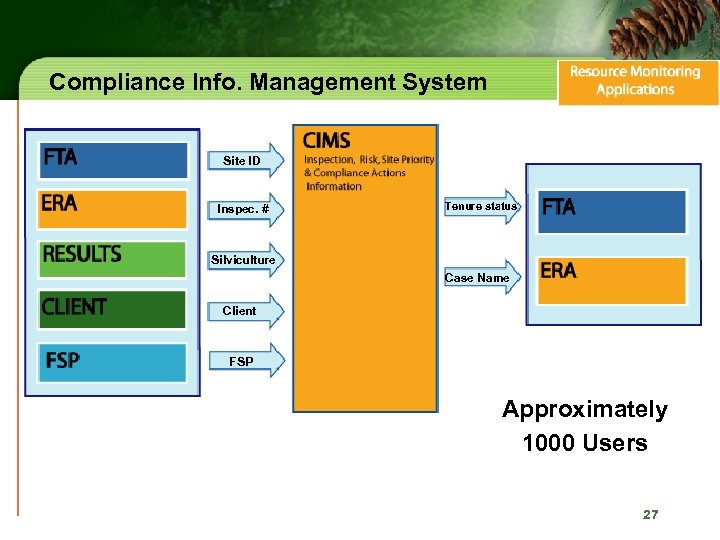 Compliance Info. Management System Site ID Inspec. # Tenure status Silviculture Case Name Client FSP Approximately 1000 Users 27
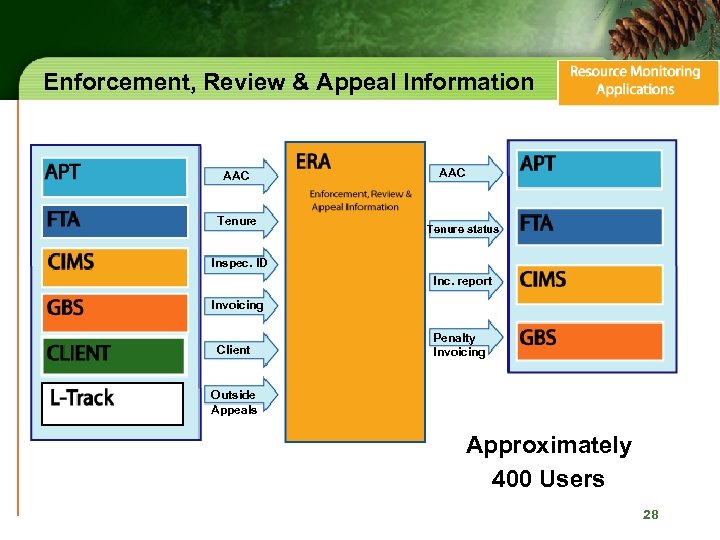 Enforcement, Review & Appeal Information AAC Tenure status Inspec. ID Inc. report Invoicing Client Penalty Invoicing Outside Appeals Approximately 400 Users 28
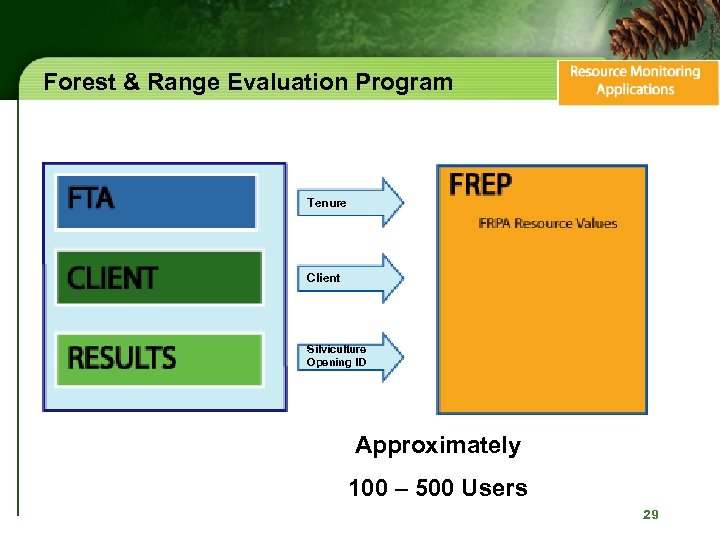 Forest & Range Evaluation Program Tenure Client Silviculture Opening ID Approximately 100 – 500 Users 29
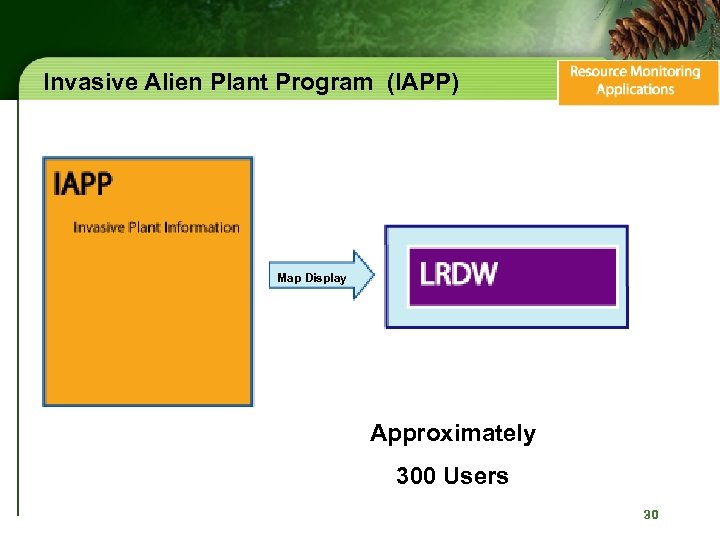 Invasive Alien Plant Program (IAPP) Map Display Approximately 300 Users 30
 Review of Critical Data Elements Critical data elements established in the Resource Monitoring Applications: Case ID – this links the CIMS case to ERA & visa-versa 31
 Sample Data Dependencies CIMS & ERA Incorrect Tenure or Client data can lead to: the inspection being thrown out of court duplicate efforts for inspectors Incorrect data may mean high risk sites are not inspected or penalties not invoiced 32
 Sample Data Dependencies FREP If RESULTS’ Net Area Reforested (NAR) and Gross Area data is not accurate, FREP analysis of the status of some resource values can be compromised If FTA’s Cut Block ID or tenure status is inaccurate, evaluations can be compromised 33
 Pricing & Billing Applications include: Electronic Commerce Appraisal System (ECAS) General Appraisal System (GAS) Harvest Billing System (HBS) General Billing System (GBS) Waste System 34
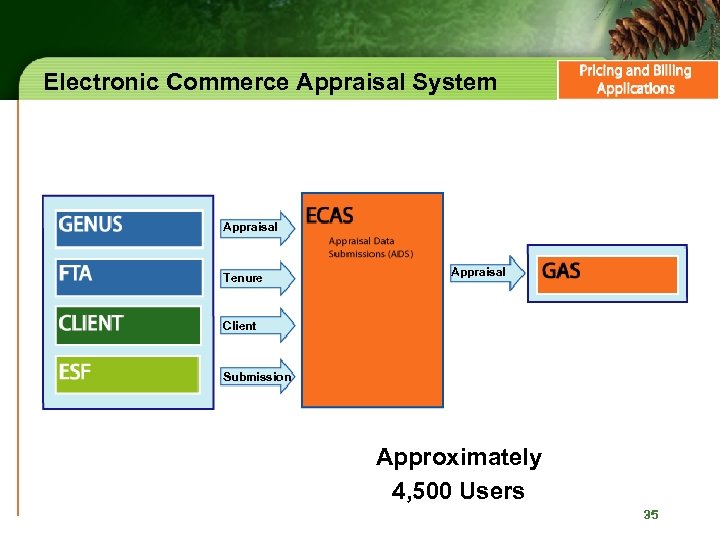 Electronic Commerce Appraisal System Appraisal Tenure Appraisal Client Submission Approximately 4, 500 Users 35
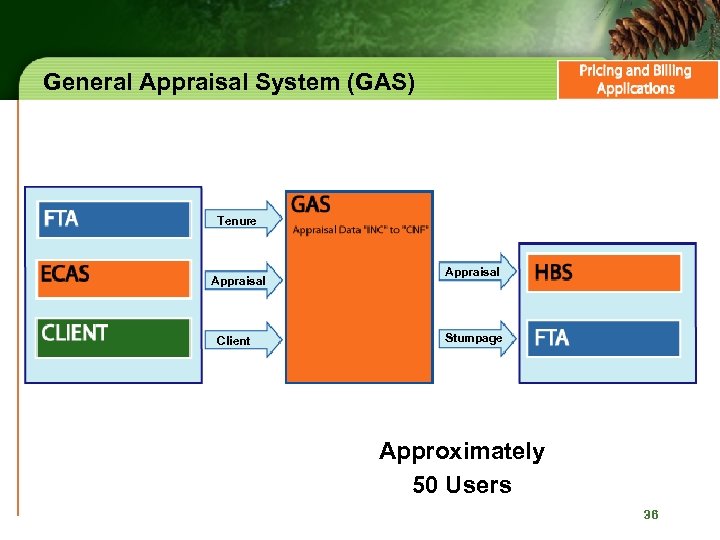 General Appraisal System (GAS) Tenure Appraisal Client Appraisal Stumpage Approximately 50 Users 36
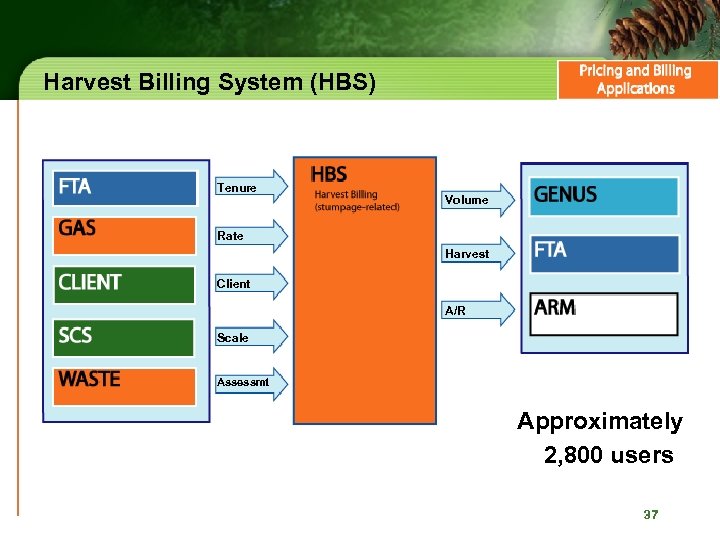 Harvest Billing System (HBS) Tenure Volume Rate Harvest Client A/R Scale Assessmt Approximately 2, 800 users 37
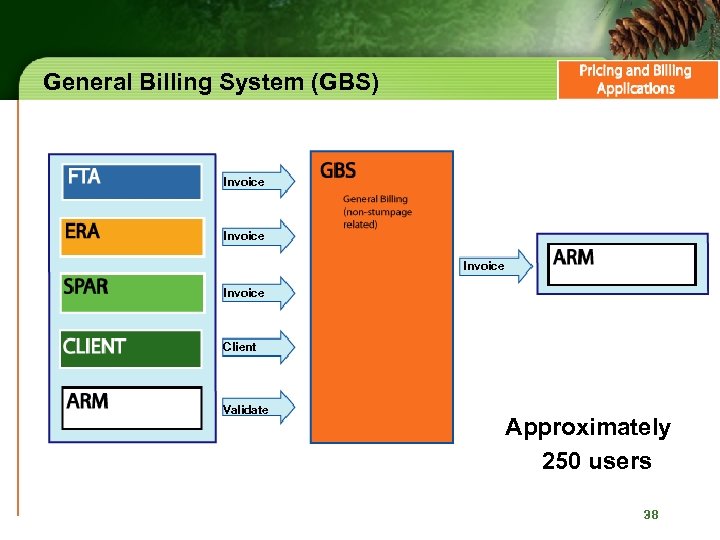 General Billing System (GBS) Invoice Client Validate Approximately 250 users 38
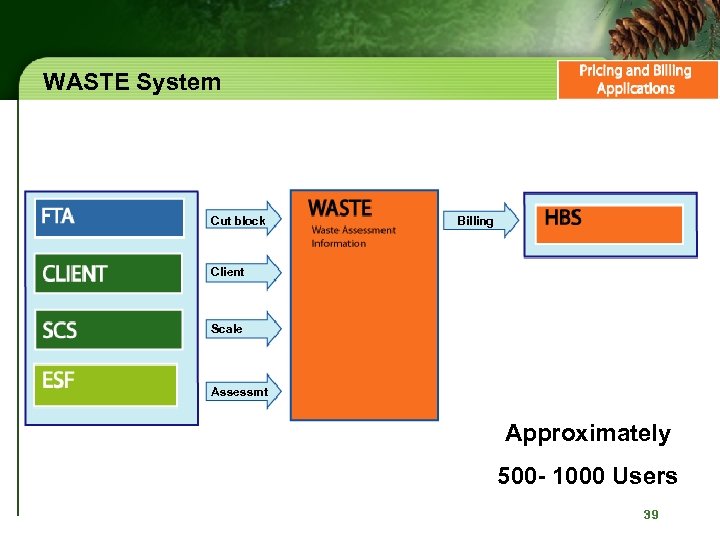 WASTE System Cut block Billing Client Scale Assessmt Approximately 500 - 1000 Users 39
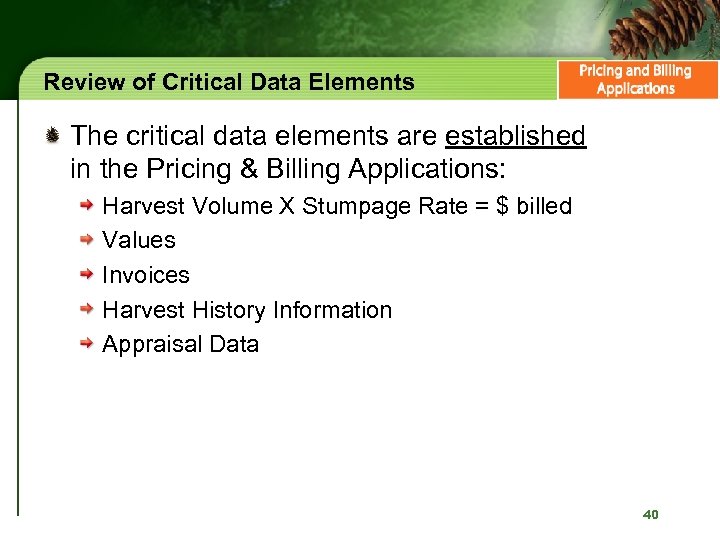 Review of Critical Data Elements The critical data elements are established in the Pricing & Billing Applications: Harvest Volume X Stumpage Rate = $ billed Values Invoices Harvest History Information Appraisal Data 40
 Importance of accurate & timely data HBS & GBS HBS is dependent on accurate and timely data in other systems, otherwise scale is unbilled. These are: CLIENT - for matching and correct Client Number FTA - for valid and accurate tenure info ECAS and GAS - for the processing of appraisal data and stumpage Poor data in either GBS or HBS impacts billing & collections 41
 Sample Data Dependencies CLIENT, ECAS, FTA, GAS, & HBS: Appraisal data may be submitted by Licensee or BCTS into ECAS without the Timber Mark existing in FTA; However, Timber Mark must exist in FTA when district sends the appraisal onto the region in ECAS; If the Timber Mark in ECAS & FTA do not match, the appraisal data will not load into GAS; If the data does not load into GAS, HBS cannot produce an invoice for the Timber Mark; and, If HBS is unable to bill for scaled wood, liability is created, and revenue is delayed 42
 Forest Regeneration Applications include: Reporting Silviculture and Land Status Tracking System (RESULTS) Seed Planning and Registry (SPAR) Nursery and Shipping Admin System (NSA) 43
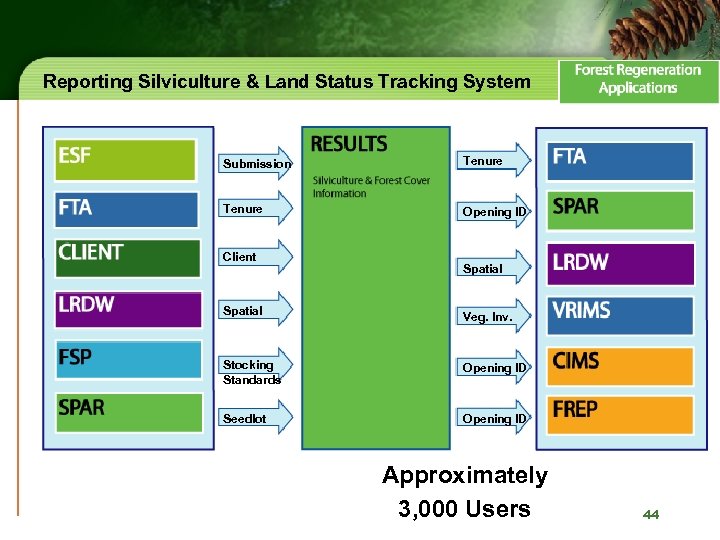 Reporting Silviculture & Land Status Tracking System Submission Tenure Opening ID Client Spatial Veg. Inv. Stocking Standards Opening ID Seedlot Opening ID Approximately 3, 000 Users 44
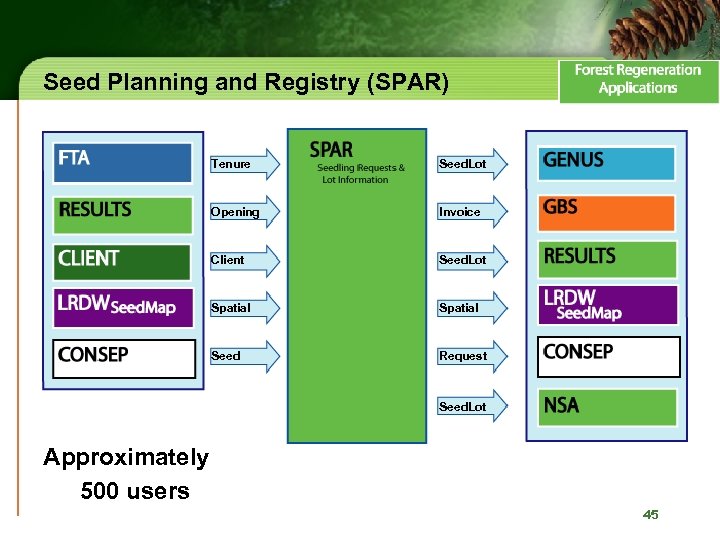 Seed Planning and Registry (SPAR) Tenure Seed. Lot Opening Invoice Client Seed. Lot Spatial Seed Request Seed. Lot Approximately 500 users 45
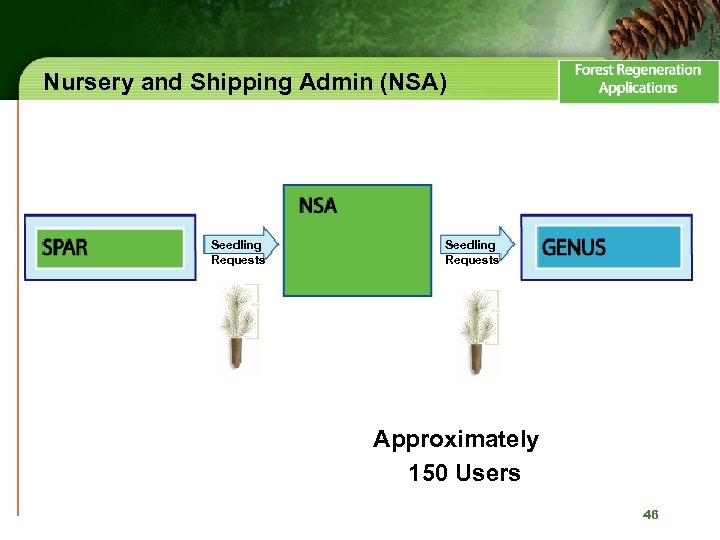 Nursery and Shipping Admin (NSA) Seedling Requests Approximately 150 Users 46
 Review of Critical Data Elements Critical data elements established in the Forest Regeneration Applications: Seedlot & Vegetative Lot ID Seedlot Collection Source Seedling Requests Opening Location Actual Harvest Start Date & Completion Date Location of Planted Seedlots Reforestation Milestone Obligations Forest Cover Land Status Attributes & Location (e. g. NSR, Stocked, Free Growing Stands) 47
 Sample Data Dependencies RESULTS Poor data causes post harvest information to be incorrect in FTA & CIMS, and missed in VRIMS C&E staff may have difficulties completing silviculture inspections if opening information (e. g. area of NAR, amendments) are not properly added to RESULTS Affects government and licensees who depend on Vegetative Inventory information Missing Standard Units & Actual Harvest Dates causes issues within RESULTS Poor data could cause an overestimation of available timber 48
 Sample Data Dependencies (cont. ) SPAR Poor client data causes incorrect invoicing information & billings for the wrong client NSA relies heavily on SPAR data. If data is incorrect in SPAR, this has significant effects on NSA 49
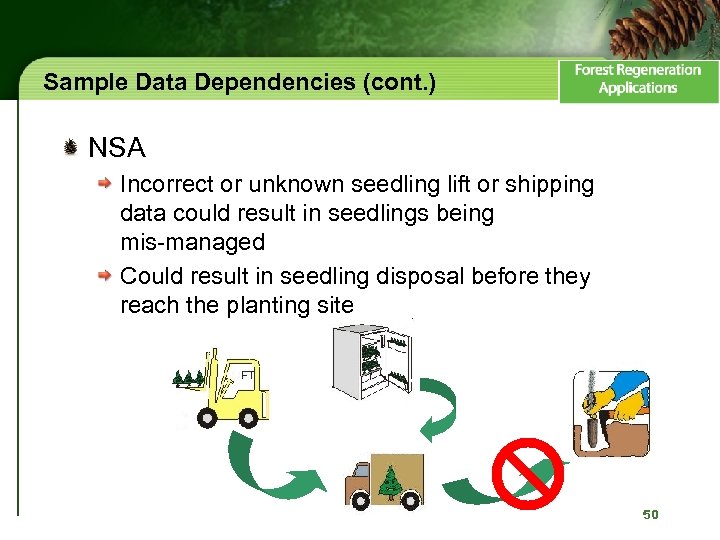 Sample Data Dependencies (cont. ) NSA Incorrect or unknown seedling lift or shipping data could result in seedlings being mis-managed Could result in seedling disposal before they reach the planting site 50
 Administration Applications include: Client Management System (CLIENT) Scaling Control System (SCS) Enterprise Documents Records Management System (EDRMS) BCTS Administration System (BCTS Admin) 51
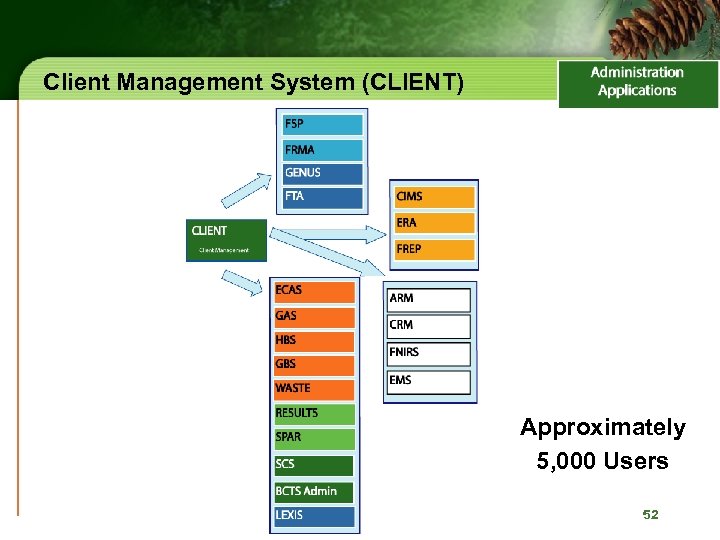 Client Management System (CLIENT) Approximately 5, 000 Users 52
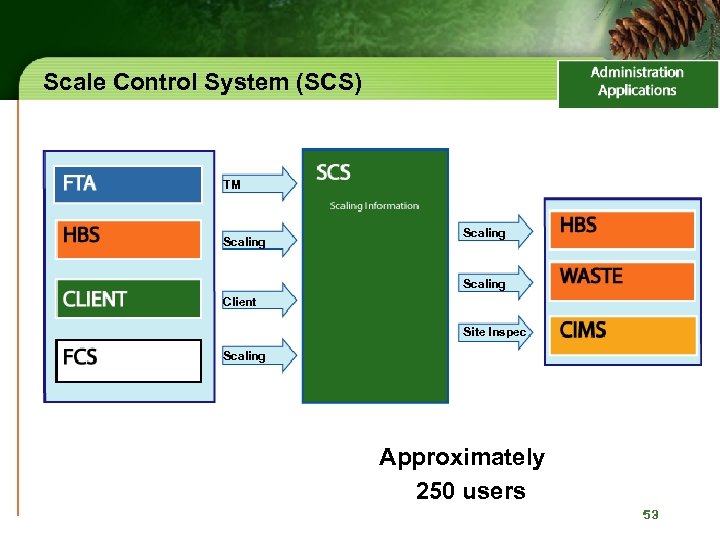 Scale Control System (SCS) TM Scaling Client Site Inspec Scaling Approximately 250 users 53
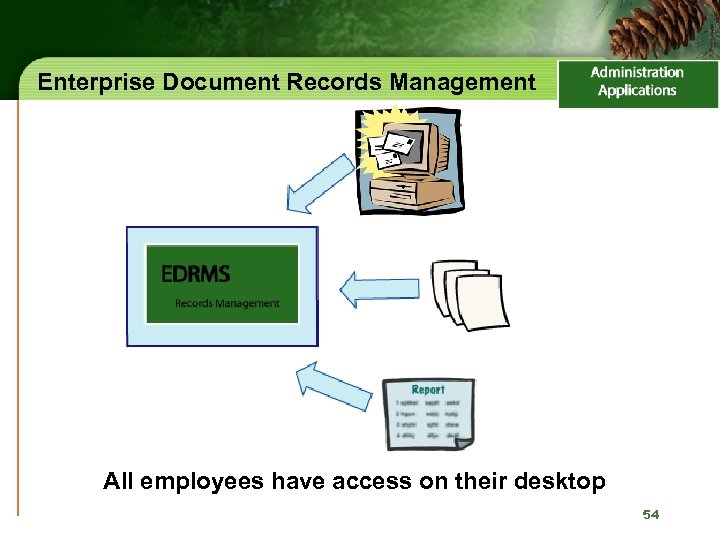 Enterprise Document Records Management All employees have access on their desktop 54
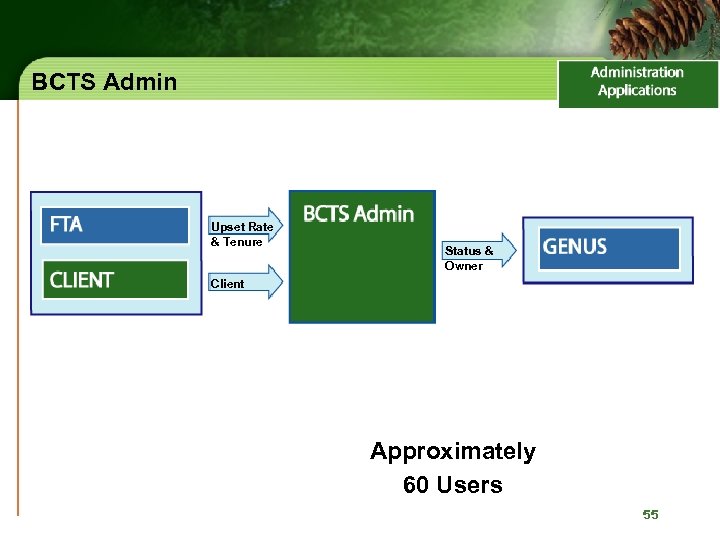 BCTS Admin Upset Rate & Tenure Status & Owner Client Approximately 60 Users 55
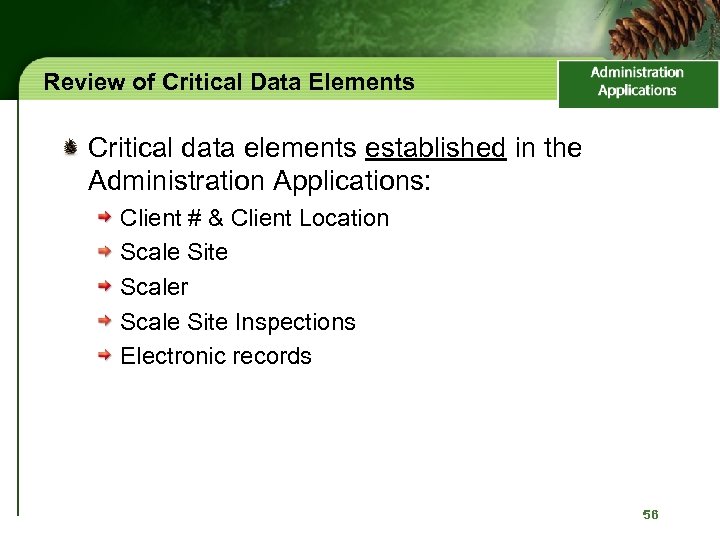 Review of Critical Data Elements Critical data elements established in the Administration Applications: Client # & Client Location Scale Site Scaler Scale Site Inspections Electronic records 56
 Sample Data Dependencies CLIENT An error in CLIENT data can have numerous repercussions (i. e. invoicing, enforcement actions, inability of client to submit data) SCS Poor data in SCS will impact invoicing in HBS EDRMS Unmanaged records can lead to lost records, confusion over versions, and increased search and retrieval time 57
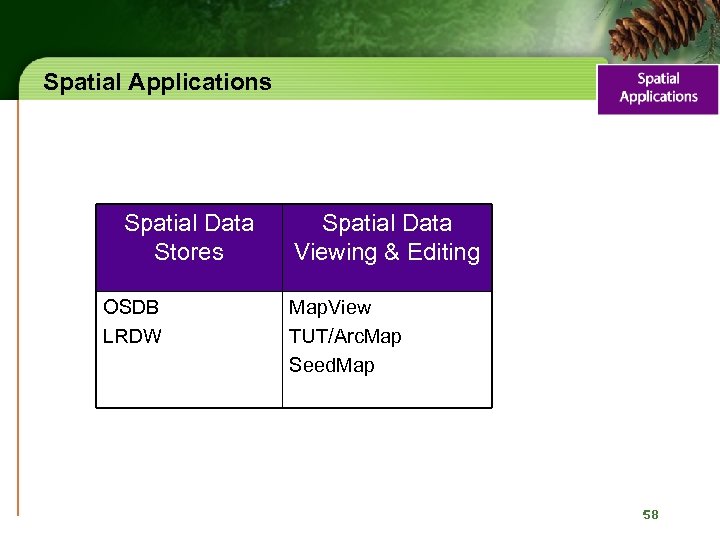 Spatial Applications Spatial Data Stores OSDB LRDW Spatial Data Viewing & Editing Map. View TUT/Arc. Map Seed. Map 58
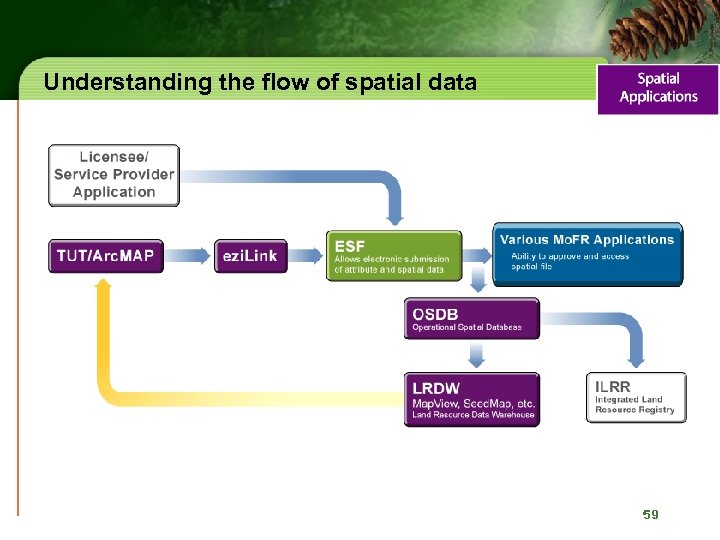 Understanding the flow of spatial data 59
 Review of Critical Data Elements Critical data elements referenced in the Spatial Applications: Spatial location of cut blocks and roads – this is established in LRDW Spatial location of Forest Development Units and identified area boundaries (from FSP) Spatial location of Openings for “cut in” on existing vegetation data Spatial location of forest cover Spatial location of seedlot collection source 60
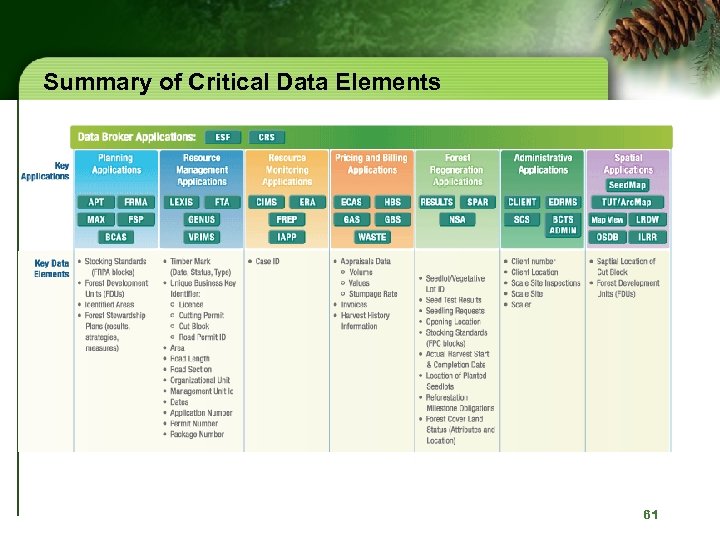 Summary of Critical Data Elements 61
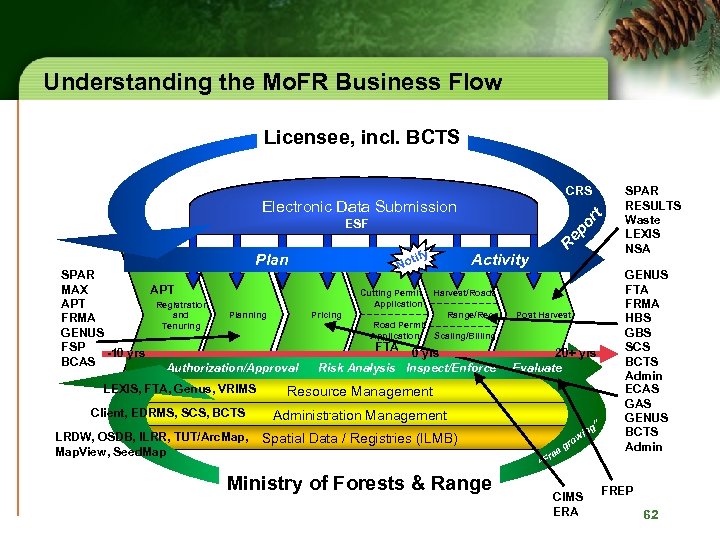 Understanding the Mo. FR Business Flow Licensee, incl. BCTS Electronic Data Submission ESF tify No Plan SPAR APT MAX Registration APT Planning and FRMA Tenuring GENUS FSP -10 yrs BCAS Authorization/Approval LEXIS, FTA, Genus, VRIMS Client, EDRMS, SCS, BCTS LRDW, OSDB, ILRR, TUT/Arc. Map, Map. View, Seed. Map Cutting Permit Application Pricing Activity R Re ep po orrt t CRS Harvest/Roads Range/Rec Road Permit Scaling/Billing Application FTA 0 yrs Risk Analysis Inspect/Enforce Post Harvest 20+ yrs Evaluate Resource Management Administration Management g” Spatial Data / Registries (ILMB) Ministry of Forests & Range e re in ow gr SPAR RESULTS Waste LEXIS NSA GENUS FTA FRMA HBS GBS SCS BCTS Admin ECAS GENUS BCTS Admin “F CIMS ERA FREP 62
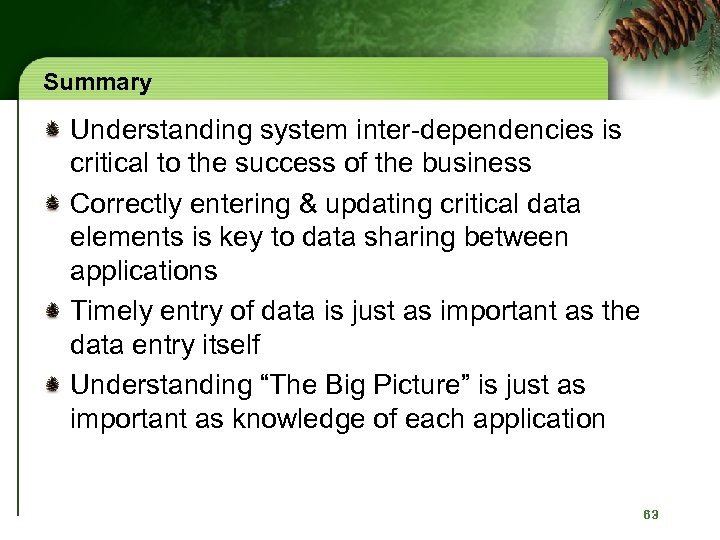 Summary Understanding system inter-dependencies is critical to the success of the business Correctly entering & updating critical data elements is key to data sharing between applications Timely entry of data is just as important as the data entry itself Understanding “The Big Picture” is just as important as knowledge of each application 63
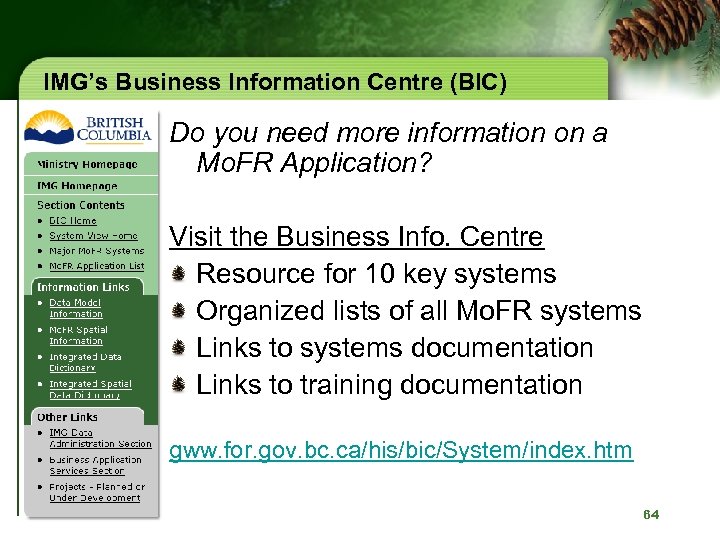 IMG’s Business Information Centre (BIC) Do you need more information on a Mo. FR Application? Visit the Business Info. Centre Resource for 10 key systems Organized lists of all Mo. FR systems Links to systems documentation Links to training documentation gww. for. gov. bc. ca/his/bic/System/index. htm 64