


 Скачать презентацию Minimizing Micro-Cracks in Solar Cell Interconnections Paul Wood
c2be66bb96b040ce0c5e655d526c4bf0.ppt
- Количество слайдов: 15
 Minimizing Micro-Cracks in Solar Cell Interconnections Paul Wood Advanced Product Applications Manager
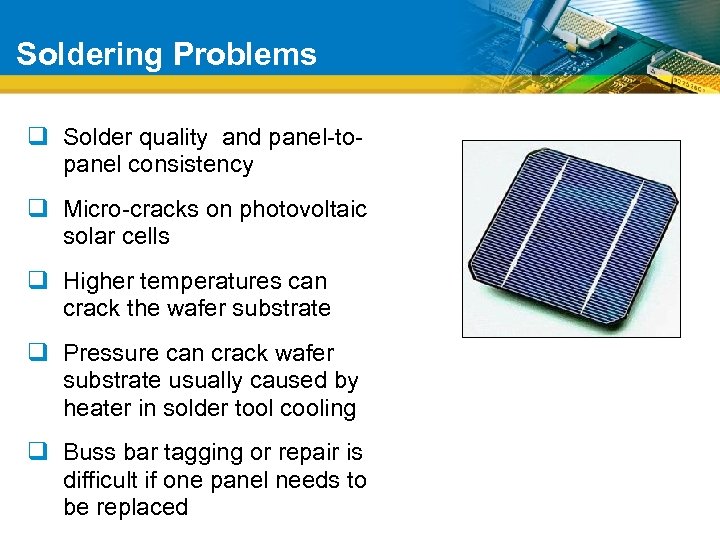 Soldering Problems q Solder quality and panel-topanel consistency q Micro-cracks on photovoltaic solar cells q Higher temperatures can crack the wafer substrate q Pressure can crack wafer substrate usually caused by heater in solder tool cooling q Buss bar tagging or repair is difficult if one panel needs to be replaced
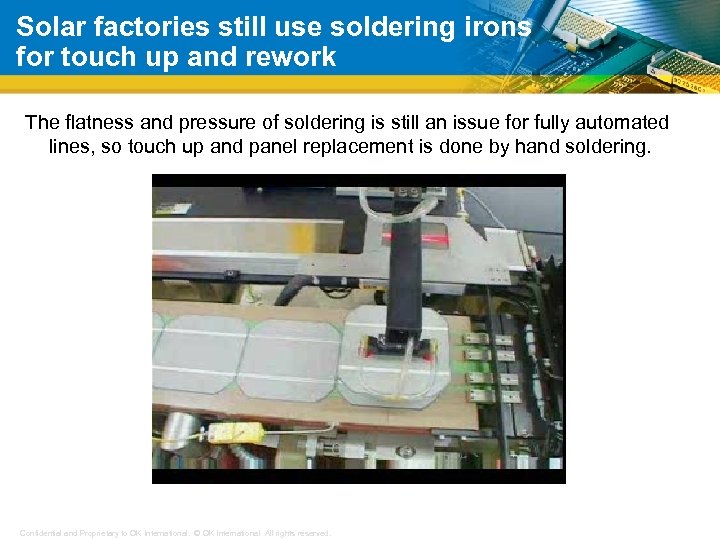 Solar factories still use soldering irons for touch up and rework The flatness and pressure of soldering is still an issue for fully automated lines, so touch up and panel replacement is done by hand soldering. Confidential and Proprietary to OK International. © OK International All rights reserved.
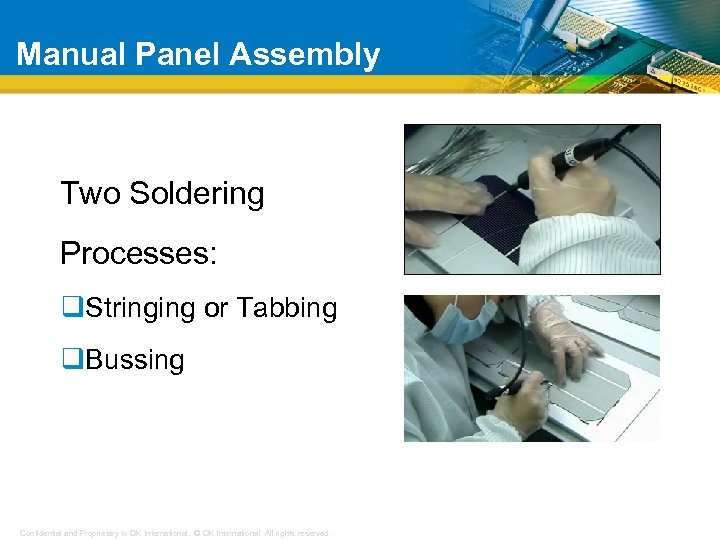 Manual Panel Assembly Two Soldering Processes: q. Stringing or Tabbing q. Bussing Confidential and Proprietary to OK International. © OK International All rights reserved.
 Solar cell manual assembly soldering video Confidential and Proprietary to OK International. © OK International All rights reserved.
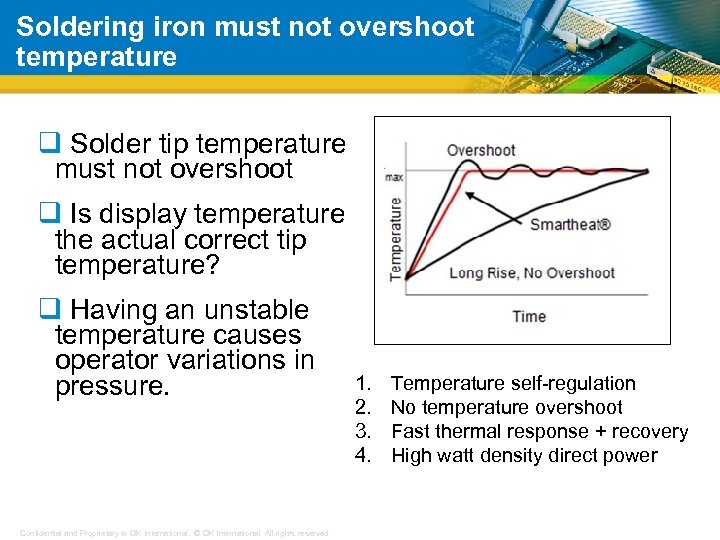 Soldering iron must not overshoot temperature q Solder tip temperature must not overshoot q Is display temperature the actual correct tip temperature? q Having an unstable temperature causes operator variations in pressure. Confidential and Proprietary to OK International. © OK International All rights reserved. 1. 2. 3. 4. Temperature self-regulation No temperature overshoot Fast thermal response + recovery High watt density direct power
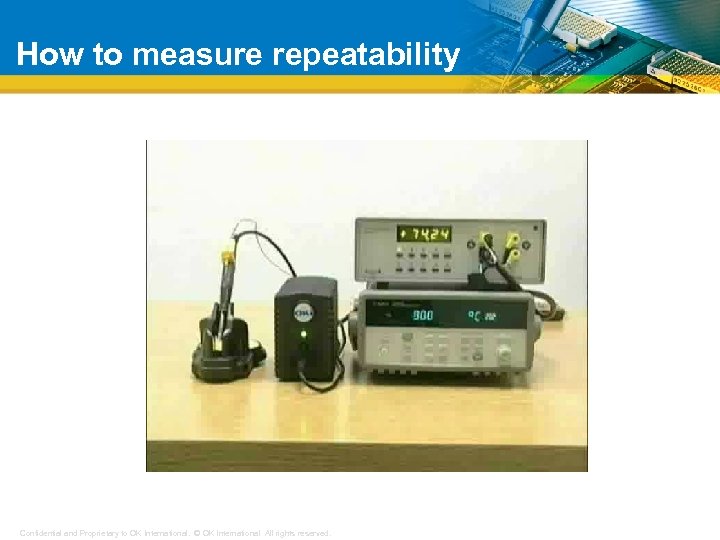 How to measure repeatability Confidential and Proprietary to OK International. © OK International All rights reserved.
 Tip temperature display issue q. Display temperature may not be tip temperatures q. Up to 60°C difference between display and actual temperature is common at the tips. This is a common fault in conventional solder iron stations and is dangerous to substrate. Confidential and Proprietary to OK International. © OK International All rights reserved.
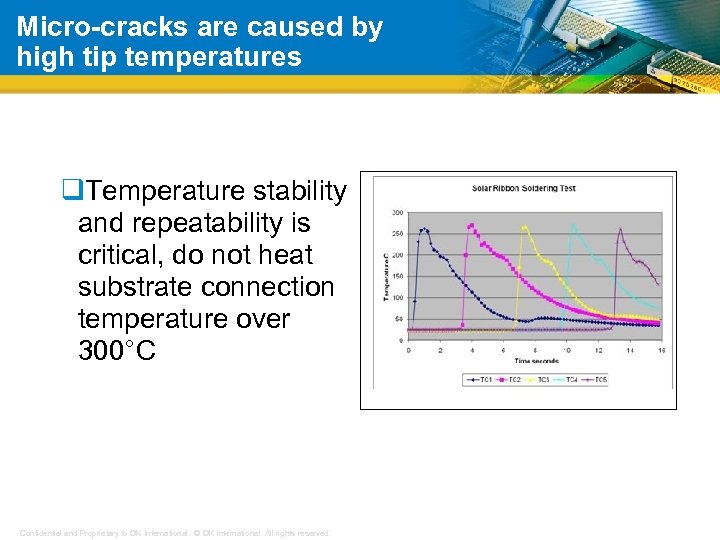 Micro-cracks are caused by high tip temperatures q. Temperature stability and repeatability is critical, do not heat substrate connection temperature over 300°C Confidential and Proprietary to OK International. © OK International All rights reserved.
 How Micro-cracks occur q. During the manual soldering operation, differential thermal expansion of the copper and the silicon elements can occur at temperatures greater than 300°C. q. This differential can result in the formation of micro-cracks that may not be detected during the manufacturing process and result in a less than expected field lifespan. q. The need for precise time and temperature control is additionally critical by the intermetallic layer requirement of 1 -2µm that must be created during the solder joint formation. Confidential and Proprietary to OK International. © OK International All rights reserved.
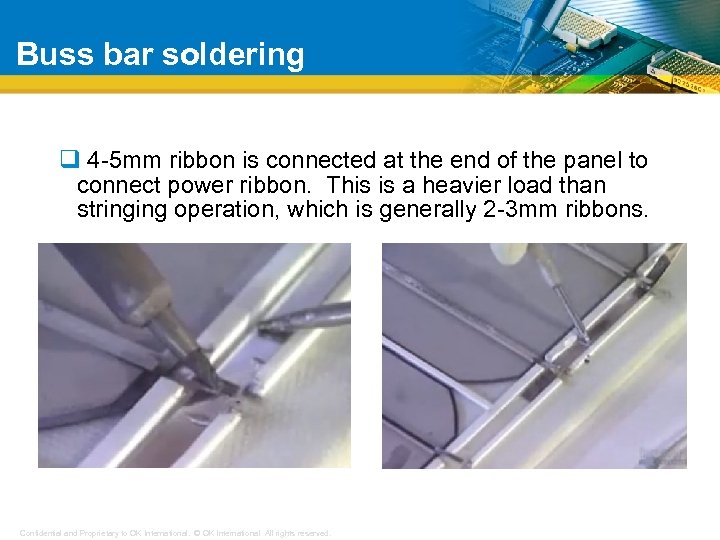 Buss bar soldering q 4 -5 mm ribbon is connected at the end of the panel to connect power ribbon. This is a heavier load than stringing operation, which is generally 2 -3 mm ribbons. Confidential and Proprietary to OK International. © OK International All rights reserved.
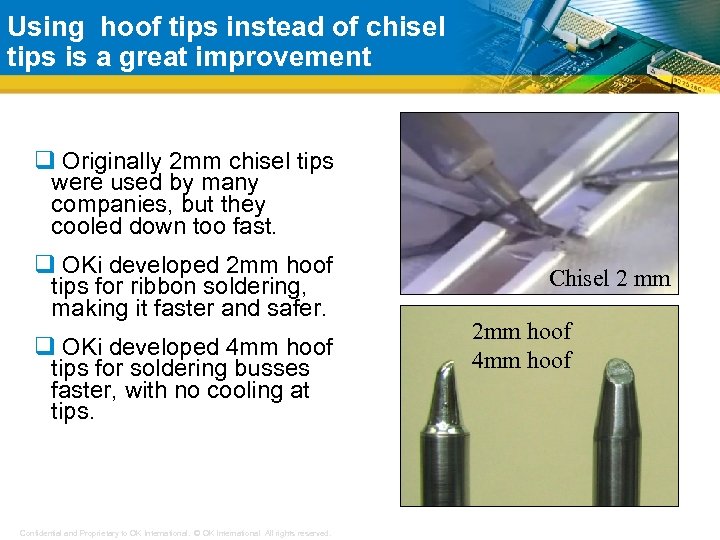 Using hoof tips instead of chisel tips is a great improvement q Originally 2 mm chisel tips were used by many companies, but they cooled down too fast. q OKi developed 2 mm hoof tips for ribbon soldering, making it faster and safer. q OKi developed 4 mm hoof tips for soldering busses faster, with no cooling at tips. Confidential and Proprietary to OK International. © OK International All rights reserved. Chisel 2 mm 2 mm hoof 4 mm hoof
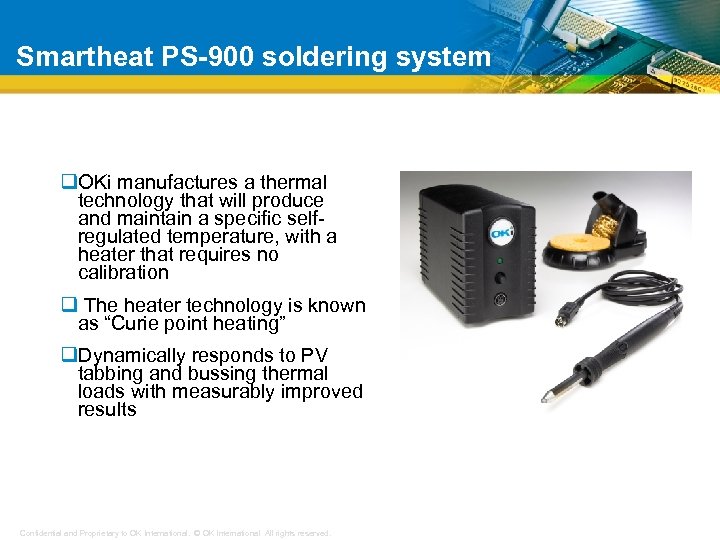 Smartheat PS-900 soldering system q. OKi manufactures a thermal technology that will produce and maintain a specific selfregulated temperature, with a heater that requires no calibration q The heater technology is known as “Curie point heating” q. Dynamically responds to PV tabbing and bussing thermal loads with measurably improved results Confidential and Proprietary to OK International. © OK International All rights reserved.
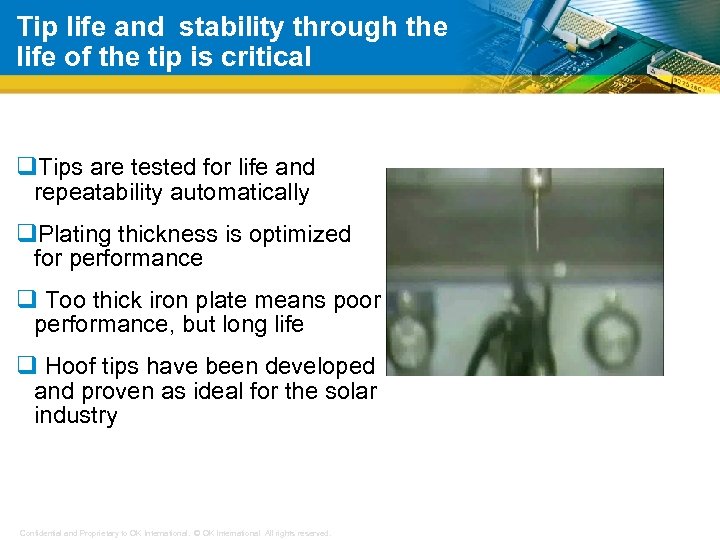 Tip life and stability through the life of the tip is critical q. Tips are tested for life and repeatability automatically q. Plating thickness is optimized for performance q Too thick iron plate means poor performance, but long life q Hoof tips have been developed and proven as ideal for the solar industry Confidential and Proprietary to OK International. © OK International All rights reserved.
 Conclusion q. OKi can provide economic solutions with high degree of repeatability q. Proven hand soldering application with happy customers within China’s solar industry q Can supply standard equipment or work with OEM manufacturers to give custom solutions Confidential and Proprietary to OK International. © OK International All rights reserved.