 Скачать презентацию Mineral Vitamin Supplementation for Beef Cattle on
590f9454da50061d4ec5456d29c20381.ppt
- Количество слайдов: 23



Mineral & Vitamin Supplementation for Beef Cattle on Pasture
Introduction • Forages are the main component of beef cattle diets in Arkansas • Cattle rely on forages to supply – Protein – Energy – Minerals – Vitamins
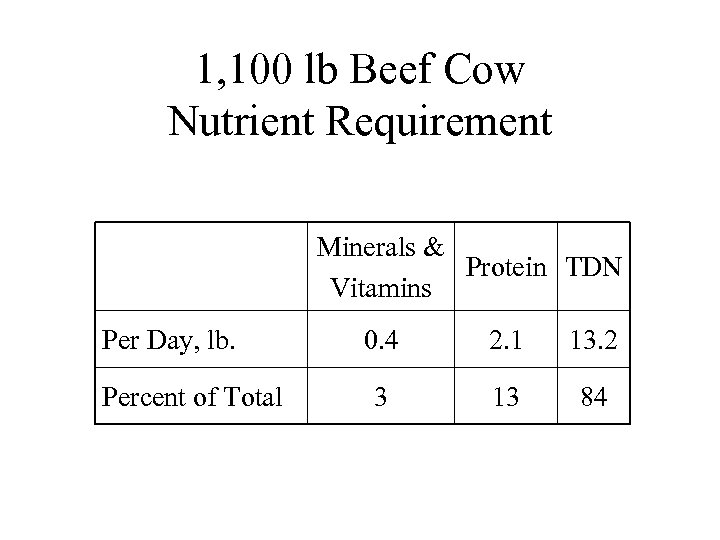
1, 100 lb Beef Cow Nutrient Requirement Minerals & Protein TDN Vitamins Per Day, lb. Percent of Total 0. 4 2. 1 13. 2 3 13 84
Role of Vitamins and Minerals • • Bone Development Metabolism Prevent oxidative damage to cells Reproduction Immune function Nerve signals Muscle contractions
How do we determine a mineral deficiency or toxicity problem? • Clinical symptoms • Forage analysis • Animal blood and tissue samples
Symptoms of Mineral Deficiencies • Clinical symptoms – Milk Fever, Grass Tetany, Goiter, White Muscle Disease • Subclinical losses such as: – Lower calf crop percentage – Higher pull rate for stressed calves – Lower growth rate • Subclinical losses reduce profitability and go undetected without good record keeping
Mineral in Forages • Mineral content of forages are affected by many factors – Mineral composition of the soil – Soil p. H – Growing conditions (i. e. , moisture) – Plant maturity
When should a mineral/vitamin supplement be provided? • When forages are deficient • When forages are excessive • When availability of nutrients from forage is limited • When forage intake is limited
Mineral Categories • Two General Categories – Major = Macro – Minor = Micro = Trace
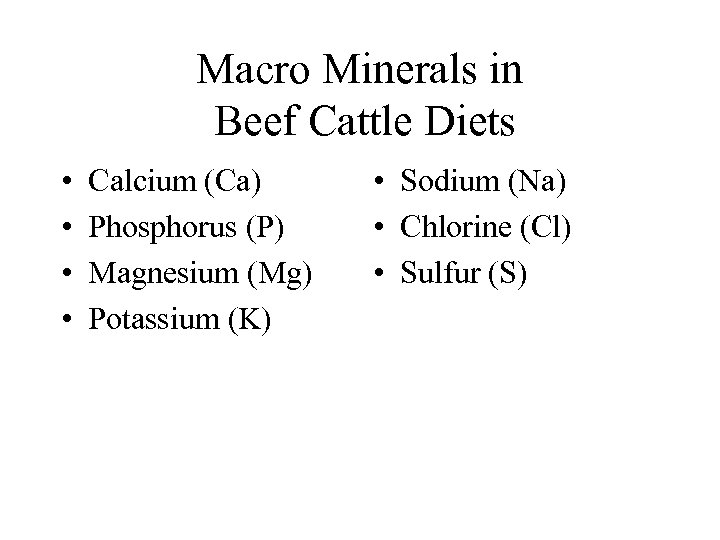
Macro Minerals in Beef Cattle Diets • • Calcium (Ca) Phosphorus (P) Magnesium (Mg) Potassium (K) • Sodium (Na) • Chlorine (Cl) • Sulfur (S)

Micro Minerals in Beef Cattle Diets • • • Iron (Fe) Manganese (Mn) Copper (Cu) Selenium (Se) Zinc (Zn) • Iodine (I) • Cobalt (Co) • Molybdenum (Mo)
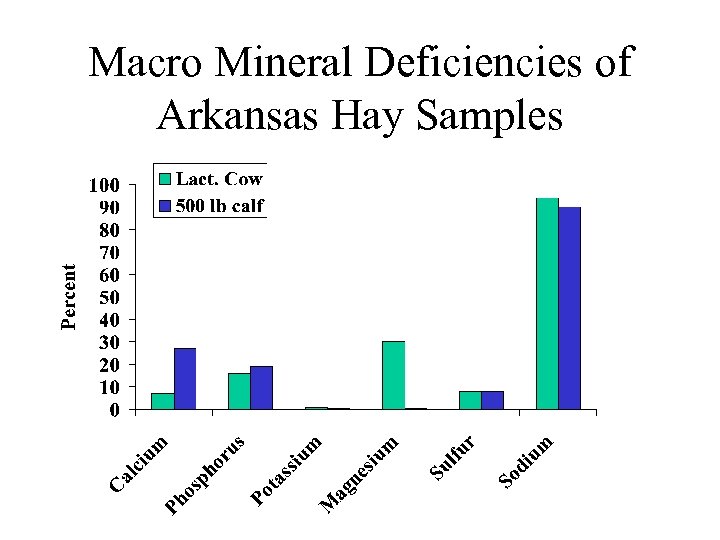
Macro Mineral Deficiencies of Arkansas Hay Samples
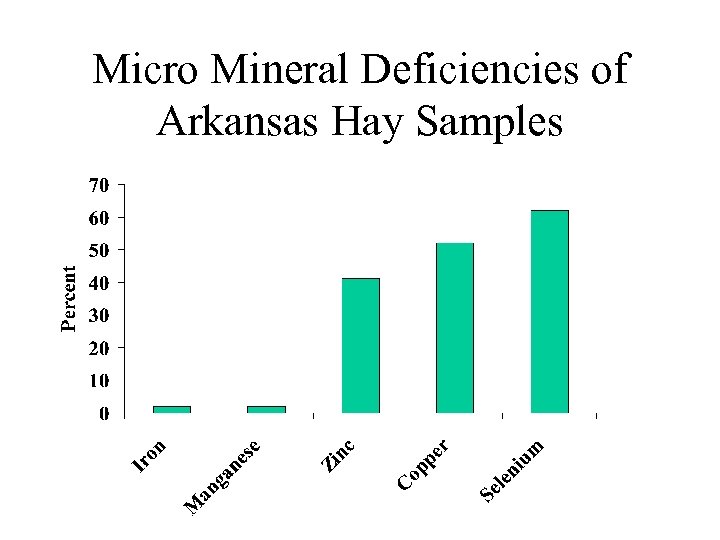
Micro Mineral Deficiencies of Arkansas Hay Samples
What Levels Are Needed in A Supplement? • Depends on pasture quality and forage availability • The amount of calcium, phosphorus and magnesium in a supplement is generally based on soil fertility and forage maturity. • Trace minerals (copper, zinc and selenium) should be formulated in a mineral supplement to meet most of the requirement.
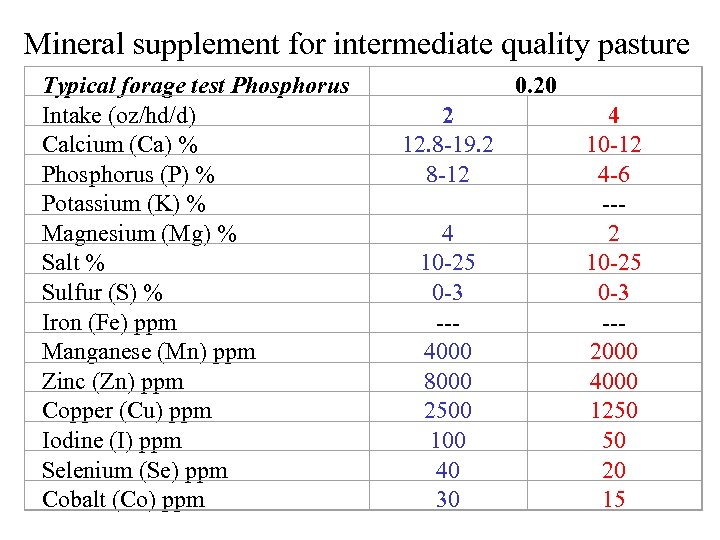
Mineral supplement for intermediate quality pasture Typical forage test Phosphorus Intake (oz/hd/d) Calcium (Ca) % Phosphorus (P) % Potassium (K) % Magnesium (Mg) % Salt % Sulfur (S) % Iron (Fe) ppm Manganese (Mn) ppm Zinc (Zn) ppm Copper (Cu) ppm Iodine (I) ppm Selenium (Se) ppm Cobalt (Co) ppm 0. 20 2 12. 8 -19. 2 8 -12 4 10 -25 0 -3 --4000 8000 2500 100 40 30 4 10 -12 4 -6 --2 10 -25 0 -3 --2000 4000 1250 50 20 15
Vitamins • Usually not a problem on green pasture • Vitamins A and E should be supplemented with hay • Most mineral mixes have A, D and E added at sufficient levels • Don’t buy more than a three-month supply of minerals because vitamins will degrade
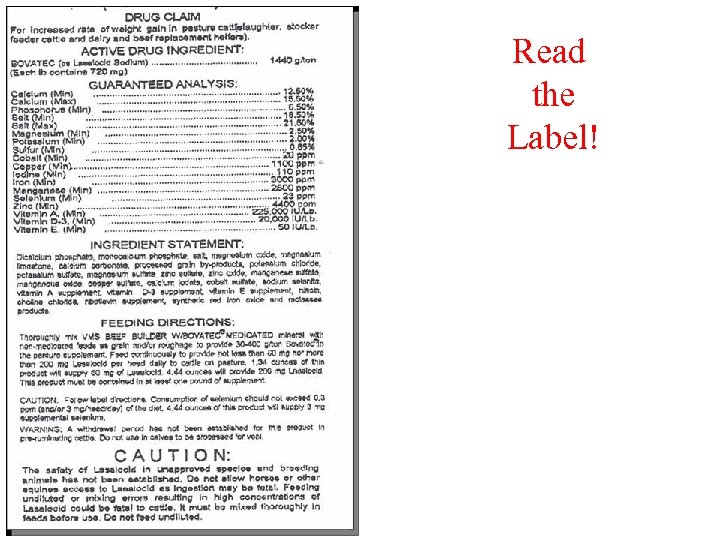
Read the Label!
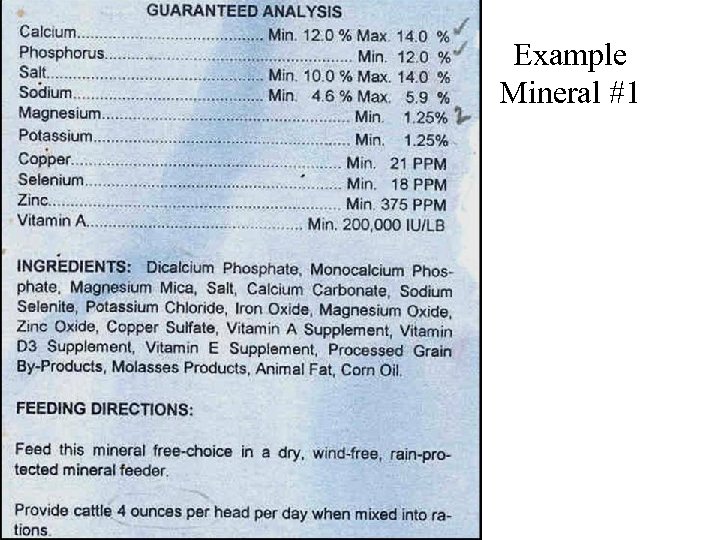
Example Mineral #1
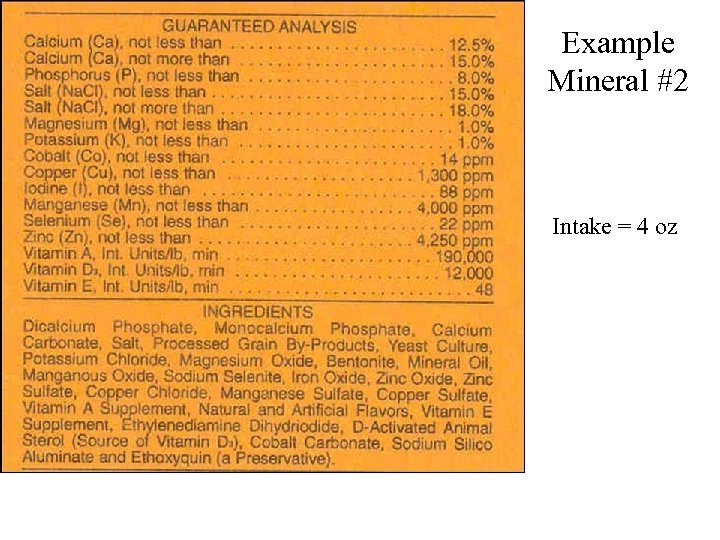
Example Mineral #2 Intake = 4 oz
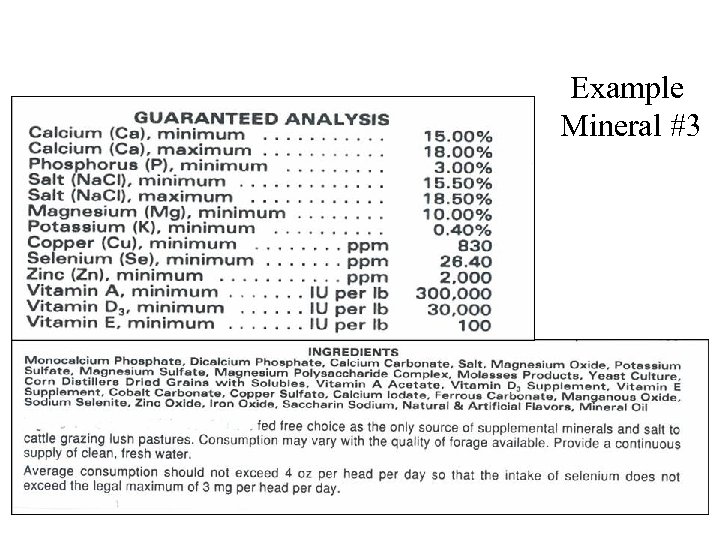
Example Mineral #3
Additional Considerations • Do not provide additional salt sources unless suggested on the mineral tag. • If feeding salt-limited grain supplements, added the mineral to the grain supplement. • If feeding grain daily, mix the mineral in with the grain if possible to ensure consistent, uniform intake of the mineral.
Additional Considerations • If mineral intake is excessive – Add salt – Move mineral feeder further away from watering source – Change brands • If mineral intake is inadequate – – Add a protein meal (cottonseed or soybean meal) Add dry molasses Move mineral feeder closer to the watering source Change brands
In Summary • Minerals deficiencies can result in reduced animal performance • Make sure the mineral supplement being used has adequate levels of trace minerals • Feed the right mineral at the right time of year • Monitor intake and adjust if needed
Скачать презентацию Mineral Vitamin Supplementation for Beef Cattle on
590f9454da50061d4ec5456d29c20381.ppt