


 Скачать презентацию Millennials http www homeworkforyou com st atic uploadedfiles User_826823220 16 teachingmillenials
a99e7a164c6d5f5249e9566b3d90f396.ppt
- Количество слайдов: 45
 Millennials http: //www. homeworkforyou. com/st atic/uploadedfiles/User_826823220 16 teachingmillenials. pdf
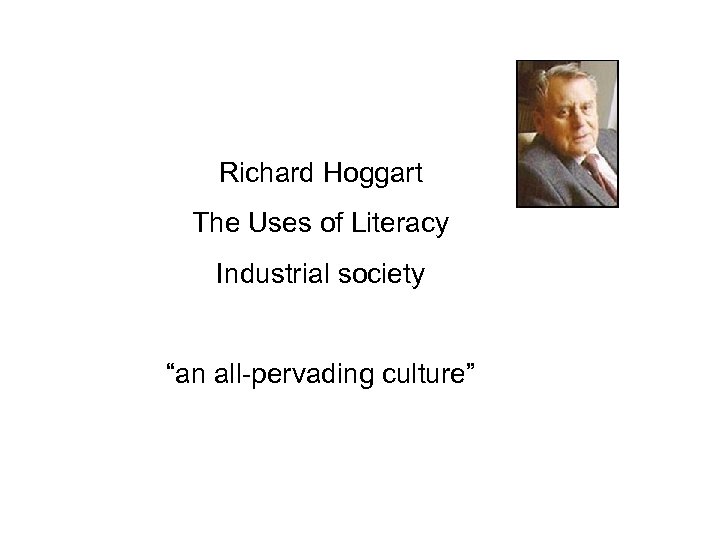 Richard Hoggart The Uses of Literacy Industrial society “an all-pervading culture”
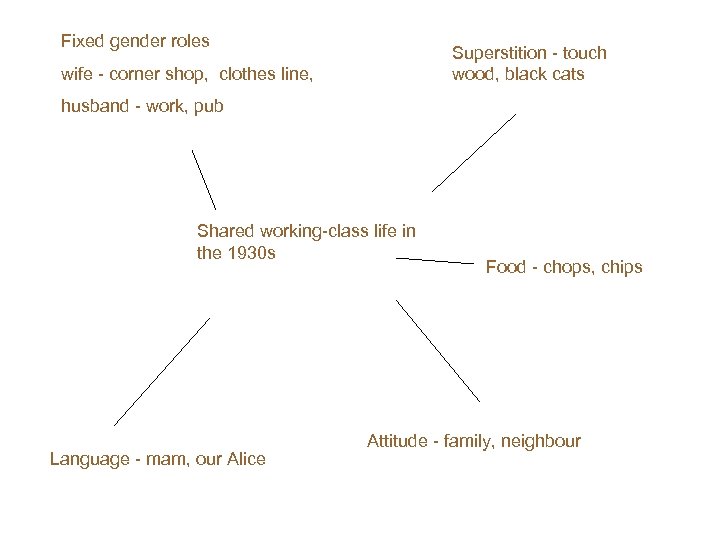 Fixed gender roles Superstition - touch wood, black cats wife - corner shop, clothes line, husband - work, pub Shared working-class life in the 1930 s Language - mam, our Alice Food - chops, chips Attitude - family, neighbour
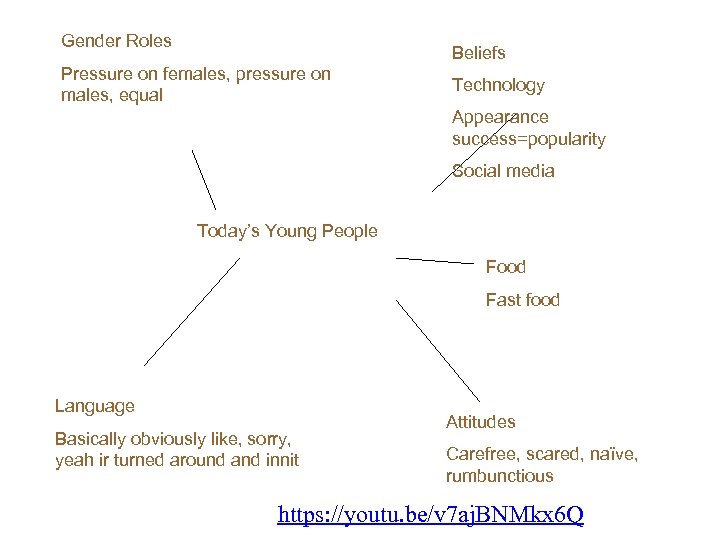 Gender Roles Beliefs Pressure on females, pressure on males, equal Technology Appearance success=popularity Social media Today’s Young People Food Fast food Language Basically obviously like, sorry, yeah ir turned around and innit Attitudes Carefree, scared, naïve, rumbunctious https: //youtu. be/v 7 aj. BNMkx 6 Q
 I don't know what's right and what's real anymore I don't know how I'm meant to feel anymore When do you think it will all become clear And I'll be taken over by the fear Life's about film stars and less about mothers It's all about fast cars and cussing each other But it doesn't matter cause I'm packing plastic And that's what makes my life so fuckin' fantastic ?
 Are Millennials neoliberals? ‘What is private is necessarily good and what is public is necessarily bad’ Apple 2000: 59
![Gramsci’s hegemony • “The predominance of one social class over others […] This represents](https://present5.com/presentation/a99e7a164c6d5f5249e9566b3d90f396/image-7.jpg "Gramsci’s hegemony • “The predominance of one social class over others […] This represents") Gramsci’s hegemony • “The predominance of one social class over others […] This represents not only political and economic control, but also the ability of the dominant class to project its own way of seeing the world so that those who are subordinated by it accept it as 'common sense' and 'natural'. • Commentators stress that this involves willing and active consent. […] Gramsci emphasizes struggle. He noted that 'common sense is not something rigid and immobile, but is continually transforming itself' (Gramsci, cited in Hall 1982: 73). Chandler http: //www. aber. ac. uk/media/Documents/marxism 10. html
Gramsci’s hegemony • “The predominance of one social class over others […] This represents not only political and economic control, but also the ability of the dominant class to project its own way of seeing the world so that those who are subordinated by it accept it as 'common sense' and 'natural'. • Commentators stress that this involves willing and active consent. […] Gramsci emphasizes struggle. He noted that 'common sense is not something rigid and immobile, but is continually transforming itself' (Gramsci, cited in Hall 1982: 73). Chandler http: //www. aber. ac. uk/media/Documents/marxism 10. html
 ‘what is most strikingly novel about neoliberal theory is its commitment to certain kinds of highly individualistic egalitarianism, promoting programs aimed at widening property ownership and distribution and securing equality of access to the competitive labour market for members of disadvantaged social groups, irrespective of their class or ethnic background’ Gilbert 2013
 Post-Industrial ‘The post-industrial society … is a knowledge society’ knowledge Bell D (1974) The Coming of Post-Industrial Society, p. 212 ‘knowledge has become the central economic resource’ Drucker P (1992) The Age of Discontinuity, p. 37
 Postmodern ‘Following a precedent is not a good advice any more. Accumulating knowledge and relying on knowledge accumulated a long time ago, is not a good proposition today. Relying on unchanged routine which you can actually imbibe and follow blindly, is also not a good recipe. The same is true for acting according to habits and customs. All this is counterproductive in a rapidly changing world in which there is no longer one dominant authority but a competition of authorities, very often at cross-purposes, very often mutually contradictory. The responsibility for choosing between these authorities falls entirely upon the person involved. ’ Bauman 2004 lecture liquid modernity
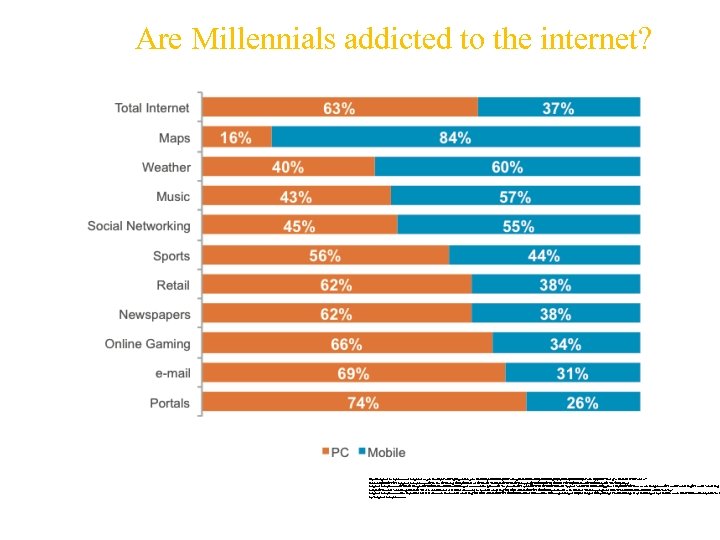 Are Millennials addicted to the internet? http: //images. search. yahoo. com/images/view; _ylt=Awr. B 8 pb. Rsx. JURTg. AAgm. Jzbk. F; _ylu=X 3 o. DMTIyb. HI 3 OWNq. BHNl. Yw. Nzcg. Rzb. Gs. Da. W 1 n. BG 9 p. ZAM 5 NDg 3 Mj. Ay. YWFk. Yj. I 3 MDA 3 Nj. Iw. Ym. Qx. Nj. Vj. OTFl. Y 2 Qw. Zg. Rnc. G 9 z. Az. QEa. XQDYmlu. Zw-? back=http%3 A%2 F%2 Fimages. search. yahoo. com%2 Fsearch%2 Fimages%3 Fp%3 Dinternet%2 Buse%2 Bstatistics%2 B 2014%2 Bshopping%26 n%3 D 60%26 ei%3 DUTF-8%26 y%3 DSearch%26 fr%3 Daaplw%26 fr 2%3 Dsb-topimages. search. yahoo. com%26 tab%3 Dorganic%26 ri%3 D 4&w=600&h=483&imgurl=www. smartinsights. com%2 Fwp-content%2 Fuploads%2 F 2013%2 F 01%2 FMobile-app-use-media-2013 -600 x 483. jpg&rurl=http%3 A%2 F%2 Fwww. smartinsights. com%2 Fmobile-marketinganalytics%2 Fmobile-marketing-statistics%2 F&size=47. 7 KB&name=The+5+best+sources+for+mobile+marketing+%3 Cb%3 Estatistics%3 C%2 Fb%3 E%3 F&p=internet+use+statistics+2014+shopping&oid=9487202 aadb 27007620 bd 165 c 91 ecd 0 f&fr 2=sb-topimages. search. yahoo. com&fr=aaplw&tt=The+5+best+sources+for+mobile+marketing+%3 Cb%3 Estatistics%3 C%2 Fb%3 E%3 F&b=0&ni=54&no=4&ts=&tab=organic&sigr=135 tjr 8 ve&sigb=158 ftqr 41&sigi=12 m 28 lot 6&sigt=11 qs 10 uk 5&sign=11 qs 10 uk 5&. crumb=HKa 5 P 0 QOknn&fr=aaplw&fr 2=sb top-images. search. yahoo. com
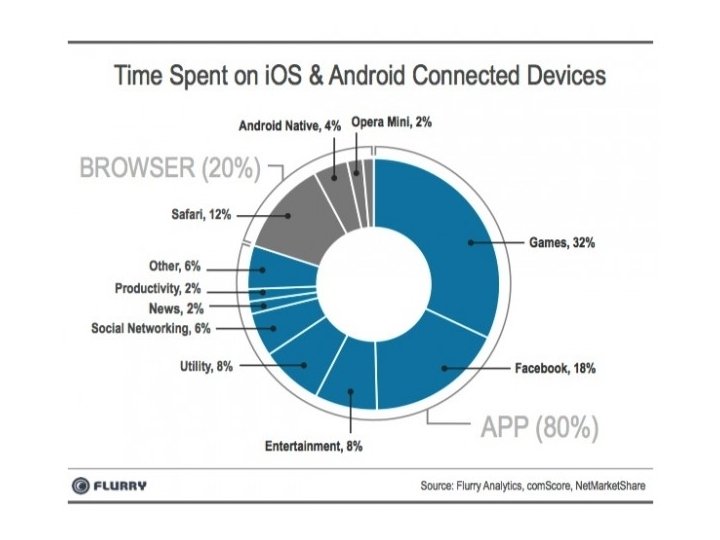
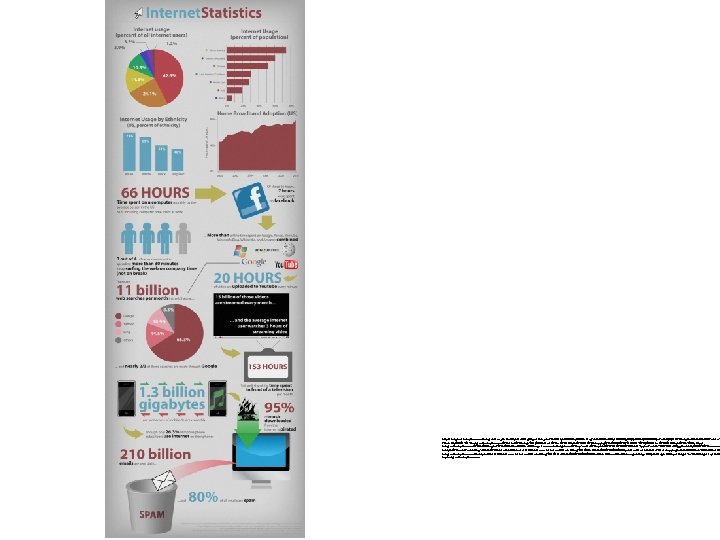 http: //images. search. yahoo. com/images/view; _ylt=Awr. B 8 pb. Rsx. JURTg. AAgm. Jzbk. F; _ylu=X 3 o. DMTIyb. HI 3 OWNq. BHNl. Yw. Nzcg. Rzb. Gs. Da. W 1 n. BG 9 p. ZAM 5 NDg 3 Mj. Ay. YWFk. Yj. I 3 MDA 3 Nj. Iw. Ym. Qx. Nj. Vj. OTFl. Y 2 Qw. Zg. Rnc. G 9 z. Az. QEa. XQDYmlu. Zw? back=http%3 A%2 F%2 Fimages. search. yahoo. com%2 Fsearch%2 Fimages%3 Fp%3 Dinternet%2 Buse%2 Bstatistics%2 B 2014%2 Bshopping%26 n%3 D 60%26 ei%3 DUTF-8%26 y%3 DSearch%26 fr%3 Daaplw%26 fr 2%3 Dsb-topimages. search. yahoo. com%26 tab%3 Dorganic%26 ri%3 D 4&w=600&h=483&imgurl=www. smartinsights. com%2 Fwp-content%2 Fuploads%2 F 2013%2 F 01%2 FMobile-app-use-media-2013 -600 x 483. jpg&rurl=http%3 A%2 F%2 Fwww. sm analytics%2 Fmobile-marketing-statistics%2 F&size=47. 7 KB&name=The+5+best+sources+for+mobile+marketing+%3 Cb%3 Estatistics%3 C%2 Fb%3 E%3 F&p=internet+use+statistics+2014+shopping&oid=9487202 aadb 27007620 bd 165 images. search. yahoo. com&fr=aaplw&tt=The+5+best+sources+for+mobile+marketing+%3 Cb%3 Estatistics%3 C%2 Fb%3 E%3 F&b=0&ni=54&no=4&ts=&tab=organic&sigr=135 tjr 8 ve&sigb=158 ftqr 41&sigi=12 m 28 lot 6&sigt=11 qs 10 uk 5 top-images. search. yahoo. com
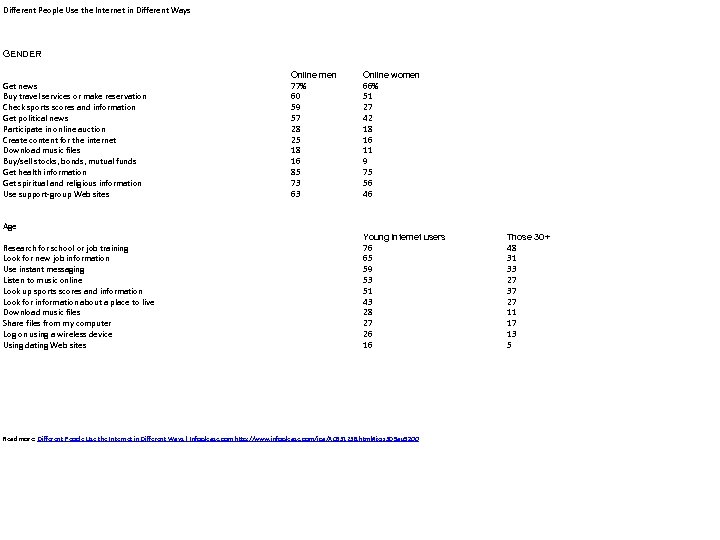 Different People Use the Internet in Different Ways GENDER Get news Buy travel services or make reservation Check sports scores and information Get political news Participate in online auction Create content for the internet Download music files Buy/sell stocks, bonds, mutual funds Get health information Get spiritual and religious information Use support-group Web sites Online men 77% 60 59 57 28 25 18 16 85 73 63 Online women 66% 51 27 42 18 16 11 9 75 56 46 Age Research for school or job training Look for new job information Use instant messaging Listen to music online Look up sports scores and information Look for information about a place to live Download music files Share files from my computer Log on using a wireless device Using dating Web sites Young internet users 76 65 59 53 51 43 28 27 26 16 Read more: Different People Use the Internet in Different Ways | Infoplease. com http: //www. infoplease. com/ipa/A 0931238. html#ixzz 3 D 5 au 5 Z 00 Those 30+ 48 31 33 27 37 27 11 17 13 5
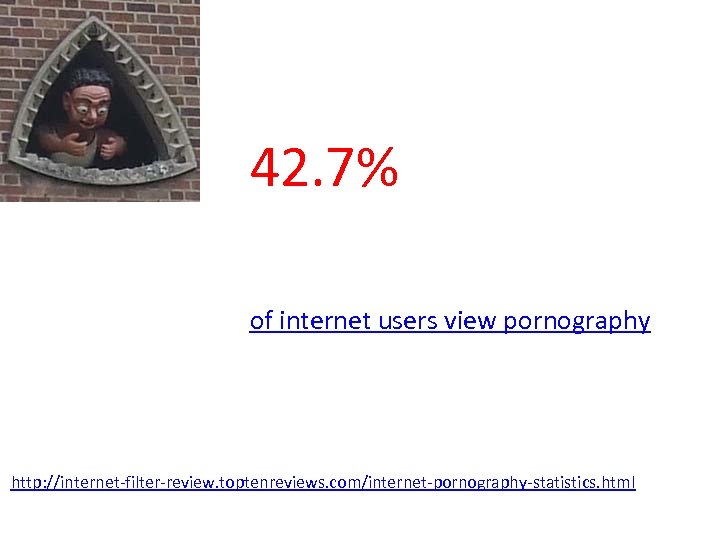 42. 7% of internet users view pornography http: //internet-filter-review. toptenreviews. com/internet-pornography-statistics. html
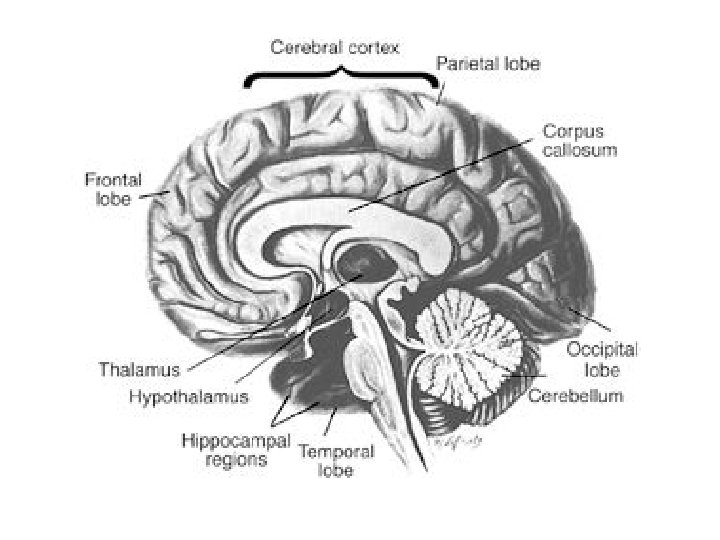
 disease of the brain that compels someone to obsess over, obtain and abuse something, despite unpleasant health or social effects Sprenger, Marilee. Brain-Based Teaching in the Digital Age. Alexandria, VA, USA: Association for Supervision & Curriculum Development (ASCD), 2010. Accessed on 18 September 2014. p 14 17
 67% 18 -25 year-olds check their phone 15 minutes after waking up http: //www. itv. com/news/update/2014 -09 -18/11 m-adults-check-phone-as-soon-as-they-wake-up/ Addicted to Pinterest, Twitter etc http: //www. akademiai. com/content/b 288753537587502/fulltext. pdf 18
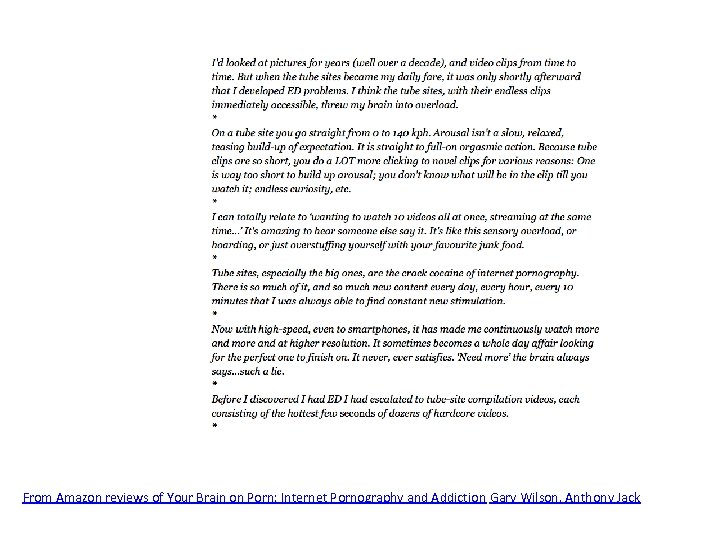 From Amazon reviews of Your Brain on Porn: Internet Pornography and Addiction Gary Wilson, Anthony Jack
 ‘As much as 14 percent of urban youth there—some 24 million kids— fit the bill as Internet addicts, according to the China Youth Internet Association. By comparison, the U. S. may see online addiction rates in urban youth around 5 to 10 percent, say neuroscientists and study coauthors Kai Yuan and Wei Qin of Xidian University in China’ Sprenger, Marilee. Brain-Based Teaching in the Digital Age. Alexandria, VA, USA: Association for Supervision & Curriculum Development (ASCD), 2010. Pro. Quest ebrary. Web. 18 September 2014. p 14 Copyright © 2010. Association for Supervision & Curriculum Development (ASCD). All rights reserved. 20
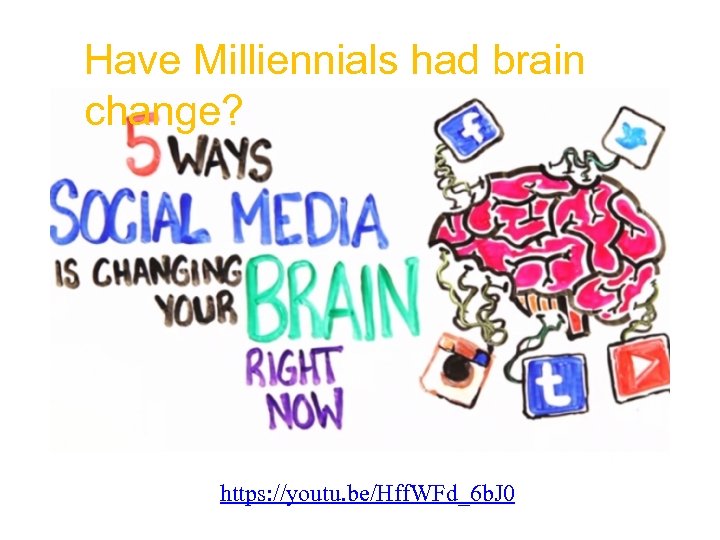 Have Milliennials had brain change? https: //youtu. be/Hff. WFd_6 b. J 0
 https: //medium. com/@tommaxwelll/facebook-is-killing-me-5122593985 e 5
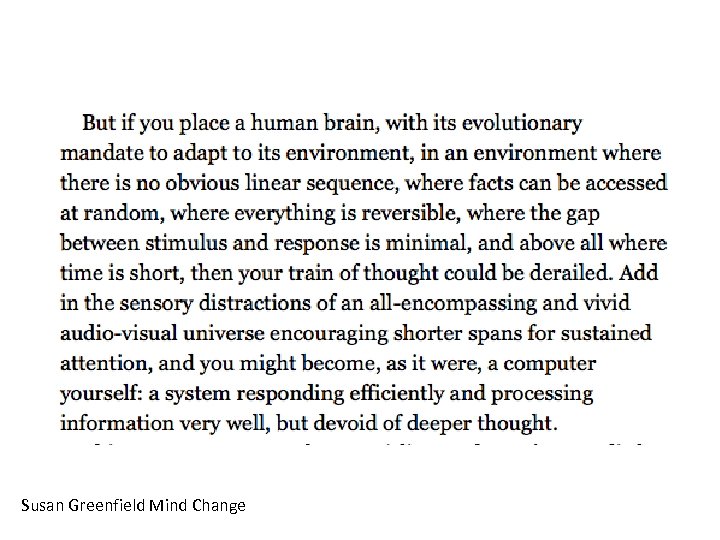 Susan Greenfield Mind Change
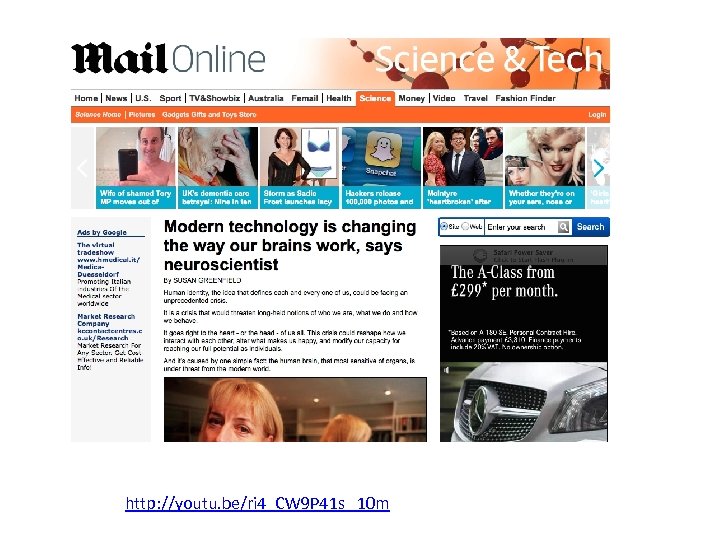 Mind Change Susan Greenfield http: //www. dailymail. co. uk/sciencetech/article 565207/Modern-technology-changing-way-brainswork-says-neuroscientist. html http: //youtu. be/ri 4_CW 9 P 41 s 10 m
 http: //www. theatlantic. com/magazine/archive/2008/07/is-google-making-us-stupid/306868/ 25
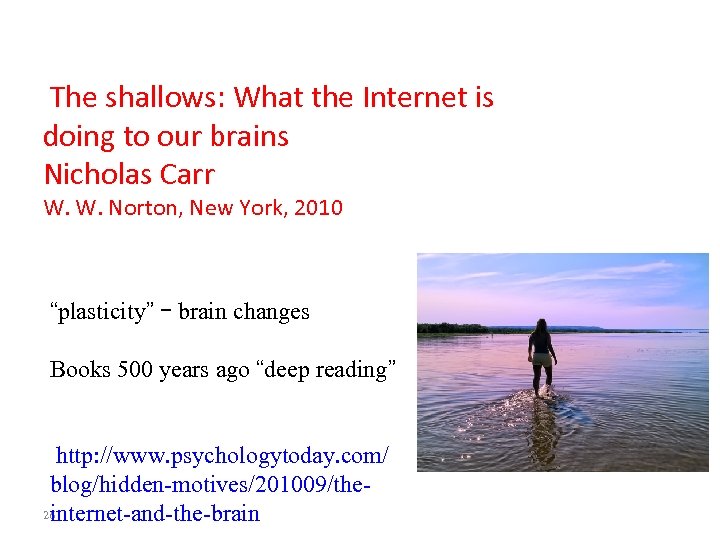 The shallows: What the Internet is doing to our brains Nicholas Carr W. W. Norton, New York, 2010 “plasticity” – brain changes Books 500 years ago “deep reading” http: //www. psychologytoday. com/ blog/hidden-motives/201009/the 26 internet-and-the-brain
 The problem with the text, however, is…Lanier misuses evidence or makes sweeping arguments with little to no evidence. Lanier criticizes collective culture for destroying musical creativity, but his argument is supported with little more than his own low opinion of contemporary music. He criticizes blogs and platforms like Twitter for making us less creative and unable to sit down and write something penetrating and beautiful, but he does not provide any evidence that most people at one time could have ever sat down to write something beautiful. Book Review (2011) Journal of Communication 61 (2011) E 9–E 12 27
 http: //www. bbc. com/future/story/20120424 -does-the-internet-rewire-brains http: //www. pnas. org/content/97/8/4398. full 28
 "I'd be surprised if playing online games for 10 to 12 hours a day didn't change the brain, " says neuroscientist Nora Volkow of the National Institute on Drug Abuse, who wasn't involved in the study. "The reason why Internet addiction isn't a widely recognized disorder is a lack of scientific evidence”. Sprenger, Marilee. Brain-Based Teaching in the Digital Age. Alexandria, VA, USA: Association for Supervision & Curriculum Development (ASCD), 2010. Pro. Quest ebrary. Web. 18 September 2014. p 14 Copyright © 2010. Association for Supervision & Curriculum Development (ASCD). All rights reserved.
 The truth is that everything you do changes your brain. Everything. Every little thought or experience plays a role in the constant wiring and rewiring of your neural networks. So there is no escape. Yes, the internet is rewiring your brain. But so is watching television. And having a cup of tea. Or not having a cup of tea. Or thinking about the washing on Tuesdays. Your life, however you live it, leaves traces in the brain. http: //www. bbc. com/future/story/20120424 -does-the-internet-rewire-brains
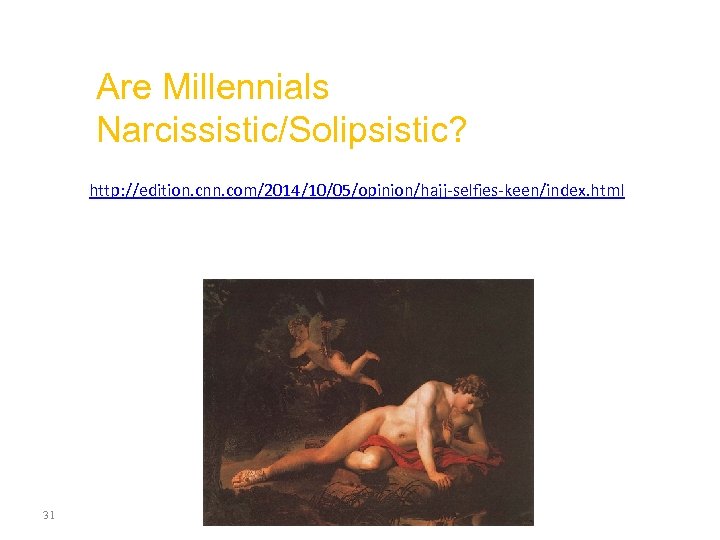 Are Millennials Narcissistic/Solipsistic? http: //edition. cnn. com/2014/10/05/opinion/hajj-selfies-keen/index. html 31
 Is this Blip Culture? Net Geners think more quickly than their older counterparts. In an Oxford Future of the Mind Institute study, Net Geners scored up to 10 percent higher on problem solving than older people, which of course may be attributed to age differences and high exposure to fast-paced technology. Some studies suggest, however, that when Net Geners are interrupted, they think and work at about the same speed as people in their 30 s. Some research concludes that those who were raised with digital media can switch attention faster and have optimized their ability to multitask. Is this a good thing? In most cases the answer is no. Researchers believe that this does not make them more productive, creative, or inventive, and perhaps makes them less so than those without the interruptions (Scott, 2006). Studies show that interruptions can cause 50 percent more errors and take people 50 percent longer to complete the task (Medina, 2008). Sprenger, Marilee. Brain-Based Teaching in the Digital Age. Alexandria, VA, USA: Association for Supervision & Curriculum Development (ASCD), 2010. Pro. Quest ebrary. Web. 18 September 2014. p 11 Copyright © 2010. Association for Supervision & Curriculum Development (ASCD). All rights reserved. 32
 The Reticular Activating System: A Busy Filter Brain research during the past 20 years indicates notable changes in parts of the brain, including the reticular activating system (RAS), which is the brain’s first filter. Located in the area of the brain associated with survival activities, it scans the outside world for danger and determines which information is allowed to enter the brain. Because the brain is programmed to forget, the RAS filters out about 99 percent of the incoming information (Gazzaniga, 1999). This selectivity usually allows us to focus and keep our sanity. Our students live in a world of constant messaging, and therefore their brains— their reticular activating systems— have changed more than ours. Fast-paced, emotionally laden messages bombard them regularly from computers, videos, and other technology, and the RAS has changed as a result of this overexposure. Because of the increase in the number and pace of messages, the RAS scans more quickly and expects more information. We may see the effect when we are teaching our students; their engagement may be brief, as new stimuli are discovered by the Sprenger, Marilee. Brain-Based Teaching in the Digital Age. Alexandria, VA, USA: Association for Supervision & Curriculum Development (ASCD), 2010. Pro. Quest ebrary. Web. 18 September 2014. page 6 Copyright © 2010. Association for Supervision & Curriculum Development (ASCD). All rights reserved. 33
 Sometimes multitasking only slows us down a bit. At Oxford University’s Institute for the Future of the Mind, two groups of subjects (18– 21 -year-olds and 35– 39 -year-olds) were asked to use a simple code for translating images into numbers. Each group was given 90 seconds to complete the task. Youth triumphed, with the 18– 21 -year-olds performing 10 percent better than the older group. However, when each group was interrupted (by a phone call, text message, or IM), the older cohort matched the younger group in both speed and accuracy. In the words of Martin Westwell, who is deputy director of the institute, ‘‘The older people think more slowly, but they have a faster fluid intelligence, so they are better able to block out interruptions and choose what to focus on. ’’ 15 p, 218 Baron, Naomi S. . Always On : Language in an Online and Mobile World. Cary, NC, USA: Oxford University Press, Incorporated, 2008. Pro. Quest ebrary. Web. 19 September 2014. Copyright © 2008. Oxford University Press 34
 ADD specialist Edward Hallowell, author of Crazy. Busy, suggests that hopping from one task to the next gives workers some of the symptoms of ADD. Neuroscientist Susan Greenfield considers the possibility that the proliferation of computers might help explain why ADD in children is on the rise. 20 In 2004 a team of researchers from the University of Washington reported a correlation between television viewing by very young children and subsequent attention-deficit/hyperactivity disorder. Baron, Naomi S. . Always On : Language in an Online and Mobile World. Cary, NC, USA: Oxford University Press, Incorporated, 2008. Pro. Quest ebrary. Web. 19 September 2014. p. 219 Copyright © 2008. Oxford University Press, Incorporated. All rights reserved. 35
 http: //www. amazon. com/i. Brain. Surviving-Technological-Alteration -Modern/dp/0061340340 36
 Are Millennials sociality stunted? Our frontal lobes are the last lobes to develop completely as the brain grows. They perform executive functions such as abstract thinking, future planning, and decision making. They also are involved in our social interactions. To the surprise of some researchers, playing video games does not activate the frontal lobe. Even games that are more complex tend to stimulate the visual and motor functions in the brain, not the frontal lobes (Small & Vorgan, 2008). Interestingly, researchers have found that doing ordinary addition problems activated many more brain areas, including the frontal lobe. Adolescents who are completely immersed in technology may suffer from stunted frontal lobe development. Social abilities are not maturing as students between the ages of 8 and 18 spend 8 ½ hours per day with digital media (Klingberg, Sprenger, Marilee. Brain-Based Teaching in the Digital Age. Alexandria, VA, USA: Association for Supervision & Curriculum Development (ASCD), 2010. Pro. Quest ebrary. Web. 18 September 2014. page 8 Copyright © 2010. Association for Supervision & Curriculum Development (ASCD). 37
 Are Millennials Anxious? A majority of U. S. adolescents at least occasionally communicate on the Internet with unknown peers. This study tested the hypothesis that online communication with an unknown peer facilitates recovery from the acute aversive effects of social exclusion and examined whether this benefit may be greater for adolescents compared with young adults. A total of 72 young adults (mean age = 18. 4 years) and 51 adolescents (mean age = 12. 5 years) were randomly assigned to undergo a standardized laboratory induction of social inclusion or exclusion, followed by 12 min of either communication with an unfamiliar other-sex peer or solitary computer game play. Compared with solitary game play, instant messaging with an unfamiliar peer facilitated greater replenishment of self-esteem and perceived relational value among previously excluded adolescents and young adults. Online communication also resulted in greater reduction of negative affect among adolescents but not among young adults. Logging on, bouncing back: An experimental investigation of online communication following social exclusion. Gross, Elisheva F. Developmental Psychology, Vol 45(6), Nov 2009, 1787 -1793. doi: 10. 1037/a 0016541
 Are Millennials isolated? 39
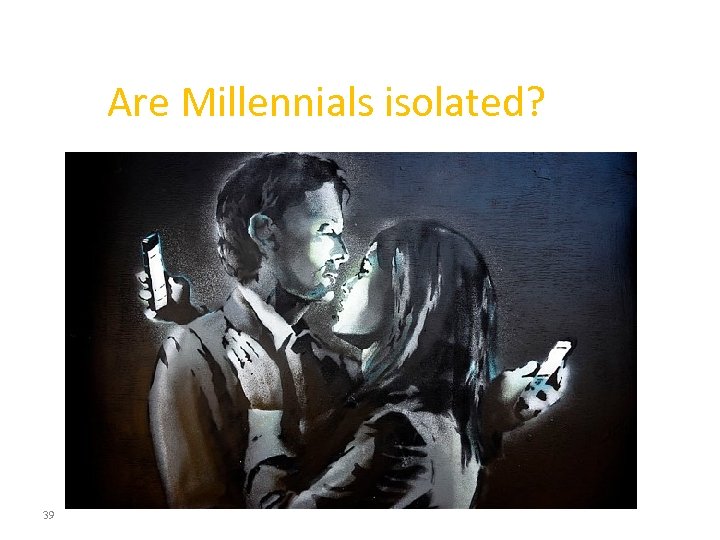
 The internet addict Remains a lonely member of the crowd because he never comes really close to the others or to himself. ’ Baron, N. Always On : Language in an Online and Mobile World. Cary, NC, USA: Oxford University Press, 2008. 40
 The phenomenon known as lonelygirl 15 is an archetypical example. In June 2006, a waiflike creature, who said she was a sixteen-year-old named Bree, began posting a video blog to You. Tube. As the series unfolded, she shared her teenage thoughts and escapades, including the story of her first kiss— which has been viewed over a million times. The videos were followed by a My. Space page. (As of May 2007, lonelygirl 15 had over 17, 000 My. Space ‘‘Friends. ’’) The only problem is that lonelygirl was hardly lonely or a teenager. Rather, she turned out to be a twenty-something actress whose vignettes were designed as fodder— and media buzz— for a future movie. Even when she was outed four months later, her fans kept watching and reading. p 216 Baron, Naomi S. . Always On : Language in an Online and Mobile World. Cary, NC, USA: Oxford University Press, Incorporated, 2008. Pro. Quest ebrary. Web. 19 41
 Do Millennials have limited memory? The advent of the Internet, with sophisticated algorithmic search engines, has made accessing information as easy as lifting a finger. No longer do we have to make costly efforts to find the things we want. We can “Google” the old classmate, find articles online, or look up the actor who was on the tip of our tongue. The results of four studies suggest that when faced with difficult questions, people are primed to think about computers and that when people expect to have future access to information, they have lower rates of recall of the information itself and enhanced recall instead for where to access it. The Internet has become a primary form of external or transactive memory, where information is stored collectively outside ourselves Searching for the Google Effect on People's Memory John Bohannon Science 15 July 2011: 277.
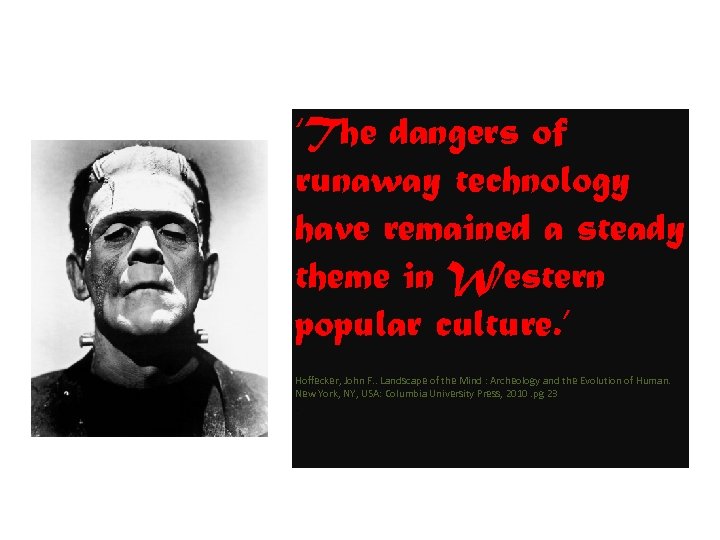 ‘The dangers of runaway technology have remained a steady theme in Western popular culture. ’ Hoffecker, John F. . Landscape of the Mind : Archeology and the Evolution of Human. New York, NY, USA: Columbia University Press, 2010. pg 23.
 Worrying about the internet is just the latest in a long line of fears society has had about the changes technologies might bring. People worried about books when they first became popularly available. In Ancient Greece, Socrates worried about the effect of writing, saying it would erode young people's ability to remember. The same thing happened with television and telephones. These technologies did change us, and the way we live our lives, but nothing like the doommongers predicted would stem from them. http: //www. bbc. com/future/story/20120424 -does-the-internet-rewire-brains
 Do Millennials have Increased IQ? http: //www. americanscientist. org/bookshelf/pub/the-domestication-of-thesavage-mind