


 Скачать презентацию Migration to western industrialized countries and perinatal
924b499c85e8a5ff1ce36b94d9e9191d.ppt
- Количество слайдов: 37
 Migration to western industrialized countries and perinatal health: A systematic review Anita J Gagnon, Jennifer Zeitlin, Meg Zimbeck, and the ROAM collaboration Many, many thanks to Hilary Elkins (in New York) & Diane Habbouche (in Montreal) for diligently searching, locating, photocopying, scanning, and ultimately providing all the literature in an electronic format that has made up this review. 1
 What is ROAM? (Reproductive Outcomes And Migration: an international research collaboration) • • • Sophie Alexander, Université libre de Bruxelles (Belgium) Béatrice Blondel, INSERM (France) Simone Buitendijk, TNO Institute – Prevention and Care (Netherlands) Marie Desmeules, Public Health Agency of Canada Dominico Di. Lallo, Agency for Public Health – Rome (Italy) Anita Gagnon (co-leader), Mc. Gill University/MUHC, (Canada) Mika Gissler, STAKES (Finland) Richard Glazier, Inst. For Clinical Evaluative Sciences (Canada) Maureen Heaman, University of Manitoba (Canada) Dineke Korfker, TNO Institute – Prevention and Care (Netherlands) • • • Alison Macfarlane, City University of London (UK) Edward Ng, Statistics Canada Carolyn Roth, Keele University (UK) Rhonda Small (co-leader), La. Trobe University (Australia) Donna Stewart, Univ. Hlth Netwk of Toronto/U of T (Canada) Babill Stray-Pederson, University of Oslo (Norway) Marcelo Urquia, Inst. For Clinical Evaluative Sciences (Canada) Siri Vangen, Dept Ob/Gyn of The National Hospital of Norway Jennifer Zeitlin, INSERM and EURO-PERISTAT (France) Meg Zimbeck, INSERM and EURO -PERISTAT (France) 2
 Acknowledgements - funding: • Canadian Institutes of Health Research (CIHR), International Opportunities Program • Start-up support: Immigration et métropoles (Center of Excellence in Immigration Studies - Montreal) • Career support to AJG: Le fonds de la recherche en santé du Québec (FRSQ) • Visiting scientist scholarship to AJG: l'Institut national de la santé et de la recherche médicale (INSERM, France) 3
 Why is migrant perinatal health important? • Important volume of women giving birth that are migrants • Perinatal health of migrant women inconsistently reported although often thought to be worse than receiving country women • Health care policies/ delivery need to be responsive to migration 4
 History… • In August 2005 in Siena, Italy at a joint meeting involving EPEN and Euro-PERISTAT, ROAM was officially created – Common themes identified by the group at that time included the need to 1. Examine definitions/ standardization of migrationrelated terms 2. Explore acceptability of these terms – Thus: • the review being presented here & • the Delphi process (previously presented) were undertaken – Done in conjunction with Euro-PERISTAT 5
 Research question • Do migrant women in ‘western industrialized countries’ have consistently poorer perinatal health outcomes than receiving-country women? 6
 Study Design • Systematic review of published literature 7
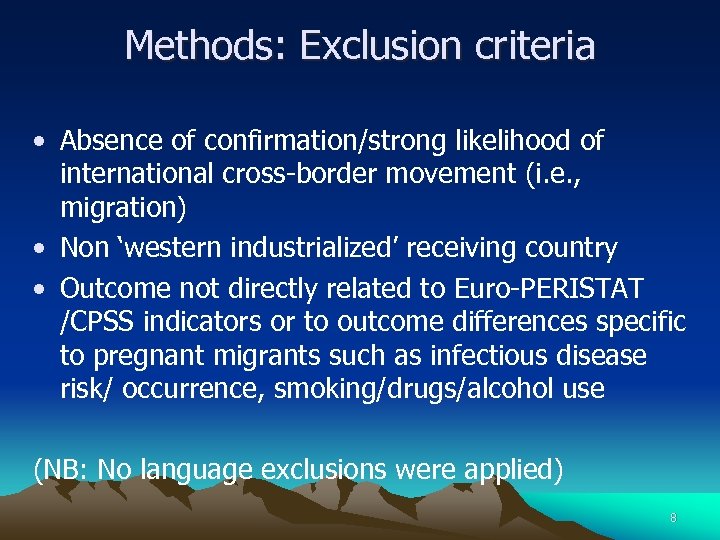 Methods: Exclusion criteria • Absence of confirmation/strong likelihood of international cross-border movement (i. e. , migration) • Non ‘western industrialized’ receiving country • Outcome not directly related to Euro-PERISTAT /CPSS indicators or to outcome differences specific to pregnant migrants such as infectious disease risk/ occurrence, smoking/drugs/alcohol use (NB: No language exclusions were applied) 8
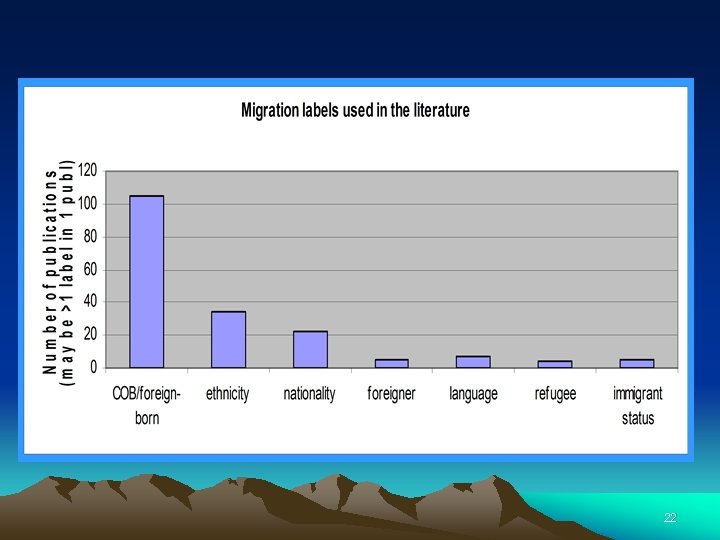
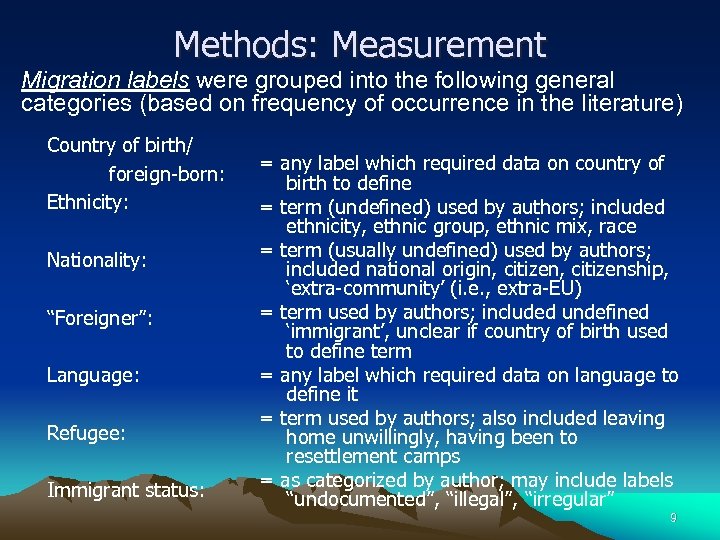 Methods: Measurement Migration labels were grouped into the following general categories (based on frequency of occurrence in the literature) Country of birth/ foreign-born: Ethnicity: Nationality: “Foreigner”: Language: Refugee: Immigrant status: = any label which required data on country of birth to define = term (undefined) used by authors; included ethnicity, ethnic group, ethnic mix, race = term (usually undefined) used by authors; included national origin, citizenship, ‘extra-community’ (i. e. , extra-EU) = term used by authors; included undefined ‘immigrant’, unclear if country of birth used to define term = any label which required data on language to define it = term used by authors; also included leaving home unwillingly, having been to resettlement camps = as categorized by author; may include labels “undocumented”, “illegal”, “irregular” 9
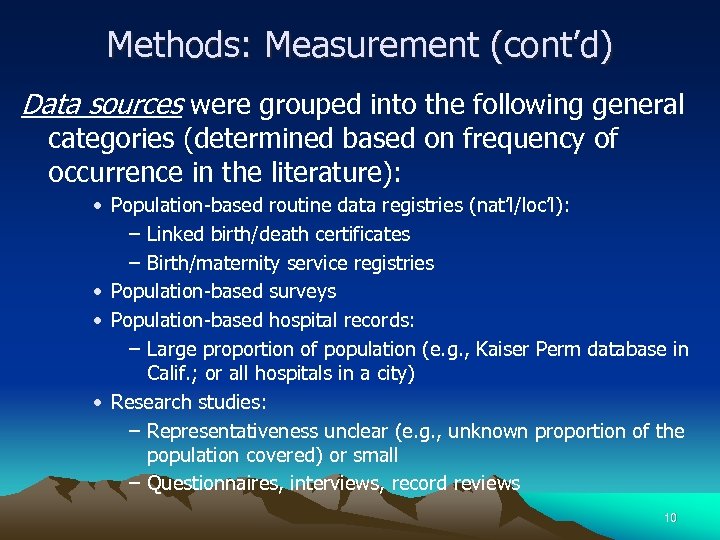 Methods: Measurement (cont’d) Data sources were grouped into the following general categories (determined based on frequency of occurrence in the literature): • Population-based routine data registries (nat’l/loc’l): – Linked birth/death certificates – Birth/maternity service registries • Population-based surveys • Population-based hospital records: – Large proportion of population (e. g. , Kaiser Perm database in Calif. ; or all hospitals in a city) • Research studies: – Representativeness unclear (e. g. , unknown proportion of the population covered) or small – Questionnaires, interviews, record reviews 10
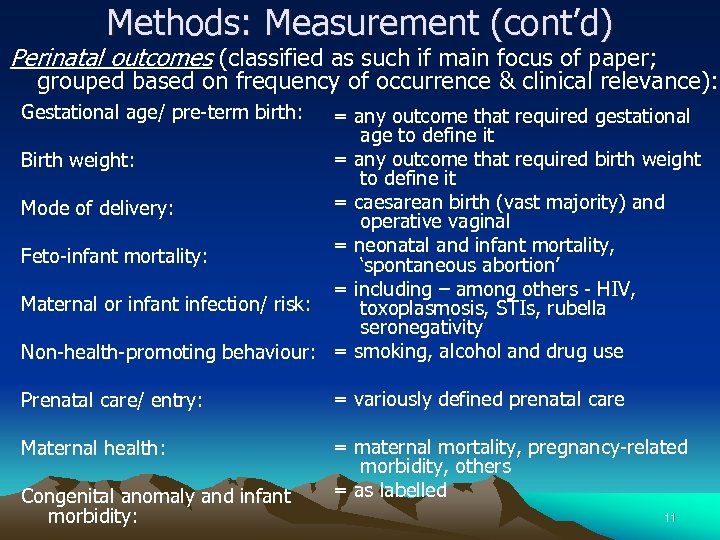 Methods: Measurement (cont’d) Perinatal outcomes (classified as such if main focus of paper; grouped based on frequency of occurrence & clinical relevance): Gestational age/ pre-term birth: = any outcome that required gestational age to define it = any outcome that required birth weight Birth weight: to define it = caesarean birth (vast majority) and Mode of delivery: operative vaginal = neonatal and infant mortality, Feto-infant mortality: ‘spontaneous abortion’ = including – among others - HIV, Maternal or infant infection/ risk: toxoplasmosis, STIs, rubella seronegativity Non-health-promoting behaviour: = smoking, alcohol and drug use Prenatal care/ entry: = variously defined prenatal care Maternal health: = maternal mortality, pregnancy-related morbidity, others = as labelled Congenital anomaly and infant morbidity: 11
 Results: Study sample 12
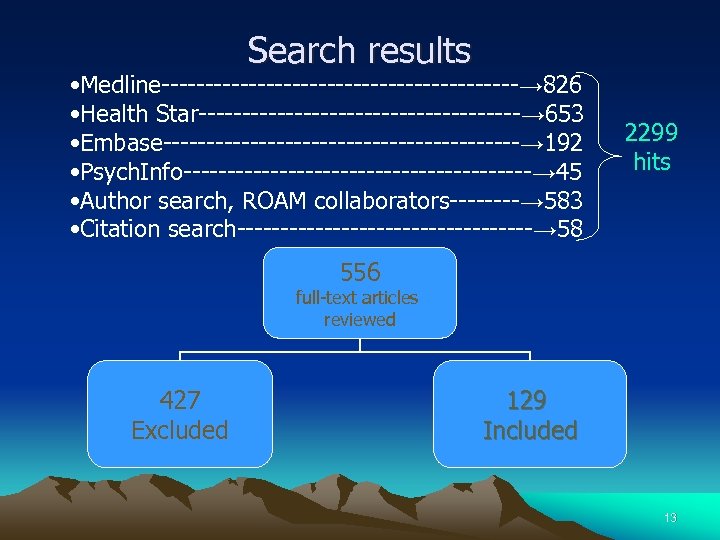 Search results • Medline---------------------→ 826 • Health Star-------------------→ 653 • Embase---------------------→ 192 • Psych. Info--------------------→ 45 • Author search, ROAM collaborators----→ 583 • Citation search-----------------→ 58 2299 hits 556 full-text articles reviewed 427 Excluded 129 Included 13
 Results: Description of the literature 14
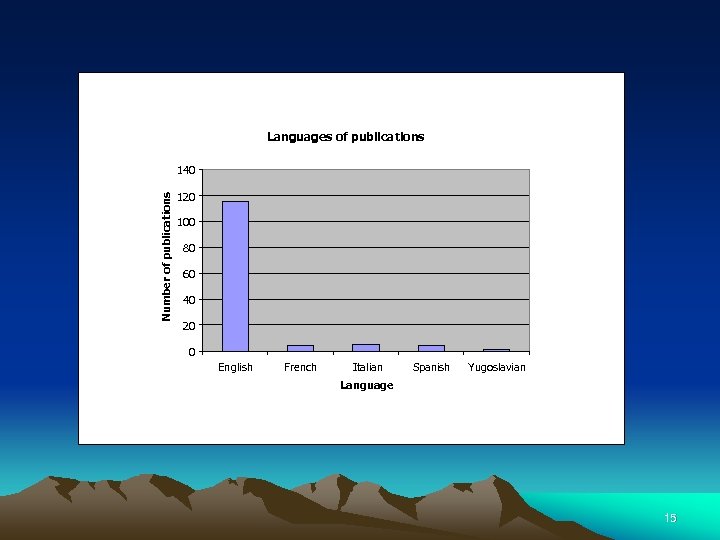 Languages of publications Number of publications 140 120 100 80 60 40 20 0 English French Italian Spanish Yugoslavian Language 15
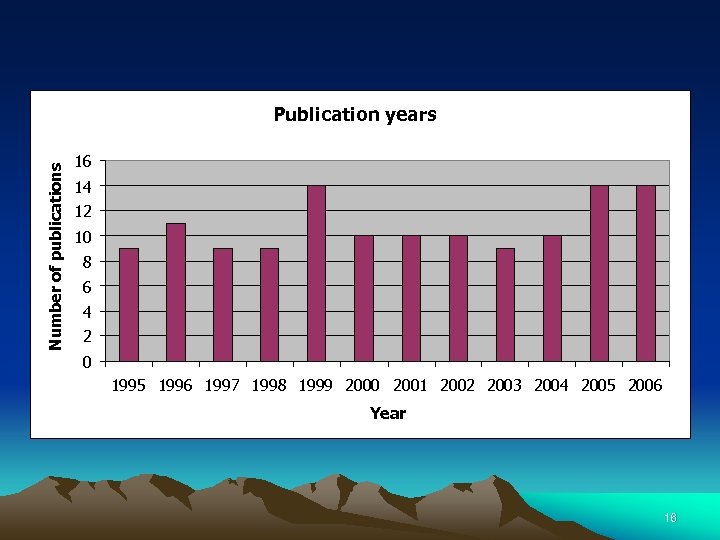 Number of publications Publication years 16 14 12 10 8 6 4 2 0 1995 1996 1997 1998 1999 2000 2001 2002 2003 2004 2005 2006 Year 16
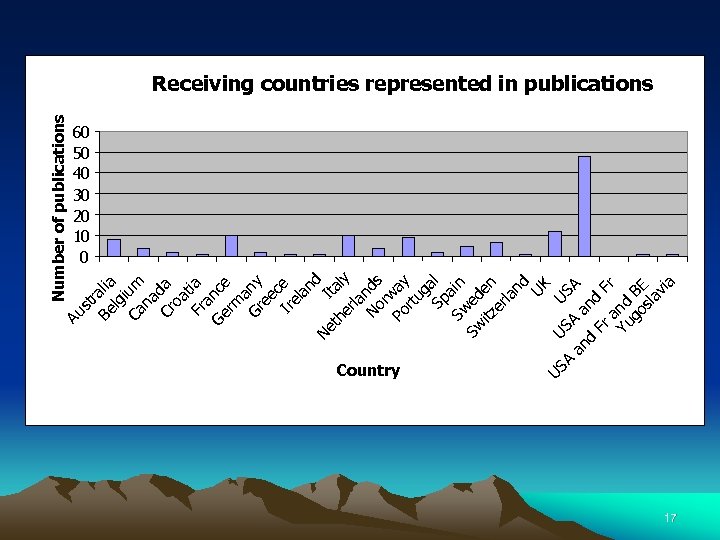 Number of publications r Be alia lg Ca ium na Cr da oa t Fr ia a Ge nce rm a Gr ny ee c Ir e el an d Ne Ita th er ly la No nds rw Po ay rtu g Sp al Sw ain Sw ed itz en er la nd UK US US U S A an A a A n d Fr d F a r Yu nd go BE sla vi a st Au Receiving countries represented in publications 60 50 40 30 20 10 0 Country 17
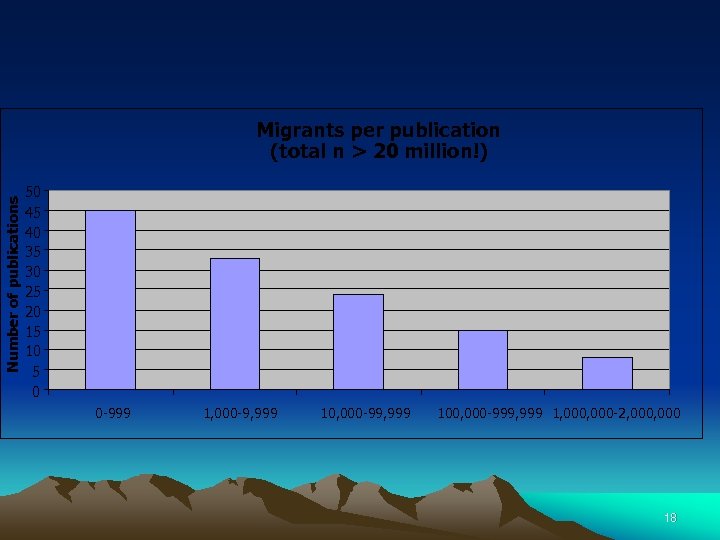 Migrants per publication (total n > 20 million!) Number of publications 50 45 40 35 30 25 20 15 10 5 0 0 -999 1, 000 -9, 999 10, 000 -99, 999 100, 000 -999, 999 1, 000 -2, 000 18
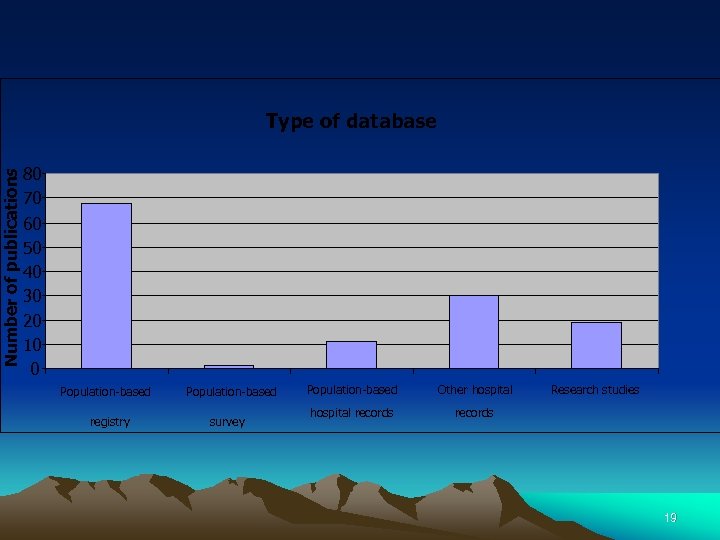 Number of publications Type of database 80 70 60 50 40 30 20 10 0 Population-based registry Population-based survey Population-based Other hospital records Research studies records 19
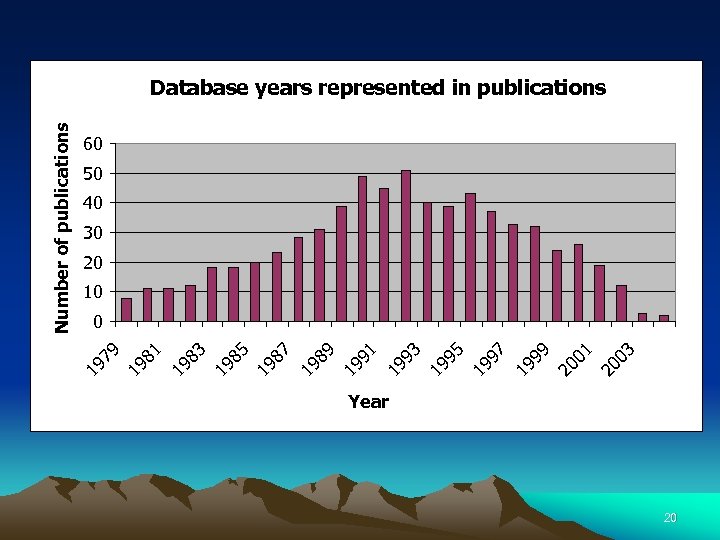 19 79 19 81 19 83 19 85 19 87 19 89 19 91 19 93 19 95 19 97 19 99 20 01 20 03 Number of publications Database years represented in publications 60 50 40 30 20 10 0 Year 20
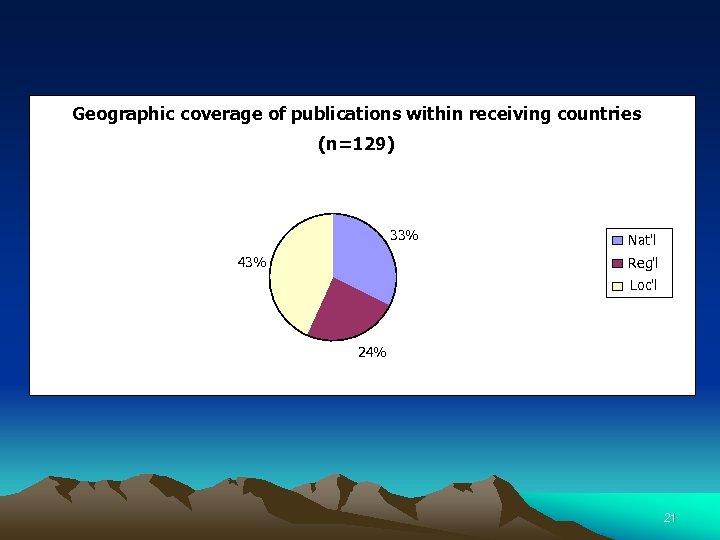 Geographic coverage of publications within receiving countries (n=129) 33% 43% Nat'l Reg'l Loc'l 24% 21
 22
22
 Results: Perinatal outcomes of migrants vs. receivingcountry born (unadjusted) 23
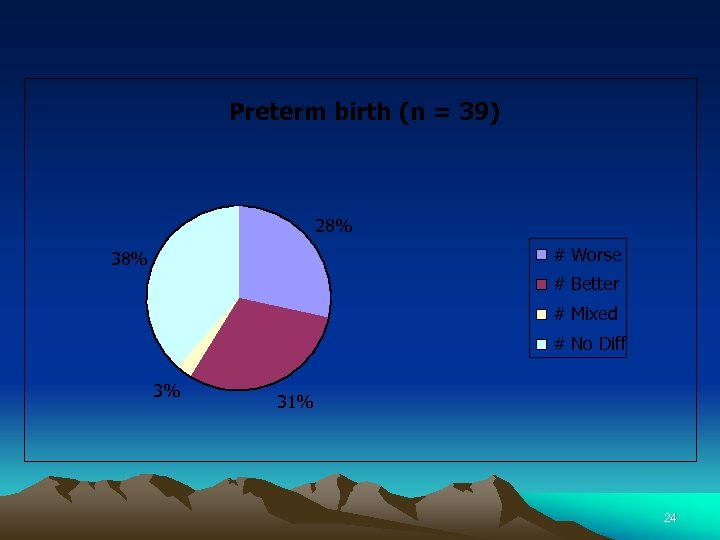 Preterm birth (n = 39) 28% 38% # Worse # Better # Mixed # No Diff 3% 31% 24
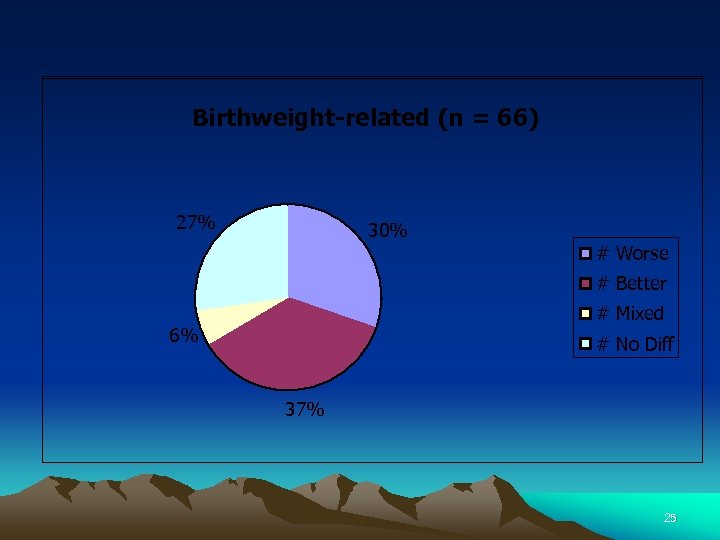 Birthweight-related (n = 66) 27% 30% # Worse # Better # Mixed 6% # No Diff 37% 25
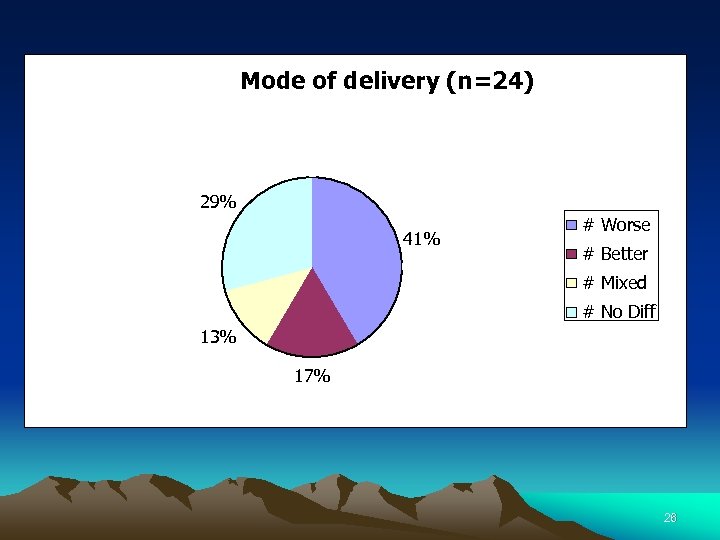 Mode of delivery (n=24) 29% 41% # Worse # Better # Mixed # No Diff 13% 17% 26
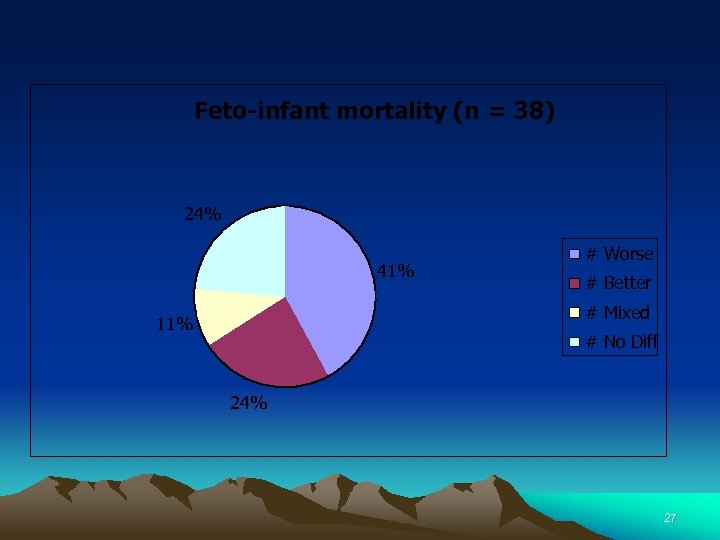 Feto-infant mortality (n = 38) 24% 41% # Worse # Better # Mixed 11% # No Diff 24% 27
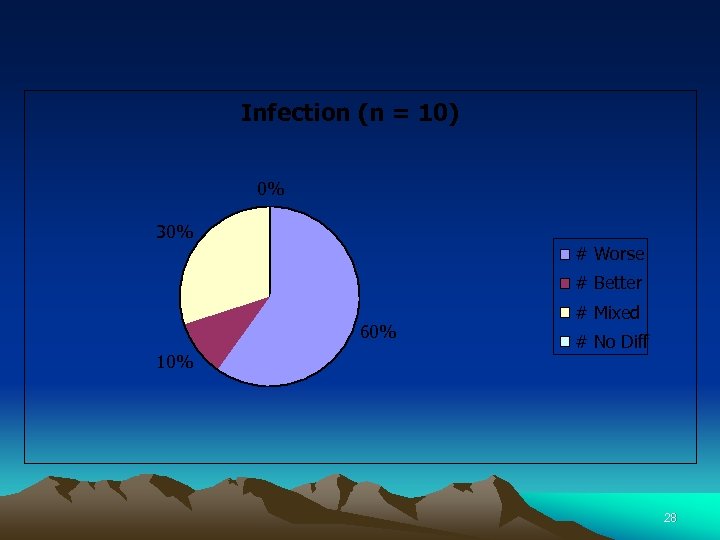 Infection (n = 10) 0% 30% # Worse # Better 60% 10% # Mixed # No Diff 28
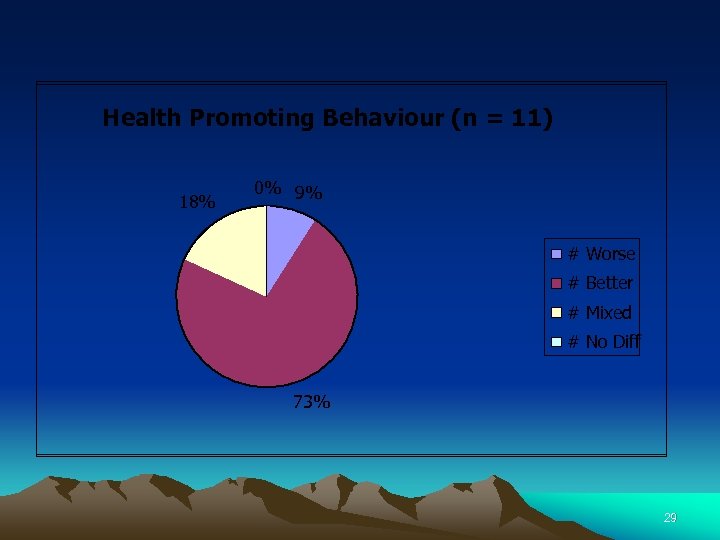 Health Promoting Behaviour (n = 11) 18% 0% 9% # Worse # Better # Mixed # No Diff 73% 29
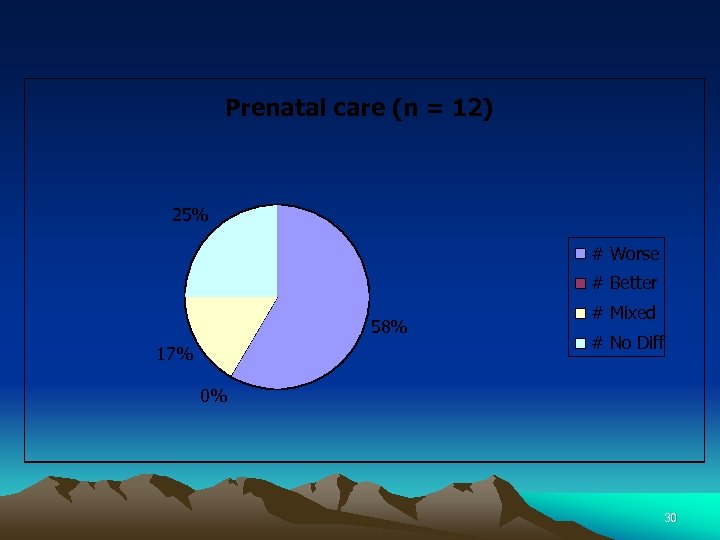 Prenatal care (n = 12) 25% # Worse # Better 58% 17% # Mixed # No Diff 0% 30
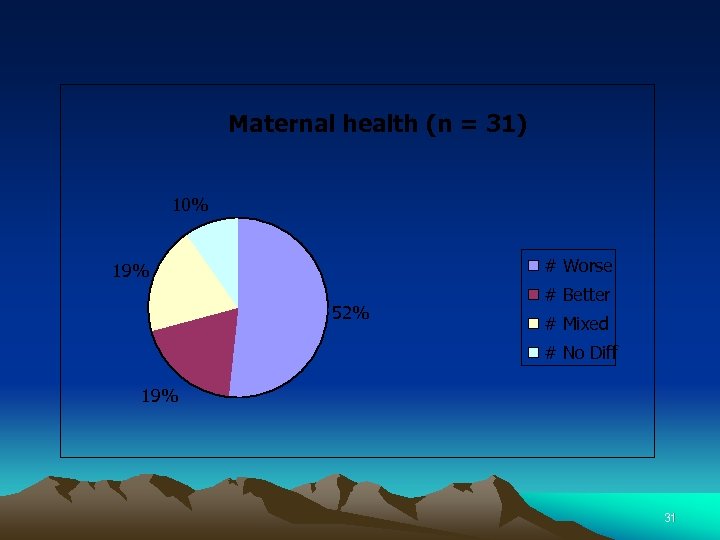 Maternal health (n = 31) 10% 19% # Worse 52% # Better # Mixed # No Diff 19% 31
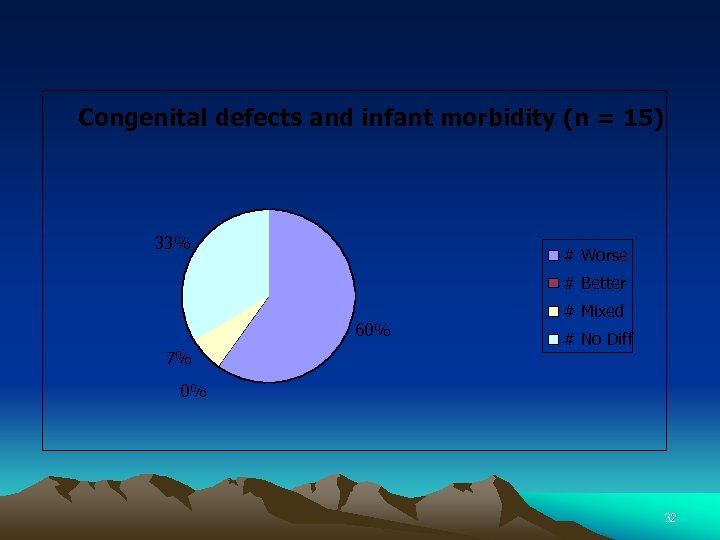 Congenital defects and infant morbidity (n = 15) 33% # Worse # Better 60% 7% # Mixed # No Diff 0% 32
 Conclusions 33
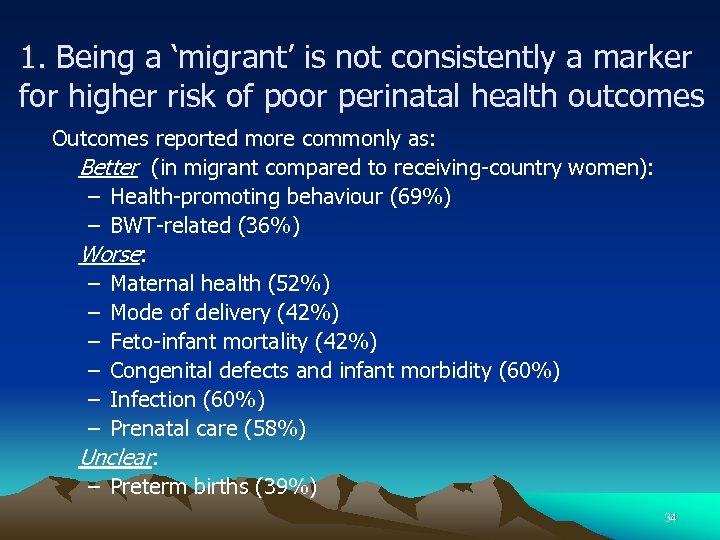 1. Being a ‘migrant’ is not consistently a marker for higher risk of poor perinatal health outcomes Outcomes reported more commonly as: Better (in migrant compared to receiving-country women): – Health-promoting behaviour (69%) – BWT-related (36%) Worse: – Maternal health (52%) – Mode of delivery (42%) – Feto-infant mortality (42%) – Congenital defects and infant morbidity (60%) – Infection (60%) – Prenatal care (58%) Unclear: – Preterm births (39%) 34
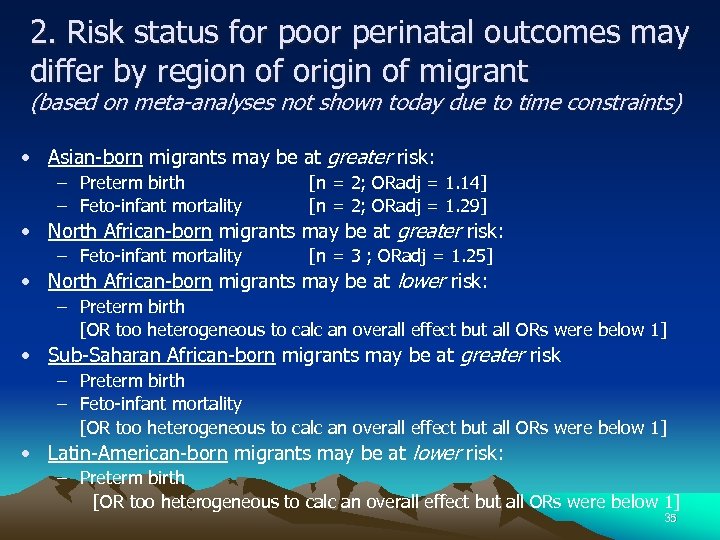 2. Risk status for poor perinatal outcomes may differ by region of origin of migrant (based on meta-analyses not shown today due to time constraints) • Asian-born migrants may be at greater risk: – Preterm birth – Feto-infant mortality [n = 2; ORadj = 1. 14] [n = 2; ORadj = 1. 29] • North African-born migrants may be at greater risk: – Feto-infant mortality [n = 3 ; ORadj = 1. 25] • North African-born migrants may be at lower risk: – Preterm birth [OR too heterogeneous to calc an overall effect but all ORs were below 1] • Sub-Saharan African-born migrants may be at greater risk – Preterm birth – Feto-infant mortality [OR too heterogeneous to calc an overall effect but all ORs were below 1] • Latin-American-born migrants may be at lower risk: – Preterm birth [OR too heterogeneous to calc an overall effect but all ORs were below 1] 35
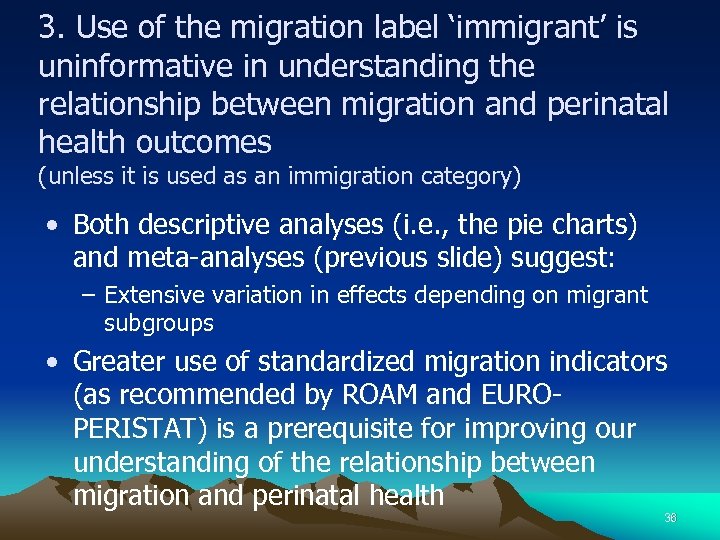 3. Use of the migration label ‘immigrant’ is uninformative in understanding the relationship between migration and perinatal health outcomes (unless it is used as an immigration category) • Both descriptive analyses (i. e. , the pie charts) and meta-analyses (previous slide) suggest: – Extensive variation in effects depending on migrant subgroups • Greater use of standardized migration indicators (as recommended by ROAM and EUROPERISTAT) is a prerequisite for improving our understanding of the relationship between migration and perinatal health 36
 Discussion…. Thank you! anita. gagnon@mcgill. ca 37