 Скачать презентацию Middle School Teaming Hickory Public Schools Summer Conference
40452c150cb894a528c9c2018f36e93d.ppt
- Количество слайдов: 18



Middle School Teaming Hickory Public Schools Summer Conference 2009
Middle School Philosophy • Large numbers in the 60 s and 70 s as part of desegregation • Another wave after The Nation at Risk report (1983) • 9 th grade became more rigorous and moved to the high school because of graduation requirements • General recognition that the adolescent had specific needs
Middle School Philosophy • • • Advisor/Advisee Individualized instruction Guidance Exploratory Continued orientation and articulation for students, parents, and teachers • Leadership teams
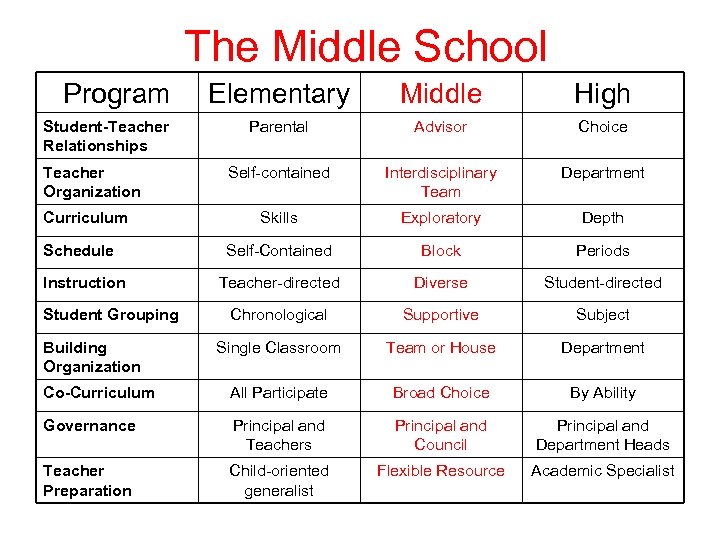
The Middle School Program Elementary Middle High Parental Advisor Choice Self-contained Interdisciplinary Team Department Skills Exploratory Depth Self-Contained Block Periods Teacher-directed Diverse Student-directed Chronological Supportive Subject Single Classroom Team or House Department Co-Curriculum All Participate Broad Choice By Ability Governance Principal and Teachers Principal and Council Principal and Department Heads Teacher Preparation Child-oriented generalist Flexible Resource Academic Specialist Student-Teacher Relationships Teacher Organization Curriculum Schedule Instruction Student Grouping Building Organization
Middle School Philosophy • Interdisciplinary teaming • Common planning time for teachers • Flexible scheduling • More teacher support and collaboration in this model
Forming • Purist – 2, 3, 4 person teams – One per content area – Self-contained group • Variations – 5+ – Departmental structure – Share a grade level
Movement from Departmental Model • Little or no correlation between departments • Territoriality • Focus on discipline rather than student • Lack of flexibility
Like a Marriage • Requires a great deal of patience • When it is good, it is beautiful • When it is not, it is horrible
Factors for Success • Planning time • How well members communicate • Proficiency in planning interdisciplinary units • Having a clear vision • Commitment to success for all students and each other
Teaming Traps • Refusal to acknowledge that teaming is a process, not an event • Resistance to change • Taking things personally • Unwillingness to work collaboratively • Refusal to commit time
Norming • Effective Middle School Teams use common strategies such as – Discipline Policies – Rewards – Schedules – Team planning – Conferences
Examples • • • Team discipline policy Team meeting policy (adults) Team meetings with students Common passes Common expectations Reading Strategies
The Next Level • • Student Led Conferences Parent Back to School Day Leopard Idol Math at the Mall
Collaborative Planning • Small steps • Build to year-long scope • Off-site planning for this session
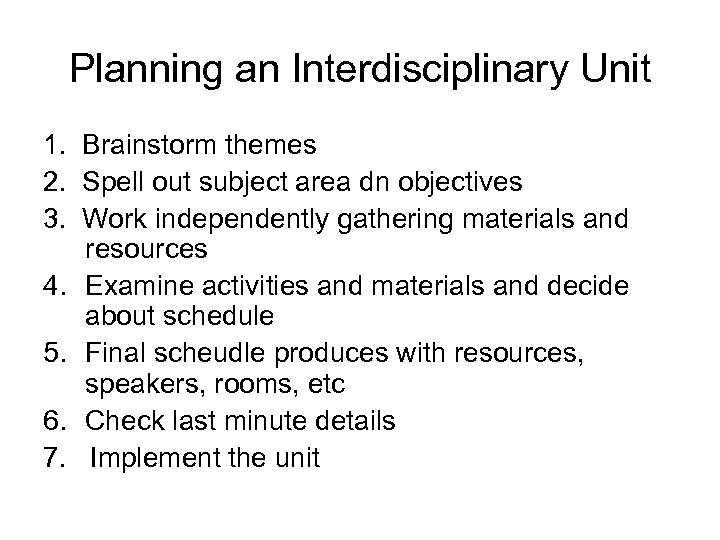
Planning an Interdisciplinary Unit 1. Brainstorm themes 2. Spell out subject area dn objectives 3. Work independently gathering materials and resources 4. Examine activities and materials and decide about schedule 5. Final scheudle produces with resources, speakers, rooms, etc 6. Check last minute details 7. Implement the unit
Helpful to Examine • • • Yearlong plans NCSCo. S Technology SCo. S Pacing Guides WASP School Wide Events
Benefits • Consistency for Kids • Clear expectations • Opportunities to build relationships
Successful Teaming is a Process • Takes time • Takes effort • Takes a leader to facilitate and organize
Скачать презентацию Middle School Teaming Hickory Public Schools Summer Conference
40452c150cb894a528c9c2018f36e93d.ppt